Acts 16:12

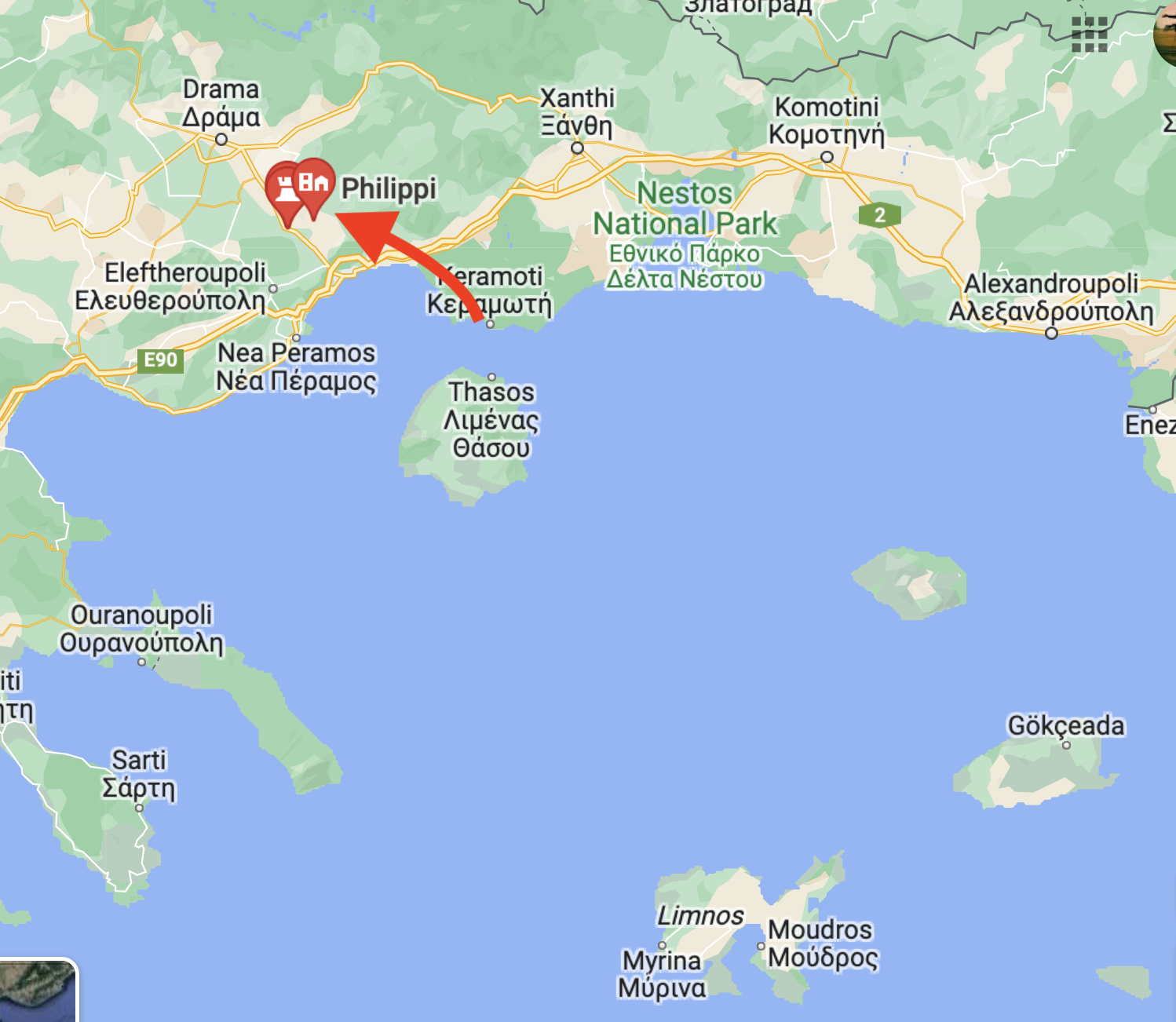
From Neapolis to Philippi.

Sunday, 23 April 2023

and from there to Philippi, which is the foremost city of that part of Macedonia, a colony. And we were staying in that city for some days. Acts 16:12

Note: You can listen to today’s commentary courtesy of our friends at “Bible in Ten” podcast. (Click Here to listen)

You can also read this commentary, with music, courtesy of our friends at “Discern the Bible” on YouTube. (Click Here to listen), or at Rumble (Click Here to listen).

The trip to Macedonia began in the previous verse with the group sailing from Troas to Samothrace and then to Neapolis. They now continue the journey with the words, “and from there to Philippi.” Of this city, Albert Barnes notes –

“The former name of this city was Dathos. It was repaired and adorned by Philip, the father of Alexander the Great, and after him was called Philippi. It was famous for having been the place where several battles were fought during the civil wars of the Romans, and, among others, for the decisive battle between Brutus and Antony. At this place Brutus killed himself. To the church in this place Paul afterward wrote the Epistle which bears its name.”

Concerning the location, Luke next says, “which is the foremost city of that part of Macedonia.” This clause has been called into question by deniers of Luke’s historical accuracy, noting that Amphipolis was the chief city. Due to the unusual construction of the Greek, several possibilities arise. First, Albert Barnes notes the following –

“This whole region had been conquered by the Romans under Paulus Aemilius. By him it was divided into four parts or provinces (Livy). The Syriac version renders it “a city of the first part of Macedonia,” and there is a medal extant which also describes this region by this name. It has been proposed, therefore, to alter the Greek text in accordance with this, since it is known that Amphipolis was made the chief city by Paulus Aemilius. But it may be remarked that, although Amphipolis was the chief city in the time of Paulus Aemilius, it may have happened that in the lapse of 220 years from that time Philippi might have become the most extensive and splendid city. The Greek here may also mean simply that this was the first city to which they arrived in their travels.”

Charles Ellicott adds his thoughts to this, saying –

“…it was not the chief city of any one of the four sub-divisions of the Roman province of Macedonia, that rank being assigned to Amphipolis, Thessalonica, Pella, and Pelagonia. As there is no definite article in the Greek, it is possible that St. Luke simply meant to say it was a chief town of the district, the epithet Prôte ( = first) being often found on the coins of cities which were not capitals. The more probable explanation, however, is that he uses the Greek word translated “part,” in the sense of “border-land,” as in the LXX. of Ezekiel 35:7, Ruth 3:7, and that it was the first city of that frontier district, either as the most important or as being the first to which they came in the route by which they travelled. This was precisely the position of Philippi, which, together with Pella and other towns, had been garrisoned by the Romans as outposts against the neighbouring tribes of Thrace.”

As the Greek is unusually worded, it seems likely that Luke was making a general statement concerning Philippi that it is either the first of their main stops or that it is the main city of a lesser district. As Luke will now turn to describe people, locations, and events in Philippi, the former option seems the most likely. They have arrived in Macedonia, and this is the first main area of their evangelistic efforts.

Of this city, Luke next says, “a colony.” Concerning the Roman idea of a colony, Vincent’s Word Studies provides a highly detailed explanation of what this means –

“The colony was used for three different purposes in the course of Roman history: as a fortified outpost in a conquered country; as a means of providing for the poor of Rome; and as a settlement for veterans who had served their time. It is with the third class, established by Augustus, that we have to do here. The Romans divided mankind into citizens and strangers. An inhabitant of Italy was a citizen; an inhabitant of any other part of the empire was a peregrinus, or stranger. The colonial policy abolished this distinction so far as privileges were concerned. The idea of a colony was, that it was another Rome transferred to the soil of another country. In his establishment of colonies, Augustus, in some instances, expelled the existing inhabitants and founded entirely new towns with his colonists; in others, he merely added his settlers to the existing population of the town then receiving the rank and title of a colony. In some instances a place received these without receiving any new citizens at all. Both classes of citizens were in possession of the same privileges, the principal of which were, exemption from scourging, freedom from arrest, except in extreme cases, and, in all cases, the right of appeal from the magistrate to the emperor. The names of the colonists were still enrolled in one of the Roman tribes. The traveller heard the Latin language and was amenable to the Roman law. The coinage of the city had Latin inscriptions. The affairs of the colony were regulated by their own magistrates, named Duumviri, who took pride in calling themselves by the Roman title of praetors (see on Acts 16:20).”

Luke finishes the thought, saying, “And we were staying in that city for some days.” It is this indeterminate amount of time that Luke will provide various details in the verses ahead.

Life application: For every difficult statement in the Bible, there are an innumerable number of people who have spent their time diligently trying to prove it wrong. In the case of this verse, there are several likely options to dismiss the claims of naysayers. If you hear someone call a part of the Bible into question, don’t just drop your faith and walk away from the Lord.

Rather, spend your time reading other commentaries. If the Bible was not trustworthy, these great men of the past would not have spent so much time defending it. After a short amount of time, it would have been dismissed and forgotten. But the Bible continues to share the message of faith while all the detractors of the past have returned to the dust. They will be forgotten while the Bible will be vindicated as the sure word of God until His coming.

Hold fast to what it says and be assured that your faith is not in vain. It is not a faith based on a dubious word. Instead, it is one grounded on a sure and reliable word. In pursuing the words of Scripture, you are not blindly stepping into the darkness. Rather, you are stepping into God’s revealed light. The path is illuminated, and you shall find your way without getting lost.

Lord God, we thank You for the sure word we possess. And we thank You for those who have gone before us and who have provided us with competent analyses of what Your word says. We can have full confidence in this precious and sacred word. And we do! Thank You for Your word that guides us as we walk this path of life. Amen.


Acts 16:11

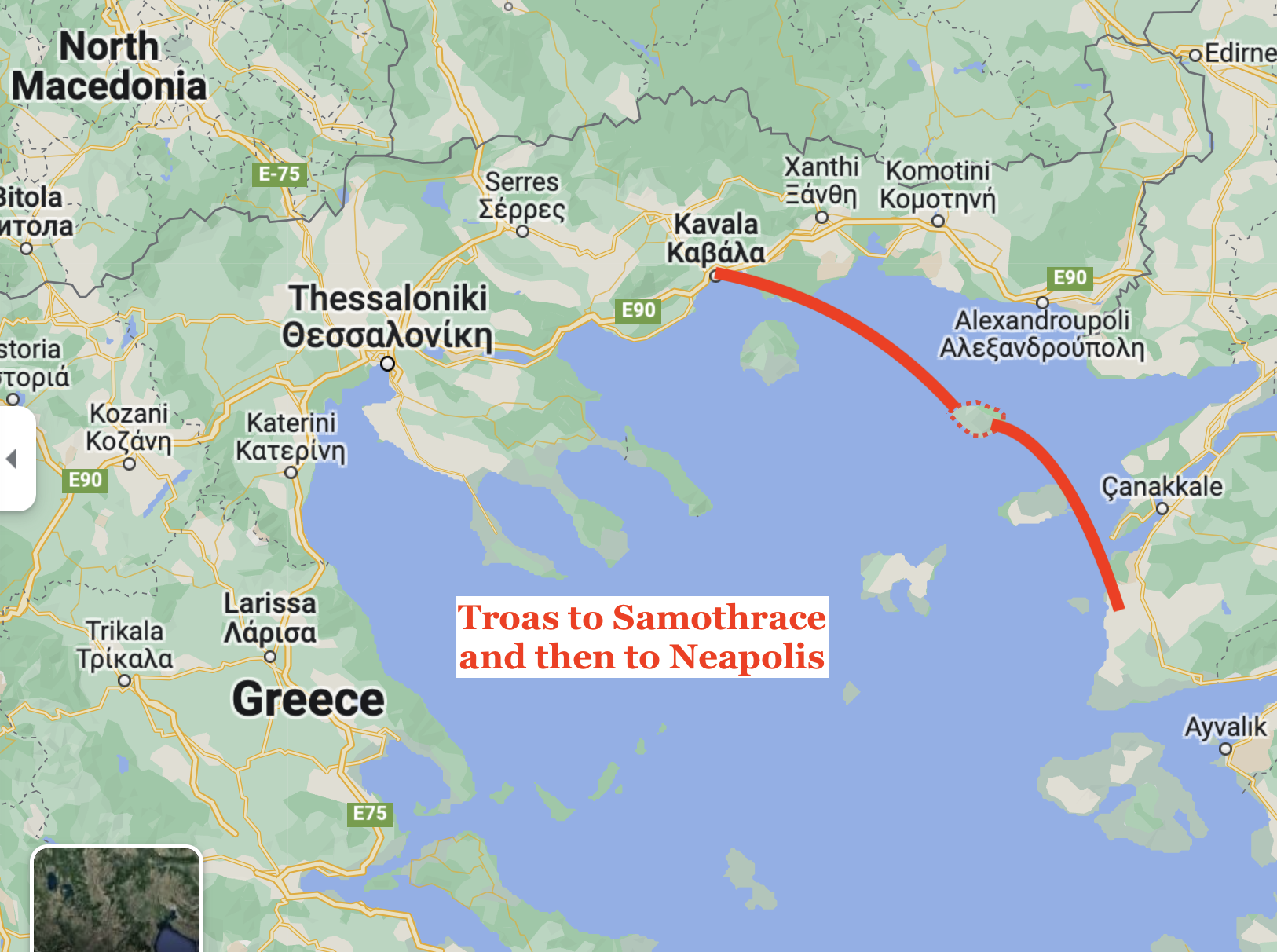
Fun travels.

Saturday, 22 April 2023

Therefore, sailing from Troas, we ran a straight course to Samothrace, and the next day came to Neapolis, Acts 16:11

Note: You can listen to today’s commentary courtesy of our friends at “Bible in Ten” podcast. (Click Here to listen)

You can also read this commentary, with music, courtesy of our friends at “Discern the Bible” on YouTube. (Click Here to listen), or at Rumble (Click Here to listen).

The previous verse had the group of men, including Luke as evidenced by using “we” and “us,” seeking to head to Macedonia. Next, it says, “Therefore, sailing from Troas.”

Rather, the Greek more literally reads, “Having set sail, therefore, from Troas.” Luke is writing as if the journey had begun at a certain time from which he will continue the narrative. From this point, it next says, “we ran a straight course to Samothrace.”

Luke introduces a word to Scripture, euthudromeó. It will be seen here and in Acts 21:1. It comes from euthus, straight of direction, and dromos, to run a course. It is a nautical term where a ship sails before the wind. Having set out, the ship first arrived at Samothrace. This is to the northwest and would have been stopped at for the night before traveling on the next day. Of this location, Albert Barnes states –

“This was an island in the Aegean Sea not far from Thrace. It was populated by inhabitants from Samos and from Thrace, and hence called Samothracia. It was about 20 miles in circumference, and was an asylum for fugitives and criminals.”

With that first leg noted, it next says, “and the next day came to Neapolis.” The name signifies “New City.” This was a maritime city of Macedonia on the Thracian coast. It was about sixty-five miles from Samothrace and about ten miles from Philippi, it being the harbor of Philippi.

Life application: Without any recorded delay, the missionaries set out for Macedonia. They were ready and willing to go when called. Today, we generally have those we report to for our jobs, whether they are for secular or religious duties. We need to be prepared to do as we are asked if it is not in violation of the word of God or the set laws of the country in which we live.

As those under the authority of another, they are relying on us to fulfill our obligations accordingly. The missionaries were under the authority of the Lord, but we are as well. The Bible says elsewhere that we are to obey the ruling authorities of those governing us (Romans 13:1) as well as our masters (today we have employers as noted in Colossians 3:22, etc.).

As the word instructs us in this manner, it lays upon us the responsibility to do so. When we do, we will be working responsibly and honoring the Lord who has so instructed us through His word.

Heavenly Father, we have authority figures over us that we are responsible to. Help us to be obedient to Your word by being obedient to them. It isn’t always easy but help us in this so that we will be model citizens and employees as we live out our lives in Your presence. Amen.


Acts 16:10

Roman Province of Macedonia.

Friday, 21 April 2023 

Now after he had seen the vision, immediately we sought to go to Macedonia, concluding that the Lord had called us to preach the gospel to them. Acts 16:10

Note: You can listen to today’s commentary courtesy of our friends at “Bible in Ten” podcast. (Click Here to listen)

You can also read this commentary, with music, courtesy of our friends at “Discern the Bible” on YouTube. (Click Here to listen), or at Rumble (Click Here to listen).

In the previous verse, Paul had seen the vision of a man of Macedonia pleading with him to come over there and help them. With that, Luke now records, “Now after he had seen the vision.”

The words don’t mean “sometime after.” Rather they give the sense of, “Now when he had seen the vision.” As soon as it occurred the next event took place. That is seen in the next word, “immediately.”

As the vision was in the night, it can be assumed that Paul excitedly told the others about what he had seen, and they started planning to make the necessary arrangements to go where they had been called to. With that, the first “we” section of the book of Acts begins. Until this point, it has been a narrative about others, such as “Paul and Barnabas did this,” or “they went to Troas.”  However, the words now go to the first-person plural, saying, “we sought to go to Macedonia.”

The obvious conclusion is that Luke had joined them in Troas. Nothing is said about how this came about. It could be that he was living there at the time, or maybe Paul had sent word to him to join the group there. However it occurred, Luke has become a part of the ongoing narrative. Together with the others, they were “concluding that the Lord had called us.”

Paul was certain that the vision wasn’t just a dream. Rather, like Peter’s vision before, he understood it to be of divine origin, having been directed by the Lord. It is worthy of note that some manuscripts (such as the Alexandrian, Vulgate, and Ethiopian) say “God” instead of “Lord.” As Jesus is God, the change doesn’t affect the narrative substantially.

As for the use of “us” in these words, it clearly indicates that Luke was immediately considered a part of the team and he was an integral part of the calling that took place. This not only identifies him as a chronicler of the events of Acts, but he was also an evangelist in his own right. This is seen in the fact that he was a part of those called “to preach the gospel to them.”

There are several things that become obvious when considered. The efforts of the men in the Asian provinces were frustrated. It can be certain that wherever they were, they attempted to share the gospel without any success or that they knew their efforts were not fruitful in their evangelization at that time.

With each movement of the team, it was as if their feet were being led until they came to Troas. Upon arrival there, they were suddenly directed by Paul’s vision. At the same time, Luke had joined them. And with the vision of the calling of the man from Macedonia, it foreshadowed the presence of the Lord in that area. Thus, the providence of God is behind each step of the journey.

Life application: The events occurring in Acts are a descriptive account of what occurred. This includes Luke’s inclusion of himself in the narrative at this time. Nothing has been prescribed for the reader to do or to apply to his own walk with the Lord. The fact that Paul had a vision does not mean that visions are to be expected in our own lives to direct where we should go or what we should do.

In fact, supposed visions in more recent times have led to some of the greatest apostasies of the faith. The visions of Joseph Smith and Ellen G. White have led millions of people into false religion. The only conclusion that can be made is that their visions were either made up lies or that they were of satanic origins. They cannot be of God because they contradict the writings found in Scripture.

This is true with innumerable other visions that people have claimed and continue to claim to this day. Where will you put your trust? It is so easy to be led astray by convincing-sounding people who claim to have a pipeline to the divine. But the fact is that you already have one. It is the Bible.

God has given His word, and He has provided what you need to know concerning your walk before Him. It is sufficient. Stick to the word and don’t bother with the claims of others who say they have more than the word to offer you. Such things are unnecessary and unhelpful. Be assured of this.

Lord God, thank You for Your word. It is sufficient to guide us on our path as we walk in Your presence from day to day. Help us to spend our time wisely by searching out its treasures and rightly applying its precepts. Surely in this, we will be pleasing to You. Thank You for Your precious and sacred word. Amen.


Acts 16:9

Virginia train tracks.

Thursday, 20 April 2023

And a vision appeared to Paul in the night. A man of Macedonia stood and pleaded with him, saying, “Come over to Macedonia and help us.” Acts 16:9

Note: You can listen to today’s commentary courtesy of our friends at “Bible in Ten” podcast. (Click Here to listen)

You can also read this commentary, with music, courtesy of our friends at “Discern the Bible” on YouTube. (Click Here to listen), or at Rumble (Click Here to listen).

Note: The verse as presented by the NKJV misses the mark. A far closer rendering, that of the Literal Standard Version, will be used: “And a vision through the night appeared to Paul—a certain man of Macedonia was standing, calling on him, and saying, ‘Having passed through to Macedonia, help us.’”

The previous verse told of the company of missionaries arriving at Troas. Once there, it now says, “And a vision through the night.” One can only speculate, but it appears that this is the very night that they arrived in Troas. No sooner had they arrived than a vision of the night “appeared to Paul.”

As the leader of the company and as the apostle to the Gentiles, the vision was directed to Paul. This is not unlike what happened to Peter previously in Acts 10 when he had a vision calling him to Caesarea to preach to the house of Cornelius. In the case of Paul, the vision concerned “a certain man of Macedonia.”

The group was currently in the province of Asia, but the call is from a Grecian province in Europe to the west. Of the area, Albert Barnes says –

“Of Macedonia – This was an extensive country of Greece, having Thrace on the north, Thessaly south, Epirus west, and the Aegean Sea east. It is supposed that it was populated by Kittim, son of Javan, Genesis 10:4. The kingdom rose into celebrity chiefly under the reign of Philip and his son, Alexander the Great. It was the first region in Europe in which we have any record that the gospel was preached.”

Of this man of Macedonia, Luke records that he “was standing.” The first verb is imperfect and the second is perfect. The idea is that he was standing and remained standing. While standing, he was “calling on him.”

One can think of Paul looking out into the vision and seeing a man who is standing, and the guy is beckoning to him, maybe waving his arms or folding his hands as if pleading. In this state of beckoning, he was “saying, ‘Having passed through to Macedonia, help us.’”

In other words, he is essentially saying, “You are over there. You should be over here. Once you have passed over to this side, you can help us.” How the man is identified as a Macedonian is not stated. It could be that the summons to Paul was from the west, and so as he looked out over the water toward Macedonia, he identified the man as Macedonian. Or it could be his clothing or speech identified him. However it came to him, Paul understood who he was and the substance of his words.

Life application: With only the Hebrew Scriptures, combined with their personal knowledge of the Lord, the missionaries went forth to proclaim the gospel. As such, it is not unexpected that visions would appear to lead the men concerning what they were to do. This is true with Peter, Ananias, and Paul.

The contents of the Bible were not yet compiled. Therefore, at times it was needed for the Lord to personally intervene in the lives of these men, directing them according to a set and determined plan. With the Bible now complete, we have the necessary instructions to follow through with the task of spreading the gospel.Although we should not expect visions to direct our feet, we can be certain that the Lord is directing them, nonetheless.

Those things He wants us to succeed at will succeed. Those things which are not supposed to occur will not come to pass. Our job is not to sit and wait for visions, but to be obedient to the word. The Lord will take care of the details according to His infinite wisdom.

Lord God, we know that when we are living according to Your will, You will lead our steps and keep us on the path that You would have us take. Help us to act by directing our efforts toward accomplishing our part of the Great Commission. Give us wisdom, boldness, and the opportunity to be a part of continuing the growth of the church until the day it is complete and You call us home. Amen.


Acts 16:8

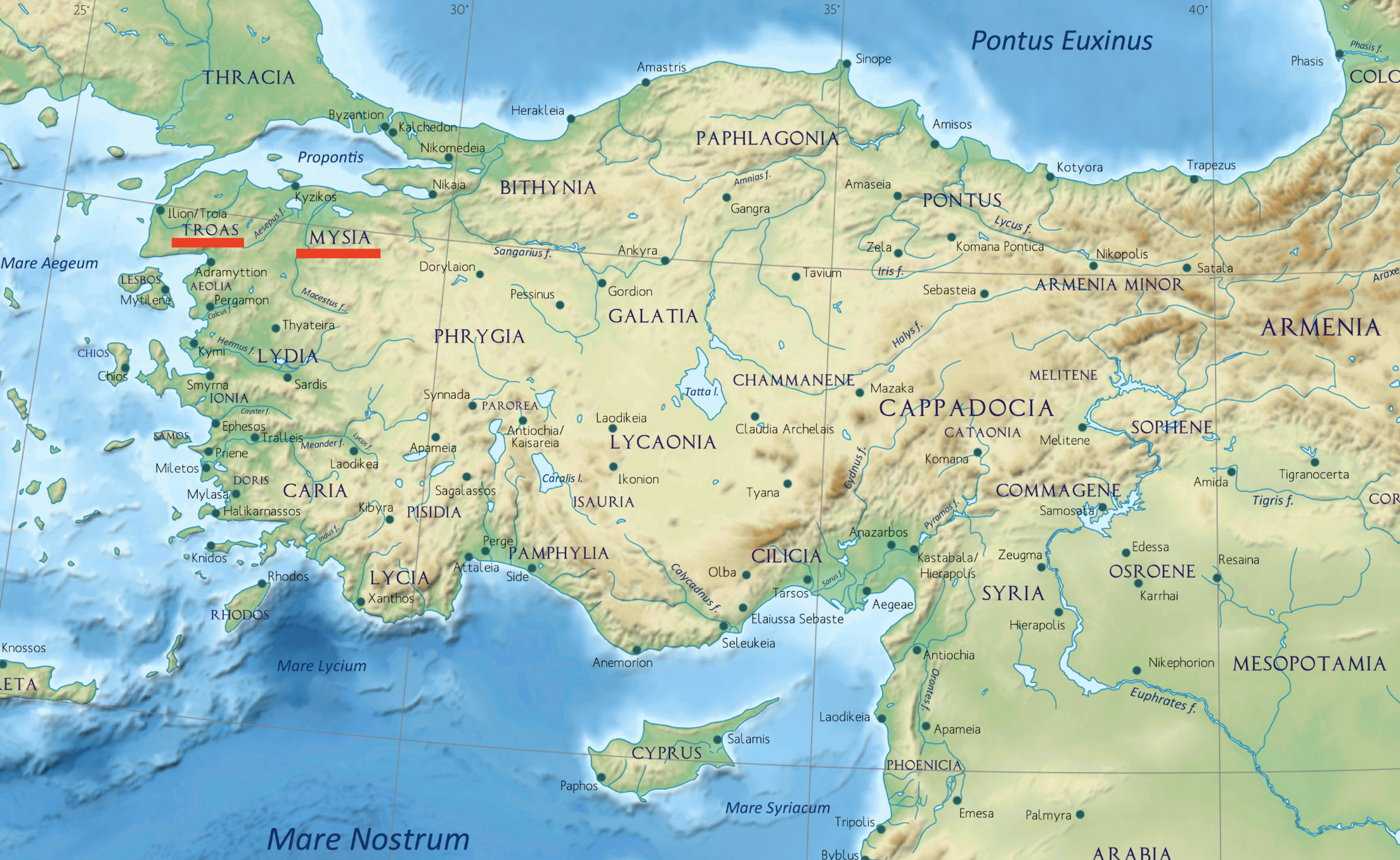
Mysia and Troas.

Wednesday, 19 April 2023

So passing by Mysia, they came down to Troas. Acts 16:8

Note: You can listen to today’s commentary courtesy of our friends at “Bible in Ten” podcast. (Click Here to listen)

You can also read this commentary, with music, courtesy of our friends at “Discern the Bible” on YouTube. (Click Here to listen), or at Rumble (Click Here to listen).

The previous verse revealed the inability of the missionary team to enter Bithynia because the Spirit would not allow them to. With that, it next records, “So passing by Mysia.”

Rather, the verb is an aorist participle, “So having passed by Mysia.” This doesn’t mean that they avoided the area altogether, but that they did not preach there. From their previous location, they had to travel through Mysia to get where they next headed, which is that “they came down to Troas.”

Their travels took them from an area of the highlands to the coastal area where the well-known seaport of Troas was. Troas, or Alexandria Troas, is a city on the northeastern coast of the Aegean Sea which is the western boundary of Asia Minor. Of this area Albert Barnes notes –

“This was a city of Phrygia or Mysia, on the Hellespont, between Troy north, and Assos south. Sometimes the name Troas or Troad, is used to denote the whole country of the Trojans, the province where the ancient city of Troy had stood. This region was much celebrated in the early periods of Grecian history. It was here that the events recorded in the Iliad of Homer are supposed to have occurred. The city of Troy has long since been completely destroyed. Troas is several times mentioned in the New Testament, 2 Corinthians 2:12; 2 Timothy 4:13; Acts 20:5.”

From this area, it is possible to sail off to other areas, and that is exactly what will be needed as the missionaries are led by the Spirit.

Life application: As noted in the commentary of the previous two verses, the hindrances placed before the group are not fully explained by Luke. It can only be speculated concerning what it means that the Holy Spirit kept them from preaching in the province of Asia or that the Spirit did not permit them to go into Bithynia. For all we know, there may have been some sort of problem in the region of Asia, such as an uprising or a time of mourning for a leader that had died. Maybe there was an arbitrarily applied lockdown because of a pandemic.

Whatever the case, and the speculation could go on indefinitely, the group understood that the timing of the surrounding events precluded them from preaching in this area. As they were being led by the Spirit and their feet had arrived in this area at that particular time, they knew that the Lord had other intentions for them.

If you are a believer in Christ, then you are “in Christ.” By default, the things that happen around you are as they should be. It is our job to respond to the events as they come and attempt to discern what God’s will for us is. This can be difficult because it won’t be written on signposts. Rather, throughout your day, talk to the Lord. Acknowledge His presence and ask Him to guide you accordingly.

Whatever happens will ultimately be known to the Lord. Nothing occurs that He is not aware of. But this doesn’t mean we are not to act. The more we include Him in our thoughts, prayers, and actions, the better off we will be in our own minds concerning what occurs.

At times, Paul sat in a Roman prison. He could say, “Well, this isn’t where the Lord wants me.” But that is not at all what he said. And more, he didn’t give up while sitting there. He continued to rely on the Lord and tell people about Jesus. He accepted that he was exactly where the Lord intended him to be. Just because he may not have liked his surroundings, it doesn’t mean he didn’t accept them as the will of the Lord.

Keep close to the Lord at all times. Include Him in all you do. And be sure to acknowledge His will as being a part of where you are at any given moment.

Lord God, help us to live in Your presence acknowledging that You are with us and directing us at all times. Our denial of this doesn’t mean it isn’t true. It would just mean that we have failed to accept that You are with us. But You are. And so, Lord, help us to realize this and remain faithful to You no matter what. Amen.