Acts 14:11

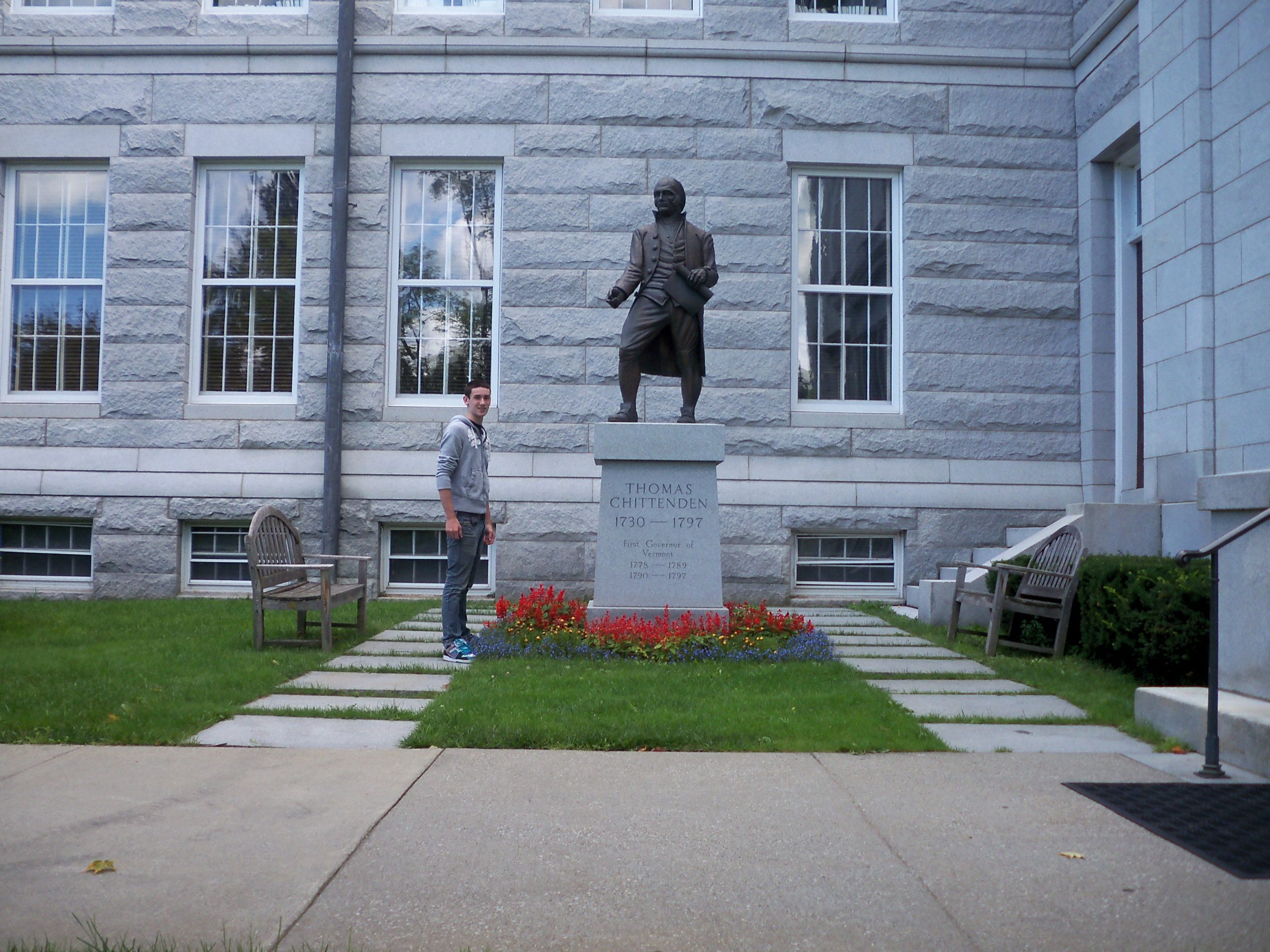
Cam getting ready to take on boxer guy.

Sunday, 12 February 2023

Now when the people saw what Paul had done, they raised their voices, saying in the Lycaonian language, “The gods have come down to us in the likeness of men!” Acts 14:11

Note: You can listen to today’s commentary courtesy of our friends at “Bible in Ten” podcast. (Click Here to listen)

You can also read this commentary, with music, courtesy of our friends at “Discern the Bible” on YouTube. (Click Here to listen), or at Rumble (Click Here to listen).

The wording of the NKJV does not give the proper sense of the verse. It should more closely read, “And the crowds, having seen what Paul did, lifted up their voice, Lycaonially, saying, ‘The gods, having become like men, came down unto us’” (CG). This will be used to evaluate the verse.

In response to Paul’s authoritative words for the cripple at Lystra to stand up straight and walk, the man did just that. With that, the crowds were obviously amazed. As such, Luke records their reaction, saying, “And the crowds, having seen what Paul did.”

Paul was preaching the gospel to a crowd of indeterminate size. However, when people preach, there will be different levels of attention being paid by those in the area. Some may listen intently, some may be curious and listen while fiddling around with their children, and some may just be passing by without paying much attention. Therefore, the actual crowd in the area could have been larger than those closely heeding Paul’s words.

However, with Paul stopping his preaching, calling out to a cripple to be healed, and the cripple suddenly being healed, everyone would stop and observe what was going on. This is especially so because the healed cripple walked and continued walking, as the verb indicated. While doing so, every eye would be on him as he stepped and rejoiced, probably lifting up his voice with each step. In response to this amazing sight, the crowd followed suit, as Luke next notes, saying that they “lifted up their voice, Lycaonially.”

The word translated here as Lycaonially is an adverb. To get the closest sense, this word was coined for the commentary. The point is that Paul was surely speaking in Greek. That can be inferred from the change to the native dialect. As they started shouting in their own language, it revealed a couple of things.

First, it is natural when suddenly amazed or stupefied for someone to return to his natural, default language. This is something seen anywhere one travels. It is how spies were identified during WWII. Those suspected of spying were tested in various ways, including suddenly surprising them to see if they reacted in their native language.

Second, it made it more likely that those who didn’t speak Greek would be able to hear and understand the magnificence of what the apostles had to say, thus increasing the state of arousal of all in the area.

For these, and whatever other reasons, it is evident that neither Paul nor Barnabas spoke in the Lycaonian tongue. This can be deduced from the delay in their petitions coming up in verse 14. As such, it explains what Paul was saying in 1 Corinthians 14:18, where he says, “I thank my God I speak with tongues more than you all.”

The tongues Paul refers to were not supernaturally given for him to evangelize wherever he went. Rather, he would normally speak the lingua franca of the empire, Greek. The tongues he refers to in 1 Corinthians are the many languages and dialects that he had learned throughout his life. As for the ongoing narrative, Luke next continues, noting that the people were “saying, ‘The gods.’”

Those of the crowds around them had either not heard Paul’s speech or they had not paid attention to it. They were caught up in the belief that there were many gods instead of the one God that Paul proclaimed. Because of this, and because of the miracle that had occurred which they assumed had been accomplished by Paul personally, they thought he and Barnabas must be a couple of those many gods, saying, “having become like men.”

The notion of gods assuming the form of man was not an uncommon theme in Greek writings, and it is found in many cultures of the world. Even today, the Japanese believe that their emperor is of divine descent. At the end of WWII, Hirohito had to give up his claim to divinity, but this does not mean that his line is not still considered divine.

And more, there are people who follow supposed gods around the world elsewhere today. For example, Kumari, or Kumari Devi, is supposedly the Living Goddess. This is a tradition of worshipping a particular virgin as a manifestation of the divine female energy (Shakti) in Dharmic religious customs. Others claim to be the Messiah, the Mahdi, or other divine manifestations of a god. This has been the case throughout human history. As for those in Lystra, they believed that Paul and Barnabas were gods who, as they said, “came down unto us.”

This is another aspect of the divine that is almost universally understood. The gods are above, and those on the earth are below. The symbolism itself permeates Scripture. There is the heavenly, which is above, and there is the earthly below. The gods coming down, then, is a part of the universal conscience of man going all the way back to the Garden of Eden where the Lord was in the garden with Adam and Eve. It is a state that is anticipated to be restored someday –

“And I heard a loud voice from heaven saying, ‘Behold, the tabernacle of God is with men, and He will dwell with them, and they shall be His people. God Himself will be with them and be their God.’” Revelation 21:3

This is what those in Lystra believed had happened with the coming of Paul and Barnabas. They assumed that the divine gods had come among them, having missed the intent of the apostles’ words that proclaimed the One true God. Paul and Barnabas had proclaimed Christ and they were His sent ones to bring them out of pagan darkness and into His light.

Life application: The account of Paul and Barnabas here in Acts 14 gives a clear indication that the tongues (meaning languages) he speaks of in 1 Corinthians 14 are not supernatural gobbledygook supposedly spoken by charismatics today. Those are false tongues intended to bring glory to self and inclusion in a body that is unsound in its theology.

Those utterings are not “divinely inspired,” nor are they “the tongues of angels.” They are nonsensical gibberish that distract from the beauty of what God has done in the giving of Jesus for all nations, tribes, and tongues of the world. True tongues will always be a known language. At the time of the apostles, some were given divine utterances as a validation of the coming of the Spirit.

With the completion of the Bible, divinely inspired tongues are no longer necessary. The record has been given, the details confirm the word, and we now must learn the language of those we intend to evangelize. Nothing else will do. If you want to know the biblical languages, get to work and study. If you want to be a missionary in a foreign land, you will need to learn the language of the land you go to. Again, nothing else will do.

Lord God, there is a world full of people who need Jesus. Give us the desire and the ability to get the word out to them in a manner so they can understand that He is the answer to our deepest needs. May we be willing to expend ourselves to further this wonderful gospel message while there is time to do so. To Your glory, we pray. Amen.

 

Acts 14:10

Assuming a boxing stand, apparently.

Saturday, 11 February 2023

said with a loud voice, “Stand up straight on your feet!” And he leaped and walked. Acts 14:10

Note: You can listen to today’s commentary courtesy of our friends at “Bible in Ten” podcast. (Click Here to listen)

You can also read this commentary, with music, courtesy of our friends at “Discern the Bible” on YouTube. (Click Here to listen), or at Rumble (Click Here to listen).

In the previous verse, it noted that Paul was observing the cripple as he spoke. As he did, he saw that he had faith to be saved. With that noted, Luke now records that he “said with a loud voice.”

This wasn’t just Paul stopping what he was doing and quietly walking over to the cripple and helping him up. There is no hint of physical contact as occurred with the cripple in Acts 3 –

“Then Peter said, ‘Silver and gold I do not have, but what I do have I give you: In the name of Jesus Christ of Nazareth, rise up and walk.’ And he took him by the right hand and lifted him up, and immediately his feet and ankle bones received strength.” Acts 3:6, 7

Rather, Paul spoke the words of faith, “Stand up straight on your feet!” These were words of faith by Paul because he had to possess the faith necessary to proclaim them, being certain that the impulse within him was truly of the Spirit. In his exclamation, a new word to Scripture is introduced, orthos. It signifies straight as in upright. A different word eythos means straight horizontally.

The word will be seen only one more time, in Hebrews 12:13 where it will be used in a moral sense, referring to “straight paths.” The sense is “paths of moral uprightness.” As for the word itself, one can see the etymological root of our modern words such as orthodox, orthopedic, orthodontist, etc. Paul commands the man to go from his position of being crippled to being fully healed. With that, the narrative records the joyous words, “And he leaped and walked.”

Rather, the second verb is imperfect. He leaped up and was walking. There is the idea of continuance in the words. One can see the high level of excitement as he walked around on legs that had never done so before. It was an entirely new experience for him, and he soaked it in with each new step he took.

Life application: In the healing of this man, there is a hint of the doctrine of justification which occurs when one is saved, meaning by faith through grace. The man had faith to be saved, as the previous verse indicated. He was not vertically “straight” but was helpless and incapable of saving himself.

However, through faith in the message of Jesus, he was made morally straight. The sin, meaning the moral cause of his helpless state, was removed. At that moment, he was made straight, meaning morally upright. As noted above, the word is used that way in Hebrews 12 –

“Therefore strengthen the hands which hang down, and the feeble knees, 13 and make straight [orthos] paths for your feet, so that what is lame may not be dislocated, but rather be healed.” Hebrews 12:12, 13

At this time, the man was completely straightened out. Nothing was lacking in his ability to move about freely using feet that had never been used before. But more, the healing wasn’t just for a moment. Rather, with the use of the imperfect verb, the action continued. As nothing is recorded elsewhere to suggest that this man later went back to his former state, the imperfect nature of the action continues in our minds to this day.

In type, he is a person who has gone from being completely bound by sin (total depravity) to one who is completely free from sin (morally upright). This is the power of Christ in a person who has accepted the gospel.

Christ’s purification isn’t just something that partly cures. Rather, the scope of His healing is total. As this is so, we have yet another picture of eternal salvation. The man’s sin debt is paid for, he is brought to a state of restoration before God, and henceforth, he is no longer imputed sin (2 Corinthians 5:19). As this is so, the effect is total, it is continuous, and it is permanent.

If you have called on Jesus, believing the gospel, this man’s healing is a picture of what happened in your life. The depraved state has been replaced with one of moral purity. As this is so in how God sees you, there are a few things you can do:

  • Be assured that God’s perfect work is complete in you. Your salvation was secured, and it remains forever secured. BE CONFIDENT!
  • Rejoice always (1 Thessalonians 5:16) that God has saved you and perfectly healed you as you await the day of Christ’s coming for you. REJOICE!
  • Live in a manner worthy of your salvation. As you are deemed morally upright, live in a morally upright manner. WALK THE STRAIGHT PATH!
  • Tell others about the healing and the cleansing power of Christ in your life. You were a cripple from birth and now you are whole. TELL!

Do these things, and your life will be way more content than it would otherwise be. You are the redeemed of the Lord. Show it henceforth!

Lord God, we were broken and useless. And yet, through simple faith in Your gospel, we were saved, healed, and made whole. We can walk in liberty from this day forward. Help us never to return to the law which only brings a curse. Help us to be confident in our salvation, and help us to walk morally right before You each day. And, Lord, help us to open our mouths and tell others about what You have done. Thank You for Jesus who has brought about such a marvelous change in our lives! Amen.


Acts 14:9

Keeping the exterior of the Vermont state capitol jam-up and jelly-tight.

Friday, 10 February 2023

This man heard Paul speaking. Paul, observing him intently and seeing that he had faith to be healed, Acts 14:9

Note: You can listen to today’s commentary courtesy of our friends at “Bible in Ten” podcast. (Click Here to listen)

You can also read this commentary, with music, courtesy of our friends at “Discern the Bible” on YouTube. (Click Here to listen), or at Rumble (Click Here to listen).

The verbs of the verse are not well translated. The verse should read, “This man heard Paul speaking, who having looked intently at him and having seen that he has faith to be saved” (CG). This will be used for the commentary.

The previous verse said that “in Lystra a certain man without strength in his feet was sitting.” He was noted as a cripple from birth who had never walked. With that, the narrative continues, saying, “This man heard Paul speaking.”

The tense of the word translated as “heard” varies in manuscripts. Some have it as an aorist verb, some as an imperfect verb, and so on. Either way, the crippled man listened to Paul as he was speaking, probably on several separate occasions. Paul noticed this, probably realizing that the man was truly and attentively focused on what was being said. In response to the heartfelt focus toward what he was saying, it next says of Paul, “who having looked intently at him.”

Just because the man was a cripple, Paul did not neglect focusing on him. Rather, it probably captured his attention even more, realizing that the man was truly convicted in his heart at what he had been hearing. Because of this, Paul returned a fixed and focused attention on him as he sat there. With his eyes having so alighted upon him, it next says, “and having seen that he has faith.”

The words here must be taken in the context of what has been said. Before this man was introduced in the previous verse, it said, “And they were preaching the gospel there.” Paul and Barnabas were not carrying out a healing ministry. Rather, they were preaching the gospel concerning Jesus. This is key to understanding what the man’s thoughts must have been.

Paul was speaking about the salvation that comes through the finished work of Christ. He could tell that the man understood his words and accepted them as truth. This is faith. That faith then led to him believing the message in his heart. This can be deduced from the words “that he has faith.”

Faith and belief are not the same thing in the Bible. Concerning the difference, HELPS Word Studies provides these words –

“Faith (4102/pistis) involves belief but it goes beyond human believing because it involves the personal revelation (inworking) of God. Faith is always God’s work. Our believing has eternal meaning when it becomes ‘faith-believing’ by the transforming grace of God.

Reflection: Demons believe (and shudder) . . . but they do not have (experience) faith!”

The account of this man tells us that he had faith. But it is faith in what? Some commentaries cite similar examples in the gospels, such as –

“For she said to herself, ‘If only I may touch His garment, I shall be made well.’ 22 But Jesus turned around, and when He saw her He said, ‘Be of good cheer, daughter; your faith has made you well.’ And the woman was made well from that hour.” Matthew 9:21, 22

“And when He had come into the house, the blind men came to Him. And Jesus said to them, ‘Do you believe that I am able to do this?’
They said to Him, ‘Yes, Lord.’
29 Then He touched their eyes, saying, ‘According to your faith let it be to you.’” Matthew 9:28, 29

These and other similar accounts clearly indicate that the people anticipated healing. This is because this was an expected indicator of the ministry of the Messiah. The idea of being saved from sin was not what they were thinking of. Rather, they were considering physical restoration whether they were considering the issue of sin or not.

On the other hand, Paul and Barnabas are proclaiming the gospel which focused first and foremost on the issue of sin, from which man needed healing. As such, commentaries and translations need to consider this when presenting the final words of the verse, which say that he had faith “to be saved.”

The Greek word is sózó. It can mean saved, heal, preserve, rescue, make whole, etc. The context will determine what the meaning is. For example, in the account of Matthew 9:21, 22 above, the woman was clearly anticipating physical healing. On the other hand, the word is used in Matthew 27:42 where it twice says, “He saved others; Himself He cannot save.”

In that, it is not speaking of healing, but of saving one’s physical life. The scribes and elders may have been thinking of Lazarus or another person who was saved from physical death, and yet, there Jesus hung supposedly unable to save himself. In Acts 2:21, Peter spoke to Israel at Pentecost and said –

“And it shall come to pass
That whoever calls on the name of the Lord
Shall be saved.”

Peter then went on to explain that those words from the prophet Joel were anticipating salvation from sin and the saving of one’s soul. It is this, not physical healing, that Paul and Barnabas were proclaiming, meaning the gospel. Hence, rather than having faith to be healed, the translation should say the man had faith “to be saved.”

What happens afterward in his physical healing is only a bonus to the salvation from sin that he experienced. This is quite different from what occurred with the man in Acts 3. Peter and John spoke to the man but never mentioned anything about the gospel or cleansing from sin. That may have occurred later, but it was not a part of what Luke recorded. Rather, the healing was first and foremost a physical one.

To understand the difference more fully, go back and read the Acts 3:16 commentary. In short, in Acts 3, it was not the man’s faith that healed him. Instead, Peter and John healed him based on “the faith” which is established by Jesus Christ. One might say, “The church is established upon the faith found in (as the basis of) the name of Jesus.”

In the account now in Acts 14, it is the man’s faith in the gospel, leading to belief, that has saved him from sin. In his commentary on these words concerning this crippled man, Albert Barnes says –

“He had heard Paul, and perhaps the apostle had dwelt particularly on the miracles with which the gospel had been attested. The miracles performed also in Iconium had doubtless also been heard of in Lystra.”

There is nothing in the account to substantiate this. The only thing said is that these men preached the gospel. This man heard, believed, and the door to salvation was opened to him. As a witness to this, the events that will follow are then recorded. The physical healing is only a sign of the more perfect spiritual healing that has occurred.

Life application: When talking to others about Jesus, in noticing their amount of attention based on how their eyes are fixed or their other facial responses, one can then adjust his approach and words, directing them accordingly.

This is what Paul did. He was speaking out the gospel, he noticed a man’s facial expressions, and he realized that the man had faith in what was being said. With that, he more fully directed his attention to that man.

Be attentive to such things. If you are not having an effect with your words, redirect them. There is one gospel, but there are many ways to present it. Keep working with your presentation to bring about understanding in your audience. Salvation might be just a few words away for those who are listening.

Lord God, thank You that You have offered us Jesus Christ as the atoning sacrifice for our sins. And more, You have given us the choice to believe or disbelieve. Your greatness is displayed in this. You do not force Yourself upon Your people but appeal to them, asking us to reason with You and do what is right. Thank You for this. Amen.


Acts 14:8

Some person who worked (still?) at the Vermont Capitol.

Thursday, 9 February 2023

And in Lystra a certain man without strength in his feet was sitting, a cripple from his mother’s womb, who had never walked. Acts 14:8

Note: You can listen to today’s commentary courtesy of our friends at “Bible in Ten” podcast. (Click Here to listen)

You can also read this commentary, with music, courtesy of our friends at “Discern the Bible” on YouTube. (Click Here to listen), or at Rumble (Click Here to listen).

Upon arrival in the cities of Lycaonia of Lystra and Derbe, Paul and Barnabas were preaching the gospel there. With that noted, Luke continues with the words, “And in Lystra.”

The events that will now take place in Lystra are surely what Paul refers to, being remembered by him many years later when he wrote his second letter to Timothy –

“But you have carefully followed my doctrine, manner of life, purpose, faith, longsuffering, love, perseverance, 11 persecutions, afflictions, which happened to me at Antioch, at Iconium, at Lystra—what persecutions I endured. And out of them all the Lord delivered me.” 2 Timothy 3:10, 11

Timothy would have known these things because this is the general area he came from, as will be noted in Acts 16 –

“Then he came to Derbe and Lystra. And behold, a certain disciple was there, named Timothy, the son of a certain Jewish woman who believed, but his father was Greek. He was well spoken of by the brethren who were at Lystra and Iconium.” Acts 16:1, 2

There it says Timothy was a disciple, and so he was probably converted during the events of Acts 14. As for the events at Lystra, the details begin with the next words, saying, “a certain man without strength.”

The word is adunatos. It signifies “without power,” and it is quite often translated as “impossible.” At times it is used concerning Christians whose faith is not yet very firm. In this case, it is a man who had no power “in his feet.”

In other words, there was a disconnect between his brain and the feet which left him without any power of locomotion in that regard. This is further explained by the next words that say he “was sitting.”

The verb is imperfect, thus denoting a regular and continued state. He was helpless in this regard and thus sat while life went on around him. The reason for his helpless state is that he was in this condition all his life, being “a cripple from his mother’s womb.”

This is the same condition, using the same word, chólos, as the man who was healed by the Lord through Peter and John in Acts 3 –

“And a certain man lame from his mother’s womb was carried, whom they laid daily at the gate of the temple which is called Beautiful, to ask alms from those who entered the temple.” Acts 3:2

In this state, even from before his birth, Luke next notes that he was one “who had never walked.” The words are not said of the man in Acts 3, but they are implied to some extent. There, it said that he was carried to the temple each day to beg. In Acts 4:22, he was then noted to be over forty years old.

Walking is a real thing that people do, and it is also a metaphor commonly used in Scripture to speak of one’s conduct before the Lord. One of many examples of this would be Ephesians 2 –

“And you He made alive, who were dead in trespasses and sins, in which you once walked according to the course of this world, according to the prince of the power of the air, the spirit who now works in the sons of disobedience, among whom also we all once conducted ourselves in the lusts of our flesh, fulfilling the desires of the flesh and of the mind, and were by nature children of wrath, just as the others.” Ephesians 2:1-3 –

As this is so, we can guess that metaphor is being conveyed in these two men. The man of Israel was over forty and had to be carried. EW Bullinger defines the number as “a period of probation, trial, and chastisement—(not judgment, like the number 9, which stands in connection with the punishment of enemies, but the chastisement of sons, and of a covenant people). It is the product of 5 and 8, and points to the action of grace (5), leading to and ending in revival and renewal (8).”

This is an exacting description of Israel. Like the Jew in Acts 3 who was healed after forty years of life, they have always been in a state of probation, trial, and chastisement. During this entire time, they have been carried by the Lord because they could not properly walk before Him. Their conduct has been defiled. And yet, He has preserved them and will heal them as a nation someday.

Likewise, the Gentile in Acts 14 has also been lame from birth, never having walked. And yet, the Lord will now be attentive to him through the ministry of Paul and Barnabas.

The care of Luke to document these relevant facts is to be noted. Through his meticulous writings, the state of things among both the Jews and the Gentiles is clearly and precisely detailed for us to see patterns develop. These then provide an explanation for the expansion of the church beyond Israel and into the rest of the world.

Life application: The history of Israel is one of being called by God, accepting that call, imperfectly living life with the Lord, and then eventually rejecting Him. And yet, despite the rejection, there is the promise of being called back to the Lord and wholly restored someday.

It is a pattern that speaks of the eternal salvation of Israel, despite their personal failings and apostasies. If people can come to the realization that national Israel is being given as a template for individual salvation, there would never be a question in their minds about the doctrine of eternal security.

Man is called by God when the gospel is preached. Those who accept the gospel are saved. Even in their salvation, they live imperfect lives before the Lord. Some are even dismissed from the congregation, or they walk away from Him entirely. For examples of this, refer to 1 Corinthians 5:4, 5; 1 Timothy 1:18-20; and 2 Peter 1:9.

There are those who are to be cast out of the church for wholly inappropriate behavior, there are those whose feet get so far off the path that their faith is shipwrecked, and there are those who are cleansed from their past sins and yet have forgotten it was so. Despite these things, the Bible teaches that they have been saved and they will not lose that state, even if their earthly lives face incredibly unhappy times.

Israel was handed over to their own depraved ways for judgment. And yet, the Lord has kept them as a people and has brought them back to the land of Israel to restore them to Himself. This is just what Paul says is to happen to the wayward man in 1 Corinthians 5. This state of eternal security is not because either Israel or that man deserves it, but because God has spoken it. It is His name that is on the line, and so He will perform. He says this explicitly in Ezekiel 36 –

“Therefore say to the house of Israel, ‘Thus says the Lord God: “I do not do this for your sake, O house of Israel, but for My holy name’s sake, which you have profaned among the nations wherever you went.”’” Ezekiel 36:22

If you are somehow convinced that a person can lose his salvation, you are in error. Your understanding of the character of God, the eternal nature of His decrees, and the sacredness of His covenant-keeping are deficient. Look to Israel with the right eyes and your faulty view of these things will be corrected.

O God, our minds are often confused about what You are doing and why. And this isn’t because we have not been given the information to figure it out. Instead, it is there to understand. But we have biases, presuppositions, and a failure to fully explore Your word. Help us to be more attentive to what You are telling us in this precious word. In this, we will have a confident and settled walk before You all our days. Amen.


Acts 14:7

Fancy stairs. Nice touch.

Wednesday, 8 February 2023 

And they were preaching the gospel there. Acts 14:7

Note: You can listen to today’s commentary courtesy of our friends at “Bible in Ten” podcast. (Click Here to listen)

You can also read this commentary, with music, courtesy of our friends at “Discern the Bible” on YouTube. (Click Here to listen), or at Rumble (Click Here to listen).

In the previous verse, Paul and Barnabas were said to have fled to Lystra and Derbe, cities of Lycaonia, and to the surrounding region. With that in mind, Luke next records, “And they were preaching the gospel there.” The Greek is just three words. Two of them are a finite verb and a participle that together denote continuance. The exact order would read, “And there they were preaching the gospel.”

These men went to this area and these cities, and while there they didn’t just preach, but they continued to do so. The words then give the state of the situation that will continue through verse 23. It is not indicated how long their time of preaching was, but it was long enough to encounter great difficulty, make many disciples, establish a multitude of churches, and even return to other cities in the area to strengthen them.

The chapter shows the tireless efforts of Paul and Barnabas, all summed up in these few words.

Life application: There are many ministries that get started and that quickly fade away. Churches may decide to set up a pancake breakfast ministry in the poorer part of town, helping the people there. Things take off quickly but eventually flatten out. The people who are served will come to expect their pancakes as if it is their weekly due.

With that, those in the ministry get frustrated and eventually it shuts down. There are many reasons for such a failure, but the main point of a ministry that comes from a church is not feeding people pancakes. Anyone can do that, and they can do it for whatever reason they want.

A ministry that is done by a church, or by church people, should have the main goal of sharing the gospel. Paul and Barnabas did not bake pancakes. The narrative says they preached the gospel. This is what needs to be done. The way that occurs may need to be adjusted to the local circumstances. But if the good news is not shared eventually, then what is the point of the ministry?

And more, Paul and Barnabas didn’t just preach the gospel. They continued to do so. There needs to be a determination that even if the initial effort doesn’t bear any fruit, the work will continue. There is a time to move on, and that has been seen and will continue to be seen in the book of Acts, but there also must be a realization that some things take time. Without an extended effort, there will be no fruit on the tree.

Feeding people pancakes is fine, but it cannot be the main goal of a successful church ministry. Whether openly and boldly, or slowly and methodically, sharing Jesus must be the ultimate goal. If that is done, and even if the first convert comes after a long time, the ministry will be considered a success.

Lord God, help us to have the attitude that whatever we do, we will do it so that You will be evident in the doing. May our lives, our actions, and our words ultimately be dedicated to the set goal of bringing others to You. Help us with this. Even in a world that is set against You and Your offer of peace, help us to have this mind. To Your glory. Amen.