Acts 5:6

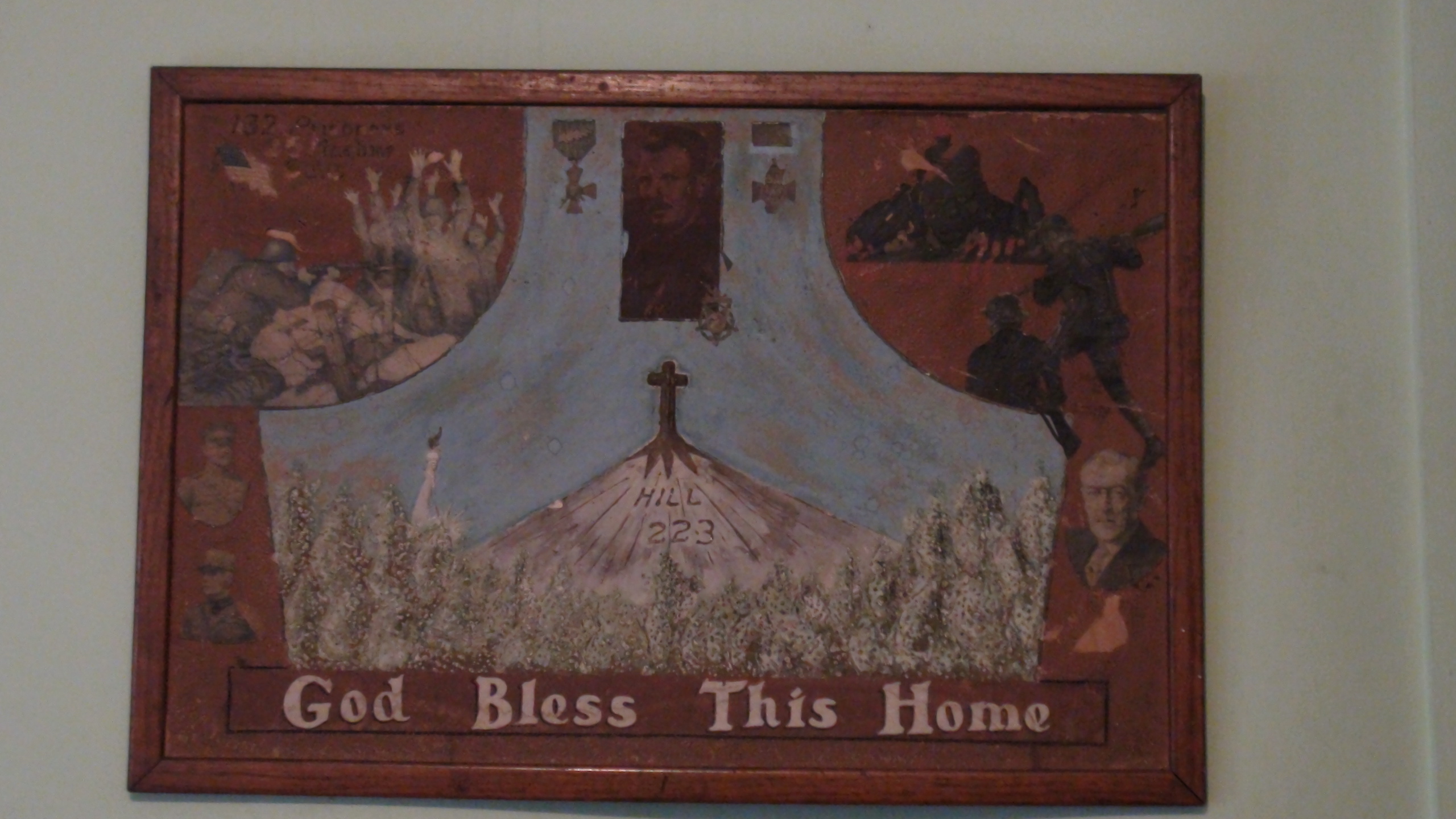
Painting of the memories of heroic actions by Sgt York.

Monday, 14 February 2022

And the young men arose and wrapped him up, carried him out, and buried him. Acts 5:6

Note: You can listen to today’s commentary courtesy of our friends at “Bible in Ten” podcast. (Click Here to listen)

You can also read this commentary, with music, courtesy of our friends at “Discern the Bible” on YouTube. (Click Here to listen), or at Rumble (Click Here to listen).

In the previous verse, the demise of Ananias was recorded. Down he went and out went his breath. With that, Luke now records, “And the young men arose.” The word is literally “younger” men. Much speculation is given over these words, but what seems likely is that they are simply being contrasted to elder men. They are youthful, they are not in any leadership position. Also, they are asked to do a job that would be expected of someone young. And so, Luke notes that the “younger men arose” to do what was necessary, which is that they “wrapped him up.”

This is common in the Middle East to this day. A shroud or blanket was laid out, and then the body is placed on it, wrapped up, and taken for internment. The verb itself gives the sense of drawing together or drawing in, as if it is a sail being shortened. Hence, the shroud is drawn into the body, and that is how it is carried to where it is deposited.

Along with that, it was not uncommon for spices to be added into this burial cloth as it was being drawn in. That is noted of Jesus’ body in John 19:40, saying it was “the custom of the Jews.” Next, Luke specifically notes that they “carried him out.”

There were places appointed for burial outside of the city. Quite often, such places were already prepared so that the body was simply placed into the chamber and a stone was then rolled over the entrance. In this, the body would decompose to the point where its bones could be later gathered together into a stone box known as an ossuary. From there, the gravesite could be used again, as it stood ready to receive its next body. As this was a customary way of quickly and efficiently disposing of a corpse, this is probably the process by which they “buried him.”

This was a quick and efficient way of getting the job done, and it avoided a lot of the drama we go through in today’s world. Rather, the place would be noted, and from there, mourners would come and go as they saw fit. This is seen, for example, in John 11 in relation to the grave of Lazarus.

Life application: The body of Ananias was handled in accord with the custom of the Jews. This prescribes nothing. It simply describes what occurred. It is an error in thinking to then come to the conclusion that all bodies must be buried. If the practice of the Jews was to be followed, we wouldn’t be using caskets. Further, we would later be gathering up the bones of the dead and placing them in ossuaries. And etc. On and on, the thinking concerning what to do with a body would go.

The Bible is silent on this issue. There are no prescriptions at all concerning the matter. As this is so, it is a matter that is left solely up to the discretion of the family or society to handle. Whether a person is vaporized in a nuclear detonation, devoured by sharks, or slowly consumed by worms, the result is pretty much the same. The body returns to its basic elements, and nothing is left of it.

The body is not what the Bible focuses on in such matters. It is the soul of the man that it is concerned with. If Christians spent less time worrying about what is going to happen to their corruptible bodies and more on what will happen to their eternal souls, things would be in a much better perspective. Unfortunately, such is normally not the case.

Jesus is the Christ of the nations. The way those nations dispose of their bodies is up to them. The way that the state of the eternal soul of man is addressed should be where the focus is. Let us consider this and get about the business of sharing the gospel.

Glorious God, You have fashioned us to live out our lives in bodies that are marvelously pieced together. But they also degrade and tire out. If there is such majesty in these frail, temporary bodies, what will it be like when we are united with our eternal dwellings? How wonderful it is to hope for that day. May it be soon! Amen.

Acts 5:5

Alvin and Gracie York

Sunday, 13 February 2022

Then Ananias, hearing these words, fell down and breathed his last. So great fear came upon all those who heard these things. Acts 5:5

Note: You can listen to today’s commentary courtesy of our friends at “Bible in Ten” podcast. (Click Here to listen)

You can also read this commentary, with music, courtesy of our friends at “Discern the Bible” on YouTube. (Click Here to listen), or at Rumble (Click Here to listen).

Peter has just accosted Ananias with his deceitfulness, telling him that what he has done is to lie to God and not to men. With that stated, Luke next records the punishment that immediately follows, beginning with, “Then Ananias.”

There is a sense of separation from Peter by saying this. It doesn’t say, “Then Peter reached out and…” or any such thing. What occurs is only to Ananias. It has nothing to do with anything Peter either initiated or that he was subsequently involved in. The effects are upon Ananias, and they came upon “hearing these words.”

Again, this is still indicating a separation from Peter and from anyone else. Ananias is the only one involved, and the event occurs simply upon hearing. He heard the charges and, Luke records, he “fell down and breathed his last.”

The meaning is plain and obvious. Apart from any action by Peter or anyone else, Ananias simply keeled over and was dead. In his description of the event, Luke uses a rare word, ekpsuchó. It is found for the first of only three times, all in Acts. It is also found in the Greek translation of the OT and also in ancient Greek medical writers. It comes from ek, meaning “out,” and psuchó, meaning “to breathe out,” but with the sense of blowing to make cool.

One can think of him collapsing to the floor, and out comes his final breath. There was no appeal, there wasn’t even time for him to beg forgiveness. Instead, he was laid low, and his breath was extinguished. Whether he was a saved believer or not, the judgment upon him was given as an example of what any one of us deserves for such an offense. Even if immediate judgment isn’t forthcoming, that is a demonstration of mercy, not that the Lord isn’t aware of the offense.

As for those who heard of such things, Luke records, “So great fear came upon all those who heard these things.” This was one of the reasons for the swift, strict, and sudden event. It was to instill in the minds of the people the terrifying nature of just how close the judgment of the Lord can be at any time. It is not as if God is far off and unconcerned. He is right among His people, and He is perfectly aware of the things that we do – be they right or wrong.

It is a common practice among Charismatics and Pentecostals to claim to be “slain in the Spirit.” They fall down and roll around on the ground in supposedly ecstatic states. This type of religion is not found in the epistles, and it does damage to the beauty of the Christian experience, sensationalizing what should be a dignified approach to the holiness of God. When Ananias was slain in the Spirit, it was a permanent effect, and it was because he deserved what happened to him.

If believers were punished for treating the holiness of God with such contempt every time they did so, there would very quickly be a lot fewer people filling the halls of churches.

Life application: Paul says the following in his epistles –

“‘The word is near you, in your mouth and in your heart’ (that is, the word of faith which we preach): that if you confess with your mouth the Lord Jesus and believe in your heart that God has raised Him from the dead, you will be saved. 10 For with the heart one believes unto righteousness, and with the mouth confession is made unto salvation.” Romans 10:8-10

And again –

“In Him you also trusted, after you heard the word of truth, the gospel of your salvation; in whom also, having believed, you were sealed with the Holy Spirit of promise, 14 who is the guarantee of our inheritance until the redemption of the purchased possession, to the praise of His glory.” Ephesians 1:13,14

We hear the word, we believe, and we are sealed with the Holy Spirit. And yet, for many, the rest of their lives is a walk with the Lord that is one of doubt and uncertainty. “I know that I believe the gospel, but how do I know I’m really (really, really) saved?”

It is as if they want an outward confirmation that what happened to them really took hold. Ananias got a confirmation that what he did really was known to God. It was a costly lesson. God is under no obligation to give us any outward sign that we have been saved, nor should any such sign ever be expected.

But this is just what charismatics claim is the case. It is as common as sand on the beach to hear them teach that speaking in tongues is a sign of having the Spirit. Such a false teaching completely damages the purpose and intent of the word “faith.” It nullifies it in the believer, and for the rest of his life, he is looking for the next sensational proof of his holiness.

The Bible never teaches such a thing, nor does it teach that we should doubt that the Lord has saved us once we have believed the gospel. What the word does teach us is to ensure the gospel we have accepted is the true gospel, and to be certain that the Jesus we have received is the true Jesus. If we are certain of this, let us accept that we have been saved, and let us live lives of gratitude – not doubt – for that salvation. This is certainly something that is pleasing to the Lord.

Heavenly Father, give us wisdom in Your word so that we live faithful lives that are properly balanced in our doctrine. Help us to stay away from strange, unbiblical doctrines. And keep us from those who would misdirect us in our walk with You. You are pleased with our faith. And so, may we be people of faith as we live out our lives in Your presence. Amen.


Acts 5:4

Designation of the US Medal of Honor.

Saturday, 12 February 2022

“While it remained, was it not your own? And after it was sold, was it not in your own control? Why have you conceived this thing in your heart? You have not lied to men but to God.” Acts 5:4

Note: You can listen to today’s commentary courtesy of our friends at “Bible in Ten” podcast. (Click Here to listen)

You can also read this commentary, with music, courtesy of our friends at “Discern the Bible” on YouTube. (Click Here to listen), or at Rumble (Click Here to listen).

The account of Ananias and his deceitfulness continues. Peter has poignantly told him that what has happened is a result of Satan filling his heart and causing him to lie to the Holy Spirit. He was looking for attention and accolades while making a claim that was untrue. Now, to show how ridiculous what he has done truly is, Peter continues to address him, saying, “While it remained, was it not your own?”

The Greek bears a play on words which is also a common Hebraism. In essence, it says, “Remaining, did it not remain to you?” It is an emphatic way of stating a truth, by repeating while also changing the form of the verb.

In this, Peter was telling Ananias that what he possessed was his and he alone had charge over it. Therefore, if he gave one quarter, one half, three quarters, or all of it, the amount was solely up to him. Because of this, to lie about the amount could only be a perverse display of pride. It had nothing to do with necessity. And more, Peter continued with, “And after it was sold, was it not in your own control?”

It is the same basic thought, repeated once again. It was his, and even after selling it, the money was his. There was no need to lie about his own possession. And so, the repetition is an emphatic way of showing Ananias how stupid and deceitful what he had done truly was. There was no threat to his financial security, there was no compulsion to give even one penny, and what he did give was solely up to him. The sin of pride had stepped in and made him long for an undeserved recognition. Because of this, Peter asks, “Why have you conceived this thing in your heart?”

Peter asks the question, but James later provides the answer –

“Blessed is the man who endures temptation; for when he has been approved, he will receive the crown of life which the Lord has promised to those who love Him. 13 Let no one say when he is tempted, “I am tempted by God”; for God cannot be tempted by evil, nor does He Himself tempt anyone. 14 But each one is tempted when he is drawn away by his own desires and enticed. 15 Then, when desire has conceived, it gives birth to sin; and sin, when it is full-grown, brings forth death.” James 1:12-15

Ananias was drawn away by his own desires, and his actions have formed a lesson for the church to consider. The evil in him was not from God, but was formed from the lies of Satan. It then sprang from the flesh of his own self, and he proceeded down the perverse path from there. With that set forth for him to consider, Peter finishes with, “You have not lied to men but to God.”

In just the previous verse, Peter said that he had lied to the Holy Spirit. Now he says that he has lied to God. Unless Peter is theologically confused, which he is not, he is stating that the Holy Spirit is – in fact – God.

The restating of this from “Holy Spirit” to “God” also appears to be another evidence that Ananias was probably a saved believer. It appears to be implied that he had received the Holy Spirit and had misunderstood the significance of that event. Peter is schooling him on the fact that in receiving the Holy Spirit, one has received the Spirit of God, who is God.

The working of the Godhead is realized in each person that comes to a saving knowledge of Christ, and from there, care needs to be taken to conduct one’s life properly in that sanctified state henceforth. Ananias had not done so and had discredited that glorious name by which he was sanctified.

Life application: One mark that is often evident among cults is that of the leaders exacting huge sums of money from those who follow. It may be that they are required to give up everything to join.

Within the church, there are ten thousand permutations of what it means to give. Some churches have annual sermons on tithing. Some mention tithing at the end of almost every sermon, just before the plate is passed.

Pressure to give may come in a variety of ways, or subtle hints of people not doing enough may be spoken out in order to shame people into giving more. Peter’s words dispel any idea that the property of an individual belongs to the church. Until it is given, it belongs to the person alone.

Paul’s words in the epistles then give the directions for proper giving. This is it, so if you can remember these two verses, you will satisfactorily handle your financial affairs in relation to giving to the church you attend –

So let each one give as he purposes in his heart, not grudgingly or of necessity; for God loves a cheerful giver.” 2 Corinthians 9:7

“Let him who is taught the word share in all good things with him who teaches.” Galatians 6:6

“Not grudgingly or of necessity” means giving is to be an act of the freewill that makes the person happy. If he isn’t happy in giving, he should not give. And it should only be what he purposes in his heart. “All good things” does not necessarily mean money. It simply means to share in what is good with one’s teacher. Whether that means a compliment, a cookie, or an invite over for dinner is solely up to the individual.

That is it. Beyond that, no person should ever feel pressured into giving. It should be from a willing heart, and it should be because it blesses the giver.

Lord God, thank You for Jesus who has done all things for us. Help us to decide what we can do in return for the grace we have been granted, and then let us live out our lives in that manner, glorifying You with our deeds and actions. May it be so. Amen.


Acts 5:3

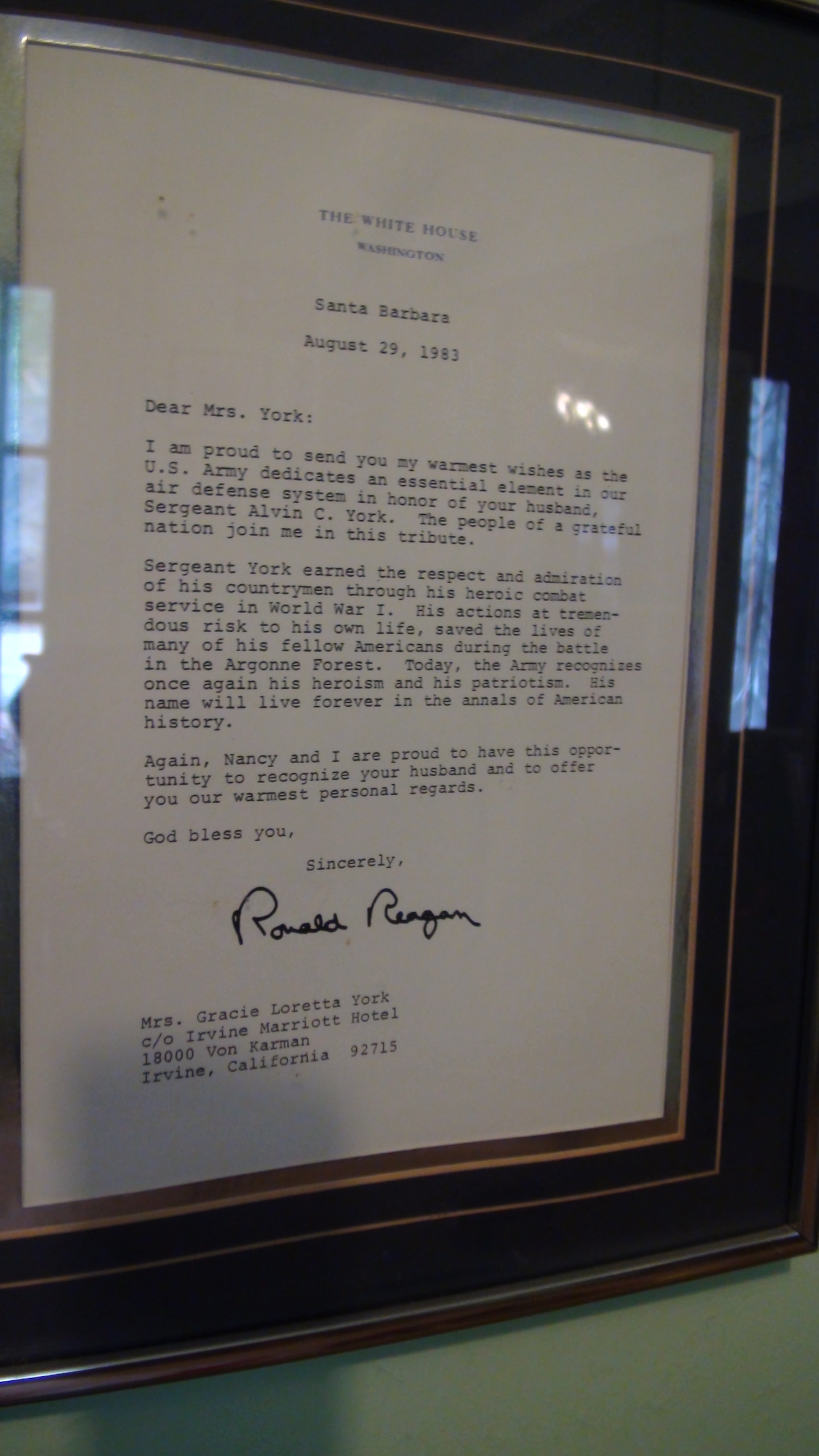
Letter from President Ronald Reagan to Gracie York

Friday, 11 February 2022

But Peter said, “Ananias, why has Satan filled your heart to lie to the Holy Spirit and keep back part of the price of the land for yourself? Acts 5:3

Note: You can listen to today’s commentary courtesy of our friends at “Bible in Ten” podcast. (Click Here to listen)

You can also read this commentary, with music, courtesy of our friends at “Discern the Bible” on YouTube. (Click Here to listen), or at Rumble (Click Here to listen).

The previous verse revealed Ananias having kept back a part of the proceeds from what he had sold, and yet placing a certain part of it at the feet of the apostles. With that done, the account continues with, “But Peter said.”

The attention of the narrative continues on with Peter. This is not an indication that Peter is the leader of the people, nor is it a note that such notable things only occurred to Peter. Rather, the narrative is recording the events surrounding Peter because he is the main apostle at this time, and he is also the one – between Peter and Paul, who Acts is mainly centered around – whose ministry is focused more especially on the Jews.

When Paul arrives on the scene, the narrative will begin to focus on him more and more because the spiritual banner of Israel will begin to transfer from Peter to Paul, and from the Jew to the Gentile. As the narrative is on Peter at this time, Luke continues with the words of Peter, saying, “Ananias, why has Satan filled your heart.”

This is one of two times Satan is spoken of by name in Acts. The other being in Acts 26:18. It is a clear indication that he is alive and active in the world after the time of the cross. In this case, it was to fill the heart of Ananias. The heart is reflective of the seat of reason and understanding. Ananias’ thought process was clearly afflicted so that he would presume to be deceitful with the money that was intended for the aid of the church.

It is an egregious offense because the apostles represented the leadership of the church, and they were those who demonstrated the power of God working through them. However, the words here no more indicate an unsaved person than they did when Jesus essentially said the same thing to Peter –

“And the Lord said, ‘Simon, Simon! Indeed, Satan has asked for you, that he may sift you as wheat. 32 But I have prayed for you, that your faith should not fail; and when you have returned to Me, strengthen your brethren.’” Luke 22:31, 32

Likewise, Paul’s epistles clearly show that Satan is working within the church and is active in that work, even among and against believers –

“Do not deprive one another except with consent for a time, that you may give yourselves to fasting and prayer; and come together again so that Satan does not tempt you because of your lack of self-control.” 1 Corinthians 7:5

Paul gives a comparable note of warning again in 2 Corinthians 2:11 and elsewhere. As for now with Ananias, the filling of his heart by Satan was “to lie to the Holy Spirit.” The offense is especially said to be directed toward the Holy Spirit as opposed to “the Lord” or “God” in a more general sense. Albert Barnes gives a long, detailed, and specific analysis of this, but the key point of his thoughts center on these words –

“Peter intended, doubtless, to designate an offence as committed particularly against the person, or influence, by which he and the other apostles were inspired. Ananias supposed that he could escape detection, and the offence was one, therefore, against the Inspirer of the apostles. Yet that was the Holy Spirit as “distinct from the Father.” See John 14:16-17, John 14:26; John 15:26; John 16:7-11; John 20:22. Compare Acts 5:32. The offence, therefore, being against him who was “sent” by the Father, and who was appointed to a particular work, clearly supposes that the Holy Spirit is distinct from the Father.”

Barnes also equates what happened here to the “blasphemy of the Spirit” noted in Matthew 12 and Mark 3. The presence of the working of the Spirit in and through Jesus can be equated to that now working through the apostles, but the magnitude of the offense does not appear to be the same. The people accused Jesus of being filled with Satan when it was the Holy Spirit. Ananias has not done this.

And more, Jesus didn’t call for those who blasphemed the Spirit to suddenly keel over and die. He simply told them that what they had done was an unpardonable offence. The very fact that punishment will come so swiftly upon Ananias is a better indication that he was saved than it would be that he is unsaved. However, it is not a proof of the matter and only a general inference can be made. Regardless of that debatable issue, Peter explains why this is lying to the Holy Spirit, saying, “and keep back part of the price of the land for yourself?”

The spiritual aspect of the ministry was plainly evident through the work of the apostles. They were carrying on the ministry of Christ, and they were responsible for the development of the church. As His “sent ones,” they bore His authority and their decisions were on His behalf. In lying to them, it was taken as a lie against the Holy Spirit who empowered them. Ananias and his wife will be given as object lessons to the people concerning this truth. What occurs to them will be a means of establishing the apostles’ authority to conduct the affairs of the church during this period of its establishment.

Life application: Things like what is occurring with Ananias no longer occur in the church today. The lesson has been recorded, and we have this descriptive account to read and accept or reject. But the Bible is a testament to it having occurred. To not believe it is not much different than what Ananias has done.

The Bible claims that it has come under the inspiration of the Holy Spirit. It claims to be the word of God, including that of Him working through the apostles. How is it different, then, to ignore the prescriptions found in Scripture than it is to do what Ananias did? In other words, Paul (an apostle of Jesus Christ) clearly states that a woman is not to teach or have authority over a man.

And yet, there are female teachers, preachers, and pastors that fill churches throughout the world. It is no less lying to the Holy Spirit. This same logic can be used in countless other doctrines that are recorded by the apostles in the pages of the epistles. The word of God must be held as sacred, and it must be treated with the same respect and honor that we give to the Holy Spirit who authored it. It is a reflection of who He is.

If we are willing to consider the word in this light, our treatment of it will be as it should be. Let us not fail to hold the word in the highest of esteem, being obedient to its precepts, lest our hearts be guilty of lying to the One who breathed it out for us as a moral guide in a darkened world.

Glorious God, how can we say we love You, and yet ignore what Your word says? And how can we know what Your word says unless we take time to read it and to know it? We have a great disconnect in our thinking when we say we love You and want to be pleasing to You, and yet we don’t spend the time getting to know who You are and what You expect! Help us to correct this by learning and applying this sacred treasure to our lives. Amen.


Acts 5:2

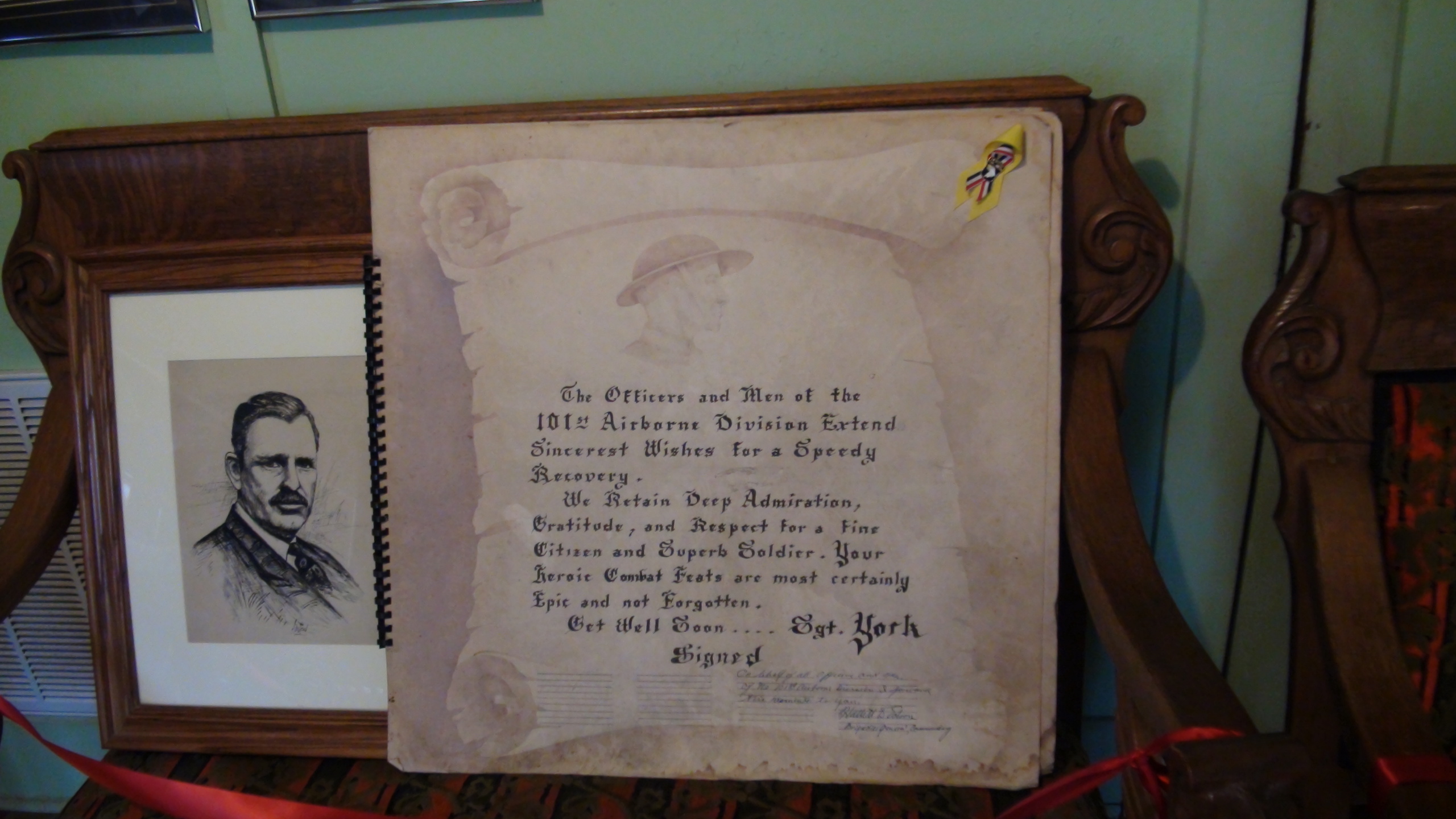
101st Airborne Division Letter sending wishes for a healthy recovery to Sgt. York.

Thursday, 10 February 2022

And he kept back part of the proceeds, his wife also being aware of it, and brought a certain part and laid it at the apostles’ feet. Acts 5:2

Note: You can listen to today’s commentary courtesy of our friends at “Bible in Ten” podcast. (Click Here to listen)

You can also read this commentary, with music, courtesy of our friends at “Discern the Bible” on YouTube. (Click Here to listen), or at Rumble (Click Here to listen).

The previous verse introduced Ananias and Sapphira, noting that they sold a possession. The narrative concerning them continues now, beginning with, “And he.”

It first focuses on Ananias, apart from his wife. This actually highlights the events of the narrative in a more pronounced way. As they unfold, the united nature of their deed, despite the order in which the events unfold, is brought to the forefront of the account. As for Ananias at this time, he “kept back part of the proceeds.”

The Greek word, translated as “kept back,” is nosphizó. It is found here in verses 2 & 3, and only again in Titus 2:10 –

Exhort bondservants to be obedient to their own masters, to be well pleasing in all things, not answering back, 10 not pilfering, but showing all good fidelity, that they may adorn the doctrine of God our Savior in all things.” Titus 2:9, 10

It signifies purloining, pilfering, or embezzling. It is the clearly wrong action of setting apart something for oneself. In this case, the setting apart is not what is wrong. The disposition of the money would be up to them. However, what accompanies the setting apart of the money is what makes their actions inappropriate.

It is clearly to be understood that their actions imply that the entire amount is supposedly being offered to God. Thus, it is the lie that accompanies the offering that is being focused on. Ananias has looked to find favor in the eyes of the people through a dishonest display of charity. But the guilt of the act extends beyond him because of “his wife also being aware of it.”

They are both complicit in the deceitful act, and thus both bear guilt before the Lord. It is in this state of trickery that it next says, “and brought a certain part and laid it at the apostles’ feet.”

The account gives the basic details and says nothing further about how it was presented, meaning what was said, what kind of a cheerful response came from those who received it, or any other such things. One can easily speculate about how esteemed the act would have been in the eyes of others, and how these two would suddenly be moved up a couple of notches in the rungs of whatever perceived hierarchy there was among the people.

And this would have been the exact intent of making such a claim. With everyone’s attention focused on them, they would be the heroes of the day. But such a state has no value in the eyes of God. Rather, He looks upon deceitfulness and a faithless heart in a completely different light. When King Saul did something that followed in a similar fashion, he was directly addressed concerning it by Samuel –

“So Samuel said:
‘Has the Lord as great delight in burnt offerings and sacrifices,
As in obeying the voice of the Lord?
Behold, to obey is better than sacrifice,
And to heed than the fat of rams.
23 For rebellion is as the sin of witchcraft,
And stubbornness is as iniquity and idolatry.
Because you have rejected the word of the Lord,
He also has rejected you from being king.’” 1 Samuel 15:22, 23

Saul looked for esteem in the eyes of his men as of more importance than a heart that was set on pleasing the Lord. It cost him the kingship. Ananias and Sapphira followed a similar path, and they will not go unscathed.

Life application: In our society today, people have become almost totally consumed with seeing themselves and being recognized on social media. All kinds of filters are used to enhance photos, and once photos have been taken, they are manipulated further to hide imperfections.

As this is so, what is being seen is nothing more than a cheap lie. Even though we know this is being done, it is ignored as an acceptable part of being in the public eye. Such deceitfulness then harms everything else around us because our view of people becomes skewed. We see the actual flaws of others and decide they need to be “corrected” before we can truly accept them.

And so, people rush off to have plastic surgery, Botox fillers, and so on. Life is cheapened with each such thing we allow. And all the while, God is evaluating what is going on inside of us. The externals mean nothing. He is looking to see if our hearts are directed to Him and to His word.

Let us not worry about the shallow, temporary, and completely vain things that do not profit. Instead, we should be concerned with building up our spiritual lives through hearts that are more in love with the Lord every day. May it be so.

Lord God, help us to forget the vain and temporary things that this world focuses on, and help us to cultivate hearts that are pleasing to You. May we be acceptable in Your sight despite all of our outward bumps and scars that will be forever removed when we receive new bodies of glory and holiness some wonderful day. Amen.