
Acts 8:14

Fancy porcelain lamp. Texas state Capitol.

Sunday, 19 June 2022

Now when the apostles who were at Jerusalem heard that Samaria had received the word of God, they sent Peter and John to them, Acts 8:14

Note: You can listen to today’s commentary courtesy of our friends at “Bible in Ten” podcast. (Click Here to listen).

You can also read this commentary, with music, courtesy of our friends at “Discern the Bible” on YouTube. (Click Here to listen), or at Rumble (Click Here to listen).

The previous verse noted Simon’s belief and baptism. This followed after the belief and baptism of “both men and women” of Samaria noted in verse 8:12. However, what has gone unnoted is any hint of the giving of the Spirit to these people. This is then a different occurrence than that which occurred in Acts 2 where Peter said to the people –

“Repent, and let every one of you be baptized in the name of Jesus Christ for the remission of sins; and you shall receive the gift of the Holy Spirit.” Acts 2:38

Nothing has been said of repenting here in Acts 8. Further, the Spirit was promised to come upon baptism by those in Acts 2. That has neither been promised nor has it occurred. These things will be recorded in the verses to come, and an explanation of what occurs will be made.

For now, it is simply to be noted that this is the case, demonstrating that Acts is providing a description of what occurs at the establishment of the early church, but no individual account is to be taken as either normative or prescriptive. As for the ongoing account, it next records, “Now when the apostles who were at Jerusalem heard.”

In the scattering of the church because of the persecution that was taking place (Acts 8:1 & 8:4), the apostles had remained in Jerusalem as an anchor for the church to remain united under their teaching. Eventually, the word got back to them “that Samaria had received the word of God.”

It is an important point that is dismissed by several heretical teachings that have infected the church. How often it is for false teachers to point to the words of Jesus and insist that there is one message to the Jews and another to the Gentiles –

“These twelve Jesus sent out and commanded them, saying: “Do not go into the way of the Gentiles, and do not enter a city of the SamaritansBut go rather to the lost sheep of the house of Israel.” Matthew 10:5, 6

&

“Then Jesus went out from there and departed to the region of Tyre and Sidon. 22 And behold, a woman of Canaan came from that region and cried out to Him, saying, ‘Have mercy on me, O Lord, Son of David! My daughter is severely demon-possessed.’
23 But He answered her not a word.
And His disciples came and urged Him, saying, ‘Send her away, for she cries out after us.’
24 But He answered and said, ‘I was not sent except to the lost sheep of the house of Israel.’” Matthew 15:21-24

Such verses are pulled out of their intended context, which is Jesus’ ministry to Israel to hear first and to then either accept or reject their Messiah. It is clear and plainly evident from this verse in Acts that either the apostles were disobedient to the words of Jesus in Matthew 10:5, or they are being obedient to the commission that the one and only gospel is to go out from Jerusalem to “Judea and Samaria, and to the end of the earth” (Acts 1:8).

The latter is correct. Those who teach that there are two gospels, that baptism is not a commandment (even if not required for salvation) for those who come to Christ, or that the church began with Paul are heretics and have failed to take in the whole counsel of God. They divide the church and the message of Christ to the harm of those they teach. With this clearly seen, it next says that “they sent Peter and John to them.”

With these words, another point of poor doctrine is argued against. It is one that will be further clarified as Acts and the epistles continue to demonstrate. By noting that the “apostles” sent Peter and John, it clearly indicates that the body has come to a mutual decision, and it argues against the idea that Peter was established by Jesus as the first leader (pope) of the church as Roman Catholicism claims.

The reason for the Holy Spirit’s influence in this decision will be seen as Acts continues, but these words wholly argue against Peter as being a leading figure within the body of the apostles. Though not as egregious an error as the one stated above, the Roman Catholic Church has purposefully twisted its history in order to justify innumerable other faulty claims and doctrines, such as in this case concerning Peter.

Under the influence of the Holy Spirit (as can be assumed though not specifically stated), Peter and John were selected by the body of apostles to go to Samaria.

Life application: Jesus’ ministry to Israel alone was for a set and determined purpose. The covenant at Sinai was given to them. The prophets spoke to them. The promises were given to them. And the promise of a New Covenant was given to them (see Jeremiah 31:31). It was right and fitting that the earthly ministry of the Messiah was to be to Israel alone. And thus, it was.

However, the gospel was always intended to go out to the Gentiles after this time (see Isaiah 42:6, for example). This was not thwarted in Israel’s rejection of Jesus. Rather, it was carried out exactly as was known by God all along. Even the Song of Moses from Deuteronomy explained this, in advance, to Israel –

“Rejoice, O Gentiles, with His people;
For He will avenge the blood of His servants,
And render vengeance to His adversaries;
He will provide atonement for His land and His people.” Deuteronomy 32:43

Paul cites this in Romans 15:10, explaining such things. Pay attention to the details in Acts! Think about what God is doing. He is giving a descriptive account of how the church was established, but in this process, He is taking into consideration everything recorded in the Old Testament, fairly treating Israel according to His word and according to their acceptance or rejection of it. And it is all based on one unified gospel message that is given to all people of the world. As Paul says in 1 Corinthians 15:11 concerning the united ministry of all of the apostles, including himself, “Therefore, whether it was I or they, so we preach and so you believed.”

Further, there is one Leader of the church, Jesus, and there are set offices below Him that are given in accord with the instructions in the epistles. There is no single authority within the faith that is set to direct the masses concerning the continuance of the church. Roman Catholicism is to be rejected based on this.

Heavenly Father, help us to think rightly concerning Your word as it unfolds before us. May we not get misdirected by those who have failed to rightly divide what is clearly presented when things are taken in context. May our doctrine be pure, and may we be pleasing followers of You as we await Your coming for us. Amen.


Acts 8:13

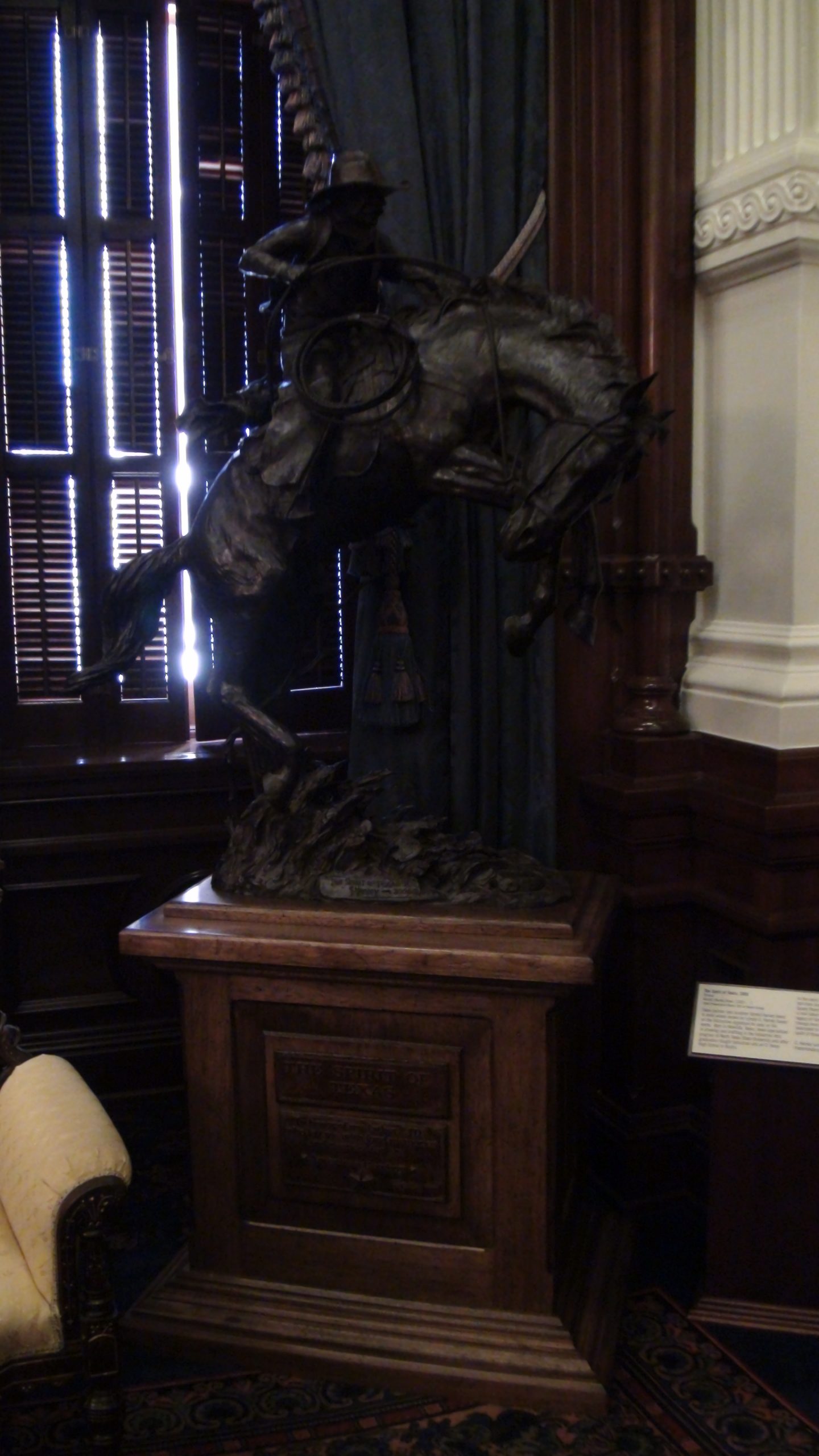
Horse and rider statue at Texas Capitol.

Saturday, 18 June 2022

Then Simon himself also believed; and when he was baptized he continued with Philip, and was amazed, seeing the miracles and signs which were done. Acts 8:13

Note: You can listen to today’s commentary courtesy of our friends at “Bible in Ten” podcast. (Click Here to listen).

You can also read this commentary, with music, courtesy of our friends at “Discern the Bible” on YouTube. (Click Here to listen), or at Rumble (Click Here to listen).

The previous verse was given as a contrast to the words concerning Simon, referring to Philip’s preaching about the kingdom of God and the name of Jesus Christ. It also noted that those who believed were baptized. With that remembered, verse 8:13 will show why all the detail was given concerning Simon. The NKJV that is used does not do a good job translating the verbs. A much better and more literal rendering is –

“and Simon also himself did believe, and, having been baptized, he was continuing with Philip, beholding also signs and mighty acts being done, he was amazed.” YLT

Because of this, Young’s will be used for analyzing the verse, beginning with, “and Simon also himself did believe.”

In verse 9, Simon was the one who “astonished the people.” He was also “claiming that he was someone great.” In verse 10 it said everyone heeded him, saying, “This man is the great power of God.” The complete contrast to his supposedly great position now begins to be seen. He thought he was someone great, and yet now, he has believed that Jesus truly is the Messiah.

The word is quite clear, Simon believed. The exact same form of the verb (an aorist participle) is found five times in John’s gospel. For example, John 20:8 says –

“Then the other disciple, who came to the tomb first, went in also; and he saw and believed.”

Because of the circumstances around Simon, especially what will occur in just a few verses, it is questioned whether he was truly saved or not. There is no reason to question that. These first words of the verse settle the matter. He heard the word concerning Jesus and he believed. With that, it next says, “and, having been baptized.”

This is in accordance with the word of the Lord. It is the standard note after every conversion in the book of Acts. It happened to the Jews in Acts 2. It now happens with the mixed-race of Samaritans in Acts 8. It will happen to the Ethiopian eunuch later in Acts 8. It will happen to Paul in Acts 9. It will happen to the Gentile believers in Acts 11. And so on.

Although Acts is a descriptive account of what happened in early church history, it is evident that what occurred concerning these baptisms was plainly a result of the command of the Lord. He clearly and unambiguously stated that all who come to Him are to be baptized. With this (as will be seen) weak believer, Simon, being baptized in accord with the word of the Lord, it next says, “he was continuing with Philip.”

It is apparent that his previous life was set aside, and he wanted to seek out the power of the Lord as displayed through Philip. He had been so self-consumed in the past that it must have been incredible to him to think that he wasn’t so great after all. And so, like a curious child, he followed Philip “beholding also signs and mighty acts being done.”

This would not be unexpected. Simon had spent his time duping people into believing that he had extraordinary powers, even touching upon the divine. But he knew that it wasn’t true. Whether what he did was sleight of hand magic or whether it was rooted in black magic, it was not the true power of God. He now saw the truth and was fully aware of the difference between it and the counterfeit. As such, it says “he was amazed.”

Here was a man stupefying people daily, and yet it is he who is now amazed at what he sees. Luke uses the same word that was used in verses 8:9 and 8:11 to describe the people’s reactions to Simon’s bag of tricks and Simon’s reaction to the Lord’s power in Philip as he did signs and mighty acts.

The contrast is complete. Simon realized the true power of God and believed what he saw. The failings to be noted of him in the verses ahead are given not to show that he wasn’t saved, but they rather point out – and even highlight – that new believers are not suddenly ultra-spiritual beings. They are people in need of instruction and correction. Hence, not only are they to be baptized, but they are also to be made sound disciples by teaching them what the Lord commanded, just as the Lord stated in Matthew 28:19.

Life application: One thing that is very common is to see people who have believed the gospel not grow into mature believers. In fact, it is more the norm than the exception. For, indeed, what is a mature believer?

A person who comes to Christ, goes to seminary, and is ordained to pastor a church will – eventually – look back at his early years as a pastor and say, “Boy, I had a lot to learn and a lot of growing up to do back then.” And yet, he was the pastor of a church and supposedly a “mature believer” at that time.

In other words, to be in Christ and to grow in Him is something that should never cease. We should be maturing in our walk from day to day. But this does not mean that people who don’t do this are not saved. If it did, and if a “fully mature” Christian was the proof of being saved, then nobody would be saved.

We need to be careful to not look down on those who are on a different level than we are. This is especially so when others could be looking down on us. Belief in Christ Jesus is what saves. Everything after that is, or it should be, a lifelong process of growing in Him.

Heavenly Father, help us to strive for growth in our Christian lives. Let us faithfully seek out Your word, pursue a closer walk with You, and come to understand our lowly position in this world. The more we grow in You, the more evident it is just how far below You we truly are. And so, Lord, help us to not look down on other believers, but to motivate them to strive ahead for the prize that is found in Christ. Amen.


Acts 8:12

WWII Iwo Jima memorial. State Capitol, Texas.

Friday, 17 June 2022

But when they believed Philip as he preached the things concerning the kingdom of God and the name of Jesus Christ, both men and women were baptized. Acts 8:12

Note: You can listen to today’s commentary courtesy of our friends at “Bible in Ten” podcast. (Click Here to listen).

You can also read this commentary, with music, courtesy of our friends at “Discern the Bible” on YouTube. (Click Here to listen), or at Rumble (Click Here to listen).

A contrast to the past few verses concerning Simon is now introduced. He practiced sorcery and astonished the people, having duped them to believe that he was the great power of God and so on. However, Philip is again brought into the narrative now, saying, “But when they believed Philip.”

The word “they” is referring to the people in the city of Samaria. Simon was a highlight among them, but something new has been introduced that goes beyond their adoration of him. As it next says of Philip, “as he preached.”

It is the same word, euaggelizó, used in verse 8:4. It means “to preach the good news.” There it said –

“Therefore those who were scattered went everywhere preaching the word.”

Contained in that preaching of good news is “the things concerning the kingdom of God.” Some manuscripts, and thus some translations, omit the words “the things.” As such, it reads, “the good news about the kingdom of God.” Either way, the subject of the kingdom of God is considered a part of the good news of Jesus. As such, it is important to understand what this is referring to.

There cannot be a kingdom without a king. In the case of the kingdom of God, it is the good news that Jesus is the King over an entirely new realm. Not only has he replaced Adam, but He is seated in authority over His people.

This kingdom is referred to throughout the epistles. Paul mentions it in Romans 14:17; 1 Corinthians 6:9, 10; 15:24, 50; Galatians 5:21; Ephesians 5:5; Colossians 1:13, 4:11; 1 Thessalonians 2:12; 2 Thessalonians 1:5; 1 Timothy 1:17, 6:15 (Jesus the King); 2 Timothy 4:1, 4:18.

It is also mentioned in Hebrews, James, 2 Peter, and Revelation. The concept of a kingdom is likewise mentioned throughout Acts as having been preached by Jesus, as well as by both the apostles and disciples who ministered to the Jews, and by those who ministered to the Gentiles.

Having said that, care must be taken to understand that the kingdom referred to can, at times, mean a literal, physical reign of Christ on earth during the millennium, or it can refer to the kingdom of God that is a spiritual kingdom. What is being referred to now is the spiritual kingdom that is also preached by Paul in Acts and that is referred to in the epistles as well. This is evident from the next words, “and the name of Jesus Christ.”

The kingdom of God is the rule and authority of God in opposition to that of Satan, the ruler of this world and its present system. Jesus Christ is the King of the kingdom of God. He is the fulfillment of everything necessary to return man to the anticipated restoration of the perfection that was lost at the fall.

Adam was like a king over the realm of the world. He lost that right and authority, and Jesus Christ has regained title to it. This applies to those who put their trust in Him, and it is this that is methodically explained in the epistles, but which is also referred to in Acts. It is what Jesus spoke of prior to His crucifixion –

“Jesus answered, ‘My kingdom is not of this world. If My kingdom were of this world, My servants would fight, so that I should not be delivered to the Jews; but now My kingdom is not from here.’
37 Pilate therefore said to Him, ‘Are You a king then?’
Jesus answered, ‘You say rightly that I am a king. For this cause I was born, and for this cause I have come into the world, that I should bear witness to the truth. Everyone who is of the truth hears My voice.’” John 18:36, 37

Of this kingdom that Philip proclaimed, it next says, “both men and women were baptized.” This is the outward sign of being accepted into the kingdom of God. It is a rite that was commanded by Jesus, after His resurrection (meaning after the introduction of the New Covenant), and thus it is applicable to all people: Jews, those of Samaria, and Gentiles (as will continue to be seen in Acts).

The rite itself is not necessary for salvation, but it is necessary for obedience to the Lord. To not receive baptism is to violate the prescriptions set down by the Lord, of which two are recorded, baptism and the Lord’s Supper.

Life application: There is a heresy that has crept into the church over the years which has already been addressed earlier in the Acts commentary, but it is a good time to review it. It is most prominently known as hyperdispensationalism. It is taught in varying degrees and with some false teachings held to by one pastor and more of them held to by another.

In general, it departs from sound doctrine in that it teaches that baptism (meaning water baptism) is not a necessary part of the life of a believer. And yet, these same people will say that it is right to observe the Lord’s Supper. The same Lord, Jesus, who mandated one also mandated the other. He did so at (or after) the inauguration of the New Covenant, of which He spoke of at the Last Supper.

As there is one New Covenant, and as it applies to both Israel (Jeremiah 31:31 & Hebrews 8:8) and to the Gentiles (1 Corinthians 11:25 & 2 Corinthians 3:6), then the mandates of that covenant by the One who established it, equally apply to both.

Hyperdispensationalism, however, goes further down Heresy Highway by proclaiming that there are two different gospels, one for the Jew and one for the Gentile. But Paul explicitly states in 1 Corinthians 15:11 that his gospel is the same as the gospel preached by Peter and the other apostles.

Along with this, hyperdispensationalists will claim that Jesus is not the King over the Gentiles and that the title should not be used of Him in this manner. Instead, they claim that this is a title that belongs to Him over the Jews and that the “kingdom” for them is an earthly one. However, as noted above, if one proclaims a kingdom – as Paul does – then there must be a king that reigns over it. The exact same kingdom that Christ rules over (as noted in the list provided above) is proclaimed by all of the apostles in one united voice.

Another erroneous point taught in hyperdispensationalism is that the church did not begin until the preaching of Paul. A key and main point of the book of Acts is to show that this is not true, but that what God is doing is not dependent on Israel as a key point of what being in the “church” means.

Rather, what belongs to Israel concerning the Old Testament promises is a separate thing altogether. The church began with Christ’s work. It was proclaimed from Acts 2 on, but Israel the nation missed what was going on. From there, the message (the same gospel message) slowly gravitated toward the Gentiles as Paul’s ministry took hold.

If you know anyone who is caught up in these false teachings, let them know that they should first question their own salvation. Have they believed the one (and only) gospel as outlined in 1 Corinthians 15:3, 4? If so, they should then question their obedience to the Lord. He has given commands concerning our responsibilities in the salvation He provides. To refuse these is a mark of disobedience to His spoken word.

Finally, they should be properly instructed on what the “kingdom” means and who the King of that kingdom is. In this, you will be helping them out of a truly heretical cult that has arisen, and which divides the body of Christ and brings shame upon what He has done for His people.

Lord God, help us to have sound doctrine. The church did not begin when Paul began preaching. It began when You established it through the giving of Christ Jesus for our sins. Help us to be responsible in our theology lest we be found inept in our doctrine. Above all, thank You for Jesus Christ our Lord. Amen.


Acts 8:11

Picture at Texas Capitol.

Thursday, 16 June 2022

And they heeded him because he had astonished them with his sorceries for a long time. Acts 8:11

Note: You can listen to today’s commentary courtesy of our friends at “Bible in Ten” podcast. (Click Here to listen)

You can also read this commentary, with music, courtesy of our friends at “Discern the Bible” on YouTube. (Click Here to listen), or at Rumble (Click Here to listen).

Still speaking of Simon, the Sorcerer, of whom it was said in the last verse, “This man is the great power of God,” Luke now records of those in Samaria, “And they heeded him.”

The verb is imperfect – “And they were heeding him.” Wherever he went and whenever he showed up to perform, the people paid attention and were held captive by him as he astonished them with his capabilities.

When people believe you have a connection to the divine, they will heed you. This is true with palm readers, tarot card readers, priests in Catholic churches (meaning supposed “mediators” between God and men), and an innumerable list of others around the world who are supposedly able to connect to the spiritual world.

In the case of people like Simon who do magic that has outward signs, people are even more convinced. The signs they do supposedly point to the surety that they are really tapping into another dimension. Simon was considered the great power of God “because he had astonished them with his sorceries.”

Here is another word found only this once in Scripture, mageia. It is a noun and signifies magic. Being plural, it means “deeds of magic,” “magic arts,” “sorceries,” “witchcrafts,” or the like. He wasn’t limited to just one or two tricks up his sleeve, but he constantly impressed people with a litany of new things. And this went on “for a long time.”

This is not an unimportant addition to the verse. It shows that he was well established, and people expected him to show up and do something new and interesting. The reason for this specific detail concerning his abilities, the signs that supposedly accompanied them, and the long duration of time that he had done these things is to then contrast him and his practices with that of the disciples who had recently come to the area.

Life application: Since the coming of television, people like Simon have been able to obtain a much wider audience to fool even more people than would have ever been thought possible. Such demonstrations of magic excite the mind and make people even more curious about the person and his abilities.

Now, with the advent of social media, especially like YouTube which has an interactive counterpart, people who claim connections into the spiritual world can have innumerable followers who hang onto their claims. And this is no different than some fraud in Christianity.

YouTube is filled with people who supposedly have conversations with Jesus, Mary, the angels, and so on. Many have claimed to have gone to heaven (or hell) and been shown things that others can only dream about.

Don’t be fooled by such claims. People are people. We are all born into the world, we live out our lives, and we will die (unless the rapture happens first). The only difference between them and you is that they claim something that has not happened, or they claim connections to the divine (or the spiritual world) that they don’t actually possess.

Be content to live your life reading the word and living by faith in what God has said and done. This is sensational enough because it comes with the promise of eternal life in His presence. Ignore anything else that distracts you from this marvelous anticipation.

Heavenly Father, please keep us from people that would distract us from what is truly important in this life. Help us to not be fooled by those that claim they are somebody when they are not. May we hold fast to what is good and proper all our days, thinking on Your word and living in faith concerning what You have promised. Amen!


Acts 8:10

The Governor’s desk. Texas Capitol.

Wednesday, 15 June 2022

to whom they all gave heed, from the least to the greatest, saying, “This man is the great power of God.” Acts 8:10

Note: You can listen to today’s commentary courtesy of our friends at “Bible in Ten” podcast. (Click Here to listen)

You can also read this commentary, with music, courtesy of our friends at “Discern the Bible” on YouTube. (Click Here to listen), or at Rumble (Click Here to listen).

The previous verse introduced Simon who practiced sorcery in the city and who astonished the people of Samaria. Along with that, he claimed that he was someone great. This verse shows us that he was believed, saying, “to whom they all gave heed.”

It is referring to him, and it shows that because of what he was doing, the people paid attention to him, probably hanging on his every word. This is not unusual. The false prophets during the time of the kings held their courts captive, such as in 1 Kings –

“The king of Israel and Jehoshaphat the king of Judah, having put on their robes, sat each on his throne, at a threshing floor at the entrance of the gate of Samaria; and all the prophets prophesied before them. 11 Now Zedekiah the son of Chenaanah had made horns of iron for himself; and he said, ‘Thus says the Lord: “With these you shall gore the Syrians until they are destroyed.”’ 12 And all the prophets prophesied so, saying, ‘Go up to Ramoth Gilead and prosper, for the Lord will deliver it into the king’s hand.’” 1 Kings 22:10-12

These, and many such instances, show that people are easily swayed by false messages and false displays of miracles, signs, and wonders. Jesus warned about this as well –

“Then if anyone says to you, ‘Look, here is the Christ!’ or ‘There!’ do not believe it. 24 For false christs and false prophets will rise and show great signs and wonders to deceive, if possible, even the elect. 25 See, I have told you beforehand.” Matthew 23:23-25

As for Simon, regardless as to whether he was in touch with demonic influences or whether he was simply good at tricks of magic, all of the people were swayed by him “from the least to the greatest.”

Young people love to look at what is curious and ponder how such things are done, but so do older people as well. People who aren’t so smart will marvel at things they don’t understand, but so will the intelligent. When we cannot grasp how something is done, we will naturally look to alternative explanations for what we see.

Seemingly highly intellectual people will believe in secret powers in certain people just because of the thing they see that they cannot explain. And such people will gladly claim that what they are doing (and this is certainly true in Christian circles as well) is by the power of God. This is the case with Simon. The people were “saying, ‘This man is the great power of God.’”

Because of the things he did, and because of the way he presented himself, the people were completely fooled as to the source of his supposed magic. He may have used smoke and mirrors, but he did so in an effective manner so that everyone was bamboozled by him.

Life application: How many countless Christians have been duped by false teachers over the years! This is both in doctrine and in simply being conned by sleight of hand “healers” and “miracle workers.” History is replete with such charlatans.

As for doctrine, Paul and the other writers of the epistles constantly warn about the importance of heeding the word, knowing it, and holding fast to it. For example, Paul says –

“But what I do, I will also continue to do, that I may cut off the opportunity from those who desire an opportunity to be regarded just as we are in the things of which they boast. 13 For such are false apostles, deceitful workers, transforming themselves into apostles of Christ. 14 And no wonder! For Satan himself transforms himself into an angel of light. 15 Therefore it is no great thing if his ministers also transform themselves into ministers of righteousness, whose end will be according to their works.” 2 Corinthians 11:12-15

Without knowing the word, people are at the whims of those who know how to twist it. Likewise, there are false presentations of power constantly performed in churches around the world. Today, Charismatics and Pentecostals (and others) have a constant stream of false healings, false receptions of “divine instruction,” and so on. People see these things, and because the person conducting them says he is doing them in the name of Jesus, it is blindly accepted as true.

Peter Popov is a classic example of this. Read up on what he did, and then realize that even AFTER he was exposed, people still follow him. The stupidity of man to give credit to people who make false claims is limitless. Unless we know the word, and unless we know what is true, we cannot identify what is false. As such, you are once again implored to think reasonably and rationally, and to know and study the Bible. Be cautious and be circumspect in what you are willing to accept.

Lord God, You have given us Your word to guide us and direct us. And, You have given it to us to warn us and keep us from being led astray by false teachers and false miracle workers. Well, we sure can’t do that without picking the Bible up and reading it. So, Lord, give us wisdom to put Your word first in our list of daily activities. Help us to not be swayed by what is false. Instead, give us the ability to discern what is good and proper. Amen.