
Acts 9:19

View from the capital, Salt Lake City, Utah.

Wednesday, 3 August 2022 

So when he had received food, he was strengthened. Then Saul spent some days with the disciples at Damascus. Acts 9:19

Note: You can listen to today’s commentary courtesy of our friends at “Bible in Ten” podcast. (Click Here to listen)

You can also read this commentary, with music, courtesy of our friends at “Discern the Bible” on YouTube. (Click Here to listen), or at Rumble (Click Here to listen).

The previous verse saw sight returned to Saul’s eyes and then his baptism was performed. Now, the narrative immediately sees to his physical needs, saying, “So when he had received food, he was strengthened.”

There is both the sense of his needing to be filled because he had not eaten for three days (verse 9:9), but also a more prophetic sense is being established as well. In 1 Kings 19, the record of Elijah states –

“But he himself went a day’s journey into the wilderness, and came and sat down under a broom tree. And he prayed that he might die, and said, ‘It is enough! Now, Lord, take my life, for I am no better than my fathers!’
Then as he lay and slept under a broom tree, suddenly an angel touched him, and said to him, ‘Arise and eat.’ Then he looked, and there by his head was a cake baked on coals, and a jar of water. So he ate and drank, and lay down again. And the angel of the Lord came back the second time, and touched him, and said, ‘Arise and eat, because the journey is too great for you.’ So he arose, and ate and drank; and he went in the strength of that food forty days and forty nights as far as Horeb, the mountain of God.
And there he went into a cave, and spent the night in that place; and behold, the word of the Lord came to him, and He said to him, ‘What are you doing here, Elijah?’” 1 Kings 19:4-9

Paul received food and he was strengthened just as Elijah was. However, with the next words of the verse, it doesn’t appear to make any connection. But Paul says this in Galatians –

“But when it pleased God, who separated me from my mother’s womb and called me through His grace, 16 to reveal His Son in me, that I might preach Him among the Gentiles, I did not immediately confer with flesh and blood, 17 nor did I go up to Jerusalem to those who were apostles before me; but I went to Arabia, and returned again to Damascus.” Galatians 1:15-17

There seems to be no room in Luke’s record for Paul’s words in Galatians. However, Luke was concerned with Paul’s ministry in a particular way. Recording the trip to Arabia was not a necessary part of his account. The trip to Arabia would fit logically in the middle of verse 19 here in Acts 9. As Paul did not “confer with flesh and blood,” it is probable that he immediately felt his calling to go to Arabia and then return after that. He may have even been instructed to do this during his three days of fasting.

As this is likely when this occurred, this brings in the next fundamental question, “Where in Arabia?” Arabia of Paul’s day was considerably different than that of Saudi Arabia today. As it is only referred to one other time in the New Testament, Galatians 4:25, all we have is that one verse to give us a clue as to where Paul went.

In that verse, Paul says that Mount Sinai (Horeb) is in Arabia. For this reason, we can logically (although not dogmatically) suppose that Paul went to the very spot where Moses received the law, and where Elijah was drawn to after his great ordeal with the false prophets of Baal (please read all of 1 Kings 19 today!), in order to receive the instruction for his ministry after having received the commission of his apostleship. There is no reason to dismiss this, and a valid reason to accept it.

Regardless of this though, after his time in Arabia, it next says in Galatians 1 that he “returned again to Damascus.” This then would be in line with the words in Acts 9:19, saying “Then Saul spent some days with the disciples at Damascus.” After his time in Arabia (assuming this is when it occurred, and which fits logically with the timeline from Galatians), Paul returned to Damascus. In 1 Kings 19:15, it says this concerning Elijah –

“Then the Lord said to him: ‘Go, return on your way to the Wilderness of Damascus; and when you arrive, anoint Hazael as king over Syria.’” 1 Kings 19:15

Both departed from Arabia (Horeb), and both then went to (back to) Damascus. In the Acts 9:3 commentary, the meaning of Damascus was noted by Abarim –

“The Hebrew term for Damascus, namely דמשק (dammasq), means something like The Beginning Of Salvation. The Chronicler’s slightly adapted term for Damascus, namely דרמשק (darammasq) means Period Of Salvation or perhaps more precise Full Turn In The Pattern Of Salvation. The Greek name Damascus means Tameness or somewhat more positive Synchronicity.”

Damascus is outside of Israel’s borders, which is appropriate for Saul’s calling that occurred. The apostle to the Gentiles received his calling outside of the set borders of Canaan, but still within the area of land originally promised to Abraham in Genesis 15:18. Understanding the typology, Elijah’s life was a pattern of Jesus’ ministry. The parallels between the two are many. A few to settle this notion –

Elijah means, “My God is Yehovah.”
Jesus is the Son of Yehovah, being Yehovah incarnate. (Matthew 22:41-45, etc.)

Elijah was a prophet.
Jesus is the Prophet. (John 7:40, etc.)

Elijah raised the dead. (1 Kings 17)
Jesus raised the dead. (John 11, etc.)

Elijah’s life was threatened by wicked rulers. (1 Kings 18, etc.)
Jesus’ life was threatened by wicked rulers. (Read the gospels)

Elijah multiplied food. (1 Kings 17)
Jesus multiplied food. (Matthew 14, etc.)

Elijah ascended to heaven. (2 Kings 2)
Jesus ascended to heaven. (Acts 1)

These and other parallels show that Jesus is the fulfillment of the typology set forth in Elijah. After Elijah ascended, Elisha continued his ministry. He also anticipated Christ and Christ fulfilled that typology, but the point is that the ministry continued after Christ’s ascension in both Israel and to those outside of Israel. Paul is selected to go to the Gentiles, and his selection occurred at the place with a name (Damascus) that suggests his commission is the start of something new.

Jesus hinted at this early on in the account of Luke where he noted the healing of Naaman the Syrian (and others) in Luke 4, stating to those of Nazareth that the miracles of the past were not limited to Jews only. They didn’t like this. Jesus gave a sure hint that the transition from Jewish leadership to Gentile leadership was coming in Luke 20:9-19. Again, they didn’t like that. But this is what is being seen now.

It is not a different gospel, but a different direction in the furtherance of the gospel. The banner is now beginning to move from Jewish leadership to Gentile leadership. That will carry on until the fulness of the Gentiles has come in. When that is complete, the banner will again return to the Jews. Paul is the key to this. Salvation to the Gentiles is beginning (Acts 8 & 10), and Paul will be the one to take it forward. There will be a full turn in the pattern of salvation until the time designated by God. It is during this period of salvation that the Gentiles will carry the message forward. Paul’s instruction in Arabia will come from the Lord, just as the other apostles’ instruction came directly from the Lord.

Life application: There are beautiful patterns to be found throughout the Bible, demonstrating that it is a unified whole. In these patterns, there is a main thought – “God is doing the marvelous through Jesus Christ to redeem fallen man.” Everything is focused on Jesus Christ. He is the central point and purpose of Scripture. Without Him as the lens of focus, there is no clarity of what is being conveyed. But in reading the Bible through the lens of Christ, it all makes sense.

God is using the most glorious means of telling us of His love for the people of the world. Be sure to accept this truth and then tell others about it. There is hope in this broken world, and that hope is to be found in Jesus! Praise God for Jesus Christ our Lord.

Lord God, Your word is a treasure of wonder and delight because Your word tells us of the coming of Jesus. It tells us in advance of His coming, it tells us about when He came, and it explains His coming to us. And more, it tells of His coming again. And may that day be soon. We wait for our Lord from heaven. Yes, we long for Jesus! Amen.


Acts 9:18

Artwork by Doug Kallerson.

Tuesday, 2 August 2022

Immediately there fell from his eyes something like scales, and he received his sight at once; and he arose and was baptized. Acts 9:18

Note: You can listen to today’s commentary courtesy of our friends at “Bible in Ten” podcast. (Click Here to listen)

You can also read this commentary, with music, courtesy of our friends at “Discern the Bible” on YouTube. (Click Here to listen), or at Rumble (Click Here to listen).

The previous verse referred to Ananias’ entrance into the house, his laying of hands upon Saul, and him noting to Paul that he had been sent so that Saul might receive his sight and be filled with the Holy Spirit. Now, this verse says, “Immediately there fell from his eyes something like scales.”

It is a word found only here in the Bible, lepis, or scale. It can be a peel, like a rind or husk, a fish scale, and so on. Hippocrates used this word as a technical term for a disease of the eye. The verb form is used in the apocryphal book Tobit to describe a similar disease –

“And the whiteness pilled away from the corners of his eyes: and when he saw his son, he fell upon his neck.” Tobit 11:13

Albert Barnes sees this not as a literal occurrence, however. He states that the words hōs lepides, or “like scales” mean that it was as if scales had been on his eyes. He could now see whereas before he could not. Thus, it was “as if” scales had been on his eyes.

Either way, the miraculous isn’t diminished if there were actually scales on his eyes or not. The miracle is that both Ananias and Paul had been given a vision in the past, they had now come together as seen in the vision, Ananias had placed his hands upon Paul in order for Paul to see again and to receive the Holy Spirit, and immediately Paul was able to see. This is what Luke specifically records, saying, “and he received his sight at once.”

As Saul could not see for three days and then he immediately was able to see, just as the visions had revealed, the miracle stands. With this accomplished, Saul is now ready to be obedient to the command of the Lord for all New Covenant believers. Whether Jew or Gentile, it is an expectation that was obviously conveyed to him because Luke next records, “and he arose and was baptized.”

If this was not expected of believers, this would not have been done. Saul already received the Holy Spirit, he was already saved, and his vision was restored. But the Lord commanded this as an outward sign for those who have entered the New Covenant, and so Saul – the one who had only days earlier openly persecuted the church – now made his open profession of being included in the faith he once tried to destroy (see Galatians 1:23).

As a side note, what is possible is that Paul’s baptism occurred in one of the two rivers noted in 2 Kings 5:12, the Abanah or the Pharpar. Both are still there to this day, although the names have been changed to Arabic. They are not far from where Paul received his sight, and it can be speculated that this is where they would have gone to.

Life application: We live in a physical world where the expectation is that things will work in a certain way. Because of this, we will look for naturalistic explanations for why things happen. There is nothing wrong with this. If Luke (a doctor who elsewhere meticulously records events as they occur) makes a statement that it was as scales falling from Saul’s eyes, there is nothing wrong with people trying to explain that in a natural way.

The thing is that even if they deny the miraculous nature of the event and come up with a naturalistic explanation for it, they are still confirming the miraculous nature of the event. This is because what is recorded in this verse is not a stand-alone matter. It is a part of a greater narrative that, beyond question, contains a miraculous element to it.

By arguing against the miraculous in this verse, a person is affirming that the event in the verse occurred. Otherwise, why even bother attacking what the verse says? Be confident concerning what is recorded in Scripture. People have argued against it for thousands of years, and yet it is they and their arguments that are lost to time. The Bible still stands as the sure and firm witness to the workings of God that it has since the time it was received. We have a sure word. We have the Bible!

Lord God, how firm and sure is our foundation! The words contained in Your word are truth. They are light. They are a source of hope and encouragement. Thank You for Your attentive care in the history of the world as You have slowly and methodically recorded events that have revealed Your working in Christ for the sake of humanity. Yes, thank You for Jesus Christ our Lord and for Your word that tells us of Him. Amen.


Acts 9:17

Monday, 1 August 2022

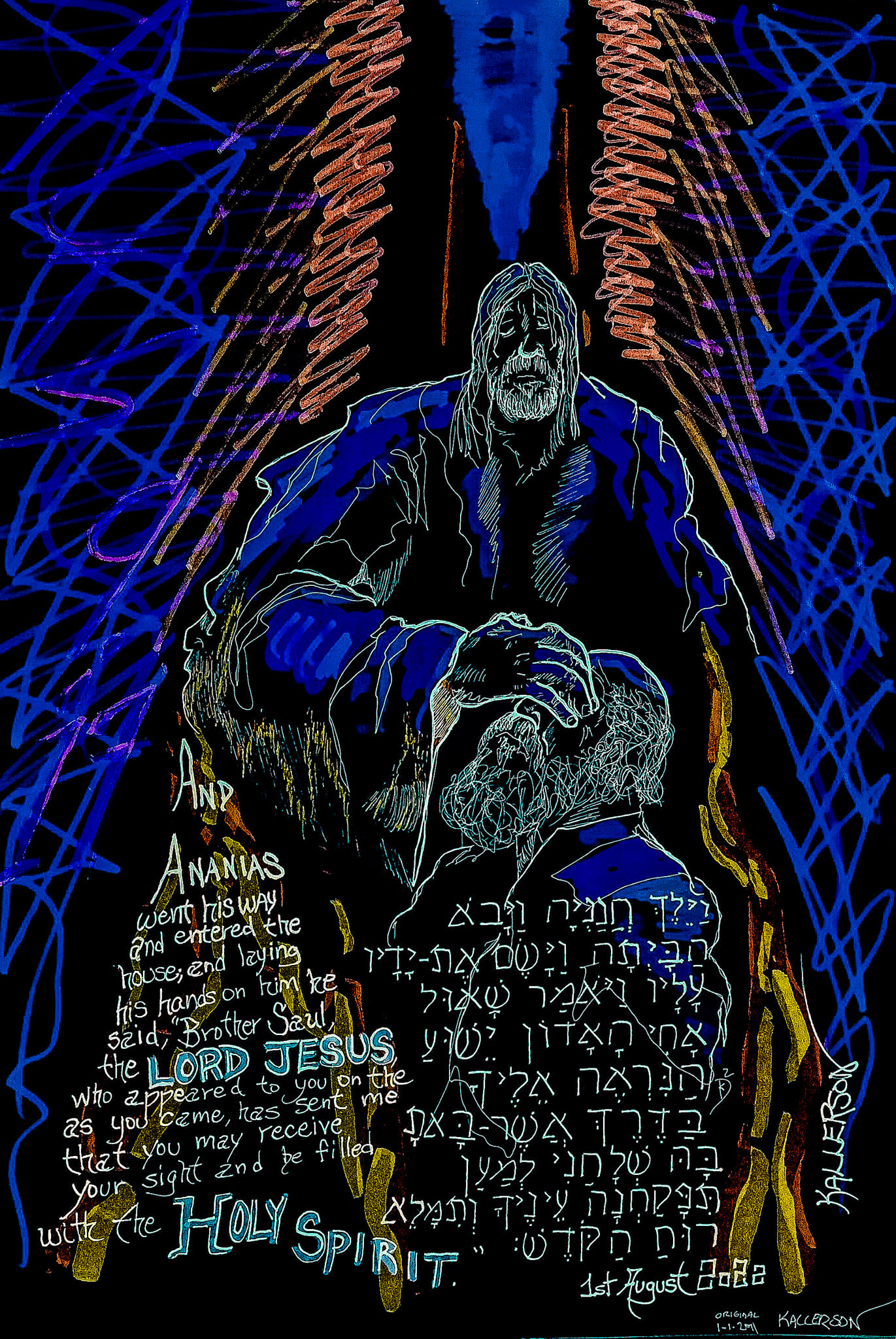
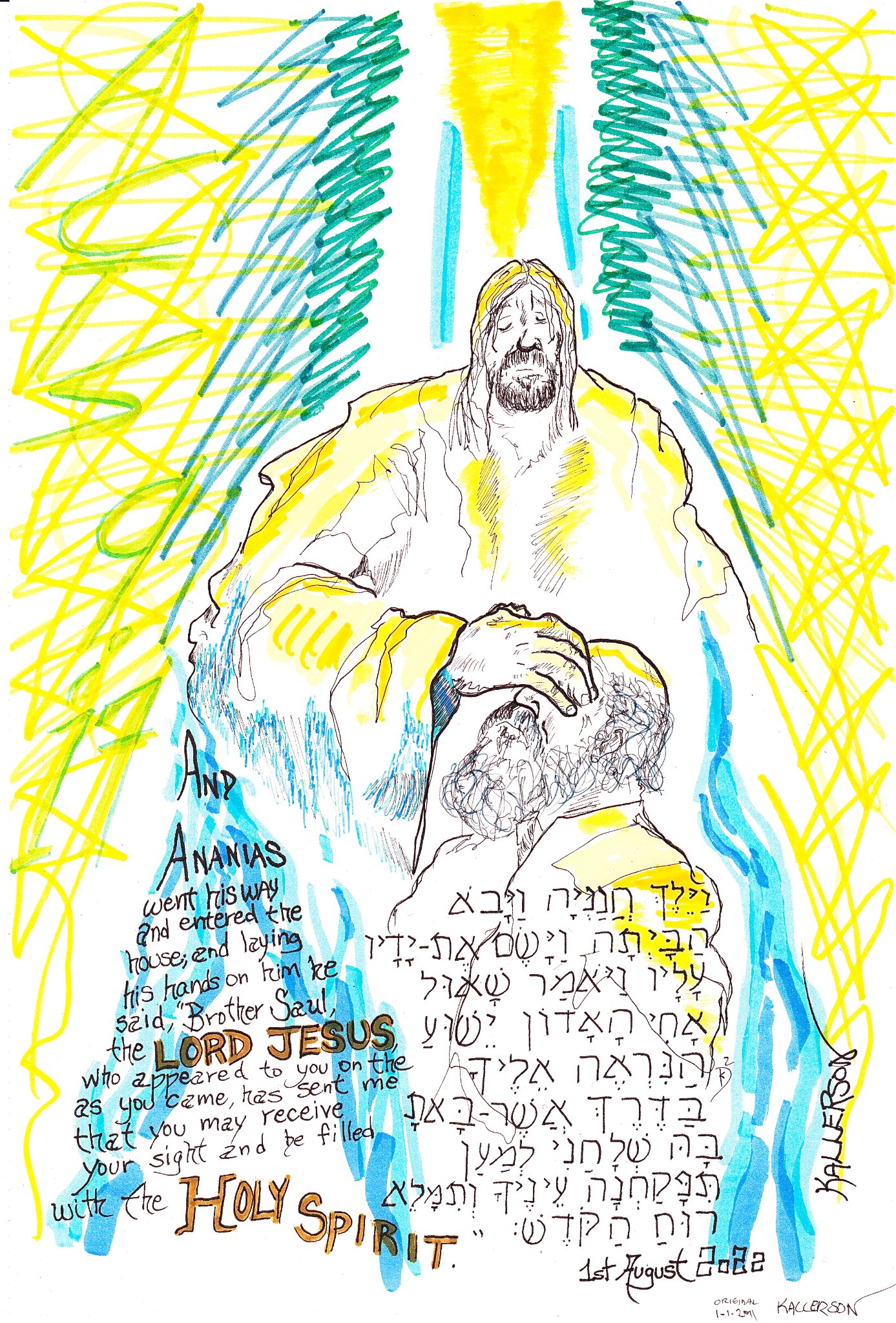
And Ananias went his way and entered the house; and laying his hands on him he said, “Brother Saul, the Lord Jesus, who appeared to you on the road as you came, has sent me that you may receive your sight and be filled with the Holy Spirit.” Acts 9:17

Note: You can listen to today’s commentary courtesy of our friends at “Bible in Ten” podcast. (Click Here to listen)

You can also read this commentary, with music, courtesy of our friends at “Discern the Bible” on YouTube. (Click Here to listen), or at Rumble (Click Here to listen).

After accepting the Lord’s words concerning Saul (Paul), Ananias complies with the directive to meet with him. That now is seen with the words, “And Ananias went his way.”

Ananias was initially reluctant to comply with the Lord’s words, but after realizing that the Lord actually had a plan that was already figured out and that he was to be an active participant in it, he yielded to the Lord’s will and departed to Straight Street “and entered the house.”

This is exactly what he was initially instructed to do. In verse 9:11, it said, “So the Lord said to him, ‘Arise and go to the street called Straight, and inquire at the house of Judas for one called Saul of Tarsus.’” Therefore, this is now that house belonging to Judas. Having entered it, Luke next records, “and laying his hands on him.”

The verb is an aorist participle. It should read, “and having laid his hands on him.” Luke is methodically detailing each step as it occurs in the order of events. As for this one, this is exactly what Saul was told would be the case in his vision in verse 9:12 –

“And in a vision he has seen a man named Ananias coming in and putting his hand on him, so that he might receive his sight.”

This would be the confirmation to Saul (Paul), as well as to Ananias, that everything that has occurred has been carefully orchestrated by the Lord. Each man would be able to bear witness that the outcome was shown to them in advance and that it occurred just as it was revealed to them. With that understood, and with Ananias having laid his hand on him, “he said, Brother Saul.”

It is obvious that this goes beyond the fellowship of being Jews. It is an indication that because the Lord has accepted Saul, he is to be considered a believing brother in the Lord. As such, he welcomes him with words regarding this fellowship, by first proclaiming the One who made it possible, saying, “the Lord Jesus.”

The very One that Saul had implicitly persecuted through the active persecution of His people was now being proclaimed over him as the One who had granted him mercy and taken him to be an apostle. Ananias notes that it is this Lord Jesus “who appeared to you on the road as you came.” This now forms a link to verse 9:5 –

“And he said, ‘Who are You, Lord?’
Then the Lord said, ‘I am Jesus, whom you are persecuting. It is hard for you to kick against the goads.’”

Any possibility that Saul was simply confused or maybe driven mad by his own guilt, thus fabricating the entire vision (as some have claimed), is now erased. The Lord who appeared on the road is the One who is now being presented by Ananias once again to bring about Saul’s deliverance from the darkness that overshadowed him. This is seen in Ananias’ words that Jesus “has sent me that you may receive your sight.”

This should actually say, “that you may regain your sight.” Saul had a vision of the Lord on the road. He was unable to see after that occurred. He was then given another vision where a man named Ananias would come and put his hands on him so that he might regain his sight. And now, a man named Ananias has come and put his hands on him, claiming authority as the Lord’s emissary to do exactly that.

No part of the equation is missing, and so there can be no question left in the mind of either man about the surety of the Source of the events now taking place. And more, new information is given for us to consider. Saul is not only to receive his sight, but Ananias adds, “and be filled with the Holy Spirit.”

This is a unique occurrence so far in Acts where the Holy Spirit is given apart from the presence of any apostle. It is also given without any noted sequence of events in relation to Paul’s baptism. Nothing is said if the Holy Spirit is received at this time, during the baptism, or after it. Ananias simply ties the event in with the laying on of his hands, and so only an inference can be made that Saul is immediately filled with the Spirit at this moment.

As such, it is completely out of the sequence of events given in Acts 2 which was the command given to those of Israel who had listened to Peter at Pentecost –

“Then Peter said to them, ‘Repent, and let every one of you be baptized in the name of Jesus Christ for the remission of sins; and you shall receive the gift of the Holy Spirit.’”

Saul did not need to repent (change his mind) because he had just spent the last three days doing exactly that. Therefore, he was already aware of who Jesus was and had accepted that He is the same One who had been crucified and resurrected.

Because Saul received the Spirit apart from the presence of the apostles, it confirms that his commission is to be considered one directly from the Lord as an apostle, and one bearing a unique charge. The record of Acts, and the later writings of Peter, will confirm this special commission, as do Paul’s own epistles.

Life application: The church did not begin at this time. The church has already been in place for an extended period, having begun in Acts 2 with the coming of the Holy Spirit. The significance of the event now occurring in Acts 9 is that the nation of Israel will become less and less of a focus in redemptive history for an unknown, but extended period of time – exactly as the curses of Deuteronomy 28 proclaim.

During this time, any individual – Jew or Gentile – may partake of the benefit of inclusion in the church. This will become perfectly evident as the focus on Paul becomes preeminent. But it will begin to be seen not with Paul, but with Peter. That is coming in Acts 10. Acts is giving an orderly and methodical account of why Israel as a nation was to be set aside during a time of national punishment. When that time is over, the time of the Gentiles will also come to a close.

The church is not “spiritual Israel,” nor does it replace national Israel, and the church does not receive the Old Testament promises that were made to Israel. The church is a body that grows out of the completed work of Jesus Christ. National Israel is a body from which Christ came, and to which promises that are yet to be fulfilled will be realized.

Keep your theological boxes straight, and you will avoid great error in your theology and doctrine.

Lord God, how faithful You are to Israel. They rejected You when they rejected the coming of Christ Jesus. And yet, You have kept them just as You promised You would, and You have brought them back to the land in order to fulfill the promises You made to them in Your word. How sure we can be that we will receive the same careful attention! We need not worry if we fail You. You will never fail us. Great are You, O God! Amen.


Acts 9:16

Utah.

Sunday, 31 July 2022

For I will show him how many things he must suffer for My name’s sake.” Acts 9:16

Note: You can listen to today’s commentary courtesy of our friends at “Bible in Ten” podcast. (Click Here to listen)

You can also read this commentary, with music, courtesy of our friends at “Discern the Bible” on YouTube. (Click Here to listen), or at Rumble (Click Here to listen).

The previous verse noted the Lord telling Ananias that he was to go to Saul (Paul) exactly as he had been instructed. The Lord then noted, “for he is a chosen vessel of Mine to bear My name before Gentiles, kings, and the children of Israel.” With that, Jesus continues, saying, “For I will show.”

It is referring to Saul, and it speaks of how the Lord will reveal to him what will come to pass. Some of what he will be shown probably occurred within the immediate future. At times, as will be seen below, Saul would receive advanced notice of things lying just ahead. And what the Lord will show him is “how many things he must suffer.”

Ananias had just said a moment earlier, “Lord, I have heard from many about this man, how much harm he has done to Your saints in Jerusalem. 14 And here he has authority from the chief priests to bind all who call on Your name” Acts 9:13, 14. The Lord is now instructing Ananias that what is coming upon Saul will be more in number, and often more in intensity, than anything Saul had done to any of those he persecuted.

Just as Saul persecuted his own people, so the Jews would (and to this day many through cursing and reviling still) do to him. But there was no safety when he was away from his own people. The Gentiles also often hounded him or misunderstood him, causing him to suffer even among them. An example of a great trial that lay ahead of him, and which he was shown in advance was coming, is found in Acts 20.

“And see, now I go bound in the spirit to Jerusalem, not knowing the things that will happen to me there, 23 except that the Holy Spirit testifies in every city, saying that chains and tribulations await me.” Acts 20:22, 23

The trials, accusations, and imprisonments that lay ahead in Acts 20 were to be from both Jews and Gentiles. But this was par for the course in his life. He wrote to those at Corinth about the troubles he faced in some detail –

“Are they Hebrews? So am I. Are they Israelites? So am I. Are they the seed of Abraham? So am I. 23 Are they ministers of Christ?—I speak as a fool—I am more: in labors more abundant, in stripes above measure, in prisons more frequently, in deaths often. 24 From the Jews five times I received forty stripes minus one. 25 Three times I was beaten with rods; once I was stoned; three times I was shipwrecked; a night and a day I have been in the deep; 26 in journeys often, in perils of waters, in perils of robbers, in perils of my own countrymen, in perils of the Gentiles, in perils in the city, in perils in the wilderness, in perils in the sea, in perils among false brethren; 27 in weariness and toil, in sleeplessness often, in hunger and thirst, in fastings often, in cold and nakedness— 28 besides the other things, what comes upon me daily: my deep concern for all the churches. 29 Who is weak, and I am not weak? Who is made to stumble, and I do not burn with indignation?” 2 Corinthians 11:22-29

Saul’s afflictions went on and on during his life, and even to this day, his epistles bring his name scorn and contempt. And this isn’t just from those outside of the faith. Rather, it comes even from those in the church, particularly in the more liberal congregations. It is as if the insertion of his letters into Scripture is to be subject to the greatest scrutiny of all. And all of this was to be, as Jesus says, “for My name’s sake.”

Ananias was being told, right from the start, that Saul’s life henceforth was to be as an offering to God in the name of Jesus. Saul, later in his life, acknowledges just this to Timothy –

“For I am already being poured out as a drink offering, and the time of my departure is at hand. I have fought the good fight, I have finished the race, I have kept the faith. Finally, there is laid up for me the crown of righteousness, which the Lord, the righteous Judge, will give to me on that Day, and not to me only but also to all who have loved His appearing.” 2 Timothy 4:6-8

But this ill treatment towards Saul couldn’t faze him because he had his eyes firmly on the prize which is found in Jesus Christ –

“But what things were gain to me, these I have counted loss for Christ. Yet indeed I also count all things loss for the excellence of the knowledge of Christ Jesus my Lord, for whom I have suffered the loss of all things, and count them as rubbish, that I may gain Christ and be found in Him, not having my own righteousness, which is from the law, but that which is through faith in Christ, the righteousness which is from God by faith; 10 that I may know Him and the power of His resurrection, and the fellowship of His sufferings, being conformed to His death, 11 if, by any means, I may attain to the resurrection from the dead.” Philippians 3:7-11

Life application: In his first epistle, Peter shows that suffering for the faith is not something confined to the apostles. Rather, any who are in the faith can and should expect it at any given time –

“Beloved, do not think it strange concerning the fiery trial which is to try you, as though some strange thing happened to you; 13 but rejoice to the extent that you partake of Christ’s sufferings, that when His glory is revealed, you may also be glad with exceeding joy. 14 If you are reproached for the name of Christ, blessed are you, for the Spirit of glory and of God rests upon you. On their part He is blasphemed, but on your part He is glorified. 15 But let none of you suffer as a murderer, a thief, an evildoer, or as a busybody in other people’s matters. 16 Yet if anyone suffers as a Christian, let him not be ashamed, but let him glorify God in this matter.” 1 Peter 4:12-16

The term “Christian” as used by Peter is not limited to the addressees of his epistle, meaning Jewish believers. It is intended for any who follow Christ. In aligning oneself with Jesus, a person – by default – is aligned against the system of this world. Those who belong to this world cannot fully appreciate what it means to be a Christian, and their thinking may even be wholly opposed to the message of Christ.

This is especially so because the gospel not only applies exclusively to those who have believed, but it actively calls out that any who have not believed are enemies of God and they stand condemned. When this truth is understood by those who do not believe, it brings with it a great deal of enmity. This is why the pope today refuses to acknowledge that unbelievers are condemned. It is certainly why adding Mary into RCC theology occurred as well. In having more than one mediator, the message is no longer exclusive.

It is hard to acknowledge to those you are witnessing to that what they believe will only lead to condemnation. This is especially so when there are unbelieving family members involved. “How dare you condemn my dead mother!” But it is the Bible that makes the claim, and therefore we cannot equivocate on what it says. And this is what then leads to persecution and suffering to whatever degree. Those who hear are often willing to go to great extremes, even persecution of those who convey the message, in order to deny the truth of God’s exclusive path to salvation.

Lord God, help us to be strong in our faith and to stand fast on the truth of what Jesus has done. May we never deny that He alone is the answer to our disconnect with You. Help us to be bold and firm in our faith, even in the face of persecution, suffering, or death. Amen. 


Acs 9:15

Playing with Hannah who came along for most of the 50 states.

Saturday, 30 July 2022

But the Lord said to him, “Go, for he is a chosen vessel of Mine to bear My name before Gentiles, kings, and the children of Israel. Acts 9:15

Note: You can listen to today’s commentary courtesy of our friends at “Bible in Ten” podcast. (Click Here to listen)

You can also read this commentary, with music, courtesy of our friends at “Discern the Bible” on YouTube. (Click Here to listen), or at Rumble (Click Here to listen).

The previous verse stated the words of Ananias, “And here he has authority from the chief priests to bind all who call on Your name.” With his words complete, we read, “But the Lord said to him.”

Jesus responds to Ananias’ protestations with a direct and unambiguous command, saying, “Go.” It is an imperative verb. Ananias probably was a bit confused at this point. He had just clearly explained to the Lord that Saul (Paul) was not a good guy, but the Lord directs him to go anyway. Jesus explains why he is to do this, saying, “for he is a chosen vessel of Mine.”

The Greek literally says, “he is a choice vessel to Me.” Jesus looked beyond Saul’s current state and saw the value in him. Calling Saul a vessel is a Hebraism that is used in various ways in the Old Testament. For example, it is used a couple times in Jeremiah –

“Is this man Coniah a despised, broken idol—
A vessel in which is no pleasure?
Why are they cast out, he and his descendants,
And cast into a land which they do not know?” Jeremiah 22:28

&

“Nebuchadnezzar the king of Babylon
Has devoured me, he has crushed me;
He has made me an empty vessel,
He has swallowed me up like a monster;
He has filled his stomach with my delicacies,
He has spit me out.” Jeremiah 51:34

In the New Testament, it is also used when referring to people –

“But we have this treasure in earthen vessels, that the excellence of the power may be of God and not of us.” 2 Corinthians 4:7

&

“that each of you know his own vessel to possess in sanctification and honour,” 1 Thessalonians 4:4 (YLT)

Unlike the king of Israel in Jeremiah 22 (above) who was a vessel in which the Lord had no pleasure, He knew Saul’s potential and his determined attitude. With a correction of his thinking about who Jesus is, it was clear that Paul was the very best possible choice to, as He says, “bear My name.”

The meaning is that Saul would be an ambassador of Christ Jesus, a function where a person bears the name – meaning one to communicate the intent and words – of the one who sends him. Saul twice specifically states that he is an ambassador of the Lord. In 2 Corinthians 5:20, he cites it in connection with the other apostles, saying, “Now then, we are ambassadors for Christ, as though God were pleading through us: we implore you on Christ’s behalf, be reconciled to God.” Also, in Ephesians 6:20, he says, “for which I am an ambassador in chains; that in it I may speak boldly, as I ought to speak.”

As you can see, in both of those instances, the idea of bearing the name of Jesus is evident. The apostle spoke on behalf of the Lord, conveying His intents and purposes for those they encountered. In Saul’s case, that was to include writing out epistles on behalf of the Lord. Jesus next notes that Saul’s authority extended to representing Him “before Gentiles, kings, and the children of Israel.”

Speaking to Ananias, the Lord clearly indicates what the primary function of Saul would be. It was not to speak to Israel so much as it was – first and foremost – to speak to the Gentiles. This explains the term “apostle to the Gentiles” that Paul states several times (Romans 11:13, Galatians 2:8, 1 Timothy 2:7, 2 Timothy 1:11, and implied many times elsewhere).

Despite this being his main calling, it was not his only calling. He was to speak on Christ’s behalf before Kings, something he did before Agrippa and Caesar, and he was to also carry the Lord’s words to the children of Israel, something he always did prior to then going to the Gentiles. In each new city or district that he traveled to, he would present himself and his doctrine to the synagogue first.

As can be seen here, the ministry of Saul to the Gentiles was to be one of primary focus, but not sole focus. The same is true with Peter. His primary focus was to the circumcision (meaning the Jews), but it was not to be his sole focus, as will be clearly evidenced in the coming chapter. The lie that there are two gospels and that the church began with Paul (hyperdispensationalism) is clearly refuted by a simple read through Acts and the epistles.

Life application: Jesus’ words to Ananias clearly tell us that the church did not replace Israel (replacement theology). Jesus was commissioning Saul to go “before Gentiles, kings, and the children of Israel.” He specifically states Israel as a separate category to be witnessed to. At no future time does the Bible ever call the church “Israel,” nor do the promises to national Israel ever transfer to the church while leaving Israel out.

Rather, the church joins into the spiritual blessings (the commonwealth) of Israel (Ephesians 2:12). Such points of doctrine as this are not difficult to determine, but once someone accepts faulty doctrine, it becomes solidified in the mind. From that point on, no matter how much evidence of what is correct is presented, unless the person is willing to say, “Maybe I am wrong,” nothing will change his mind.

This is why trying to convey one’s personal doctrine to another person, even if it is absolutely correct, can be so maddening. What is accurate is plainly evident, but the other person’s mind simply refuses to accept the truth. This is mostly because pride steps in and refuses to admit error has taken over. It is also why we are admonished to not argue with people over such things. State your case, show what is correct, and then let it be. Until they are willing to accept what Scripture actually teaches, they are vessels of obstruction and are of no value in discussing proper doctrine.

Lord God, help us to know when to walk away from someone who is unwilling to accept sound doctrine. In the end, our constant attempts to correct them will fall on deaf ears, and they often only cause the person to even further set his feet on the path of falsity. May we know when to state our case and when it is time to no longer argue. Help us to be discerning in this. Amen.