2 Corinthians 1:12

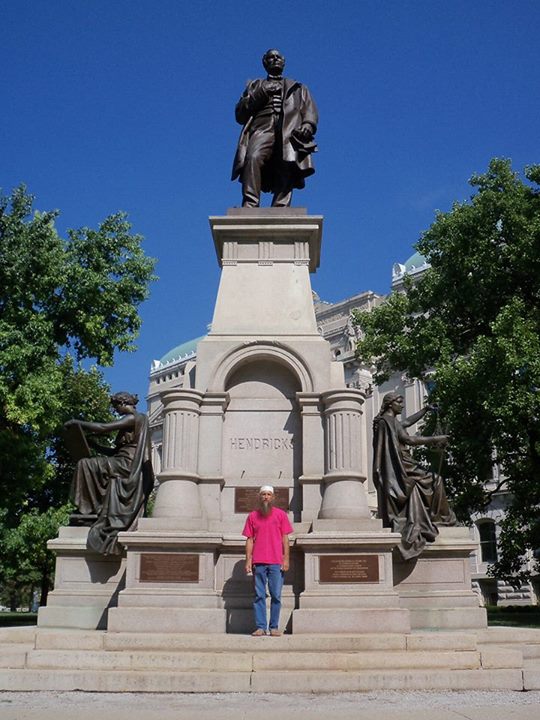
150527_washington

Wednesday, 27 May 2015

For our boasting is this: the testimony of our conscience that we conducted ourselves in the world in simplicity and godly sincerity, not with fleshly wisdom but by the grace of God, and more abundantly toward you. 2 Corinthians 1:12

In the previous verses, Paul spoke of the great trials he had faced and the prayers lifted up for him concerning that ordeal, as well as his on-going trials, all leading to his deliverance. Based on that, he now offers this thought. Beginning with, “For our boasting is this…” The word for “boasting” is translated by some as “rejoicing,” “pride,” “confidence,” and “glory.” It is a boast, but it is one directed towards God. And so “glorying” is a good word to help transmit that idea.

What he and those he was with “boasted” or “gloried” in was “the testimony of our conscience.” In the book of Acts and in his epistles, Paul uses the term conscience as a most important aspect of this life. It was a conscience filled not with his own attitudes and desires, but one filled with living for the Lord. He says it this way in Acts 23:1 –

“Then Paul, looking earnestly at the council, said, ‘“Men and brethren, I have lived in all good conscience before God until this day.'”

This “conscience” that he speaks of now toward the Corinthians is “that we conducted ourselves in the world in simplicity and godly sincerity.” He knew that their actions were in line with the truth of God and with the good of others in mind at all times. There was nothing pretentious or showy about their conduct. Instead, there was humility and honesty instilled by God in it.

In further explanation, he notes that it was “not with fleshly wisdom but by the grace of God.” In 1 Corinthians 2, he wrote this –

“And I, brethren, when I came to you, did not come with excellence of speech or of wisdom declaring to you the testimony of God. For I determined not to know anything among you except Jesus Christ and Him crucified. I was with you in weakness, in fear, and in much trembling. And my speech and my preaching were not with persuasive words of human wisdom, but in demonstration of the Spirit and of power, that your faith should not be in the wisdom of men but in the power of God.”

In the same fashion, he is again telling the Corinthians that he and his companions words and actions were those of people living “in the spirit” and not “in the flesh.” Instead of following the way of the world in their conduct, they attempted to live by the grace of God. And finally, he notes that this grace was “more abundantly toward you.”

His love for those in Corinth is evident in these words. The first letter that he wrote to them addressed divisions and conflicts in the congregation. He knew that his life and actions towards them had to reflect the highest character and godliness in order that they may not become disenchanted with a seeming “hypocrite” in their presence. For this reason, he endeavored to be completely holy before them. In this, he could then glory in God who bestowed such grace as to live in this manner.

Life application: Eyes are watching our actions at all times. Our non-believing neighbors and co-workers see us and make value judgments about Christ based on what we do. But also those in the church are watching. If one weaker in the faith sees that our actions aren’t the epitome of character and godliness, they may also decide that the walk isn’t worth the effort. Let us always attempt to walk in holiness before the Lord and in the presence of others.

Heavenly Father, I know that others are watching my life and actions and are then making value judgments about the faith I possess in You – Is it true? Is it noble? Is it honoring of God? Help me to be cautious with my words, careful with my actions, and circumspect in how I live my life before others. I know that their ultimate end is based on a relationship with Jesus. And so help me to reflect a person who will lead others to Him, not from Him. This I pray that You will be glorified. Amen.


 

2 Corinthians 1:11

150526_national_road

Tuesday, 26 May 2015

…you also helping together in prayer for us, that thanks may be given by many persons on our behalf for the gift granted to us through many. 2 Corinthians 1:11

Paul’s writings show that he truly believed in the effectiveness of prayers on behalf of others, meaning “intercessory” prayers. For example, in Philippians 1:19, he says –

“For I know that this will turn out for my deliverance through your prayer and the supply of the Spirit of Jesus Christ…”

Here he shows the same belief to those at Corinth. In the previous verse, he had just noted the great deliverance which was received for him and those he was with. This also included the belief that they would have continued deliverance. And so in a delicate way of asking for prayer, he writes as if they had been in prayer all along by saying, “…you also helping together in prayer for us.” If they had been praying, he knew it was a help to them. And their continued (or newly-initiated) prayers would be heard for their on-going delivery.

And he gives the reason for this help through prayer by saying “that thanks may be given by many persons on our behalf.” The word for “persons” here is prosopon which literally means “faces.” It is an expression which is found many times in the New Testament and which carries over from the Hebrew’s pictorial way of describing a person. Thus, the mind is given an image of many faces jointly being lifted to God in thanks. Ellicott notes an interesting concept concerning this word –

“The use of the word prosopopœia, however, for “personifying,” and of prosôpon for the characters in a drama, indicates that the noun was beginning to be used in a different sense, and this must clearly have been well established when it came to be used in theological language for the three “persons” of the Godhead. It is interesting to note, however, as a fact in the history of language, that, if this be its meaning here, it is probably one of the earliest extant instances of its being so used.”

In other words, the term “persons” of the Godhead has always seemed cumbersome because we think of persons as distinct and separate without any true unity of essence. However, the use of the word prosopon for “person” may make the concept easier to grasp than some other word indicating an individual person as we think of it today. It wouldn’t mean God is one Person with three faces, but three persons in one essence, just as those in prayer are united in a single way even though they are individuals.

Regardless of this though, Paul notes that these many faces, because of their united prayer, would give thanks “for the gift granted to us through many.” The gift refers to their delivery from death, something the many would be thankful for because of knowing that their prayers had been heard and responded to.

Life application: On several occasions, Paul notes the effectiveness of prayers, including the greater effectiveness of united prayers on behalf of a given person or issue. Therefore, it is right and proper to jointly lift up individuals or specific issues to God. And we should do so with the confidence that these prayers are heard and they are responded to according to His wisdom and in accord with His plans.

Lord, thank You for the time of prayer that I have each day. There are quiet moments alone with You, there are prayers united with others that are close by, and there are prayers united with like-prayers by others around the world. Sometimes I make short, spontaneous prayers of praise or petition which come from my heart and roll off my tongue at any given moment. And I know that every one of these prayers is heard by You and will be responded to according to Your wisdom. And so I will continue to pray without ceasing, knowing that Your ear is attentive to each one I make! Amen.


2 Corinthians 1:10

150525_lady_law

Monday, 25 May 2015

…who delivered us from so great a death, and does deliver us; in whom we trust that He will still deliver us, 2 Corinthians 1:10

In the previous verse, Paul spoke of the sentence of death which loomed over him and those he was with. He took this to heart. Knowing this, he said that they “should not trust in ourselves but in God who raises the dead.” Now he continues by telling the Corinthians that it was God “who delivered us from so great a death.” He has taken the extreme possibility of death that he faced and equated it to death itself in order to more effectively communicate the dire situation they faced. It is as if they had actually been resurrected in their deliverance, so sure was the sentence that hung over them.

And not only had they been delivered, but they continued to be delivered as he wrote his letter. The victory was not just in the past but ongoing. And more, he believed that it would continue into the future, stating “in whom we trust that He will still deliver us.”

The word “trust” here is not the same Greek word as was in the previous verse. That word communicated the sense of “to have confidence.” This word, elpizo, conveys the idea of hope. In essence, we are not to have confidence in ourselves, but we are to place our hope in God. No matter what we face, we can only rely on God and His promises for us. If we are to die, we have hope in the resurrection. If we are to live, it can’t be because of our control over whatever the situation is, but only because of God’s hand being in it. As the hand is unseen, it is a hope that we possess.

Life application: Can we honestly say that we will be alive in five minutes? Our heart could stop, our house could be struck by a meteorite, or we might get bitten by an unseen spider. We truly have no control over a single moment in time. Therefore, let us place our souls in the capable hands of the Lord and know that whatever we face, He is tending to it. We shall be delivered in life and through death because of the work of Jesus our Lord.

Lord God, having seen people around me die, I know that it can come at any time and in the most unexpected of ways. I cannot honestly count on being alive five minutes from now. Anything could happen and it would be arrogant of me to believe I had any control over the future at all. But I have a greater hope than this temporary life. I have the surety of the resurrection and the prospect of eternal life safely guarded in my heart. I have Jesus! Amen.


2 Corinthians 1:9

150524_hendricks

Sunday, 24 May 2015

Yes, we had the sentence of death in ourselves, that we should not trust in ourselves but in God who raises the dead, 2 Corinthians 1:9

This verse should be taken and considered in light of the previous one which said, “…that we were burdened beyond measure, above strength, so that we despaired even of life.” In this desperate state, Paul acknowledges that they questioned if they would even survive the ordeal (despaired of life) and the answer came back in their minds that they would not.

The word translated “sentence” is apokrima. It is a word not found anywhere else in the New Testament or even in Greek literature. It indicates a judicial sentence, meaning an answer. There seemed to be a decree that they would not survive the ordeal. But this led them to the truth which almost always seems to be the case with those in such despair – “…that we should not trust in ourselves.”

The soldier in the foxhole will call out to God, knowing that he is incapable of making it without Him. The person lost at sea and going down below the raging waters knows when there is finally no hope but from God alone. In such instances, there is only the trust of God left. However, Paul’s words add to the thought. Their trust wasn’t that God would save them from the immediate trial, but that he would save them from the results of it.

The sentence seemed to be pronounced: death. And so knowing that death was inevitable, they entrusted themselves to “God who raises the dead.” If they were to die, which seemed to be the case, their hope extended beyond the grasp of death itself and found itself realized in the hope of the resurrection. This conforms to Paul’s words of 1 Corinthians 15 –

“‘O Death, where is your sting?
O Hades, where is your victory?’
56 The sting of death is sin, and the strength of sin is the law. 57 But thanks be to God, who gives us the victory through our Lord Jesus Christ.” 1 Corinthians 15:55-57

Paul took comfort in the truth that Jesus Christ prevailed over death and so death had no mastery over him. Instead, even with the foe of the sentence of death awaiting him, he felt the powerful victory of Jesus Christ an even stronger friend.

Life application: As Christians bury their dead, they will often “commit the soul of the departed loved one” into the hands of Jesus Christ, acknowledging the power of the resurrection. In this, the body-planted is but a seed waiting to be given the water of life to bring it back from the ground. This is truly our great hope and this is certainly where our ultimate joy should be!

Heavenly Father, should I face a sentence of death, my trust isn’t in being rescued from that temporary sentence. Rather, my hope is found in release from the results of it. Death may have a temporary hold on me, but I know that I will rise victorious over that defeated foe! I know this because I personally bear the victory through Your Son, Jesus Christ my Lord. No fear here. Eternal life is assured. Hallelujah and Amen.

2 Corinthians 1:8

150523_justice

Saturday, 23 May 2015

For we do not want you to be ignorant, brethren, of our trouble which came to us in Asia: that we were burdened beyond measure, above strength, so that we despaired even of life. 2 Corinthians 1:8

Paul has been writing in general terms and speech during his introductory comments. He now initiates a more specific line of thought beginning with “For we do not want you to be ignorant, brethren.” This same terminology is used by him at least four other times in his letters. For example, in 1 Thessalonians 4:13 he says –

“But I do not want you to be ignorant, brethren, concerning those who have fallen asleep, lest you sorrow as others who have no hope.”

Continuing on, he will now give specific details of the sufferings that he referenced in verses 3 through 7. They came about in Asia, meaning the part of Asia Minor in which Ephesus is the capital. This trouble may be referred to in one or more of the incidents recorded in Acts, but which cannot be definitively identified.

It may also be, as some suppose, an internal stress that he felt. If so, it could be the troubles which are identified in his first letter to the Corinthians, his concern over them, and the conflict he felt concerning what type of reception his words would bring. If this is so, he stressed over the matter in the greatest way. However, later verses seem to negate this possibility.

Whatever the burden, internal or external, it was felt by those who were with him. As he notes, “…we were burdened beyond measure, above strength.” The term “beyond measure” comes from the Greek word huperbolé, which means properly “a throwing beyond.” It then indicates excess. The burden he felt was in such a category, even “above strength.”

The words are given as a superlative way of showing the nature of the situation. So bad it was “that we despaired even of life.” His choice of wording translated as “despaired” is the word exaporeó. It is used only twice in the New Testament and both are in this epistle. It comes from ex – out, and aporeo which is to be without a way of escape. Again, the use of his words is intended to let the Corinthians know the absolutely serious nature of the situation he and his companions faced.

Life application: Paul has taken the time to expand on his previous thoughts to show the superlative nature of his sufferings. Despite them, as seen in the previous verses, he was comforted. He then noted that the same comfort was a means of edifying and comforting his audience. If we can learn to use real life examples of our troubles and trials, we can then turn and show empathy for others who are living through their own trials. Reading our Bible daily is a good way of learning how to do exactly this. Don’t let your Bible get dusty! Read it and think on it daily.

Lord, the Bible won’t do me a bit of good as long as it sits on the shelf. The amount of dust it has accumulated is really an indictment on how I perceive this precious gift from You. Grant me the desire, the time, and the ability to pick it p, read it, and learn it each day and even throughout each day. I would pray that there would be far less dust on the Bible than on the TV remote! Grant me wisdom in this most important matter. Amen.