Acts 7:21

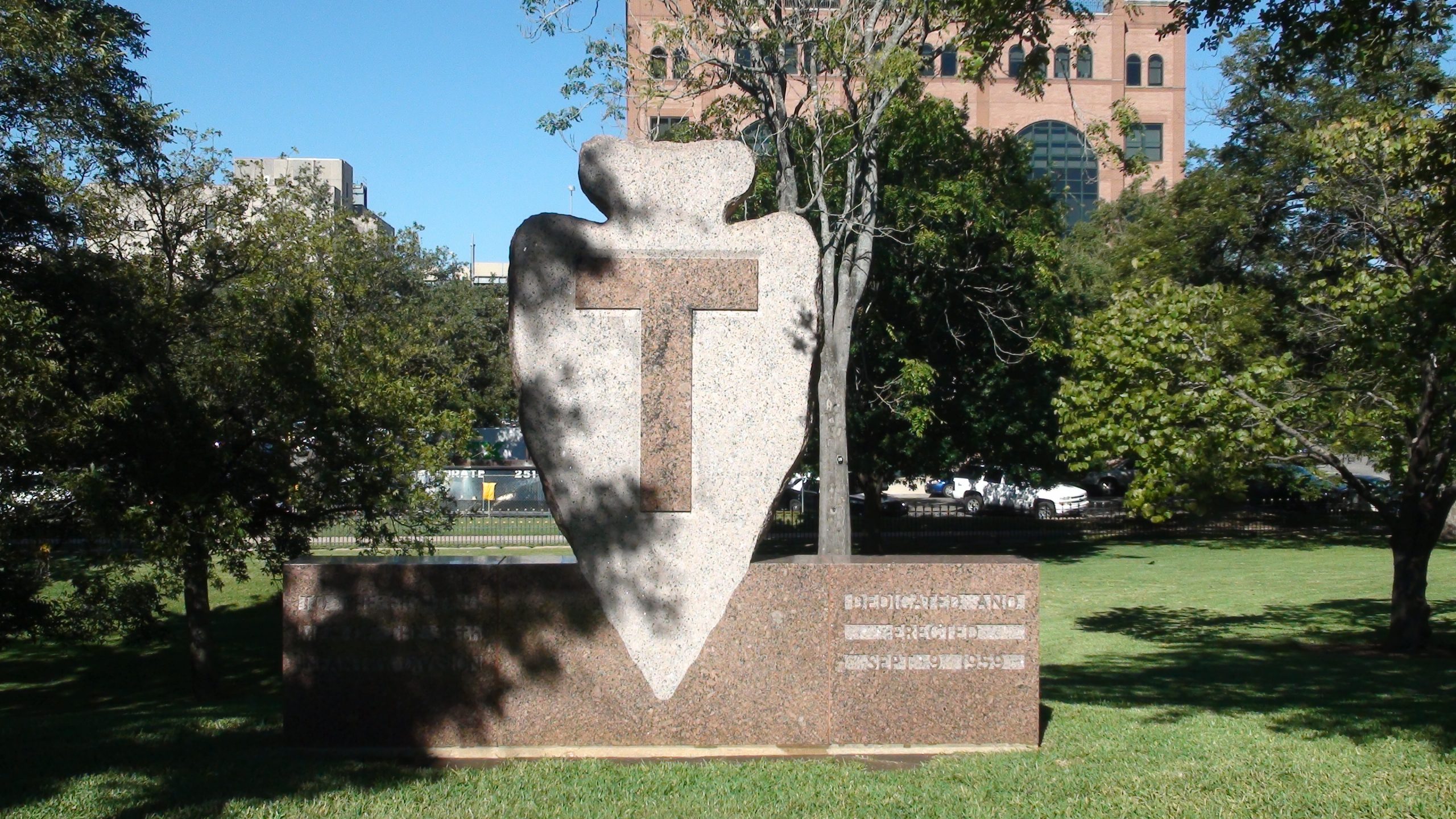
Texas capitol refurbishment.

Wednesday, 27 April 2022

But when he was set out, Pharaoh’s daughter took him away and brought him up as her own son. Acts 7:21

Note: You can listen to today’s commentary courtesy of our friends at “Bible in Ten” podcast. (Click Here to listen).

You can also read this commentary, with music, courtesy of our friends at “Discern the Bible” on YouTube. (Click Here to listen), or at Rumble (Click Here to listen).

Stephen had just previously said that Moses was brought up in his father’s house for three months. He next notes, “But when he was set out.” That refers to what is stated in the narrative of Exodus 2 –

“But when she could no longer hide him, she took an ark of bulrushes for him, daubed it with asphalt and pitch, put the child in it, and laid it in the reeds by the river’s bank. And his sister stood afar off, to know what would be done to him.” Exodus 2:3, 4

The brevity of Stephen’s words in relation to the Exodus narrative shows that the story of Moses was universally known. Instead of giving the details, he simply acknowledges the account in the simplest of words. The events themselves would automatically be mentally filled in by each member of the council.

The word translated as “But when he was set out” means that he was exposed. The same word is used three more times in Acts where it means to explain, such as when Peter explained events that occurred (Acts 11:4), or when Paul explained the significance of the kingdom of God (Acts 28:23). Stephen continues with, “Pharaoh’s daughter took him away.”

Again, the few words of Stephen are much more detailed in Exodus –

“Then the daughter of Pharaoh came down to bathe at the river. And her maidens walked along the riverside; and when she saw the ark among the reeds, she sent her maid to get it. And when she opened it, she saw the child, and behold, the baby wept. So she had compassion on him, and said, ‘This is one of the Hebrews’ children.’
Then his sister said to Pharaoh’s daughter, ‘Shall I go and call a nurse for you from the Hebrew women, that she may nurse the child for you?’
And Pharaoh’s daughter said to her, ‘Go.’ So the maiden went and called the child’s mother. Then Pharaoh’s daughter said to her, ‘Take this child away and nurse him for me, and I will give you your wages.’ So the woman took the child and nursed him.” Exodus 2:5-9

The word translated as “took him away” is quite interesting. It is anaireó. It is almost always translated as kill, end life, murder, put to death, and so on. For example, it is used this way in Acts 7:28. In one instance, Hebrews 10:9, it is used to signify the taking away of the Old Covenant as it is replaced with the New. It is a compound verb coming from ana, a word giving the sense of upwards, and haireó, meaning to choose or take.

In this, Vincent’s Word Studies notes –

“Used among Greek writers of taking up exposed children; also of owning new-born children. So Aristophanes: ‘I exposed (the child) and some other woman, having taken it, adopted (ανείλετο) it’ (‘Clouds,’ 531). There is no reason why the meaning should be limited to took him up from the water (as Gloag).”

In other words, some (like Gloag) might think, “This is referring to Pharaoh’s daughter taking Moses up from the water of the Nile.” But it is surely signifying more than this. It is the ending of one part of his life and the entrance of a new aspect. She “took him up” from his life as a Hebrew “and brought him up as her own son.”

This is noted in Exodus 2 as well –

“And the child grew, and she brought him to Pharaoh’s daughter, and he became her son. So she called his name Moses, saying, ‘Because I drew him out of the water.’” Exodus 2:10

The meaning of Stephen’s words is that Moses was both nourished and educated as a member of Pharaoh’s home. What is ironic, and what may (?) be on Stephen’s mind, is that just as Moses was taken away from his life as a Hebrew in order to become the deliverer of Israel, so Moses (the law) must be taken away in order for Israel to be delivered from the law’s bondage. As noted, the word used to describe this is also found in Hebrews 10 –

Previously saying, ‘Sacrifice and offering, burnt offerings, and offerings for sin You did not desire, nor had pleasure in them’ (which are offered according to the law), then He said, ‘Behold, I have come to do Your will, O God.’ He takes away the first that He may establish the second. 10 By that will we have been sanctified through the offering of the body of Jesus Christ once for all.” Hebrews 10:8-10

Whether this was on Stephen’s mind or not, the ironic nature of the use of the word to signify the changes concerning Moses (representative of the law) is remarkable.

Life application: The words of Exodus, as confirmed here, show us that Pharaoh’s daughter was an exceptional financier. We can deduce this because she went down to the bank of the Nile and drew out a little prophet.

Sometimes, a little humor is a good thing.

Lord God, what a treasure Your word is. It is filled with wisdom, history, poetry, irony, and revealed glory. In it, we find the answer to our needs. In it, we find rest for the weary soul. In it, we find Jesus. Thank You for this wonderful, beautiful word. Amen.


Acts 7:20

Someone please remind the people in DC about this concept.

Tuesday, 26 April 2022

At this time Moses was born, and was well pleasing to God; and he was brought up in his father’s house for three months. Acts 7:20

Note: You can listen to today’s commentary courtesy of our friends at “Bible in Ten” podcast. (Click Here to listen).

You can also read this commentary, with music, courtesy of our friends at “Discern the Bible” on YouTube. (Click Here to listen), or at Rumble (Click Here to listen).

Stephen’s previous words referred to the king of Egypt’s treacherous instructions against the people of Israel. This included, “making them expose their babies, so that they might not live.” With that thought introduced, he next says, “At this time Moses was born.”

The word translated as “time” signifies a fitting season, as if the opportune moment. In this, Stephen is certainly indicating that God planned it out that this would be the proper time for the events leading up to the Exodus to take place, according to His promise to Abraham hundreds of years earlier.

It is at this fitting and opportune time that Moses was born. Moses means “He who draws out.” It is based upon his being drawn out of the Nile, but it certainly is a prophetic anticipation of him being the one to draw out the word of God (the law) to then pass it onto the people. In this, he is a type, or picture, of the coming Christ – the Word of God – who draws out the will of God through His word in order to fulfill it. These things are more fully explained in the Superior Word sermons that begin in Exodus and progress through Deuteronomy.

As for Stephen, his words continue with, “and was well pleasing to God.” The word translated as “well pleasing” is asteios, and it is only found here and in Hebrews 11:23 where it also speaks of Moses. The word comes from astu, a city. And so, it literally means “belonging to the city.” This is because a city is considered a place of polished manners and living. Thus, one could paraphrase the word as “he was a city dweller,” and the sense may be brought out.

The idea of him being pleasing “to God” is both superlative and idiomatic. It refers to anything that is beautiful, grand, lofty, and so on. Albert Barnes explains this –

“Thus, Psalm 36:7, ‘mountains of God,’ mean lofty mountains; Psalm 80:11, ‘cedars of God,’ mean lofty, beautiful cedars. Thus, Nineveh is called ‘a great city to God’ (Jonah 3:3, Greek), meaning a very great city. The expression here simply means that Moses was ‘very fair,’ or handsome.”

With this understood, Stephen finishes with, “and he was brought up in his father’s house for three months.”

Because of the elegant nature of the child, the parents were emboldened and, as it says in Hebrews 11, “they were not afraid of the king’s command.” The two aspects, that of the beauty of the child, and that of the parents not caring about obeying an immoral command, combined into their determination to hide the child. In the Hebrews reference, it is ascribed to them as an act of faith. He was protected during these early months because of this.

Life application: Hebrews 11 describes this same event, saying that what the parents did was an act of faith. In this, they were recorded in the Bible’s Hall of Fame of Faith for their deed. Though the things we do will not be recorded in the Bible, they will be remembered by God. Those that are of faith will receive their reward. Those that are not, will not.

If a pastor mandates tithing in his church, there is no faith in the giving. It is considered an obligation and the congregants, rightly or wrongly, will give (or not give) based on his words. Only if a person knows that tithing is not a New Covenant precept is he freed from this legalistic nonsense. His giving, then, can be considered an act of faith.

In other words, when a pastor mandates tithing – something contrary to the word of God – he denies his congregants who are uneducated in the word the blessing of rewards for their giving. This is all the more poignant when Paul, speaking of eating various foods, says, “for whatever is not from faith is sin.” Though referring to foods, the precept is universal in its scope.

We are to live our lives in faith. When we give, it is to be because we have faith in the giving, not because of a legalistic mandate that is not to be found in Scripture. The law mandated tithing. Those who did not tithe were guilty before the law. Now that Christians are not under law, but under grace, to be forced to tithe removes faith from the process.

Think about this as a simple example for everything you do. What you do, do in faith that you are in the presence of God and that He is evaluating your life and actions as such. In all your ways, acknowledge Him, and He shall direct your paths.

Glorious God, thank You that we can live our lives in faith by simply acknowledging You in our thoughts. May we consider our actions, knowing that You are there, and You are with us. As we go forth with this attitude, direct our paths accordingly. Thank You that there can be such an intimate fellowship between us. Thank You for this, O God. Amen.


Acts 7:19

Sharing the Good News.

Monday, 25 April 2022

This man dealt treacherously with our people, and oppressed our forefathers, making them expose their babies, so that they might not live. Acts 7:19

Note: You can listen to today’s commentary courtesy of our friends at “Bible in Ten” podcast. (Click Here to listen)

You can also read this commentary, with music, courtesy of our friends at “Discern the Bible” on YouTube. (Click Here to listen), or at Rumble (Click Here to listen).

Stephen just referred to “another king” who “arose who did not know Joseph.” He now continues referring to that king, saying, “This man dealt treacherously with our people.” Here, Stephen uses a word found only this one time in Scripture, katasophizomai. It is a compound verb coming from kata (bring down) and sophizó (make wise). As such, it signifies to deal craftily with or to act subtly.

This is a reference to the treatment of Israel as is first noted in Exodus 1 –

“Now there arose a new king over Egypt, who did not know Joseph. And he said to his people, ‘Look, the people of the children of Israel are more and mightier than we; 10 come, let us deal shrewdly with them, lest they multiply, and it happen, in the event of war, that they also join our enemies and fight against us, and so go up out of the land.’” Exodus 1:8-10

Stephen next says, “and oppressed our forefathers.” That is certainly what is next stated in the Exodus narrative –

“Therefore they set taskmasters over them to afflict them with their burdens. And they built for Pharaoh supply cities, Pithom and Raamses. 12 But the more they afflicted them, the more they multiplied and grew. And they were in dread of the children of Israel. 13 So the Egyptians made the children of Israel serve with rigor. 14 And they made their lives bitter with hard bondage—in mortar, in brick, and in all manner of service in the field. All their service in which they made them serve was with rigor.” Exodus 1:11-14

In this state of oppression, Stephen next explicitly describes at least a portion of their treatment with the horrifying words, “making them expose their babies, so that they might not live.”

An attack against the male babies was first noted in the ongoing narrative of Exodus –

“Then the king of Egypt spoke to the Hebrew midwives, of whom the name of one was Shiphrah and the name of the other Puah; 16 and he said, ‘When you do the duties of a midwife for the Hebrew women, and see them on the birthstools, if it is a son, then you shall kill him; but if it is a daughter, then she shall live.’” Exodus 1:15, 16

That directive from Pharaoh took an unusual turn and was not effective at meeting his goals, and so he made a command which was intended to reduce the number of Hebrews to a manageable level –

“So Pharaoh commanded all his people, saying, ‘Every son who is born you shall cast into the river, and every daughter you shall save alive.’” Exodus 1:22

The narrative, as given by Stephen, has carefully followed the words of Exodus 1, revealing the progression of what happened at that time.

Life application: What is unstated by Stephen, but which is something that would have been known to every Israelite, even from their earliest days as the parents talked about their history, is what is said about why the first attempt to reduce the male population failed. That is recorded in Exodus 1 as well –

“But the midwives feared God, and did not do as the king of Egypt commanded them, but saved the male children alive. 18 So the king of Egypt called for the midwives and said to them, ‘Why have you done this thing, and saved the male children alive?’
19 And the midwives said to Pharaoh, ‘Because the Hebrew women are not like the Egyptian women; for they are lively and give birth before the midwives come to them.’
20 Therefore God dealt well with the midwives, and the people multiplied and grew very mighty. 21 And so it was, because the midwives feared God, that He provided households for them.” Exodus 1:17-21

Stephen skipped right over this, and yet by doing so it would have been its own reminder of the events to those he stood before. By simply recalling a story, the memory of the story would come to mind. In not mentioning this portion of it, it would surely have highlighted it in the minds of those who heard. It is in our nature to fill in the blanks of such things.

As this is so, it would be a reminder that non-Hebrews had been obedient to the inner moral standard placed in humans by God. They had not committed such a wicked act by being disobedient to the king’s edict. This would be an appeal, all by itself, to have the council consider their own wicked deeds by ignoring the words and actions of Christ and then, later, the obvious signs and wonders that have come through the apostles and which have been done in the name of Jesus.

Sometimes, what is left unstated is as poignant as what is openly stated. It is a good tool for each of us to consider. Ecclesiastes 5:2 says, “let your words be few.” It is good advice to remember before God and man. The few words we speak should carry weight, and the words we refrain from speaking can be just as heavy.

Lord God Almighty, help us to be wise in our speech, carefully considering everything we have to say, and only speaking out that which is wholesome, helpful, and pleasing in Your sight. It is so easy for us to allow our tongues to go beyond that which is proper, so help us in this Lord! For sure, we need it. Amen.


Deuteronomy 33:1-5 (The Lord Came From Sinai)

Artwork by Doug Kallerson.

Deuteronomy 33:1-5
The Lord Came From Sinai

Despite very difficult Hebrew at times, there are unmistakable anticipations of Christ in our first three verses today. But the Hebrew is also beautiful in how it portrays the Lord even from a simple reading without looking at the finer details of what is presented.

What is rather interesting is that Moses says that the Lord came from Sinai, but some people conduct their lives as if He never left there. Instead, it is as if He is still there to this day, issuing out commands and prophecies.

At least, this is the substance behind their theology. Sinai was chosen to reveal things about what Jesus would do. It was also chosen to be a point of reference for the law itself and how the law fit into the greater picture of redemptive history.

It is not that the Lord came from Sinai and keeps coming from Sinai, but that Sinai is a point of reference for us to understand what He would do, what He did do, and what that means for our walk before the Lord.

Paul shows us this in the book of Galatians through a simple explanation of the metaphorical nature of what the word of the Lord has presented in three separate things –

1) the account of Abraham, his wife, his bondwoman, and the children that issued from them;
2) the giving of the law at Sinai; and
3) the administration of that law in Jerusalem, or the administration of the New Covenant from heaven.

His words form our text verse today…

Text Verse: “Tell me, you who desire to be under the law, do you not hear the law? 22 For it is written that Abraham had two sons: the one by a bondwoman, the other by a freewoman. 23 But he who was of the bondwoman was born according to the flesh, and he of the freewoman through promise, 24 which things are symbolic. For these are the two covenants: the one from Mount Sinai which gives birth to bondage, which is Hagar— 25 for this Hagar is Mount Sinai in Arabia, and corresponds to Jerusalem which now is, and is in bondage with her children— 26 but the Jerusalem above is free, which is the mother of us all.” Galatians 4:21-26

Abraham was given a promise. The promise cannot be later annulled by some other event. It stands between the Lord and him regardless of the introduction or fulfillment of any other thing.

In awaiting the continuance of that promise, which we later find out is a son through his wife (the freewoman) Sarah, Abraham had a child through Sarah’s servant (the bondwoman), Hagar.

Paul tells us that God used those events to symbolically tell us a greater story. The child of the bondwoman, Ishmael, came in the normal way children come, according to the flesh. If you don’t know about that yet, ask your mom. The point is that the son was born through a bondwoman.

The child of the freewoman, however, came according to a promise. As this is so, even if the child was conceived and born in the typical way, the fact that he came by a promise from God was not.

With this understood, Paul tells us that the birth of these sons symbolically anticipated what God would do through His covenants. The first covenant, the one at Sinai, brings forth sons born into bondage because the covenant itself is one of bondage.

This covenant, the one initiated at Sinai, was administered in Jerusalem, at the temple. It is a covenant of bondage. This is because sin is bondage. The law is what makes sin possible, and in violating the law, sin comes about. There is nothing free about the law. The law is bondage because it leads to sin. As this is so, those who are under the law are in bondage.

On the other hand, there is another covenant, the Christ Covenant that came through His work in fulfillment of the law. Being sinless, he had nothing binding Him. He was free, and He remained free.

In His death, He brought the law of bondage to an end for all who believe. As Paul says, “For Christ is the end of the law for righteousness to everyone who believes” (Romans 10:4). This is the covenant of promise, and it corresponds to Sarah’s giving birth to Abraham’s son Isaac, which came by promise.

This covenant is administered in the heavenly Jerusalem. And as Sarah was free, so is the Jerusalem in heaven. Thus, the sons of this covenant are free. There is no bondage because there is no sin that comes from or through the administration of this covenant.

As this is so, one must decide where he will hang his hat. It is not a matter to be taken lightly. It is the most important decision one who is presented with the two covenants can make. The Jews, to this day, have made their choice to follow Moses and the covenant made at Sinai.

Many supposed Christians have made the same choice as the Jews. One cannot have one foot in the law and one foot in Christ. It is one or the other, and if the law is a part of either, then the law – by default – takes precedence (see Galatians 5:3).

And then, there are those who have come to Christ alone in order to find their peace with God. They are free because Christ is the end of the law for righteousness to everyone who believes (Romans 10:4). Without law, there is no sin (Romans 5:13). Without sin, there is no bondage. Thus, in Christ, we are free.

This is an important point to understand because our verses today deal with it. It is great and glorious what Jesus Christ has done. The marvel of it is to be found in His superior word. And so, let us turn to that precious word once again and… May God speak to us through His word today and may His glorious name ever be praised.

I. He Hides the Peoples (verses 1-3)

Now this is the blessing with which Moses the man of God blessed

The Hebrew bears an article overlooked by all translations: v’zoth ha’berakah asher berakh mosheh ish ha’elohim – “And this the blessing which blessed Moses, man THE God.”

Out of about twenty-six hundred uses of the word Elohim, or God, the definite article is used with it less than four hundred times. It is always purposeful, and it is used when referring to man’s relationship, or interactions, with the true God.

Moses is not just a man of God, but he is a man of THE God. His life was, and continues to be, noted as one that is fully in line with the intents, purposes, and goals of the one true God. This is the first time the title “man of the God” is found in Scripture. It will be a term used frequently of Elijah and Elisha in the books of Kings.

But more than even this, the statement indicates that his words – as recorded in the books that are credited to him – are the words of the true God as well. His words are divine communications being conveyed through him. This includes the final words of his that are recorded in this chapter of Deuteronomy.

The inclusion of the article sets off Moses the man, and his words, as being aligned wholly and completely with Yehovah, the one true God. The blessing given is one by which Moses blessed…

1 (con’t) the children of Israel

eth bene Yisrael – “sons Israel.” The words speak of the sons of Israel by their names, Reuben, Judah, and the other remaining ones as well. However, the idea obviously extends to those who issue from them. The whole is accounted as Israel, but then there is a division that separates the whole into individual, set, and specific lines by which the people are designated.

Saying the term “children” as many translations do is not inappropriate. They are sons, but the people who issue from the sons are young and old, male and female, etc. But more to the point, they are “children” under the law. Paul explains this theological point in Galatians 4 –

“Now I say that the heir, as long as he is a child, does not differ at all from a slave, though he is master of all, but is under guardians and stewards until the time appointed by the father. Even so we, when we were children, were in bondage under the elements of the world. But when the fullness of the time had come, God sent forth His Son, born of a woman, born under the law, to redeem those who were under the law, that we might receive the adoption as sons.
And because you are sons, God has sent forth the Spirit of His Son into your hearts, crying out, ‘Abba, Father!’ Therefore you are no longer a slave but a son, and if a son, then an heir of God through Christ.” Galatians 4:1-7

As this is so, translating this as “sons” or as “children” are both acceptable, depending on what reference point is being spoken of. It is to this body of people, Israel, and specifically to the individual tribes that issue from him, that Moses will now bless the people…

1 (con’t) before his death.

The act of blessing here is one that was seen in the lives of both Isaac, who is the father of Israel, and of Israel, from whom these lines issue forth –

“Now it came to pass, when Isaac was old and his eyes were so dim that he could not see, that he called Esau his older son and said to him, ‘My son.’
And he answered him, ‘Here I am.’
Then he said, ‘Behold now, I am old. I do not know the day of my death. Now therefore, please take your weapons, your quiver and your bow, and go out to the field and hunt game for me. And make me savory food, such as I love, and bring it to me that I may eat, that my soul may bless you before I die.’” Genesis 27:1-4

&

“And Jacob called his sons and said, ‘Gather together, that I may tell you what shall befall you in the last days:’” … “And when Jacob had finished commanding his sons, he drew his feet up into the bed and breathed his last, and was gathered to his people.” Genesis 49:1 & 33

Isaac had intended to bless Esau, but through cunning and trickery Jacob had received the blessing. Just prior to his own demise, Jacob likewise gave forth his blessing upon his sons. As for Moses, he is the leader of the people and their lawgiver.

As they are a people under this law, they are as children united in a family relationship who are awaiting the promise which they alone are the heirs of – that of the promised coming of Messiah. It is to this group of people, waiting to be adopted as true sons of God through Him, that the blessing of their lawgiver will now come forth…

And he said:

va’yomar – “And he said.” Because of the words “man of the God” in the previous verse, and now “And he said” here, many scholars say that this introduction was penned later. This would mean that Moses decided to bless the tribes, what he said was recorded as he spoke it out (possibly by Joshua), and that the one who recorded the blessings explained what happened.

But just as likely is that Moses, knowing that he would die, wrote out these words in advance, including the words “man of the God.” As such, it is a claim that the words are God’s, that they came through Moses, and that God approved them.

We can’t be sure either way, but I would personally lean to Moses being the author in any such debatable section. No matter what, his words of blessing now begin with…

2 (con’t) “The Lord came from Sinai,

Yehovah mi’sinay ba – “Yehovah from Sinai came.” As an introductory note, this is the last time that Sinai (Horeb) is mentioned in the books of Moses.

As for the words themselves, they are poetic, and they speak of the Lord as if coming forth like the sunrise, illuminating the land. In this case, the Lord first manifested Himself to Israel by coming to Moses at the burning bush as is recorded in Exodus 3.

There Moses was told that he would be used to deliver the people. As an assurance of that, the Lord spoke clearly to Moses –

“So He said, ‘I will certainly be with you. And this shall be a sign to you that I have sent you: When you have brought the people out of Egypt, you shall serve God on this mountain.’” Exodus 3:12

The Lord came forth from Sinai (Bush of the Thorn/Bush of the Lord), and He displayed His glory at Sinai, radiating out His majesty from there.

When the name Sinai is used instead of Horeb, it is given in connection with the redemptive workings of God in Christ and in anticipation of His cross. Moses next says…

2 (con’t) And dawned on them from Seir;

v’zarakh mi’Seir la’mo – “And irradiated from Seir to them.” The word zarakh gives the sense of shooting forth beams as the day dawns, even while the sun is rising, but before it has actually arisen.

From the coming forth of the Lord from Sinai, the glory of the Lord is seen to irradiate from Seir (Hairy). The name Hairy is because of the appearance of the mountain, being covered with low bushes thus giving it a hairy appearance. But hair in the Bible signifies an awareness of things, especially in relation to sin.

2 (con’t) He shone forth from Mount Paran,

hophia me’har Paran – “He shone forth from Mount Paran.” It is a new word, yapha. It signifies to shine forth, but not as the rising of the sun shoots forth. Rather, it is to be light itself; it is a causing of light to shine forth. A good example of this word is found in Psalm 50 which parallels the previous clauses as well –

“The Mighty One, God the Lord,
Has spoken and called the earth
From the rising of the sun to its going down.
Out of Zion, the perfection of beauty,
God will shine forth.” Psalm 50:1, 2

For now, Paran means Glorious. The word is used quite a few times in the Old Testament, but it is only affixed to the word “Mount” twice – here and in a similarly worded passage in Habakkuk 3 –

“God came from Teman,
The Holy One from Mount Paran. Selah
His glory covered the heavens,
And the earth was full of His praise.
His brightness was like the light;
He had rays flashing from His hand,
And there His power was hidden.
Before Him went pestilence,
And fever followed at His feet.” Habakkuk 3:3-5

As such, this refers to the Mount of Glory, or the Glorious Mount. Of the resplendent Lord, it next says…

2 (con’t) And He came with ten thousands of saints;

The translation is incorrect. It says “from,” not “with,” and the word “saints” is not right. It is a masculine singular noun: v’athah m’rivot qodesh – “And He came from myriads of holiness.”

The word translated as “came” is athah. It is a new word signifying “to come.” It is only used in words set off in a poetic manner, never in a general discourse. Because of this, it calls special attention to the coming, as if a herald is making a distinctive proclamation. Isaiah uses it ten times in his book, more than any other book in Scripture.

What is being said here is that the Lord has come from the place where the holy angels dwell. It is reflective of what is said of Him in Daniel 7 –

“A fiery stream issued
And came forth from before Him.
A thousand thousands ministered to Him;
Ten thousand times ten thousand stood before Him.” Daniel 7:10

The Lord left the glory of heaven to come and allow His light to shine upon Israel. At this time…

2 (con’t) From His right hand

mi’mino – “From His right hand.” The right hand is a symbol of power and authority. It is from this…

2 (con’t) Came a fiery law for them.

esh dath la’mo – “Fire-law for them.” This is the only time this expression is found in Scripture. Fire burns. In this it consumes, and purifies. What occurs is based on the substance that it interacts with. In the translation and its explanation, one can see anticipatory references to the coming of Christ –

*Yehovah from Sinai came.
The Lord Jesus came from the place of the thorn, the cross.

*And irradiated from Seir to them.
He illuminated the awareness of sin in man, becoming sin who knew no sin.

*He shone forth from Mount Paran.
He shone forth from the Glorious Mount – where He was crucified.

*And He came from myriads of holiness.
Having left heaven and the company of innumerable angels.

*From His right hand…
He is at the right hand of God, and He bears the power and authority of the Lord. It is from this position that came…

*Fire-law for them.He is both the Giver of the law and the embodiment of it. He is the standard of God by which all are judged. They (if unsaved), or their deeds (if saved), will either be consumed or purified –

“And the dead were judged according to their works, by the things which were written in the books. 13 The sea gave up the dead who were in it, and Death and Hades delivered up the dead who were in them. And they were judged, each one according to his works. 14 Then Death and Hades were cast into the lake of fire. This is the second death. 15 And anyone not found written in the Book of Life was cast into the lake of fire.” Revelation 20:12-15 (The unsaved).

“Now if anyone builds on this foundation with gold, silver, precious stones, wood, hay, straw, 13 each one’s work will become clear; for the Day will declare it, because it will be revealed by fire; and the fire will test each one’s work, of what sort it is. 14 If anyone’s work which he has built on it endures, he will receive a reward. 15 If anyone’s work is burned, he will suffer loss; but he himself will be saved, yet so as through fire.” 1 Corinthians 3:12-15 (The saved).

As long as the reference is understood in whatever dispensation of time is being addressed, the parallels are clearly seen.

Yes, He loves the people;

It is plural: aph khovev ammim – “Also He hides the peoples.” Here is a word, khavav, found only this one time and translated as “loves.” It comes from a root meaning “to hide.” To say, “He hides (or secrets away) the peoples,” is not incorrect. But the meaning would be obscure.

Therefore, one can think of them being hidden away in the bosom, and thus there being a sense of cherishing, affection, and love. However, despite all other translations, my use of the word “hide” conveys the typology of Christ better.

3 (con’t) All His saints are in Your hand;

It is an adjective, not a noun: kal qedosav b’yadekha – “All His holies in Your hand.” It is referring to the saints, but they are being described by their characteristic, which is that they are holy.

If you noticed, it goes from the third person to the second person, but the context surely demands that this is speaking of the Lord in each word (His and Your), and yet it is showing a definite distinction in how the Lord is being presented.

Next, referring to the holies (the saints), it says…

3 (con’t) They sit down at Your feet;

v’hem tuku l’raglekha – “And they gather to Your feet.” Another unique word is seen here, takah. It is unclear what it means. It comes from a primitive root meaning “to strew.” Thus “gather” seems to make good sense. The Greek translation says, “they are under thee.” That is somewhat of a paraphrase.

We can think of the peoples that the Lord loves gathered to the place of His feet. Thus, He is elevated as if on a throne with His people before Him. There…

3 (con’t) Everyone receives Your words.

yisa mi’daberotekha – “Lifts up Him from Your words.” Here is another unique word, a noun, dabarah. It is an intensive, coming from the verb meaning “to speak.” The verb itself is imperfect, and it is third person singular. It means to lift up or to carry. Being imperfect, it is “lifts up” or “carries.”

There are as many opinions on this verse and what its meaning is as can be imagined. Translations are all over the place and more often than not, they stray from the precision of what Moses says in order to try to make the words convey some sort of sense.

But the Lord is working through Moses to reveal Christ: “For if you believed Moses, you would believe Me; for he wrote about Me” (John 5:46). Israel will receive the blessings, but Christ is the Subject and the Object of what he is now conveying. So, with the most literal translation possible, it says –

*Also He hides the peoples.
The word “peoples” is telling. It does not use a word signifying “tribes” as would be expected if speaking of Israel. Hence, it is referring to any peoples. Those who are in Christ, from any people group, are hidden (and thus beloved) in Christ –

“For you died, and your life is hidden with Christ in God. When Christ who is our life appears, then you also will appear with Him in glory.” Colossians 3:3, 4

*All His holies in Your hand.
The holies, those holy to the Lord (Yehovah, “His”) because of Christ are in “Your” (meaning Christ’s) hand. They are under His control, power, and authority. They are the Lord’s because they are Christ’s. The change in person only makes sense when the Subject is properly understood.

*And they gather to Your feet.
Just a couple of the many references will show what this refers to. First, the gathering –

“For I know their works and their thoughts. It shall be that I will gather all nations and tongues; and they shall come and see My glory.” Isaiah 66:18

“…he prophesied that Jesus would die for the nation, 52 and not for that nation only, but also that He would gather together in one the children of God who were scattered abroad.” John 11:51, 52

And next, that it will be at Christ’s feet –

“For we must all appear before the judgment seat of Christ, that each one may receive the things done in the body, according to what he has done, whether good or bad.” 2 Corinthians 5:10

The “judgment seat” is an elevated seat known as the béma. The people will be gathered, and they will come before Him. The symbolism refers to Christ.

*Lifts up Him from Your words.
The change in person and the way the words are presented are so striking that it is hard to imagine how they can point to anything but the Lord.

There are scholars who have come up with inventive interpretations, such as Yehovah rising up when Israel (singular) speaks to Him, but such a thought means anything can mean anything and it does not fit with the previous clauses.

What is being said is that the Lord (Jesus) lifts up (carries) the words of Moses, which are the Lord’s (Yehovah’s) words. This is absolutely something He did. He quoted the words of law to the people, lifting them up as a witness both to them and against them.

It is the words of the Lord through Moses that speak of Jesus, that He lived by, that He instructed by, and which He fulfilled. And as He is the Prophet like Moses, referred to in Chapter 18, this clause actually anticipates Christ’s words continuing into the New Covenant as He continues to lift up the words of Yehovah.

The glorious Lord who came from Sinai
Also went to Calvary’s cross
As the years of the law passed by
There was only continued death and tragic loss

As His light dawned on them from Seir
It was destined that someday He would die
Time marched on from year to year
And the people experienced loss and wondered why

The Lord shone forth from Mount Paran
And He rose again from the darkened grave
And now His light shines eternally on
He is the Lord our God, mighty to save

II. King in Jeshurun (verses 4 & 5)

Moses commanded a law for us,

The words are definitive: torah tsivah lanu Moshe – “Law he commanded to us, Moses.” The change to the first person plural, “to us,” is noteworthy.

So much is this the case, that Cambridge naturally considers it a later insertion. As they say, “The change to 1st pers. plur. … the introduction of Moses’ name, and the fact that the line is an odd one, raise the suspicion that it is a gloss.”

That is their excuse for everything. “We can’t figure this out, so it must be a later insertion” is the explanation for what is presented. John Lange does agree with this. He says that Joshua used the same words as Moses, but then included the people of Israel in what is said –

torah tsivah eth Moshe – “Law He commanded to Moses.”
torah tsivah lanu Moshe – “Law he commanded to us, Moses.”

In other words, the subject is the Lord. He commanded the law to Moses who spoke out the words as in the first line. The scribe then repeated what is said, including Israel as the recipients because the law came from the Lord, through Moses.

The problem with this is that it then changes what Moses says. The words are complicated, and it is hard to definitively place them, but I think they were spoken just as they are written down.

The poem is about to enter into the blessings of the tribes. The law was given to them, and the blessings are likewise pronounced upon them.

The fact that the previous verses include the “peoples” doesn’t negate that the law was only for Israel. The result of what the Lord did, in relation to the law, is for all people. But Israel is the one who is given the schooling that is to lead to Jesus.

The lesson can be learned by all, but they are the ones who will live it out. Moses is of Israel, and so he is included in the address personally and as a part of the people. That explains why the words are given as they are – “Law he commanded to us, Moses.”

Ultimately, the law is from the Lord, and so He is the Subject, even if it is not stated directly. Hence, the words “to us” are inclusive of Moses, even if they came through Moses. He is not exempt from them. This is especially highlighted because it is he who will die outside of the land of promise.

4 (con’t) A heritage of the congregation of Jacob.

morashah qehilath yaaqov – “Possession assembly Jacob.” The word being translated as “congregation” is incorrect. It should be “assembly.” The form of it used here is a feminine form of a more common word, and it is found in Scripture only here and in Nehemiah 5:7.

The words are speaking of the law. It is considered as a heritage, or possession, of the “assembly of Jacob,” meaning the tribes that issue from him. This is absolutely true. The law is not a heritage (or possession) of anyone else. It was given to Israel, it was to be lived out by Israel, and it awaited its fulfillment from within Israel.

Crossing the lines of who the law was given to, or who is required to observe it, forms the greatest controversy of the book of Acts, and it is the main subject of Paul’s earliest written epistle, Galatians.

It was a heritage of the assembly of Jacob, and it belongs to no other group of people, except as it is fulfilled in Christ who then annulled it through His death and instituted a New Covenant at the same time. With this understood, the words continue…

And He was King in Jeshurun,

vayhi bishurun melek – “And He was in Jeshurun King.” The subject here is clearly the Lord, thus demonstrating that the analysis of the previous verse is at least correct in the intent of what is said. Moses may have given the law to Israel (“to us”), but it is the Lord who gave it through Moses.

There are two reasons why some ascribe these words as referring to Moses though. The first is to alleviate the difficulty of the previous verse by making him the only subject. The second is that he was the ruler over the people in the capacity of a king.

Both of these thoughts are incorrect. The issue with the previous verse has been explained. Also, Moses clearly disassociated himself from the idea of him being a king in Chapter 17 –

“When you come to the land which the Lord your God is giving you, and possess it and dwell in it, and say, ‘I will set a king over me like all the nations that are around me,’ 15 you shall surely set a king over you whom the Lord your God chooses; one from among your brethren you shall set as king over you; you may not set a foreigner over you, who is not your brother.” Deuteronomy 17:14, 15

The idea of a king did not exist in Moses, and it continued to not exist until the time of Saul where the Lord said –

“And the Lord said to Samuel, ‘Heed the voice of the people in all that they say to you; for they have not rejected you, but they have rejected Me, that I should not reign over them.’” 1 Samuel 8:7

The words now refer to the Lord as King. The unusual nature of how Moses said what he said in the previous verse was certainly to highlight this fact. As such, the Lord, who gave the law through Moses, is said to be King in Jeshurun, or “Upright.” It is a proper noun used when referring to Israel.

As far as translating these words now as, “And He was King,” that is fine, but it must be understood what is being said. It is not saying, “He once was.” Rather, it is saying that at a certain point “He became the King.” There was a time when He was not the King of Jeshurun, and then at a particular point in time, He was. That point in time was…

5 (con’t) When the leaders of the people were gathered,

b’hitaseph rashe am – “In gathering leaders people.” This is referring to what was stated in Exodus 19 –

“So Moses came and called for the elders of the people, and laid before them all these words which the Lord commanded him.” Exodus 19:7

At this time, the proposition was set forth by the Lord –

“Now therefore, if you will indeed obey My voice and keep My covenant, then you shall be a special treasure to Me above all people; for all the earth is Mine. And you shall be to Me a kingdom of priests and a holy nation.’ These are the words which you shall speak to the children of Israel.” Exodus 19:5, 6

The words, “a kingdom of priests,” implies there is a King by which they become a kingdom. It was at Sinai, mentioned in verse 2, that Moses now refers to the Lord becoming the King. This is again testified to with the final words of the day…

*5 (fin) All the tribes of Israel together.

yakhad shivte Yisrael – “together tribes Israel.” This continues to refer to the time at Sinai –

“Then all the people answered together and said, ‘All that the Lord has spoken we will do.’ So Moses brought back the words of the people to the Lord.” Exodus 19:8

The leaders spoke for the tribes. Thus, when they accepted the words of the Lord, their answer stood for all of those under them. It was at this time that He was King in Jeshurun. Hence, the law was given to them, and they became the people of His kingdom.

As was seen, there are anticipations of Christ in the first verses of the passage today, but the law itself is a possession only of Israel. It has no part in what occurred in the Gentile world before the coming of Christ, and it has no part in the life of the people of God since Christ came, except as it is fulfilled in Him.

Unfortunately, this fact is either obscured or it is ignored because of faulty doctrine that has arisen within the church. There are those who say that the church has replaced Israel. The problem with this is that they will openly avow that the curses of the law have been, and continue to be, realized in Israel.

In this, there is an obvious disconnect in their thinking. If the law is finished and obsolete, and if the church has replaced Israel, then it cannot be that the curses of the law still belong to Israel. Or, if the law is not through, then the curses of Israel would then belong to the church. The thinking is unclear, unsound, and wrong.

Others claim that the precepts of the law are still binding on the church. But again, in this passage, as has been consistently seen, the law was given to Israel and to no other group. If the law is binding upon us today, it would mean that the church had, in fact, replaced or become a part of Israel.

As such, the curses would belong to this body, inclusive of those who had come to Christ. But this is completely contrary to the words of the epistles. An example is found in Galatians 3 –

“Christ has redeemed us from the curse of the law, having become a curse for us (for it is written, “Cursed is everyone who hangs on a tree”), 14 that the blessing of Abraham might come upon the Gentiles in Christ Jesus, that we might receive the promise of the Spirit through faith.” Galatians 3:13, 14

Again, the thinking is unclear, unsound, and just plain wrong. We must keep our theological boxes straight, or we will fall into great error. In this, those who are taught that the church replaced Israel will never know the true Jesus who is presented in Scripture, nor will they accept the true gospel message which God has presented to the world.

The law anticipated Christ, and it awaited His coming. It was then fully lived out through His life’s actions, and it was annulled in the shedding of His blood. This is what we must remember as we contemplate what is presented by Moses. He wrote of Christ, and it is only in Him that this law finds its true purpose and value.

Our futile attempts at living it out, as if we are bound by it, do not glorify Him at all. Rather, they diminish what Jesus has done, and they bring a curse upon us. That is all the law can do with fallen man. Let us trust in Christ who took this great and terrible burden from us. In this, God will be pleased with our lives as we live them out before Him.

Closing Verse: “Blessed be the Lord,
Who daily loads us with benefits,
The God of our salvation! Selah
20 Our God is the God of salvation;
And to God the Lord belong escapes from death.” Psalm 68:19, 20

Next Week: Deuteronomy 33:6-11 Moses will bless until the blessing is done… (Moses Blesses Israel, Part I) (100th Deuteronomy Sermon)

The Lord has you exactly where He wants you. He has a good plan and purpose for you. But He also has expectations of you as He prepares you for entrance into His Land of Promise. So, follow Him and trust Him and He will do marvelous things for you and through you.

The Lord Came From Sinai

Now this is the blessing
With which Moses the man of God, as we have read
Blessed the children of Israel
Before his death. And he said:

“The LORD came from Sinai
And dawned on them from Seir
He shone forth from Mount Paran
And He came with ten thousands of saints from there

From His right hand like a diadem
Came a fiery law for them

Yes, He loves the people
All His saints are in Your hand
They sit down at Your feet
Everyone receives Your words, words so grand

Moses commanded a law for us
A heritage of the congregation of Jacob
———-And He was King in Jeshurun
When the leaders of the people were gathered
All the tribes of Israel together as one

Lord God, turn our hearts to be obedient to Your word
Give us wisdom to be ever faithful to You
May we carefully heed each thing we have heard
Yes, Lord God may our hearts be faithful and true

And we shall be content and satisfied in You alone
We will follow You as we sing our songs of praise
Hallelujah to You; to us Your path You have shown
Hallelujah we shall sing to You for all of our days

Hallelujah and Amen…


Now this is the blessing with which Moses the man of God blessed the children of Israel before his death. And he said:

“The Lord came from Sinai,
And dawned on them from Seir;
He shone forth from Mount Paran,
And He came with ten thousands of saints;
From His right hand
Came a fiery law for them.
Yes, He loves the people;
All His saints are in Your hand;
They sit down at Your feet;
Everyone receives Your words.
Moses commanded a law for us,
A heritage of the congregation of Jacob.
And He was King in Jeshurun,
When the leaders of the people were gathered,
All the tribes of Israel together.

Acts 7:18

Austin.

Sunday, 24 April 2022

till another king arose who did not know Joseph. Acts 7:18

Note: You can listen to today’s commentary courtesy of our friends at “Bible in Ten” podcast. (Click Here to listen)

You can also read this commentary, with music, courtesy of our friends at “Discern the Bible” on YouTube. (Click Here to listen), or at Rumble (Click Here to listen).

As was noted in the previous verse, it said that “when the time of promise drew near which God had sworn to Abraham, the people grew and multiplied in Egypt.” From there, and in accord with the detailed narrative of Exodus, Stephen continues by saying, “till another king arose.”

The identity of this king is debated, even today. In his commentary, Albert Barnes gives some possibilities –

“It has commonly been supposed to have been the celebrated Rameses, the sixth king of the eighteenth dynasty, and the event is supposed to have occurred about 1559 years before the Christian era. M. Champollion supposes that his name was Mandonei, whose reign commenced in 1585 b.c., and ended 1565 years before Christ (Essay on the Hieroglyphic System, p. 94, 95). Sir Jas. G. Wilkinson supposes that it was Amosis, or Ames, the ‘first’ king of the eighteenth dynasty (Manners and Customs of the Ancient Egyptians, vol. 1, pp. 42, 2nd ed.). ‘The present knowledge of Egyptian history is too imperfect to enable us to determine this point’ (Prof. Hackett).”

Though the history of Egyptian rulers is much more fully known today, there is still debate on who the king was. Much of this depends on a person’s view of when the events of the biblical narrative actually took place. Regardless of this, it is relevant to understand that the word translated as “another” signifies another of a different kind. HELPS Word Studies defines it as, “héteros (‘another but distinct in kind’) stands in contrast to /állos (‘another of the same kind’). … [it] ‘emphasizes it is qualitatively different from its counterpart (comparison).’”

As such, this is a king, meaning a Pharaoh, that is distinctly different from the one that had previously ruled. Pharaoh at Joseph’s time was accommodating to the Israelites. However, and as will be noted by Stephen, this one will not be. That begins to be reflected in the next words, saying, “who did not know Joseph.”

The idea here could be either figurative or literal. If literal, it would mean he was unaware of the rule of the previous Pharaoh. This is unlikely as historical records would have been kept, and there was only a period of sixty-four years from the death of Joseph until the time of the birth of Moses.

What is more likely is that the word “know” is to be taken figuratively, as the word in Hebrew, yada, is often used. The Greek word used here, eidó, can also be used in a figurative sense. As such, it would mean that he did not recognize, or care about, the type of rule the previous Pharaoh acknowledged.

In other words, and as a suitable example, the founding fathers of the US had a certain type of rule which guided them. It was based on morality, Christian principles, personal industry and accountability, limited government, and so on. To sum them up, we might say, “Men of character.”

In contrast to that, one could name any modern democrat president and say he does not “know” or “care about” the type of leaders of the past. Instead, their decisions are based on perversion, anti-Christian principles, collectivism, no accountability for criminal behavior, government control, and so on. To sum them up, we might note them as “Moral minuscules.”

This is the type of contrast seen between the two kings. As such, there will be a completely different type of rule over his kingdom. The verse now quoted by Stephen comes from Exodus 1:8 –

“Now there arose a new king over Egypt, who did not know Joseph.”

Life application: Because the commentary above touched upon the thought of good leaders and crummy ones, it is worth noting that if you live in a country where you have a right to vote, when you fail to do so and you then have a crummy leader elected over you (at whatever level of government), you are part of the problem. In the end, you have only yourself to blame for not being an active participant in the process which you have a right and a duty to engage in.

And more, by withholding one’s vote, that person is – by default – supporting whoever the elected official will be. It is worthy to note the words of James in such a situation –

“Therefore, to him who knows to do good and does not do it, to him it is sin.” James 4:17

It is reasonable to assume that through inaction, the one who does not work against the wicked, when he has the opportunity to do so, will be held accountable for his chosen path. It is a sobering thing to consider when human life, personal property, and common morality are at stake. Take time to consider this and work to correct that which is evil by exercising your vote. If your candidate loses, it does not mean you didn’t try. Your efforts may have not succeeded, but they were also not in vain.

Lord God, how we would love to return to the days of sanity in government and morality within our society. And maybe it will happen. Or it may be that the country in which we live is destined to become as corrupt as the world before the flood. We are almost there already, for sure. No matter what, may we be willing to work against the rising tide of wickedness while we are able. Amen.