Acts 3:7

Tuesday, 14 December 2021

And he took him by the right hand and lifted him up, and immediately his feet and ankle bones received strength. Acts 3:7

Note: You can listen to today’s commentary courtesy of our friends at “Bible in Ten” podcast. (Click Here to listen)

You can also read this commentary, with music, courtesy of our friends at “Discern the Bible” on YouTube. (Click Here to listen), or at Rumble (Click Here to listen).

Peter’s last words to the beggar on the street were, “In the name of Jesus Christ of Nazareth, rise up and walk.” With that stated, it now says, “And he took him.” Peter, knowing that the man was crippled and did not have any experience at what it meant to rise in his own strength, was prepared to help him in his new walk of life. The word Luke uses, piazó, signifies “to squeeze.” In other words, Peter firmly seized his hand, demonstrating complete confidence in what was to occur.

In reaching out his hand, it was a sign to the man that he honestly believed the healing had been realized. It was also an encouragement to him to be confident as well. As a note of authenticity to what he is writing, Luke specifically next says, “by the right hand.”

In noting this, Luke is showing that he was fully aware of every detail and had carefully and meticulously investigated the account. As it was only Peter and John with the beggar, and yet by noting the right hand, it is seen that he went beyond the normal description of someone who would have been standing right there.

Most people would say, “Well, I grabbed him by the hand and raised him up.” Upon hearing that, the hearer would say, “Well, isn’t that amazing!” It appears that Luke, however, went a step further by specifically asking which hand he grabbed. Everything about the account is perfectly detailed to be that of an investigator who is determining the absolute accuracy and truth of what is being conveyed. Only after noting which hand, it then says, “and lifted him up.”

The man was probably so incredulous at what occurred that without Peter’s help, he might have spent a few minutes testing the waters before taking the plunge. But with Peter’s assistance, he was impelled to rise immediately and go all-in with utilizing his body in this new condition.

The words of the account so far are not unlike the manner in which Jesus treated others that He had healed. The account of the boy possessed by a demon in Mark 9 is given. After Jesus cast it out, he was so still that those around him thought he was dead. But Mark then records, “But Jesus took him by the hand and lifted him up, and he arose” (Mark 9:27).

The care of the Healer for His patient is beautifully seen in Christ’s care of the boy. Peter learned from that and followed in like manner when he was given the power to perform his own healings. With this noted, Luke next records, “and immediately.”

There wasn’t any delay in what occurred. Peter spoke the words, reached out to take the man up, and with the instant power of the workings of God, there was a change in “his feet and ankle bones.”

In these words, the particular language of a physician is clearly evidenced. Luke’s knowledge of the human body led him to describe exactingly what occurred. So precise are his words that it is probable he personally interviewed the man who was healed. Peter and John probably would have said, “Well, he couldn’t walk, and then he could.” However, Luke not only describes what was wrong, but he uses specific terminology to report the change. It is something the beggar would probably have had to point at and say, “Well, it was this and this… these things that were healed.”

Both words are found only here in Scripture. The first is basis. It signifies “a pace.” It is the base step and thus, by implication the foot. It is the source of our modern word of the same spelling which came to us via Latin from the Greek, and it bears much the same sense. Vincent’s Word Studies describes its meaning –

“A peculiar, technical word, used by Luke only, and described by Galen as the part of the foot lying beneath the leg, upon which the leg directly rests, as distinguished from the ταρσὸς [tarsos], the flat of the foot between the toes and heel, and πεδίον [pedion], the part next the toes.”

The next word is sphudron. That is believed to be basically the same as the word sphaira, meaning a ball or sphere. As such, it signifies the ankle bone that is globular in nature. Luke’s medical knowledge of the event is carefully detailing the exact changes that took place in this man, crippled even from his mother’s womb.

With the description of the body parts complete, Luke then carefully notes that they “received strength.”

The Greek word is found only three times in Acts. The first two are in this account (3:7 & 3:16). The last is used when referring to the strengthening of the church in Acts 16:5. Paul uses the kindred noun in Colossians 2:5 when referring to the steadfastness of the Colossians’ faith in Christ. When used in medical language, it is especially applied to the bones.

Luke’s careful and thorough record of the events that took place gives us every reason to believe that the account took place, exactly as described.

Life application: When a person is given the gospel and he receives it, a complete change in that person occurs at that very moment. There is a new walk of life that is realized. But that person may not even notice the change has taken place. Yes, there was belief in what Christ did and the sealing of the Spirit. And yet, for each person who accepts the gospel, there will be a personal and individual reaction to it.

Because of this, it is incumbent on those who share the gospel to be willing to take them by the hand and help them stand on their new spiritual legs. At the same time, some people will simply spring up automatically and get going. But even this type may need assistance that he may not realize. Such a person can run ahead without knowledge and have a head-on crash in his theology.

If we are willing to share the gospel, we should also be willing to help those who receive it understand what to do with it. “Live for the Lord, read the word, grow in Christ, and walk as the Bible instructs us to.”

The more effort we put into those who receive the word, the better grounded they will be as they head into a church that is actually quite dysfunctional, filled with bad doctrine (or even heresy), and that is known to chew up and spit out those who are truly on fire for the new life they have come to know.

But there is another truth to convey. How grounded are we in our own walk? If we lead someone to Christ, and yet are not doing our own part to increase our spiritual maturity, we will be like a fish out of water trying to teach another fish out of water how to swim. Therefore, each of us needs to not only share the gospel, but to also be in the word, growing in it daily. May it be so, to the glory of God who first saved us so that we can then go out and tell others.

Lord God, help us to be responsible witnesses of Your wonderful gospel message and then help us to be reliable and responsible helpers to those who receive it. May it be so to Your glory. Amen.


Acts 3:6

Monday, 13 December 2021

Then Peter said, “Silver and gold I do not have, but what I do have I give you: In the name of Jesus Christ of Nazareth, rise up and walk.” Acts 3:6

Note: You can listen to today’s commentary courtesy of our friends at “Bible in Ten” podcast. (Click Here to listen)

You can also read this commentary, with music, courtesy of our friends at “Discern the Bible” on YouTube. (Click Here to listen), or at Rumble (Click Here to listen).

Luke’s precisely worded account of the beggar at the gate called Beautiful has been detailed up to the point where the beggar has now given his full attention to the apostles standing before him. With that being the case, the narrative continues, saying, “Then Peter said.”

Again, it is Peter who speaks. He is the central focus of Acts during the first twelve chapters. Whatever else was going on with the other disciples, Luke’s focus is most especially on Peter, his words, and his actions. Noting John during this account provides adequate testimony for the events that take place. The words of Peter to the beggar are, “Silver and gold I do not have.”

As apostles, and as members of the society of disciples, they would have had access to the money distributed among believers as was noted in Acts 2:45. This distribution will be noted again, such as in Acts 6:1. Having access to this does not cause any conflict with what is stated here. The two were simply going to the temple. There is no reason to assume that they always carried money with them as they went out, nor should any such thought be inferred, as if Peter was somehow not being honest. His words are clear and precise. Peter was not carrying any silver or gold that he could pass on to the man. Despite this, he did have something of value that he could provide. That is seen in the words, “but what I do have I give you.”

The apostles had been given the authority to heal. That is explicitly stated in Mark 16 –

“And these signs will follow those who believe: In My name they will cast out demons; they will speak with new tongues; 18 they will take up serpents; and if they drink anything deadly, it will by no means hurt them; they will lay hands on the sick, and they will recover.”

Peter, knowing the words of Jesus, and having been a part of his ministry where those sent forth by Jesus throughout Israel had already accomplished such things (such as in Luke 10:9), was confident that he had the power and ability to continue to do what Jesus said. With this confidence, he next said to the man, “In the name.”

The words set forth the Source of the power and authority. To proclaim a name is to proclaim that person’s position and sphere of influence. To say, “I come in the name of Caesar,” is to proclaim the authority of Caesar. Peter now proclaims a name. As such, he is saying, “I proclaim under the authority of…” And the name he proclaims is that of “Jesus Christ.”

To a Jewish person, the name would mean, “Jesus the Messiah,” meaning, “Jesus the Anointed One.” Peter is proclaiming that the Person he is naming bears the authority and power of the Lord (Yehovah) because He had been anointed as such. This is noted in the prophetic writings of Isaiah, words which would have been well known to the people –

“The Spirit of the Lord God is upon Me,
Because the Lord has anointed Me
To preach good tidings to the poor;
He has sent Me to heal the brokenhearted,
To proclaim liberty to the captives,
And the opening of the prison to those who are bound;
To proclaim the acceptable year of the Lord,
And the day of vengeance of our God;
To comfort all who mourn,
To console those who mourn in Zion,
To give them beauty for ashes,
The oil of joy for mourning,
The garment of praise for the spirit of heaviness;
That they may be called trees of righteousness,
The planting of the Lord, that He may be glorified.” Isaiah 61:1-3

The Lord God, Yehovah Elohim, had promised to anoint One to come who would bring healing and restoration to the people. This is the anticipated Messiah whom Peter now proclaims. But to further define who he is referring to, he adds in the words “of Nazareth.”

The name Yeshua, or Jesus, was a common name in Israel at the time. However, by adding the designation of the town from which He came, it set Him apart more clearly. The term “Jesus of Nazareth,” or the affixing of the location to His name, is used time and again in the gospels to specifically refer to the Lord, such as in Matthew 21:10, 11 –

“And when He had come into Jerusalem, all the city was moved, saying, ‘Who is this?’
11 So the multitudes said, ‘This is Jesus, the prophet from Nazareth of Galilee.’”

So notable is the name, that it was purposely placed upon the cross when He was crucified –

“And He, bearing His cross, went out to a place called the Place of a Skull, which is called in Hebrew, Golgotha, 18 where they crucified Him, and two others with Him, one on either side, and Jesus in the center. 19 Now Pilate wrote a title and put it on the cross. And the writing was:
JESUS OF NAZARETH, THE KING OF THE JEWS.” John 19:17-19

This would have been known by almost everyone at this point, and the title is purposefully used by Peter to ensure that there was no doubt about the exact Person he was referring to. So important is this designation, that Peter will again use it when speaking to Gentiles about Him in Acts 10 –

“Then Peter opened his mouth and said: ‘In truth I perceive that God shows no partiality. 35 But in every nation whoever fears Him and works righteousness is accepted by Him. 36 The word which God sent to the children of Israel, preaching peace through Jesus Christ—He is Lord of all— 37 that word you know, which was proclaimed throughout all Judea, and began from Galilee after the baptism which John preached: 38 how God anointed Jesus of Nazareth with the Holy Spirit and with power, who went about doing good and healing all who were oppressed by the devil, for God was with Him. 39 And we are witnesses of all things which He did both in the land of the Jews and in Jerusalem, whom they killed by hanging on a tree.’” Acts 10:34-39

With the Name proclaimed, and thus having credited the One to whom the power issues from, Peter next says, “rise up and walk.” It is the same general command given by Jesus at times, such as in Matthew 9:6 and John 5:8. There was someone lame, and Jesus – by the power He possessed – healed the lame. Peter now proclaims that same power by proclaiming the name of Jesus Christ of Nazareth.

Life application: Verses such as these in Acts have led Charismatics and Pentecostals to assume that they have the same power to heal as the apostles did. They claim healing over people and often perform false healings. Or they will claim healing power over someone, but the healing never comes to pass, thus destroying the faith and confidence of those they prayed over.

The first problem with this theology is that they are not apostles of Jesus. The office of apostle no longer exists because Jesus does not personally commission anyone anymore, a necessity for the office. But more, even the apostles – who healed at times – did not have the power to heal at all times. Paul had the power to heal in Acts 14:8-10 and elsewhere. However, he certainly could not heal his own affliction as is recorded in 2 Corinthians 12:7-10. It is said that he left Trophimus sick in Miletus in 2 Timothy 4:20. He also notes his inability to cure Epaphroditus in Philippians 2:25-27. And Timothy, who was with Paul quite often, had an affliction of the stomach, along with other infirmities, that Paul never healed. That is noted in 1 Timothy 5:23.

Such examples are provided, right in the prescriptive epistles, to show us that the power and authority used by the apostles was something that was not to be abused, and it only came at certain times and for reasons set forth by the Lord. When the healing power was there, it may have been evident to them just as the words of prophecy were evident to the prophet. But prophets did not prophesy at all times. They only did so when the Lord spoke through them. Likewise, it is clear that the apostles did not heal at all times, but only when they were somehow prompted to do so by the Lord.

In whatever manner these things occurred, they are not normative for the church age. If we desire the healing of another, we are to pray for it. If the Lord heals, it is His prerogative alone. It is presumptuous and sinful to claim something over another when we have no right to do so. Let us not be found to act in this manner.

Lord God, Your word asks us to pray for the healing of others, but there is no guarantee that it will come to pass. Help us to understand this, and to leave such matters in Your capable hands as we pour out our desires to You. In the end, we know that You will do what is just, good, and right. All things will come out as You determine, and so help us to be satisfied with this knowledge. Amen.


Deuteronomy 28:52-61 (The Blessings and the Curses, Part VI)

Deuteronomy 28:52-61
(The Blessings and the Curses, Part VI)

In our first verse today, a word, batakh, will be introduced. As will be explained again when we get there, it means “to trust.” It is used in the psalms more than 45 times, almost always in connection with trusting in the Lord.

There are things we can trust in, and there are things that we are admonished to not put our trust in. The verses today contain some of the most horrifying words in all of Scripture. That is for certain.

To keep them in context with the people to whom they are directed, I will say, without giving too much personal information, that I have been to several Jewish funerals. Some friends, some family of friends.

At one of them, the rabbi who was doing the ceremony talked about his people and the struggles they had gone through. He even mentioned Leviticus 26 which is the parallel passage to Deuteronomy 28. There, it is in the first person. The Lord says, “I will do this,” and “I will do that.”

On the other hand, here in Deuteronomy 28, it is in the third person. Moses says, “the Lord will do this,” and “the Lord will do that.” Either way, they are words that are so obviously fulfilled in the history of the Jewish people that they simply cannot be dismissed. And yet, this is exactly what the rabbi did when he mentioned the plagues the Lord promised to come upon the people.

It was as if, “This great book established us, and it is our rule and guide for life, but the bad parts do not – no they cannot – apply to us.” I was shocked, but not surprised. We see it in churches all the time. Let us get out our Exacto knife and cut out the things we don’t like. It is not wise, nor is it helpful.

Who are we going to trust concerning the word, concerning the Lord, concerning our theology, and our doctrine? If God is competent, and he made trees so He is, then we should expect that He will get us a word that is suitable for the edification of all people, if they will simply check it out.

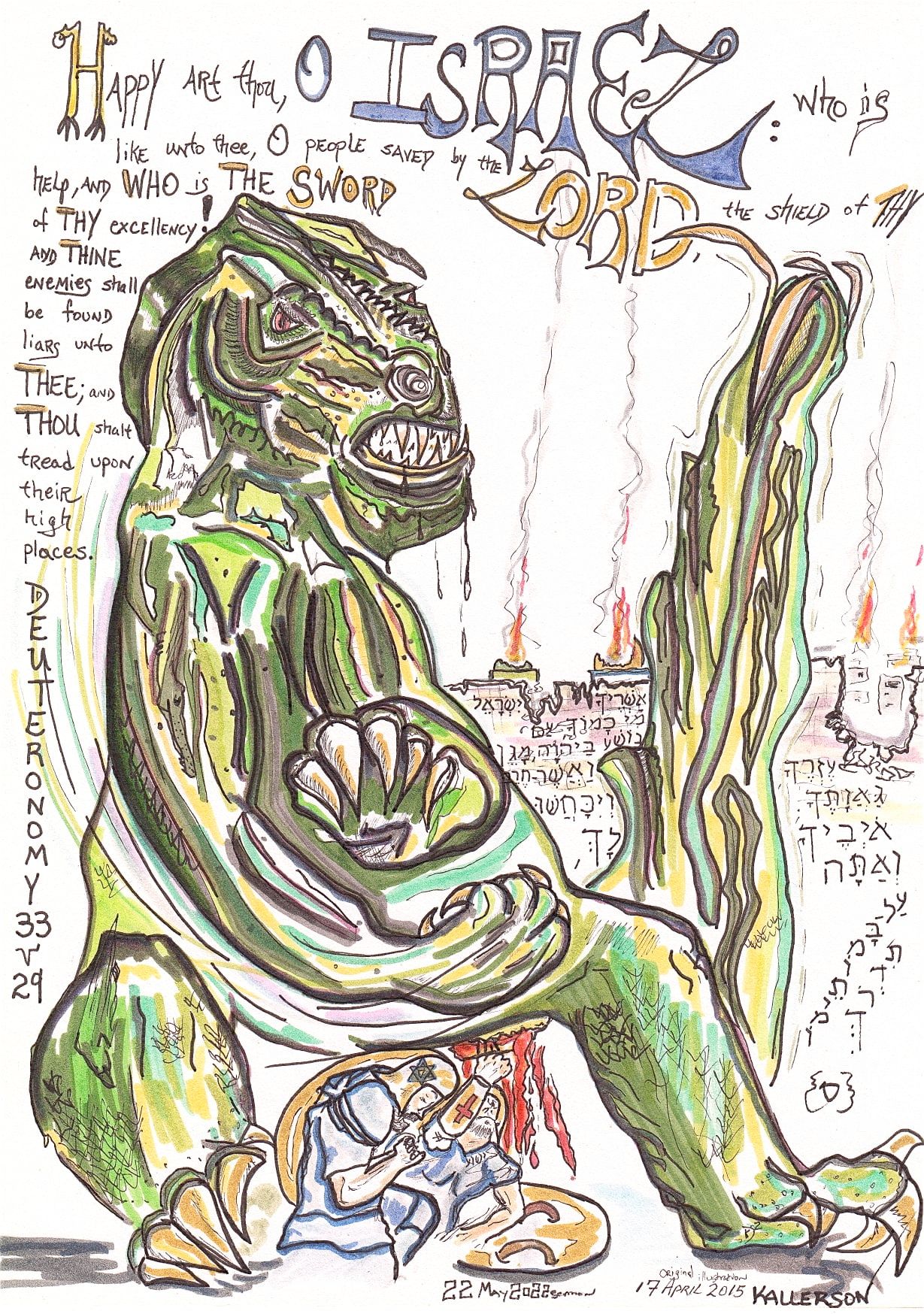
Text Verse: “O Israel, trust in the Lord;
He is their help and their shield.
10 O house of Aaron, trust in the Lord;
He is their help and their shield.
11 You who fear the Lord, trust in the Lord;
He is their help and their shield.” Psalm 115:9-11

One thing that doesn’t matter is “many.” Too often, we look at “many” and we use that as our guide for making decisions. There are many people on the earth and so there must be many acceptable ways to express ourselves toward God.

There are many cultures on the earth and so there are many ways that people groups can express themselves toward God.

There are many religions, and so there must be many ways to have a relationship with God.

There are many denominations, and so it must be ok to worship God in any of them.

And so on.

The problem with that is that there is only one God. We don’t set the rules, He does. That should be obvious on the surface. But it eludes most people, and it is a tragic flaw in our thinking. Once we can accept that God is God and that He sets the rules – and only then – can we then work to find out “how” He expects us to live.

If there is one God and He has actually only given one way for many to relate to Him, we need to find out what that way is. Is it Judaism, Islam, Buddhism, Sikhism, or what? Does He care at all? It is certainly worth finding out.

Does walking into a shopping mall and pulling a detonator cord, blowing yourself and all the people around you up, please God? Does that, as some are told, guarantee you a place in paradise?

If the Bible is God’s word, and if we think dismissing parts of it are ok, then we only need to look at Israel. The tragic story is of a nation that has, and continues to receive, exactly what it bargained for. God has given an example for the whole wide world to discover exactly what He expects and what happens when those expectations aren’t met.

Wonderful, blessed, and great things, along with tragic, terrible, and extraordinary things are to be found in His superior word. And so, let us turn to that precious word once again and… May God speak to us through His word today and may His glorious name ever be praised.

I. The Siege and Desperate Straits (verses 52-57)

52 “They shall besiege you at all your gates

v’hetsar lekha b’kal shearekha – “and he shall besiege to you in all your gates.” As was noted in the verses last week, from verse 49, it speaks of a nation whom the Lord will bring against Israel. In referring to the actions of that nation, the words are in the singular, speaking of it as a united entity.

That continues now – “He shall besiege you,” rather than “They shall be besiege you.” Understanding this, it will be…

52 (con’t) until your high and fortified walls,

The words are prefixed by articles for effect. It says, “until come down your walls, the high and the fortified.” Obviously, one builds walls for protection.

To build them high is intended to make getting over them more difficult, and to give greater advantage to those inside when those outsides are trying to scale them. And more, from a higher elevation, there is an advantage for archers and the like over troops mustered below.

To fortify them obviously is intended to make breeching them more difficult. Having such notable defenses would lead to a feeling of security for those within. The walls are those things…

52 (con’t) in which you trust,

With such strong fortifications, the inhabitants would feel secure. But to trust in such things while failing to trust the Lord can only lead to futility. To highlight this, a new word is introduced, batakh. It gives the sense of being bold, confident, placing one’s hope, and so on.

Where is one’s confidence? In 2 Kings 18 alone, the word is used eight times. The chapter refers to Hezekiah. Of him, it first says in verse 5 –

“He trusted in the Lord God of Israel, so that after him was none like him among all the kings of Judah, nor who were before him.”

In verses 9-12, it notes the besieging of Samaria by Shalmaneser, king of Assyria. The city was taken, and the inhabitants were taken into exile “because they did not obey the voice of the Lord their God.” They had failed to put their trust in Him.

After that, starting in verse 13, it refers to the warfare of the cities of Judah by Sennacherib, king of Assyria. Then, from verse 17, it details the coming siege of Jerusalem by Sennacherib. Until the end of the chapter, the word batakh is used seven more times in relation to where Hezekiah placed his trust, meaning in the Lord.

After that, the word is used again in Chapter 19 as the account of the siege continues. Despite the overwhelming force that stood outside threatening the city, Hezekiah refused to surrender, but continued to trust (batakh) in the Lord God. Because of this, the account of the siege concludes with these words –

“And it came to pass on a certain night that the angel of the Lord went out, and killed in the camp of the Assyrians one hundred and eighty-five thousand; and when people arose early in the morning, there were the corpses—all dead. 36 So Sennacherib king of Assyria departed and went away, returned home, and remained at Nineveh.” 2 Kings 19:35, 36

Here in Deuteronomy, Moses is laying down the law. Where will the people place their trust? Will it be in the Lord, following Him and being obedient to His law, or will it be in the walls of their cities, the work of their own hands? If that is their hope, he says that such strong fortifications will…

52 (con’t) come down throughout all your land;

If an army is prepared to besiege a city long enough, even the highest and strongest walls will not be able to endure forever. A city is comprised of people and people need food. Eventually, even the greatest and most protected city will run out of it.

In such a state, the soldiers within would be so famished that they would be unable to fend off those scaling the walls or the sappers beneath the walls. In this, the walls which had been the inhabitants greatest trust will come down. One city after another would fall to the foe. But more…

52 (con’t) and they shall besiege you at all your gates

v’hetsar lekha b’kal shearekha – “and he shall besiege to you in all your gates.” Moses returns to the thought of the besieging of the gates of the first clause, exactly repeating those words again. Why would he do this? It is to set a contrast to what was said and what will next be said, which is…

52 (con’t) throughout all your land which the Lord your God has given you.

Notice the difference between the two thoughts –

*at all your gates until your high and fortified walls, in which you trust
*at all your gates throughout all your land which the Lord your God has given you

Where is your trust? There are gates and there are gates. There are walls and there are walls. Some are built by man, and some are of the Lord. The contrast to where Israel will place its trust, to its own destruction, and where the Lord Jesus placed His trust, to His own victory, is absolute.

In the 22nd Psalm, a messianic psalm, the word batakh, or trust, is used three times. Twice it speaks of the trust of the fathers in the Lord –

“But You are holy,
Enthroned in the praises of Israel.
Our fathers trusted in You;
They trusted, and You delivered them.
They cried to You, and were delivered;
They trusted in You, and were not ashamed.” Psalm 22:3-5

The third time, it speaks of the faith of the Lord’s Messiah in the Lord –

“But You are He who took Me out of the womb;
You made Me trust while on My mother’s breasts.
10 I was cast upon You from birth.
From My mother’s womb
You have been My God.” Psalm 22:9, 10

Christ placed His trust in the Lord, even from infancy. The Lord is the Gate of trust –

“Open to me the gates of righteousness;
I will go through them,
And I will praise the Lord.
20 This is the gate of the Lord,
Through which the righteous shall enter.” Psalm 118:19, 20

And the Lord is a Wall for those who trust Him –

“‘For I,’ says the Lord, ‘will be a wall of fire all around her, and I will be the glory in her midst.’” Zechariah 2:5

Moses’ implied question for Israel is, “Where will you place your trust?” Israel failed and was punished and exiled. The Lord Jesus never swerved in His trust of the Lord His God. He prevailed where Israel failed. Because of their failures, Moses says…

53 You shall eat the fruit of your own body, the flesh of your sons and your daughters

The words here, as tragic as they are, were given by Moses in advance. Therefore, when such events were to take place, and they did – in fact – take place, the people could go to his words and say, “This is our fault.” The “fruit of your own body” is explained by the words, “the flesh of your sons and your daughters.”

What is as horrifying as the act itself is the fact that before the act, the child would first have to be killed. And this is what the record of Israel details –

“Then, as the king of Israel was passing by on the wall, a woman cried out to him, saying, ‘Help, my lord, O king!’
27 And he said, ‘If the Lord does not help you, where can I find help for you? From the threshing floor or from the winepress?’ 28 Then the king said to her, ‘What is troubling you?’
And she answered, ‘This woman said to me, “Give your son, that we may eat him today, and we will eat my son tomorrow.” 29 So we boiled my son, and ate him. And I said to her on the next day, “Give your son, that we may eat him’; but she has hidden her son.”’” 2 Kings 6:26-29

This also is recorded as occurring in Judah –

“The hands of the compassionate women
Have cooked their own children;
They became food for them
In the destruction of the daughter of my people.” Lamentations 4:10

These and other such examples are given right in Scripture as fulfillment of the words of Moses now. Israel was told that they would eat their own children…

53 (con’t) whom the Lord your God has given you,

In the Bible, having children is considered a blessing from the Lord. However, in rejecting the Lord and shunning His law, the blessing of children would turn into a curse of horror. The unthinkable would become reality…

53 (con’t) in the siege and desperate straits in which your enemy shall distress you.

b’matsor u-b’matsoq asher yatsiq lekha oyevekha – “in siege and in desperate straights which shall distress to you your enemy.” The words are filled with horror – enemies without, complete lack within, and a state of total distress because of the siege of the enemy.

Moses introduces two new words. The first is tsuq. It is a verb signifying distress, being brought into dire straits, and so on. From that comes the other noun, matsoq, meaning dire straits, anguish, and so on. Moses says that the Lord will distress Israel in the sieges and straits that He brings upon the people.

It is in this terrible state that they would do the horrifying thing of eating their own children. This is not only recorded in the Bible, but it is also recorded concerning the siege of Jerusalem by Josephus. Joseph Benson says the following –

“This prediction was repeatedly fulfilled, especially when Vespasian and his son Titus begirt Jerusalem so closely that the besieged were reduced to a most grievous famine, which forced them, after they had eaten up their horses and other creatures, to eat even their own children, whom parents, who had used to live delicately, Moses here foretels, should themselves eat up privately, and let none share with them.” Joseph Benson

What Benson is referring to continues to be explained by Moses in the next words…

54 The sensitive and very refined man among you 

Moses uses two words to describe the man of this verse. The first is rak, or “sensitive.” It signifies tender, delicate, soft and the like. The second word is new and rare, anog. It is used only here, in verse 56, and in Isaiah 47:1. It speaks of that which is luxurious or delicate. He then modifies it with the word meod, or very.

The person being described is the kindest and most gentle sort of man. In normal circumstances, he would reach out to help anyone, and he would never dare to be rude or unkind. And yet, in the straits that Moses speaks of, he…

54 (con’t) will be hostile toward his brother, toward the wife of his bosom, and toward the rest of his children whom he leaves behind,

The words translated as “will be hostile” are literally “will be evil his eye.” In his own anguish, he will look at his brother, his beloved wife, and even his own children with contempt and disdain rather than compassion.

In saying “the rest of his children,” it means that he has taken one to eat. In saying “whom he leaves behind,” it is speaking of the other children. More correctly, it reads, “the rest of his children who remain.” One is taken, the others are not, but he will not give a bite of the meal he is preparing to anyone else.

In the siege of Jerusalem Josephus records –

“…in every house where there was any appearance of food (or anything that looked like it, that had the shadow of it) there was a battle; and the dearest friends fought with one another, snatching away from each other, the miserable supports of life.”

That is just what Moses says of this refined man now. He will take one of his own children and look at those around him with an evil eye…

55 so that he will not give any of them the flesh of his children whom he will eat,

The obvious thought that comes to mind is that his child is already skin and bones. To his demented mind, killing him would be an act of mercy at this point. But because he is nothing but skin and bones, to share him wouldn’t leave enough even for himself. This is all there is, and it isn’t much…

55 (con’t) because he has nothing left in the siege and desperate straits in which your enemy shall distress you at all your gates.

Moses repeats the same words as in verse 53, thus forming its own stress on the state of things – “in siege and in desperate straits which shall distress to you your enemy.” Along with that, he adds in the words from verse 52, b’kal shearekha – “in all your gates.”

It isn’t just a city that is besieged so that the residents of other cities could come and help. Rather, there is no help for anyone because invaders have come upon the whole land. None will be spared. No food will be smuggled in. No friendly armies will launch counterattacks.

In this terrible state, the unthinkable for this man has become reality. The horror and the revolting nature of the meal is all he can think of. But the man is not alone…

56 The tender and delicate woman among you,

Moses uses the same two words he just used to describe the man to describe now this woman, rak and anog. She is “tender” and “delicate.” She is a woman of culture, she is refined, she is dainty. However you would describe the mildest and sweetest woman, this is who Moses now refers to. She is so cultured that she is one…

56 (con’t) who would not venture to set the sole of her foot on the ground

The word translated as “venture” is nasah. It signifies to test or prove a matter. She is so delicate and soft that she wouldn’t attempt to tread barefooted. Moses also uses the word arets (land) instead of adamah (ground).

Though they are almost synonymous, and are both translated as earth, land, and ground, it appears that he may have chosen arets to speak of any terrain – be it soft grass, the shores of the water, or anywhere else. She would never even attempt it…

56 (con’t) because of her delicateness and sensitivity,

Again, Moses repeats the word anog (delicate) and then he uses the noun form of rak, a word found only here in the Bible, rok, or “tenderness.” The repetition is once again a way of highlighting what is said. Such a completely polished and refined woman…

56 (con’t) will refuse to the husband of her bosom, and to her son and her daughter,

Again, like the description of the sensitive and refined man, Moses says that this sensitive and refined woman would have an evil eye toward her beloved husband and also toward her own children. The idea here is that of the strongest of possible bonds.

In saying “wife of his bosom,” or “husband of her bosom,” it is speaking of someone so close that the two are as close to one another as if they are one. And as the children have issued from them, they are one in the same stock. No human relationships could be any closer. And yet, for this once refine and tender woman, she will refuse them…

57 her placenta which comes out from between her feet

This is a word found only here in the Bible, shilyah. Some translations say “her young,” but this is unlikely. It is more likely referring to afterbirth. The word comes from shalah meaning to extract.

The woman is at the time of birth, and so she has withdrawn herself from being near anyone else in order that she will be alone to consume what passes from her. But knowing that the placenta would only lightly satisfy her, she plots to also add to it…

57 (con’t) and her children whom she bears;

The use of the plural, children, certainly means one, twins, or triplets. Her affection for the child or children to be born would be completely lacking. In her deranged thinking, she probably thought it a just and fair trade. “My body has been the vessel to produce the child, now the child will be the means of sustaining my body.

Such is the nature of the horror of being besieged and there being nothing left to eat. And so, to bear a child would be to set forth a meal…

57 (con’t) for she will eat them secretly for lack of everything

ki tokelem b’khoser kol ba’sather – “for she will eat them [plural – probably meaning the afterbirth and the child] in lack all, in the secret.” The words of Moses are so direct, so personal, and so horrifying that surely none could believe they were possible. Who could even imagine it?

But in abandoning the Lord, there would be a time of dread that those who have never faced such a thing could not even think possible. And yet, he says that it would come…

57 (con’t) in the siege and desperate straits in which your enemy shall distress you at all your gates.

The NKJV translators lazily copied the translation from verse 55 and restated it here. However, here it only says, “in your gates,” not “in all your gates” as it said in verse 55. Such lack of attention to detail is unacceptable for a translation committee.

Despite that, for the third time in a row, Moses returns to the same general words as were used in verses 53 and 55 – “in siege and in desperate straits which shall distress to you your enemy in your gates.” Thus, he is forming a very heavy stress on the state of what it will be like when the Lord turns His favor away from Israel.

As already seen, this came to pass in various degrees in 2 Kings 6 and in Lamentations 4. This is also noted in Ezekiel 5. Moses had warned, the law was given, and Israel shunned both the Lord and His word. Because of this, the prophet confirmed what lay ahead –

“Thus says the Lord God: ‘This is Jerusalem; I have set her in the midst of the nations and the countries all around her. She has rebelled against My judgments by doing wickedness more than the nations, and against My statutes more than the countries that are all around her; for they have refused My judgments, and they have not walked in My statutes.’ Therefore thus says the Lord God: ‘Because you have multiplied disobedience more than the nations that are all around you, have not walked in My statutes nor kept My judgments, nor even done according to the judgments of the nations that are all around you’— therefore thus says the Lord God: ‘Indeed I, even I, am against you and will execute judgments in your midst in the sight of the nations. And I will do among you what I have never done, and the like of which I will never do again, because of all your abominations. 10 Therefore fathers shall eat their sons in your midst, and sons shall eat their fathers; and I will execute judgments among you, and all of you who remain I will scatter to all the winds.” Ezekiel 5:5-10

Ezekiel was referring to the tragedy that would come upon the people in the first exile, which had already begun. Eventually, the city was destroyed as prophesied, including the resulting horrors he conveyed to the people.

However, in failing to heed after that, the same tragedy came upon them again as recorded by Josephus and as relayed on Wikipedia. It is a story that occurred during the Roman siege that so closely matches Moses’ words that it can be considered nothing but a fulfillment of these verses here in Deuteronomy –

“Josephus relates that there was a Mary, daughter of Eleazar originally from the village of Bethezuba in the district of Perea, east of the Jordan River, who had previously fled to Jerusalem. Distinguished in family and fortune, her property, treasures and food had been plundered by the Jewish defenders of the city during the siege. Famine was “eating her heart out, and rage consuming her still faster”. Maddened by hunger she took the infant at her breast and said to him: ‘Poor little mite! In war, famine, and civil strife why should I keep you alive? With the Romans there is only slavery and that only if alive when they come; but famine is forestalling slavery, and the partisans are crueler than either. Come you must be food for me, to the partisans an avenging spirit, and to the world a tale, the only thing left to fill up the measure of Jewish misery.’ And in ‘defiance to all natural feeling’ she killed her son, then roasted him and ate one half, hiding the rest.
Almost immediately the rebels appeared (‘sniffing the unholy smell’) and threatened to kill her on the spot unless she revealed what she had prepared. As she uncovered what was left of the child she offered them a share. They left her in horror and the ‘entire city could not stop thinking of this crime and abomination.’ When the news reached the Romans, ‘some refused to believe, some were distressed but on most the effect was to add enormously to their detestation’ of the enemy at hand. Titus disclaimed all responsibility as he had repeatedly offered peace and amnesty for surrender.”

Though not in the Bible itself, and though Josephus – at times – contradicts or misunderstands some of the things found in Scripture, his eyewitness writings of the time in which he lived serve as a witness to what occurred in Israel after their rejection of Christ Jesus.

On the one hand, there is disobedience leading to the horror spoken of in these verses concerning the offspring of the people. On the other hand, there is the note of the blessing for Christ who perfectly obeyed the will of His Father by accomplishing everything set forth for Him to do –

“For it was fitting for Him, for whom are all things and by whom are all things, in bringing many sons to glory, to make the captain of their salvation perfect through sufferings. 11 For both He who sanctifies and those who are being sanctified are all of one, for which reason He is not ashamed to call them brethren, 12 saying:
‘I will declare Your name to My brethren;
In the midst of the assembly I will sing praise to You.’

13 And again:
‘I will put My trust in Him.’
And again:
‘Here am I and the children whom God has given Me.’
14 Inasmuch then as the children have partaken of flesh and blood, He Himself likewise shared in the same, that through death He might destroy him who had the power of death, that is, the devil, 15 and release those who through fear of death were all their lifetime subject to bondage. 16 For indeed He does not give aid to angels, but He does give aid to the seed of Abraham. 17 Therefore, in all things He had to be made like His brethren, that He might be a merciful and faithful High Priest in things pertaining to God, to make propitiation for the sins of the people. 18 For in that He Himself has suffered, being tempted, He is able to aid those who are tempted.” Hebrews 2:10-18

Instead of those in Israel rejecting brother, wife, or offspring, and consuming their own children, Christ was willing to come to save His brethren, die for His bride (Ephesians 5:25), and to suffer for the children God has given Him. The contrast between the two is complete.

As for Israel, it has been a heavy burden laid upon them, but the law came by their own agreement to be under it, and it came with advanced warnings of what it meant to reject what it says. Moses will again confirm this thought in the next verse…

He was so gentle and such a loving soul
He never harmed a thing in his whole wife
But something has come over him that he cannot control
And it has separated any love he had, even for his wife

She was the epitome of tenderness and sensitivity
Never did she dare to put the sole of her foot to the ground
But she has destroyed her own child in the siege of the city
And has hidden his body to eat when none are around

How could such a thing happen? It is a world full of woe
There is only horror and disaster to be found
Where will it end? No one can know
But look at what has happened with the terror all around 

Oh God, may our trust be in You alone
You are our God, our only Helping Stone

II. Until You Are Destroyed (verses 58-61)

58 “If you do not carefully observe

This is somewhat of a paraphrase. The words are more precise, saying, “If not you keep to do.” There is the keeping and the doing as has been mentioned in earlier sermons. One can keep and not do, and one can do without keeping. But what is expected is that the people will both keep and also do…

58 (con’t) all the words of this law that are written in this book,

The English gives the sense for us to understand, but in the original Moses is very specific, leaving out any possibility of ambiguity – “all words, the law the this, these written in the book the this.” One can only see that absolute perfect adherence to what is stated is the expectation.

For Israel, there was the sacrificial system for failure to meet this perfect standard, but the intent is not to fail and then seek forgiveness. It is, instead, to perform and not need to seek it. In keeping and doing, there is a demonstration of the attitude of the people…

58 (con’t) that you may fear

The words, “that you may fear” are not correct. Rather, it says “to fear.” Using “that” implies one clause gives the purpose for the other. Rather the second clause explains the first. In observing and doing, the people are showing reverential fear.

Taken together, it says, “If you do not carefully observe all the words of this law that are written in this book, to fear…

58 (con’t) this glorious and awesome name,

ha’shem ha’nikbad v’ha’nora – “the Name, the heavying, and the feared.” The verb kavad means heavy, weighty, or abounding with. Thus, “the glorying” is a good way to understand the meaning. The word nora is a verb meaning to fear. Being prefixed by the article, it thus means “the feared,” and so “the awestriking” may get the point across as well. And that superlative name is…

58 (con’t) THE LORD YOUR GOD,

YEHOVAH ELOHEKHA – YEHOVAH YOUR GOD. It is a term used many times in Deuteronomy when speaking of the Lord in general, but because of how Moses has preceded it with the previous clause that is filled with superlatives, the full cap title is a sweet touch to offset the words.

By stating it the way he has, it appears that Moses has shown that the name Yehovah that was explained to him at the burning bush in Exodus 3:14 (I AM THAT I AM), is now more fully developed to Israel. It is not just that He is “Yehovah, who is your God,” but that he is “YEHOVAH YOUR GOD.”

The name, and the people to whom the name has been presented, are united in a new revelation of Himself. God is progressively revealing who He is and what His relationship with Israel is. Therefore, if they fail to keep and to do the words of the law and to fear the Name, the heavying, and the feared (YEHOVAH YOUR GOD) …

59 then the Lord will bring upon you and your descendants extraordinary plagues

The nature of the plagues is stated first – “And will make extraordinary, Yehovah, your plagues and plagues your descendants.” Also, the word “plagues” is the same word that was used to describe the beating a person was to receive for violating the law – up to forty stripes – seen in Deuteronomy 25:3.

Therefore, this is certainly more than just plagues of pestilence, but plagues, hazards, social afflictions against the people, and dare we even say of events such as the pogroms and the holocaust. It is the stripes of punishment for rejecting the law and the Lord from whom the law came. These will be…

59 (con’t) —great and prolonged plagues—and serious and prolonged sicknesses.

This seems to show that the idea of “stripes” is more suited. There are both great and prolonged stripes and great and prolonged sicknesses. The two work hand in hand. In being afflicted, such as when the Jews were all clustered into the ghettos (a stripe), the sicknesses would then accompany the stripes.

60 Moreover He will bring back on you all the diseases of Egypt,

Here, the word “disease” is singular. It reads, “And he will return in you every infirmity Egypt.” The word translated as “disease” is used now for the second and last time, madveh.” In both Deuteronomy 7:15 and here, it is referring to disease found in Egypt.

It comes from a word signifying infirmity and it was something that they should have forever left behind, but the Lord promises to bring them back upon the people when they fail to heed. These may or may not be the diseases that afflicted the Egyptians during the plagues upon Egypt. The reason is that a different word is used when describing those in Exodus 15 –

“There He made a statute and an ordinance for them, and there He tested them, 26 and said, ‘If you diligently heed the voice of the Lord your God and do what is right in His sight, give ear to His commandments and keep all His statutes, I will put none of the diseases on you which I have brought on the Egyptians. For I am the Lord who heals you.’” Exodus 15:25, 26

Either way, whether those particular plagues, or whether it was general diseases that were found in Egypt that the Israelites personally experienced, of them, he specifically notes…

60 (con’t) of which you were afraid,

The words are more personal, “which you were afraid of their presence.” In other words, like AIDS or some other debilitating disease that people are fearful of even being around, they shall return to the people of Israel, but more…

60 (con’t) and they shall cling to you.

They will reappear among the people and there will be no way to shake them off. Where one person goes, it will follow. And when it does, it will cling to whoever is near him, sticking like glue. But more than these, the Lord promises extra that the people had not even considered…

61 Also every sickness and every plague, which is not written in this Book of the Law,

Here again, Moses uses the same word translated elsewhere as “stripe” that he used in verse 59, “Also, every sickness and every stripe, which is not written in this Book of the Law.”

Things that would be completely unknown, more terrible, more enduring, more terrifying, and so on – all of these would come upon Israel for their failure to heed. All of these and more…

*61 (fin) will the Lord bring upon you until you are destroyed.

This is the sixth of seven times that Moses uses the word shamad, or “destroy” in this chapter. As we have already seen, it means just that, to destroy, bring to naught, perish, and so on. However, it does not have to be taken in its absolute sense.

Moses knows that Israel will be destroyed. They will be so crushed that there appears to be no hope for them at all. And yet, he knows that the Lord has promised to preserve them through their destruction and to never utterly annihilate them. But that will not ease the pains they are sure to face while they are facing them.

In Jeremiah 6, the prophet uses the same two words that Moses now uses (sickness and stripe) to describe what had befallen the people as an attempted corrective measure –

“For thus says the LORD of hosts:
‘Cut down her trees;
cast up a siege mound against Jerusalem.
This is the city that must be punished;
there is nothing but oppression within her.
7As a well keeps its water fresh,
so she keeps fresh her evil;
violence and destruction are heard within her;
sickness and wounds are ever before me.
8 Be warned, O Jerusalem,
lest I turn from you in disgust,
lest I make you a desolation,
an uninhabited land.’”

Jeremiah probably read the words after penning them and said, “Yes, the Lord is true to His word.” He may have wondered what the end of it all would be. But it wasn’t for him to know. He simply wrote what the Spirit inspired, and he waited to see where things would head.

To this day, people in Israel still don’t know where things will go, because – for the most part – the are wholly ignorant of His word. And of those who have studied it, almost none of them have done so with the thought of Christ Jesus being the One to whom the words point.

Think of that rabbi I mentioned at the beginning of our word today. There he is, telling his people about how unreliable the word is, when it told – in the minutest detail – exactly what would come to pass. But unless one wants to admit that he is (or his people are) in the wrong, there will be no understanding.

Let us not make this error. God is God and we must let Him be so in our lives. Think clearly, think soberly, and think about Israel. If nothing else on this planet explains what is right and what is not concerning who God is (and there many things that do), Israel surely does.

We cannot ignore this word, which tells us of such things, and go unscathed. And the fact is that above all else, this word tells us of Jesus. Therefore, to reject what it says about Him is to find only condemnation.

Pay heed to the word, accept it as it is given (and in its proper context), and you will do well. Of this, I am absolutely certain. If you do not, things will not go well. And of this, I am absolutely certain. Come to Christ and find God’s favor. Amen.

Closing Verse: “Vengeance is Mine, and recompense;
Their foot shall slip in due time;
For the day of their calamity is at hand,
And the things to come hasten upon them.” Deuteronomy 32:35

Next Week: Deuteronomy 28:62-68 Some will find hell by ignoring these verses, and yet they think they will find heaven… (The Blessings and the Curses, Part VII) (83rd Deuteronomy Sermon)

The Lord has you exactly where He wants you. He has a good plan and purpose for you. But He also has expectations of you as He prepares you for entrance into His Land of Promise. So, follow Him and trust Him and He will do marvelous things for you and through you.

The Blessings and the Curses, Part VI

“They shall besiege you at all your gates until your high and
———-fortified walls
Those in which you trust
Come down throughout all your land; and they shall besiege you
———-at all your gates
Throughout all your land which the LORD your God has given you
———–as is right and just

You shall eat the fruit of your own body
The flesh of your sons and your daughters – yes, this is true
Whom the LORD your God has given you
In the siege and desperate straits in which your enemy
———-shall distress you

The sensitive and very refined man among you
Will be hostile toward his brother, acting so unkind
Toward the wife of his bosom
And toward the rest of his children whom he leaves behind

So that he will not give any of them the flesh; their meat
Of his children whom he will eat

Because he has nothing left in the siege and desperate straits
In which your enemy shall distress you at all your gates

The tender and delicate woman among you
Who would not venture to set the sole of her foot on the ground
Because of her delicateness and sensitivity
Will refuse to the husband of her bosom, and to her son
———-and her daughter, if they be found

Her placenta which comes out from between her feet
And her children whom she bears, so she will them treat

For she will eat them secretly for lack of everything
———-in the siege and desperate straits
In which your enemy shall distress you at all your gates

“If you do not carefully observe all the words of this law
That are written in this book by which you should be awed
That you may fear this glorious and awesome name
THE LORD YOUR GOD

Then the LORD will bring upon you and your descendants
Extraordinary plagues; a vile mess
Great and prolonged plagues—
And serious and prolonged sicknesses

Moreover He will bring back on you all the diseases of Egypt
Of which you were afraid, and they shall cling to you
———-they shall from you not be stripped

Also every sickness and every plague
Which is not written in this Book of the Law
Will the LORD bring upon you until you are destroyed
Because you did not show Him respect and awe

Lord God, turn our hearts to be obedient to Your word
Give us wisdom to be ever faithful to You
May we carefully heed each thing we have heard
Yes, Lord God may our hearts be faithful and true

And we shall be content and satisfied in You alone
We will follow You as we sing our songs of praise
Hallelujah to You; to us Your path You have shown
Hallelujah we shall sing to You for all of our days

Hallelujah and Amen…


52 “They shall besiege you at all your gates until your high and fortified walls, in which you trust, come down throughout all your land; and they shall besiege you at all your gates throughout all your land which the Lord your God has given you. 53 You shall eat the fruit of your own body, the flesh of your sons and your daughters whom the Lord your God has given you, in the siege and desperate straits in which your enemy shall distress you. 54 The sensitive and very refined man among you will be hostile toward his brother, toward the wife of his bosom, and toward the rest of his children whom he leaves behind, 55 so that he will not give any of them the flesh of his children whom he will eat, because he has nothing left in the siege and desperate straits in which your enemy shall distress you at all your gates. 56 The tender and delicate woman among you, who would not venture to set the sole of her foot on the ground because of her delicateness and sensitivity, will refuse to the husband of her bosom, and to her son and her daughter, 57 her placenta which comes out from between her feet and her children whom she bears; for she will eat them secretly for lack of everything in the siege and desperate straits in which your enemy shall distress you at all your gates.

58 “If you do not carefully observe all the words of this law that are written in this book, that you may fear this glorious and awesome name, THE LORD YOUR GOD, 59 then the Lord will bring upon you and your descendants extraordinary plagues—great and prolonged plagues—and serious and prolonged sicknesses. 60 Moreover He will bring back on you all the diseases of Egypt, of which you were afraid, and they shall cling to you. 61 Also every sickness and every plague, which is not written in this Book of the Law, will the Lord bring upon you until you are destroyed.


Acts 3:5

Sunday, 12 December 2021

So he gave them his attention, expecting to receive something from them. Acts 3:5

Note: You can listen to today’s commentary courtesy of our friends at “Bible in Ten” podcast. (Click Here to listen)

You can also read this commentary, with music, courtesy of our friends at “Discern the Bible” on YouTube. (Click Here to listen), or at Rumble (Click Here to listen).

In the previous verse, Peter fixed his eyes on the beggar who had asked for alms and called out to him, “Look at us.” Now, in response to that, Luke records, “So he gave them his attention.”

The verb is imperfect and should say something like, “So he began to give them his attention.” The action began and is continuing into the present. This clearly shows that even though the beggar saw Peter and John as is recorded in verse 3:5, he didn’t really “see” them. He simply noticed that they were there and immediately did what beggars do. He asked for alms. His care was not on “who” in particular was going by, but that potential givers were going by, regardless as to who they were.

Now, with Peter calling for him to give them his attention, he began to notice them for “who” they were. This still doesn’t mean he has made a mental note of who they really were as people, but that he has gained their attention and so he was going to give them his attention. This is as common as Brits in the UK. When one stands to profit from another, more attention is given in hopes of securing the deal, or even for increasing the amount that may be offered. Luke’s use of the imperfect brings this to life. And the reason for his attention being given to the apostles is then explained with the words that he was “expecting to receive something from them.”

The verb is a present participle. He began to look at them because he was anticipating alms to be delivered to him. One can get the mental idea of what was going on in the man’s head. “I had better start directing my attention at these guys because they are about to hand me some silver.” A full gaze of attention from him may come if they handed him ten silver coins, but a quick look up and then back down may come if they handed him a small copper coin. The response of the beggar will now be fully brought forth by how the hand is filled.

Life application: When sharing the gospel, there are as many reactions to it as there are people who are willing to listen. And those who are willing to listen may only be doing so because they are too shy to tell the one sharing the message that they are not really interested. Once the message starts to be presented, the person hearing the message will give cues as to whether he is actually interested in hearing what is said or not.

What happened with this beggar is just what needs to happen with the person being given the gospel. His attention needs to be fixed. There should be no other distractions, and no more than two people should be there. And even if there are two people, only one should do the talking. If there are more than two people, the presentation will be intimidating. If more than one is talking, the message will be confused in the mind of the hearer.

Once the hearer has his attention directed to the one who is speaking, the speaker needs to be attentive to the body cues. The eyes, the feet, the arms… each part of the person will give cues as to his state of mind. Is he fidgeting? He is nervous. Is he backing up? He is scared. Are his arms crossed in front of him? He feels exposed and maybe threatened. Are the eyes darting around? He wants the conversation to just end so he can get away.

Ten thousand little cues will tell you if you are having an impact or not. If you are not, then you need to redirect your approach so that the person will feel comfortable, not threatened, welcomed, and so on. This is what Peter and John have done, and it is how we are to do such things as well. The attention must be focused, direct, caring, and of personal value to the hearer.

You have the greatest “alms” in the world to give to this person, if you can get him to understand that he is a beggar in need of them. Sin is the problem, we are desperately in need of the kind hand of the Lord to cure it, and the gospel is the gift that we cannot do without. Be ready with this message at all times. Pass on the gift of eternal life that was secured for the person standing before you through the shed blood of Christ.

Lord God, help us to be responsible with sharing the gospel message. None can do without it, and all who come must do so through it. So, Lord, give us wisdom in sharing this all-important message of life and hope. Amen.


Acts 3:4

Saturday, 11 December 2021

And fixing his eyes on him, with John, Peter said, “Look at us.” Acts 3:4

Note: You can listen to today’s commentary courtesy of our friends at “Bible in Ten” podcast. (Click Here to listen)

You can also read this commentary, with music, courtesy of our friends at “Discern the Bible” on YouTube. (Click Here to listen), or at Rumble (Click Here to listen).

The lame man sitting at the gate called Beautiful had noticed Peter and John going into the temple. Upon noticing them, he asked for alms. In response to this, Luke records concerning Peter, “And fixing his eyes on him.” The Greek word, atenizó, gives the sense of the attention of the individual being completely fixed on what is before him. It is a word that is used fourteen times in the New Testament, and all but two are from Luke. The other two uses are by Paul in 2 Corinthians 3.

With this directed and steady stare upon the beggar, Luke adds in the words, “with John.” Peter is the one who is inspired to act, but John is there as well. As such, he is able to confirm the event as a second witness to what will take place. With this noted, the verse ends with, “Peter said, ‘Look at us.’”

Here, Luke uses the word blepó. It is not an uncommon word, but it gives the sense of looking attentively. The previous verse used another word when it said of the beggar, “who, seeing Peter and John about to go into the temple.” There, he saw, but he wasn’t attentive to what he was seeing. He just simply saw a couple of guys coming and was set to ask alms from them without really paying attention to who they were. He discerned their presence, but his attention was not fixed upon them. However, Peter now asks for full and undivided attention.

Life application: In your daily life, you will see many people and many things without really paying attention to them. This doesn’t mean you are uncaring. Rather, if we took the time to carefully observe everything we passed, we would never get anywhere.

When we drive down the road, we see trees, but we don’t see each tree. And even if we went slow enough to see each tree, we wouldn’t see each branch. But suppose we stopped and looked at each branch. We still probably wouldn’t continue by looking at every leaf or pine needle. Again, if we were attentive to every detail, we would never get anywhere.

However, there are things we should be more attentive to than others. The word of God, for example, is something we may read every day. But our level of attention to it may be more or less, depending on how careful we are with it.

As noted above, the word atenizó is used twice by Paul, both times in 2 Corinthians 3. The second time he uses it, he says –

“Therefore, since we have such hope, we use great boldness of speech— 13 unlike Moses, who put a veil over his face so that the children of Israel could not look steadily at the end of what was passing away. 14 But their minds were blinded. For until this day the same veil remains unlifted in the reading of the Old Testament because the veil is taken away in Christ.” 2 Corinthians 3:12-14

Paul compares the veiling of Moses’ face to the veil which blinds the eyes of the Jews to the truth of Christ. The same words of the Old Testament are read by Jew and Gentile alike, and yet, unbelieving Jews have no sense of discernment concerning how it all points to Jesus. The same is true with us before we are shown how it anticipates Him.

Have you ever read a passage and thought, “I wonder why that is included in the Bible?” And then, shortly after, a preacher does a sermon on exactly that passage. In his sermon, he carefully explains how it anticipates Christ. It is as if a light goes on. “Yes, of course! I see it. If only I had thought it through.”

When we read the Bible, we are reading the word of God. It is a book intended to show us what He has done, is doing, and will do in redemptive history. And every bit of it is centered on Jesus. If we keep that in mind, and if we are careful to think about what we are reading, we can often see things that are right there in plain sight, but which are veiled in how they are presented.

When reading the Bible, be careful not to insert what you are looking for into what you are reading. Rather, ask the Lord, “What are You showing us?” Then think on what you have read, considering it in relation to the rest of Scripture. In this, you may find types and pictures of what God is doing in the text right before you.

Fix your gaze attentively on this precious word, contemplate what it says, and cherish what it conveys. This word is what tells us of Jesus, and Jesus is the One who reveals the unseen Father to us. Yes, cherish this sacred word and this beautiful gift that God has given to reveal Himself to us.

Lord God, how wonderful it is to study Your word, to think on its precepts, and to consider its lessons. There are foundational truths recorded there. In it, we find a properly established moral base for our lives. And through it, we are directed to You – the Giver of all good blessings in Christ. Thank You for this precious word, O God. Amen.