Acts 7:27

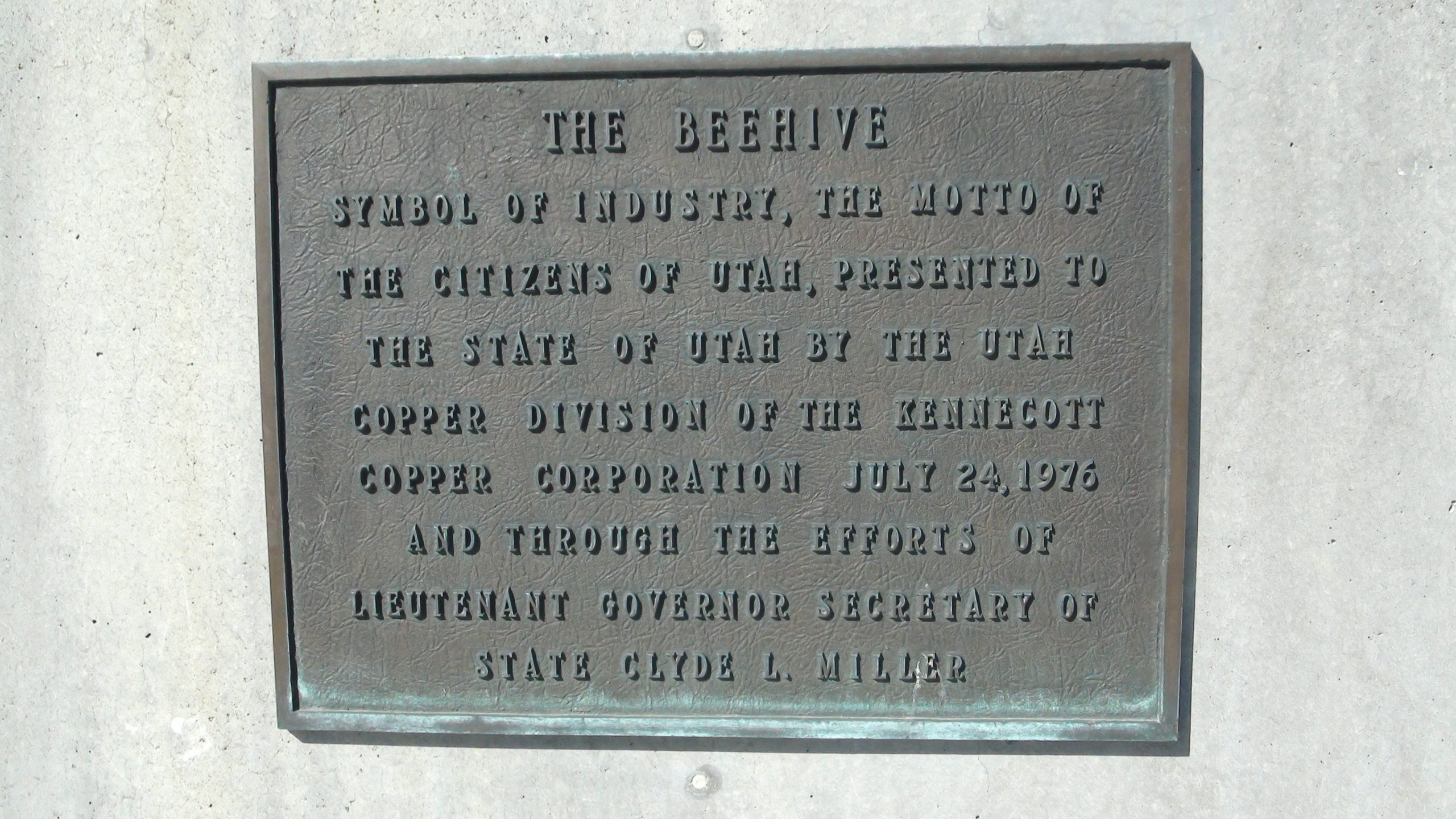
Cannon, shiny, one each.

Tuesday, 3 May 2022

“But he who did his neighbor wrong pushed him away, saying, ‘Who made you a ruler and a judge over us? Acts 7:27

Note: You can listen to today’s commentary courtesy of our friends at “Bible in Ten” podcast. (Click Here to listen)

You can also read this commentary, with music, courtesy of our friends at “Discern the Bible” on YouTube. (Click Here to listen), or at Rumble (Click Here to listen).

The previous verse had Moses trying to reconcile the Israelites who were fighting. That now continues with, “But he who did his neighbor wrong.”

In the commentary of the previous verse, a proverb was cited, warning people to not get involved in a quarrel that is not their own. The reason is that one or both of the people are bound to turn and bite at you. In this case, it is the one who was the wrongdoer in the argument. He is obviously a bully, and he has taken offense at someone attempting to correct his wrongdoing. With his state of anger turned towards Moses, it says he then “pushed him away.”

This is not recorded in the Exodus account –

“And when he went out the second day, behold, two Hebrew men were fighting, and he said to the one who did the wrong, ‘Why are you striking your companion?’
14 Then he said, ‘Who made you a prince and a judge over us? Do you intend to kill me as you killed the Egyptian?’” Exodus 2:13, 14

Stephen’s words are as much a theological addition as anything else. A main point of what he is conveying is the rebellious nature of Israel in general, especially to those in authority over them or those who are willing to guide and instruct them, most especially the Lord.

In His incarnation, this is exactly what they had done. They had “pushed him away,” rejecting His appointed authority over them. The similarity continues with the final words of the verse, where Stephen says this bully was “saying, ‘Who made you a ruler and a judge over us?’”

It was obvious that Moses was in a place of authority, even if it was only based on his adopted family’s status. His position, then, entitled him a level of respect not seen in his treatment by this miscreant. But this person’s actions are recorded specifically as a type of all of Israel throughout their history, pushing the authority of Moses (meaning the law that came through him) away. In this, they “pushed away” the authority of the Lord who gave that law through Moses.

Further, they “pushed away” the Lord Jesus who not only fulfilled the law but who then initiated a New Covenant in His blood. They rejected Him as their ruler, and they rejected Him as their judge. Ironically, in rejecting Jesus, they fell back on Moses (meaning the law), the same leader they had constantly rejected over their entire history –

“Do not think that I shall accuse you to the Father; there is one who accuses you—Moses, in whom you trust. 46 For if you believed Moses, you would believe Me; for he wrote about Me. 47 But if you do not believe his writings, how will you believe My words?” John 5:45-47

Life application: As a reminder to each of us, we need to not assume that we are any better than Israel. We read the words of the Old Testament, and even into the New, and we say, “Boy, they really were a disobedient nation. They rejected Moses and went their own way constantly.” This is true, they did. But Moses’ words came from the Lord.

Today, we have the word of the Lord through the apostles. And yet, do we faithfully follow what He says? Even on the best of days, we fall short of all that is expected of us. Some more than others. But when we are not obedient to what is given in the epistles, we are just like Israel.

Let us consider this, especially in 1) adding to the word things that are not in the word – pet peeves, legalistic precepts, and so on, 2) taking from the word (meaning not doing) things that are explicit, and 3) mishandling the word by not following sound rules of biblical interpretation. We must be especially careful to KNOW THE WORD, or we can never do these things with any reliability. Our doctrine will be at the whims of whatever we are told, but it will not be backed up with our own knowledge of whether what we are told is actually correct or not.

Glorious Heavenly Father, thank You for Your grace and tender mercy upon us through the giving of Your Son. Help us to show our thanks by desiring to know more about Him, about what He has done, and about how that knowledge comes through knowing Your word. May it be so, to Your glory. Amen.


Acts 7:26

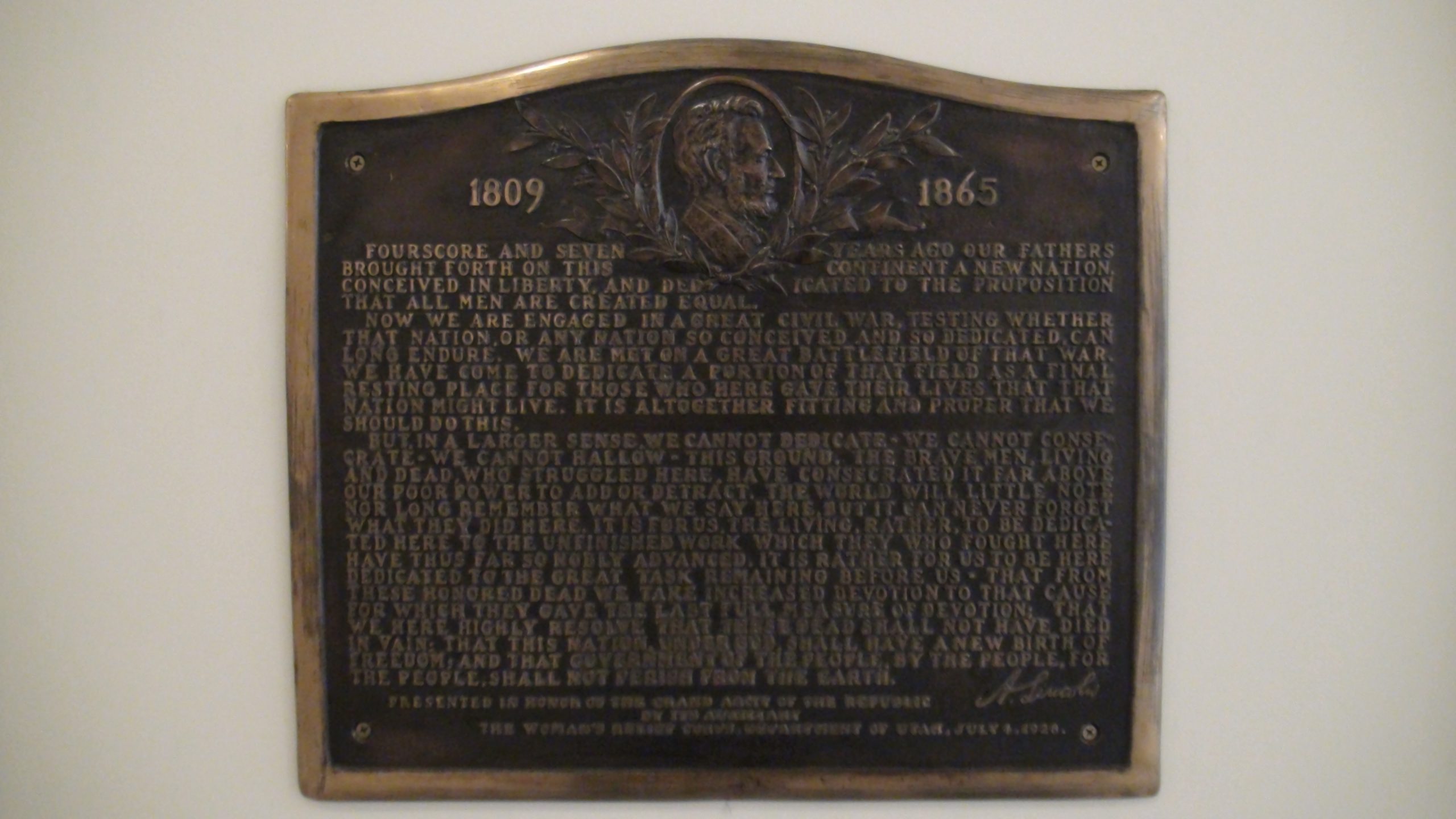
Grounds at Austin Capitol.

Monday, 2 May 2022

And the next day he appeared to two of them as they were fighting, and tried to reconcile them, saying, ‘Men, you are brethren; why do you wrong one another?’ Acts 7:26

Note: You can listen to today’s commentary courtesy of our friends at “Bible in Ten” podcast. (Click Here to listen)

You can also read this commentary, with music, courtesy of our friends at “Discern the Bible” on YouTube. (Click Here to listen), or at Rumble (Click Here to listen).

Stephen will now explain the words of the previous verse concerning Moses. There, it said, “For he supposed that his brethren would have understood that God would deliver them by his hand, but they did not understand.” Their not understanding begins to be explained with the words, “And the next day he appeared to two of them.”

The word used signifies that he appeared in an unexpected way or suddenly. It is the kind of appearance that would describe someone having a vision or being sent from God. The use of this word is clearly hinting at the advent of Christ Jesus who came in an unexpected and sudden way. As for Moses, this unexpected appearance occurred “as they were fighting.”

One gets the sense of two men having a fight and Moses is suddenly there, as if he was destined to be the one to bring peace between the two. It is at this time, and with this unexpected appearance, that Moses “tried to reconcile them.”

The phrase is more literally rendered, “urged them to peace.” One can see a fight going on today and another person coming up and saying, “Hey guys, lighten up and calm down. There is no need for this!” Moses feels he is doing the right thing. It was laid upon his heart to visit his brethren, and instead of finding a group that is united and caring of one another, he finds fighting. In this state of things, he looks to bring reconciliation, “saying, ‘Men, you are brethren; why do you wrong one another?’”

Stephen gives more information than the original account in Exodus, which reads –

“And when he went out the second day, behold, two Hebrew men were fighting, and he said to the one who did the wrong, ‘Why are you striking your companion?’” Exodus 7:13

Stephen acknowledges the bond between the two and uses that as an anchor to then question why they would have enmity for one another. His words are undoubtedly chosen to reveal the attitude of Israel towards Jesus. That will be more fully expressed in the verses to come. Moses came to deliver his people from the bondage of Egypt and to unite them as a people under the Lord. Jesus came to deliver His people from the bondage of sin and to unite them as children of God.

Life application: Solomon was an observant man. He was able to look at the world around him and see how things should work, what is effective or ineffective, what will lead to peace and what will lead to trouble, and so on. It could be that he was reading this account of Moses from Exodus and then thought about other similar instances he had seen, and then penned the words of this proverb –

“He who passes by and meddles in a quarrel not his own
Is like one who takes a dog by the ears.” Proverbs 26:17

Taking a dog by the ears means you are more than likely going to get bit. Such is true when you step into an already explosive situation. The two who are quarreling are set on fixing the matter themselves. When someone who has no stake in the matter sticks his nose into the fight, it is like bringing along a bucket of gasoline and an already lit match. Things will probably not go well.

Instead of bringing peace and reconciliation, the two who are fighting will find the interference unacceptable and are bound to take out their frustration on the meddler first, before finishing their own quarrel. Moses didn’t see this, and to this day, those who fail to heed the words of proverbs will continue to make exactly the same mistake. Human nature doesn’t change, so to gain wisdom, be sure to read and apply the words of Proverbs to your life.

Lord God, thank You for the wisdom Your word provides. If we will just apply it to our lives, things will go better for sure. Help us to display wisdom by reading and taking heed to Your word. You created us, and You have given the manual for proper operating conditions concerning us. Therefore, Lord, help us to tweak our walk before You so that all things will go smoothly! Amen.


Deuteronomy 33:6-11 (Moses Blesses Israel, Part I)

Deuteronomy 33:6-11
Moses Blesses Israel, Part I

In the previous sermon, magnificent and splendid words began the blessing of Israel by Moses. It was as a flower of beauty slowly opening with each word. Today, the petals of this precious rose continue to gradually unfold and present themselves to us.

We will see the rather concise and curt blessing upon Reuben. From there a short, but most majestic blessing will be pronounced upon Judah. And then, words of remembrance, mingled with words of petition, are brought forth from the lips of Moses toward those of his own tribe, Levi.

The words were spoken, they have been recorded, and they remain as a memorial before the Lord as well as an instrument of instruction for Israel and for us.

It is hard to imagine that the Lord would give them, allow them to rest upon the people – through good and bad – and then have the people come to a sudden and crushing end without any hope of restoration or remedy.

But this is what much of the church has decided has occurred. Israel disastrously did not heed, they failed to recognize the time of their visitation, and the Lord cut them off forever. Does that sound like the covenant keeping Lord that we have seen throughout the books of Moses? It doesn’t to me!

Text Verse: “He has helped His servant Israel,
In remembrance of His mercy,
55 As He spoke to our fathers,
To Abraham and to his seed forever.” Luke 1:54, 55

It is true that the covenant of the Lord with Israel through Moses contains many stern warnings and curses, but it also is very precise in how it presents them. We have seen this again and again.

Moses speaks of cutting off the people, but never of cutting off the nation. The continuous movement of the words he has presented, especially in Deuteronomy, have been precisely chosen and laid before us to show that this is not the case.

Moses simply builds upon what the Lord has already said earlier in the law. For today, there is less of that type of speech, and more of a carefully selected line of thought that provides hope and assurance to the individual tribes, while at the same time revealing really marvelous hints and pictures of the coming Messiah.

Woven into the words are also some unique patterns, linguistic nuances, and literary forms to help guide us in the often obscure nature of the words themselves. I do hope you will be pleased and even tickled with how these three blessings unfold. It was a joy to search them out, and now I joyfully present them to you.

Precious and wonderful things are to be found in His superior word. And so, let us turn to that precious word once again and… May God speak to us through His word today and may His glorious name ever be praised.

I. The Blessings Upon Reuben and Judah (verses 6 & 7)

“Let Reuben live, and not die,

The words are simple and direct in Reuben’s blessing. And yet, they are also quite complicated and even obscure in meaning. Hence, they are highly debated. In them, there are three jussives – indirect commands or petitions. The first two are found in this clause: yehi Reuven v’al yamot – “May live Reuben and not may die.”

The blessing of Reuben is one of life. The reason for Moses stating this is that, despite being the firstborn, Reuben was already removed from the honor and position of the firstborn because he slept with his father’s concubine, Bilhah. That is found in Genesis 35:22. Upon his death, Jacob’s blessing upon his sons did not reflect favorably upon Reuben –

“Reuben, you are my firstborn,
My might and the beginning of my strength,
The excellency of dignity and the excellency of power.
Unstable as water, you shall not excel,
Because you went up to your father’s bed;
Then you defiled it
He went up to my couch.” Genesis 49:3, 4

Later, when the rebels came against Moses in the wilderness, some of the main insurgents were of the tribe of Reuben –

“Now Korah the son of Izhar, the son of Kohath, the son of Levi, with Dathan and Abiram the sons of Eliab, and On the son of Peleth, sons of Reuben…” Numbers 16:1

Despite their troubled past, Moses’ petition is for Reuben’s continuance, “May live Reuben, and not may die.” However, the next clause is what becomes difficult and debated over…

6 (con’t) Nor let his men be few.”

The third jussive is seen in this clause: vihi metav mispar – “And may his men a number.” Despite being just three words, there are pages of commentary on what Moses is saying. First, the word mispar, or “number,” signifies that which can be counted. If this is an independent clause, the meaning is the same as that found in Deuteronomy 4:27 –

“And the Lord will scatter you among the peoples, and you will be left few in number among the nations where the Lord will drive you.”

As such, it is a countable number –

*May live Reuben, and not may die.
*And may his men be few.

But “a number” may be a way of saying an indeterminate number and thus –

*May live Reuben, and not may die.
*And may his men be unnumbered.

Or, if “a number” is tied to the previous words, it would also be a large number because the “not” would carry on to the second clause –

*May live Reuben, and not may die.
*And (not) may his men be few.

And to throw a monkey wrench in that almost nobody would see coming, an ancient Greek translation of this verse inserts the name of Simeon here. This is because there is no other mention of Simeon in the entire blessing of Moses upon the tribes –

*May live Reuben, and not may die.
*And may the men of Simeon be few.

Simply because we are following the Hebrew, and because there is only one negation, I would go with the most literal translation and say that Moses is petitioning that Reuben not be extinguished as a tribe, and – being charitable – he is asking that he become an uncountable number.

The use of three jussives in the verse seems to exclude carrying the word “not” over to the second clause. Moses is directly petitioning with clarity and precision –

May live Reuben and not may die;
And may his men be a number.”

It is, then, a blessing for continuance and a petition for growth without a set limit. As such, Reuben, or “See a Son,” would picture Christ who did live and not die in the sense that He was never cut off because of His own sin. And He has also increased to an innumerable number –

“After these things I looked, and behold, a great multitude which no one could number, of all nations, tribes, peoples, and tongues, standing before the throne and before the Lamb, clothed with white robes, with palm branches in their hands, 10 and crying out with a loud voice, saying, ‘Salvation belongs to our God who sits on the throne, and to the Lamb!’” Revelation 7:9, 10

Simeon then has no blessing at all. Jacob’s blessing of Simeon was joined with that of Levi –

“Simeon and Levi are brothers;
Instruments of cruelty are in their dwelling place.
Let not my soul enter their council;
Let not my honor be united to their assembly;
For in their anger they slew a man,
And in their self-will they hamstrung an ox.
Cursed be their anger, for it is fierce;
And their wrath, for it is cruel!
I will divide them in Jacob
And scatter them in Israel.” Genesis 49:5-7

Because Simeon was to be divided and scattered, and because his tribe will be assimilated into Judah’s land grant, they would – for all intents and purposes – be assimilated into Judah as well. As such, the blessing upon Judah should be taken – at least partially, even if not intentionally at this time – as also falling upon Simeon.

Because of this, the words of Moses continue with this fourth son of Jacob who is next blessed even before the third son, Levi –

And this he said of Judah:

The introductory words are so short and precise in the Hebrew that it is hard to not see in them something stately and majestic, as if it is being proclaimed at the coming of a king: v’zoth lihudah – “And this to Judah.”

One can almost sense the blast of a trumpet, drawing all attention to what will be proclaimed as he heralds the royal arrival, “And this to Judah!”

7 (con’t) “Hear, Lord, the voice of Judah,

vayomar shema Yehovah qol yehudah – “And he said, ‘Hear, Yehovah, voice Judah!” The blessing of Judah calls attention to his voice. Although we would be here for the next week or two, or longer, if we were to sufficiently evaluate the meaning of this, it can be summed up in the thought that a great portion of Scripture is based upon the voice of Judah.

It was building throughout the time of the judges, but it was heard in the most resplendent manner as the young shepherd boy from Bethlehem called forth to the great foe of Israel –

“You come to me with a sword, with a spear, and with a javelin. But I come to you in the name of the Lord of hosts, the God of the armies of Israel, whom you have defied. 46 This day the Lord will deliver you into my hand, and I will strike you and take your head from you. And this day I will give the carcasses of the camp of the Philistines to the birds of the air and the wild beasts of the earth, that all the earth may know that there is a God in Israel. 47 Then all this assembly shall know that the Lord does not save with sword and spear; for the battle is the Lord’s, and He will give you into our hands.” 1 Samuel 17:45-47

From that time on, the voice of Judah fills the pages of the psalms, the historical writings, the books of wisdom, and the words issued forth as prophecy. And then, the voice of Judah was heard in the most unique way of all in the first recorded words of the Lord –

“Why did you seek Me? Did you not know that I must be about My Father’s business?” Luke 2:49

At that time, and for the rest of Scripture, the voice of Judah is truly realized in the way that Moses now intends. He knew the words of Jacob when he blessed his fourth son, and he thus knew that the line of the Messiah was fixed through him –

“Judah, you are he whom your brothers shall praise;
Your hand shall be on the neck of your enemies;
Your father’s children shall bow down before you.
Judah is a lion’s whelp;
From the prey, my son, you have gone up.
He bows down, he lies down as a lion;
And as a lion, who shall rouse him?
10 The scepter shall not depart from Judah,
Nor a lawgiver from between his feet,
Until Shiloh comes;
And to Him shall be the obedience of the people.
11 Binding his donkey to the vine,
And his donkey’s colt to the choice vine,
He washed his garments in wine,
And his clothes in the blood of grapes.
12 His eyes are darker than wine,
And his teeth whiter than milk.” Genesis 49:8-12

The voice of Judah, which means “Praise,” is the praise of God because he is the praised of God. The voice of Judah is the voice of the Word of God that speaks forth life. The voice of Judah is the battle cry for the people of God to follow their King. The voice of Judah is the roar of the Lion and the humble call of the Servant. The voice of Judah is, ultimately, the voice of Jesus – the Lord.

7 (con’t) And bring him to his people;

v’el amo tevienu – “And unto His people [You] bring him.” Immediately, this refers to the tribe. Judah was separated from Israel, being the southernmost tribe and thus somewhat isolated from the rest. Throughout the Bible, Judah continues in this state of semi-separation.

However, Ezekiel prophesied of a time when Judah would be inseparably united to Israel –

Again the word of the Lord came to me, saying, 16 “As for you, son of man, take a stick for yourself and write on it: ‘For Judah and for the children of Israel, his companions.’ Then take another stick and write on it, ‘For Joseph, the stick of Ephraim, and for all the house of Israel, his companions.’ 17 Then join them one to another for yourself into one stick, and they will become one in your hand.
18 “And when the children of your people speak to you, saying, ‘Will you not show us what you mean by these?’— 19 say to them, ‘Thus says the Lord God: “Surely I will take the stick of Joseph, which is in the hand of Ephraim, and the tribes of Israel, his companions; and I will join them with it, with the stick of Judah, and make them one stick, and they will be one in My hand.”’ 20 And the sticks on which you write will be in your hand before their eyes.

The words of Moses, however, are certainly looking ahead in anticipation even more precisely than this. He is remembering the blessing of Jacob, and he is specifically calling forth for the coming of Messiah, to be brought to His people –

“But you, Bethlehem Ephrathah,
Though you are little among the thousands of Judah,
Yet out of you shall come forth to Me
The One to be Ruler in Israel,
Whose goings forth are from of old,
From everlasting.” Micah 5:2

The voice of Judah, through Micah of Moresheth – which is in the tribe of Judah – called forth for the coming of Israel’s Ruler who would be from Bethlehem Ephrathah, also in the tribe of Judah.

7 (con’t) Let his hands be sufficient for him,

The words are obscure and complicated: yada rav lo – “His hands abound to him.” The Greek reads “contend.” Because of the difficulty, many translations follow the Greek, saying, “His hand contends for him.” The word is rav, signifying abundance, enough, many, mighty, and so on. It is a sort of superlative in whatever it is referring to.

As the hand is that which accomplishes things, I would say the intent is something like, “He is fully sufficient to perform, be it in war, productivity, salvation, deliverance, and so on.” As such, Judah has the strength to carry itself and its purposes through.

In anticipation of the Greatest of Judah, one could look to the words of Isaiah to find the ultimate intent of Moses’ words –

“Who is this who comes from Edom,
With dyed garments from Bozrah,
This One who is glorious in His apparel,
Traveling in the greatness of His strength?—
‘I who speak in righteousness, mighty to save.’
Why is Your apparel red,
And Your garments like one who treads in the winepress?
‘I have trodden the winepress alone,
And from the peoples no one was with Me.
For I have trodden them in My anger,
And trampled them in My fury;
Their blood is sprinkled upon My garments,
And I have stained all My robes.
For the day of vengeance is in My heart,
And the year of My redeemed has come.
I looked, but there was no one to help,
And I wondered
That there was no one to uphold;
Therefore My own arm brought salvation for Me;
And My own fury, it sustained Me.
I have trodden down the peoples in My anger,
Made them drunk in My fury,
And brought down their strength to the earth.’” Isaiah 63:1-6

With this in mind, the next words of the blessing might seem contradictory, but this is not the case…

7 (con’t) And may You be a help against his enemies.”

v’ezer mitsarav tiyeh – “And help from his enemies may You be.” If the hands of Judah abound in might, then why would they need the Lord to help them? But the words are comparative. Judah is considered to be capable of meeting and defeating its foes, but even the mightiest nation cannot prevail if the Lord is not with it.

This has been and it will continue to be seen. If the Lord purposes triumph, there will be triumph if by many or by few. And if the Lord purposes defeat, then it will come without regard to number.

And again, the words of Moses toward Judah are but a reflection of words that apply to the ultimate Son of Judah. Though in one way He is mighty to save, working out salvation by His own arm, He is fully dependent on the Lord who sent Him forth –

“For dogs have surrounded Me;
The congregation of the wicked has enclosed Me.
They pierced My hands and My feet;
17 I can count all My bones.
They look and stare at Me.
18 They divide My garments among them,
And for My clothing they cast lots.
19 But You, O Lord, do not be far from Me;
O My Strength, hasten to help Me!
20 Deliver Me from the sword,
My precious life from the power of the dog.
21 Save Me from the lion’s mouth
And from the horns of the wild oxen!
You have answered Me.” Psalm 22:16-21

Not only are the two clauses not contradictory, whether referring to Judah or to Jesus, they show the total dependence of them upon the Lord. And the Lord is with both, helping them against the foes who have arisen against them.

There is a story to be found in the tribes of Israel
There is God working out His plan
Each detail calls out, “I have something to tell”
Something that leads to the redemption of man

The names of the tribes are carefully given
One shows one thing, and the next shows another
Each points to the greater story of hope-filled livin’
When Christ would come – Israel’s greatest Son and Brother

The things they did and the lives they lived out
Are recorded in the Bible for us to read and to learn
The stories are given for us to see and have no doubt
The marvelous majesty, for which our souls now yearn

Christ is coming, so the word does tell
And hints of Him are found in the stories of Israel

II. The Blessing Upon Levi (verses 8-11)

And of Levi he said:

u-l’levi amar – “And to Levi he said.” Levi is the third son, and he receives the third blessing, even if it is out of order because of Simeon’s assumed inclusion in the blessing of Judah. It is the tribe of Moses. It is the tribe of the priestly class, and it is the tribe that has no land inheritance but is instead to be found throughout the land in the Levitical cities. To Levi, he says…

8 (con’t)Let Your Thummim and Your Urim be with Your holy one,

thumekha v’urekha l’ish khasidekha – “Your Thummin and Your Urim to man your godly.” The blessing of Levi concerns his office and duties. Here is a new word, khasid. It is an adjective signifying kind, godly, pious, and so on. It is mostly found in the psalms and at times it is rendered “saint.”

Levi is spoken of here as a godly man who possesses the special stones, the “Perfections and Lights,” used to determine the will of the Lord. They are what receive the infallible truths and revelations divulged by God.

Of the five times these stones are mentioned together, this is the only time that the Thummim is stated before the Urim. There is no explanation for this, and there are various conjectures as to its meaning, some imaginatively elevating one precept over the other. But I would think that this is a way of saying that both are on an equal standing.

In other words, if it always said, “Urim and Thummim,” one might think that “Lights,” meaning God’s revelations, come first and then “Perfections,” or the infallible truths, are based upon those revelations.

But in stating it as “Thummim and Urim” here, Moses is indicating that they are both of the same substance. God’s revelations are revealed in infallible truths, and His infallible truths are conveyed in His revelations. In essence, they are two sides of one coin.

The godly nature of Levi is to be revealed in the coming clauses. For now…

8 (con’t) Whom You tested at Massah,

asher nisito b’Massah – “Whom You tested in Massah.” The name Massah means Testing. Hence, it says, “Whom you tested in Testing.”

There is nothing directly stated of Levi concerning what occurred in Massah which is the account given in Exodus 17. As such, it leaves one wondering what Moses is talking about. But the next clause helps alleviate the difficulty…

8 (con’t) And with whom You contended at the waters of Meribah,

terivehu al me merivah – “You strived with him upon waters Meribah.” The name Meribah means “Place of Quarrelling.”  The Lord strived with Levi at the “Place of Quarrelling.” This was when Moses and Aaron were to speak to the rock and have water issue forth. Instead, Moses struck the rock twice with his rod.

The connection between the two is that the event at Massah occurred just shortly after having departed from Egypt, and the event at Meribah occurred just as the spies were investigating the land of Canaan. As such they encompass, as book ends, the entire time at Sinai when the law was given.

Once the spies returned, the people rejected the word of the Lord, and they were punished with being exiled into the wilderness. As we have repeatedly seen, that is emblematic of the past two thousand years of exile for Israel. As such, Moses’ words now look to the time of the administration of the law.

Next, Moses takes us back to the time of the giving of the law…

Who says of his father and mother,

Levi is referred to by a verb prefixed by an article: ha’omer l’abiv u-l’imo – “The sayer to his father and to his mother.” Here, it is referring to Levi as an individual, a collective whole. He says…

9 (con’t) ‘I have not seen them’;

It is singular: lo’reitiv – “Not I have seen him.” The mother is the wife of the father and so the singular stands for both. The father and the mother are there, but it is as if they are not seen, and they are not regarded. The same attitude is again seen in the next words…

9 (con’t) Nor did he acknowledge his brothers,

v’eth ekhav lo hikir – “And his brothers no regard.” Moses says that even though Levi had brothers, his mind was not on them when called to do what he must do. Moses is making a point about Levi’s priorities. Moses next says…

9 (con’t) Or know his own children;

v’eth banav lo yada – “And sons no know.” Any children of Levi are as if they are not even his when he is called to act. Levi has not seen the parents before him. He has not regarded the brothers around him, and he has not known his own sons. Despite them being the closest of family relationships, Moses speaks of Levi’s priorities. What is it that Levi has put first? To tell us, Moses slips into the plural…

9 (con’t) For they have observed Your word

ki shameru imratekha– “For they have heeded Your word.” The plural now speaks of the people of the tribe. They are Levi, but they are also Levites. The actions of the people are what is now being highlighted.

The word of the Lord takes precedence over even the closest of family relationships. If parents, siblings, or even children come between a person and the Lord, they are to be overlooked, disregarded, and treated as a stranger. Nothing can come between the faithful and the word of the Lord. Levi accepted the premise and applied it…

9 (con’t) And kept Your covenant.

uberitekha yintsoru – “And Your covenant they have guarded.” The covenant of the Lord, which is based upon the word of the Lord, must take priority. To not heed it is to find death. To heed it is to find life. All family relations will end, but the covenant and the word remain. Levi was presented with a choice –

“Now when Moses saw that the people were unrestrained (for Aaron had not restrained them, to their shame among their enemies), 26 then Moses stood in the entrance of the camp, and said, ‘Whoever is on the Lord’s side—come to me!’ And all the sons of Levi gathered themselves together to him. 27 And he said to them, ‘Thus says the Lord God of Israel: “Let every man put his sword on his side, and go in and out from entrance to entrance throughout the camp, and let every man kill his brother, every man his companion, and every man his neighbor.”’ 28 So the sons of Levi did according to the word of Moses. And about three thousand men of the people fell that day. 29 Then Moses said, ‘Consecrate yourselves today to the Lord, that He may bestow on you a blessing this day, for every man has opposed his son and his brother.’” Exodus 32:25-29

This incident is what Moses is referring to now. Levi has put the word of the Lord, and His covenant, first. They went throughout the camp without recognizing faces, and they slew any who came before them. Because of this, they were granted the high honor of the priestly class and of those attached to them.

This then explains why Moses chose Massah and Meribah as his points of reference. Because those two events encompass the time of the giving of the law, from redemption out of Egypt until standing at the door of Canaan, their zeal for the Lord was a highlight among all of the failings of Israel, and – indeed – all the failings of Levi, including those of Moses and Aaron.

What they did was a demonstration of what the Lord finds pleasing above all else, meaning attendance to His word. Because of their moment of faithfulness…

10 They shall teach Jacob Your judgments,

yoru mishpatekha l’yaaqov – “They instruct Your judgments to Jacob.” Moses uses the word yarah, to shoot as an arrow. As such, it gives the sense of pointing out, as if aiming by the finger. Hence, it is instruction in the judgments recorded for them. Further…

10 (con’t) And Israel Your law.

v’torahtekha l’yisrael – “And Your law to Israel.” This is still an explanation of the verb yarah, and thus the two clauses are set in parallel. Just as they point out the judgments of the Lord to Jacob, so they point out the law of the Lord to Israel. The substance of the clauses is simply a poetic parallel –

They instruct:
Your judgments to Jacob.
And Your law to Israel.

10 (con’t) They shall put incense before You,

yasimu qetorah b’apekha – “They put incense in your nostril.” This and the next clause are again parallel thoughts. In this clause is a word found only here in Scripture, qetorah. It signifies the smoke of incense. This is specifically speaking of the twice-daily mandate to burn the specially compounded incense which was then presented each day before the Lord –

“Aaron shall burn on it sweet incense every morning; when he tends the lamps, he shall burn incense on it. And when Aaron lights the lamps at twilight, he shall burn incense on it, a perpetual incense before the Lord throughout your generations.” Exodus 30:7, 8

Along with that…

10 (con’t) And a whole burnt sacrifice on Your altar.

v’kalil al mizbekhekha – “And holocaust upon Your altar.” The words speak of the second twice-daily offering made to the Lord –

“Now this is what you shall offer on the altar: two lambs of the first year, day by day continually. 39 One lamb you shall offer in the morning, and the other lamb you shall offer at twilight. 40 With the one lamb shall be one-tenth of an ephah of flour mixed with one-fourth of a hin of pressed oil, and one-fourth of a hin of wine as a drink offering. 41 And the other lamb you shall offer at twilight; and you shall offer with it the grain offering and the drink offering, as in the morning, for a sweet aroma, an offering made by fire to the Lord. 42 This shall be a continual burnt offering throughout your generations at the door of the tabernacle of meeting before the Lord, where I will meet you to speak with you.” Exodus 29:38-42

The words of this verse then speak of the honor and the responsibilities given to Levi because of their act of faithfulness to the word and the covenant of the Lord. The clauses are parallel as they describe the twice daily duties that are actually both things that rise up before and to the Lord –

They put:
Incense in your nose nostril.
And holocaust upon Your altar.

Because of this, Moses calls for a special blessing upon them…

11 Bless his substance, Lord,

The words return to the second person singular: barekh Yehovah khelo – “Bless, Yehovah, his activity.” The word khayil speaks of the force of something. This is probably speaking of the future state of the tribe.

In other words, “Bless his activity” is asking for a blessing upon what Levi would accomplish in the future. They have their duties to perform, and Moses is asking for a blessing upon that. This appears to be what is being conveyed, but there is a reason for it that will take completing the verse first to understand. And more…

11 (con’t) And accept the work of his hands;

u-poal yada tirseh – “And deed his hands accept.” The word “work” or “deed” is singular. This is then parallel to the previous clause, and it refers to the future work of Levi in a collective sense – all of his works are one work.

As such, it is asking the Lord to accept their work in presenting the offerings, teaching the people, and so on. One can see the obvious parallel between the two –

Bless, Yehovah, his activity.
And deed his hands accept.

Next, Moses asks for a future blessing against any foes of Levi…

11 (con’t) Strike the loins of those who rise against him,

mekhats matenayim qama – “Shatter loins rising against him.” Some equate this to the rebellion of Korah from Numbers 16, but that was as much an internal rebellion as anything else. Instead, this is a petition to protect and defend not just the priesthood, but all of Levi.

The priests were the mediators of the law between God and the people, and the Levities then stood between the priesthood and the people. Moses is calling for those who would oppose this divinely instituted system to be shattered so that they cannot stand against them again. And more…

*11 (fin) And of those who hate him, that they rise not again.”

There is a stress in the Hebrew on the last word: u-mesana min yequmun – “And those hating him, from their rising!” The exclamation point attempts to give the sense of what is conveyed. This and the previous clause are set in parallel, but they are marvelously structured to overlap in their presentation –

Shatter loins *those rising (qum) against him
And those hating him, from *their rising (qum)!

Moses is asking for the Lord’s protection for the priesthood, bringing their enemies low so that the priests can continue with the ministrations of the law without interference.

Now, taking the clauses of verse 10 and 11 together, one can see another parallel that is set forth –

They instruct Your judgments to Jacob. (Levi’s work)
And Your law to Israel. (Levi’s work)
They put incense in your nostril. (Offering rising)
And holocaust upon Your altar. (Offering rising)

Bless, Yehovah, his activity. (Levi’s work)
And deed his hands accept. (Levi’s work)
Shatter loins rising against him. (Protection from rising enemy)
And those hating him, from their rising! (Protection from rising enemy)

One can see that because of the work of Levi, to present offerings, Moses is asking for the work of Levi to be uninterrupted by any enemy rising. Nothing is to interfere with the work.

With that noted, another parallel exists that is seen in the final two clauses of the blessing upon Judah which matches the final four clauses of the blessing upon Levi, meaning the work and the protection –

His hands abound to him. (The work of Judah/the Lord)
And help from his enemies may You be. (Protection from the enemy for Judah/the Lord)

Judah anticipates the coming Messiah, but so does Levi. Everything about the priests, the Levites, their duties, and their offerings – all of it – anticipates and typologically pictures the work of Jesus. Hence, one can see why Moses linked the blessings of Judah with those of Levi, but also why he placed Judah first.

Judah anticipates Christ in His Person while Levi (as a tribe) more closely anticipates Christ in His duties. In the end, everything is anticipating the coming of Messiah and of what He would do in fulfillment of this law.

It is a law that served its purpose well. It used fallible people who ministered it on behalf of fallible people who lived under it in order to show the impossibility of it bringing man any closer to God. The problem did not, however, exist in the law.

Rather, it exists in those under the law. Their defect, sin, is what kept this law from performing its purpose. In the identification of this defect, the need for One without sin to fulfill it becomes evident.

And more, it highlights the need for it to end, and for a New Covenant to enter into the fabric of God’s redemptive workings. It would need to be a law based upon the work of the One without defect, but which would grant that same state of perfection to those who enter into it.

This is what Christ did. He completed the mission set before Him, fulfilled the law that stood against us, and then He offers His righteousness to us – not through that law, but through faith in His fulfillment of that law.

It is what we might call the greatest deal of all time. And it is a deal that extends to “all time.” God has made the offer, and He asks you to accept Him at His word, “Adam blew it, the law highlights that fact. Now, I have done this for you, just accept that My word is true.”

May you carefully consider this, and may you receive the marvelous gift that God has extended to you. And may you do so today.

Closing Verse: “But the free gift is not like the offense. For if by the one man’s offense many died, much more the grace of God and the gift by the grace of the one Man, Jesus Christ, abounded to many. 16 And the gift is not like that which came through the one who sinned. For the judgment which came from one offense resulted in condemnation, but the free gift which came from many offenses resulted in justification.” Romans 5:15, 16

Next Week: Deuteronomy 33:12-17 Moses will continue to bless the tribes until the blessings are through… (Moses Blesses Israel, Part II) (101st Deuteronomy Sermon)

The Lord has you exactly where He wants you. He has a good plan and purpose for you. But He also has expectations of you as He prepares you for entrance into His Land of Promise. So, follow Him and trust Him and He will do marvelous things for you and through you.

Moses Blesses Israel, Part I

“Let Reuben live, and not die
Nor let his men be few, but be numbered high

And this he said of Judah:
“Hear, LORD, the voice of Judah
And bring him to his people as you please
Let his hands be sufficient for him
And may You be a help against his enemies

And of Levi he said:
“Let Your Thummim and Your Urim
———-be with Your holy one days unended
Whom You tested at Massah
And with whom You at the waters of Meribah contended

Who says of his father and mother
———-‘I have not seen them’
Nor did he acknowledge his brothers
Or know his own children until the wrath was spent
For they have observed Your word
And kept Your covenant

They shall teach Jacob Your judgments
And Israel Your law, in this they shall not falter
They shall put incense before You
And a whole burnt sacrifice on Your altar

Bless his substance, LORD
And accept the work of his hands among men
Strike the loins of those who rise against him
And of those who hate him, that they rise not again

Lord God, turn our hearts to be obedient to Your word
Give us wisdom to be ever faithful to You
May we carefully heed each thing we have heard
Yes, Lord God may our hearts be faithful and true

And we shall be content and satisfied in You alone
We will follow You as we sing our songs of praise
Hallelujah to You; to us Your path You have shown
Hallelujah we shall sing to You for all of our days

Hallelujah and Amen…


“Let Reuben live, and not die,
Nor let his men be few.”

And this he said of Judah:

“Hear, Lord, the voice of Judah,
And bring him to his people;
Let his hands be sufficient for him,
And may You be a help against his enemies.”

And of Levi he said:

Let Your Thummim and Your Urim be with Your holy one,
Whom You tested at Massah,
And with whom You contended at the waters of Meribah,
Who says of his father and mother,
‘I have not seen them’;
Nor did he acknowledge his brothers,
Or know his own children;
For they have observed Your word
And kept Your covenant.
10 They shall teach Jacob Your judgments,
And Israel Your law.
They shall put incense before You,
And a whole burnt sacrifice on Your altar.
11 Bless his substance, Lord,
And accept the work of his hands;
Strike the loins of those who rise against him,
And of those who hate him, that they rise not again.”

Acts 7:25

Austin capitol memorial.

Sunday, 1 May 2022

For he supposed that his brethren would have understood that God would deliver them by his hand, but they did not understand. Acts 7:25

Note: You can listen to today’s commentary courtesy of our friends at “Bible in Ten” podcast. (Click Here to listen)

You can also read this commentary, with music, courtesy of our friends at “Discern the Bible” on YouTube. (Click Here to listen), or at Rumble (Click Here to listen).

Stephen’s previous words were that of Moses defending one of the Israelites by striking down an Egyptian. With that, he continues by saying, “For he supposed that his brethren would have understood that God would deliver them by his hand, but they did not understand.”

Again, as with the previous verse, the translation does not follow the action of the Greek which includes present tense verbs. It is active and alive, and it is better rendered, “and he was supposing his brothers might understand that God, through his hand is giving salvation. But they did not understand.” Despite the translation, we will continue with the NKJV, beginning with, “For he supposed that his brethren would have understood.”

Moses certainly was known to have been of Israel. That can be inferred from the words of Exodus 2:14 where Moses is set in contrast to the Egyptian. Being of Israelite birth, he then must have assumed that they would acknowledge this and welcome him as one of their own. However, such was not the case. Not knowing their attitude would be unaccepting, after defending his brother Israelite, he thought that surely they were seeing “that God would deliver them by his hand.”

In his thinking, it seemed obvious: “I was born of Israel. I was drawn out of the Nile and rescued from death. I have been raised in Pharaoh’s house and understand the culture of Egypt. These people will recognize that I have taken their side and see that I am here to provide salvation from their oppressors.” It is a logical possibility of what went on in Moses’ mind. And yet, Stephen says, “but they did not understand.”

Stephen’s words are certainly given to tie what Moses did to the coming of Jesus. He was born an Israelite, He was obviously well learned despite not being schooled (Matthew 13:55, Mark 6:2). He also had come to free the people from their bondage, and so on. And yet Israel “did not understand.” The parallel is being expressed right to the faces of the leading council of the nation, and yet they sat there not comprehending in the slightest what Stephen was talking about.

Life application: Presuppositions lead to cognitive dissonance. When we suppose we know what is correct about a matter, such as a particular doctrine in the Bible, we will then close out anything from coming in and challenging what we think we know. That is cognitive dissonance. It is a state of mental discomfort resulting from being exposed to conflicting attitudes, beliefs, values, and so on.

We don’t want to think we are wrong, and so we mentally shut off opposing views without due consideration. If we believe that Jesus is not God, we will be prone to shutting out any thought that refutes or challenges our belief. This will go so far as denying the obvious.

Using the blue sky as an analogy, we know that it being blue is perfectly evident. It is something anyone will acknowledge who is honestly willing to admit. But if someone has been told that the sky is brown, and that is what he has accepted, he will shut out anything that clashes with his presupposition.

The same is true with any biblical doctrine. The Bible teaches that the rapture and other end-times events will happen in a particular sequence. This sequence is perfectly understandable as it has been laid out by Paul. It actually takes little effort to grasp what he outlines. And yet, there are many, many views on when the rapture will occur.

When a person is presented with a suitable explanation of the proper outline, if he already believes it is different, then the black and white words on the paper mean very little to him. They will be ignored or argued against with fallacious thinking, irrelevant side arguments, and so on. The true and correct reading will be ignored and even belittled.

Let us be willing to acknowledge that maybe we are wrong. We should then be willing to consider other options until they have been fully researched and proven right or wrong. As the word says, “Be diligent to present yourself approved to God, a worker who does not need to be ashamed, rightly dividing the word of truth” (2 Timothy 2:15).

Lord God, help us to put aside incorrect ideas about what is presented in Your word. Until we have done the hard work, may we be willing to acknowledge that what we initially believed may – in fact – be wrong. Your word is big and complicated, and we are prone to error. But You give more grace when we will humble ourselves and acknowledge our errors. Thank You for Your grace. Amen.


Acts 7:24

Texas war memorial.

Saturday, 30 April 2022

And seeing one of them suffer wrong, he defended and avenged him who was oppressed, and struck down the Egyptian. Acts 7:24

Note: You can listen to today’s commentary courtesy of our friends at “Bible in Ten” podcast. (Click Here to listen)

You can also read this commentary, with music, courtesy of our friends at “Discern the Bible” on YouTube. (Click Here to listen), or at Rumble (Click Here to listen).

Stephen previously spoke of Moses being forty years old and how at that time “it came into his heart to visit his brethren, the children of Israel.” Now Stephen’s words continue with words that are active and alive, using participles. A better rendering of the entire set of words than that of the NKJV would be –

“And having seen a certain one being wronged, he defended and did avenge him being oppressed, having struck down the Egyptian” (CG).

As for the words, the NKJV begins with, “And seeing one of them suffer wrong.” That is recorded in Exodus 2 –

“Now it came to pass in those days, when Moses was grown, that he went out to his brethren and looked at their burdens. And he saw an Egyptian beating a Hebrew, one of his brethren.” Exodus 2:11

It was already made clear from the context of the previous verse that it is an Israelite that is being mistreated. Further, the previous verse noted that it had come into Moses’ heart (literally: it arose upon his heart) to visit his brethren. As such, the desire to be with his true kin was impelling him to join with them. As this is so, he now perceives the injustice against this Israelite. With that, Stephen says, “he defended and avenged him who was oppressed.”

The Greek words used are carefully chosen. The word translated as “defended” is only found here. Vincent’s Word Studies notes that “The word means originally to ward off from one’s self, with a collateral notion of requital or revenge.” Also, the word translated as “avenged” is found in the parable of the unjust judge of Luke 18 –

“Then the Lord said, ‘Hear what the unjust judge said. And shall God not avenge His own elect who cry out day and night to Him, though He bears long with them? I tell you that He will avenge them speedily. Nevertheless, when the Son of Man comes, will He really find faith on the earth?’” Luke 186-8

Moses is there to avenge this Israelite in the same manner that God will avenge those who call upon Him. But, as will be seen, Israel failed to see Moses’ intent. For now, Stephen concludes with, “and struck down the Egyptian.” That is seen in the continuing Exodus narrative –

“So he looked this way and that way, and when he saw no one, he killed the Egyptian and hid him in the sand.” Exodus 2:12

Stephen gives the main details that sufficiently connect Moses’ actions on behalf of Israel to hopefully wake up his audience to Jesus’ parallel actions on behalf of Israel.

Life application: Moses killed another man who was doing him no personal harm. It is a fact of the story. The Bible doesn’t hide such things or try to sugarcoat them. It simply gives the facts and allows the narrative to continue. David did something like this when he had Uriah the Hittite killed after first committing adultery with Uriah’s wife.

Despite these things, they are both considered great men before God, even champions of the biblical narrative. The reason this is so is that their hearts were right toward and before the Lord. They both failed at key points in their lives, but they didn’t allow their failures to define who they were as people. Rather, they acknowledged their actions and pressed on in humility and faithfulness to the Lord.

The Lord understands our failings, He knows our every imperfection, and because of Jesus, our sins are forgiven. Let us be grateful for this, mindful of our need to correct our deficiencies, and let us do our best to live faithfully before the Lord all our days. When we fail, our hearts should be convicted and remorseful, but they should also be determined to glorify God for His abundant and merciful faithfulness to us through the giving of Christ Jesus.

How blessed we are for what You have done for us in Christ, O God. We have failed You; we have been as enemies toward You, and yet You gave Your Son to reconcile us to Yourself. What is it that would prompt such an offer of grace and mercy? We are reconciled! Praise God! You have reconciled us through the shed blood of Jesus! Hallelujah and Amen.