Acts 10:36

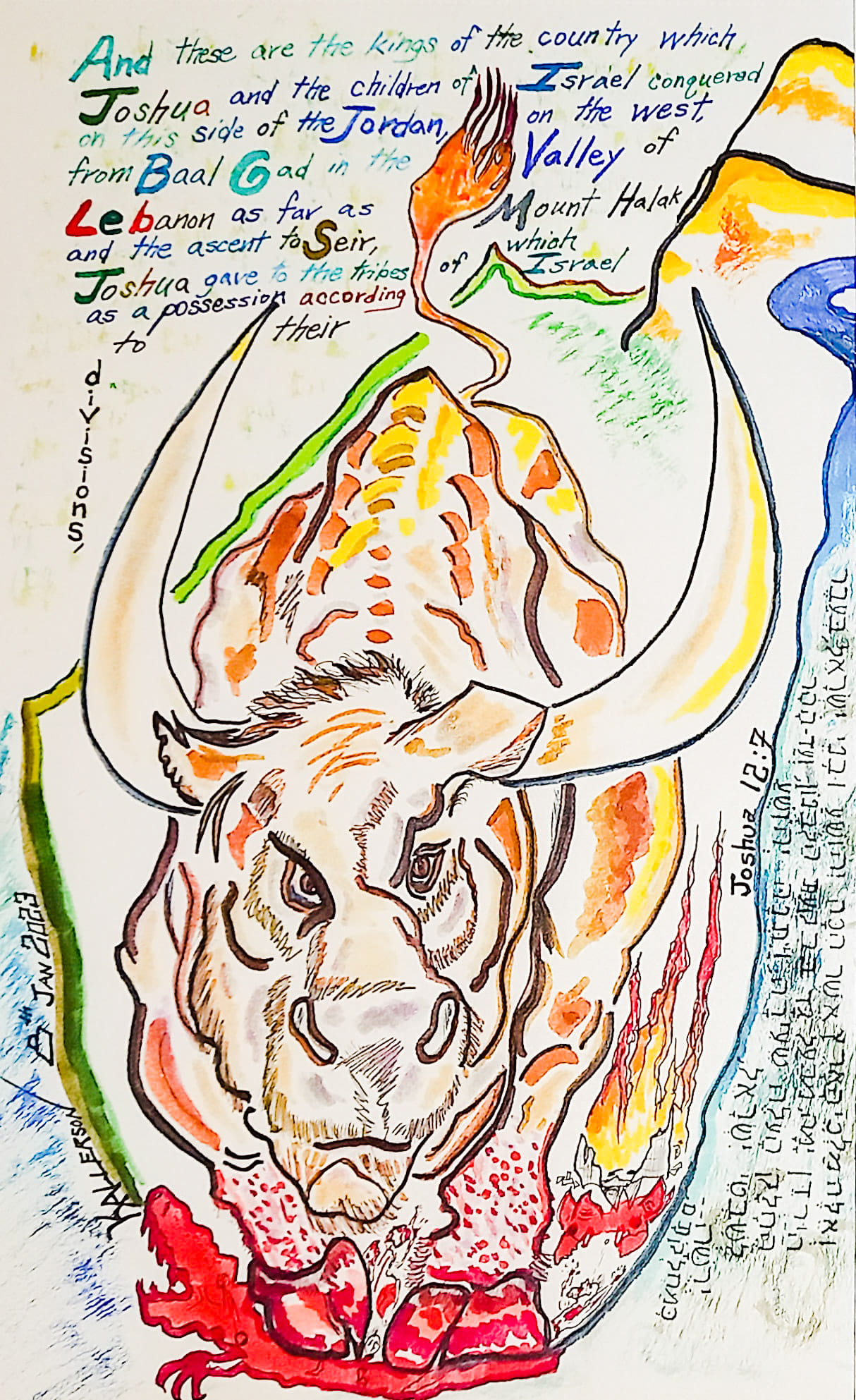
Painting at Utah capitol building.

Wednesday, 5 October 2022

The word which God sent to the children of Israel, preaching peace through Jesus Christ—He is Lord of all— Acts 10:36

Note: You can listen to today’s commentary courtesy of our friends at “Bible in Ten” podcast. (Click Here to listen).

You can also read this commentary, with music, courtesy of our friends at “Discern the Bible” on YouTube. (Click Here to listen), or at Rumble (Click Here to listen).

Peter is responding to the reason why Cornelius had summoned him. He just noted that those who fear God and work righteousness are acceptable to Him. He continues now, beginning with, “The word.”

Peter is now going to convey the divine utterance of God, the word, that came to those of Israel. He understands more fully now that this divine declaration was not to be limited to Israel at all, but that it is a word that is to extend beyond its borders to all people. With that, Peter continues by sharing what the word is. It is that “which God sent to the children of Israel.”

This is exactly what the law and the prophets indicated. There was the law, but it was spoken in a manner that indicated there must be One who would come and fulfill it. From there, the prophets spoke of this coming One, hinting at His ministry and how He would accomplish the things set before Him. Within the prophets was also the promise of a New Covenant. That New Covenant was promised to the people of Israel –

“Behold, the days are coming, says the Lord, when I will make a new covenant with the house of Israel and with the house of Judah—” Jeremiah 31:31

In reading this, one might assume that the covenant was limited to Israel and Judah, but that would be a myopic view of the matter. Rather, though it is made with the house of Israel and Judah it was never intended to be limited to them. Rather –

“And now the Lord says,
Who formed Me from the womb to be His Servant,
To bring Jacob back to Him,
So that Israel is gathered to Him
(For I shall be glorious in the eyes of the Lord,
And My God shall be My strength),
Indeed He says,
‘It is too small a thing that You should be My Servant
To raise up the tribes of Jacob,
And to restore the preserved ones of Israel;
I will also give You as a light to the Gentiles,
That You should be My salvation to the ends of the earth.’” Isaiah 49:5, 6

This is the word that Peter is now conveying to Cornelius, explaining that God was “preaching peace through Jesus Christ.” The translation is correct, cleaning up the faulty rendering of the KJV which says, “by Jesus Christ.” It is God in Christ who preached through Jesus. Jesus is the means of God transmitting the message. One can see the human united with the divine in this. It is a necessary point of doctrine that Jesus Christ is God rather than just a created being. God has accomplished all things through Jesus directly. And thus, Peter says, “He is Lord of all.”

The words are their own independent part of the divine declaration. Jesus Christ is not just the Lord over Israel but over all people. The message that God in Christ preached through Jesus is a single, unified message that issues to all people. One must remember that Peter had just said in verse 10:34, “In truth I perceive that God shows no partiality.” What is being expressed by him concerning the word, the divine utterance of God, is as much of a surprise to him as it might be to Cornelius.

It may be true that Peter knew there is only one God, but he assumed that the message of peace was one limited to Jews alone. He now perceives that this is not the case. The Mosaic Covenant was with Israel alone. The New Covenant, though being made with Israel and Judah, extends out to all who will accept God’s offer of peace through Jesus.

Life application: The substance of the gospel is to be found in Peter’s words of this and the coming verses. It teaches that Jesus is God incarnate. It teaches that Jesus died for sins. It implicitly teaches that Jesus was buried, and it teaches that God raised Him on the third day. This is the exact same message that Paul will express in 1 Corinthians 15:3, 4. It is the reason that Paul then says, while speaking of Peter and the other apostles –

“Therefore, whether it was I or they, so we preach and so you believed.” 1 Corinthians 15:11

This is the one and only gospel given by which men must be saved. Luke is providing a description of what Peter said for us to understand that what God has determined sets the boundaries for salvation, whether it is for that of a Jew, for that of a Gentile, or for that of national Israel. The message is the divine declaration of God that tells us of His incarnation in the Person of Jesus Christ.

Lord God, thank You for the wonderful thing You have done. You have spoken forth Your message concerning the coming of Christ, and He spoke forth the good news to the world. We have a full and complete explanation of this through the words of the apostles, telling us of this wonderful thing. Thank You, O God, for Jesus Christ our Lord. Amen.


Acts 10:35

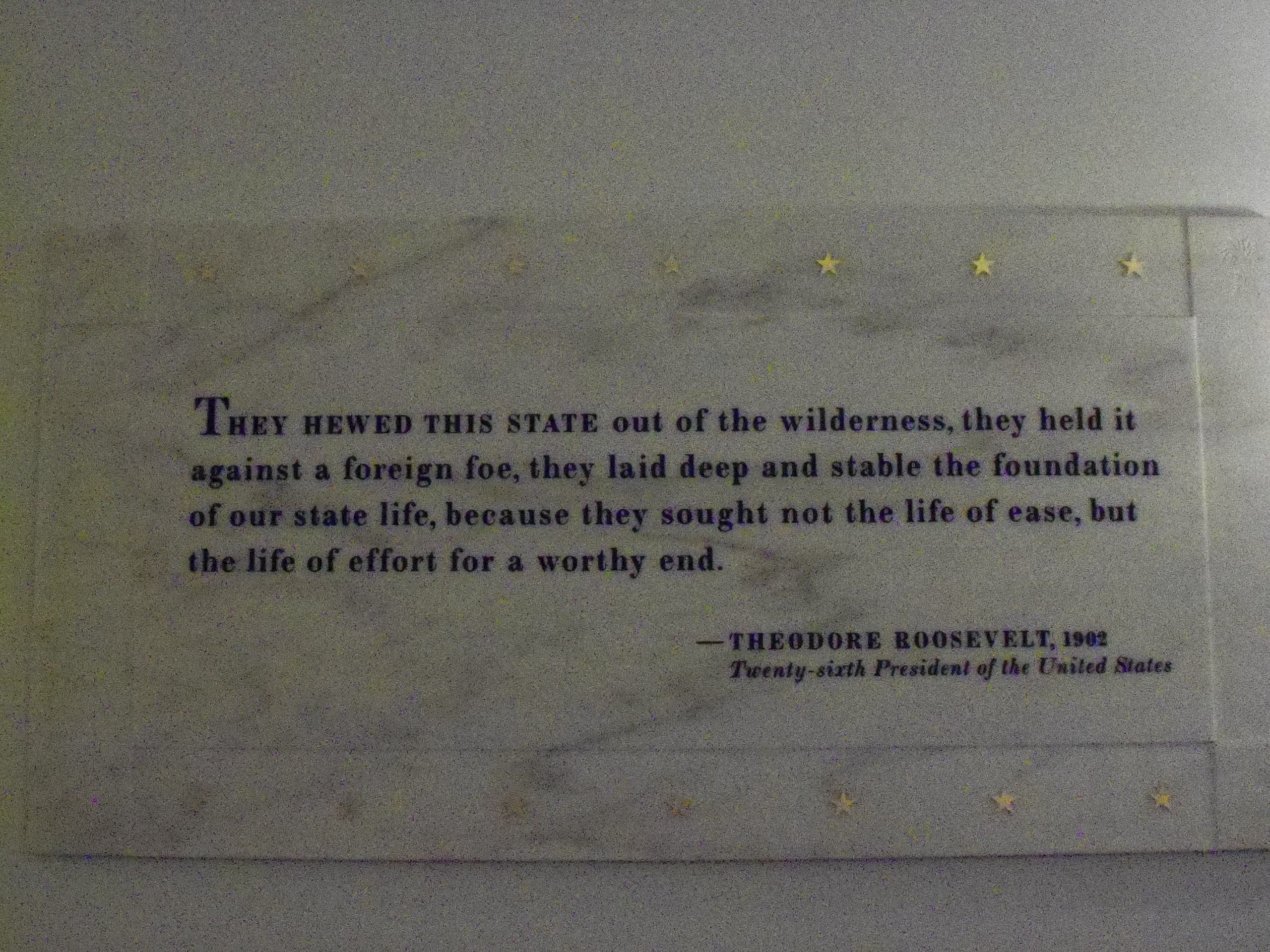
Painting at capitol building, Salt Lake City, Utah.

Tuesday, 4 October 2022

But in every nation whoever fears Him and works righteousness is accepted by Him. Acts 10:35

Note: You can listen to today’s commentary courtesy of our friends at “Bible in Ten” podcast. (Click Here to listen).

You can also read this commentary, with music, courtesy of our friends at “Discern the Bible” on YouTube. (Click Here to listen), or at Rumble (Click Here to listen).

The previous verse said, “Then Peter opened his mouth and said: ‘In truth I perceive that God shows no partiality.’” That is immediately followed up by Peter, saying, “But in every nation.”

Of these words, Bengel rightly states, “It is not an indifferentism of religions, but an indifferency (impartiality) as to the acceptance of nations, that is here asserted.” What is to be said does not include people simply because they faithfully pursue their personal religion, but it is inclusive of those of any nation who faithfully pursue God as he is revealed to people.

Hence, Job can be included in this. Rahab and Naaman likewise are noted in this category in the Bible. However, it cannot be said of someone in Islam or Buddhism today. They are excluded from the thought until a change is made in their mind (a repenting) to turn to the truth of God that has been revealed.

It doesn’t matter if it is a person in Pakistan, Tanzania, Russia, Japan, or any other nation – which is the thought that was expressed to Peter in the descent of the great object filled with the various beasts, birds, and so on. With this understood, Peter next says, “whoever fears Him.” To be more precise, it says, “the one fearing Him.”

This is an upward acknowledgment of God, and it is an action directed toward Him. God is looking at those who are fearing Him in the knowledge of Him that has been made available to the person. Of Cornelius, it said that he was “one who feared God” (Acts 10:2). Paul speaks of this in Romans 2 –

“For as many as have sinned without law will also perish without law, and as many as have sinned in the law will be judged by the law 13 (for not the hearers of the law are just in the sight of God, but the doers of the law will be justified; 14 for when Gentiles, who do not have the law, by nature do the things in the law, these, although not having the law, are a law to themselves, 15 who show the work of the law written in their hearts, their conscience also bearing witness, and between themselves their thoughts accusing or else excusing them16 in the day when God will judge the secrets of men by Jesus Christ, according to my gospel.” Romans 2:12-16

Job did not possess the Law of Moses, and yet he had a law written upon his heart that led him to seek out the true God as He had been thus far revealed. He anticipated restoration with Him through the promised Messiah, and he was noted as a son of God (Job 1:6) through this. Peter continues with “and works righteousness.”

Again, it is a present participle, saying, “and is working righteousness.” This is a horizontal acknowledgment of God, and it is seen in actions directed toward others according to a standard that is pure and faithful. God is looking at those who are fearing Him and who are then expressing that fear of Him in a manner that is appropriate. Of Cornelius, it said that he “gave alms to the people and prayed to God always” (Acts 10:2). Someone may give alms to the people, but he may not be doing it because of an acknowledgment of God. Instead, he may be doing it to to simply get ahead in life. That is self-serving and unacceptable.

Likewise, of Job, it says that he was “one who feared God and shunned evil” (Job 1:1). Job confessed that –

“I was eyes to the blind,
And I was feet to the lame.
16 was a father to the poor,
And I searched out the case that I did not know.
17 I broke the fangs of the wicked,
And plucked the victim from his teeth.” Job 29:15-17

Like Cornelius, these things were done because he feared God. And this is the heart of the Law of Moses, as spoken by Jesus –

“So he answered and said, ‘You shall love the Lord your God with all your heart, with all your soul, with all your strength, and with all your mind,’ and ‘your neighbor as yourself.’” Luke 10:27

This is the thought now being expressed. With that noted, Peter finishes with, “is accepted by Him.” In the Greek, it is an adjective connected to a present tense verb – “is acceptable.” The incorrect translation would cause a rather significant theological problem. Rather, the full clause rightly says, “is acceptable to Him.”

John Gill rightly says, “though God accepts of such who fear him, and work righteousness from a right principle, and to a right end, without any regard to their being circumcised, or not circumcised, or to their being of this or the other nation, yet their fear of him, and working righteousness, are not the ground of their acceptance; but are to be considered as descriptive of the persons, who are accepted by him in Christ; for there is no acceptance of persons or services, but in Christ Jesus.”

Such a person is “acceptable” to God, but only in Christ can he be “accepted” by Him. One cannot do an end around God in Christ. Job anticipated the coming Messiah through his limited knowledge of what God was doing. Cornelius is now on the “after” side of the coming of Jesus. God has heard his prayers and seen his deeds and has sent Peter to take him the necessary further step to Christ Jesus.

The entire account bears this out. It is not that Cornelius was accepted by God, but that he is acceptable to God because of his rightly directed heart and his actions which displayed that heart. Now, Peter has been summoned to take that heart that acknowledges God and direct it to the Messiah, who alone can remove his sin and make him accepted by God.

Life application: A wrongly translated word can make a world of difference. The NKJV, following after the KJV, has introduced an error that makes it appear that Cornelius has been accepted by (or with) God apart from Jesus. From there, an explanation of what the true meaning is must be constructed, as John Gill did above.

The error of translation can be overcome by a continued reading of the passage which reveals Cornelius was saved after hearing and accepting the gospel. But it is far too often the case that people will take a verse, such as this one now being analyzed, and make up an entire commentary or sermon about how people are saved by their right heart towards God and their good works towards others if they have never met Jesus. And it would all be based on a mistranslation that has been copied again and again from eons ago –

Tyndale Bible of 1526
is accepted with him.

Coverdale Bible of 1535
is accepted vnto him.

Bishops’ Bible of 1568
is accepted with hym.

Geneva Bible of 1587
is accepted with him.

King James Bible
is accepted with him.

New King James Version
is accepted by Him.

As a side note, the word “accepted” can also be an adjective, such as “he is handsome in the accepted sense.” However, the meaning when combined with “is” changes it to a verb. As such the meaning is changed as well. Be studious and be ready to question both people’s commentaries and their translations. In the end, no person will be saved apart from what God is doing in Christ. There are no loopholes, no end-arounds, and no acceptable “Plan B’s.” It is Jesus who saves. Thank God for Jesus!

Heavenly Father, thank You for our Lord and our Savior, Jesus Christ. May we never waffle in our convictions or in our proclamations concerning Him. May we take His words of John 14:6 as true, literal, and unchangeable – “I am the way, the truth, and the life. No one comes to the Father except through Me.” Thank You, O God, that You have made this way possible! Amen.


Acts 10:34

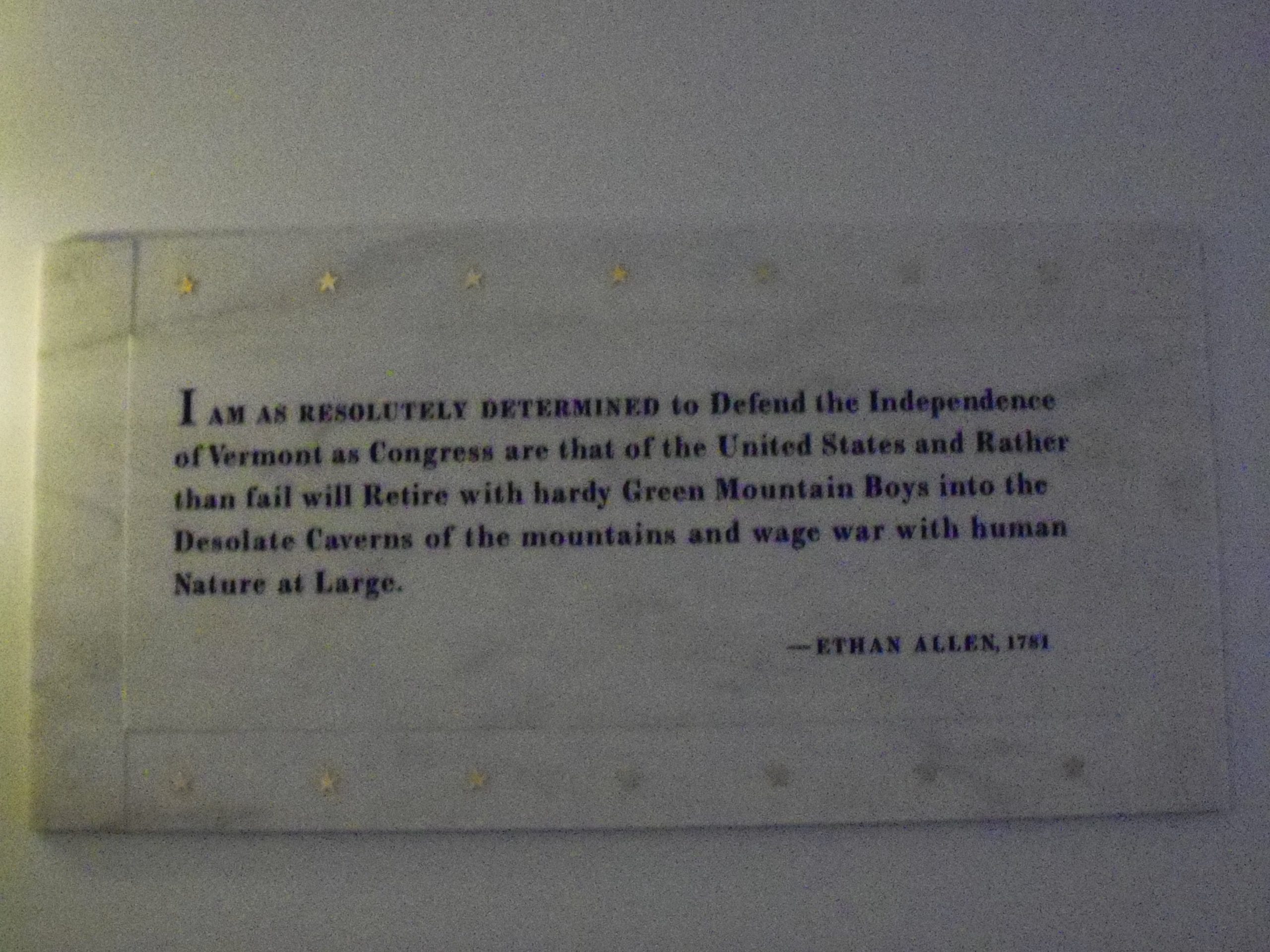
Fancy painting, Utah capitol.

Monday, 3 October 2022

Then Peter opened his mouth and said: “In truth I perceive that God shows no partiality. Acts 10:34

Note: You can listen to today’s commentary courtesy of our friends at “Bible in Ten” podcast. (Click Here to listen).

You can also read this commentary, with music, courtesy of our friends at “Discern the Bible” on YouTube. (Click Here to listen), or at Rumble (Click Here to listen).

Cornelius just completed his explanation for calling Peter. With his words stated, it now says, “Then Peter opened his mouth.”

As has been seen already in Acts, this is a way of saying that Peter prepared to speak and then engaged in speech. The thoughts in his head are now to be expressed verbally through his mouth. With that, Luke next notes, “and said: ‘In truth I perceive.’”

Peter has made a logical deduction based on the events that have occurred over the past few days. The object like a great sheet has descended from heaven in a trance; he had seen the creatures of the earth on display: he had been told to rise up, kill, and eat. And so on.

Along with that, he now knows that God had sent a messenger to Cornelius telling him to fetch Peter and have him explain all that he was to do. When the messengers from Cornelius arrived, the Spirit had told Peter to go with them without hesitation. Everything was synchronized and purposefully presented to inform Peter of a truth that he now fully perceives, which is, “that God shows no partiality.”

Here is a word found only once in Scripture, prosópolémptés. It comes from prosopon, the face, and lambanó, to receive. Thus, it means “an accepter of a face (individual), i.e. (specially), one exhibiting partiality — respecter of persons” (HELPS Word Studies). This is something that Jesus was known to the leaders of Israel for –

“Then they asked Him, saying, ‘Teacher, we know that You say and teach rightly, and You do not show personal favoritism, but teach the way of God in truth: 22 Is it lawful for us to pay taxes to Caesar or not?’” Luke 20:21, 22

In that account, the leaders used the same two words, lambanó and prosopon, separately. Peter now simply unites them into one word to make the same point. However, Peter cannot necessarily be considered dull for not having grasped something that he should have. These leaders were a part of the Jewish society, and they were referring to Jesus’ actions as they saw them within the Jewish society. Jesus had even spoken to a Gentile woman, saying, “I was not sent except to the lost sheep of the house of Israel” (Matthew 15:24).

Because of this, Peter and the others may have (and the indication we can receive from the words of his vision is that this is certainly the case) thought that what Jesus meant was limited to those of Israel. But Peter now sees something fuller has sprung out of the New Covenant. This was not an easy lesson to learn because time and again Israel had been warned about intermingling with Gentiles to some degree or another. Eventually, their leaders took that even further than the law and their writings intimated.

In Deuteronomy 23:1-8, certain prohibitions on accepting people into the assembly are noted. Other incidents like this are noted in the law. During the time of the historical writings, intermingling with Gentiles caused troubles to arise among the people. A perfect example of this is Solomon’s intermarriages with Gentiles as noted in 1 Kings 11 –

“But King Solomon loved many foreign women, as well as the daughter of Pharaoh: women of the Moabites, Ammonites, Edomites, Sidonians, and Hittites— from the nations of whom the Lord had said to the children of Israel, ‘You shall not intermarry with them, nor they with you. Surely they will turn away your hearts after their gods.’ Solomon clung to these in love. And he had seven hundred wives, princesses, and three hundred concubines; and his wives turned away his heart. For it was so, when Solomon was old, that his wives turned his heart after other gods; and his heart was not loyal to the Lord his God, as was the heart of his father David. For Solomon went after Ashtoreth the goddess of the Sidonians, and after Milcom the abomination of the Ammonites. Solomon did evil in the sight of the Lord, and did not fully follow the Lord, as did his father David.” 1 Kings 11:1-6

After Israel’s first exile, a heavy stress is laid upon this notion as is recorded in Ezra and Nehemiah, where these men implored the people to maintain the purity of the race and culture, even forbidding such marriages and forcing the ending of what they perceived as illegitimate marriages. Ezra 10 is dedicated to this idea of defilement and purity. Take time to read that today.

Because of this, and because of later more strenuous prohibitions laid upon the people to not even enter the houses of Gentiles, this was something that Peter had to be fully trained out of by the messenger from God to Cornelius and the trance from God on Simon the tanner’s housetop.

With the coming of Paul’s ministry, and as is recorded in Acts and his epistles, this idea of Gentile inclusion is most perfectly fleshed out. But it is being first expressed in this account of Peter and Cornelius. There is a reason for this that will be dealt with as Acts 10 continues.

Life application: James addresses the idea of showing favoritism in James 2:1-7. It could be argued that he is only referring to this within the Jewish community because he is addressing “the twelve tribes which are scattered abroad” (James 1:1). Further, he uses a term, synagogue, used only among Jews concerning their gathering together (James 2:2). Paul never uses this term when referring to the gathering of the churches in his letters.

As such, this account of Peter and Cornelius, Paul’s interactions in Acts, and also Paul’s letters are invaluable in understanding the equality of Jew and Gentile in the New Covenant. Paul, writing to those in Rome, and using a noun cognate to the one used by Peter above, says that God does not show favoritism when referring to both Jew and Gentile.

He also breaks down the barrier between classes within society, such as that of masters and slaves in Ephesians 6, Colossians 3 & 4, 1 Timothy 6, and Titus 2. It is also the subject of the letter to Philemon. Paul speaks of the unity of acceptance in the gospel concerning males and females as well –

“For you are all sons of God through faith in Christ Jesus. 27 For as many of you as were baptized into Christ have put on Christ. 28 There is neither Jew nor Greek, there is neither slave nor free, there is neither male nor female; for you are all one in Christ Jesus. 29 And if you are Christ’s, then you are Abraham’s seed, and heirs according to the promise.” Galatians 3:26-29

These and other such references tell us that all people are on equal standing before God, and that those who are in Christ are on equal standing in Him. This does not mean we all possess the same rights in this earthly life, however. By Paul noting that slaves are to heed their masters, it implies that there are slaves.

By noting the physical differences between men and women and the cultural differences between Jew and Gentile (Galatians 3:28), it means they are different, even if no distinction in Christ exists. Because of that, when Paul says elsewhere that women are not to teach or have authority over men, it is because of these differences. Thus, there is no contradiction in Paul’s words.

Think about these things and remember that God’s word has defined the Christian parameters for our earthly lives. For our eternal position in Christ, He has accepted all as being on the same level. Any and all are open to receiving the gospel and being saved by the precious blood of Christ. Thank God for Jesus Christ.

Lord God, how good it is to be a part of what You have done in Christ. Each of us is acceptable to You regardless of our gender, societal class, culture, or any other earthly distinction. We are acceptable to You because of Jesus! Thank You for Your care of Your people even when we don’t always care for one another. Help us to drop all such things and be willing to share the message with all we encounter. Amen.


Joshua 7:16-26 (The Valley of Achor, Part II)

Joshua 7:16-26
The Valley of Achor, Part II

A lot is going on in the Bible. Unusual patterns go on and on and on (and on). One of the great patterns that is evident once it is explained is that the first twenty-eight books have matching patterns and parallels to the twenty-eight chapters of Matthew.

Some patterns are types, some are numbers, some are word patterns. For example, Matthew 1:1 begins with, “The book of the genealogy of Jesus Christ, the Son of David, the Son of Abraham.”  This is a direct link to Genesis 22:18, “In your seed all the nations of the earth shall be blessed, because you have obeyed My voice.”

Also, in Genesis 37, Joseph has a messianic dream. Likewise, in Matthew 1:20, Joseph has a dream about the coming Messiah.

In the second book of the Bible, we find in Exodus 4:22, 23 it says, “Then you shall say to Pharaoh, ‘Thus says the Lord: “Israel is My son, My firstborn. 23 So I say to you, let My son go that he may serve Me. But if you refuse to let him go, indeed I will kill your son, your firstborn.’”

In Matthew 2:15, we see the following link to Exodus: “And so was fulfilled what the Lord had said through the prophet, ‘Out of Egypt I called My Son.’” In one instance is the firstborn son, Israel, and in the other, God’s only begotten Son, Jesus our Lord.

A great one is found in Daniel (27th book) and Matthew 27. Daniel 6:17 says, “Then a stone was brought and laid on the mouth of the den, and the king sealed it with his own signet ring and with the signets of his lords, that the purpose concerning Daniel might not be changed.”  Likewise, Matthew 27:66 says, “So they went and made the tomb secure, sealing the stone and setting the guard.”

Again in Daniel 9:2, it says, “in the first year of his reign I, Daniel, understood by the books the number of the years specified by the word of the Lord through Jeremiah the prophet, that He would accomplish seventy years in the desolations of Jerusalem.”

Matthew 27:9 says, “Then was fulfilled what was spoken by Jeremiah the prophet.” Notice the intricacy where Jeremiah is quoted in Daniel (27)9 and Matthew 27:9.

Text Verse: “Do not love the world or the things in the world. If anyone loves the world, the love of the Father is not in him. 16 For all that is in the world—the lust of the flesh, the lust of the eyes, and the pride of life—is not of the Father but is of the world. 17 And the world is passing away, and the lust of it; but he who does the will of God abides forever.” 1 John 2:15-17

John speaks about the lust of the flesh, the lust of the eyes, and the pride of life. These things can only lead us down the wrong path. That is where Achan has gone, and it will cost him.

The patterns between the first 28 Old Testament books and the Matthew chapters I mentioned above go throughout twenty-eight of both. And there are similar patterns like this in other books of the Bible as well. As for Joshua (the sixth book) and Matthew 6, the pattern is seen in our verses today.

Joshua especially highlights the silver in what was taken by Achan. It does this twice and in a most curious way. Here is the pattern along with its counterpart in Matthew.

Joshua (6th book) 7:21 says, “When I saw among the spoils a beautiful Babylonian garment, two hundred shekels of silver, and a wedge of gold weighing fifty shekels, I coveted them and took them. And there they are, hidden in the earth in the midst of my tent, with the silver under it.”

Now in Matthew 6:21, it says, “For where your treasure is, there your heart will be also.” Also, notice the parallel in the number where both are found in verse 21 – 6 (book) 21 (verse) & 6:21.

As I said, these patterns go on and on in the Bible. There are too many and they are too precise to simply be flukes. Rather, they are purposeful hints about what is going on in the word, leading to even further insights for us to know and to then find our confidence in this precious word.

For now, knowing these patterns exist, with a part of them in today’s verses, let us proceed into the passage. Great things are to be found in His superior word. And so, let us turn to that precious word once again and… May God speak to us through His word today, and may His glorious name ever be praised.

I. The Valley of Achor (verses 16-26)

16 So Joshua rose early in the morning

va’yishkem Yehoshua ba’boqer – “And rose early Joshua in the morning.” These exact same words were seen in Joshua 3:1 when the people were setting out from Acacia Grove (Shittim) prior to crossing the Jordan. They were again seen in Joshua 6:12 when the armies set out to march around Jericho.

In other words, the very note concerning Joshua rising early in the morning tells us that a great and important event lies ahead, highlighted by the words. With that noted, it says…

16 (con’t) and brought Israel by their tribes,

It is masculine singular: va’yaqrev eth Yis’rael lish’vatav – “And brought near Israel to his tribes. The only other time the word shevet, or “tribe,” is formed this way is in Numbers 24:2 when Balaam looked out over all of Israel encamped in the valley below and blessed them –

“And raised Balaam his eyes and saw Israel encamped to his tribes (lish’vatav).”

In other words, as has already been seen, there is a corporate guilt upon Israel. It is as if Israel and his sons are sitting there at the moment, being judged for the anathema among them. That must be identified, singled out, and removed or the corporate guilt will remain. And so, the matter begins…

16 (con’t) and the tribe of Judah was taken.

The first identification. As noted last week, the manner in which this identification took place is not what is important. Rather, the focus is on the fact that the Lord already knows who the offender is, and there is a process by which the man will be singled out. From the tribes of Israel, Judah is taken. From there…

17 He brought the clan of Judah,

Much is written about these words –va’yaqrev eth mishpakhath Yehudah – “And brought near family Judah.” Keil says, “we should expect ‘the tribe’ (shebet) or ‘the families’ (mishpachoth) of Judah, instead of ‘the family.’” And that would normally be true.

But just as the text identifies the tribes with Israel the man (“to his tribes”), so it now identifies Judah according to “family.” It is, again, as if Judah is sitting right there being judged for what has occurred within his family. Next…

17 (con’t) and he took the family of the Zarhites;

The second identification. Again, it is singular: va’yilkod eth mishpakhath ha’zarkhi – “And he took family the Zarhite.” One family of the family of Judah is taken. It is the family of the Zarhite. Everything is being precisely identified, one unit at a time, demonstrating that the Lord is fully aware of the offender and is closing in on him. Next…

17 (con’t) and he brought the family of the Zarhites man by man,

When the Zarhite family is identified, it then says that the identification goes la’gevarim, or “to the man.” By this time, the offender must be beside himself, knowing full well that he is known. And yet, he does not come forward, but still waits…

17 (con’t) and Zabdi was taken.

The third identification. The man of the Zarhite family who is singled out is Zabdi who obviously had his own sons, and it is obvious that more than one son went into battle, or else this next step would be superfluous…

18 Then he brought his household man by man,

This would be the household of Zabdi being brought forward “to the man.” It is a methodical process of eliminating the guiltless and identifying the guilty. This would be needed because it could have, until this point, been two brothers if they both went into the battle. Therefore, it is right to not just assume only one man was guilty…

18 (con’t) and Achan the son of Carmi, the son of Zabdi, the son of Zerah, of the tribe of Judah, was taken.

The fourth identification. It is now repeated in reverse to ensure that he is carefully pinpointed. It is he alone who has done it and none other. Therefore, the leader next speaks to him…

19 Now Joshua said to Achan, “My son, I beg you, give glory to the Lord God of Israel,

More precisely, it reads: beni sim na khavod l’Yehovah elohe Yis’rael – “My son, set, I pray, glory to Yehovah, God of Israel.” In saying, “My son,” you can feel the bond Joshua feels with the person despite what has transpired. A sense of pity can be interpreted from the words.

Achan is being asked to set (sim) before the Lord the glory that He is due, as if it is a guilt offering. Unfortunately, by doing so, he is placing himself as that guilt offering on behalf of the congregation…

19 (con’t) and make confession to Him,

v’ten lo todah – “And give to Him thanks.” The word todah comes from the word yadah – or “to throw out” with the yad, or hand. Thus, it signifies “to extend the hand” as if in adoration. One can think of a choir of worshippers raising their hands to the Lord.

Joshua is basically telling him to set himself before the Lord and to raise his hands in thanksgiving to Him. It may seem odd, but when one considers that the entire congregation stands before the Lord as anathema, Achan’s acknowledging his guilt is to give back to Israel their status as being no longer anathema.

19 (con’t) and tell me now what you have done; do not hide it from me.”

This sounds like any father that has ever caught his child doing something wrong. As in such a case, Joshua conveys the same basic idea in two different ways: declare/do not hide. The word nagad means to make conspicuous or literally “to front.” The word kakhad means to secret away or conceal. This is what is expected, and this is what he will now receive…

20 And Achan answered Joshua and said, “Indeed I have sinned against the Lord God of Israel,

The words are emphatic and filled with a sense of superlative guilt: am’nah anoki khatati l’Yehovah elohe Yis’rael – “Truly, I, I have sinned to Yehovah, God of Israel.”

He emphatically pronounces that it was he who had done it and he acknowledges it as sin which was “to Yehovah.” It is not unlike David’s words in the 51st Psalm, where he said, l’kha l’badekha khatati – “To you, to you alone, I have sinned.”

Though this is true, the congregation stood guilty collectively for what he had done. As such, he must pay the penalty for their guilt to be removed. Achan also uses a word, omnah, or truly, found only one other time in Scripture. In Genesis 20 when Abraham confessed to Abimelech that Sarah was actually his sister, he used this same word. Next, Achan again speaks emphatically…

20 (con’t) and this is what I have done:

v’khazoth v’khazoth asiti – “and according to this, and according to this, I have done.” Of his words, Adam Clarke says, “This seems a very honest and hearty confession, and there is hope that this poor culprit escaped perdition.” That may be so, but he won’t escape temporal judgment, even if his soul is saved. For now, he says…

21 When I saw among the spoils a beautiful Babylonian garment,

The first failing: va’ereh ba’salal adereth shinar akhat tovah – “And I saw in the spoil garment Shinar, one beautiful.” His eyes alighted upon a garment of Shinar, meaning the plain noted in Genesis 11 where the tower of Babel was built. The meaning of the name is wholly speculative and can come from one of several possible roots.

Scholars highlight the fact that the garments from this area were particularly beautiful, skillfully made, and highly ornamented. The word used, addereth, comes from addir, or majestic. We can only speculate, but it may have been the king’s robe, or it may have been used in the temple of an idol. Next, he took…

21 (con’t) two hundred shekels of silver,

This would be two hundred by weight, not necessarily two hundred coins. As such, we could estimate it at a bit more than five pounds of silver. As of sermon typing day, this was worth about $1375 in standard ounces, not troy ounces. The main thing to consider in this is the weight.

As the narrative gives it to us, we need to determine what it signifies. Bullinger says the number two hundred signifies insufficiency. Next…

21 (con’t) and a wedge of gold weighing fifty shekels,

ul’shon zahav ekhad khamishim sh’qalim mish’qalo – “and tongue gold one fifty shekels his weight.” The gold was in the shape of a tongue or wedge. It would be about 1.26 pounds, and so the value of this as of sermon typing day was about $31,378. Again, this is in standard ounces.

The number fifty must be considered. It “is the number of jubilee or deliverance.” Bullinger says it is the issue of 7 x 7, and points to deliverance and rest following on as the result of the perfect consummation of time. With that noted, Achan next says…

21 (con’t) I coveted them

The second failing: va’ekh’m’dem – And desired them. It is the same word, khamad, used concerning the tree in the garden, (it was desirable to make one wise). It was used in the Tenth Commandment where it is translated as “covet.” It was also used in Deuteronomy 7:25 –

“You shall burn the carved images of their gods with fire; you shall not covet the silver or gold that is on them, nor take it for yourselves, lest you be snared by it; for it is an abomination to the Lord your God.”

21 (con’t) and took them.

The third failing: va’eqakhem – “and took them.” Achan took the same path, using the same words, that brought about the fall in the first place. The woman saw (raah), she desired (khamad), and she took (laqakh). Then she passed it on to the man. It is also what James especially warns against –

“But each one is tempted when he is drawn away by his own desires and enticed. 15 Then, when desire has conceived, it gives birth to sin; and sin, when it is full-grown, brings forth death.” James 1:14, 15

21 (con’t) And there they are, hidden in the earth in the midst of my tent, with the silver under it.”

The words are spoken very precisely: v’hinam t’munim ba’arets b’tok ha’aholi v’ha’keseph takh’teha – “And behold them, hidden in the earth, in midst the my tent, and the silver under it.” Scholars say things like, “The mantle would naturally be placed uppermost, and be used to cover up the others” (Barnes).

But that does not explain the precise wording at all, especially singling out the silver. Nevertheless, the admission is made…

22 So Joshua sent messengers, and they ran to the tent;

va’yishlakh Yehoshua mal’akhim va’yarutsu ha’ohelah – “And sent Joshua messengers, and they run the tent.” The word “messengers” is the same word often translated as “angels.” It is one who is dispatched to perform a duty. And they find…

22 (con’t) and there it was, hidden in his tent, with the silver under it.

The Hebrew is briefer: v’hineh t’munah b’aholo v’ha’keseph takh’teha – “And behold! Hidden in his tent. And the silver under it.” Again as with the previous verse, the silver is singled out. The other two items are not even named, but must be inferred.

23 And they took them from the midst of the tent, brought them to Joshua and to all the children of Israel, and laid them out before the Lord.

The idea here is that of guilt. The anathema is taken from the guilty party and brought to the leader of the people. He bore the guilt because he bore the responsibility for his people. It was brought to all the sons of Israel, surely meaning the elders who represent them, because the congregation bore the collective guilt.

And next, the Hebrew reads va’yatsiqum liph’ne Yehovah – “and poured them out before Yehovah.” One can imagine a blanket laid out and the contents of the anathema being poured out onto it revealing the guilt with the drop of each item.

What should have either been burned, ascending to the Lord as an offering, or what should have been brought into the treasury of the Lord, and which was now no longer acceptable in that capacity, lay exposed to the sight of all.

24 Then Joshua, and all Israel with him, took Achan the son of Zerah, the silver, the garment, the wedge of gold, his sons, his daughters, his oxen, his donkeys, his sheep, his tent, and all that he had,

Here it calls him “the son of Zerah.” That is an acceptable Hebraism where “son” can mean any descendant. He is Zerah’s great-grandson.

In the Hebrew, Joshua is highlighted as the main figure. Israel is mentioned at the end of the action – “And took Joshua Achan son of Zerah, and the silver, and the garment, and tongue the gold, and his sons, and his daughters, and his ox, and his donkey, and his flock, and his tent, and all that he had – and all Israel with him. The joint nature of the matter is mentioned only next…

24 (con’t) and they brought them to the Valley of Achor.

It more correctly reads, “and they took them up to the Valley of Achor.” This place, emeq akhor, is mentioned again in Joshua 15, Isaiah 65:10, and Hosea 2:15. The word emeq signifies a deep place, coming from amoq, meaning to be deep or to make deep.

The word akhor comes from the verb akhar, or trouble. Thus, it means “Trouble,” and it is a play on words based on what Joshua says in verse 25. Together, the two words mean the Valley of Akhor, or the “Depth of Trouble.”

It is uncertain exactly where this valley is located, but a really good candidate would be Wadi Qelt, a very deep canyon that runs through the surrounding area. It is where Sergio and I and our friend Yossi (with one “s” – it’s a private joke) walked from Jericho to Jerusalem and which Jesus took on His travels.

25 And Joshua said, “Why have you troubled us? The Lord will trouble you this day.”

Here, Joshua uses the word akhar, to trouble, twice. It gives the reason for the name of the valley. After saying this, it says…

25 (con’t) So all Israel stoned him with stones;

va’yirg’mu oto kal Yis’rael even – “And stoned him all Israel stone.” Because of this being in the singular, many scholars say that only Achan was stoned, and that the family was simply taught a lesson by watching dad get stoned to death.

That is wrong because 1) the next clause says so, 2) Joshua 22:20 says so, and 3) the law of kherem, or anathema, demanded that his entire family perish with him. Achan is singled out as the representative of his family.

As for the word “stone” being singular, it may convey the idea that someone walked up to him and clobbered him over the head with a single stone, dispatching him off to the next world. Also…

25 (con’t) and they burned them with fire after they had stoned them with stones.

va’yish’r’phu otam ba’esh va’yisq’lu otam ba’abanim – “and burned them in the fire and stoned them in the stones.” The plural of these words indicates the extent of the stoning. The entire family and all the animals were stoned. Noting that there were originally no verse numbers in the Hebrew, the words make sense when read along with the words of the next verse…

26 Then they raised over him a great heap of stones, still there to this day.

Taken together with the previous verse, you can see the progression – “And stoned him (sg.) all Israel stone, and burned them (pl.) in the fire, and stoned them (pl.) in the stones, and raised over him (sg.) heap stones great to until the day, the this.”

In other words, his death and the stones over him also stand for the entire household who accompanied him in the punishment. It is a collective punishment even though it was solely his transgression. And more, the cairn of stones signifies the shameful nature of the death that the one under it received.

26 (con’t) So the Lord turned from the fierceness of His anger.

va’yashav Yehovah me’kharon apo – “And turned Yehovah from burning His nostril.” This takes us right back to verse 1 –

“But the children of Israel committed a trespass regarding the accursed things, for Achan the son of Carmi, the son of Zabdi, the son of Zerah, of the tribe of Judah, took of the accursed things; so the anger of the Lord burned against the children of Israel.” Joshua 7:1

With the obedience of the people now realized, they no longer stand as anathema. The offense has been atoned for, and the propitious relationship has been restored…

*26 (fin) Therefore the name of that place has been called the Valley of Achor to this day.

al ken qara shem ha’maqom ha’hu emeq akhor ad ha’yom ha’zeh – “Upon this is called name the place, the it, “Valley Akhor” until day, the this.” In other words, the valley got its name from what occurred.

Why, O Lord, has this come about?
What is it that has caused all this suffering?
What has happened has caused me to doubt
What is the source of this terrible thing

Lord, we look to you and wait for a word
We long to know what has caused this trouble
When the answer is given, and we have heard
We will take action to correct it on the double

Lord, don’t let anything tarnish Your great name
Be with Israel and rescue us from this terrible state
Spread around the world Your glorious fame
Let the nations know that Your name alone is great

II. Pictures of Christ

What we have in Joshua 7 is not unlike several passages in Deuteronomy. For example, Deuteronomy 21 gave several situations which Israel might face, such as finding the body of someone in a field who was clearly slain, female captives, the rights of the firstborn, what to do with a rebellious son, and what to do with a person who was hanged on a tree.

Each of these was clearly seen to anticipate the work of Christ. For example, the disobedient son pictured Israel. He was to be taken out and executed for his transgressions. Israel was the disobedient son, but Christ took their place instead.

Here, we have a passage where Israel has become anathema –

“Therefore the children of Israel could not stand before their enemies, but turned their backs before their enemies, because they have become doomed to destruction [kherem].” Joshua 7:12

But this was said of such a state in Leviticus –

“No person under the ban [kherem], who may become doomed to destruction among men, shall be redeemed, but shall surely be put to death.” Leviticus 27:29

And this is exactly what Isaiah says the state of Israel has been –

“I, even I, am He who blots out your transgressions for My own sake;
And I will not remember your sins.
26 Put Me in remembrance;
Let us contend together;
State your case, that you may be acquitted.
27 Your first father sinned,
And your mediators have transgressed against Me.
28 Therefore I will profane the princes of the sanctuary;
I will give Jacob to the curse [kherem],
And Israel to reproaches.” Isaiah 43:25-28

And more, the land itself went under the ban because of their rejection of Jesus –

“And he will turn
The hearts of the fathers to the children,
And the hearts of the children to their fathers,
Lest I come and strike the earth with a curse [kherem].” Malachi 4:6

How can Israel, both the land and the people, be redeemed if they are devoted to destruction? That is what Joshua 7 deals with. Israel went under the ban. Achan, because of what he did, typifies Israel. They have been under the ban since their rejection of Christ. This is made clear in several New Testament passages where the comparable Greek word, anathema, is used –

“If anyone does not love the Lord Jesus Christ, let him be accursed. O Lord, come!” 1 Corinthians 16:22

“But even if we, or an angel from heaven, preach any other gospel to you than what we have preached to you, let him be accursedAs we have said before, so now I say again, if anyone preaches any other gospel to you than what you have received, let him be accursed.” Galatians 1:8, 9

Israel failed to love the Lord Jesus and they have preached a false gospel of law, works, and self-righteousness. Despite this, we see in Joshua 7 that national Israel’s collective guilt, which is clearly evidenced in verses 1, 12, and indeed the entire chapter, can be removed.

Verse 1 shows that they acted unfaithfully in regard to the kherem, the anathema. Israel rejected Christ making themselves anathema. In Joshua, that was specifically done by Achan (Achar as noted in 1 Chronicles 2), the serpent of trouble. The names of his ancestors give a picture – My Vineyard, My Gift, Rising of Light, Praise.

Like Ananias and Sapphira in Acts 5, Israel came under the ban and is subject to death. Unlike them, however, Israel falls under corporate judgment because of their corporate guilt and so the anger of the Lord burned against them.

With that, the details of the battle of Ai were given to show this. Ai means “Ruins.” That is beside Beth Aven or the House of Wickedness and east of Bethel, the House of God. In the Bible, east is the place of exile.

It is a picture of Israel in their time of rejecting Christ – exiled from God, the land is in ruins, and they are a house of wickedness – a state that they cannot defeat. In trying to do so, they were defeated, and it specifically noted that thirty-six were killed.

That number was defined as a multiple of nine and four – finality or judgment and the world number (creation). It reflects the state of Israel apart from Christ – under judgment in the world and being chased as far as “the Shevarim,” or “the crushing.” Their state is a state of ruin and it will continue to be into the tribulation.

It was especially highlighted in the words of verses 11 and 12 concerning the corporate nature of the offence, followed by the explanation of why Israel had turned their necks before their enemies. It was “because they have become to anathema.”

This is where they are and unless the matter is corrected, they will remain that way. Starting our verses today, Israel was brought forward by tribes, then the families of the tribe, then the next generation of families, and then man by man.

The process of identifying him is accomplished in the reverse of how the names are mentioned in verse 7:1 – Achan, Carmi, Zabdi, Zerah, Judah / Serpent, My Vineyard, My Gift, Rising of Light, Praise, thus forming a pattern that speaks of Jesus reversing what happened at the fall: The serpent brought sin into the Lord’s vineyard. The Lord promised the gift of the coming Messiah. The Light of Messiah arose and accomplished His work. The Messiah is the Praise of God.

Once identified, Achan admits his guilt, saying, “Truly, I, I have sinned to Yehovah, God of Israel.” He then explains his three failings – his eyes (raah), his desire (khamad), his taking (laqakh). It was this sequence of things that brought his downfall and that brought Israel under the anathema. Jesus, like Achan, is from Judah. He, like Achan was in a battle for the Place of Fragrance (Jericho/Eden), He like Achan was tempted in the same general area in Israel, and yet – unlike Achan – He did not transgress.

Three things Achan was tempted by were a beautiful garment, two hundred shekels of silver, and a tongue of gold weighing fifty shekels. The garment pictures the state of a person. Silver pictures redemption. Gold pictures holiness, divinity, and royalty.

They are each something Christ offers – garments of righteousness, redemption, and holiness, divinity (not deity), and royalty. Achan attempted to get those things on his own, and it cost him. But, if you remember, the narrative twice focused on the silver, it being “underneath.”

As we saw in the opening, Jesus noted that “where your treasure is, there your heart will be also.” The weight, being two hundred, signifies insufficiency. What he had was insufficient to redeem him. The guilt of what he did was transferred to all of Israel, and thus all of Israel was under the ban.

When those items were poured out before the Lord, it stood as a witness against all the people. Thus, they had to remove the accursed from among them. And so that is what they did. They took Achan and everything belonging to him, meaning his entire household, along with the three banned things, down to the Valley of Achor, the Depth of Trouble, and there they stoned and burned him and all that he had.

This is picturing Israel removing everything that is contrary to Christ that puts them under the ban – the total removal of it – by coming to Him. Think of what has been presented from the previous sermons –

We have been seeing the process of salvation in individual passages, but they all happen at once. *Moses, the law dies. Israel accepts Christ’s fulfillment of the law. *Israel enters the Jordan (Christ); Israel is baptized into Christ’s death (Chapter 3). *Israel, signified by the stones carried to Gilgal and which are then rested there, enters its rest (Chapter 4). *Two sets of stones are set up, signifying the heavenly government of Jew and Gentile (Chapter 4). *Israel is circumcised; Israel has put off the body of sins of the flesh / The reproach of the past is taken away when believers are circumcised by the Lord (Chapter 5). *Believers partake of Christ as their Passover (Chapter 5). *The Lord is the Leader of the people, and they are brought into “holy ground.” (Chapter 5). *Access to that holy ground is brought about by acceptance of Christ’s work (Chapter 6). And now, *Coming out of the state of anathema (kherem) is realized through the love of Jesus (1 Corinthians 16:22) and pursuing the true gospel of Jesus Christ (Galatians 1:8, 9) (Chapter 7).

This is what the meaning of the uses of the name “Valley of Achor” found later in the Old Testament signify. First, Isaiah refers to it in relation to the millennial kingdom –

“Thus says the Lord:
‘As the new wine is found in the cluster,
And one says, ‘Do not destroy it,
For a blessing is in it,’
So will I do for My servants’ sake,
That I may not destroy them all.
I will bring forth descendants from Jacob,
And from Judah an heir of My mountains;
My elect shall inherit it,
And My servants shall dwell there.
10 Sharon shall be a fold of flocks,
And the Valley of Achor a place for herds to lie down,
For My people who have sought Me.’” Isaiah 65:8-10

And in the other instance, Hosea refers to it when speaking of the covenant relationship they will enter into with the Lord –

“Therefore, behold, I will allure her,
Will bring her into the wilderness,
And speak comfort to her.
15 I will give her her vineyards from there,
And the Valley of Achor as a door of hope;
She shall sing there,
As in the days of her youth,
As in the day when she came up from the land of Egypt.
16 And it shall be, in that day,
Says the Lord,
That you will call Me ‘My Husband,’
And no longer call Me ‘My Master.’” Hosea 2:14-16

Later, in that same chapter, it says –

“Then I will sow her for Myself in the earth,
And I will have mercy on her who had not obtained mercy;
Then I will say to those who were not My people,
‘You are My people!’
And they shall say, ‘You are my God!’” Hosea 2:23

Peter, writing to the Jews of the end times, cites that, saying –

“But you are a chosen generation, a royal priesthood, a holy nation, His own special people, that you may proclaim the praises of Him who called you out of darkness into His marvelous light; 10 who once were not a people but are now the people of God, who had not obtained mercy but now have obtained mercy.” 1 Peter 2:9, 10

The people will be brought out of anathema, and the land will as well. Referring to the millennial kingdom, Zechariah says –

“All the land shall be turned into a plain from Geba to Rimmon south of Jerusalem. Jerusalem shall be raised up and inhabited in her place from Benjamin’s Gate to the place of the First Gate and the Corner Gate, and from the Tower of Hananel to the king’s winepresses.

11 The people shall dwell in it;
And no longer shall there be utter destruction [kherem],
But Jerusalem shall be safely inhabited.” Zechariah 14:10, 11

With this seen, the one point that may seem contradictory to what I have presented is Joshua’s statement of verse 7 –

“And Joshua said, ‘Alas, Lord God, why have You brought this people over the Jordan at all—to deliver us into the hand of the Amorites, to destroy us? Oh, that we had been content, and dwelt on the other side of the Jordan!’”

The question may be, “If crossing the Jordan pictures Israel coming to Christ, then why would Joshua (Israel’s leadership) say this?” It is because this is showing the stages of what occurred one after another. Although the process of salvation, meaning each thing that happens to Israel, all occurs at once, each thing is being detailed separately to show us it in an understandable way. As such, this is what Joshua 7 is anticipating.

The Lord is faithful to Israel, even in their unfaithfulness. This is perfectly evident from Joshua 7 where the entire nation was anathema because of the failings of one man. This is certainly not the only time in their history this came about, and it is certain that they went under the ban when they rejected Jesus.

And yet, the Lord has spared them because He covenanted with them. That ought to be the greatest of reassurances for each of us when we fail Him. When we do, His faithfulness is highlighted all the more. But let us endeavor to not fail Him. Rather, let us be grateful, all our days, for the wonderful salvation that He has provided us through the shed blood of Christ.

And when we have those moments of doubt that arise in our minds, let us remember the intricacy of this word He has given us. The patterns I showed you when we opened today are just a tiny smidgen of what is in the word.

Read the word! Cherish the word! Cling to this word as we await the sure promised return of the Lord for us. He is faithful, and He will perform. Just look at Israel and you can be perfectly certain of this. What a great and glorious God we serve. Hallelujah and Amen!

Closing Verse: “For yet a little while,
And He who is coming will come and will not tarry.
38 Now the just shall live by faith;
But if anyone draws back,
My soul has no pleasure in him.”
39 But we are not of those who draw back to perdition, but of those who believe to the saving of the soul.” Hebrews 10:37-39

Next Week: Joshua 8:1-20 They didn’t get it on the first try, but they will now get it done… (The Fall of Ai, Part I) (15th Joshua Sermon)

The Lord has you exactly where He wants you. He has a good plan and purpose for you. It is He who has defeated the enemy and who now offers His people rest. So, follow Him and trust Him and He will do marvelous things for you and through you.

The Valley of Achor, Part II

So Joshua rose early in the morning
And brought by their tribes Israel
And the tribe of Judah was taken
For Judah it wasn’t going well

He brought the clan of Judah
And he took the family of the Zarhites –
———-surely they were all shakin’
And he brought the family of the Zarhites man by man
And Zabdi was taken

Then he brought his household man by man
And Achan the son of Carmi – now this guy was really shakin’
The son of Zabdi, the son of Zerah
Of the tribe of Judah, was taken

Now Joshua said to Achan
“My son, I beg you, to the Lord God of Israel give glory
And make confession to Him
Tell me now what you have done; do not hide it from me

And Achan answered Joshua and said
“Indeed I have sinned, yes, I am the one
Against the Lord God of Israel
And this is what I have done:

“When I saw among the spoils a beautiful Babylonian garment
Two hundred shekels of silver, and a wedge of gold
———-weighing fifty shekels. Yes, I admit
I coveted and took them. And there they are
Hidden in the earth in the midst of my tent, with the silver under it

So Joshua sent messengers, and they ran to the tent in a fit
And there it was, hidden in his tent, with the silver under it

And they took them from the midst of the tent
Brought them to Joshua, according to the word
And to all the children of Israel
And laid them out before the Lord

Then Joshua, and all Israel with him
Took Achan the son of Zerah, the silver, the garment
———-the wedge of gold – and more…
His sons, his daughters, his oxen, his donkeys, his sheep, his tent
———-and all that he had
And they brought them to the Valley of Achor

And Joshua said, “Why have you troubled us?
The Lord will trouble you this day (set the pyre!)
So all Israel stoned him with stones
And after they had stoned them with stones, they burned them
———-with fire

Then they raised over him a great heap of stones
———-still there to this day
So the Lord turned from the fierceness of His angry way
Therefore the name of that place
Has been called the Valley of Achor to this day

Lord God, turn our hearts to be obedient to Your word
Give us wisdom to be ever faithful to You
May we carefully heed each thing we have heard
Yes, Lord God may our hearts be faithful and true

And we shall be content and satisfied in You alone
We will follow You as we sing our songs of praise
Hallelujah to You; to us Your path You have shown
Hallelujah we shall sing to You for all of our days

Hallelujah and Amen…


16 So Joshua rose early in the morning and brought Israel by their tribes, and the tribe of Judah was taken. 17 He brought the clan of Judah, and he took the family of the Zarhites; and he brought the family of the Zarhites man by man, and Zabdi was taken. 18 Then he brought his household man by man, and Achan the son of Carmi, the son of Zabdi, the son of Zerah, of the tribe of Judah, was taken.

19 Now Joshua said to Achan, “My son, I beg you, give glory to the Lord God of Israel, and make confession to Him, and tell me now what you have done; do not hide it from me.”

20 And Achan answered Joshua and said, “Indeed I have sinned against the Lord God of Israel, and this is what I have done: 21 When I saw among the spoils a beautiful Babylonian garment, two hundred shekels of silver, and a wedge of gold weighing fifty shekels, I coveted them and took them. And there they are, hidden in the earth in the midst of my tent, with the silver under it.”

22 So Joshua sent messengers, and they ran to the tent; and there it was, hidden in his tent, with the silver under it. 23 And they took them from the midst of the tent, brought them to Joshua and to all the children of Israel, and laid them out before the Lord. 24 Then Joshua, and all Israel with him, took Achan the son of Zerah, the silver, the garment, the wedge of gold, his sons, his daughters, his oxen, his donkeys, his sheep, his tent, and all that he had, and they brought them to the Valley of Achor. 25 And Joshua said, “Why have you troubled us? The Lord will trouble you this day.” So all Israel stoned him with stones; and they burned them with fire after they had stoned them with stones.

26 Then they raised over him a great heap of stones, still there to this day. So the Lord turned from the fierceness of His anger. Therefore the name of that place has been called the Valley of Achor to this day.


Acts 10:33

State Senate, Salt Lake City, Utah

Sunday, 2 October 2022

So I sent to you immediately, and you have done well to come. Now therefore, we are all present before God, to hear all the things commanded you by God.” Acts 10:33

Note: You can listen to today’s commentary courtesy of our friends at “Bible in Ten” podcast. (Click Here to listen).

You can also read this commentary, with music, courtesy of our friends at “Discern the Bible” on YouTube. (Click Here to listen), or at Rumble (Click Here to listen).

In the previous verse, Cornelius continued his reason for having Peter called, as he conveyed the words of the messenger from God. Now, he finishes this side of the conversation, beginning with the words, “So I sent to you immediately.”

This is exactly what happened as was stated in verses 10:7, 8 –

“And when the angel who spoke to him had departed, Cornelius called two of his household servants and a devout soldier from among those who waited on him continually. So when he had explained all these things to them, he sent them to Joppa.”

Not even waiting for the next day, he had immediately followed through with the words spoken to him. With that, he next says to Peter, “and you have done well to come.” The words more appropriately read, “and you did well, having come.”

Cornelius acknowledges Peter’s presence, demonstrating gratefulness through the words conveyed. It is the same formula used when Paul addressed those at Philippi –

“Everywhere and in all things I have learned both to be full and to be hungry, both to abound and to suffer need. 13 I can do all things through Christ who strengthens me.
14 Nevertheless you have done well that you shared in my distress.” Philippians 5:13,14

After his compliment to Peter, he begins his finishing thought, saying, “Now therefore, we are all present before God.”

Cornelius acknowledges on behalf of all assembled his understanding of God’s omnipresence and ability to discern the hearts of those assembled. Even if his understanding of the nature of God was limited, he had deduced enough to know that God was fully sovereign over His creation, including His creatures, and that He had expectations of man who walked in His presence. His words convey the idea that God was attending the meeting with the same attention that He had when He created the universe. Having noted this, he finishes with, “to hear all the things commanded you by God.”

The Alexandrian text, used by many translations, says, “to hear all the things having been commanded you by the Lord” (BLB). Determining which is original, God or Lord, is difficult. If Cornelius was either aware of Jesus, or if Peter had told him he was a messenger of Jesus as they entered in verse 10:27, then saying “Lord” would make more sense. If Cornelius was not yet aware of Jesus yet, then saying “God” would make more sense.

The coming verses do not really clear that up and could be taken either way, but because Jesus is God, it doesn’t change the overall narrative greatly. God sent Jesus to accomplish His mission. The command rested upon Jesus, and He fulfilled it, including giving His commands to the people. Peter was fully aware of this, and he had been given his further commission during the trance which was specifically tied to his speaking to Cornelius.

Peter will explain the ministry of Jesus going back to the time of John’s baptizing, including the words “that word you know, which was proclaimed throughout Judea.” However, this doesn’t necessarily mean that Cornelius was aware that Jesus was the Messiah. All it means is that he had likely heard about Jesus in some fashion. This is certain because it will go on to say –

“Him God raised up on the third day, and showed Him openly, 41 not to all the people, but to witnesses chosen before by God, even to us who ate and drank with Him after He arose from the dead.” Acts 10:40, 41

If the resurrection was not known to all the people, then it means that not all the people knew that Jesus was, in fact, the Messiah. As such, the story in Cornelius’ mind may be that another failed messianic figure had come among the people. The extent that Cornelius had of who Jesus was cannot be known. But what he will need to know will be fully presented as the verses continue.

Life application: It is rare to come across a person who has never heard of Jesus, even people in other cultures around the world usually have some limited knowledge of Him. This is no different than most people having heard of Buddha or Muhammed. Just because someone has heard of a person, it doesn’t really tell you much about the extent of that person’s knowledge.

In the US today, knowing there was a “Jesus” who started Christianity is almost universal. And yet, even in supposed Christian churches, there may be very little knowledge beyond that about who He is or what is expected by Him. Our responsibility as saved believers in Jesus is to explain the meaning of Jesus’ coming and what it means to the state of humanity.

Once the truth of Jesus has been explained, there is still the necessary instruction that not only is He God and that He is the focus of the gospel, but it should be explained that He is the only path of restoration with God. This is not a part of the gospel itself, but it is an important point about Jesus that should be explained. If not, there may remain confusion in people’s minds about the exclusivity of what Jesus has done. This should not be the state of anyone who has accepted the simple gospel.

The sooner sound discipleship is introduced, the chances will be all the better that this person will rightly repeat the message of Jesus to others. And so, be prepared to give the important basic points about the faith that will keep that individual, and those he next talks to, from heading down erroneous paths of thinking.

Lord God, help us to be clear in our presentation of who Jesus is and what He means to the state of all people before You. Give us wisdom in our presentation of Him, and help us to be strong in our stand concerning those points about Him that must be conveyed for a new believer to be solidly grounded in his thinking about the faith. Amen.