Matthew 13:58

Monday, 3 November 2025

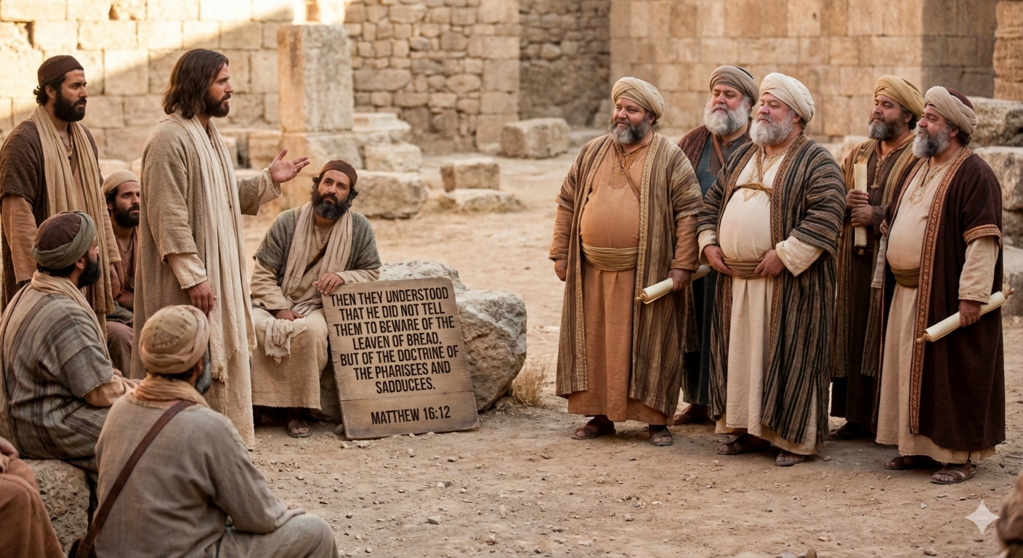
Now He did not do many mighty works there because of their unbelief. Matthew 13:58

Note: You can listen to today’s commentary courtesy of our friends at the “Bible in Ten” podcast. (Click Here to listen)

You can also read this commentary, scrolling with music, courtesy of our friends at “Discern the Bible” on YouTube. (Click Here to listen), or at Rumble (Click Here to listen).

You can also read the Chapter 13 translation, scrolling with music, courtesy of our friends at “Discern the Bible” on YouTube or Rumble. (Click Here for YT) or (Click Here for Rumble).

“And through their faithlessness He did not, there, many miracles” (CG).

In the previous verse, it was noted that the people were offended at Jesus. Because of this, He said that a prophet is not without honor except in his fatherland and in his house. With that stated, Matthew next records, “And through their faithlessness He did not, there, many miracles.”

A new word, apistia, faithlessness, is seen. It is derived from the negative particle a and pistos, faithful. Therefore, depending on the context, it means not faithful, unfaithful, unbelief, an unbeliever, faithlessness, etc.

The preposition preceding this, dia, through, signifies that the cause of His not doing many miracles was their unbelief. In the parallel account in Mark 6, this is stated more firmly so that it is understood –

“And He could not do any miracles there, if not a few infirm, having laid the hands, He cured.” Mark 6:5 (CG)

This is similar to what Jesus said to the apostles after the transfiguration –

“Then the disciples came to Jesus privately and said, ‘Why could we not cast it out?’
20 So Jesus said to them, ‘Because of your unbelief; for assuredly, I say to you, if you have faith as a mustard seed, you will say to this mountain, “Move from here to there,” and it will move; and nothing will be impossible for you. 21 However, this kind does not go out except by prayer and fasting.’” Matthew 17:19-21

In Nazareth, the unbelief of those who resided there kept Jesus from being able to cure them. In the case of the apostles, their faith blocked the healing process. Either way, a lack of faith was a hindrance to what otherwise could have been possible.

Life application: Unfortunately, it is common today for people in charismatic churches, or who carry around the name it and claim it attitude, to accuse those who have health problems, financial problems, etc., of lacking faith.

They strut around like roosters, boasting of the supposed spiritual superiority as if they have access to such things on a whim. This type of attitude laughingly extends to claims of being able to protect homes from tornadoes, earthquakes, hurricanes, etc.

This is neither acceptable nor responsible. We live in a fallen world. People get sick, we have troubles and trials, and people die. Such things are a part of human existence. God is not looking for super spiritual showoffs.

Rather, He is pleased with the simple faith of those who trust in Jesus despite their trials and troubles. Nothing in Scripture ever says that believers will be immune from the woes of this world. In fact, just the opposite is true, both in spiritual and physical matters.

Don’t let the arrogant, boastful, and theologically uninformed rob your joy in Christ through such false claims or accusations. Rather, pity them. Because when their times of trial and woe come upon them, and they will, they will have nothing to fall back on.

Be responsible, read your word, and have faith in God and His promises, despite the trials and catastrophes that come your way. In this, God will be pleased with you.

“Therefore, when we could no longer endure it, we thought it good to be left in Athens alone, and sent Timothy, our brother and minister of God, and our fellow laborer in the gospel of Christ, to establish you and encourage you concerning your faith, that no one should be shaken by these afflictions; for you yourselves know that we are appointed to this. For, in fact, we told you before when we were with you that we would suffer tribulation, just as it happened, and you know.” 1 Thessalonians 3:1-4

Lord God, we know that we are ordained for trials and troubles in this life. Despite this, we thank You for the promises You have given us in Christ Jesus. Whatever happens now, no matter how great and troubling it is, we know it is temporary and just a glitch on our path to eternal glory in Your presence. Thank You for the surety we possess in Christ Jesus our Lord. Amen.


Matthew 13 (CG)

1 And in that day, Jesus, having departed from the house, He sat by the sea. 2 And they gathered to Him, great crowds, so too He, having in-stepped into the boat, sat. And all the crowd, they had stood on the beach. 3 And He spoke to them, many in parables, saying, “You behold! He went out, ‘the sowing to sow.’ 4 And in his sowing, some, indeed, it fell near the road, and it came, the birds, and it devoured them. 5 And others, it fell upon the rock-like, where it had not much earth, and immediately it out-rose through not having soil depth. 6 And sun, having risen, it burned, and through not having root, it desiccated. 7 And others, it fell upon the thorns, and they ascended, the thorns, and they choked them. 8 And others, it fell upon the good earth, and it gave fruit. Some, indeed, hundred, and some sixty, and some thirty. 9 The ‘having ears to hear,’ he – hear!”

10 And the disciples, having come, they said to Him, “Through what in parables You speak to them?” 11 And having answered, He said to them, “Because it has been given to you to know the mysteries ‘the kingdom the heavens.’ And to them, not it has been given. 12 For whoever he has, it will be given him, and he will superabound. And whoever not he has, and what he has, it will be lifted from him. 13 Through this I speak to them in parables, because seeing, not they see, and hearing, not they hear nor comprehend. 14 And it fulfills upon them Isaiah’s prophecy, saying,

‘News you will hear and no, not you might comprehend,

And seeing, you will see and no, not you might see.

15 For it thickened, the heart of this people

And their ears, heavily they heard,

And their eyes, they shut,

Lest not they should behold – their eyes,

And they should hear – their ears,

And they should comprehend – the heart,

And they should return,

And I will heal them.’

16 And you, blessed the eyes, because they see, and the ears, because it hears. 17 Amen! For I say to you that many prophets and righteous, they passioned to see what you see, and not they saw, and to hear what you hear, and not they heard.

18 You, therefore, you hear the parable, the ‘having sown.’ 19 Everyone hearing the word of the kingdom and not comprehending, the evil, he comes, and he seizes the ‘having been sown in his heart.’ This, he is, the ‘having been sown near the path.’ 20 And the ‘having been sown upon the rocky places,’ this, he is, the ‘the word hearing and immediately with joy receiving it.’ 21 And he has no root in himself, but he is temporary. And having come pressure or persecution through the word, immediately he stumbles. 22 And the ‘into the thorns having been sown’ this is the ‘the word hearing,’ but the care of this age, and the delusion of wealth, it strangles the word, and it becomes unfruitful. 23 And the ‘upon the good earth having been sown,’ this, it is ‘the word hearing and comprehending’ who surely he fruit-bears and it yields – some indeed hundred, and some sixty, and some thirty.”

24 Another parable He near-set them, saying, “It is likened, the kingdom of the heavens, to a man having sown good seed in his field. 25 And in the ‘sleeps the men,’ he came, his enemy, and he sowed darnel in between the wheat, and he went away. 26 And when it sprouted, the grass, and it yielded fruit, then it appeared, also, the darnel. 27 And having come, the servants of the housemaster, they said to him, ‘Lord, not good seed you sowed in your field? Whence, therefore, it has darnel?’ 28 And he said to them, ‘Enemy! A man did this!’ And the servants, they said to him, ‘You incline, therefore, having gone, we should gather them?’ 29 And he said, ‘No! Not lest gathering the darnel, you should uproot with them the wheat. 30 You allow both to co-grow until the harvest. And in the harvest season, I will say to the harvesters, “You gather first the darnel, and you bind them into bundles to incinerate them, and wheat you collect into my barn.”’”

31 Another parable He presented them, saying, “The kingdom of the heavens, it is like a mustard kernel, which a man, having taken, he sowed in his field. 32 Which, indeed, it is least of all seeds. And when it may be grown, it is greater than the tillings, and it becomes a tree, so the birds of the sky come and encamp in its branches.”

33 Another parable He presented them, “The kingdom of the heavens, it is like leaven which a woman, having taken, she concealed in flour – three measures – until it all, it leavened.”

34 All these, He spoke, Jesus, in parables to the crowds, and besides parable, not He spoke to them. 35 So it should be fulfilled, the ‘having been spoken through the prophet,’ saying,

“I will open My mouth in parables.

I will blurt things having been concealed from foundation – world.”

36 Then Jesus, having dismissed the crowds, He went into the house. And His disciples, they came to Him, saying, “Expound to us the parable of the fields’ darnel.”

37 And answering, He said, “He, the ‘sowing the good seed,’ he is the Son of Man. 38 And the field, it is the world. And the good seed, these, they are the sons of the kingdom. And the weeds, they are the sons of the evil. 39 And the enemy, the ‘having sown them,’ he is the Traducer. And harvest – it is the age’s consummation. And harvesters – they are messengers. 40 Therefore, just as it is gathered, the darnel, and fire – it consumed, thus it will be in the age’s consummation. 41 The Son of Man, He will send His messengers and they will gather from His kingdom all the snares and those doing lawlessness. 42 And they will cast them into the furnace of the fire. There it will be the lamentation and the gnash of the teeth. 43 Then the righteous, they will irradiate as the sun in the kingdom of their Father. The ‘having ears,’ let him hear!

44 Again, the kingdom of the heavens, it is like treasure having been concealed in the field, which a man, having found, he concealed, and from the joy of it, he withdraws and all that he has he sells and he buys that field.

45 Again, the kingdom of the heavens, it is like a man, a merchant, seeking beautiful pearls, 46 who, having found one highly valued pearl, having departed, he has sold all – as many as he had, and he purchased it.

47 Again, the kingdom of the heavens, it is like a seine having been cast into the sea, and from every kind having been gathered, 48 which, when it was filled, having dragged upon the beach, and having sat, they gathered the good into vessels, and the bad they cast out. 49 Thus it will be in the age’s consummation. The messengers, they will go out and they will separate the evil from the righteous’ midst. 50 And they will cast them into the furnace of the fire. There, it will be the lamentation and the gnash of the teeth.”

51 Jesus, He says to them, “These all, you comprehend?”

They say to Him, “Yes, Lord.”

52 And He said to them, “Through this, every scribe, having been discipled in the ‘kingdom the heavens,’ he is like a man, a house-master, who – he ejects from his treasure newbies and oldies.”

53 And it was when He finished, Jesus, these parables, He after-lifted thence. 54 And having come into His fatherland, He taught them in their synagogue, so they are outstruck and say, “Whence this, this wisdom and the miracles? 55 Not this, He is the artificer’s Son? Not His mother, her called Mary? And His brothers James, and Joses, and Simon, and Judas? 56 And His sisters, not they are all with us? Whence then this – these all?” 57 And they stumbled in Him.

And Jesus, He said to them, “Not, he is, a prophet dishonored if not in his fatherland and in his house.” 58 And through their faithlessness He did not, there, many miracles.


Matthew 13:57

Sunday, 2 November 2025

So they were offended at Him.
But Jesus said to them, 
“A prophet is not without honor except in his own country and in his own house.” Matthew 13:57

Note: You can listen to today’s commentary courtesy of our friends at the “Bible in Ten” podcast. (Click Here to listen)

You can also read this commentary, scrolling with music, courtesy of our friends at “Discern the Bible” on YouTube. (Click Here to listen), or at Rumble (Click Here to listen).

“And they stumbled in Him. And Jesus, He said to them, ‘A prophet, he is not dishonored if not in his fatherland and in his house.’” (CG).

In the previous verse, the questions about Jesus continued as the people asked about His sisters, wondering how He had obtained His wisdom and mighty working abilities. Because of their confusion, it next says, “And they stumbled in Him.”

The meaning is that they were tripped up. Their mental disconnect would not allow them proper understanding of how someone so common and who was a seemingly normal child among them had grown into such a mighty intellect with the ability to accomplish such great things.

Their assumption, though faulty, is not uncommon. To them, humble beginnings equated to a humble existence henceforth. Instead of looking at Jesus as a prodigy, they probably looked to Him more as a charlatan or an underhanded opportunist. However, Matthew records Jesus’ response to them, “And Jesus, He said to them, ‘A prophet, he is not dishonored.’”

A new word, atimos, is seen. It is derived from the negative particle a and the word timé, value. Thus, it extends to honor, esteem, dignity, etc. Jesus’ beginning words of His response indicate that prophets are normally honored for their prophetic ability.

They stood with kings, were esteemed by the people, and were sought out by all classes of people in times of need. However, there was often a notable exception. Jesus continues with, “if not in his fatherland and in his house.”

A prophet who only became a prophet later in life by the call of the Lord could expect to be ignored by those he grew up with and who once interacted with him regularly. People would not understand how someone they knew and hung around with, just a common Joe, could somehow have a special connection to God.

This is the intent of Jesus’ words, which were probably a proverbial expression concerning such things.

Life application: As noted above, the reasoning of the people is commonly faulty. There are innumerable ways people can suddenly excel who seemed to have no special background, potential, or abilities.

For example, from time to time, someone may get bumped on the head and suddenly have the ability to do incredible feats in math, memory, invention, etc. A prophet or preacher may have a sudden calling on his life that changes the entire course of his existence.

In the case of the latter, faith in God demands that people take stock of such a thing and consider it. Of course, the chances are good that a person is making a false claim about such a religious encounter, but the only way to get to the bottom of that would be to test him, observe his conduct, and check with others who may have intimate knowledge of the situation.

However, others may be in on the scam as well. Joseph Smith claimed he had received the Book of Mormon from the angel Moroni. Brigham Young supported him in his false teaching and helped perpetuate and grow Mormonism. So one has to be careful with such things.

There is a great example of the thought presented here right in Scripture –

“And when Saul had come to Jerusalem, he tried to join the disciples; but they were all afraid of him, and did not believe that he was a disciple. 27 But Barnabas took him and brought him to the apostles. And he declared to them how he had seen the Lord on the road, and that He had spoken to him, and how he had preached boldly at Damascus in the name of Jesus.” Acts 9:26, 27

Paul resided in Jerusalem. People there knew of his conduct toward those in the church. After his conversion, his change was a hard sell to those who previously knew him. This is to be expected. However, there is a point when such things need to be accepted as true and valid, like Paul’s conversion, or forever rejected, like Joseph Smith’s false claims.

The evidence behind the claims should be sufficient to make such a determination. Pay attention to such things as you interact with others. Your initial assessment may be wrong. Likewise, your lurking suspicions may be borne out when a false narrative is exposed. Be wise and discerning, and as John admonishes, “test the spirits” (1 John 4:1).

O God, we pray for Your hand of protection to surround us from false teachers. At the same time, we pray for discerning minds that can identify them so that we are not led astray by them. There are so many who claim they know the “mysteries” of how things work by You when in fact, they are just making stuff up. Help us to see the truth and keep far from such people. Amen.


Matthew 13:56

Saturday, 1 November 2025

And His sisters, are they not all with us? Where then did this Man get all these things?” Matthew 13:56

Note: You can listen to today’s commentary courtesy of our friends at the “Bible in Ten” podcast. (Click Here to listen)

You can also read this commentary, scrolling with music, courtesy of our friends at “Discern the Bible” on YouTube. (Click Here to listen), or at Rumble (Click Here to listen).

“And His sisters, not they are all with us? Whence then this – these all?” (CG).

In the previous verse, the people of Nazareth questioned Jesus about His father, mother, and brothers. Their words continue with, “And His sisters.”

The word translated as “sister” is adelphé. It is the feminine form of adelphos, brother, and carries the same connotation, one of the same womb. As with the previous verse, however, the word can figuratively be extended to a person in a figurative sense –

“Do not rebuke an older man, but exhort him as a father, younger men as brothers, older women as mothers, younger women as sisters [adelphé], with all purity.” 1 Timothy 5:1, 2

For this reason, the Roman Catholic Church and others who hold to the perpetual virginity of Mary insist that the words here extend to daughters of Joseph and not daughters of Mary, despite the obvious intent of the words to indicate actual sisters having been born to Mary.

Mary, not some unnamed former wife, is spoken of in the same context as the rest of the family, making her the natural connection to these sisters. As for the number of them, that is to be inferred from the next words, “not they are all with us?”

Although no number is set, it is telling us that there were three or more sisters. Otherwise, it would have said, “isn’t she here with us,” or “are not both of them here with us.” Not only was Mary not a perpetual virgin, apart from Jesus, but she had at least seven other children. Having noted Joseph, Mary, and the siblings of Jesus, demonstrating complete familiarity with the family, the people next exclaim, “Whence then this – these all?”

The words are referring to “this wisdom and the miracles” mentioned in verse 54. In other words, everything about Jesus and His family was laid out before the people through years of close interaction.

And yet, somehow, He suddenly appeared to them with incredible abilities that surpassed the normal life He previously lived. They could not understand how Jesus could have gone from a simple Son of an artificer to a great miracle worker and biblical scholar.

Life application: The supposed perpetual virginity of Mary is never taught in Scripture. It is unfathomable that God would present such a doctrine without clear and unambiguous evidence for it. And yet, a normal read through the text would lead anyone with a modicum of honesty to conclude that Jesus was the Son of Mary and the others mentioned here were as well.

The only result to be realized from this aberrant doctrine is to cause Scripture itself to be violated. The words of Hebrews 12:2 implore Christians to fix their eyes on Jesus, not Mary, Paul, David, or Moses. To highlight Mary’s role, as has been done by the Roman Catholic Church, destroys this precept.

Be wise, filled with prudence when dealing with doctrinal and theological issues, and consider what God is doing and why. Don’t accept people’s teachings just because they seem authoritative or because they have some particular trait that makes them seem special.

For example, it is as common as peanuts in peanut brittle in Christian circles today to highlight Bible teachers simply because they are Jewish. It is as if being Jewish elevates people to some supposed level of biblical knowledge that must be listened to and adhered to. It is a ridiculous way to handle one’s biblical studies.

Whether someone has a PhD, can read and write Hebrew and/or Greek, or has a large congregation, such things have nothing to do with adherence to Scripture. Evaluate your teachers based on how they teach the word of God. And guess what, this is impossible unless you yourself know the word well enough to do so. Read the Bible!

Glorious God Almighty, help each of us to desire knowing Your word above even the food we eat. May we listen to it, meditate on it, and cherish it in our hearts and minds all the days of our lives. To Your glory. Amen.


Matthew 13:55

Friday, 31 October 2025

Is this not the carpenter’s son? Is not His mother called Mary? And His brothers James, Joses, Simon, and Judas? Matthew 13:55

Note: You can listen to today’s commentary courtesy of our friends at the “Bible in Ten” podcast. (Click Here to listen)

You can also read this commentary, scrolling with music, courtesy of our friends at “Discern the Bible” on YouTube. (Click Here to listen), or at Rumble (Click Here to listen).

“Not this, He is the carpenter’s Son? Not His mother, her called Mary? And His brothers James, and Joses, and Simon, and Judas?” (CG).

In the previous verse, Jesus returned to His fatherland and began teaching in the synagogues. The people were amazed and wondered where He got His wisdom and abilities to perform the miraculous. They next exclaim, “Not this, He is the artificer’s Son?”

It is a new word, tektón, an artificer or craftsman. This could be in wood, stone, metal, etc. The general thought and tradition is that Joseph was a woodworker. However, some believe he worked in stone. There is a stone quarry in the area of Nazareth where objects have been found, such as cups, that have been fashioned out of stone.

From the time of Homer down, the word was used to define a woodworker, such as a carpenter, joiner, shipbuilder, etc. To limit Joseph to one specific trade or another may be to limit the application of the word. For all we know, he was a general artificer who worked in wood, stone, etc.  Continuing with the query, the people continue, saying, “Not His mother, her called Mary?”

They are not asking this as if they could be wrong, as in, “We thought He was Mary’s Son? No?” Rather, the reason for the question is that they definitely know He is Mary’s Son. Thus, they know all about His family line. He is not a mystery to them. Rather, He grew up with them. And more, they next ask, “And His brothers James, and Joses, and Simon, and Judas?”

The word used is adelphos, coming from the connective particle a and the word delphus, the womb. Thus, it literally means, “of the same womb.” That is the sense that should be considered here. However, for the cult of Mary who insists she was a perpetual virgin, it is argued that the word can be extended to people in close personal relationships, of the same people (such as Jews), etc. It can also be applied to those born to one of two parents, etc.

In other words, in order to justify their stand, the claim by those of the Mary cult is that these are Joseph’s sons but not Mary’s. The normal and reasonable sense that anyone reading this without a bias or presupposition would agree upon is that this is speaking of Jesus’ brothers from Mary, especially when she was just mentioned prior to these words.

The point of the questioning by these people is that their words otherwise form an emphatic proclamation. “We know Jesus! We know His father’s trade, and we know His mom and siblings!” With such a knowledge base about Him, they will next reveal why this understanding is important to them.

Life application: In reading the record of Jesus in the gospels, it is inconceivable that someone would suddenly start highlighting Mary as the key figure in the narrative. She is hardly mentioned at all. Her purpose for being mentioned clearly centers on Jesus, and then she is not mentioned other than incidentally at any other time.

To focus on Mary as those in Roman Catholicism do makes as much sense as focusing on Mary Magdalene, who is mentioned way more than Mary, the mother of Jesus. But the devil knows how to misdirect people. He has done it since our first parents in the Garden of Eden.

In getting people to take their eyes off the Lord, he has the ability to rob them of the prize, meaning a right relationship with God and the surety of salvation through faith in Jesus Christ. If this can be passed down from one generation to the next, the level of veneration will normally increase.

This is certainly the case with the cult of Mary. It has become a global phenomenon that has robbed innumerable souls of properly directed faith in Jesus. Don’t be swayed away from what God wants us to focus on when we read Scripture. That is Him and how He has revealed us in the coming of Jesus Christ.

May we hold fast to Him, fixing our eyes on Him, and never being distracted from that goal and focus all the days of our lives –

“We must pay the most careful attention, therefore, to what we have heard, so that we do not drift away. For since the message spoken through angels was binding, and every violation and disobedience received its just punishment, how shall we escape if we ignore so great a salvation?” Hebrews 2:1-3

Glorious God, the whole world is trying to rob us of our focus on You and what You have done in the giving of Jesus Christ. Leading that attempt is the devil, who is ever striving for us to turn from You and to do things our own way. Give us wisdom, strength, and the fortitude to stand against this and to fix our eyes firmly on Jesus. Amen.


Matthew 13:54

Thursday, 30 October 2025

When He had come to His own country, He taught them in their synagogue, so that they were astonished and said, “Where did this Man get this wisdom and these mighty works? Matthew 13:54

Note: You can listen to today’s commentary courtesy of our friends at the “Bible in Ten” podcast. (Click Here to listen)

You can also read this commentary, scrolling with music, courtesy of our friends at “Discern the Bible” on YouTube. (Click Here to listen), or at Rumble (Click Here to listen).

“And having come into His fatherland, He taught them in their synagogue, so they are outstruck and say, ‘Whence this, this wisdom and the miracles?’” (CG).

In the previous verse, Jesus was noted to have lifted Himself and purposefully set out from where He was. Matthew next says, “And having come into His fatherland.”

It is a new word, patris, a fatherland, coming from patér, father. It speaks of one’s native country. Therefore, more than simple geography is being referred to. Instead, thoughts such as identity, family tradition, family lineage, etc., are being referred to. In Hebrews 11:14, it refers to the hope of the saints who await their true homeland, a heavenly country –

“These all died in faith, not having received the promises, but having seen them afar off were assured of them, embraced them and confessed that they were strangers and pilgrims on the earth. 14 For those who say such things declare plainly that they seek a homeland [patris]. 15 And truly if they had called to mind that country from which they had come out, they would have had opportunity to return. 16 But now they desire a better, that is, a heavenly country. Therefore God is not ashamed to be called their God, for He has prepared a city for them.” Hebrews 11:13-16

Once Jesus arrived in His earthly fatherland, “He taught them in their synagogue.”

Mark adds that this teaching in the synagogue was on the Sabbath, something that is unnecessary in Matthew’s gospel, as this would have been understood by the Jewish audience his words are directed to. This teaching by Jesus in the synagogues that He attended is noted elsewhere. In the case of His instruction in Nazareth, it notes, “so they are outstruck.”

Matthew’s use of the present verbs brings the reader directly into the room. It is as if they are sitting in front of us having this awe-inspiring conversation. The reason for their astonishment is next stated, “and say, ‘Whence this, this wisdom and the miracles?’”

Another new adverb, pothen, whence, is seen. It is from the same source as posos, how great, how many, how much, etc. The explanation for their questioning will be given in the coming verses. But one can imagine already why it would be so. They had seen Jesus growing up, observed His family, learning, daily habits, etc. None of that could seemingly account for His presentation while teaching.

Life application: How often has it been said of people who have come to faith in Christ that the change in them is inexplicable? Someone went to a particular school, bumbled around like most youth do, spent his time surfing or doing some other activity, and seemingly would be the guy who would spend the rest of his life in a local bar talking about the good old days.

And yet, after meeting the Lord, he returns home eloquent, confident, and ready to challenge the norms of those still living out their lives in the same cliques they were in years earlier. When they see him, they are astonished at the change, question what kind of game he is up to, and offer him a free round of bowling as they try to figure him out.

But even more pronounced is the reaction of his family. They knew all of his secret faults, shortcomings, and personal struggles. How could there be such a vast change in him? But this is the power of Jesus in our lives.

He will transform each believer as they allow Him to. This will never be forced, and yet, for every inch of our past lives we are willing to cede to Him, He will step in and renew us in His image. Jesus wants us to reflect Him, and He will gladly allow us to do so in order to bring Him glory.

Likewise, our conversion may be stunning to others at first, but eventually, they will realize it is true and permanent, or at least as permanent as we stand fast and direct our eyes to Jesus. Once they realize this, we will no longer appear as an aberration, but a source of hopeful change in their own lives when difficulties come their way.

This is what Jesus would have for each of us. Not only should we be conformed to His image and transformed in our minds, but we should also do so to the point that we effect this change in others as well. May it be so with each of us, to the glory of God who saved us in Christ Jesus our Lord.

Lord God, may our lives reflect the goodness of Jesus in all we do. May our actions and words lead others to want the same confident walk with You that we possess. In all ways, may we bring glory and honor to You with every fiber of our being. Amen.