Romans 8:27

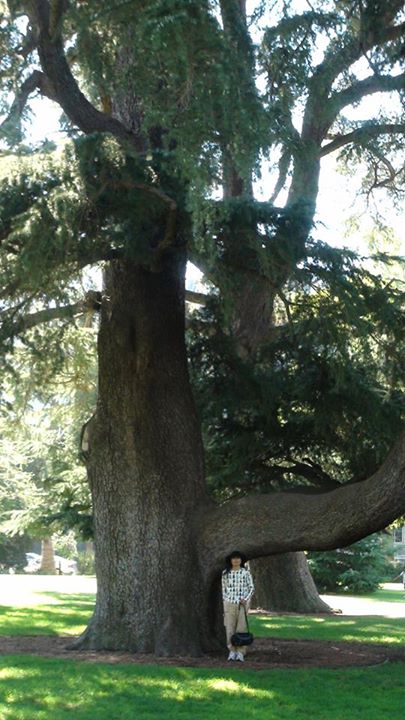
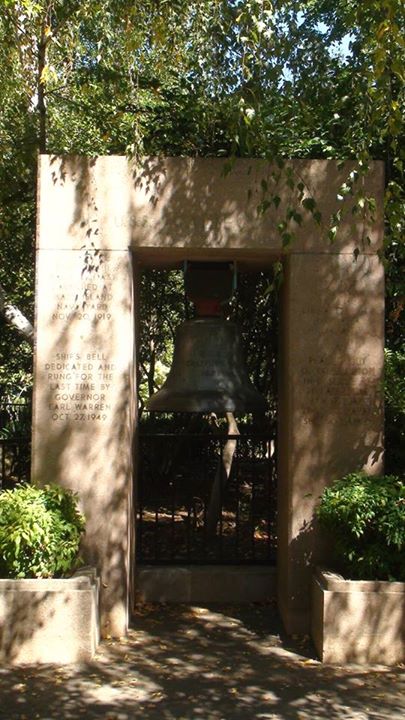
130725_liberty_bell

Thursday, 25 July 2013

Now He who searches the hearts knows what the mind of the Spirit is, because He makes intercession for the saints according to the will of God. Romans 8:27

Who is it that searches the hearts and mind? In Jeremiah 17:10, we see it is the Lord, Jehovah –

I, the Lord, search the heart, I test the mind, Even to give every man according to his ways, According to the fruit of his doings.

In Revelation 2:23 we see that it is Jesus –

… I am He who searches the minds and hearts.

Elsewhere throughout the Bible, such as in the psalms, this is spoken of as being in the providence of God. In other words, something that is at the providence of God alone is something that is accomplished by all of the above; all are God. Each performs this function in a way which is appropriate to the situation and dispensation. Paul in this verse, which is tied to the Spirit in the previous verse, is speaking of us in our prayer life in relation to the Spirit. He says that it is “He who searches the hearts.”

At the same time, He “knows what the mind of the Spirit is.” The Spirit works in accord with His knowledge and becomes the one who “makes intercession for the saints according to the will of God.” This is the Spirit’s role, but again it is not a role unique to the Spirit. Coming up in just a few verses, Romans 8:34 says that it is Christ who also makes intercession for us (also see Hebrews 7:25).

Therefore, as the Spirit of God is searching us, He takes this information that even we can’t properly make clear in our prayers, and He brings it before the throne of God. The “right hand of God” is the position of power and authority. At this glorious place, Christ intercedes for us. The marvel of the Trinity is that there is One God who is eternal and without division and yet He within Himself performs certain roles – we call them “persons.”

This is something that is hard to grasp and theologians bandy concepts of God about, but in the end, one must look at a few facts that the Bible teaches –

1) The Bible proclaims the Father is God
2) The Bible proclaims Jesus is God
3) The Bible proclaims that the Holy Spirit is God
4) The Bible shows that all three members of the Godhead are eternal – no beginning, no end
5) Time is created and we are in time
6) Our concepts of God must be considered based on God’s eternality, not how we interact with Him in time
7) If we are wrong about the nature of the Trinity, it doesn’t change who God is. God is God – Father, Son, and Holy Spirit

Why is this important? Because the Bible proclaims these things to us. In our limited knowledge of God, we come up with our own misguided thoughts on these matters, such as whether Christ is God or not. Regardless of whether we can conceive of Jesus as God and eternal in His being, the Bible says He is. When we deny that He is, we must then deny the evident teaching of the Bible; thus we now proclaim heresy. The importance of these matters is that they can keep others from salvation if this is what they are taught and what they believe.

Now understanding these intercessory roles a bit more, it would be good to note that on a human level, we also are given this honor, albeit in a limited way. We see the distinction mentioned in 1 Timothy 2:1 –  “Therefore I exhort first of all that supplications, prayers, intercessions, and giving of thanks be made for all men…”

We also have an intercessory role, bringing these things before God in order to transmit our desires and hopes before Him. When we are limited in doing so because of our lack of intercessory skill, isn’t it comforting to know that God searches us out and does it for us? Great stuff from a wonderful Creator.

Life application: Let us first accept the premises of the Bible at face-value and then work within those parameters to develop our doctrine. If we don’t do this, then our thinking about God – His nature and activity in our lives, becomes skewed. Better we don’t understand and accept than to deny and then attempt to contemplate “why” our denial is right and acceptable.

Lord, as I sit here in Your presence, the planets are moving in their paths, the stars are putting forth light and heat, the birds are moving on the winds, and creatures are walking on this beautiful planet. These things, and so very much more are all under Your constant care and control. If this is so, and I know it is, then I can feel confident that You have me in the same care. How I love You – I am carefree because You care for me. Amen.

Romans 8:26

130724_tree_top

Wednesday, 24 July 2013

Likewise the Spirit also helps in our weaknesses. For we do not know what we should pray for as we ought, but the Spirit Himself makes intercession for us with groanings which cannot be uttered.  Romans 8:26

News Flash: This verse has nothing to do with “speaking in tongues.” This is not a verse which can be used to defend the unintelligible emanations which proceed forth during charismatic gatherings.

Paul uses the term “Likewise” to open this verse. It is the Greek word hōsautōs and means “in like manner.” In like manner of what? Paul has said that the creation groans with birth pangs and we likewise groan, eagerly waiting for our body’s redemption. This is the comparison that he is using. It is not an excuse to stand in church and draw unnecessary attention to oneself by making up a “prayer language.”

This is actually an important theological issue and to diminish it as has been done in the past 100 years or so is to devalue the worth of sound biblical interpretation. And so we continue – “Likewise the Spirit also helps us in our weaknesses.” We are mortal and we are weak. Some of us are weak in physical strength, some weak in health, some weak in knowledge, some weak in elocution, etc. The weakness of our prayer life is what Paul is speaking of.

We often have real needs and/or desires that we simply can’t put into words because our thoughts, our ability to reason the issue out, or the interference of our emotions causes us to be unable to accurately express what is on our heart. When this happens, “we do not know what to pray for as we ought.” This is our weakness and yet, it is not a problem to God. Instead, the “Spirit Himself” who is the third member of the triune God, makes intercession for us.

Paul says that it is He who searches our hearts and minds and he uses a word, hyperentynchanei, which is found nowhere else in Scripture. The Spirit takes our place and makes the plea to God for us. This intercession has nothing to do with audible emanations flowing off our tongues. Instead, it is speaking of our internal “groanings, which cannot be uttered” because we don’t know how to utter them. These are sorted out and brought to God in knowing and understanding. In other words, what we simply cannot tell God, the Spirit does for us.

The Spirit is the one who aids us, just as an advocate in a court of law would. We have no idea how to defend ourselves in a legal situation because we simply don’t have the knowledge or training to do so. In such a case, we wouldn’t walk up to the judge and start flapping off unintelligible syllables. Rather the advocate would speak on our behalf, carefully stating to the judge the things we are unable to probably elucidate.

This is the intent and meaning of what Paul is stating here. Because we can’t put into words the things that we want to say but the Spirit can, and because the Spirit knows the mind of God, the two are brought into a point of harmony. This is done silently and with the decorum of the Holy Spirit tending to His troubled child, not with outlandish fantasies of the mind and of the tongue.

Life application: If you want to make noises for the Lord, do them in a way which builds up the church and glorifies God. With such shouts of praise and honor, the Lord is well-pleased.

Yes Lord God! With my tongue I will speak and sings words of praise, glory, and honor to You. And with my heart and mind I will think on Your greatness at all times. When my words fail me, I will remain quiet and allow the Spirit to search me out and carry my troubles and woes to You for a happy resolution. In all ways, may you be glorified though the words and thoughts which proceed from me. Amen.

Romans 8:25

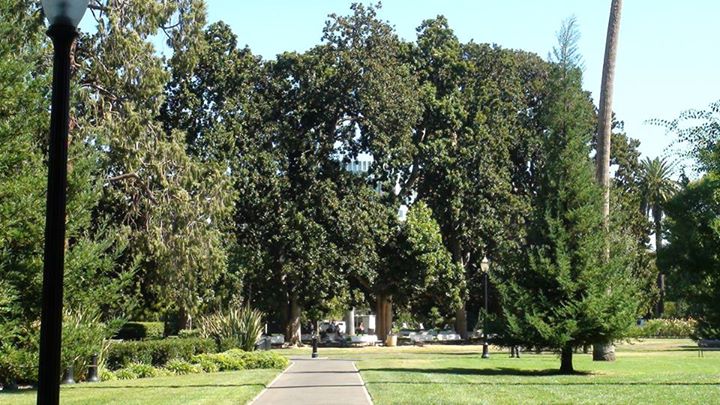
130723_capitol_grounds

Tuesday, 23 July 2013

But if we hope for what we do not see, we eagerly wait for it with perseverance. Romans 8:25

“But” marks the contrast with the preceding verse: “For we were saved in this hope, but hope that is seen is not hope; for why does one still hope for what he sees?”

Instead of sight, which is the realization of our hope, we (even now 2000 years after Paul’s letter) “hope for what we do not see.” The Bible, from Genesis to Revelation, is a book of hope and promise for those who wait patiently on their God to fulfill His word and execute His plan. The New Testament shows us the fullness of this plan and helps clarify what the Old Testament only partially revealed. In the New there are numerous passages about the hope which has been presented. As an inspiration to the longing soul, let’s review but a few of them –

Galatians 5:5 – …the hope of righteousness by faith
Colossians 1:5 – …the hope which is laid up for you in heaven
Colossians 1:27 – Christ in you, the hope of glory
Ephesians 1:18 – …the hope of His calling; the riches of the glory of His inheritance
1 Thessalonians 5:8 – …the hope of your salvation
1 Timothy 1:1 – …the Lord Jesus Christ, our hope
Titus 1:2 – the …hope of eternal life

Titus 2:13 – … the blessed hope and glorious appearing of our great God and Savior Jesus Christ

Because we have the guarantee, which is the sealing of the Spirit, these things have been promised; they are our hope. And because of the magnitude of the glory of what is coming, we have the ability to “eagerly wait for [them] with perseverance.” Why should we feel any sense of hopelessness at all. The rich and famous may have it good in this life, but where is the hope? Unless they have something more to look forward to, their life is but a fading glory at best.

On the other hand, no matter what our station, because we have that which is eternal in our sight, we have more riches than they could ever imagine. All of it is stored up for us because of the work of Another. How can we not marvel at the grace and glory which proceeds from God?

Life application: When attending a funeral, mark well the difference between a person who was truly saved and everyone knows it and a person who actually had no hope. Someday, unless the Lord comes for us first, you will be laid in a box as well. What message will be spoken over you on that day?

Lord, should I die today, I would hope that every person who attended my funeral would know but one thing: I was Your servant – failing yes, but Your servant. And because of this, the box isn’t my final home. I have a hope eternal in the fullness of Messiah, my Lord Jesus. Amen.

Romans 8:24

130722_hideko_tree

Monday, 22 July 2013

For we were saved in this hope, but hope that is seen is not hope; for why does one still hope for what he sees? Romans 8:24

This is the final “for” of this subsection. Notice the logical progression of Paul’s thoughts as they come from the tip of his pen –

We are children of God, heirs of God and joint heirs with Christ, if we indeed suffer with Him, that we may also be glorified together.

For – the present sufferings are inconsequential to the glory which shall be revealed in us

For – the creation eagerly waits for the revealing of the sons of God

For – the creation was involuntarily subjected to futility but the creation itself will be delivered from this state into the same liberty as God’s children

For – we know that even the creation is agonizing with labor pangs together until now, just as we who have the firstfruits of the Spirit groan as we wait for the redemption of our bodies

For – we were saved in this hope, but seeing isn’t hope, it is realization

Verse 16 spoke of our suffering which will eventually be replaced with our glorification. Since that verse, he’s built upon that thought to demonstrate what is intuitively known by all people, that this is a world which is not in an ideal state. It is something that is easily supported by observing the physical creation.

We are saved in the hope of being glorified and that hasn’t happened yet, so we are in hope still, being preserved for the glory to come. Just as the creation fell with the fall of man, so will creation be restored with the restoration of man. It is yet future, and this is our hope. If it were to happen to either, then it would happen to the other. Therefore, “hope” would be realized in sight. If creation were redeemed, then we would see it and there would be no hope yet future in this regard. As he says, “why does one still hope for what he sees?” The answer is, “They don’t – they live in that reality.”

And this takes us back to what the “for” of this verse is for. It is explaining the thought of the previous verse – “…we also who have the firstfruits of the Spirit, even we ourselves groan within ourselves, eagerly waiting for the adoption, the redemption of our body.”

The Spirit is our guarantee of the reality to come, not the final reality itself. Thus, the signs of the apostles which validated the indwelling of the Spirit, weren’t an end in and of themselves. They were given as a demonstration of this hope. This is why those signs were given at the establishment of the church. To give an anchor for the hope yet to come. And this is why, despite the flagrant abuses of charismatic churches world-wide, these signs aren’t necessary now. The Bible is published, the doctrine is established, and Jesus is revealed. Those signs are no longer necessary because we have the surety of God’s word which fully explains the work of Messiah.

If God chooses to give us a sign, such as healing, this is His prerogative in any age. He did it prior to the coming of Christ and when He chooses to do it now, it will occur, but it is not a necessary part of our life in Christ. The record which testifies to His power and authority has been made; it is sufficient for our faith and practice.

Life application: What is your hope? If you have hold of what you wish for, then you don’t have hope of it, you have what you wish for. At the present time, the work of the Spirit is a guarantee of what we hope for, not the final reality of the promises to come. The Spirit has breathed out the word of God for our edification. In it, we are told that we are sealed with Him when we believe. If the Spirit wrote the book, then the sealing must be true if the book is true. Is this your hope? If so, then your hope will be realized some glorious day when the sons of God are revealed.

Glorious, precious Lord – Your word tells me that I am sealed with Your Spirit the moment I put my trust in the work of Christ. Because He wrote the book, then it must be true. I am baptized in to the death of my Lord and raised to newness of life by the power of the resurrection. This is where my hope is grounded and this is where I find my peace. Wonderful, blissful peace. Amen.

Romans 8:23

130721_downtown-sacramento

Sunday, 21 July 2013

Not only that, but we also who have the firstfruits of the Spirit, even we ourselves groan within ourselves, eagerly waiting for the adoption, the redemption of our body. Romans 8:23

The thought “not only that” is tying our personal groaning in with the “whole creation” of the previous verse. Everything in creation, and those who have been redeemed understand the glory ahead, and are jointly waiting for that wondrous day. Paul notes those he is speaking about – “…we also who have the firstfruits of the Spirit.”

Firstfruits is a term which looks back to the Old Testament Feasts of the Lord in Leviticus 23 (and as noted in other OT passages). There, in Leviticus 23:9-13, the details of the feast are given. As with all of the Feasts of the Lord, they were fulfilled in the coming of Christ during His first advent. This particular feast was picturing His resurrection. Paul specifically ties them together in 1 Corinthians 15:23.

The Bible uses nature quite often to make spiritual applications. The wind, water, rocks, and agricultural themes, among so many others, are used in a manner which tell spiritual truths of the work of God in Christ, in Israel, in the church, and in the world at large. The firstfruits of the harvest picture Christ’s resurrection and therefore the rest of the harvest looks forward to the great day when we likewise will see “the adoption, the redemption of our body.”

There are several opinions as to who “we” are and also to the exact application of the term “firstfruits of the Spirit.” Some say it is the Jewish believers who received the Spirit at Pentecost, but Paul wasn’t among them at that time and so this view is unlikely.

Another view says that this is referring to the Spirit as a “pledge” of the good things to come in Christ. This can be assumed because the firstfruits during Israel’s history were just that, they were an offering in hopes of an abundant harvest once the entire field had ripened. This also doesn’t seem likely based on Paul’s wording here as well as Christ being the actual Firstfruits.

What is more likely is that it is speaking in general terms of the early Christians during the apostolic age. This was still the time of signs occurring for the establishment and building up of the church until the Bible was complete. After that time, the signs were no longer necessary because the Holy Spirit has completed that portion of His redemptive work, a work which testifies to the truth of the message of Christ.

The Romans would have been included in this period, obviously, because the epistle written to them is a portion of the Bible which we now possess and which testifies to the work of God the Father, God the Son, and God the Holy Spirit. The roles are now understood and so the time of firstfruits of the Spirit have moved into the ripening of the fields for the time of greater harvest to come.

Life Application: It is always good to return to the fountain and think through our position in redemptive history in comparison to the earlier stages which are recorded for us. The Bible is the well-spring of our faith in Christ and it testifies to what has been accomplished in the establishment of the church and the doctrine of our faith. Is it sufficient for faith and practice or not? The answer is, “Yes.” Cling to the words of Scripture as you await the coming of the Lord Jesus and the redemption of our bodies.

Heavenly Father, You have bestowed upon us the wondrous gift which is Your word, the Holy Bible. In it I find riches and treasure unimaginable. I find there Your love for us, the giving of Your Son for us, and the work of Your Spirit for us. In it, doctrine is established, the avenue to life is revealed, and the path for our current walk in holiness is shown to me. Thank You for Your precious word! Amen.