Matthew Introduction, Part III

WWII plaque. Wyoming Capitol.

Sunday, 7 July 2024

Note: You can listen to today’s commentary courtesy of our friends at “Bible in Ten” podcast. (Click Here to listen)

You can also read this commentary, scrolling with music, courtesy of our friends at “Discern the Bible” on YouTube. (Click Here to listen), or at Rumble (Click Here to listen).

The Book of Matthew; an Introduction – Part III

With some of the interesting patterns found within the book of Matthew complete, we now return to finish the list of main purposes for the writing of the book.

4) The Pivotal Placement of Acts: The layout of the Bible forms innumerable patterns. One is seen in the order of how the books are placed, with Matthew beginning a key section of this layout –

a. Tent of Shem:

Genesis – Malachi (Law)

Synoptic Gospels according to the naming of Noah’s sons (OT Law Fulfillment)
* Matthew – Directed predominantly to Shem
* Mark – Directed predominantly to Ham
* Luke – Directed predominantly to Japheth

b. Mixture/Transition

John (mixture of OT Law and NT concepts/theology)

Acts – Transition / Jerusalem to Rome / Peter to Paul / Jew to Gentile / Shem to Japheth

c. Tent of Japheth (dwelling in, meaning between, tents of Shem)

Romans-Philemon – to Gentile-led church

d. Tent of Shem

Hebrews, James, 1 & 2 Peter to Jews (Shem)

e. Mixture

John (mixture)

Jude (mixture, final letter of warning)

f. Summary from John’s time until the end

Revelation – 1:1 – 4:1 (church – Japheth)
4:2 – 19:21 (tribulation upon the whole world)
21 – (millennial reign and final battle – Shem)
22 – (restoration of all things good for all of mankind)

* Matthew begins the section of Law Fulfillment where Jesus’ words and actions are directed specifically to the people of Israel who were serving under the law. During that entire period, no person was able to fulfill the law. According to Leviticus 18:5, the person who fulfilled the law would live. However, all continued to die.

Matthew’s gospel, beginning with Jesus’ genealogy, is provided to show that Jesus was the qualified Messiah, anticipated from ages past. The gospel narrative is then provided to show that Jesus is the capable Messiah who did, in fact, fulfill the law. In His fulfillment of it, the law was annulled, and a New Covenant was introduced.

5) Doctrinal Themes:

Historical – This reveals the actual life of Israel’s Messiah, from birth through to His atoning death and glorious resurrection.
Spiritual – This reveals the fulfillment of the law, God’s standard by which the man who did the things of the law would live.
Apostolic – This begins to reveal the united message of the synoptic gospels even though Matthew has a distinct audience (directed most specifically to the Jews and identifying Jesus as their Messiah/King).
Political – This gospel reveals the truth that Christianity stemmed from Judaism and is the fulfillment of it, thus it establishes faith in Jesus as a legitimate religion (Religio Licita) within the Roman empire.
Prophetic – This reveals the fulfillment of innumerable prophecies within the Jewish writings, some explicitly cited by Matthew.

6) A Very Brief Outline:

The Book of Matthew – Messiah as King

Book Superstructure/

The Son of David**

Book Structure/

Links***

Book Outline
Establishing Kingship – The Son of David Link to Genesis 1.  The right to rule.
Link to Exodus 2.  The prophesied King.
Link to Leviticus 3.  The anointed King.
Link to Numbers 4.  The kingdom attained and announced.
Link to Deuteronomy 5.  The King’s surprising edicts.
Link to Joshua 6.  The King’s surprising edicts (2).
Link to Judges 7.  The King’s surprising edicts (3).
Link to Ruth 8.  The King’s authority confirmed through word and action.
Link to 1 Samuel 9.  Demonstrations of the King’s mercy.
Link to 2 Samuel 10.  Loyal subjects of the King.
Link to 1 Kings 11.  Exultation of loyal subjects; condemnation of the King’s foes.
Is this the Son of David? Link to 2 Kings 12.  The questioned kingship.
Link to 1 Chronicles 13.  The kingdom parables
Link to 2 Chronicles 14.  Revalidations of kingdom authority.
Proclamation of Davidic Son-ship from outside Israel Link to Ezra 15.  The King’s authority confirmed through word and action (2).
Link to Nehemiah 16.  The Messiah-King acknowledged and His mission identified.
Link to Esther 17.  Visual confirmations of divine Kingship.
Link to Job 18.  Kingdom compassion.
Link to Psalms 19.  The importance of earthly and kingdom familial relations.
Proclamation of Davidic Son-ship from within Israel Link to Proverbs 20.  Prerogatives of kingship and requirements of His subjects.
Link to Ecclesiastes 21.  Prophetic fulfillments of the Messiah-King.
Link to Song of Solomon 22.  Testing of the King.
Link to Isaiah 23.  Woe to disobedient subjects.
Link to Jeremiah 24.  Olivet discourse; prophetic passages.
Book Superstructure Book Structure Book Outline
Link to Lamentations 25.  Olivet discourse; prophetic passages (2).
Link to Ezekiel 26.  Passover preparation – dual significance.
Link to Daniel 27.  Messiah-King – the Passover Lamb.
Prophetic fulfillment of the Eternal Davidic King Link to Hosea 28.  The Risen King and His Great Commission.

** The chosen super-structure is evident from Matthew’s identifying Jesus with King David, the genealogy in particular sets the mood. In the first chapter, David is mentioned 6 times; 5 in the genealogy. The genealogy is divided into sections of 14 generations each with David as the link. Interestingly, David is written d-v-d in Hebrew – of which the gematria value is 14.  d = 4 v = 6 d = 4, or a total of 14.

*** It is certain that chapter and verse divisions were not arbitrary but were divinely inspired. Matthew provides wonderful evidence of this fact (although we can be sure he didn’t realize it was happening). See attached previously supplied patterns as evidence of these things.

Life application: In previous commentaries, the chronologically-snobberous teachings of those who dismiss dispensationalism have been addressed. Just because something new is introduced into biblical interpretation, it does not mean that what is presented is invalid. Suitable explanations for why dismissing dispensationalism is inappropriate were presented.

One of the doctrines that arises because of the dispensational model is that of the rapture. The doctrine is necessary because what happens to the church in Christ’s coming, if it has actually not replaced Israel, is not sufficiently addressed by earlier teachings within the church.

From a dispensational understanding of biblical writings, the coming of Christ in His return to save Israel cannot be the same as the coming of Christ to receive His church. This is because even if the church is a part of the commonwealth of Israel (Ephesians 2:12), it is not the nation of Israel. Paul never hints at such a notion.

Therefore, the writings of Paul in 1 Corinthians 15, 1 Thessalonians 4, and 2 Thessalonians 2 cannot be speaking of matters related to Israel. In dismissal of this, rapture deniers say that the term “rapture” is never mentioned by Paul. However, a doctrine does not need a specific word for it to be valid.

The doctrine of original sin is clearly taught in Scripture, even if no such term is ever used. Likewise, the teaching of the Trinity is accepted by all orthodox Christian teachers of Scripture, and yet the term is never used.

Matthew’s gospel is directed to Israel, under the law and demonstrating Christ’s fulfillment of the law. With that complete, the New Covenant was introduced. With Israel’s rejection of Christ, they were placed under the punishments of the Law of Moses, having remained under that law until a future date.

At that time, the Gentiles took the prominent role in the church while the number of Jews decreased to the point where there was but a remnant left at any time during the church age. When the dispensation of grace ends, the church must be removed in order to refocus the redemptive narrative on the nation of Israel.

Matthew’s gospel has introduced something new into the redemptive narrative, the coming of Jesus Christ. Only in understanding the history of the world from a dispensational viewpoint does the overall scenario of what God is doing make proper sense.

There will be a rapture of the church. After that, the world will be prepared for Jesus’ return to His long-wayward people to rule among them for a thousand years. Matthew clearly indicates that it is up to Israel’s decision to acknowledge Jesus for Him to physically return to the earth and accomplish this –

“O Jerusalem, Jerusalem, the one who kills the prophets and stones those who are sent to her! How often I wanted to gather your children together, as a hen gathers her chicks under her wings, but you were not willing! 38 See! Your house is left to you desolate; 39 for I say to you, you shall see Me no more till you say, ‘Blessed is He who comes in the name of the Lord!’” Matthew 23:37-39

Jerusalem refers to the national leadership of Israel, not the church. The church has already said “Blessed is He who comes in the name of the Lord.” They have done so for two thousand years. However, a day lies ahead when Israel will do this as well.

Lord God, thank You for allowing us to see wonderful treasures in Your word. They give us every confidence that it truly is from You, and it is revealing Your heart and mind to us. Yes, Lord God, thank You for Your precious word. Amen!


Matthew Introduction IId

Wyoming Capitol, 1888

Saturday, 6 July 2024

Note: You can listen to today’s commentary courtesy of our friends at “Bible in Ten” podcast. (Click Here to listen)

You can also read this commentary, scrolling with music, courtesy of our friends at “Discern the Bible” on YouTube. (Click Here to listen), or at Rumble (Click Here to listen).

The Book of Matthew; an Introduction – Part IId

The list of books of the Bible that match the corresponding chapters of the Book of Matthew continues here:

———————
*Jeremiah (book 24) speaks more of false prophets than any other book in the Bible. Entire sections are dedicated to false prophets and false prophecies. False prophets are even singled out by name several times.

Here is a Matthew 24 connection –

“At that time many will turn away from the faith and will betray and hate each other, and many false prophets will appear and deceive many people” Matthew 24:10, 11.

*Another fantastic parallel is in Jeremiah 31. Here’s the book/chapter (24)31 –

“Hear the word of the LORD, O nations;
proclaim it in distant coastlands:
‘He who scattered Israel will gather them
and will watch over his flock like a shepherd.’” Jeremiah 31:10 (NIV)

Now Matthew 24:31 –

“And he will send his angels with a loud trumpet call, and they will gather His elect from the four winds, from one end of the heavens to the other.”

Notice the numbers again (24)31 and 24:31

———————
*Lamentations (25th book) says –

“The tongue of the infant clings
To the roof of its mouth for thirst;
The young children ask for bread,
But no one breaks it for them.” Lamentations 4:4

Matthew 25:44 says –

“Then they also will answer Him, saying, ‘Lord, when did we see You hungry or thirsty or a stranger or naked or sick or in prison, and did not minister to You?’”

Notice again, the immensely accurate verse connection – (25)4:4 and 25:44!

————————–
*Ezekiel (26th book) 5:2 reads –

“When the days of your siege come to an end, burn a third of the hair with fire inside the city. Take a third and strike it with the sword all around the city. And scatter a third to the wind. For I will pursue them with drawn sword.”

Now Matthew 26:52 –

“‘Put your sword back in its place, Jesus said to him, for all who draw the sword will die by the sword.’”

Astonishingly enough is that fact that both books read about the “drawn sword” at the numbers (26)5:2 and 26:52, but also worthy of note is that the term “drawn sword” is mentioned more times in Ezekiel than any other book of the Bible, confirming that this is a valid link.

———————–
*Daniel (27th book) 17 –

“A stone was brought and placed over the mouth of the den, and the king sealed it with his own signet ring and with the rings of his nobles, so that Daniel’s situation might not be changed” Daniel 6:17.

Now read Matthew 27:66 –

“So they went and made the tomb secure by putting a seal on the stone and posting the guard.”

Glorious!

*Again in Daniel, the 9th chapter –

“…in the first year of his reign I, Daniel, understood by the books the number of the years specified by the word of the Lord through Jeremiah the prophet, that He would accomplish seventy years in the desolations of Jerusalem.”

Now read Matthew 27:9 –

“Then what was spoken by Jeremiah the prophet was fulfilled.”

Notice the intricacy: Jeremiah is quoted in Daniel (27)9 and Matthew 27:9.

———————–
*Hosea (28th book) 2:15 reads –

“There I will give her back her vineyards, and will make the Valley of Achor a door of hope.” (Achor means trouble.)

Matthew 28:2 says –

“And behold, there was a great earthquake; for an angel of the Lord descended from heaven, and came and rolled back the stone from the door, and sat on it.”

If you look at the comparison, it fits very well. God said in Hosea that He would make the valley of trouble a door of hope, and the ending of all our trouble (in and from death) came as the stone was rolled away from the door of the tomb! As usual, notice the numbers (28)2 and 28:2!

*A second marvelous parallel is Hosea 6:3 –

“Let us acknowledge the Lord;
let us press on to acknowledge him.
As surely as the sun rises,
he will appear;
he will come to us like the winter rains,
like the spring rains that water the earth” (NIV).

Now read Matthew 28:6 –

“He is not here; for He is risen, as He said. Come, see the place where the Lord lay.”

The parallel cannot be mistaken! Just as we were in search of God, He came to us, proving it when He arose and appeared in the morning. And once again, we have the astonishing numerical parallel: (28)6:3 and 28:6!

———————–
If you have enjoyed these patterns, we will provide one more fantastic numerical pattern that runs outside of the 28 chapters of Matthew but instead links to the 40th chapter of Isaiah and corresponds to Matthew, the 40th book of the Bible –

Isaiah 40:3 says –

“The voice of one crying in the wilderness:
‘Prepare the way of the Lord;
Make straight in the desert
A highway for our God.’”

Now Matthew 3:3 –

“For this is he who was spoken of by the prophet Isaiah, saying:
‘The voice of one crying in the wilderness:
“Prepare the way of the Lord;
Make His paths straight.”’”

The interesting thing about this is that Matthew is the 40th book of the Bible. The parallel then is Isaiah 40:3. Matthew (40)3:3.  

Life application: The issue concerning the matter that the book, chapter, and verse divisions did not exist at the time Matthew penned his gospel was discussed in a previous introductory commentary.

It was then discussed that just because dispensationalism was not properly understood or taught until much later in the church age, it does not mean that it is not a valid teaching. The fallacy of Chronological Snobbery was then discussed, showing that it is not proper to assume something is incorrect simply because it is new.

But why would God allow the church to go through 1800 years of incorrect thinking if dispensationalism is correct? The answer is obvious when thought through. If the church knew that the return of Jesus for His church and the establishment of His earthly millennial kingdom was based on the return of the Jewish people to the land, it would have become the main passion and mission of the church to make that happen.

However, Israel had a time of punishment preset by God in order to fulfill their promised punishments according to the Law of Moses. That needed to be fulfilled. Also, the church’s main mission was specifically given by Jesus in Matthew 28 –

“And Jesus came and spoke to them, saying, ‘All authority has been given to Me in heaven and on earth. 19 Go therefore and make disciples of all the nations, baptizing them in the name of the Father and of the Son and of the Holy Spirit, 20 teaching them to observe all things that I have commanded you; and lo, I am with you always, even to the end of the age.’ Amen.”

These words were the Lord’s post-resurrection command to the church. Those so directed didn’t quite get it the first time, and so they asked Him about future matters before He ascended. When they did, He reiterated His directive to them one final time –

“Therefore, when they had come together, they asked Him, saying, ‘Lord, will You at this time restore the kingdom to Israel?’ And He said to them, ‘It is not for you to know times or seasons which the Father has put in His own authority. But you shall receive power when the Holy Spirit has come upon you; and you shall be witnesses to Me in Jerusalem, and in all Judea and Samaria, and to the end of the earth.’” Acts 1:6-8

The disciples were looking forward to the kingdom age. The church, if it realized all that God was doing, would have been looking for the resurrection of the dead and the rapture so that they could be with the Lord. If it was understood that Jesus would return when Israel was in the land once again, that is all people in the church would be working towards.

An entire planet of people needs to hear the gospel, but the church would be working on reestablishing one little people group into a teeny slice of land in the Middle East. Things would not have worked out well. If you want proof that this would be the case, look at today’s modern rapture-seeking crowd.

They literally spend all of their time reading about the rapture, watching videos about the rapture, calculating the timing of the rapture, scolding others about their mistaken priorities, and never spending a moment of the day doing what they should be doing – as commanded by the Lord Himself.

Don’t be like these people. Read the word! Study the word! Tell people the gospel! And then baptize and disciple those you tell. If you don’t do these things, you are being disobedient to the very words Jesus instructed you to do in the word that you fail to pick up and read!

Lord God, help people (including us!) to have properly directed priorities concerning our duties as instructed by You in Your word. May we be faithful and obedient followers and doers concerning what we have been instructed. To Your glory, we pray. Amen.


Matthew Introduction IIc

Great Seal Press Stamp, 1869 (1 each). Wyoming Capitol.

Friday, 5 July 2024

Note: You can listen to today’s commentary courtesy of our friends at “Bible in Ten” podcast. (Click Here to listen)

You can also read this commentary, scrolling with music, courtesy of our friends at “Discern the Bible” on YouTube. (Click Here to listen), or at Rumble (Click Here to listen).

The Book of Matthew; an Introduction – Part IIc

The list of books of the Bible that match the corresponding chapters of the Book of Matthew continues here:

———————–
*Job (18th book) says –

“There was a man in the land of Uz, whose name was Job; and that man was blameless and upright, and one who feared God and shunned evil. And seven sons and three daughters were born to him. Also, his possessions were seven thousand sheep, three thousand camels, five hundred yoke of oxen, five hundred female donkeys, and a very large household, so that this man was the greatest of all the people of the East.” Job 1:1-3.

Matthew 18:1-4 says –

“At that time the disciples came to Jesus, saying, ‘Who then is greatest in the kingdom of heaven?’
Then Jesus called a little child to Him, set him in the midst of them, and said, ‘Assuredly, I say to you, unless you are converted and become as little children, you will by no means enter the kingdom of heaven. Therefore whoever humbles himself as this little child is the greatest in the kingdom of heaven. Whoever receives one little child like this in My name receives Me.’”

Job was certainly unlike any other man of his time.  Read the following description by the Lord Himself –

“Then the LORD said to Satan, ‘Have you considered My servant Job, that there is none like him on the earth, a blameless and upright man, one who fears God and shuns evil?’” (Job 1:8).

However, even with such righteousness, Job faced difficulties that he did not understand.  In the course of these difficulties, Job questioned God’s purposes.  Towards the end of the book, God challenges Job with hard questions to which we have Job’s response –

Then Job answered the Lord and said:
“I know that You can do everything,
And that no purpose of Yours can be withheld from You.
You asked, ‘Who is this who hides counsel without knowledge?’
Therefore I have uttered what I did not understand,
Things too wonderful for me, which I did not know.
Listen, please, and let me speak;
You said, ‘I will question you, and you shall answer Me.’
“I have heard of You by the hearing of the ear,
But now my eye sees You.
Therefore I abhor myself,
And repent in dust and ashes.” Job 42:1-6.

The link is obvious:  Job was considered righteous, but yet he – in the end – was humbled like a child before God’s majesty.

*A second link to confirm this chapter link is that it states –

“…this man was the greatest of all the people of the East” (Job 1:3).

Matthew 18:1 says –

“At that time the disciples came to Jesus, saying, ‘Who then is greatest in the kingdom of heaven?’”

Notice the book/chapter and chapter/verse parallel – (18)1 and 18:1.

A third parallel falls in Job 16:19 –

“Surely even now my witness is in heaven and my evidence is on high.”

Matthew 16:19 says –

“Again I say to you that if two of you agree on earth concerning anything that they ask, it will be done for them by My Father in heaven.”

Notice the numerical parallel – (16)19 and 16:19

*Job contains the three witnesses against Job; Matthew says that “by the mouth of two or three witnesses every word may be established.

———————-
*Psalms (19th book) says –

“But the LORD shall endure forever;
He has prepared His throne for judgment.” Psalm 9:7

Matthew 19:28 says –

“So Jesus said to them, ‘Assuredly I say to you, that in the regeneration, when the Son of Man sits on the throne of His glory, you who have followed Me will also sit on twelve thrones, judging the twelve tribes of Israel.’”

———————-
*Proverbs (20th book) says –

“A man with an evil eye hastens after riches,
And does not consider that poverty will come upon him.” Proverbs 28:22

And the parallel in Matthew 20 –

“Is it not lawful for me to do what I wish with my own things?  Or is your eye evil because I am good?” Matthew 20:15

In fact, an “evil eye” is extremely rare in Scripture. Both of these accounts are dealing with inappropriate use of riches. Something Matthew as a tax collector would be very familiar with.

———————-
*Ecclesiastes (21st Book) says –

“The words of the Preacher, the son of David, king in Jerusalem.” Ecclesiastes 1:1

Matthew 21 records the people of Israel hailing Christ Jesus as the fulfillment of this, He the greater Son of David –

“Then the multitudes who went before and those who followed cried out, saying: ‘Hosanna to the Son of David! Blessed is He who comes in the name of the Lord!’ Hosanna in the highest!” Matthew 21:9

———————-
*Song of Songs (22nd book) concerns the wedding of the king, the son of David.

Matthew 22:1, 2 –

“And Jesus answered and spoke to them again by parables and said: ‘The kingdom of heaven is like a certain king who arranged a marriage for his son.’”

———————–
*Isaiah (23rd book) is filled with warnings of WOE to the people of Israel. Woe is mentioned 8 times through Isaiah 5.

In Matthew 23 Jesus gives His famous discourse to the teachers of the law and Pharisees –

“But woe to you, scribes and Pharisees, hypocrites!” (23:13).

Note that Jesus says this to them 8 times, precisely matching Isaiah.

It’s interesting to note that Isaiah points out all the faults of others in these chapters, but when he has his famous vision of the Lord at the beginning of chapter 6, he cries, “Woe to me.” He had seen the LORD Almighty and suddenly realized his own low state. On the contrary, Jesus finishes His 8 woes and that’s that. Unlike Isaiah, Jesus is exalted, not lowly. As the Incarnate Word of God, all was said and there was no need for more!

*Another interesting point is what it says in Isaiah 1:23 –

“Your princes are rebellious,
And companions of thieves;
Everyone loves bribes,
And follows after rewards.
They do not defend the fatherless,
Nor does the cause of the widow come before them.”

And Jesus says in Matthew 23:1, 2, 3 –

“Then Jesus spoke to the multitudes and to His disciples, saying: ‘The scribes and the Pharisees sit in Moses’ seat. Therefore whatever they tell you to observe, that observe and do, but do not do according to their works; for they say, and do not do.’”

Notice the comparison between the leaders of Isaiah’s time and Jesus’ time, as well as the astonishing numerical parallels (23)1:23 and 23:1,2,3!

Life application: The fact that the book, chapter, and verse divisions did not exist at the time of Matthew was discussed in a previous introductory commentary. It was then discussed that just because dispensationalism was not properly understood or taught until much later in the church age does not mean that it is not a valid teaching.

This is a fallacy known as chronological snobbery. Other names for this fallacy are historical elitism, temporal arrogance, time-based condescension, chronological superiority, and history-dismissing arrogance. The idea is that something taught at one time is superior to what was previously taught, or it is superior to what is later taught.

Those who are chronological snobs towards dispensationalism essentially say, “Nobody ever taught that in the past, and it is therefore a false teaching.” One can see the arrogant, condescending, elitist attitude flowing out of such a claim.

In regard to dispensationalism, the problem with that rests in their misunderstanding of history itself. God promised to punish Israel for their disobedience. However, He clearly and unambiguously promised that they would be restored. He did this explicitly in Leviticus 26, and He alluded to it innumerable times after that.

However, Israel’s punishment brought about the Gentile-led church. To understand this, and to see what God has been doing, watch the sermon series from the book of Judges that clearly reveals this is so. The story of the sacrifice of Jephthah’s daughter that is found in Judges 11 gives an exacting portrayal of what God is doing and why.

These marvelous patterns from Matthew provide their own sort of confirmation that God reveals certain things at certain times to ensure that we don’t just get stuck in the chronologically-snobberous attitude that we have everything figured out and that God’s plan fits our own little box and goes no further.

Be willing to put aside your presuppositions, and be willing to allow God to reveal to us those things that should be revealed at their own proper time.

Lord God, thank You for not having rejected Israel. Though the church thought this for so long, it also led to a lot of other bad theology. If You would break Your covenant with them, then how easy would it be for You to break the one that You made with us as well? But we can now see that salvation is eternal. The pattern for it rests in the saving of Your wayward people, Israel, for their own day of redemption. Hallelujah and Amen.


Matthew Introduction IIb

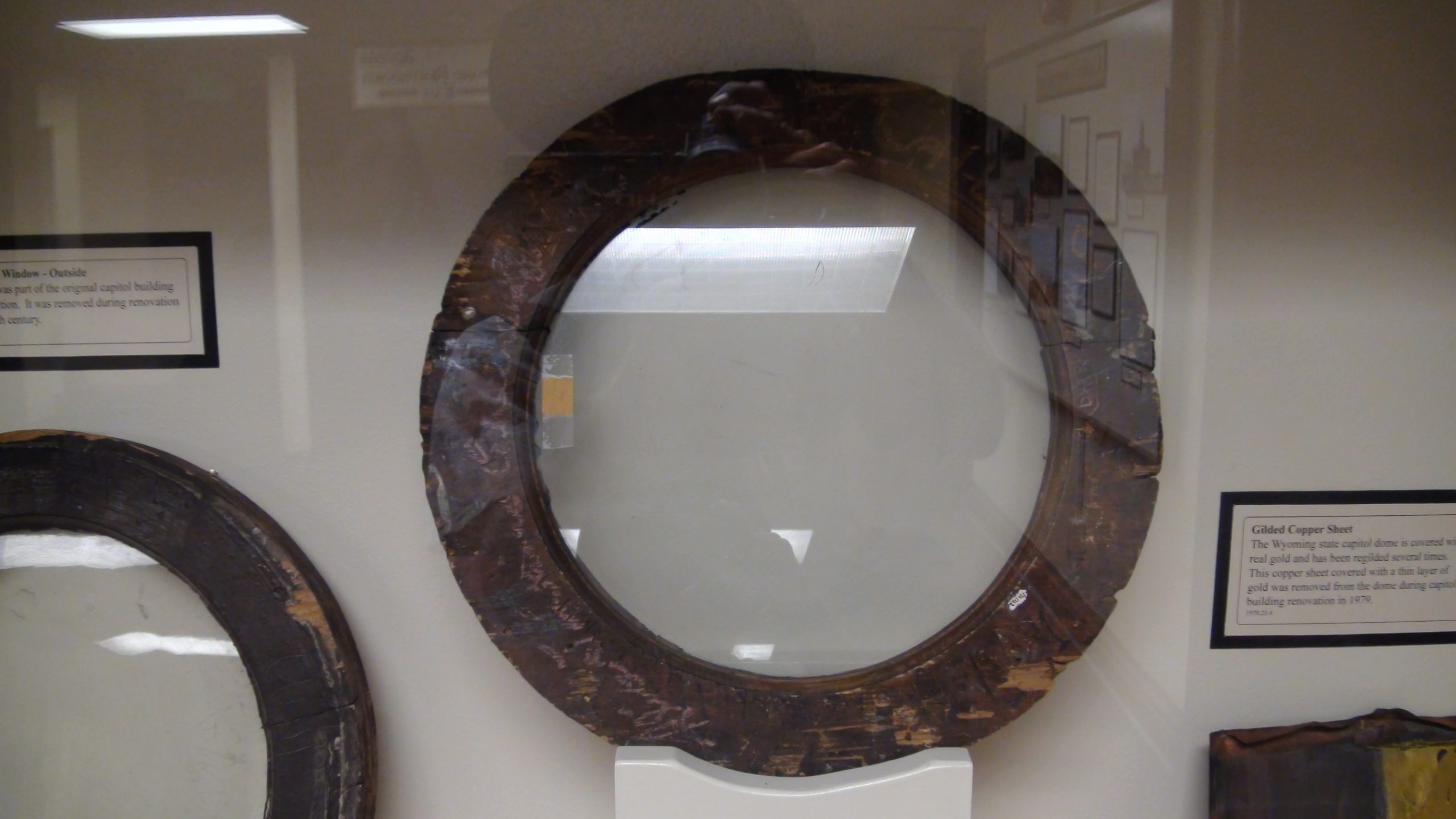
Metal circle, one each. Wyoming Capitol.

Thursday, 4 July 2024

Note: You can listen to today’s commentary courtesy of our friends at “Bible in Ten” podcast. (Click Here to listen)

You can also read this commentary, scrolling with music, courtesy of our friends at “Discern the Bible” on YouTube. (Click Here to listen), or at Rumble (Click Here to listen).

The Book of Matthew; an Introduction – Part IIb

The list of books of the Bible that match the corresponding chapters of the Book of Matthew continues here:

————————
*1 Samuel (9th book) contains the following –

“As soon as you come into the city, you will surely find him before he goes up to the high place to eat. For the people will not eat until he comes, because he must bless the sacrifice; afterward those who are invited will eat. Now therefore, go up, for about this time you will find him” 1 Samuel 9:13.

Matthew 9:13 says –

“But go and learn what this means: ‘I desire mercy and not sacrifice.’ For I did not come to call the righteous, but sinners, to repentance.”

*The fact that sacrifice is mentioned, in both paragraphs 9:13 shows a pattern by itself, but in a deeper parallel we see the following, again from 1 Samuel –

“So Samuel said:
‘Has the LORD as great delight in burnt offerings and sacrifices,
As in obeying the voice of the LORD?
Behold, to obey is better than sacrifice,
And to heed than the fat of rams.’” 1 Samuel 15:22

Saul was first shown the importance of sacrifice in 1 Samuel 9, but he failed to make the distinction between mere sacrifice and the more important aspect of following the Lord. Jesus had to again teach this lesson to Israel’s leaders in Matthew 9:13.

———————-
*2 Samuel (10th book) says –

“Now therefore, the sword shall never depart from your house, because you have despised Me, and have taken the wife of Uriah the Hittite to be your wife” 2 Samuel 12:10.

Here’s the parallel in Matthew –

“…and ‘a man’s enemies will be those of his own household” Matthew 10:36.

———————-
*1 Kings (11th book) mentions Elijah for the first time in the Bible, and although Elijah is mentioned many times in Matthew, he is first introduced in Matthew 11:14. “And if you are willing to receive it, he is Elijah who is to come.”

Interestingly, in 1 Kings 18:14, it says, “…Elijah is here.”

Notice both occur in the 14th verse.

*A second parallel in 1 Kings is this –

“And he said to them, ‘What advice do you give? How should we answer this people who have spoken to me, saying, “Lighten the yoke which your father put on us”’?” 1 Kings 12:9

Now read Matthew 11:29 –

“Take My yoke upon you and learn from Me, for I am gentle and lowly in heart, and you will find rest for your souls.”

Notice not just the “yoke” parallel from the 11th book and the 11th chapter, but notice the numbers without the word “Kings” – 11:29 and 11:29

———————–
*2 Kings (12th book) describes the history of Israel as a divided kingdom, meaning Israel in the north and Judah in the south, each with its own kings and slowly divergent cultures. The chronology continues through the destruction of first the northern kingdom and culminates in the destruction and exile of the southern kingdom.

Matthew 12:25 states the following –

“But Jesus knew their thoughts, and said to them: ‘Every divided kingdom against itself is brought to desolation, and every city or house divided against itself will not stand.’”

*A second link is found in 2 Kings 1:2 –

“Now Ahaziah fell through the lattice of his upper room in Samaria, and was injured; so he sent messengers and said to them, ‘Go, inquire of Baal-Zebub, the god of Ekron, whether I shall recover from this injury.’”

Now read Matthew 12:24 –

“Now when the Pharisees heard it they said, ‘This fellow does not cast out demons except by Beelzebub, the ruler of the demons.’”

*A third link is found in 2 Kings 11:5 –

“Then he commanded them, saying, ‘This is what you shall do: One-third of you who come on duty on the Sabbath shall be keeping watch over the king’s house…’”

In Matthew 12:5 we read –

“Or have you not read in the law that on the Sabbath the priests in the temple profane the Sabbath, and are blameless?”

Notice the numerical pattern as both are in verse 5.

It’s interesting concerning the number of links in the books of Kings because Matthew’s book details Jesus as Israel’s King.

————————-
*1 Chronicles (13th book) it says –

“Moreover, because I have set my affection on the house of my God, I have given to the house of my God, over and above all that I have prepared for the holy house, my own special treasure of gold and silver” 1 Chronicles 29:3.

Matthew 13:52 says –

“Then He said to them, ‘Therefore every scribe instructed concerning the kingdom of heaven is like a householder who brings out of his treasure things new and old.’”

————————-
*2 Chronicles 16:10 (14th book) says –

“Then Asa was angry with the seer, and put him in prison, for he was enraged at him because of this. And Asa oppressed some of the people at that time.”

The parallel is what King Herod did in Matthew 14:10, “So he sent and had John beheaded in prison.”

Both occur in verse 10. Prophets of righteousness really had it tough. God bless them!

———————
*Ezra (15th book) 3:5 discusses freewill offerings given to the glory of God –

“Afterwards they offered the regular burnt offering, and those for New Moons and for all the appointed feasts of the LORD that were consecrated, and those of everyone who willingly offered a freewill offering to the LORD.”

This is contrasted with the inappropriate gifts of the Pharisees in Matthew 15:5 –

“But you say, ‘Whoever says to his father or mother, “Whatever profit you might have received from me is a gift to God”’” Matthew 15:5.

Again, notice that the parallels are both contained in verse 5.

———————–
*Nehemiah (16th book) is concerned primarily with the rebuilding of the walls and gates of Jerusalem after the exile. In fact, the entire 3rd chapter concerns the gate building. Nehemiah’s efforts were not overcome by the forces of evil.

Matthew 16:18 says –

“And I also say to you that you are Peter, and on this rock I will build My church, and the gates of Hades shall not prevail against it.”

———————–
*Esther (17th book) teaches us the importance of fasting to seek God’s face and His favor, saying –

“Go, gather all the Jews who are present in Shushan, and fast for me; neither eat nor drink for three days, night or day. My maids and I will fast likewise. And so I will go to the king, which is against the law; and if I perish, I perish!” Esther 4:16

Matthew 17:20, 21 says –

“So Jesus said to them, ‘Because of your unbelief; for assuredly, I say to you, if you have faith as a mustard seed, you will say to this mountain, “Move from here to there,” and it will move; and nothing will be impossible for you. 21 However, this kind does not go out except by prayer and fasting.’”

Life application: As noted in the previous life application, the book divisions, chapter divisions, and verse divisions in the Christian Bible did not exist at the time of Matthew. And yet, most honest Christian evaluators of the Bible would agree that these patterns are real and that they seem to point to more than just random chance.

And yet, many of those same people will dismiss various doctrines that supposedly arose later in the church age. For example, dispensationalism is called everything from poor theology to outright heresy by some. Those scholars believe the church has replaced Israel and that the modern state of Israel is an aberration.

They then attack those who originally proposed the doctrine of dispensationalism, saying that it is a new and aberrant teaching that only came into existence around the 1800s. But if dispensationalism is true, it doesn’t matter when it was “discovered,” just as the dating of the discovery of these patterns in Matthew is irrelevant.

But two points should be considered. The first is that many of those who dismiss dispensationalism because it is new teach doctrines that are only one or two hundred years older, such as Calvinism. In the span of the church age this is like the difference between children that are one and two years old. Thus, their thinking is biased, skewed, and flawed.

Second, however, is that Paul taught the dispensational model in Romans 9-11. It is clearly revealed elsewhere explicitly, and it is typologically seen again and again in the Old Testament. A review of the sermons by the Superior Word from Genesis, Joshua, and Judges in particular clearly and unambiguously portray the dispensational model.

Don’t be swayed by people who have not thought through the entire panorama of what God is doing in and through chronological history. God has not rejected Israel! The church has not replaced Israel! And, finally, the modern state of Israel, even if it is not right with God at this time, is placed back in the land of Israel for the fulfillment of God’s purposes, just as the dispensational model reveals.

Lord God, though we are unfaithful, You are always faithful. You will never reject those with whom You have covenanted. And what a blessing it is to know this. Since the day we met Jesus, we have continued to err and stray. But He remains faithful to us every step of the way. Super-duper and Hooray! Praise God for Jesus, our faithful Lord. Amen.


Matthew Introduction IIa

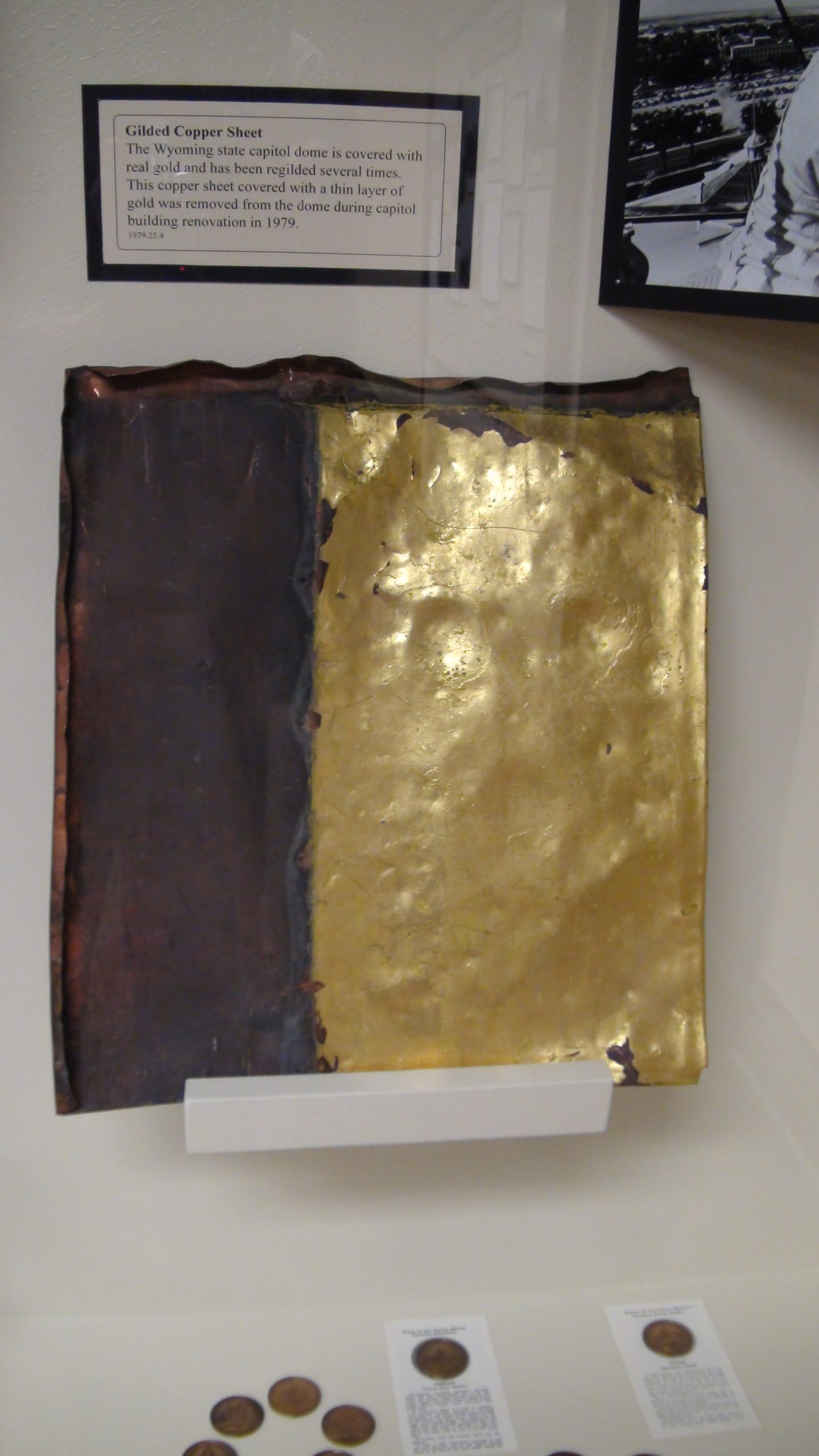
Gilded sheet from the original dome covering the Montana State Capitol.

Wednesday, 3 July 2024

The Book of Matthew; an Introduction – Part IIa

Note: You can listen to today’s commentary courtesy of our friends at “Bible in Ten” podcast. (Click Here to listen).

You can also read this commentary, scrolling with music, courtesy of our friends at “Discern the Bible” on YouTube. (Click Here to listen), or at Rumble (Click Here to listen).

As noted in the first introductory segment, this segment will reveal some of the patterns of Matthew, and how the book fits into the overall structure of how the Bible is laid out. Due to its length, it will be divided into a two-day study.

Main Purposes:
There are several purposes concerning the need for the Book of Matthew, as well as its placement in the Bible.

1) A Depiction of Jesus Christ Given to Assure Believers That He Is The One Promised to Come and Restore All Things for the People of God

2) A Carefully Detailed Record of the Life and Ministry of Jesus Christ: Matthew records the genealogy of Jesus, proving that He possessed the right to the throne of David and is the fulfillment of the messianic prophecies in the Old Testament.

He records the things Jesus did, the words He spoke, and the miracles He accomplished. Matthew’s gospel provides a beautiful panorama of the life, death, and resurrection of Jesus. With a knowledge of the Old Testament, one can pick up this gospel narrative and make the obvious connection to the things prophesied and the things then fulfilled.

3) Intricate Patterns That Reveal the Wisdom of God Through Inspiration of the Text: Each of the first 28 books of the Old Testament has a link to the corresponding chapter in Matthew, forming a notable structure within Matthew. These will be placed here in the introduction for easy reference in the future. Based on these patterns, there is every reason to assume that the chapter and verse numbers, though added centuries later, are divinely inspired.

——————–
*God speaking to Abraham in Genesis (1st book) 22:18 says –

“In your seed all the nations of the earth shall be blessed, because you have obeyed My voice.”

Matthew 1:1 links to this –

“The book of the genealogy of Jesus Christ, the Son of David, the Son of Abraham.”

Here, the first sentence of Matthew is establishing the direct lineage of the Christ, Jesus. It is interesting to note that no other person in history can fulfill this prophecy because the records of Jewish genealogy were destroyed with the 2nd Temple in AD 70.

Secondly, Matthew 1:17 says –

“So all the generations from Abraham to David are fourteen generations, from David until the captivity in Babylon are fourteen generations, and from the captivity in Babylon until the Christ are fourteen generations.”

Interestingly, it is the 17th Chapter of Genesis where God reveals to Abraham that he would receive the covenant and that kings would come from him.

Notice the parallel – (1)17 and 1:17

Another Genesis/Matthew link is to be found here in Matthew 1:20, 21 –

“But while he thought about these things, behold, an angel of the Lord appeared to him in a dream, saying, ‘Joseph, son of David, do not be afraid to take to you Mary your wife, for that which is conceived in her is of the Holy Spirit. 21 And she will bring forth a Son, and you shall call His name JESUS, for He will save His people from their sins.’”

The parallel in Genesis is this –

“Joseph had a dream, and when he told it to his brothers, they hated him all the more.” Genesis 37:5

Notice that both Josephs received dreams from God.

——————-
*Exodus (2nd book) 4:22, 23 says –

“Then you shall say to Pharaoh, ‘Thus says the LORD: “Israel is My son, My firstborn. 23 So I say to you, let My son go that he may serve Me. But if you refuse to let him go, indeed I will kill your son, your firstborn.””’

Matthew 2:15, provides the link –

“and was there until the death of Herod, that it might be fulfilled which was spoken by the Lord through the prophet, saying, ‘Out of Egypt I called My Son.’” 

Another impressive pattern from Exodus is the attempted murder of Moses by Pharoah and Jesus by Herod, both of which involved and order to exterminate the male children –

“When you help the Hebrew women in childbirth and observe them on the delivery stool, if it is a boy, kill him; but if it is a girl, let her live.” Exodus 1:16

“When Herod realized that he had been outwitted by the Magi, he was furious, and he gave orders to kill all the boys in Bethlehem and its vicinity who were two years old and under, in accordance with the time he had learned from the Magi.” Matthew 2:16

Notice that both of these events occur in the 16th verse (2)1:16 and 2:16.

——————–
*Leviticus (3rd book) 11:22 reads –

“These you may eat: the locust after its kind, the destroying locust after its kind, the cricket after its kind, and the grasshopper after its kind.”

In Matthew 3:4 is this link –

“Now John himself was clothed in camel’s hair, with a leather belt around his waist; and his food was locusts and wild honey.”

———————
*Numbers (4th book) begins with, “Now the LORD spoke to Moses in the Wilderness of Sinai…”

In fact, the Hebrew name for Numbers is Bamidbar which means “In the Wilderness.”  The book details the forty years of wandering in the desert.

See how Matthew 4 begins –

“Then Jesus was led up by the Spirit into the wilderness…”

Notice the numerical pattern (4)1 and 4:1. Israel’s forty years are in accord with the biblical pattern of a day for a year which corresponds to Jesus’ forty days there.

Remember that the purpose of the 40 years of wandering is outlined in Deuteronomy 8 –

“And you shall remember that the Lord your God led you all the way these forty years in the wilderness, to humble you and test you, to know what was in your heart, whether you would keep His commandments or not. So He humbled you, allowed you to hunger, and fed you with manna which you did not know nor did your fathers know, that He might make you know that man shall not live by bread alone; but man lives by every word that proceeds from the mouth of the Lord.” Deuteronomy 8:2, 3

Jesus used exactly this verse in Matthew 4:4 to refute the devil after His wandering in the wilderness –

“But He answered and said, ‘It is written, ‘Man shall not live by bread alone, but by every word that proceeds from the mouth of God.’”

Another parallel between the two is in Numbers 23. Here it shows us where Balaam was tempted three times to curse the Israelites as they camped east of the Promised Land at the end of 40 years in the wilderness.

Matthew 4 matches this beautifully in the three temptations of Jesus by Satan at the end of His 40 days of fasting in the Judean wilderness which is east of Jerusalem.

———————-
*Deuteronomy (5th book) 28 starts with Israel’s expected blessings from God for obedience. In fact, from Deuteronomy 3-12, the word “bless” in one form or another is mentioned nine times.

Matthew 5 starts with the Beatitudes spoken by the Lord Jesus. In fact, a form of the word “bless” is mentioned nine times from 3-11.

———————
*Joshua (6th book) 7:21 says –

“When I saw among the spoils a beautiful Babylonian garment, two hundred shekels of silver, and a wedge of gold weighing fifty shekels, I coveted them and took them. And there they are, hidden in the earth in the midst of my tent, with the silver under it.”

Matthew 6:21 states –

“For where your treasure is, there your heart will be also.”

Notice the parallel in the number – (6)7:21 and 6:21.

———————–
*Judges is the 7th book.

Matthew 7:1 states, “Judge not, that you be not judged.”

————————
*Ruth (8th book) 1:14 says –

“At this they wept again. Then Orpah kissed her mother-in-law good-by, but Ruth clung to her” (NIV).

Matthew 8:14 says –

“When Jesus came into Peter’s house, he saw Peter’s mother-in-law lying in bed with a fever” (NIV).

It may seem insignificant, but it is a pattern – (8)1:14 and Matthew 8:14 both speak of mother-in-law. This term is used only 16 times in the entire bible and 9 of these are in the book of Ruth while 5 are in the synoptic Gospels.

Life application: As you can already see, there are patterns hidden within the text of Matthew that correspond exactingly to other books of the Bible. These patterns will continue to be presented in the next few days.

Such patterns can be found in other Books of the Bible, such as Luke, which is filled with them. If one considers that the order of the books of the Old Testament do not match the same order as that used by the Jewish people, that the chapter divisions did not exist until the 1200s, and that the verse numbers did not exist until the 1500s, it is either the biggest fluke in history that these patterns exist, or it is absolutely certain that God superintended over the process of inspiring what was recorded, how it is laid out, and how it continued to be laid out even a millennia and a half later.

Further, these patterns continue to be discovered even today. If you struggle with whether the word of God is really the word of God, consider these things. The guiding hand of God has been involved in the process of inspiration all along as He has slowly revealed His word to His people in a chronologically methodical way so that man can have every assurance that he is putting his eggs in the right basket when he trusts in Jesus because he trusts in the reliability of the word of God.

Lord God, how wonderful it is to read and study Your word. The amount of wisdom and knowledge that is derived from it is beyond our ability to even imagine. Thank You for your sure and precious word that tells us about our great and exalted Savior, Jesus. Amen.