Acts 15:13

More of downtown Richmond.

Tuesday, 14 March 2023

And after they had become silent, James answered, saying, “Men and brethren, listen to me: Acts 15:13

Note: You can listen to today’s commentary courtesy of our friends at “Bible in Ten” podcast. (Click Here to listen).

You can also read this commentary, with music, courtesy of our friends at “Discern the Bible” on YouTube. (Click Here to listen), or at Rumble (Click Here to listen).

In the previous verse, the words of Barnabas and Paul concerning their evangelism of the Gentiles were recorded, God having worked through the apostles with signs and wonders. With that, it now says, “And after they had become silent.”

It is certainly referring to the words of Barnabas and Paul as well as the voices of anyone else who may have had questions or comments. In other words, the dialogue has wound down and now a decision must be rendered by the council. With that, “James answered, saying.”

It is generally (though not universally) agreed that this is James, the son of Alpheus, also known as the brother of the Lord. He was the one singled out by Peter in Acts 12:17. Later, in Galatians 2:9, he is noted by Paul as one of the pillars of the church. The words here in Acts indicate that he is presiding over the council. As with other clues in Acts, it reveals that this James was the accepted leader of the church at this time.

Without the matter being explained in Acts, and though not explicitly stated, the implication is that James held the administrative reigns in church matters. He was obviously qualified to handle the affairs of the church in a better manner than the apostles. As such, he now addresses the assembly, saying, “Men and brethren, listen to me.”

As the assembly fell silent, and as James now addresses them to sum up the deliberations, it is certain that he is the overseer of the church at this time. His coming words will show that he was a man of understanding in Scripture and one who was able to come to a sound conclusion. With his conclusion, he will also render a judgment for the church to adhere to.

Life application: As noted above, nothing is said in Acts about how James came to be the leader of the church at this time. That would seem to be a glaring omission unless one understands that it is irrelevant to the purpose of the book. Acts has been written with various main themes and purposes in mind, but one of them is not how to structure the church.

Surprisingly, the epistles give scant information on how to do so as well. The pastoral epistles provide relevant information on some key points, but nothing is said about meeting times or places, order of worship, frequency of various events to be held, what to do with church resources (with but a few exceptions such as provision for widows in 1 Timothy 5), etc.

Individual churches are given great latitude in how they operate. The primary role of the church is certainly to bring forth the word of God to people, both the saved and the unsaved. The word is what explains the defect of sin in man and the sending of Jesus to bring him back to God through the forgiveness of sin. Once reconciliation between the two has been made, it is then time to properly instruct believers in the word.

Churches that get too far off from this main idea will eventually devolve into nothing more than a social meeting or a congregation that is constantly trying to earn what Christ offers for free. Be sure that where you attend the word is read and explained at every gathering.

Lord God, help us not to get misdirected from the main goal and purpose of the church, which is to get out the word concerning Jesus. You have sent Him to bring the world back to You through Him. Unless that is expressed and explained, we are not competently handling our time. Guide us, O God. Help us to get the good news out! Amen.




Acts 15:12

Down town Richmond, directly opposite the Capitol building.

Monday, 13 March 2023

Then all the multitude kept silent and listened to Barnabas and Paul declaring how many miracles and wonders God had worked through them among the Gentiles. Acts 15:12

Note: You can listen to today’s commentary courtesy of our friends at “Bible in Ten” podcast. (Click Here to listen)

You can also read this commentary, with music, courtesy of our friends at “Discern the Bible” on YouTube. (Click Here to listen), or at Rumble (Click Here to listen).

In the previous verse, Peter completed his words in support of Paul’s position that the Gentiles were not to be placed under the yoke of the law. With that, Luke next records, “Then all the multitude kept silent.”

The verb is imperfect. They were silent and they continued in silence as the next part of the hearing was presented. The group had gathered and listened to Peter explain what had occurred in Caesarea and what he had learned from that experience. He realized that the law was not a means to an end. Rather, it was a step in the process of learning what God would do in Christ.

With his words completed, and with it understood that his position was that the Gentiles were not bound to adherence to the Law of Moses, the attention of the audience was redirected. They held their peace so that they could hear directly from those who had evangelized the Gentiles. In this, they remained silent “and listened to Barnabas and Paul.”

Unlike in Antioch in Acts 15:2, Luke places Barnabas first. Despite Paul being called as an apostle, Barnabas was certainly more closely associated with the church in Jerusalem than Paul. Thus, he is highlighted now.

Further, Paul probably voluntarily yielded his speech to whatever Barnabas had to say because he was a Pharisee. As it was the party of the Pharisees who demanded law observance for the Gentiles in verse 15:5, Paul probably wanted to avoid any hint of a personal dispute between himself and those he was once so closely identified with. Together, Barnabas and Paul were “declaring how many miracles and wonders God had worked.”

The Greek more precisely reads, “declaring what God had done – signs and wonders.” Thus, there is an emphasis on how God was working through their ministry. They went out as directed by the Holy Spirit, and as they followed the Spirit’s leading, God worked through them. That is reflected, for example, in Acts 14:3 –

“Therefore they stayed there a long time, speaking boldly in the Lord, who was bearing witness to the word of His grace, granting signs and wonders to be done by [literally “through”] their hands.”

That thought is then more fully expressed with the final words of the verse, saying,
“through them among the Gentiles.” More literally, the entire thought says –

“…declaring what God had done – signs and wonders – among the Gentiles through them.”

God accomplished the work, the signs and wonders, among the Gentiles. Barnabas and Paul were merely the instruments through which these things came about. This is perfectly in accord with the thought expressed in verse 14:3 which was just noted.

The point of this is that these signs and wonders were accomplished by God just as freely as they had been accomplished among the Jews, both by Jesus during His earthly ministry and through the apostles after His ascension. And all this occurred apart from the Law of Moses.

God had granted these things to be done among people who had never heard of the law and who were saved apart from the law. And more, those under the law who saw them had rejected what was done by God through Barnabas and Paul, clearly demonstrating that the law was not a part of what God was doing. Rather, it had become a hindrance to it.

Life application: Acts 14:3 said that the Lord (meaning the Lord Jesus) had accomplished the signs and wonders through the hands of Barnabas and Paul. This verse now says that God had accomplished these signs and wonders. What this implies is that Jesus is God. Unless one simply dismisses the literal meaning and sense of the words, no other conclusion can be deduced from what is said.

This is not an isolated instance either. The deity of Jesus Christ is a concept and a precept that is on prominent display throughout Scripture. Don’t allow anyone to steal the truth of the word from you through cunning and deception. Accept that God is not fickle and that His word is not convoluted. Scripture clearly presents the fact that God came in the flesh in the Person of Jesus Christ. Hold fast to this fundamental truth.

Lord God, Your word is sure, and it is certain. We don’t need to even wonder about the deity of Jesus Christ. It is such a clear teaching that we should only wonder why people would attempt to deny it. We honor You, O God, when we honor the Son. May we always hold this truth close and remember the greatness of what You have done in and through our Lord Jesus Christ. Amen.


Acts 15:11

Downtown Richmond, across from the capitol. Click [here] to see what it looked like after civil war burning:

Sunday, 12 March 2023 

“But we believe that through the grace of the Lord Jesus Christ we shall be saved in the same manner as they.” Acts 15:11

Note: You can listen to today’s commentary courtesy of our friends at “Bible in Ten” podcast. (Click Here to listen)

You can also read this commentary, with music, courtesy of our friends at “Discern the Bible” on YouTube. (Click Here to listen), or at Rumble (Click Here to listen).

The NKJV, following the rendering of the KJV, changes the order of the clauses, thus obscuring the intent of the wording. Young’s renders it thus

“…but, through the grace of the Lord Jesus Christ, we believe to be saved, even as also they.”

One can see how dramatically different the two thoughts are. Young’s will be used for analysis. Peter had just challenged the Judaizers with the words, “Now therefore, why do you test God by putting a yoke on the neck of the disciples which neither our fathers nor we were able to bear?” With that remembered, he now says, “but through the grace of the Lord Jesus Christ.”

Peter is making an absolute contrast between the law and grace. The law is of works; grace is unmerited favor. The two are mutually exclusive. The law puts a yoke on the necks of those under it; grace is burden-free. One under law attempts to be justified by works; one who trusts is saved through grace.

But even the thought of grace must be qualified to ensure that the proper means of grace that Peter is referring to is understood. Thus, he added the words kuriou Iesou Christou – “the Lord Jesus Christ.” Grace is the subject; the Lord Jesus Christ is the means. With that, Peter continues with action and its result, saying, “we believe to be saved.”

This is exactly what Paul writes about in detail in his epistles, such as –

“For by grace you have been saved through faith, and that not of yourselves; it is the gift of God, not of works, lest anyone should boast.” Ephesians 2:8, 9

Why this translational difference is important: ** One can see that the NKJV changes the formula, removing belief as part of the process of salvation. Rather, it makes it a mere hope of the subject.** Surprisingly, the Catholic Public Domain Version, though paraphrasing the verse, gives the proper sense of what is being conveyed –

“But by the grace of the Lord Jesus Christ, we believe in order to be saved, in the same manner also as them.”

Again, grace is the subject, the Lord Jesus Christ is the means, belief in Christ is the activator of the process, and salvation is the result. This is just what Paul conveys in Ephesians 2:8, 9. With this understood, Peter next says, “even as also they.”

Peter has been speaking as a Jew to his Jewish brethren. Not one of them was saved by law observance. And yet, they were attempting to impose law observance on the Gentiles who were not even given the law! Their thinking was twisted and perverse.

It is an amazing set of words to consider because it is the last recorded words of Peter in the book of Acts. He sets forth the gospel, the one and only gospel, that is identical in thought to that of Paul. With this, his words in Acts are ended.

Life application: In Peter’s words, several points of incorrect doctrine are laid to rest. He has proclaimed the gospel that saves. It is identical to the gospel that Paul proclaims. This refutes the heresy known as hyperdispensationalism which proclaims there are two gospels, one to the Jews and one to the Gentiles, among other errors.

Peter has proclaimed that salvation (for all) comes by grace through faith, apart from any works of the law. He has gone further with this by indicating that the Gentiles were not under the law and were not to be put under the law. This refutes the heresy of the Judaizers, today known as the Hebrew Roots movement.

Peter’s words were improperly translated by the KJV, thus showing that it is not the only infallible translation of the Bible.

The words of Peter in these past few verses implicitly help to dispel the false teachings of the Seventh Day Adventists, the Church of Christ, the Jehovah’s Witnesses, and others – especially the Roman Catholic Church – who teach a system of works leading to (or guaranteeing) salvation.

Think about the goodness of God in sending Jesus Christ to save us from our sins. And then think about how depraved the human heart is to constantly want to add to this simple offering. Be on the lookout for any teaching that would attempt to rob you of the freedom, surety, and eternal hope you can (and should) possess because of your faith in the all-sufficient work of Jesus Christ our Lord.

Yes! Lord God, we are so very thankful to You because of Your wonderful love for us in the giving of Jesus to bring us back to You. Help us to never add to the simplicity of the gospel. May we confidently trust in the full, final, and forever work of Jesus Christ our Lord. Amen!


Acts 15:10

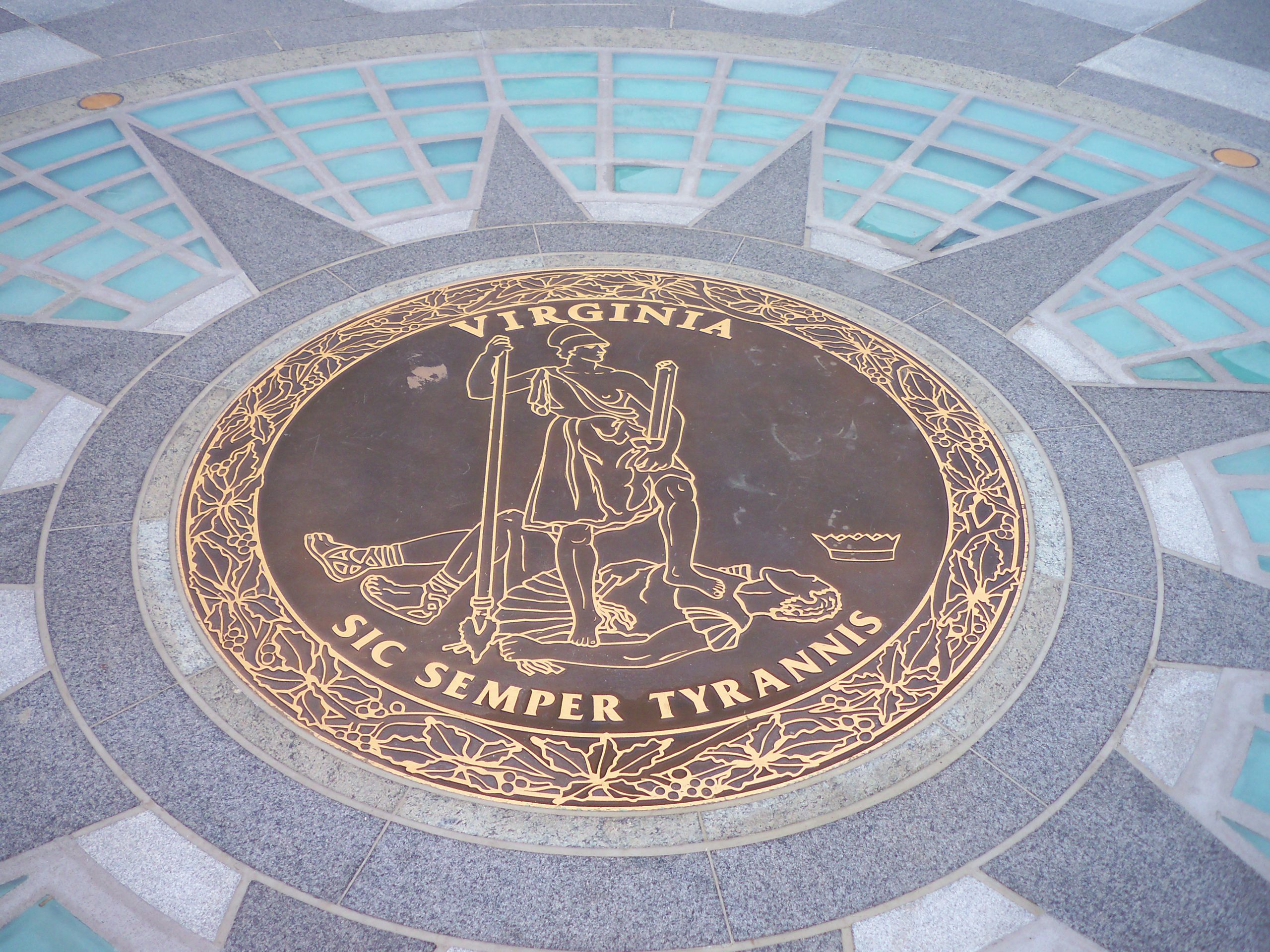
The state has sure forgotten to live up to its motto.

Saturday, 11 March 2023

“Now therefore, why do you test God by putting a yoke on the neck of the disciples which neither our fathers nor we were able to bear? Acts 15:10

Note: You can listen to today’s commentary courtesy of our friends at “Bible in Ten” podcast. (Click Here to listen)

You can also read this commentary, with music, courtesy of our friends at “Discern the Bible” on YouTube. (Click Here to listen), or at Rumble (Click Here to listen).

Peter had just said that God made no distinction between the Jews and the Gentiles, purifying the hearts of both by faith. With that, he continues with, “Now therefore, why do you test God?”

The verb is a present infinitive and gives the sense of “why are you testing God?” They were standing there and actively working against what God was doing. Because of this, Peter is reminding the people of their own history. Instead of accepting the will of God that was openly expressed to them, Israel turned and imposed their own will on a situation or matter. An example of this is recorded in Psalm 95 –

“Today, if you will hear His voice:
‘Do not harden your hearts, as in the rebellion,
As in the day of trial in the wilderness,
When your fathers tested Me;
They tried Me, though they saw My work.
10 For forty years I was grieved with that generation,
And said, “It is a people who go astray in their hearts,
And they do not know My ways.”
11 So I swore in My wrath,
‘They shall not enter My rest.’’” Psalm 95:7-11

The author of Hebrews cites this psalm, directly equating it to Israel’s rejection of Christ and remaining under the Law of Moses. And now, this is just what the Pharisees were trying to impose on the Gentiles. Paul used the same terminology in 1 Corinthians 10:9, saying, “…nor let us tempt Christ, as some of them also tempted, and were destroyed by serpents.”

At that time, the people “spoke against God and against Moses” (Numbers 21:5). Paul warned against doing what is inappropriate, showing that as God was with Moses, He was now fully revealed through Christ with the introduction of the New Covenant.

Peter’s admonition concerning testing God is directly tied to a rejection of what God had done to the Gentiles in the giving of the Spirit. This testing was being accomplished “by putting a yoke on the neck of the disciples.”

The yoke he is referring to is the Law of Moses. It is the subject of the discourse, and it was the purpose for calling the council. It is what Paul says of the law in Galatians 5 –

“Stand fast therefore in the liberty by which Christ has made us free, and do not be entangled again with a yoke of bondage. Indeed I, Paul, say to you that if you become circumcised, Christ will profit you nothing. And I testify again to every man who becomes circumcised that he is a debtor to keep the whole law. You have become estranged from Christ, you who attempt to be justified by law; you have fallen from grace.” Galatians 5:1-4

Paul’s words are clear, concise, and specific. The law is a yoke, a burden, that stands against grace. So intolerable was the Law of Moses in this regard, that Peter next says it is a yoke “which neither our fathers nor we were able to bear?”

It is an all-inclusive statement. Israel was given the law and no person within Israel could bear up under the weight of the yoke that rested on them because of it. The law promised that the person who did the things of the law would live (Leviticus 18:5). And yet, the people, without exception, had died. Elijah was taken out before he died, but that does not mean he was sinless under the law. No person born under the law could meet the demands of the law. Thus, all died.

Despite this, these Judaizers were standing there, rejecting the grace of the Lord Jesus. And more, they were trying to impose upon the Gentiles, who had already been accepted by God, the same yoke that they had been under and were unable to bear. The perverse nature of such an attitude could not stand.

Life application: Of the words of Peter, Cambridge says the following:

“So St Paul (Galatians 5:1) calls the ceremonial law ‘a yoke of bondage.’ Christ uses the word “yoke” for his own precepts, knowing that a yoke was needed for men’s guidance, but He calls it ‘easy’ (Matthew 11:30).” Cambridge

This is not what Paul says, nor is it what Peter is saying. Cambridge has done what far too many scholars do. They have divided the law into a moral law and a ceremonial law. No such distinction is found in the law. The Law of Moses is a codified whole. There are moral parts to the law, and there are ceremonial parts to it as well. But these are internal distinctions that form a single law.

To say that Jesus only fulfilled and set aside the ceremonial law part of the Law of Moses, and not the moral part, would mean that believers today were obligated to the entirety of the Ten Commandments, but no sound Christian or theologian would agree that we must observe the Sabbath. Paul argues against that several times in his writings. The author of Hebrews clearly signifies that the Sabbath is fulfilled, and we have entered our rest in our coming to Christ.

The law, the entire Law of Moses, is fulfilled. It is set aside, it is annulled, it is obsolete, and it is nailed to the cross. This does not mean, however, that we are not obligated to be obedient to what is morally right. Such moral precepts are stated throughout the epistles. These explain our obligations and expectations under the New Covenant.

However, in not doing these things, sin is not imputed because we are not under law but under grace. Our failure to meet the expectations of the New Covenant expectations will not result in a loss of salvation but in a loss of rewards. All of this is explained by Paul.

Be careful to not make the mistake of those who try to shove you back under “part” of the Law of Moses. It is fulfilled and it is over. We now live under a much better dispensation, that of grace. Thank God for the grace of our Lord Jesus Christ.

Yes, O God. Thank You for what You have done for us in the giving of Your Son to remove from us the curse of death and eternal separation from You. We have been granted life, eternal life, through receiving the gospel. Christ has done it all! Thank God for Jesus Christ our Lord who has brought us back to You. Amen.


Acts 15:9

Virginia State Capitol, Richmond.

Friday, 10 March 2023

“and made no distinction between us and them, purifying their hearts by faith. Acts 15:9

Note: You can listen to today’s commentary courtesy of our friends at “Bible in Ten” podcast. (Click Here to listen)

You can also read this commentary, with music, courtesy of our friends at “Discern the Bible” on YouTube. (Click Here to listen), or at Rumble (Click Here to listen).

Peter had just noted that God acknowledged the Gentiles who believed by giving them the Holy Spirit, having read their hearts. This was just the same as the Jews who believed, apart from any law observance. With that, he now says, “and made no distinction.”

The thought here is that of some sort of class. The Greek word is diakrinó. It signifies to thoroughly judge a matter and thus to completely separate. God makes no distinction in types or categories of men when He reads their hearts. Skin color, marital status, age, societal status, wealth, etc. are all irrelevant to Him. One human heart is just like any other. The sentiment is reflected in Acts 10, just prior to Peter beginning his speech to the Gentiles –“Then Peter opened his mouth and said: ‘In truth I perceive that God shows no partiality. 35 But in every nation whoever fears Him and works righteousness is accepted by Him.’” Acts 10:34, 35

In this case, Peter continues his words, saying, “between us and them.” The distinction being made, then, is between a Jew under the law and a Gentile not under the law. There is absolutely no distinction in God’s eyes between the two when the gospel is considered.

Despite this, there is a difference. A Jew under the law was obligated to the law. A Gentile not under the law was not. Paul addresses these things in Romans. This is why Peter will say what he says in the next verse. For now, however, the matter is one not of difference, but of distinction. The gospel is presented, the offer is thus made, and God will evaluate people based on that alone. In believing, He is then “purifying their hearts.”

The tense is wrong. The verb is an aorist participle, “having purified.” These Gentiles had their hearts searched, they had believed, and their hearts were purified. The idea is expressed well by Jeremiah –

“The heart is deceitful above all things,
And desperately wicked;
Who can know it?
10 I, the Lord, search the heart,
I test the mind,
Even to give every man according to his ways,
According to the fruit of his doings.” Jeremiah 17:9, 10

The wicked heart of the unregenerate that is willing to call out for cleansing through the hearing of the gospel is purified. The word used to describe this purifying, katharizó, is the same word spoken to Peter in his vision –

“But Peter said, ‘Not so, Lord! For I have never eaten anything common or unclean.’
15 And a voice spoke to him again the second time, ‘What God has cleansed [katharizó] you must not call common.’ 16 This was done three times. And the object was taken up into heaven again.”

The “unclean” Gentiles had been purified just like the supposedly “clean” Jews, thus signifying that the Jews were actually unclean. The law never purified them in the manner that is needed before God.

And this purification was, as Peter says, “by faith.” It was an internal act for the Jews who believed. It was an internal act for the Samaritans who believed, and it was an internal act for the Gentiles who believed.

God, without making any distinction, saw that they believed and He gave His Spirit. No works of the law were associated with what occurred. The words of Peter now are exactingly mirrored by Paul in Romans 3 –

“Or is He the God of the Jews only? Is He not also the God of the Gentiles? Yes, of the Gentiles also, 30 since there is one God who will justify the circumcised by faith and the uncircumcised through faith.” Romans 3:29, 30

It is also the very thought that Paul had to correct Peter on when he made an error in his ways while in Antioch –

“We who are Jews by nature, and not sinners of the Gentiles, 16 knowing that a man is not justified by the works of the law but by faith in Jesus Christ, even we have believed in Christ Jesus, that we might be justified by faith in Christ and not by the works of the law; for by the works of the law no flesh shall be justified.” Galatians 2:15, 16

Life application: When reading the Bible, we may come to a thought similar to what is presented in this verse and make an erroneous conclusion if we don’t stop and think through what is being conveyed. A good example of this comes from Galatians –

“For you are all sons of God through faith in Christ Jesus. 27 For as many of you as were baptized into Christ have put on Christ. 28 There is neither Jew nor Greek, there is neither slave nor free, there is neither male nor female; for you are all one in Christ Jesus. 29 And if you are Christ’s, then you are Abraham’s seed, and heirs according to the promise.” Galatians 3:26-29

Because of these words, it has been inferred that everyone in the church has the same rights as anyone else. For example, this verse is used to justify the ordination of women because “there is neither male nor female” in Christ. This is a failure to understand the difference between the words “distinction” and “difference.”

God has made no distinction between any of these (or other) categories, as was noted earlier. However, God still recognizes the differences. First, Paul could not have written these words if there are no longer any differences. The fact that he says there is neither Jew nor Greek means that the categories still exist.

Paul explicitly addresses Jews and Gentiles in separate thoughts in Romans and elsewhere. Likewise, Paul specifically addresses slaves and their responsibilities to their masters several times. He specifically addresses the responsibilities of men and of women elsewhere as well. He is addressing different categories of people in whom God has found no distinction for salvation.

When the differences, which are still recognized by God, are ignored, only chaos will result. It is our responsibility to always recognize what God recognizes, such as our responsibilities as males or females, and to not recognize what God has not found distinct. Thus, we are to be willing to present the gospel to all without recognizing any differences that would bias us against doing so.

Heavenly Father, may we be willing to think through what is presented in Your word and responsibly handle the duties that have been set before us. May we not allow what You have forbidden, and may we not overlook anyone because of our own biases. You have made no distinction, nor should we. Help us in this, O God. Amen.