
Acts 24:1

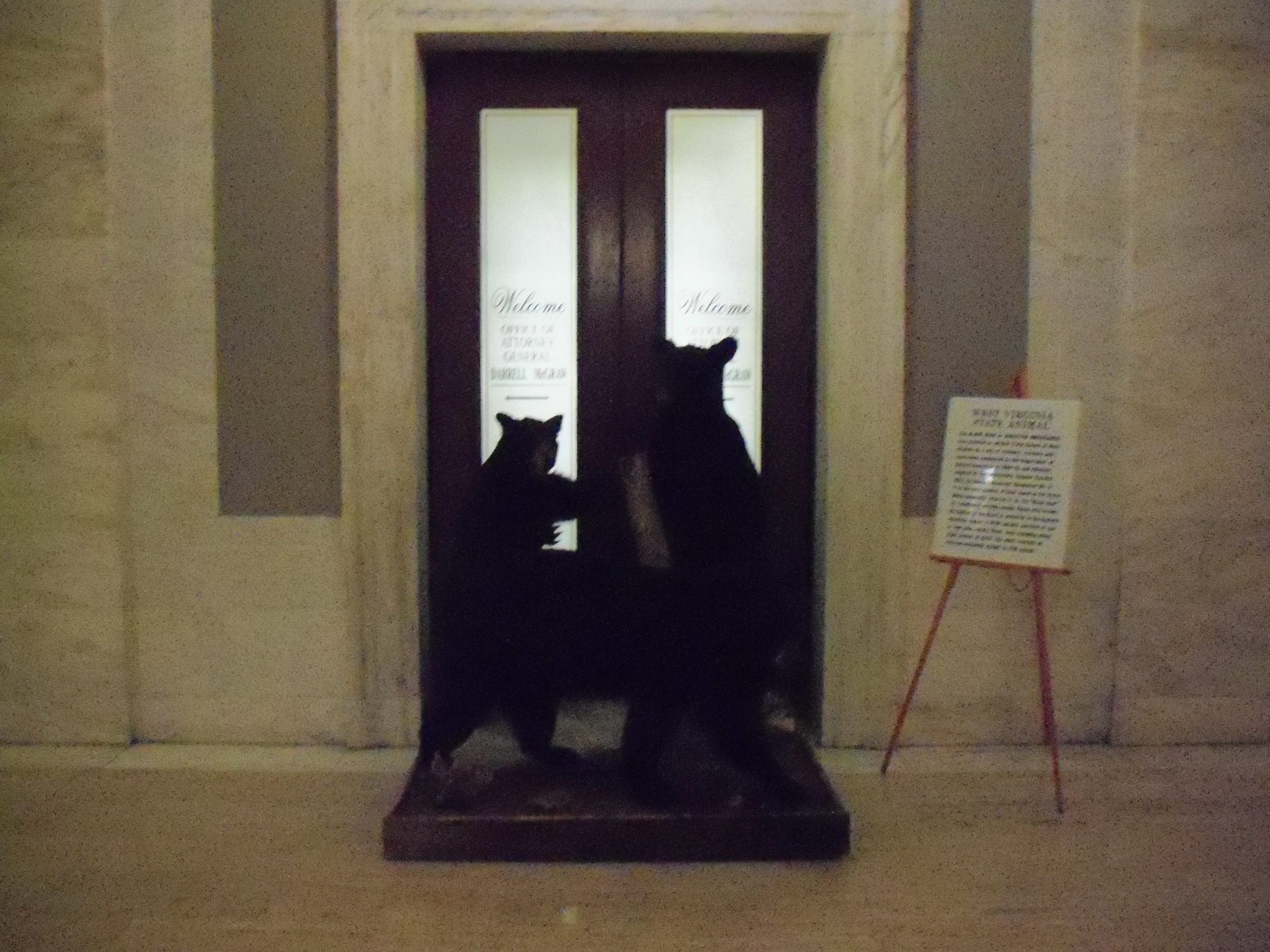
Bears. West Virginia Capitol.

Tuesday, 23 January 2024

Now after five days Ananias the high priest came down with the elders and a certain orator named Tertullus. These gave evidence to the governor against Paul. Acts 24:1

Note: You can listen to today’s commentary courtesy of our friends at “Bible in Ten” podcast. (Click Here to listen)

You can also read this commentary, with music, courtesy of our friends at “Discern the Bible” on YouTube. (Click Here to listen), or at Rumble (Click Here to listen).

Chapter 24 enters into the hearing that Felix promised Paul in the preceding verse. The words begin with, “Now after five days.”

This five-day period is probably from the time of Paul’s departure from Jerusalem. At that same time, the council would have been informed, and they would have begun preparations for a case against him.

This is the likely scenario because it was twelve days since Paul’s arrival in Jerusalem, as will be seen in verse 24:11. Therefore, the timeline is better reckoned from the departure from Jerusalem and not from the last events of Chapter 23.

Regardless of this, the five-day period sees the coming of a delegation to testify against Paul. Of them, Luke records that “Ananias the high priest came down with the elders and a certain orator named Tertullus.”

As always, when a trip is made from Jerusalem, the term “came down” or “descended” is used. Because the Lord’s temple is in Jerusalem, it is considered as the highest place on earth from a legal and royal perspective. He being the King of kings and Lord of lords.

Likewise, when going to Jerusalem from anywhere else, it is an ascent regardless of direction or elevation. The word used to describe Tertullus is rhétór. This is its only use in Scripture. It signifies an orator, public speaker, or an advocate. Today, we use the words rhetoric, rhetorically, etc. These are etymologically derived from this ancient Greek word.

As for Tertullus, he would have the eloquence of a toastmaster. Ellicott describes the rhétór

“Men of this class were to be found in most of the provincial towns of the Roman empire, ready to hold a brief for plaintiff or defendant, and bringing to bear the power of their glib eloquence, as well as their knowledge of Roman laws, on the mind of the judge.”

Of this delegation that has arrived, it next says, “These gave evidence to the governor against Paul.”

The word translated as “gave evidence” is emphanizó. It signifies to appear, declare, make visible, etc. In this case, it is being used in a technical sense. In essence, it is a formal indictment being made against Paul. One might more accurately say that they litigated against Paul. They are set to disclose the charges against him that have been decided upon.

Of this verse, the Geneva Bible comments, “Hypocrites, when they can not do what they want to do by force and deceit, at length they go about to accomplish it by a show of law.”

Life application: Think of what has happened to Paul. These miscreants had initiated a sort of coup against him in the temple, stirring up the masses against him and stealing away his rights in the process. The only thing that saved him from disaster was that he was found to be Roman by the barracks commander.

From there, they plotted against him to kill him. That plot was discovered, and Paul was safely conducted out of Jerusalem. Now, because they have been ineffective in laying hands on him any other way, they are set to bring false charges against him to keep him from spreading his message of freedom in Christ any further.

The parallel between what has happened thus far and what has happened to President Donald Trump is quite similar. There are certain ways that people will react when they cannot get their way. They will follow the same patterns again and again in history to meet whatever the present circumstances are that they find displeasing.

But this isn’t just with leaders. Eventually, the persecution continues even to those who are inspired by the leader. In the case of Paul, it started with Jesus. It continued to His apostles. From there, it continued to the people who accepted the apostles’ message. Paul was supernaturally pulled from that by a personal appearance of Jesus. But then the persecution against him began.

In our world today, the communists on the left have fought against conservative ideology. They have then targeted the leader of the conservative movement that was most likely to harm their globalist agenda. With that goal seemingly realized, they began targeting his supporters.

Only with a massive amount of public support has this wave of communism been fought against. Will it be turned around? Only time will tell. If not, the political persecution will very quickly become a persecution of the religious lives of the people they are targeting. This is because faith in God is diametrically opposed to communist ideology. It must be terminated for the communists to prevail.

Be ready to stand on your priorities, whatever they are. If they include Jesus, be ready to face what so many have faced before you. Faith in Christ will eventually be something considered intolerable and worthy of death. Even now, that is on the minds of these miscreants.

Lord God, we know that the end times will be difficult for those who hold fast to faith in You. We don’t know the timing of the rapture, and so we don’t know at what point we may have to face persecution because of what we believe. Should it come to pass, may we be faithful to stand and proclaim the Name of Jesus as our ultimate hope and passion. To Your glory, we pray. Amen.




Acts 23:35

Gov. Joe Manchin III, West Virginia Capitol.

Monday, 22 January 2024

he said, “I will hear you when your accusers also have come.” And he commanded him to be kept in Herod’s Praetorium. Acts 23:35

Note: You can listen to today’s commentary courtesy of our friends at “Bible in Ten” podcast. (Click Here to listen)

You can also read this commentary, with music, courtesy of our friends at “Discern the Bible” on YouTube. (Click Here to listen), or at Rumble (Click Here to listen).

The Greek more literally reads, “‘I will thoroughly hear you, he said, when your accusers also may have arrived,’ having commanded him to be guarded in the Praetorium of Herod” (CG).

The previous verse flows into this one, having ended with the words, “and having learned that from Cilicia.” That thought now continues with, “I will thoroughly hear you.”

Whatever the correct interpretation of Paul’s standing was concerning his being from Cilicia, as discussed in the previous verse, it was sufficient for Felix to accept responsibility for the investigation.

Apparently, there would be no conflict in his doing so. The word translated as “I will thoroughly hear you” is diakouó. It comes from dia, “through,” and akouo, “a hearing.” This is its only use in the Bible. It is obvious when connecting the two words that a “thorough hearing” in a judicial sense is what is intended.

The questions from Felix thus far were only preparatory, and Paul would be given an entire and thorough chance to speak when those who accused him might come before Felix. That is seen in what Luke next records, “he said, ‘when your accusers also may have arrived.’”

Felix continues his thoughts using an aorist subjunctive verb. In other words, “when this, then this.” The anticipated trial is wholly dependent on the coming of his accusers. If none come, then there will be no trial. Every protection for Paul’s status as a Roman citizen is being afforded to him. Therefore, it next says, “having commanded him to be guarded in the Praetorium of Herod.”

Herod’s Praetorium was built by Herod the Great. A great deal of this building is still standing today. The praetorium itself was a judgment hall. Paul was to be kept in that area, but in this case the word translated as “guarded” apparently does not imply being held as a prisoner.

He would have been granted the respect of his citizenship while he awaited the trial to come. Thus, the act of guarding was less for the sake of keeping him bound as a prisoner than it was to keep him safe and secure as a citizen.

Life application: It has become evident in the UK and the US that being a citizen does not carry the same protections that it once did. Being a Christian who accepts the Bible as authoritative places a person at odds with the ruling authorities who reject the notion of the God who judges in righteousness.

Therefore, arresting citizens and holding them without due process under trumped up charges is becoming more common. The legal system does fight back against this, but all it will take is minor tweaks in the structure of these governments for even that to change.

From here on out, Christians must be willing to accept the fact that the faith they possess will be challenged by wholly corrupted leaders who are willing to test the true metal of those who profess their faith. Many will yield and deny what they have claimed all along. Others will be willing to hold fast to Jesus with all their hearts and souls.

The difference will be found in how they have been instructed on the salvation they have received and what that means for their future in Christ’s presence. Those who hold the absolute assurance that their faith is grounded on reality will be much more likely to put their lives aside now for the greater and eternal glory that lies ahead.

Be ready! The time may not be far off. When it comes, decisions will have to be made. Where do you intend to stand should the Lord tarry in His coming?

We praise You, Lord God! Nothing in this life compares to what You have promised Your people in the life to come, which is true life in Christ. In that day, give us the strength and fortitude to stand on the truth of Your word, never compromising with those who hate You and the doctrines You have conveyed to us in Your word. Yes, Lord, be with us. And we know You will be. Hallelujah and amen.


Acts 23:34

Marble work under the main dome. West Virginia Capitol.

Sunday, 21 January 2024

And when the governor had read it, he asked what province he was from. And when he understood that he was from Cilicia, Acts 23:34

Note: You can listen to today’s commentary courtesy of our friends at “Bible in Ten” podcast. (Click Here to listen)

You can also read this commentary, with music, courtesy of our friends at “Discern the Bible” on YouTube. (Click Here to listen), or at Rumble (Click Here to listen).

In the Greek, the words are full of participles, and the sentence remains incomplete until the next verse. More literally, it reads, “And the governor having read, and having asked from what province he is, and having learned that from Cilicia” (CG).

The previous verse told of the arrival of the Roman horsemen in Caesarea, where they delivered the letter to the governor and presented Paul to him. That next continues with, “And the governor having read.”

One can imagine the situation. The soldiers, along with Paul, were conducted into the main area where the governor sat. The letter bearer would have come forward, probably not saying a word but simply presenting the letter. Then, he would have stood at attention while the letter was read. Once the governor read it, it next says, “and having asked from what province he is.”

Luke begins the clause with an aorist participle and then uses a present tense verb, thus bringing the reader right into the proceedings – “What is his status?”

The question as to where Paul was from would have been the normal way of validating jurisdiction and being able to ascertain more information about the person at hand. This is the same thing that occurs in Luke 23:6. In the US, it is common for a similar question to be asked, such as, “What state are you from?”

We are not told who gave the response. It only says, “and having learned that from Cilicia.” There are a couple of possibilities concerning his question. Cambridge says –

“Cilicia had been at one time, and perhaps still was, attached to the province of Syria. It was so in the time of Quirinus. This will explain why at once Felix without question decided that, at the proper time, he would hear the cause.”

If Cilicia was not attached to Syria, then a formal note would probably have been sent out for either permission to try the case or to determine what they wanted to do with the matter. On the other hand, Vincent’s Word Studies says that, rather than asking what province Paul was from, Felix’s words ek poias eparchias signify “from what kind of a province?”

In other words, Vincent’s Word Studies is stating that, in this situation, the word poios is intended to mean “of what sort,” not merely “which.” As such, he is trying to determine if the province is senatorial or imperial. Cilicia was an imperial province.

Life application: The question concerning Paul’s province may seem irrelevant to us until we consider that the same type of question is asked of accused criminals thousands of times a day. What was the crime? Where was it perpetrated? What is the citizenship of the person who committed it? What is the legal status of the person who committed it?

All of these things must be determined before someone can be properly processed and tried. If a person is from Japan, something is learned about him. If he is in the US on a student visa, something more is now known. If he came here illegally, on a green card, or with diplomatic privileges, it makes a difference in whether he can even be charged at all.

Luke is carefully recording what happened so that the status of Paul in the coming verses will be more properly understood. Seemingly unimportant details may be extremely important if someone wants to question the Bible’s authenticity. A person who is well-informed about how legal matters were conducted in the Roman empire at Paul’s time may say, “This isn’t at all how things worked. The Bible is wrong.”

But with Luke carefully presenting what occurred, such arguments can be laid to rest. Therefore, should you come across such accusations, be sure to not just accept them at face value. Rather, because commentaries have been faithfully composed covering every verse in Scripture, there is a good chance that you will find one that covers exactly what you are looking for.

So carefully has the Bible been studied that even the nuances of single words – their tense, gender, etc. – are carefully considered and commented on. Be sure that this word has been meticulously looked over and challenged. And yet, the brightest minds in history have concluded that this is, in fact, the sure word of God.

Heavenly Father, Your word is a gloriously constructed marvel of wisdom. It is presented to the world as a testament that You are truly working within the stream of time and human existence to reconcile man back to Yourself. Thank You for the elaborate and intricate detail of Your wonderful, superior word. Amen.


Acts 23:33

Anna Jarvis Bust. West Virginia Capitol.

Saturday, 20 January 2024

When they came to Caesarea and had delivered the letter to the governor, they also presented Paul to him.  Acts 23:33

Note: You can listen to today’s commentary courtesy of our friends at “Bible in Ten” podcast. (Click Here to listen)

You can also read this commentary, with music, courtesy of our friends at “Discern the Bible” on YouTube. (Click Here to listen), or at Rumble (Click Here to listen).

More literally, the words read, “Who, having entered into Caesarea, and having delivered the letter to the governor, also presented Paul to him” (CG).

In the previous verse, it noted that the soldiers returned to Jerusalem, but the horsemen stayed with Paul in order to conduct him the rest of the way to Caesarea. Now, referring to these horsemen, it says, “Who, having entered into Caesarea.”

It would have been an impressive sight for the people of the city to see seventy horsemen arrayed in Roman colors marching a single man into the city, carefully guarding him as they went. Like the procession of a presidential limousine today, the people would have stopped to gawk. Upon arriving at their destination, it next says, “and having delivered the letter to the governor.”

Interestingly, Paul’s name is mentioned a total of sixteen times in this chapter, but in the letter from Claudius Lysias, it is never declared. As such, it was up to the testimony of those who conducted him to say, “This is the man.” Therefore, it next says that they “also presented Paul to him.”

As there was a whole contingent of horsemen, they could testify that the right man had been safely delivered into the care of the authorities.

Life application: The word is a wonderful gift to us from the mind of God. As you read it, be sure to think about why things are included in it. Stopping to do short word studies, counting the number of times things are mentioned, or doing short topical studies will open up new avenues of thought that may never have been contemplated before.

Also, let your mind wander into what things might have been like. Considering such things as the majestic, stately, or terrifying march of horses into a city, a battle, or across a desert area will make the word come alive in your mind. Let the word come alive to you in wonderful ways.

Your time in the word will only be as interesting as you make it. So be sure to make it interesting!

Lord God, thank You for Your wonderful word. And, above all, thank You for Jesus, who is revealed to us in this precious word! Amen.


Acts 23:32

Net angle looking up into dome of West Virginia Capitol.

Friday, 19 January 2024

The next day they left the horsemen to go on with him, and returned to the barracks. Acts 23:32

Note: You can listen to today’s commentary courtesy of our friends at “Bible in Ten” podcast. (Click Here to listen)

You can also read this commentary, with music, courtesy of our friends at “Discern the Bible” on YouTube. (Click Here to listen), or at Rumble (Click Here to listen).

More literally, the words read, “And the morrow, having allowed the horsemen to go with him, they returned to the barracks” (CG).

In the previous verse, the detachment of soldiers took Paul out of Jerusalem to Antipatris. Now, the narrative continues, saying, “And the morrow.”

Scholars debate whether this means it is the next day from Jerusalem or from Antipatris. Being a forced march, it is most probably from Jerusalem. Thus, the entire trip was done in a single day. Further, Cambridge notes that “The original has a conjunction which the Rev. Ver. represents by ‘But.’ These men would return to Jerusalem again on the day of the intended plot.”

Because of the use of the conjunction, which can be translated as and, but, now, etc., it is more probable that this is referring to the next day from Jerusalem. Further, some translations add in the word “on” before “morrow” or “next day.” That will also cause confusion. It is most likely the first day after leaving Jerusalem that it next says, “having allowed the horsemen to go with him, they returned to the barracks.”

The four hundred soldiers and spearmen went directly back to Jerusalem. Thus, they would be in Jerusalem when the original plot against Paul was supposed to occur. These soldiers would have had a very long time without sleep before all went back to normal. The seventy horsemen would be more than sufficient to conduct Paul the rest of the way swiftly and safely.

This account shows us the immense size of the force that must have been kept in Jerusalem. If almost 500 were dispatched for this one incident, there were many more who remained to keep the peace and to perform the normal functions Rome required.

Life application: For such a short and simple verse, one would think the translators would be willing to carefully look at the Greek, notice there was an opening conjunction, and say, “This is a necessary part of God’s word,” and include it in the translation.

But translations as far back as Tyndale (1526), the Bishop’s Bible (1568), and the King James (1611) arbitrarily omit it. By doing so, an ambiguity in the wording arises, and debates arise concerning which day Paul was escorted. It’s not an issue that someone should lose sleep over, but because of the poor translation, varying thoughts are unnecessarily bandied about concerning what is being said.

So why would this conjunction have been left off? It may have been to make the verse flow better in English. Reading a literal translation can be awkward because the words fit together in a clunky fashion. But this is not an excuse to arbitrarily skip necessary words.

When you come to a conflict in translations, before deciding on a final analysis that may be wrong because of one translation or another, try checking the original manuscript. Carefully consider what is being conveyed. Unlike Acts 23:32, faulty translations of some verses can lead to very poor theological positions being held. Study! Stand approved in what you accept.

Glorious Lord God, the more we study Your word, the more delightful it is to our minds. It is like a well of deep waters that are sweet and refreshing. Help us to read it, cherish it, and carefully study its contents all the days of our lives. To Your glory! Amen.