
Acts 7:24

Texas war memorial.

Saturday, 30 April 2022

And seeing one of them suffer wrong, he defended and avenged him who was oppressed, and struck down the Egyptian. Acts 7:24

Note: You can listen to today’s commentary courtesy of our friends at “Bible in Ten” podcast. (Click Here to listen)

You can also read this commentary, with music, courtesy of our friends at “Discern the Bible” on YouTube. (Click Here to listen), or at Rumble (Click Here to listen).

Stephen previously spoke of Moses being forty years old and how at that time “it came into his heart to visit his brethren, the children of Israel.” Now Stephen’s words continue with words that are active and alive, using participles. A better rendering of the entire set of words than that of the NKJV would be –

“And having seen a certain one being wronged, he defended and did avenge him being oppressed, having struck down the Egyptian” (CG).

As for the words, the NKJV begins with, “And seeing one of them suffer wrong.” That is recorded in Exodus 2 –

“Now it came to pass in those days, when Moses was grown, that he went out to his brethren and looked at their burdens. And he saw an Egyptian beating a Hebrew, one of his brethren.” Exodus 2:11

It was already made clear from the context of the previous verse that it is an Israelite that is being mistreated. Further, the previous verse noted that it had come into Moses’ heart (literally: it arose upon his heart) to visit his brethren. As such, the desire to be with his true kin was impelling him to join with them. As this is so, he now perceives the injustice against this Israelite. With that, Stephen says, “he defended and avenged him who was oppressed.”

The Greek words used are carefully chosen. The word translated as “defended” is only found here. Vincent’s Word Studies notes that “The word means originally to ward off from one’s self, with a collateral notion of requital or revenge.” Also, the word translated as “avenged” is found in the parable of the unjust judge of Luke 18 –

“Then the Lord said, ‘Hear what the unjust judge said. And shall God not avenge His own elect who cry out day and night to Him, though He bears long with them? I tell you that He will avenge them speedily. Nevertheless, when the Son of Man comes, will He really find faith on the earth?’” Luke 186-8

Moses is there to avenge this Israelite in the same manner that God will avenge those who call upon Him. But, as will be seen, Israel failed to see Moses’ intent. For now, Stephen concludes with, “and struck down the Egyptian.” That is seen in the continuing Exodus narrative –

“So he looked this way and that way, and when he saw no one, he killed the Egyptian and hid him in the sand.” Exodus 2:12

Stephen gives the main details that sufficiently connect Moses’ actions on behalf of Israel to hopefully wake up his audience to Jesus’ parallel actions on behalf of Israel.

Life application: Moses killed another man who was doing him no personal harm. It is a fact of the story. The Bible doesn’t hide such things or try to sugarcoat them. It simply gives the facts and allows the narrative to continue. David did something like this when he had Uriah the Hittite killed after first committing adultery with Uriah’s wife.

Despite these things, they are both considered great men before God, even champions of the biblical narrative. The reason this is so is that their hearts were right toward and before the Lord. They both failed at key points in their lives, but they didn’t allow their failures to define who they were as people. Rather, they acknowledged their actions and pressed on in humility and faithfulness to the Lord.

The Lord understands our failings, He knows our every imperfection, and because of Jesus, our sins are forgiven. Let us be grateful for this, mindful of our need to correct our deficiencies, and let us do our best to live faithfully before the Lord all our days. When we fail, our hearts should be convicted and remorseful, but they should also be determined to glorify God for His abundant and merciful faithfulness to us through the giving of Christ Jesus.

How blessed we are for what You have done for us in Christ, O God. We have failed You; we have been as enemies toward You, and yet You gave Your Son to reconcile us to Yourself. What is it that would prompt such an offer of grace and mercy? We are reconciled! Praise God! You have reconciled us through the shed blood of Jesus! Hallelujah and Amen.



Acts 7:23

Texas War Memorial.

Friday, 29 April 2022

“Now when he was forty years old, it came into his heart to visit his brethren, the children of Israel. Acts 7:23

Note: You can listen to today’s commentary courtesy of our friends at “Bible in Ten” podcast. (Click Here to listen)

You can also read this commentary, with music, courtesy of our friends at “Discern the Bible” on YouTube. (Click Here to listen), or at Rumble (Click Here to listen).

Stephen’s last words spoke of Moses being learned in all the wisdom of Egypt, something not referred to in the Old Testament. He also referred to Moses being mighty in words and deeds. Now, Stephen gives another insight not previously recorded in Scripture, saying, “Now when he was forty years old.”

The translation falls short. The verb used is pléroó, to fulfill. Furthermore, it is imperfect. It more closely says, “And when a period of forty years was fulfilling to him.” In other words, it is as if his life was coming to a set point where there would be a change in him. At that time, an inner impulse came upon him. As Stephen notes, “it came into his heart.”

The Greek bears an idiom, saying, “it arose upon his heart.” It is as if this inner impulse suddenly activated and there arose into his thinking (the heart being the seat of reasoning and understanding) something that he had not previously experienced. It is similar to the words of the Greek translation of Jeremiah 3:16. There, referring to the Ark of the Covenant, it says that “it shall not ascend upon the heart.” As for Moses, nothing is said of why this came about, but it is the timing of the event that opens up the narrative. He was forty at this time.

As this is so, Moses’ life was divided up into three periods of forty years. He was in Egypt till he was forty. He went to Midian and was there forty years until his calling. He then led Israel for forty years. Bullinger defines the number forty by associating it “with a period of probation, trial, and chastisement—(not judgment, like the number 9, which stands in connection with the punishment of enemies, but the chastisement of sons, and of a covenant people). It is the product of 5 and 8, and points to the action of grace (5), leading to and ending in revival and renewal (8).”

This very suitably defines the periods of Moses’ life. Taken together, they equal one hundred and twenty, the time recorded as the life of Moses upon his death (Deuteronomy 34:7). Of that, Bullinger notes that the number one hundred and twenty “is made up of three forties (3×40=120). Applied to time therefore it signifies a divinely appointed period of probation.”

As Moses is emblematic of the law, this is a marvelously fulfilled pattern. As for Stephen’s words, they continue with “to visit his brethren, the children of Israel.” This is what arose upon his heart. It was an inner impulse probably weighing upon him to discover his roots and to understand who he was as a person. With this mindset, Stephen will next continue the narrative.

By specifically naming them as “the children of Israel,” it is a clear indication that there should be a bond of fellowship between them. Upon his coming to them, they should acknowledge him as their own and treat him accordingly.

Life application: In this verse, one can see the guiding hand of the Lord in how He is working out the redemptive narrative to meet His plan. It is like the call of Abraham, the seemingly chance meeting of Abraham’s servant with Rebekah at a well, and so on. Various things occur that seem unrelated or through simple good luck, but each was purposefully arranged in order to lead His chosen instruments through history until it finally arrives at Jesus.

This will continue to be true at the rapture of the church. The Restrainer will be taken out of the way, and only then will the antichrist be revealed. There is nothing arbitrary about how the events of history are unfolding. The plan is known to God, it is set, and it will come to pass.

This should not lead us to a fatalistic attitude though. We are living out our lives as individuals, and God is not forcing us into decisions. We can sit on the porch all day and wait for a welfare check, or we can be industrious and get to work. Those are personal choices, and we will be accountable for each such thing we do.

Despite this, we should be comforted that there is a process that is occurring around us that has been set and that we will participate in when the time has reached its fullness. Because of this, let us not be troubled as those of the world are. Whatever happens to us in this life, it is a part of the human experience. But what will happen to us when Christ comes is a part of His divinely appointed plan for His people.

Live in the world, but do not live as the world. In this, we will be demonstrating faith in God’s overarching plan that is guiding us to a very good end.

Heavenly Father, help us to not be fearful when troubles or catastrophes occur. May we stand fast on the sure promises You have spoken out to us in Your word, being reassured that a good end will be the result, even if the way is difficult or even dangerous at times. We know that You have all things under control. Hallelujah and amen.


Act 7:22

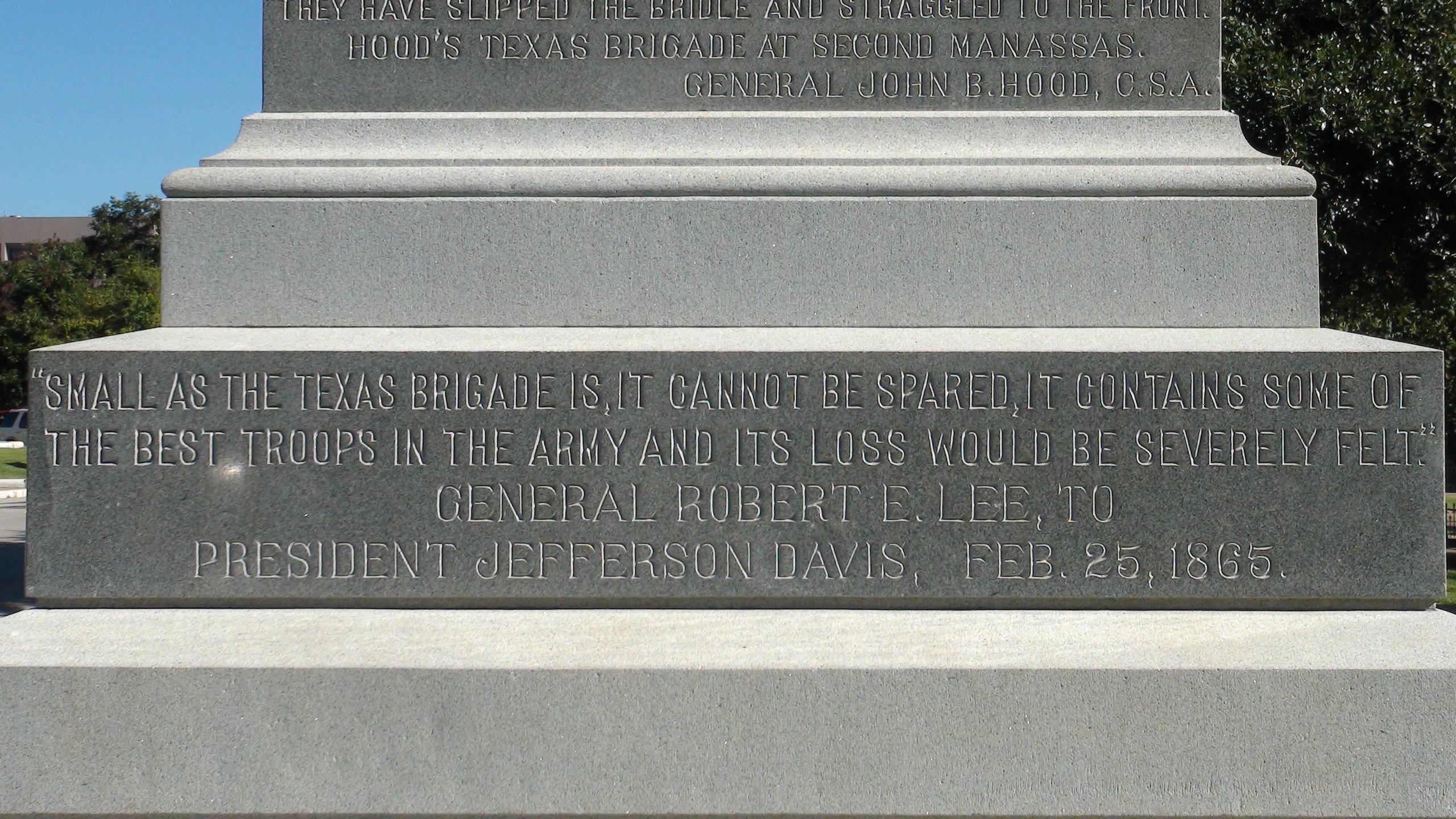
Tough Texas Brigade.

Thursday, 28 April 2022

And Moses was learned in all the wisdom of the Egyptians, and was mighty in words and deeds. Acts 7:22

Note: You can listen to today’s commentary courtesy of our friends at “Bible in Ten” podcast. (Click Here to listen).

You can also read this commentary, with music, courtesy of our friends at “Discern the Bible” on YouTube. (Click Here to listen), or at Rumble (Click Here to listen).

It was just noted that Moses was set out, but Pharaoh’s daughter “took him away and brought him up as her own son.” With that remembered, Stephen next says, “And Moses was learned.”

The word is paideuó. It signifies the process of learning, not the result. In other words, this doesn’t mean, “Moses was known for having learned everything.” Instead, it means “Moses was given training in.” Other than Stephen’s speech, this is not recorded in Scripture. However, Flavius Josephus and Philo both referred to this. The Pulpit Commentary states –

“Josephus makes Thermeutis speak of him as ‘of a noble understanding;’ and says that he was ‘brought up with much care and diligence.’ And Philo, in his life of Moses (quoted by Whitby), says he was smiled [skilled] in music, geometry, arithmetic, and hieroglyphics, and the whole circle of arts and sciences.”

It is evident from this, as well as verses such as 2 Timothy 3:8 and Jude 1:9, that extrabiblical references were accepted among the people concerning their history. Likewise, Paul cites Greek philosophers in his writings as well. Despite the sources not being inspired, their inclusion in Scripture tells us that those particular things that have been cited should be considered accurate statements concerning what is stated.

As for Moses, whatever his final level of education was, he was educated “in all the wisdom of the Egyptians.” As noted in the words of the Pulpit Commentary above, this included a wide range of disciplines. It probably also included astrology, medical studies, Egyptian religious rites and practices, various types of divination and dream interpretation, and so on.

Moses was aware of these things, as can be seen in the law. For example, there is great structure and poetical beauty in his writings at times, such as the Song of Moses in Deuteronomy 32. These things can only be speculated on, but by reading what he speaks of, the way he writes, and the things he warns against, a fuller picture of the things he was aware of can be determined. Because of his learning, Stephen next says, “and was mighty in words and deeds.”

This refers to his pronouncements and actions in life. His learning gave him the ability to utter forth things that were intelligent, structured, and of great importance. He was also able to turn the things he instructed into action, accomplishing great feats, such as uniting Israel and keeping them united despite all the troubles that they faced, both from without and from within. The statement in Exodus 4:10 (below) does not at all conflict with what Stephen now says –

“Then Moses said to the Lord, ‘O my Lord, I am not eloquent, neither before nor since You have spoken to Your servant; but I am slow of speech and slow of tongue.’”

Having a speech impediment is not connected to what Stephen speaks of when he says, “mighty in words.” Words can be written down, they can be communicated by another (such as Aaron), and they can also simply refer to what a word signifies – a matter – and not the speaking out of the word. The words of Moses have immense weight, regardless as to how they may have fumbled off of his lips.

Life application: There is often a dilemma among Christians concerning education. Some demand that getting an education in theology is an excuse to reject that person’s doctrine (yes, there are people out there like this). Some think that one should only be trained in the Bible. Some find extrabiblical studies relevant to some extent, dismissing some things as unacceptable and claiming other things are acceptable.

It is hard to know where education becomes pointless, such as obtaining knowledge merely for the sake of having it, but without any valid reason for having it. Those things can be debated forever. But one should not dismiss being educated as leading to being tainted and unqualified to teach the Bible. For example, someone might learn about heresies in order to know how to identify that which is heretical.

Further, someone may use the writings of Greek philosophers as a way of conveying a biblical truth that can then be more readily understood. As noted above, Paul cites several Greek philosophers. Some are stated in Acts as recorded by Luke, and some are in Paul’s own writings.

In regard to the Bible, the first and most important thing is to know it sufficiently before any other training in relation to it is obtained. If one is trained in theology without first knowing the Bible, then two things will immediately be true. The first is that he will have no idea if what he is being trained in is actually in accord with the word or not.

The second is that once he is trained in that theology, he will have presuppositions based on that training which will then bias his analysis of the Bible from that point on. It is very hard to mentally separate oneself from what he has been trained in, even when provided evidence that his training was faulty.

For example, a Jehovah’s Witness will be trained, in advance of his knowing the Bible, that Jesus is not God. From that point on, he will always believe this, even when provided all the evidence necessary to validate that Jesus is, in fact, God. It is a state known as cognitive dissonance, and it is an extremely hard thing to overcome.

Only when the Bible is read and understood to a sufficient degree should a person be introduced to various theologies. And it is always good to learn as many viewpoints on those particular theologies as possible. Understanding the variations in thought can help a person process what he already knows, and come to a right decision about what is correct and what is to be rejected. Above all, know the Bible intimately first. From there, never stop checking the Bible for confirmation of what you are told.

Glorious God Almighty, give us the desire to seek Your word daily, and give us the ability to remember what is there. Help us in this, O Lord, so that when we are presented with a teaching on its contents, we can properly evaluate if what we have been told is correct or not. May it be so, to Your glory and for our benefit. Amen.


Acts 7:21

Texas capitol refurbishment.

Wednesday, 27 April 2022

But when he was set out, Pharaoh’s daughter took him away and brought him up as her own son. Acts 7:21

Note: You can listen to today’s commentary courtesy of our friends at “Bible in Ten” podcast. (Click Here to listen).

You can also read this commentary, with music, courtesy of our friends at “Discern the Bible” on YouTube. (Click Here to listen), or at Rumble (Click Here to listen).

Stephen had just previously said that Moses was brought up in his father’s house for three months. He next notes, “But when he was set out.” That refers to what is stated in the narrative of Exodus 2 –

“But when she could no longer hide him, she took an ark of bulrushes for him, daubed it with asphalt and pitch, put the child in it, and laid it in the reeds by the river’s bank. And his sister stood afar off, to know what would be done to him.” Exodus 2:3, 4

The brevity of Stephen’s words in relation to the Exodus narrative shows that the story of Moses was universally known. Instead of giving the details, he simply acknowledges the account in the simplest of words. The events themselves would automatically be mentally filled in by each member of the council.

The word translated as “But when he was set out” means that he was exposed. The same word is used three more times in Acts where it means to explain, such as when Peter explained events that occurred (Acts 11:4), or when Paul explained the significance of the kingdom of God (Acts 28:23). Stephen continues with, “Pharaoh’s daughter took him away.”

Again, the few words of Stephen are much more detailed in Exodus –

“Then the daughter of Pharaoh came down to bathe at the river. And her maidens walked along the riverside; and when she saw the ark among the reeds, she sent her maid to get it. And when she opened it, she saw the child, and behold, the baby wept. So she had compassion on him, and said, ‘This is one of the Hebrews’ children.’
Then his sister said to Pharaoh’s daughter, ‘Shall I go and call a nurse for you from the Hebrew women, that she may nurse the child for you?’
And Pharaoh’s daughter said to her, ‘Go.’ So the maiden went and called the child’s mother. Then Pharaoh’s daughter said to her, ‘Take this child away and nurse him for me, and I will give you your wages.’ So the woman took the child and nursed him.” Exodus 2:5-9

The word translated as “took him away” is quite interesting. It is anaireó. It is almost always translated as kill, end life, murder, put to death, and so on. For example, it is used this way in Acts 7:28. In one instance, Hebrews 10:9, it is used to signify the taking away of the Old Covenant as it is replaced with the New. It is a compound verb coming from ana, a word giving the sense of upwards, and haireó, meaning to choose or take.

In this, Vincent’s Word Studies notes –

“Used among Greek writers of taking up exposed children; also of owning new-born children. So Aristophanes: ‘I exposed (the child) and some other woman, having taken it, adopted (ανείλετο) it’ (‘Clouds,’ 531). There is no reason why the meaning should be limited to took him up from the water (as Gloag).”

In other words, some (like Gloag) might think, “This is referring to Pharaoh’s daughter taking Moses up from the water of the Nile.” But it is surely signifying more than this. It is the ending of one part of his life and the entrance of a new aspect. She “took him up” from his life as a Hebrew “and brought him up as her own son.”

This is noted in Exodus 2 as well –

“And the child grew, and she brought him to Pharaoh’s daughter, and he became her son. So she called his name Moses, saying, ‘Because I drew him out of the water.’” Exodus 2:10

The meaning of Stephen’s words is that Moses was both nourished and educated as a member of Pharaoh’s home. What is ironic, and what may (?) be on Stephen’s mind, is that just as Moses was taken away from his life as a Hebrew in order to become the deliverer of Israel, so Moses (the law) must be taken away in order for Israel to be delivered from the law’s bondage. As noted, the word used to describe this is also found in Hebrews 10 –

Previously saying, ‘Sacrifice and offering, burnt offerings, and offerings for sin You did not desire, nor had pleasure in them’ (which are offered according to the law), then He said, ‘Behold, I have come to do Your will, O God.’ He takes away the first that He may establish the second. 10 By that will we have been sanctified through the offering of the body of Jesus Christ once for all.” Hebrews 10:8-10

Whether this was on Stephen’s mind or not, the ironic nature of the use of the word to signify the changes concerning Moses (representative of the law) is remarkable.

Life application: The words of Exodus, as confirmed here, show us that Pharaoh’s daughter was an exceptional financier. We can deduce this because she went down to the bank of the Nile and drew out a little prophet.

Sometimes, a little humor is a good thing.

Lord God, what a treasure Your word is. It is filled with wisdom, history, poetry, irony, and revealed glory. In it, we find the answer to our needs. In it, we find rest for the weary soul. In it, we find Jesus. Thank You for this wonderful, beautiful word. Amen.


Acts 7:20

Someone please remind the people in DC about this concept.

Tuesday, 26 April 2022

At this time Moses was born, and was well pleasing to God; and he was brought up in his father’s house for three months. Acts 7:20

Note: You can listen to today’s commentary courtesy of our friends at “Bible in Ten” podcast. (Click Here to listen).

You can also read this commentary, with music, courtesy of our friends at “Discern the Bible” on YouTube. (Click Here to listen), or at Rumble (Click Here to listen).

Stephen’s previous words referred to the king of Egypt’s treacherous instructions against the people of Israel. This included, “making them expose their babies, so that they might not live.” With that thought introduced, he next says, “At this time Moses was born.”

The word translated as “time” signifies a fitting season, as if the opportune moment. In this, Stephen is certainly indicating that God planned it out that this would be the proper time for the events leading up to the Exodus to take place, according to His promise to Abraham hundreds of years earlier.

It is at this fitting and opportune time that Moses was born. Moses means “He who draws out.” It is based upon his being drawn out of the Nile, but it certainly is a prophetic anticipation of him being the one to draw out the word of God (the law) to then pass it onto the people. In this, he is a type, or picture, of the coming Christ – the Word of God – who draws out the will of God through His word in order to fulfill it. These things are more fully explained in the Superior Word sermons that begin in Exodus and progress through Deuteronomy.

As for Stephen, his words continue with, “and was well pleasing to God.” The word translated as “well pleasing” is asteios, and it is only found here and in Hebrews 11:23 where it also speaks of Moses. The word comes from astu, a city. And so, it literally means “belonging to the city.” This is because a city is considered a place of polished manners and living. Thus, one could paraphrase the word as “he was a city dweller,” and the sense may be brought out.

The idea of him being pleasing “to God” is both superlative and idiomatic. It refers to anything that is beautiful, grand, lofty, and so on. Albert Barnes explains this –

“Thus, Psalm 36:7, ‘mountains of God,’ mean lofty mountains; Psalm 80:11, ‘cedars of God,’ mean lofty, beautiful cedars. Thus, Nineveh is called ‘a great city to God’ (Jonah 3:3, Greek), meaning a very great city. The expression here simply means that Moses was ‘very fair,’ or handsome.”

With this understood, Stephen finishes with, “and he was brought up in his father’s house for three months.”

Because of the elegant nature of the child, the parents were emboldened and, as it says in Hebrews 11, “they were not afraid of the king’s command.” The two aspects, that of the beauty of the child, and that of the parents not caring about obeying an immoral command, combined into their determination to hide the child. In the Hebrews reference, it is ascribed to them as an act of faith. He was protected during these early months because of this.

Life application: Hebrews 11 describes this same event, saying that what the parents did was an act of faith. In this, they were recorded in the Bible’s Hall of Fame of Faith for their deed. Though the things we do will not be recorded in the Bible, they will be remembered by God. Those that are of faith will receive their reward. Those that are not, will not.

If a pastor mandates tithing in his church, there is no faith in the giving. It is considered an obligation and the congregants, rightly or wrongly, will give (or not give) based on his words. Only if a person knows that tithing is not a New Covenant precept is he freed from this legalistic nonsense. His giving, then, can be considered an act of faith.

In other words, when a pastor mandates tithing – something contrary to the word of God – he denies his congregants who are uneducated in the word the blessing of rewards for their giving. This is all the more poignant when Paul, speaking of eating various foods, says, “for whatever is not from faith is sin.” Though referring to foods, the precept is universal in its scope.

We are to live our lives in faith. When we give, it is to be because we have faith in the giving, not because of a legalistic mandate that is not to be found in Scripture. The law mandated tithing. Those who did not tithe were guilty before the law. Now that Christians are not under law, but under grace, to be forced to tithe removes faith from the process.

Think about this as a simple example for everything you do. What you do, do in faith that you are in the presence of God and that He is evaluating your life and actions as such. In all your ways, acknowledge Him, and He shall direct your paths.

Glorious God, thank You that we can live our lives in faith by simply acknowledging You in our thoughts. May we consider our actions, knowing that You are there, and You are with us. As we go forth with this attitude, direct our paths accordingly. Thank You that there can be such an intimate fellowship between us. Thank You for this, O God. Amen.