
Acts 7:54

A person from Texas.

Monday, 30 May 2022

When they heard these things they were cut to the heart, and they gnashed at him with their teeth. Acts 7:54

Note: You can listen to today’s commentary courtesy of our friends at “Bible in Ten” podcast. (Click Here to listen)

You can also read this commentary, with music, courtesy of our friends at “Discern the Bible” on YouTube. (Click Here to listen), or at Rumble (Click Here to listen).

Stephen has been quite clear in his words to the council, and they have perfectly understood what he meant. Because of this, a strong reaction has been elicited from them. As it now says, “When they heard these things they were cut to the heart.”

It is the same word introduced into Scripture in Acts 5:33, diaprió. This is the second and last use of it in the Bible. It comes from two words signifying “through” and “cut with a saw.” Hence, it signifies “sawn in two.” It is a state where a person feels he has been cut right in two, right down the middle, when overcome with grief or rage. At this time, it is a state of rage.

One can imagine a saw cutting through their minds as bits fly off in different directions. The more words they heard, the more their minds would be drawn apart. In this case, being reminded that they resisted the Spirit, that they were the murderers of the Messiah, and that they were supposed to have been the stewards of the law, and yet they themselves did not keep it, their minds had become completely enraged and disjointed. In this state, Luke next says, “and they gnashed at him with their teeth.”

The Greek word translated as “gnashed” is found only here in the Bible, bruchó. Of this word, Vincent’s Word Studies notes, “Originally to eat greedily, with a noise, as wild beasts: hence to gnash or grind the teeth.” In their case, it is also a sign of rage. They were like wild animals clenching their teeth and snarling at Stephen. Things don’t look good for him at this point.

Life application: Speaking out the truth of the word can, and quite often will, get people riled up. Sometimes you can present it as a challenge, sometimes as a warning, sometimes as a point of correction for someone’s conduct, and so on. Depending on who is being addressed and what the circumstances are, these things may be taken well, or they may be taken as an offense. But as long as you are presenting your words with the proper intent and in the proper context, you are doing your job.

Stephen is addressing Israel’s leaders. They should have known better, and he has been as direct as Jesus was concerning their failings. There is nothing wrong with this approach. Quite often people get too caught up in the thought, “You need to do this in love.” That is often a means of silencing you. Stephen’s words are true, they are direct, and they are biting. The psalms are often written in such a manner. We must take God’s word as it is presented and accept that stern warnings or open chastisement are a part of how it is presented.

Let us remember this and present our words as the occasion necessitates. Don’t let others shut you down when you are doing exactly what you should be doing. Present your words and let the chips fall where they may.

Lord God, help us to be wise and discerning in how to present Your word, and how to present correction to others when necessary. It is not always an easy task, so be with us and help us to glorify You in all such situations. May it be so! Amen.


Acts 7:53

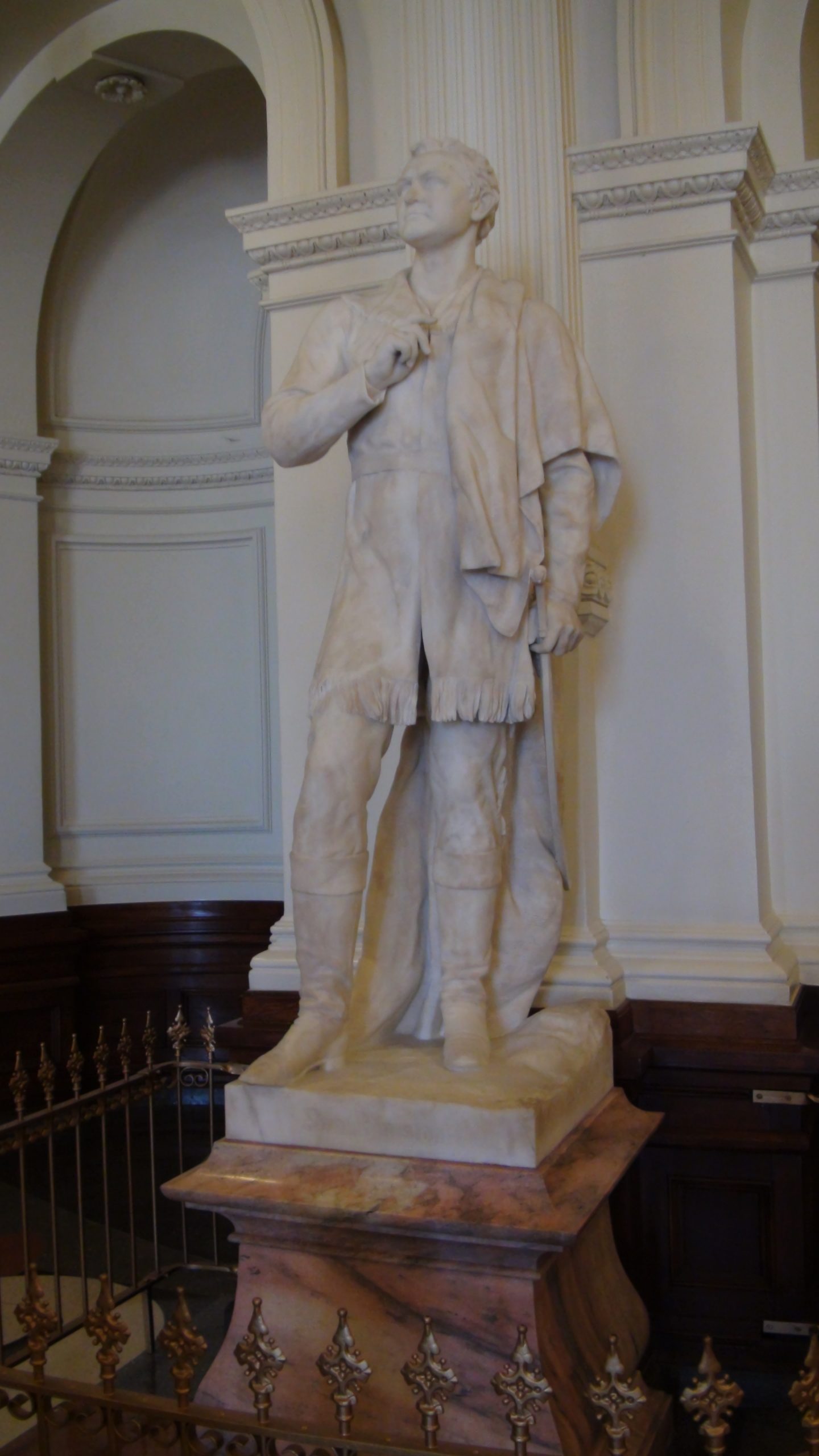
Striking a noble pose in marble.

Sunday, 29 May 2022

who have received the law by the direction of angels and have not kept it.” Acts 7:53

Note: You can listen to today’s commentary courtesy of our friends at “Bible in Ten” podcast. (Click Here to listen)

You can also read this commentary, with music, courtesy of our friends at “Discern the Bible” on YouTube. (Click Here to listen), or at Rumble (Click Here to listen).

Stephen’s words of this verse should be taken in connection with the previous verses to get the full context –

You stiff-necked and uncircumcised in heart and ears! You always resist the Holy Spirit; as your fathers did, so do you. 52 Which of the prophets did your fathers not persecute? And they killed those who foretold the coming of the Just One, of whom you now have become the betrayers and murderers, 53 who have received the law by the direction of angels and have not kept it.

Understanding the context, this verse begins with, “who have received the law.” The word translated as “who” is “Stronger than the simple relative who, and emphasizing their sin by contrast with their privileges: inasmuch as ye were those who received, etc.” (Vincent’s Word Studies).

Stephen is clearly pointing his finger at the council and pointing out their hypocrisy. They have been entrusted with the law and they are the guardians of it. As such, they are responsible to ensure others keep it accordingly. It is the law, as he next says, given “by the direction of angels.”

Here, Stephen introduces a word into the Bible, diatagé, that is found only here and in Romans 13:2. It signifies an ordinance or disposition. Reading it in Romans 13 will help understand the meaning –

“Therefore whoever resists the authority resists the ordinance of God, and those who resist will bring judgment on themselves.” Romans 13:2

As for the meaning, it is quite common for scholars to cite Jewish references that claim the Law of Moses was received from God through angels as if they mediated the law to the people of Israel. This is not found in the account of Exodus, nor anywhere else. To simply cite Jewish commentary in this manner is not responsible because it does not match what the Bible says.

Rather, and quite simply, the word translated as “angels” means “messengers.” This is the same as the Hebrew where the word translated as “angel” means just the same thing as in the Greek. It can refer to a supernatural angel (see Zechariah 1:9, for example), the Angel of the Lord, meaning the eternal Christ – Jesus (see Numbers 22:22, for example), the coming Messiah (see second use of the word “Messenger” in Malachi 3:1, for example), or even mere human beings who bring messages (such as John the Baptist – see the first use of “messenger” in Malachi 3:1 and in Mark 1:2).

In this case now presented by Stephen, it is a clear reference to Moses and Aaron, the “messengers” who were designated to receive the law and transmit it to the people. They acted as the angels, or messengers, of the Lord. Later during the time of the law, it is seen that angels, such as Gabriel and Michael, also spoke out words to certain people. Further, prophets and seers continued to receive the word, passing it along to the people.

The point of what is being said here is that the law was “received by the direction of angels.” The Lord spoke, and His chosen messengers – be it Moses and Aaron, the prophets, or heavenly angels – relayed His word to the people. This same thought is seen in Galatians 3:19 and in Hebrews 2:2. Despite this, Stephen accuses those in the council. They had received this law “and have not kept it.”

The council sits in authority over Israel. The words he speaks are not just pointing at the men sitting before him, but they refer to this council over the entire dispensation of the law. He says that in the entire history of Israel, this council had failed to uphold the law and to administer it properly. The Scriptures themselves testify to this fact, and it was no less so now when they had dismissed, rejected, and crucified the very One that those Scriptures testified to.

These men were just the recipients of the final expression of what God was doing under the law. As such, they were more accountable than any others for failing as they had. They had turned their responsibilities into a point of shame, and they would turn their nation into a people set for destruction, as warned in the very law they administered.

Life application: The dispensation of the law was intended to teach Israel that they, as a people, needed God’s grace and mercy. If nothing else, the sacrificial system that accompanied the law should have taught them this. Though the law is based on works, including the mandatory sacrifices, the fact that sacrifices were given for sins committed under the law are their own mark of grace. And the fact that the entire nation, without exception – including Israel’s high priest – needed to observe the Day of Atonement told them that they had failed to meet the demands of the law. Hence, they needed the grace and mercy offered on that day.

But because of a perceived self-righteousness that came from having the law, they could not see this. They thought (and still think to this day) that the law elevated them as a people to a special status that brought them an inherent righteousness. What does one need the sacrifice of the Messiah for if the law has been given? Without seeing that the law only pointed to Jesus, it became a supposed means to an end.

This is the problem with churches that mandate the law (in part or in whole) today. “I give ten percent.” “I don’t eat pork.” “I observe the Feasts of the Lord.” “I observe the Sabbath.” The focus of each of these is on the subject, “I.” That is the problem with such doctrine. It makes the same error as is held by Israel. It is not about us. It is about Jesus. Despite all of the “I haves” or “I ams” that Israel possesses, they are no closer to God than the worst pagan without the grace and mercy of God.

Come to God through His full, final, and forever offer of Jesus. Then you can do acceptable good stuff all day long. Get things in the proper order and never rely on “I” to get you to heaven. You will never make it. Come to Jesus, and you are guaranteed to make it.

Lord God, thank You for Jesus Christ our precious Savior. Amen.


Acts 7:52

Someone famous from Texas.

Saturday, 28 May 2022

Which of the prophets did your fathers not persecute? And they killed those who foretold the coming of the Just One, of whom you now have become the betrayers and murderers, Acts 7:52

Note: You can listen to today’s commentary courtesy of our friends at “Bible in Ten” podcast. (Click Here to listen)

You can also read this commentary, with music, courtesy of our friends at “Discern the Bible” on YouTube. (Click Here to listen), or at Rumble (Click Here to listen).

Stephen’s last words were concerning the stiff necks and uncircumcised hearts and ears of those in the council. He also noted that they always resist the Holy Spirit, just as their fathers did. Now he asks them a direct question that somewhat mirrors the words of Jesus, “Which of the prophets did your fathers not persecute?”

It is reflective of what Jesus said to the leaders in Matthew 5 (and also in Luke 13) –

“Therefore you are witnesses against yourselves that you are sons of those who murdered the prophets. 32 Fill up, then, the measure of your fathers’ guilt. 33 Serpents, brood of vipers! How can you escape the condemnation of hell? 34 Therefore, indeed, I send you prophets, wise men, and scribes: some of them you will kill and crucify, and some of them you will scourge in your synagogues and persecute from city to city, 35 that on you may come all the righteous blood shed on the earth, from the blood of righteous Abel to the blood of Zechariah, son of Berechiah, whom you murdered between the temple and the altar. 36 Assuredly, I say to you, all these things will come upon this generation.” Matthew 5:31-36

Jesus’ words were an affirmative statement. Stephen’s words are put in the form of a question, but one that begs the answer, “Your fathers have persecuted them all.” The Scriptures themselves testify to the truth of the matter. But that question was only asked to connect what the fathers had done to what this very council would do. He is showing that there is an unbroken line of hatred by them to the very people who proclaimed the coming of the Messiah. This is seen in Stephen’s continued words, saying, “And they killed those who foretold the coming of the Just One.”

The title, the Just One, is not directly proclaimed by the prophets, but the intent behind it is seen in the words of the prophets. A similar thought to it is found in Isaiah 11 –

“But with righteousness He shall judge the poor,
And decide with equity for the meek of the earth;
He shall strike the earth with the rod of His mouth,
And with the breath of His lips He shall slay the wicked.
Righteousness shall be the belt of His loins,
And faithfulness the belt of His waist.” Isaiah 11:4, 5

The title was understood well enough that it is used here. Likewise, 1 John 2:1 uses a similar title saying, “My little children, these things I write to you, so that you may not sin. And if anyone sins, we have an Advocate with the Father, Jesus Christ the righteous.” The word John uses is the same Greek word meaning both just and righteous. The title is also similar to that already stated by Peter in Acts 3:14.

As for the continued words of Stephen, what he says still refers to the fathers, meaning those leaders who had come before. At the time when the prophets were proclaiming the coming of the Messiah, these leaders of Israel were busy killing those same prophets. The prophets called the people to turn from their wicked ways while also proclaiming that the Messiah was coming. Because of their words of correction concerning holiness and living according to God’s standards, the fathers had persecuted and killed those prophets of God. And, following in their unrighteous footsteps, Stephen says of those before him, “of whom you now have become the betrayers and murderers.”

There is no article before “betrayers” in the Greek. Because of the way he says it, the statement bears an emphasis, “you betrayers and murderers have become.” The council both conspired against God’s Messiah, and they were directly involved in His killing. One example of the conspiracy is found in Matthew 27:3, 4 –

“Then Judas, His betrayer, seeing that He had been condemned, was remorseful and brought back the thirty pieces of silver to the chief priests and elders, saying, ‘I have sinned by betraying innocent blood.’
And they said, ‘What is that to us? You see to it!’”

As for acknowledging guilt in the murder, that is also found in Matthew 27. In verse 27:20, it acknowledges that the chief priests and elders were present at this time. Then in verses 27:24, 25, it says –

“When Pilate saw that he could not prevail at all, but rather that a tumult was rising, he took water and washed his hands before the multitude, saying, ‘I am innocent of the blood of this just Person. You see to it.
25 And all the people answered and said, ‘His blood be on us and on our children.’”

The weight of Stephen’s words may not be pleasant to the ears of the council, but they are words of truth that cannot be denied from the written eyewitness record of what occurred.

Life application: To this day, those who call the people to turn from wickedness are persecuted and even killed for their stand. The message of Jesus is not one of tolerance, even if it is one of acceptance. Jesus will accept any who come to Him, but the expectation is that in coming to Him there will be lives lived out in holiness. There will be judgment upon all – both saved and unsaved – for unholy living. The difference is that those who never come to Him are destined for an eternal swim in the Lake of Fire. Those who do come to Him will be judged for loss of rewards.

It is best to come to Jesus and then put Him first in our lives. Let us endeavor to learn the word, apply it to our lives, and live out our days in right conduct and holy living. May it be so to the glory of God who has saved us.

Lord God, thank You for the salvation that is found in the giving of Your precious Son for us. Help us to live out our lives in holiness rather than in pursuit of the things of the flesh. It is a tempting world, a world filled with trials and stresses, and a world that calls out for us to join it in earthly pursuits. But, Lord, help us as we keep our eyes on Jesus, striving for that which lies ahead of us. Help us in this, O God. Amen.


Acts 7:51

Reminds me of a song: https://www.youtube.com/watch?v=HhKZLhxFFUY

Friday, 27 May 2022

You stiff-necked and uncircumcised in heart and ears! You always resist the Holy Spirit; as your fathers did, so do you. Acts 7:51

Note: You can listen to today’s commentary courtesy of our friends at “Bible in Ten” podcast. (Click Here to listen)

You can also read this commentary, with music, courtesy of our friends at “Discern the Bible” on YouTube. (Click Here to listen), or at Rumble (Click Here to listen).

Stephen has carefully and methodically laid out his analysis of the worship of Israel, and of their attitude toward the Lord throughout their history. With his words now finished concerning the Lord in relation to the temple, his complete disappointment in the ability of the leaders to perceive what is good and right concerning the Lord comes forth.

Citing Scripture, he has shown that the Lord is not confined to a building of stone that has been fashioned by men’s hands. Because of their inability to perceive this basic truth, he next calls out to them, “You stiff-necked and uncircumcised in heart and ears!”

He uses two words that are only found here in Scripture:

sklérotrachélos – This comes from two separate words, the first of which is skléros. It means hard, stiff, stubborn, and so on. It describes people that simply won’t budge. And trachélos, meaning the neck or throat. Together, they obviously signify stiff-necked. It speaks of a people who are contrary and obstinate.

aperitmétos – This comes from the negative particle a being united to peritemnó, or to circumcise.

The second word, uncircumcised, is then defined by the words “in heart and ears.” Being uncircumcised would signify that the people were both outside of the covenant of Abraham and outside of the Law of Moses. Stephen is using this as an example of being in that state, not legally but morally. They were circumcised in the flesh, but that did not mean they were right with the Lord. This concept is found in both testaments of Scripture going back as far as Moses –

“Therefore circumcise the foreskin of your heart, and be stiff-necked no longer.” Deuteronomy 10:16

“And the Lord your God will circumcise your heart and the heart of your descendants, to love the Lord your God with all your heart and with all your soul, that you may live.” Deuteronomy 30:6

“Circumcise yourselves to the Lord,
And take away the foreskins of your hearts,
You men of Judah and inhabitants of Jerusalem,
Lest My fury come forth like fire,
And burn so that no one can quench it,
Because of the evil of your doings.” Jeremiah 4:4

“For he is not a Jew who is one outwardly, nor is circumcision that which is outward in the flesh; 29 but he is a Jew who is one inwardly; and circumcision is that of the heart, in the Spirit, not in the letter; whose praise is not from men but from God.” Romans 2: 28, 29

To be uncircumcised in the heart is to lack reasoning towards God, resulting in being disobedient towards Him. It would be a person who lives for the flesh and not for the spiritual things laid out by the Lord. To be uncircumcised in the ear is to fail to hear (both hearing and then applying) the word of the Lord to one’s life. The word “hearken” gives a good sense of this. One can hear and not do. Or one can fail to hear at all and be incapable of doing. One who hearkens will both hear and do.

In this state, Stephen continues by saying, “You always resist the Holy Spirit.” Again, he uses a word that is only found this one time in Scripture, antipiptó. It is an especially strong word signifying “to fall against.” As such, it means active resistance. HELPS Word Studies says it is “like someone trying to crush an adversary in battle.”

These people hadn’t just resisted the Holy Spirit by ignoring Him. Rather, they were actively working against Him. It is He who inspired Scripture, and thus the meaning is that they were actively working against what He had provided in the word by actively trying to crush anything concerning Jesus, who is the Subject of Scripture. But this attitude was nothing new. He says that this is “as your fathers did, so do you.”

This is certainly referring to the examples given in verses 7:39-43. He is equating those sitting before him with those who actively rejected Moses, made a golden calf, turned their hearts back to Egypt, offered sacrifices to the idol, and who continued to do such things ever since. The rebellious streak of the fathers was still being openly evidenced in the council of leaders to that very day.

Life application: Israel was crushed, destroyed, and exiled because they rejected Jesus. This is what the Bible, even by the words of Jesus Himself, teaches. They purposefully and willfully continued to do so even after the resurrection and the witness of the apostles.

As such, they were exiled in accord with the Law of Moses, and the punishments laid out there have been brought upon them for the past two millennia. To this day, they actively work against any notion of Jesus being the Messiah, and they are – for the most part – intolerant of Him within their culture and community.

Though they are back in the land, this is not because they are right with the Lord, but it is the Lord’s way of bringing them to a right standing with Him. Jesus lays all of this out in the gospels, such as in Matthew 24.

As this is so, it means that His coming for His people in the church is probably not far off. We have a great hope that we will be delivered from this world of wickedness and into our heavenly home. Israel, along with the rest of the unbelieving world, will enter into the tribulation where most will not survive. Now is the time to tell people about the goodness of God in Christ, and to convey to them the gospel. Be sure to get this word out while you can.

Lord God, help our hearts to be softened towards those who have not yet come to You through Jesus. Help us to be caring enough to share this good news while we can. Direct our steps to those whom You know will favorably respond to the call when it is given. Time is winding down, Lord. Help us to take full advantage of it while we can. Amen.


Acts 7:50

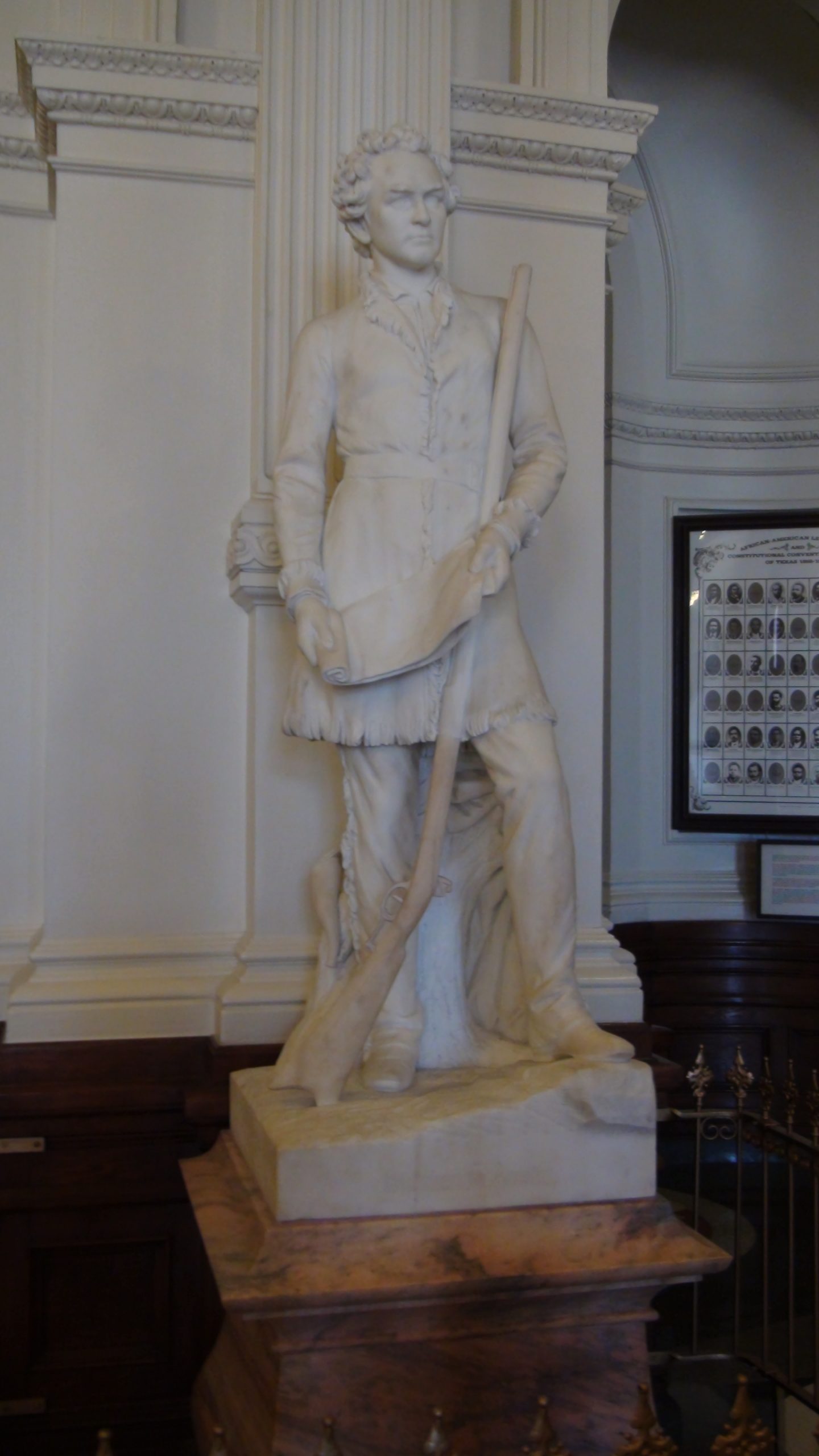
Davy Crockett. Texas Capitol.

Thursday, 26 May 2022

Has My hand not made all these things?’ Acts 7:50

Note: You can listen to today’s commentary courtesy of our friends at “Bible in Ten” podcast. (Click Here to listen)

You can also read this commentary, with music, courtesy of our friends at “Discern the Bible” on YouTube. (Click Here to listen), or at Rumble (Click Here to listen).

Stephen is in the process of quoting Isaiah 66:1, 2. He will finish his citation with this verse which is only the first clause of Isaiah 66:2. His entire citation says –

“Heaven is My throne,
And earth is My footstool.
What house will you build for Me? says the Lord,
Or what is the place of My rest?
50 Has My hand not made all these things?” Acts 7:49, 50

With this context remembered, he finishes with, “Has My hand not made all these things?” The Hebrew is very close, saying, “For all those things My hand has made.”

The previous words spoke of the position of authority and the state of having all of the earth in a state of subjection. The words now bring in the fact that not only is this so, but that the Lord is the Creator of them as well. What is implied in this is that if He is the Creator of them, then He is also the Sustainer of them. This is stated explicitly in the continued words of Isaiah (not cited by Stephen) that say, “And all those things exist.”

They came into being because of Him (existence from creation), but they remain now only because He purposes it to be so (continued existence). This concept is mentioned by Paul and by the author of Hebrews –

“And he is before all, and all things subsist together by him.” Colossians 1:17 (Darby)

“…has in these last days spoken to us by His Son, whom He has appointed heir of all things, through whom also He made the worlds; who being the brightness of His glory and the express image of His person, and upholding all things by the word of His power.” Hebrews 1:2, 3

As these things are so, then it must be that a temple fashioned by human hands is both insufficient to contain Him, and that what occurs at that temple is actually for our benefit, not His. He needs nothing as all things are from Him and all things belong to Him. Further, true righteousness and holiness cannot come from such a temple and its rites and rituals. Rather, they are intended to school those to whom they are given that only such a state can come from the work of God.

What man does is already tainted with unholiness. The thought of what Stephen is saying through the words of Isaiah is that a right standing before God will come through what God does. That is actually seen in the finishing words of Isaiah 66:2 –

“But on this one will I look:
On him who is poor and of a contrite spirit,
And who trembles at My word.”

The word of God is a reflection of who He is. It is true that the rites and rituals used in the worship of the temple were set forth by the Lord, but they are only types and shadows of what is more perfect. To demonstrate this, the Lord’s word prophesied the coming of the Messiah who would perfectly fulfill all things that Israel imperfectly lived out. This will be seen as Stephen continues. He has clearly set forth his case, and he will show how Israel failed to recognize the time of their visitation.

Life application: In worshipping Jesus, we are worshipping the fullest expression of who God is in a form that we can understand. The Holy Spirit intends for us to see God revealed in Christ. The influence of the Spirit on the prophets was for them to prophesy. The overshadowing of Mary so that she would conceive was given to bring forth the incarnate Word of God. The influence of the Spirit on the apostles was to remind them of the work of the Lord and to testify to it. The sealing of the Spirit now is given as an acceptance of faith (belief in) the gospel of the Lord Jesus.

Everything is centered on Christ Jesus. Let us fix our eyes on Him as we await the wondrous day when we are brought into the presence of God and of the Lamb for all eternity. Let us thank God for His favor, His grace, and His mercy towards us in Christ.

Lord God, all praise, glory, and honor belong to You. We give You our hearts and our devotion as we await the day when You renew all things and bring us into the pure and undefiled state that will allow us perfect union with You for all eternity. Glory to You in the highest! Amen.