Acts 11:8

Stopping for the night in Salt Lake City.

Tuesday, 25 October 2022

But I said, ‘Not so, Lord! For nothing common or unclean has at any time entered my mouth.’ Acts 11:8

Note: You can listen to today’s commentary courtesy of our friends at “Bible in Ten” podcast. (Click Here to listen)

You can also read this commentary, with music, courtesy of our friends at “Discern the Bible” on YouTube. (Click Here to listen), or at Rumble (Click Here to listen).

The previous verse referred to the voice saying to Peter, “Rise, Peter; kill and eat.” In response to that, Peter now says, “But I said, ‘Not so, Lord!’” These are just the words Peter spoke. He recognized the authority in the voice and responded with the word “Lord,” thus confirming that authority. And yet, he appealed for it not to be.

He was a Jew and was observant to their laws as set forth by Moses. To confirm this, he continues with, “For nothing common or unclean has at any time entered my mouth.”

Here Peter makes a few small changes to what he said, but the substance is the same:

“For I have never eaten anything common or unclean.” Acts 10:14
“For nothing common or unclean has at any time entered my mouth.” Acts 11:8

He acknowledges to those he is speaking that he clearly presented himself as a law-observant Jew to the voice from heaven. If this was a test of his faithfulness to Moses, he would have passed with flying colors. Hence, they had no reason to question his careful attention to that particular matter. He will continue to explain what occurred in the verses ahead, defending his actions based on the circumstances that surrounded them.

Life application: At this point, the people who understood how the law worked must have been wondering what was going on. James, an observant Jew at the time of Christ, did understand the ramifications of sinning under the law –

“For whoever shall keep the whole law, and yet stumble in one point, he is guilty of all.” James 2:10

The voice from heaven had directed something that would be considered a point of stumbling under the law. How could it be that the voice could direct an observant Jew to do something like this unless it was just a test of his faithfulness to the law? They must have rationalized in their minds that this was surely the case.

But as the narrative progresses, it will become evident that what was directed was an object lesson concerning Gentile inclusion in the New Covenant. As Gentiles were never under the law, and as they are included in the New Covenant apart from the law, then it must be that the New Covenant is not based upon law observance.

For them, this would be a difficult thing to even imagine. But it is they who must adapt to what is being conveyed. When the author of Hebrews writes about the state of the law after the introduction of the New Covenant, he is clear and precise in what that means. And yet, to this day, both Judaizers and others who supposedly claim to be Christians adamantly reintroduce law observance into their flawed theology. But Hebrews says otherwise –

“For on the one hand there is an annulling of the former commandment because of its weakness and unprofitableness, 19 for the law made nothing perfect; on the other hand, there is the bringing in of a better hope, through which we draw near to God.” Hebrews 7:18, 19

“In that He says, ‘A new covenant,’ He has made the first obsolete. Now what is becoming obsolete and growing old is ready to vanish away.” Hebrews 8:13

“Previously saying, ‘Sacrifice and offering, burnt offerings, and offerings for sin You did not desire, nor had pleasure in them’ (which are offered according to the law), then He said, ‘Behold, I have come to do Your will, O God.’ He takes away the first that He may establish the second.” Hebrews 10:8, 9

The words are written, and they do not reflect well on those who have rejected the grace of God in Christ. His lifeless body on the cross of Calvary is a testament to the law’s fulfillment and ending. His resurrection is a confirmation that it is so. A New Covenant now exists. Trusting in personal righteousness before God based on law observance disgraces the Lord’s cross, and it rejects the significance of His resurrection. Be wise, give up on your self-righteousness and come to God through Jesus.

Lord God, Thank You for the burden that has been lifted from us because of Jesus. We were without hope, stuck in a state of constant fear of death. But now, we have the victory in Him! Thank You for allowing us to return to You covered by His precious blood. Praises to You forever and ever! Amen.




Acts 11:7

Salt Lake City, Utah.

Monday, 24 October 2022 

And I heard a voice saying to me, ‘Rise, Peter; kill and eat.’ Acts 11:7

Note: You can listen to today’s commentary courtesy of our friends at “Bible in Ten” podcast. (Click Here to listen)

You can also read this commentary, with music, courtesy of our friends at “Discern the Bible” on YouTube. (Click Here to listen), or at Rumble (Click Here to listen).

Peter saw the object from heaven descend. In the previous verse, it described the many animals and birds seen in it. In fact, it was a world full of all animals. With that, it now says, “And I heard a voice saying to me.”

This is just what is recorded in Acts 10:13. A voice came to him, and he heard it. The message from that voice is next stated, saying, “Rise, Peter; kill and eat.”

More correctly, the verb is an aorist participle, “Having risen, Peter, kill and eat.” In other words, “Once you have gotten up, then you are directed to kill and eat.” The words are also in accord with verse 10:13, being cited word for word exactly as they were recorded there. Peter is being meticulously careful to relay exactly what he saw and heard to those who were there before him.

Life application: We are being provided a careful look into what occurred as if we are the audience there before Peter. Luke could have just said, “Peter carefully explained everything that happened while he was in Caesarea.” Instead, he attentively details for a second time all that occurred.

Because of this, we need to be sure to understand the message that is being conveyed. It is a message concerning the law and grace. How anyone can go through all of this detail twice, and still think it is appropriate to put himself back under the constraints of the Law of Moses is simply unimaginable. We are provided the same freedoms granted to Noah and all who followed him, even until the time of the law when only Israel was placed under the law. All other people continued to have the freedom to eat anything set before them.

Israel was given the law. Israel could not meet the demands of the law. Not even a single person of Israel could meet the law’s demands. And so, God Himself entered into the stream of time and human existence in order to fulfill the law. Why would anyone set that aside and claim that he was going to do what Jesus had done, improving upon His completed work? It is a slap in God’s face! Rest in Christ, trust in Christ, and be freed from the yoke of the law through the finished work of Jesus Christ.

Lord God, thank You for Jesus who has opened the way for restoration with You. Yes, thank You for Jesus Christ our Lord. Amen.


Acts 11:6

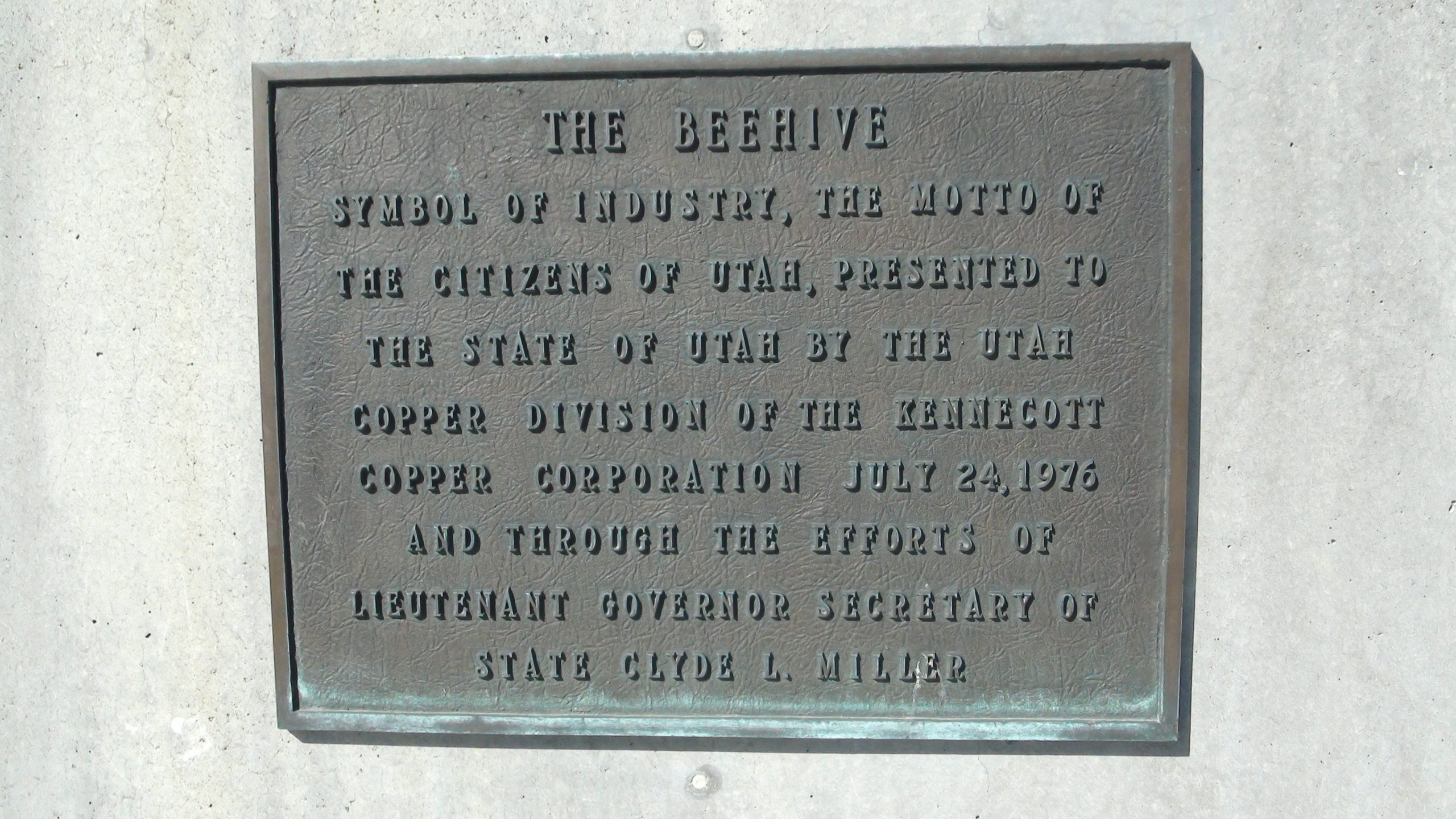
Beehive, symbol of industry. Capitol building, Salt Lake City, Utah

Sunday, 23 October 2022

When I observed it intently and considered, I saw four-footed animals of the earth, wild beasts, creeping things, and birds of the air. Acts 11:6

Note: You can listen to today’s commentary courtesy of our friends at “Bible in Ten” podcast. (Click Here to listen)

You can also read this commentary, with music, courtesy of our friends at “Discern the Bible” on YouTube. (Click Here to listen), or at Rumble (Click Here to listen).

Peter just described the object descending like a great sheet [sail] that came down from heaven. He now explains what was in it. The translation of the NKJV does not get the verbs right, and each category is preceded by an article. A more proper rendering is, “at which having looked steadfastly, I was considering, and I saw the quadrupeds of the earth, and the wild beasts, and the creeping things, and the birds of the heaven” (CG).

Peter’s words, “at which having looked steadfastly,” are not found in Acts 10. He is describing his own personal mental state at the curious sight that had been presented to him. He obviously was quite curious about what he was seeing. With that state of mind, he continues with, “I was considering.”

The verb is imperfect. He didn’t just consider and then move on. Rather, he was engaged in an ongoing thought process. During his considerations, he then notes what was presented to him, saying, “and I saw the quadrupeds of the earth, and the wild beasts, and the creeping things, and the birds of the heaven.”

This is a close repeat of the words of verse 10:12. He is carefully recounting what was first presented to his sight at that time. Each category is stated with an article to show that these were not a couple of animals of each category, but rather an innumerable – even all-inclusive – number of them. Peter is seeing a world full of otherwise unclean animals interspersed with whatever few clean animals there are in relation to the whole.


Life application: We tend to place a high value on animals we are favorable towards. In the US, people love their dogs. When a photo of a Chinese meat market is seen that includes caged dogs waiting to be sold for food, activists get out and protest at the horror of such a thing.

And yet, those same people will go to the local steakhouse for dinner and have a big meaty steak. Are dogs more important than cows? In the end, Peter is being asked to consider things from God’s perspective. This is His world, and He has ordained all things to be eaten by man.

During the time of the law, this was changed for one group of people to teach the world a lesson about the coming Messiah. Outside of that, the people of the world are all in need of a Savior. Are we going to pick and choose which are acceptable for evangelism and which are not? Or are we going to direct our attention toward how God sees things?

Let us not get caught up in personal or cultural biases and condemn others because of what they eat. Let us also not decide that some people or some people groups are not to be included in our evangelistic efforts. God sent Jesus into the world for all people. Let us have that attitude as we conduct our affairs.

Lord God, the only difference between those who have been saved and those who have not yet been saved is the act of acceptance of the gospel message. Other than that, we are all sinners in need of a Savior. Help us to remember this and not get smug in our state of salvation. Someone took the time to tell us about Jesus. Now, help us to do the same. To Your glory, we pray. Amen.


Acts 11:5

Utah, the Beehive State

Saturday, 22 October 202

“I was in the city of Joppa praying; and in a trance I saw a vision, an object descending like a great sheet, let down from heaven by four corners; and it came to me. Acts 11:5

Note: You can listen to today’s commentary courtesy of our friends at “Bible in Ten” podcast. (Click Here to listen)

You can also read this commentary, with music, courtesy of our friends at “Discern the Bible” on YouTube. (Click Here to listen), or at Rumble (Click Here to listen).

In the previous verse, it noted that Peter began his response to the circumcision, putting everything in order as it occurred. That order now starts with, “I was in the city of Joppa praying.”

Peter begins with his location. As it was in a different city than where Cornelius was, it is important that he conveyed this to his audience. In this, they would be able to see that what occurred was based on events that actually took place more than a day apart in order for the immediate events surrounding Peter to occur simultaneously. While in Joppa, he next notes his state, saying, “and in a trance I saw a vision.”

The words are explanatory. Luke recorded what Peter saw as a trance without using the term “vision.” That is seen in Acts 10 –

The next day, as they went on their journey and drew near the city, Peter went up on the housetop to pray, about the sixth hour. 10 Then he became very hungry and wanted to eat; but while they made ready, he fell into a trance 11 and saw heaven opened and an object like a great sheet bound at the four corners, descending to him and let down to the earth. 12 In it were all kinds of four-footed animals of the earth, wild beasts, creeping things, and birds of the air. 13 And a voice came to him, “Rise, Peter; kill and eat.”
14 But Peter said, “Not so, Lord! For I have never eaten anything common or unclean.”
15 And a voice spoke to him again the second time, “What God has cleansed you must not call common.” 16 This was done three times. And the object was taken up into heaven again. Acts 10: 9-16

It is while in a trance and seeing the vision that Peter next explains the contents of the vision, saying, “an object descending like a great sheet.”

One can refer to the comments on Acts 10:11 to understand the meaning of this and to see that what Peter saw was probably a “great sail.” Translating the Greek word as “sail” is acceptable, and it is the most likely meaning of Peter’s words. Next, Peter says this great object was “let down from heaven by four corners.”

The Greek has two slight differences. First, the verb is a present participle, “being let down.” Secondly, it says, “from the heaven.” With that noted, the words of this clause are again explained in the Acts 10:11 commentary. There is rich symbolism and Peter would have grasped its intent after pondering what he saw. The verse next ends with, “and it came to me.”

It does not specifically say this in Acts 10, but it is implied. Peter is on the earth, the great object descended from the heaven, it was intended for him to see, and the voice that spoke was directed to him. Hence to say “and it came to me” is correct from his perspective.

Life application: The personal witness of an individual to the changing power of events in one’s life can lead others to follow the same path as well. In the case of accepting Jesus because of the gospel, there is no need to embellish the events that took place at all.

The focus is to be on the power of God, not on the individual. Unfortunately, humans find it satisfying to make events about us. This is not a healthy way of presenting why we have received Jesus. First, it is not the point of salvation. The ultimate point of salvation is for God to receive the glory.

Secondly, we are fallen beings and we are bound to fail. When we do, those who were impressed with the change in us might become disheartened in their seeking out the reason for our conversion. But if we keep the focus of our conversion on Jesus at all times, then our failings will not diminish the power of God in our lives, they will actually highlight it.

If we needed a Savior, and if we continue to need a Savior, it means that we are dependent on the Lord at all times. If we act as if our salvation has brought us to a state where we are no longer in need of Jesus’ guiding hand in our lives, we will not be bringing the glory to Him as we should.

Let us keep our personal testimony about Jesus focusing on Him at all times. As Paul says, “Therefore let him who thinks he stands take heed lest he fall” 1 Corinthians 10:12. We are always dependent on Jesus. Let our speech and attitude reflect this.

Lord God, how good You are to us. You saved us and You keep on saving us. When we fail You, there is always the assurance that we are Yours and that You are there to forgive us and lead us back to Yourself. And so, Lord, help us to consider this and draw near to You at all times. Thank You for Your tender care of us. Amen.


Acts 11:4

Another view from capitol building, Salt Lake City, Utah

Friday, 21 October 2022

But Peter explained it to them in order from the beginning, saying: Acts 11:4

Note: You can listen to today’s commentary courtesy of our friends at “Bible in Ten” podcast. (Click Here to listen)

You can also read this commentary, with music, courtesy of our friends at “Discern the Bible” on YouTube. (Click Here to listen), or at Rumble (Click Here to listen).

Those of the circumcision were in a snit towards Peter about what had occurred in Caesarea. They said to him, “You went into uncircumcised men and ate with them.” With that, it now says, “But Peter explained it to them in order from the beginning, saying.”

This translation by the NKJV is hardly reflective of the Greek. Rather, the Greek reads, “Now Peter having begun, set forth to them in order, saying” (BLB). Peter opened his mouth and began his response to them. Once he did, he set forth the events as they occurred. The verb is imperfect, reflecting the ongoing nature of his speaking out the chronology of events. He started explaining and he continued by sequentially relaying how things happened.

By doing this, he would be able to convince them of the appropriateness of his actions more precisely. This is because they will be able to see it in the same manner as God ordered the things to occur. Peter had his own doubts, but they were dispelled by how things transpired. By the time he arrived at Cornelius’ house, he felt reassured that his entry into it was exactly the right thing to do.

By speaking out the matter just as it had been presented to him, they could logically follow along as if they were there, right next to him, watching how God orchestrated everything. As such, even a hardened Jew, if he accepted Peter’s story as true, would be fully convinced that Peter’s actions were wholly acceptable.

Life application: By looking at this verse in parallel with other translations, one can see how carefully some translations follow the original Greek, some paraphrase it, and some practically plagiarize what others have already put forth without ever checking with the original.

For this commentary, forty-six versions were looked at. Of them, thirty-one follow the Greek order exactly or pretty closely. Eleven follow the same pattern as the NKJV (noted above), and the rest are essentially paraphrases that do not reflect the Greek very well at all. One can almost see where the original error in thought came in and who went with it. In this case, the oldest Bible referred to, and which started the divergence in translation, was the Bishop’s Bible of 1568.

First, remember the correct sequence of the Greek from the BLB –

“Now Peter having begun, set forth to them in order, saying”

The translation that less properly follows the Greek (the Bishop’s Bible of 1568) reads –

“But Peter rehearsed the matter from the begynnyng, and expounded it by order vnto them, saying:”

From there, whoever was assigned this portion of Acts on the KJV translation team simply copied that and updated it to more modern English –

“But Peter rehearsed the matter from the beginning, and expounded it by order unto them, saying,”

From there, the NKJV did this again –

“But Peter explained it to them in order from the beginning, saying:”

This is just a simple exercise in finding out why translations are the way they are, and it can be extremely helpful in better learning the original intent, if desired. Seeing error in something can help in directing the mind to what is correct. If such things don’t matter to you, then enjoy whatever translation you are reading, but be sure to not assume it is the only correct version. Just because you enjoy the style of the translation you are reading, it doesn’t make it right.

Consider this carefully because even though Acts 11:4 doesn’t carry any heavy theological weight, other verses do. A single mistranslated verse, or a single verse taken out of its proper context, can lead people down entirely incorrect paths of doctrine. Never stop studying this precious word. It is a lifetime of joy for those who seek out what God has set forth for us!

Lord God, what a delight it is to read Your word and to contemplate it. Thank You for those who have diligently and faithfully translated it for us over the millennia. We are the recipients of their efforts, and for that, we are grateful. How wonderful it is to have modern, reliable versions to help us understand what You have set for us. Amen.