
Acts 13:3

Front door of Vermont capitol. Big door.

Wednesday, 14 December 2022

Then, having fasted and prayed, and laid hands on them, they sent them away. Acts 13:3

Note: You can listen to today’s commentary courtesy of our friends at “Bible in Ten” podcast. (Click Here to listen)

You can also read this commentary, with music, courtesy of our friends at “Discern the Bible” on YouTube. (Click Here to listen), or at Rumble (Click Here to listen).

In the last verse, the Holy Spirit had instructed Barnabas and Saul to be separated for a particular work that He had called them to. With that remembered, the next words state, “Then, having fasted and prayed, and laid hands on them, they sent them away.”

Rather, and more precisely, each of the first three verbs is an aorist participle. It should read, “Then having fasted, and having prayed, and having laid the hands on them, they sent them away” (CG). This will be the translation used for analysis. As such, it first notes of these prophets and teachers, “Then having fasted.”

Again, as with the previous verse, fasting by these men is noted. This must have been in addition to the fasting that was previously mentioned. In other words, this seems like all of them together held a special fast for this particular ordination. Combined with the fast itself it adds, “and having prayed.”

A special time of both fasting and prayer was held to seek the favor of the Lord, to acknowledge His will in what was taking place, and to unite all these men together in a closer bond. Of this, Albert Barnes states –

“The gospel had been preached to the Jews, to Cornelius, and to the Gentiles at Antioch. But there had been no solemn, public, and concerted plan of sending it to the Gentiles, or of appointing a mission to the pagan. It was a new event, and was full of danger and hardships. The primitive church felt the need of divine direction and aid in the great work.”

This follows from the assumption that this is specifically a Gentile evangelizing missionary journey. But as has been previously noted, there is nothing definitive yet to claim that the primary focus was for this purpose. Rather, the next verse will indicate just the opposite. It is not until verse 46 that it will definitively note proselytizing of the Gentiles.

Regardless of this, it next says, “and having laid the hands on them.”

Very few translations include the article before “hands,” saying something like, “and laid hands on them.” Though maybe a bit trifling, in this case, the article should be rendered. In both testaments, to lay hands on someone is often to be taken in a negative way –

“In those days, while Mordecai sat within the king’s gate, two of the king’s eunuchs, Bigthan and Teresh, doorkeepers, became furious and sought to lay hands on King Ahasuerus.” Esther 2:21

“Now when the chief priests and Pharisees heard His parables, they perceived that He was speaking of them. 46 But when they sought to lay hands on Him, they feared the multitudes, because they took Him for a prophet.” Matthew 21:45, 46

At other times, noting the laying on of hands is for the purpose of healing (see Matthew 9:18, etc.). Here, it is a specific rite that is being conducted, noted elsewhere as “the laying on of the hands” for the purpose of ordination –

“Do not neglect the gift that is in you, which was given to you by prophecy with the laying on of the hands of the eldership.” 1 Timothy 4:14

This is what is being conveyed. There has been a period of fasting, prayer, and the laying on of the hands. With that complete, “they sent them away.” The Spirit called, the favor of God has been petitioned, and the rite of acknowledging the consecration of these men has been made. This certainly included prayers for continued guidance, safety, and prosperity.  With those things settled, they were released to the leading of the Holy Spirit’s direction.

Life application: The words here are not prescriptive. In other words, they do not instruct us with the notion that each missionary selection should be conducted in the same manner. If that were so, we would expect that the Holy Spirit would first say, “Now separate to me Clint Peckinpah and Sam Eastwood for the work to which I have called them.”

That should not be expected, nor will it occur. In other words, to use Acts in a manner that prescribes something, the same events should take place as had taken place in Acts. As this is not the case, it is not logical that any of the other events must take place in the same manner either. And yet, it is right that missionaries, like deacons and elders, be carefully selected.

There should be a process by which the selection takes place, and then there should be an open acknowledgment of it having occurred. From there, it is right for churches to pray for the success of the missionaries. And “success” does not necessarily mean “coming back alive.” It means that the will of the Lord is served, in whatever manner He directs. His will should be the first and main focus of any such endeavor. If it is, then whatever occurs will be defined as a success.

For example, if a missionary goes forth and many people come to Jesus, but the missionary is arrested for drugs or for sexually exploiting a child, this was not a successful labor. It is certain that not only were a few harmed by such a person’s actions.

On the other hand, if the missionary only leads one to Christ but faithfully serves the Lord in all ways, even dying in the process, it was overall worthwhile. Such things must always be evaluated by how the Lord is glorified. And this should extend to all things in our lives. Let us always be God-conscious. In doing so, our lives will always be properly directed.

Lord God, please keep us from wandering away from You in our thoughts and actions. We are so very prone to this. And so, Lord, be with us and guide us all our days. Help our lives to be lived honorably before You, bringing glory, not shame, upon Your magnificent name. Amen.



Acts 13:2

Cannon. 1 each. Vermont Capitol.

Tuesday, 13 December 2022

As they ministered to the Lord and fasted, the Holy Spirit said, “Now separate to Me Barnabas and Saul for the work to which I have called them.” Acts 13:2

Note: You can listen to today’s commentary courtesy of our friends at “Bible in Ten” podcast. (Click Here to listen)

You can also read this commentary, with music, courtesy of our friends at “Discern the Bible” on YouTube. (Click Here to listen), or at Rumble (Click Here to listen).

Chapter 13 began with a note concerning the prophets and teachers at Antioch, naming each. The last one named Saul (who is Paul) will become the central point of focus concerning the ministry from this point on. Although still veiled, that begins to be revealed with the words of this verse which begins with, “As they ministered to the Lord.”

The verse begins with a conjunction. Also, the verb is a present participle. It rightly should read, “And as they were ministering to the Lord.” Here, the verb translated as “ministered,” leitourgeó, is introduced. It will be seen two more times, once in Romans and once in Hebrews.

It signifies being a public servant. Thus, by analogy, it signifies “to perform religious or charitable functions (worship, obey, relieve) – minister” (Strong’s). It is a word commonly used in the Greek translation of the Old Testament when referring to the work of the priests and the Levites. Its use in Hebrews 10:11 is specifically referring to the service of the Old Covenant priests. It is the basis for our now commonly used word “liturgy.” Along with serving in this capacity, it says they also “fasted.”

Again, it is from a present participle. They “were fasting.” The word signifies abstaining from food, but the implication is that it is for religious reasons. It is during this time of ministration and fasting that “the Holy Spirit said.”

In other words, a message from God is conveyed to the men mentioned in verse 1. We are not told if one of them received this message and then passed it on to the others or if all received the same message. But the text is clear that God spoke to them for a specific purpose, saying, “Now separate to Me.”

In the Greek, there is an alliterative particle, , that is in the text, but which is ignored by most translations. It is intended to give emphasis or urgency to a statement. It is included to provide an underlying affirmation of the surrounding words. The Weymouth New Testament brilliantly translates these words as, “Set apart for Me, now at once.”

And this message, whether received by one or by all, is intended for all. The verb translated as “separate” is plural, “you all separate to me.” It is the same word, aphorizó, Paul uses to open his letter to the Romans (and elsewhere) –

“Paul, a bondservant of Jesus Christ, called to be an apostle, separated to the gospel of God.” Romans 1:1

The word itself comes from apo (away from) and horizó (to set boundaries). One can see the etymological root of the word “horizon” in this word. The holy spirit is directing the setting apart of “Barnabas and Saul.” In other words, they have been counted among the prophets and teachers of Antioch, but now they are being called for a special purpose, which is – as the Holy Spirit states – “for the work to which I have called them.”

Of these words, Cambridge says, “…we may perhaps be warranted in concluding that the whole course of this first great missionary journey was pointed out also by the Spirit. There is no notice of a deliberation in the Church about the best way for the Apostles to set forth.”

This is surely the case. The Holy Spirit has called, and so it can be expected that He will also direct. And this is just what is later seen on these missionary journeys, such as –

“Now when they had gone through Phrygia and the region of Galatia, they were forbidden by the Holy Spirit to preach the word in Asia. After they had come to Mysia, they tried to go into Bithynia, but the Spirit did not permit them. So passing by Mysia, they came down to Troas. And a vision appeared to Paul in the night. A man of Macedonia stood and pleaded with him, saying, ‘Come over to Macedonia and help us.’ 10 Now after he had seen the vision, immediately we sought to go to Macedonia, concluding that the Lord had called us to preach the gospel to them.” Acts 16:6-10

Though the specifics of the calling are not yet seen in this verse, when they are, it must have been the greatest of comfort to these men that they were being sent out knowing that God had called and would, therefore, direct.

Life application: It is a common question for people to ask if fasting is required for believers. The answer must be, “No.” Though it is referred to in Scripture, and even though Jesus speaks of it as something that was commonly done, His words were to Israel, under the law. As such, those verses cannot be considered prescriptive for the church.

Likewise, in Acts, fasting is mentioned, but Acts is a descriptive account of what was occurring. It prescribes nothing. On the other hand, in the epistles – from where we are to derive our doctrine on such matters – fasting is never explicitly directed. It is mentioned once in 1 Corinthians 7:5, but it is not a prescription. Rather, it is an allowance.

The other two times fasting is mentioned are in 2 Corinthians 6:5 and 11:27. Both are involuntary fasts. Paul was forced to fast because of a lack of food. Other than these three references, fasting is never addressed, and it is certainly not prescribed. As this is true, any fast you conduct – for whatever reason – is between you and the Lord, between you and your doctor, or between you and your spouse (see 1 Corinthians 7:5).

If fasting is something that interests you, study up on it. A water diet, meaning a diet that consists of only drinking water for a set amount of time, is something that has benefitted many. The longest recorded water fast was by Angus Barbieri (1939 – 7 September 1990). He was a Scottish man who fasted for 382 days, from June 1965 to July 1966. He went from an immensely overweight and unhealthy person to a slimmed-down, healthy person in this manner. His fast, and many others, can be seen on YouTube or through general internet searches.

Study up on fasting, but: 1) It is not required according to a proper study of the New Testament. 2) It should never be mandated by a Christian leader. 3) If it is mandated by someone, you should consider not fellowshipping with that person any longer as this may lead to a form of tyrannical authoritarian leadership. 4) You will have to give up bacon. In the end, the plusses and minuses must be personally weighed.

Lord God, thank You for the freedoms we have in Christ. What a joy it is to know that we are sealed with Your Holy Spirit, and You are as close to us now as will ever be the case. Because of this, help us to open up to You, removing all walls and hindrances, and learning to fellowship with You intimately all our days. Amen.


Acts 13:1

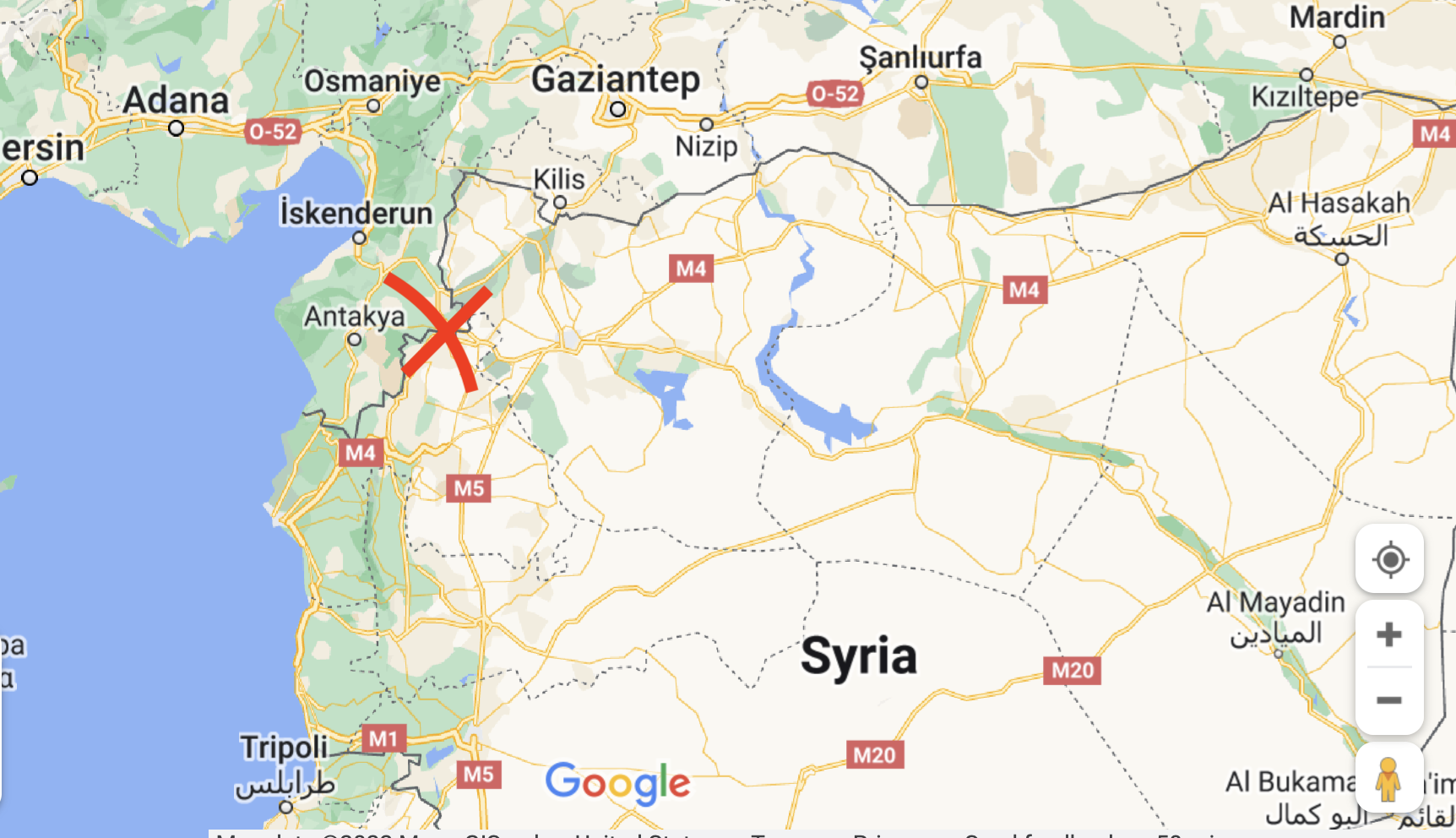
Area of Antioch in Modern Syria.

Monday, 12 December 2022

Now in the church that was at Antioch there were certain prophets and teachers: Barnabas, Simeon who was called Niger, Lucius of Cyrene, Manaen who had been brought up with Herod the tetrarch, and Saul. Acts 13:1

Note: You can listen to today’s commentary courtesy of our friends at “Bible in Ten” podcast. (Click Here to listen).

You can also read this commentary, with music, courtesy of our friends at “Discern the Bible” on YouTube. (Click Here to listen), or at Rumble (Click Here to listen).

The previous verse ended Chapter 12 with Barnabas and Saul returning from Jerusalem and having taken along John Mark. With that, it now says, “Now in the church that was at Antioch.”

This is where Barnabas and Saul had been sent from, and it is where they had now returned to. The detail provided here is setting up the narrative in a way that will henceforth highlight the ministry of Paul. To do that, there must be a separation of him from the main body to highlight what he will do. That begins to come about with the words that in Antioch “there were certain prophets and teachers.”

The words here indicate two classes. It may be that some prophets were also teachers, but they are two distinct offices. Paul notes this in 1 Corinthians 12 in a list there –

“Now you are the body of Christ, and members individually. 28 And God has appointed these in the church: first apostles, second prophets, third teachers, after that miracles, then gifts of healings, helps, administrations, varieties of tongues. 29 Are all apostles? Are all prophets? Are all teachers? Are all workers of miracles? 30 Do all have gifts of healings? Do all speak with tongues? Do all interpret? 31 But earnestly desire the best gifts. And yet I show you a more excellent way.” 1 Corinthians 12:27-31

Of these two offices now noted in Acts, the individuals named are:

Barnabas. This is Barnabas who has already been seen several times and who traveled to Jerusalem with Saul and then returned with him.

Simeon who was called Niger. The name Niger is Latin, and it means “Black.” He is only mentioned here in Scripture, and it can be inferred that he was especially dark-skinned. The designation was probably given to him so that he would be distinguished from other people named Simeon. Being dark may mean that he had an African heritage, or it could simply be he was dark-skinned because of working outdoors as was the case with the Shulamite in the Song of Solomon –

“I am dark, but lovely,
O daughters of Jerusalem,
Like the tents of Kedar,
Like the curtains of Solomon.
Do not look upon me, because I am dark,
Because the sun has tanned me.
My mother’s sons were angry with me;
They made me the keeper of the vineyards,
But my own vineyard I have not kept.” Song of Solomon 1:5, 6

Lucius of Cyrene. Of this person, Vincent’s Word Studies states –

“Attempts have been made to identify him with Luke the evangelist; but the name Lucas is an abbreviation of Lucanus, and not of Lucius. It is worth noting, however, that, according to Herodotus (iii., 131), the physicians of Cyrene had the reputation of being the second best in Greece, those of Crotona being the best; and that Galen the physician says that Lucius was before him a distinguished physician in Tarsus of Cilicia. From this it has been conjectured that Luke was born and instructed in medicine in Cyrene, and left that place for Tarsus, where he made Paul’s acquaintance, and was, perhaps, converted by him (Dr. Howard Crosby, “The New Testament, Old and New Version”). But, apart from the form of the name (see above), the mention of the evangelist’s name here is not in accord with his usual practice, since he nowhere mentions his own name, either in the Gospel or in the Acts; and if the present passage were an exception, we should have expected to find his name last in the list of the worthies of Antioch. Of the five here named, four are known to be Jews; and therefore, probably, Lucius was also a Jew from Cyrene, where Jews are known to have abounded. Luke the evangelist, on the contrary, was a Gentile. Nothing certain can be inferred from Romans 16:21, where Lucius is enumerated by Paul among his kinsmen. If συγγενεῖς, kinsmen, means here, as is claimed by some, countrymen, it would prove Lucius to be a Jew; but the word is commonly used of relatives in the New Testament. In Romans 9:3, Paul applies the term to his fellow-countrymen, ‘my brethren, my kinsmen according to the flesh, who are Israelites.’”

There are other reasons for not accepting this person as being Luke. First, there are various “we” sections in Acts, meaning that the author is personally including himself in the narrative. The first such section begins in Acts 16:10. Such is not the case now in Acts 13. Second, and again, it has not been perfectly determined if Gentiles are even included in the church at Antioch at this point. And third, there is no note of Luke being either a teacher or a prophet elsewhere. He is noted as a doctor (physician), however, in Colossians 4:14. There, it says, “Luke the beloved physician and Demas greet you.”

Manaen. Of him, it says, “who had been brought up with Herod the tetrarch.” The word translated as “who had been brought up” is suntrophos. It is rendered by some as “foster-brother.” Others say, “close friend,” “member of the court,” “comrade,” and so on. The word comes from two roots signifying “together” and “nurse.” Hence, he is a fellow nursling. As such, it can mean either a foster brother or something similar, such as being brought up in the same court.

Saul. This is Saul of Tarsus who will soon be almost exclusively known by his given name, Paul.

Life application: It is important to know the details of what is going on in the Bible. Seemingly small and irrelevant details, such as Luke being a Gentile, can make a large difference in the minds of those who read and teach the word.

For example, it has been argued that Luke must be a Jew because of what it says in Romans 3:2 where Paul notes that it is to the Jews that “were committed the oracles of God.”

This is what is known as a category mistake. Luke and Acts were not yet a part of the canon of Scripture. Paul was speaking of the Old Testament which pointed to Christ. It further means that they were entrusted with these oracles, not necessarily that they had all been written by Jews. Job was a Gentile, and he may (we do not know) have been the author of his book.

Regardless of Job, the New Testament is not the Old, and Paul’s words do not apply to what is being referred to in Romans 3:2. And yet, despite Paul’s clear and obvious words here, people will still make up false analyses concerning Luke to justify their presuppositions. This is a very bad way of handling the word of God.

Paul mentioned various Jews in Colossians 4 (above), noting that they were the only ones of the circumcision, or Jews, who were with him. One plus one will always equal two. In the case of Luke, because he was not a Jew, he was – by default – a Gentile. In ignoring this, a faulty sense of what God has done and is doing in the Bible will result. As such, we must hold close to the word, never abusing what it conveys because of a sense of pride or arrogance concerning something like “only the Jews brought us the word of God.”

If the Bible teaches that Luke was a Gentile, which it does, but you are stuck with a presupposition that he was a Jew (or a proselyte to Judaism), get over it. Luke was a Gentile.

Lord God, help us to accept what Your word teaches, and then to be obedient to it. It is too precious to be trifled with because we don’t agree with it in our own minds. Who are we to argue against what You have done. Help us to accept it as You have given it to us so that our doctrine will be pure. Amen.


Acts 12:25

Sunday, 11 December 2022

And Barnabas and Saul returned from Jerusalem when they had fulfilled their ministry, and they also took with them John whose surname was Mark. Acts 12:25

Note: You can listen to today’s commentary courtesy of our friends at “Bible in Ten” podcast. (Click Here to listen).

You can also read this commentary, with music, courtesy of our friends at “Discern the Bible” on YouTube. (Click Here to listen), or at Rumble (Click Here to listen).

The previous verse noted the growth and multiplication of the word of God. Now we come to the final verse of Chapter 12, beginning with, “And Barnabas and Saul.”

Despite Barnabas being mentioned first, the focus of the book of Acts, from this verse forward, will be the ministry of Saul (Paul). Obviously, the content is given to reveal the workings of Jesus and the Holy Spirit in the further growth and multiplication of the church, but Paul will be the main instrument of focus till the end of the book. Noting him now is a way of reminding our thoughts of his inclusion in the narrative and preparing our minds for the details that lie ahead concerning his ministry.

The last mention of Barnabas and Saul was in verse 11:21 (also the last verse of that chapter) –

“Then the disciples, each according to his ability, determined to send relief to the brethren dwelling in Judea. 30 This they also did, and sent it to the elders by the hands of Barnabas and Saul.” Acts 11:29, 30

Of these two, it now says they “returned from Jerusalem.” With these words, one can see that the contents of verses 12:1-24 were an insert into the narrative that is not necessarily chronological but rather categorical. It was given to show various aspects of what occurred, especially related to Peter. With that now complete, the narrative returns to its mainstream of thought where Saul (Paul) will become the main focus (as noted above) and Peter will no longer be the focus. He will appear for a few words in Acts 15, but that is it.

This is clearly showing that the move is away from focusing on Israel and the Jewish people and is going to be more and more towards the nations and among the Gentiles. A careful noting of all that Paul does during these chapters will show that almost everything said and done by Peter will be repeated by Paul. This was highlighted in the introduction to Acts and it will now become more and more evident as the narrative continues.

As for Barnabas and Saul, it next notes, “when they had fulfilled their ministry.” This is referring to the citation from Acts 11 above. They were chosen to deliver relief to those in Judea. That task is now complete and so they are returning from Judea to Antioch, as can be deduced from the first verses of the next chapter. Of them, it says, “and they also took with them John whose surname was Mark.”

Rather, the verb is an aorist participle. It rightly reads, “having taken with them John whose surname was Mark.” This is the same person mentioned in Acts 12:12 who was a cousin to Barnabas. See the notes on that verse to get a fuller picture of him. Of this note concerning Mark, Charles Ellicott says –

“The choice is, of course, partly explained by his relationship to Barnabas, but it shows also that he entered heartily into the work of the conversion of the Gentiles; and owing, as he did, his own conversion to Peter, it would naturally be regarded as a proof of that Apostle’s interest in it.”

Ellicot’s thoughts are, quite possibly, the opposite of the truth. As was noted in an earlier commentary, there is not substantial proof that the Gentiles at Antioch had been evangelized. Various source texts disagree on whether it was Greek-speaking Jews or Gentiles. In the Acts narrative, Peter has seen the conversion of the house of Cornelius. Other than that, and the noting of the conversion of the Ethiopian eunuch, the focus has been almost solely on the conversion of the Jews.

However, once the missionary trip of Barnabas and Saul gets started, a few key verses must be considered –

“So, being sent out by the Holy Spirit, they went down to Seleucia, and from there they sailed to Cyprus. And when they arrived in Salamis, they preached the word of God in the synagogues of the Jews. They also had John as their assistant.” Acts 13:4, 5

“Now when Paul and his party set sail from Paphos, they came to Perga in Pamphylia; and John, departing from them, returned to Jerusalem.” Acts 13:13

“Then Paul and Barnabas grew bold and said, ‘It was necessary that the word of God should be spoken to you first; but since you reject it, and judge yourselves unworthy of everlasting life, behold, we turn to the Gentiles.’” Acts 13:46

“Now Barnabas was determined to take with them John called Mark. 38 But Paul insisted that they should not take with them the one who had departed from them in Pamphylia and had not gone with them to the work.” Acts 15:37, 38

John Mark will be taken on the mission trip that Barnabas and Saul went on. It will first note that this team “preached the word of God in the synagogues of the Jews.” Immediately after that, it will detail the conversion of a Gentile man named Sergius Paulus.

It is unknown why John Mark departed. It simply says that he “had not gone with them to the work.” It can be speculated on all day why this was so, but the noting of his departure came directly after the conversion of the Gentile Sergius Paulus. As such, it may be that John Mark found this inappropriate and rebelled against any further evangelism. For now, the main thought is that the narrative has finally turned more specifically to the coming ministry of Saul who is Paul.

Life application: As you read the Bible, it is often the case that an introduction or a seeming side note in the narrative will be made that seems out of place. But shortly that detail becomes the main focus of the narrative. A good example of this is found at the very end of Genesis 22 in verses 22:20-24.

Something that seems completely irrelevant to the narrative that precedes it is introduced. From there, the main narrative continues in Genesis 23. But then in Genesis 24, one name of the listing at the end of Genesis 22 suddenly comes into focus – Rebekah. The narrative of her then fills Genesis 24.

As you read the Bible, make mental notes of these seemingly unrelated verses. In considering them, you will often be given great treasure to consider later in the narrative. There could even be information early in the Old Testament that waits until the New Testament to be revealed, but when it is seen, it gives us the sure understanding that the Bible has a single overall Author, even if it has come through many men of God.

Pay heed and rejoice in the wonderful words that are given. It all serves a great purpose for us to consider.

Heavenly Father, thank You for this marvelous word You have given us. It is so precise and detailed, and it fills us with excitement with each turn of the page. There are mysteries to be uncovered and details to be revealed if we just think about them as we continue through the narrative. Yes, Lord, thank You for this precious word. Amen.


Acts 12:24

Guess who? Hint, famous in Vermont.

Saturday, 10 December 2022

But the word of God grew and multiplied. Acts 12:24

Note: You can listen to today’s commentary courtesy of our friends at “Bible in Ten” podcast. (Click Here to listen).

You can also read this commentary, with music, courtesy of our friends at “Discern the Bible” on YouTube. (Click Here to listen), or at Rumble (Click Here to listen).

The words of this verse are set in total contrast to the events of the previous verses –

  • Herod the king looked flashy and spoke to the people from an elevated seat. When he did, the people kept shouting, “The voice of a god and not of a man!” With that, he was struck by an angel of the Lord because he didn’t give glory to God and he died, having been eaten by worms.
  • While the word of God may not seem flashy to the masses, it speaks to us from the highest heaven. It is the voice of God in written form. When we cherish it and apply it to our lives through the reception of the gospel, we ascribe glory to God. We affirm its sacred contents. In this, we find life. We go from being corruptible to incorruptible.

With that noted, the words now begin with, “But the word of God grew.” The verb is imperfect. It grew and continued to grow. The sense of the word is that of growing like a plant or a child. Essentially, it conveys the idea of becoming greater in size. While Herod’s “voice of a god and not a man” ceased forever, the word of the true God increased in its reach. Further, Luke says it also “multiplied.”

The verb is also imperfect, it multiplied and continued to multiply. The word signifies growth in number. Not only did the word continue to grow up, but it grew out. While Herod lay in the ground, turning back to the dust from which he came, the word of the true God expanded to soul after soul, bringing them to spiritual life and vigor.

It should be remembered that Herod was the one who put James to death. He was also set to put Peter to death. Instead, God made James and Peter alive in Christ. James’ physical death is a temporary impediment to his walk with the Lord. Herod’s physical death is a permanent one. And while the blood of James helped expand the growth and multiplication of the word of God to others, the death of Herod brought a swift and decisive end to the cult of the word of Herod.

Life application: On several occasions, Paul writes about the insignificant state of man. We tend to think more highly of ourselves than we ought to. Heeding Paul’s words will help us realign this incorrect thinking –

“For I say, through the grace given to me, to everyone who is among you, not to think of himself more highly than he ought to think, but to think soberly, as God has dealt to each one a measure of faith.” Romans 12:3

“And if anyone thinks that he knows anything, he knows nothing yet as he ought to know.” 1 Corinthians 8:2

“For if anyone thinks himself to be something, when he is nothing, he deceives himself.” Galatians 6:3

Obviously, these and other such verses have a context that must be maintained, but the main intent of each is that of considering ourselves in the proper light. God is God. We are created. Whatever we are, whatever capabilities we have, whatever traits we possess, and so on, all these things came from God. As this is so, we should glorify God with who we are and not allow our minds to become puffed up like Herod. With such an attitude, catastrophe is the certain result.

Glorious God, thank You for who we are. You have created each of us to be unique and precious. And yet, what we possess is only because You have allowed it to be so. And so, as we are grateful for the lives we live, may we use them to bring glory to You. Help us to never be tempted with self-exaltation, but to walk humbly before You all our days. Amen.