The Sovereignty of God
Calvinism, or “Something Else?”
Read Isaiah 44:9-23. The week I typed this particular sermon, I also typed up the week’s prophecy update. As you know, at the end of the prophecy update – which is often a bit of a downer in its contents – I add in one or two ironic things that have happened in the recent past. I do this to end on a fun note rather than on something that might be depressing or maddening. The two ironies for the week were –
1) On a Tiny Island that Bans Guns, the Only Prosecutor is Shot Dead, and 2) ‘Lucky’ Buddhist Statue Topples Over and Crushes Religious Leader as It Is Unveiled in Thailand.
It’s hard to imagine two better lead-ins into the subject of the sovereignty of God. The first example is because as soon as there is a tragedy in our lives, the preeminent question which arises in our minds is, “Where is God in this?”
We may ask, “How could God allow this to happen?” We may ask, “Wasn’t God big enough to stop this?” A hundred variations of this line of thought will come to mind, or they may even be spoken aloud as we implicitly accuse God of not being in control.
The second example could follow suit, at least for the friends and family of the monk who got scrunched. But would they have a right to ask this? They lost someone who was crushed by a concrete image of Buddha that fell over.
We could stop right there and ask a few logical questions. “Where did the concrete come from?” “Is concrete used for other things?” “Do we pray to or petition our concrete house?” “Do we pray to or petition the sidewalk?” What is it that makes the lucky (or in this case – not so lucky) Buddha different than a concrete urinal in the public restroom?
Text Verse: “Little children, keep yourselves from idols. Amen.” 1 John 5:21
What is it that we are worshiping when we fall down before, and pray to, lucky Buddha? It is the work of our own hands. It is the imaginations of our own mind. It is almost a form of man worship, because we are giving our devotion to something man has made.
But isn’t that the same as questioning why God allows the death of someone close to us? Is God required to serve our happiness? Is this the point of the Creator’s existence – to serve His creation and make sure that it remains happy, content, and free from calamity? Or, in this, have we not fashioned a god in our own minds rather than allowing God to be God.
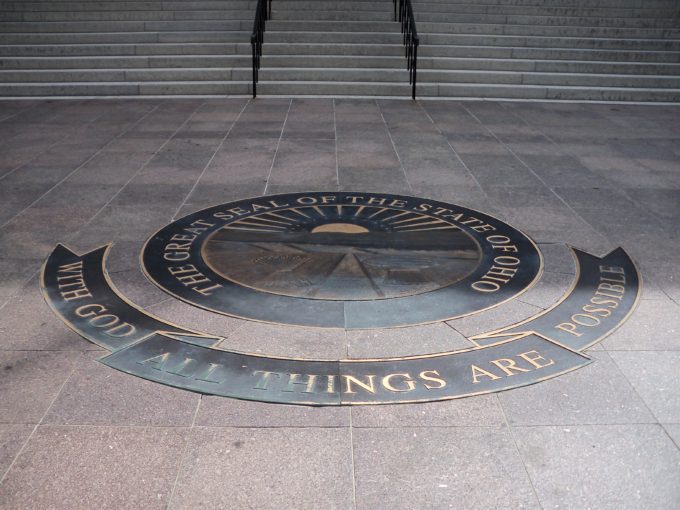
God is sovereign. He is sovereign over His creation, He is sovereign over how He allows access to Himself, He is sovereign over suffering, He is sovereign over all things. There is no thing which is outside of His knowledge, ability, or presence. Nothing happens apart from Him. He is omniscient, He is omnipotent, and He is omnipresent.
Therefore, He is sovereign. And the sovereignty of God means that whatever happens has been allowed by Him. We may question why something happens, and we may question how it fits into His plan, but we may not – ever – impute an implied state of incompetence or wrongdoing to God in the process of our questioning.
Such truths are to be found in His superior word. And so, let’s contemplate that precious word once again. And, may God speak to us through His word today, and may His glorious name ever be praised.
I. Free to Will, or Not Free to Will
Most Christians will acknowledge the sovereignty of God. Even if we don’t think about it much, we take it as an axiom that God is in full control and that He is fully capable of working things out as they should be.
The questions that arise from us, such as “Why did God allow this to happen?”, show a weakness in our understanding, and that usually comes from not being properly trained in the ways of God. But even if we get it. Even if we understand that God is in complete control, we still may not understand what that means in regard to the things we do.
It would be impossible, even in a hundred sermons, to define everything about the sovereignty of God, but one of the greatest questions of all, and one of the greatest doubts of all – even by some of the finest theologians in Christian history – comes down to the question of free will. Does man have free will? If so, how far does that free will go? Does it extend to doing good? Does it extend to salvation? Or, does man actually not have free will at all?
One thing that is evident and clear – even without the Bible – is that God knows the future. But the Bible does proclaim it as well –
“Behold, the former things have come to pass,
And new things I declare;
Before they spring forth I tell you of them.” Isaiah 42:9
He created all things in a single moment. Relativity proved this. Time, space, and matter all came into existence at the same time. None of the three can exist without the other two. They are all dependent on the existence of the others.
But they could not have created themselves. If they did, then there would have been the existence of each of them before they existed, meaning all three would have existed already – a logical contradiction. Therefore, there is a Being which brought them into existence who is not a part of them. The Bible says this is God, who is also the deity of the Lord Jesus –
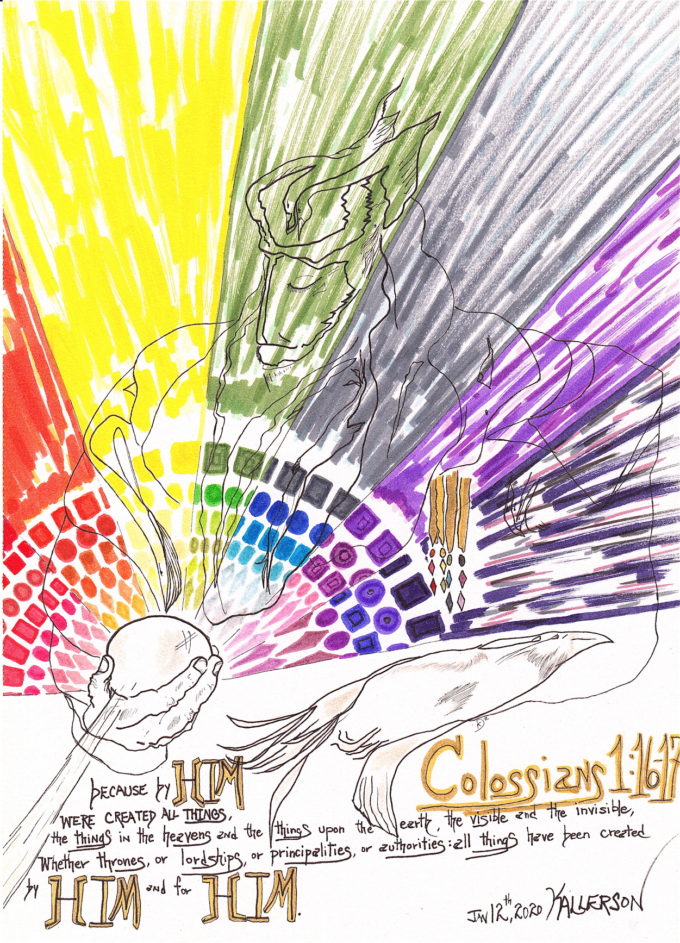
“because by him were created all things, the things in the heavens and the things upon the earth, the visible and the invisible, whether thrones, or lordships, or principalities, or authorities: all things have been created by him and for him.
17 And *he* is before all, and all things subsist together by him.” Colossians 1:16, 17 (Darby)
God has no matter; He is not bound by time; and He is not limited in space. Because of this, His being – for the lack of a better word – is above all matter. This means above in power, in presence, and in how it subsists.
In other words, when we look at the vastness of the known universe, and in all of the power displayed there, He is – right now and for all time – in control of it.
We may see a tremendous storm and think, “What a display of God’s power.” We may see the enormity of a volcano and tremble at the destruction which flows from it. Or, we may look to the nuclear weapons we have created and think, “What an awesome display.” The mechanics of a small bit of plutonium and a few other elements combine to create such power. And from that, we can think about how God was the One who set that power into those things.
But consider this, all of the power and energy that man has ever seen on this earth, or that he will ever see on this earth, doesn’t compare to a millionth of a second of the power released in the rest of the universe.
That is the matter. But there is also space. With our telescopes – of various kinds and which peer into assorted diverse places of the universe – we have an idea of the size of what we call “the known universe.”
The implication is that there is still “the unknown universe.” But, of the known universe alone, which stretches out, as they say, 93.016 billion light-years, not one micrometer is outside of the presence of God.
If we were to travel on one of our space shuttles, which can move at 5 miles per second, it would take about 37,200 years to go one light-year. Multiply that times 93 billion light-years. And now consider that in three dimensions. We may ask, “Where is God in this?” during a catastrophe, but the answer comes right back, “He is here, and He is everywhere else – right now.”
That is the matter, and that is the space. But there is also time – the third element which necessarily came into existence with the other two. It is often said that before God created time, He lived in the eternal state.
The word “eternal” has two general meanings. The first is a condition where there is no beginning or end. The second is that which lasts forever. The first is the one used to describe the state God is in. The universe had a beginning, but God was there before that. It is He who did the beginning, putting it all together. That is found at various times in Scripture, such as –
“Before the mountains were brought forth,
Or ever You had formed the earth and the world,
Even from everlasting to everlasting, You are God.” Psalm 90:2
As this is so, He is before time, and He is outside of time. Thus, logically, like being in all places at one time, and like having all power of all of the universe at all times, He also fills all time at all times. His being is present with Adam right now, and His being is hovering over the cross of Calvary – right now. His being is with Jacob as he agonizes over the loss of his beloved son Joseph, and His being is on the road which Paul is taking to Damascus in order to persecute Christians in that city.
His being is here in this church, and His being is there at the rapture – and indeed He is present at all times which is throughout all of time that ever has existed or ever will exist – right now.
He is everywhere, He is at all times, and He possesses all the power contained within the two. And, further, He is not limited to these things; He transcends them. This is the Creator; this is God. This is the One who revealed Himself to Moses in the burning bush of Sinai –
“And God said to Moses, I AM THAT I AM. And he said, Thus shalt thou say unto the children of Israel: I AM hath sent me unto you.” Exodus 3:14 (Darby)
As these things are true of God, they establish the baseline of God’s sovereignty and control in, and over, the universe. In all things – nothing excepted – God is aware of and allows all things to occur, which, in fact, occur.
Anything which does not fit His plans for what occurs will not occur. All that He determined to occur will come to pass. He can cause or prevent anything in order for what He wills to come about. However, those things which do occur, which are morally opposed to His nature, and yet which have come about, have been allowed by Him, though not directly caused by Him.
Some, when contemplating that God is sovereign and that He knows the end from the beginning, cannot accept the idea of free will in man. To them, if God knows the end from the beginning, it must – by its very nature – negate free will in man.
If God already knows what we will do, and if God has already determined how all things will come out, then they would say that we cannot be truly free moral beings. There is real fault in that thinking, from several perspectives.
First, God calls certain things “evil.” There is evil that God abhors. Further, man is capable of committing evil. Therefore, to say that man lacks free will is to then say that God determined the evil, which he abhors. That is a logical contradiction. There are many examples of this in Scripture, but one example will suffice –
“Now Israel remained in Acacia Grove, and the people began to commit harlotry with the women of Moab. 2 They invited the people to the sacrifices of their gods, and the people ate and bowed down to their gods. 3 So Israel was joined to Baal of Peor, and the anger of the Lord was aroused against Israel.” Numbers 25:1-3
These people willfully bowed to a god which is not God. God did not force them to do so, but He also could have forced them to not do so. Therefore, there is an allowance by God of things which stand opposed to His own moral nature.
But, does the fact that there is evil then mean that God is not in control? Not at all. To understand the problem of evil – how it came about, and what it means in relation to God’s plan – you can go back and watch several of the early Genesis sermons, especially the sermon called “Who is the Liar.”
Suffice it to say that evil exists, that God – although the ultimate Cause of all things – does not actively cause evil, and that logically man, therefore, possesses free will. God indirectly controls all things, but He does not directly cause all things to occur.
This, then, is the exterior limits of God’s sovereignty over His creation. Man’s free will, and man’s accountability as to how he exercises his free will is that limit. We can do things which are contrary to God’s nature, and He allows this within His own personal control of creation.
Just because God knows something will happen, it does not mean that free will does not exist. What it means that God’s knowledge, and His plan using that knowledge, has factored in man’s free will.
Though the term “free will” is not explicitly stated in Scripture, the concept is. One does not need to have specific words stated in order to have a concept explicitly stated in another way. In other words, the term “original sin” is not found in Scripture, but it is taught implicitly, and it is stated in another form explicitly. So is free will, explicitly, such as in Deuteronomy 30:15-20 –
“See, I have set before you today life and good, death and evil, 16 in that I command you today to love the Lord your God, to walk in His ways, and to keep His commandments, His statutes, and His judgments, that you may live and multiply; and the Lord your God will bless you in the land which you go to possess. 17 But if your heart turns away so that you do not hear, and are drawn away, and worship other gods and serve them, 18 I announce to you today that you shall surely perish; you shall not prolong your days in the land which you cross over the Jordan to go in and possess. 19 I call heaven and earth as witnesses today against you, that I have set before you life and death, blessing and cursing; therefore choose life, that both you and your descendants may live; 20 that you may love the Lord your God, that you may obey His voice, and that you may cling to Him, for He is your life and the length of your days; and that you may dwell in the land which the Lord swore to your fathers, to Abraham, Isaac, and Jacob, to give them.”
This precept is found, maybe in its most profound sense, in the words of Jeremiah the prophet. Moses could have said to Israel, “You are commanded today to be observant to the Lord your God.” But even that implies free will, because a command is – by default – something that can be disobeyed.
However, a burden was laid upon Jeremiah by the Lord. It is one he strove to cast off – implying free will to do so. And yet, the Lord overrode his ability to do so. Thus, His allowance of certain things only extends so far –
“Then I said, ‘I will not make mention of Him,
Nor speak anymore in His name.’
But His word was in my heart like a burning fire
Shut up in my bones;
I was weary of holding it back,
And I could not.” Jeremiah 20:9
The very fact that Jeremiah willed to withhold the name of the Lord and the word of the Lord, but that he could not, proves that he had free will, but it also proves that he was not free to will. So it is with each and every one of us. But how far does what God desires to occur mean that God will override what could occur. It is an interesting question that is answered within Scripture. For example, 2 Peter 3:9 says –
“The Lord is not slack concerning His promise, as some count slackness, but is longsuffering toward us, not willing that any should perish but that all should come to repentance.”
The Lord is not willing that any should perish. But, in countless other places, the same Greek word is used to show that, in fact, many will perish, such as by the hand of Paul in 2 Thessalonians –
“The coming of the lawless one is according to the working of Satan, with all power, signs, and lying wonders, 10 and with all unrighteous deception among those who perish, because they did not receive the love of the truth, that they might be saved.” 2 Thessalonians 2:9, 10
Therefore, though it is God’s will that all will be saved and that none should perish, there must be a limiting factor placed on what God desires, because those He desires to not perish will, in fact, perish.
One of the premises of the Bible is that God is building a church, out of living human beings. Jesus alluded to it in Matthew 16, Paul confirms it and explains it in 1 Corinthians 3:9 – “For we are God’s fellow workers; you are God’s field, you are God’s building.”
Peter speaks of it then in 1 Peter 2:7 saying, “you also, as living stones, are being built up a spiritual house, a holy priesthood, to offer up spiritual sacrifices acceptable to God through Jesus Christ.” From there, both Paul and Peter say that Christ is the Cornerstone of this building. There is one building, and one Cornerstone of those who are not set to perish.
But one of the limitations of that building is that it will only be built out of those who have faith in Christ, believing His gospel message.
God has set the parameters, one of which is faith. But not merely any faith will do. Rather, a properly directed faith is necessary. It takes real faith to walk into a shopping mall, pull a cord, and blow yourself up in order to destroy others in the process.
There is real faith in the person that what he has been told is true – paradise awaits, along with a bunch of perpetual virgins. The problem with that is not a lack of faith, but it is misdirected faith. And, misdirected faith is, unfortunately, wasted faith.
Using the same word for “perish” that both Paul and Peter did above in regard to those who perish and those who God wills not to perish, Jesus our Lord – Jesus the Lord – says this –
“For God so loved the world that He gave His only begotten Son, that whoever believes in Him should not perish but have everlasting life. 17 For God did not send His Son into the world to condemn the world, but that the world through Him might be saved.” John 3:16, 17
God is willing that none should perish, but some – in fact – do perish. And the limiting factor that one should not perish is faith. But it is not any faith. It is faith in Christ Jesus.
Despite the sovereignty of God, He does not force faith. Instead, He allows man the choice. But the fact that some perish does not mean God is not sovereign.
Just because God does not actively cause and direct all things, people assume that He is not sovereign. “Why couldn’t God keep my husband from dying?” But if God must do everything that He can do, and everything that He wills to do, then all things would be done, and there would be nothing to do.
But God has put limitations on Himself in order for things to come about in a way where we can participate in His creation. Along with those limitations, He has set parameters, and He has given guidelines. Some of those are known to us. They are recorded in nature and they are recorded in His word. An example of this is found in Romans 10 –
How then shall they call on Him in whom they have not believed? And how shall they believe in Him of whom they have not heard? And how shall they hear without a preacher? 15 And how shall they preach unless they are sent? As it is written:
“How beautiful are the feet of those who preach the gospel of peace,
Who bring glad tidings of good things!”
16 But they have not all obeyed the gospel. For Isaiah says, “Lord, who has believed our report?” 17 So then faith comes by hearing, and hearing by the word of God. Romans 10:14-17
God has set limitations on Himself as to how the message to keep those He wills to not perish can do so. One of them is that He has given us the word of God. And within that limitation, he has set the parameters. There must be someone who will proclaim that message.
But there are then other implied parameters. Because a person is limited by time, by movement, by funding, and so on. A person cannot simply stand on a mountain, shout out the gospel, and then expect everyone to hear it.
And so, there are set natural and written parameters which must be adhered to. And yet, these are limited by guidelines. As we saw, faith is how the message moves one from “perish” to “not perish.” And that faith must be proper faith for this to occur.
But some might then say that this dispels the idea of God’s sovereignty. Rather, it upholds it. If there is a message of restoration with God, and if that message is exclusive of all but one avenue, and if that avenue has defined parameters and guidelines which come from God, then it means that God is sovereign over the very process which He at first seems to be incompetent in controlling.
What this tells us, is that God has put a burden on us if we care about what He desires. His will, including His will that none should perish, is actually tied up in our will in regard to that same precept. If our will says, “I don’t care that some are perishing, then He has allowed our will to override what He wills.”
This is certain because Paul says that the message which has been given must go through us. And further, that the one who carries that message cannot do so unless he is sent. And so, as you sit here, unwilling to assist those who desire to go forth to share the gospel, your uncaring will is, at least in part, the cause of God’s willingness that none should perish to not come about. How does that move you? Or does it just not matter to you?
One problem with man’s view of God’s sovereignty is that man places far too high of a view and value on himself, or on the things he possesses or loves than the Bible actually reveals concerning how God views those things.
The Bible says that the earth is the Lord’s and everything in it. As God (as we have already seen) possesses time as well as space and matter, then He possesses all things once and forever. For man to perish, it means that he perishes from the stream of time going forward. But God does not stop possessing that man at the time he existed. And, therefore, God always possesses that man.
And he may have been a good man or a bad man. But to us, a good man or a bad man is not the same as it is to God. A person to God is, by default, bad. That is the doctrine of original sin. Sin is bad; man has sin; man is bad. But we love people around us without taking that into consideration. God does not.
Those who do not have the sin problem corrected perish. From a certain point, and forever after, they are done. But, they were already done because of the sin in them. God is not out of control when someone perishes. Rather, He has controlled what was already bad by not allowing the person to continue (see Genesis 3:22-24).
The value in man is not in the state in which he arrived. It is in the state which he will become, if he comes to God through Christ. That is why Christ came. It was to allow a change in the default position from bad to good.
Therefore, God – the Person of Jesus – came into the stream of humanity in order to bring about the necessary change for man to go from “bad” to “good.” Was God under an obligation to do this? No. Could God have destroyed the entire world? Yes. Did God destroy the world once? Yes, with the exception of eight souls.
Therefore, God’s sovereignty is not in question. The goodness of man, and the usefulness of man to God is. God sovereignly allowed eight to live. God sovereignly chose Israel to bring forth Messiah. God sovereignly stepped out of His eternal realm. And God sovereignly set the parameters, based on these things, to bring man from bad to good.
He is not out of control. Rather, He is in complete control. He is allowing things to occur, despite that control, in order for the man of value, meaning the man brought from “bad” to “good” to come about.
Our arbitrary assigning the concept of “bad” and “good” to those around us is not reflective of how God assigns those same values. This is why Solomon was able to say this to us –
“When I applied my heart to know wisdom and to see the business that is done on earth, even though one sees no sleep day or night, 17 then I saw all the work of God, that a man cannot find out the work that is done under the sun. For though a man labors to discover it, yet he will not find it; moreover, though a wise man attempts to know it, he will not be able to find it.” Ecclesiastes 8:16, 17
We look at the plan of redemption, and we say, “If God is not actively redeeming all men, then He must not be in control.” But all men are bad. Therefore, that any are redeemed at all shows that God is sovereign over the entire process – both for those who are perishing, and those who are being saved.
The parameters are set, the guidelines are given, and God’s sovereignty stands. What He determines is advanced no matter which occurs. It may not be our will, but our will is not always God’s will, and His standards take priority over our fallen state, and our preferences, desires, and life choices.
However, when our will is in accord with God’s will, then there is a chance that what God is willing to happen, meaning that a particular “bad” person will become a “good” person, will happen. If not, then His will for that unchanged “bad” person, will come to pass. Both the sovereignty of God and the free will of man are on prominent display here.
“To whom then will you liken Me,
Or to whom shall I be equal?” says the Holy One
Lift up your eyes on high; look and see
Who has created these things, and who is His Son
Who brings out their host by number, from darkness to light?
He calls them all by name
This, by the greatness of His might
He will bring Himself glory and fame
Through the strength of His power
Not one is missing; all the heavenly host is accounted for
From day unto day and hour unto hour
And as the waves ceaselessly wash up on the shore
Great is God, and worthy is He of our praise
Glorious is God, from everlasting to everlasting – unto eternal days
II. God is Sovereign Over Salvation
If God is Sovereign over all things, as is clearly the case – even if He doesn’t actively work out all things – then God must be sovereign over salvation. Jonah, from the belly of the great fish, confirms this with the words, “Salvation is of the Lord.”
Man cannot save himself because he is already condemned. Jesus says that explicitly in John 3:18. As we are condemned already, then to become uncondemned must come from without ourselves, just as the default state of a computer must be changed from outside. Even if a computer was programmed to change its default settings under certain circumstances, the programming had to come from outside itself originally.
Unfortunately, because of this idea of such a dramatic change in man’s default position, and because man cannot change himself, certain aberrant doctrines have arisen over time to say that man is incapable of being changed apart from an active working of God.
Such a view proclaims that this is the only way to confirm God’s sovereignty over the salvation process. If He doesn’t actively do every step of the changing, then it somehow would then mean that He is not sovereign over what occurs.
But the fallacy of that is seen in the computer which is given instruction to change its default position. The instructions are given, and they may or may not ever occur. But if the parameters which have been placed into the computer are met, the default position changes.
There was no active participation by the programmer, and yet, he has remained sovereign over the process of change. The error of, for example, Calvinism is in perceiving how the process of change is effected in the man.
The question for man is, “As Scripture declares that man’s nature is condemned already, and also incapable of saving himself, then how is it possible for a person to choose or desire a relationship with God?” The Calvinist answer is, “He cannot. Therefore, he must be predestined by God for regeneration in order to believe and then to be saved.”
This makes the assumption that man cannot see what is good. But that is proven false both in human nature, and in Scripture. Man is not incapable of seeing that which is good, nor is he incapable of pursuing that good thing which he sees.
Further, Calvinism incorrectly uses the words of Paul to show that man cannot make a choice for salvation. Paul says in Ephesians 2 that apart from Christ we “were dead in trespasses and sins.” Calvinism says that one who is dead cannot choose life, nor can he bring about a change in himself any more than a rock could.
This is what is known as a “category mistake” – a fallacy, or an error in thinking. A category mistake is the error of assigning to something a quality or action that can properly be assigned to things only of another category.
Calvinism has taken the category of “dead in trespasses and sins,” meaning spiritually disconnected from God, and it has assigned that same category to living man, who is a rational, cognitive organism that can choose both good and evil.
Because of this, Calvinism produces a convoluted theology concerning salvation which says that 1) man is dead; 2) God regenerates man (he is born again by God); and then 3) man chooses Christ, and then – based on that choice – 4) he is saved.
From this error, the other principle points of Calvinism arise. Each based on the original error, and each therefore continuing that original error and expanding on it. Quite possibly the greatest error of this failed theological system is the doctrine of “Limited Atonement,” which says that Jesus died only for the elect, not for all people, and thus only the elect are saved.
Limited Atonement supposedly stands in opposition to another heresy known as Unlimited Atonement in the sense that Christ died for all people, and that all are, therefore, saved. But this is a second category mistake made by Calvinists. The words, Limited Atonement and Unlimited Atonement do not stand alone as the only quality which is assigned to the process of salvation.
John 3:16 says that Christ died for the world, meaning the people of the world, and that whoever – meaning anyone – believes in Him would not perish but would be granted everlasting life. This is substantially repeated elsewhere in various ways and degrees throughout the New Testament.
Therefore, the term Unlimited Atonement is appropriate, but it is only so potentially, not actually. And the term Limited Atonement is appropriate, actually – not because God has limited the atonement, but because we have limited it – either through negligence in transmitting the word to those who could be saved, or through rejection of the word presented to the individual.
God, through the giving of His Son, has granted the potential for all men to hear the word, and then for all who hear the word to be saved. But he has only granted that salvation actually to those who hear, and who then respond in accord with His word. This is perfectly seen in the words of John –
“And He Himself is the propitiation for our sins, and not for ours only but also for the whole world.” 1 John 2:2
The sacrifice of Christ is not limited to the elect except in how it is received or rejected. Election is made based upon the free-will exercise of faith in the Object of rightly directed faith, meaning the atoning sacrifice of Christ Jesus.
Understanding this, we can see that God is wholly sovereign over the process of salvation. Man fell, man is in the pit, and God must bring Him out. In this, He has developed the remedy, He has prescribed both the parameters and the guidelines, and He has limited Himself in the process.
To say that God must first regenerate the man is to say that He must make a second move in salvation, apart from the giving of His Son. This is not found in Scripture. God has made the move. He has entered into the sphere of His creation, and He now offers that to the people of the world.
Again, just because God does not actively select and regenerate the man, it does not mean that God is not sovereign over the process. The exact opposite is true. If we were the computer mentioned earlier, the default setting is already set – condemned.
But there is a program which has been included in the process which, if enabled, changes the default setting. Unlike a computer which cannot see good and bad, man has that ability (again, Genesis 3:22 says this). The fact that you are listening to this sermon – whether saved or not – testifies to this. Not that this is a good sermon, but you are freely deciding if it is or not. I hope you are not disappointed.
When you execute the appropriate command, the default setting is changed. God’s sovereignty is seen in that He has shown the way of salvation, he has effected and provided the means of salvation, and He has established the mode of salvation.
All who are to be saved will follow the path, they will hear the gospel message, and they will place faith in what they have heard. For those who do not hear, or for those who reject what they have heard, God is sovereign over that. For those who do hear and respond, God was and is sovereign over that (see John 12:32).
No part of the salvation process is out of the control of God, and the glory is given to God through the process. Though upholding what would otherwise be the sovereignty of God, the Calvinistic model does not bring glory to God because it does not follow the process of salvation as recorded in the word of God.
But on the other side of the aisle are the countless other religious expressions found in the world, both supposedly Christian and those outside of the realm of that sphere.
There is one common thread between every one of them – be it Roman Catholicism or the Hebrew Roots Movement, or Buddhism, Islam, Hinduism, and etc. That common thread is works.
For non-Christians, it is works in order to please God so that the man can be saved – whatever that salvation means to the individual. For them, it cries out, “I am my own savior, and God will accept my works as such.”
For supposed Christians, it means works in order to please God apart from what Christ has done. For them, it cries out, “God has sent the Savior, but I still must save myself.” It is a rejection of the all-sufficient work of Christ, and it is a desire to show God where His deficiencies were and what the person can do to correct those deficiencies. Both deny the sovereignty of God over the salvation process.
The sovereignty of God says that He is in complete control of all things, but that He has allowed certain things to occur apart from His direct control. This is true in creation, it is true in the daily process of our lives – either in harmony with Him or apart from Him, and it is true in the process of salvation which restores the harmony between us and Him.
Concerning God’s sovereignty in the process of salvation, it is just as necessary for God to allow man free will in his decision-making process as it is for Him to impel His will at any time and in any way that He so chooses.
This is because His word has given man the right, the duty, the privilege, and indeed the responsibility to carry this message forward. As His word is a reflection of who He is, then to effect the transmission of this message apart from man – whom He has commissioned to do so – is to interfere in His own sovereign decree over the very process which He has ordained.
And this must take into consideration that not everyone who transmits this message has the same reason for doing so. Some will do it because of their love for God. Some will do it because of their love for money. Some desire to be famous. Some might simply use the gospel as a way to travel to exotic locations. Who knows… one may simply want to marry the preacher’s daughter, and becoming a preacher is the surest way for that to happen.
Surprisingly, God has factored all of that into the transmission of His word to the people of the world. God, who is infinitely wise, and who is in complete control over all things, has done these things to bring Himself glory, and to bring restoration and fellowship to those who were once far off, but whom He has now brought near through the precious, purifying, and all-sufficient shed blood of Christ.
Closing Verse: “Some indeed preach Christ even from envy and strife, and some also from goodwill: 16 The former preach Christ from selfish ambition, not sincerely, supposing to add affliction to my chains; 17 but the latter out of love, knowing that I am appointed for the defense of the gospel. 18 What then? Only that in every way, whether in pretense or in truth, Christ is preached; and in this I rejoice, yes, and will rejoice.” Philippians 1:14-18