Acts 16:4

Wooden bridge. Virginia.

Saturday, 15 April 2023

And as they went through the cities, they delivered to them the decrees to keep, which were determined by the apostles and elders at Jerusalem. Acts 16:4

Note: You can listen to today’s commentary courtesy of our friends at “Bible in Ten” podcast. (Click Here to listen).

You can also read this commentary, with music, courtesy of our friends at “Discern the Bible” on YouTube. (Click Here to listen), or at Rumble (Click Here to listen).

In the previous verse, Timothy was taken and circumcised by Paul. With that now accomplished, the narrative continues, saying, “And as they went through the cities.”

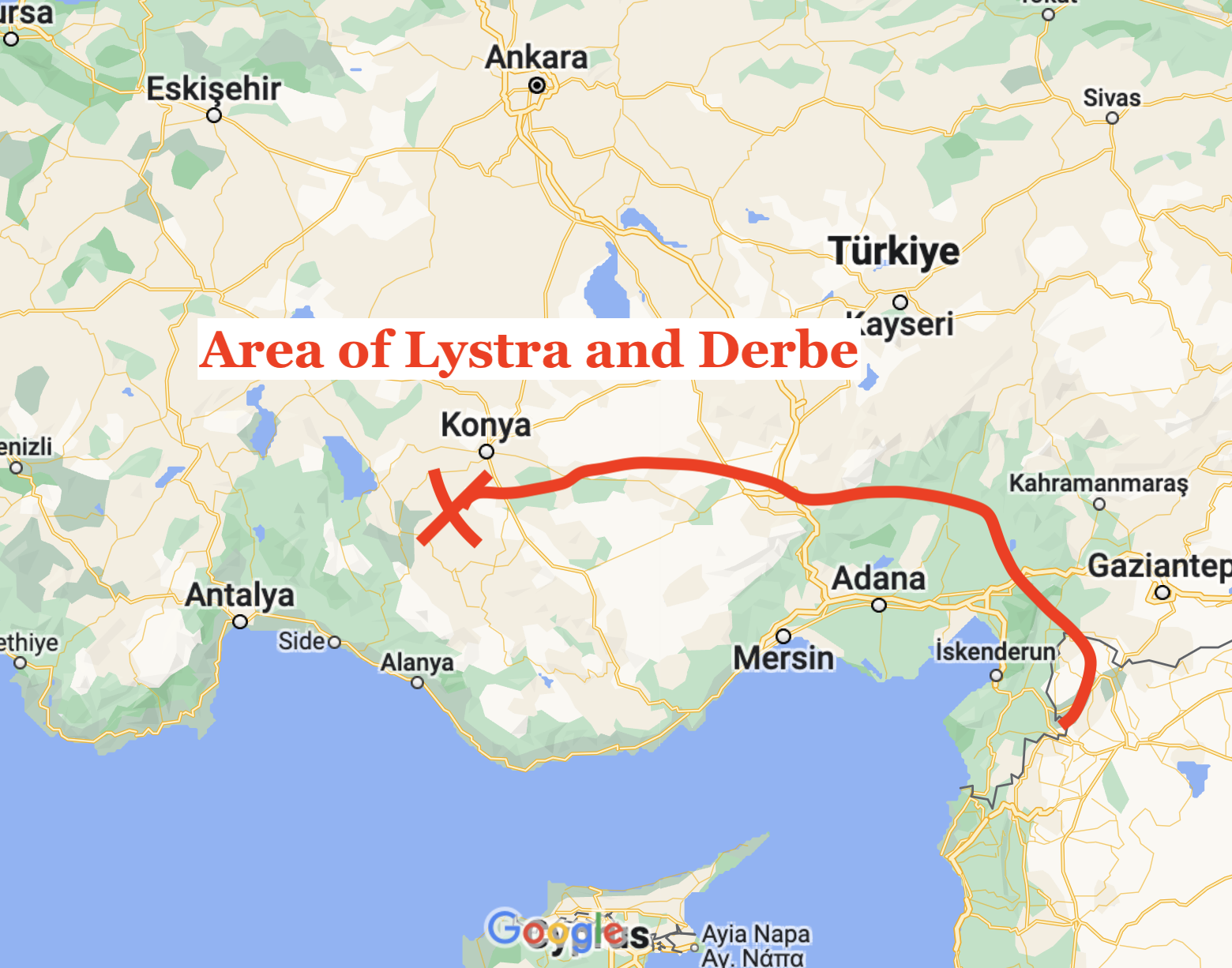
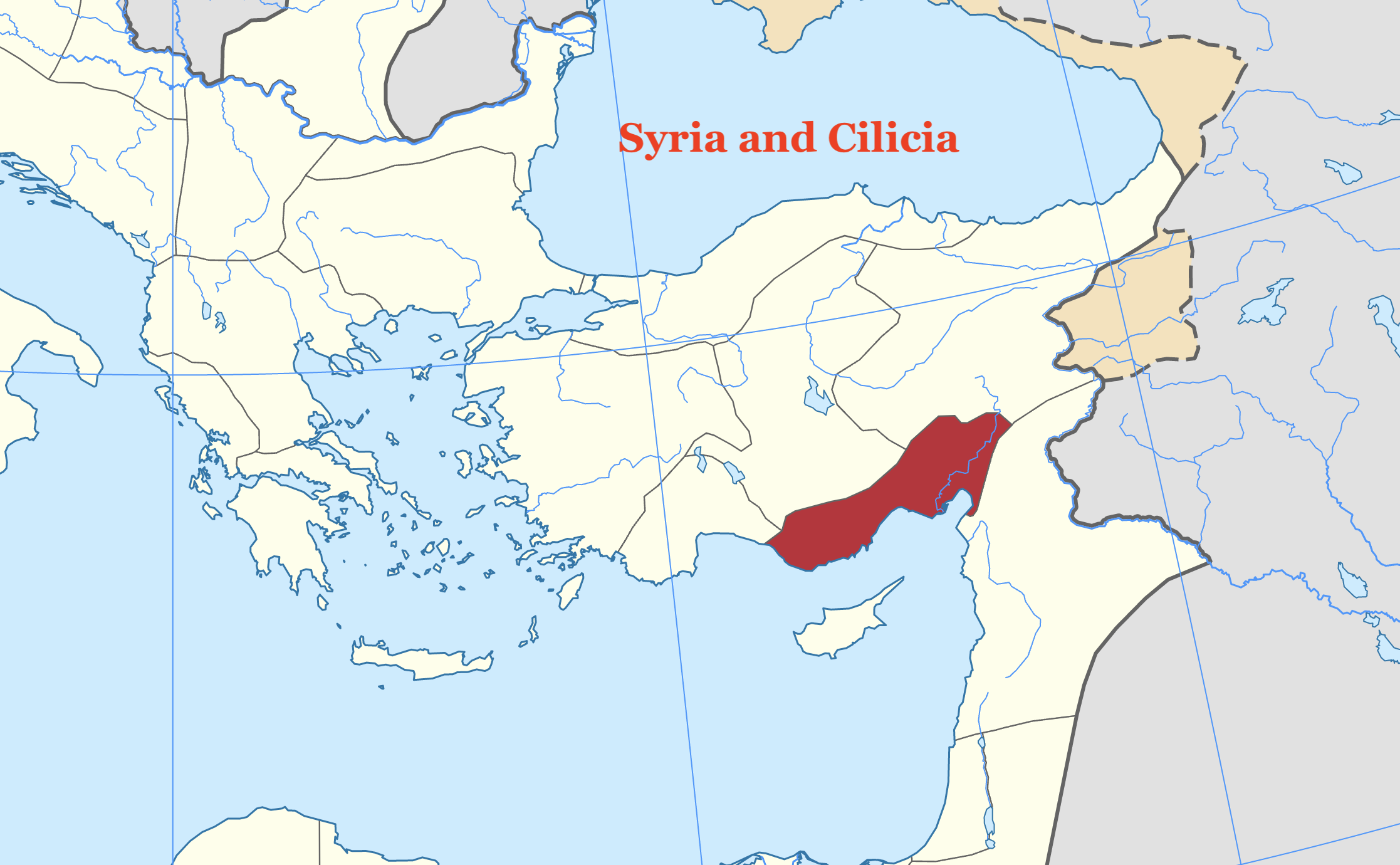
Rather, the verb is imperfect, “they were going through the cities.” There is a sense of ongoing action as the team travels from city to city. They have already been through the areas of Syria and Cilicia as was seen in Acts 15:41. They had come to Derbe and Lystra in Acts 16:1. So they are continuing on from there. Verse 16:6 will note Phrygia and the region of Galatia, so it is the general area that they are now going through.

Anywhere there was already an established church, they made sure to stop because, as it next says, “they delivered to them the decrees to keep.” Again, the verb is imperfect, saying, “they were delivering to them the decrees to keep.”

In each city where there was a church, they were careful to stop and provide the judgment that had previously been rendered. The narrative may imply that a sufficient number of certified copies of the edict had been prepared and that each church was given its own.

Even if not, the decrees were transmitted to them in a suitable manner. The word translated as “decrees” is dogma. It is now seen for only the second time, the first being in Luke 2:1. Of it, Albert Barnes states –

“It properly means a law or edict of a king or legislature. In this instance it was the decision of the council in a case submitted to it, and implied an obligation on the Christians to submit to that decision, since they had submitted the matter to them. The same principles, also, would be applicable everywhere, and the decision, therefore, at Jerusalem became conclusive.”

As for providing copies or maybe making a copy from a single original, with Silas accompanying the team, he stood as a representative of the council at Jerusalem (Acts 15:22).  And so, he could vouch for its contents “which were determined by the apostles and elders at Jerusalem.”

The council was the final human authority on such matters at this time. As such, their decision stood as a witness against any Judaizers that would come in and try to bully the Gentiles into being circumcised and observing the Law of Moses. This was necessary as is evidenced by the trouble that had come about in Antioch. It is the same trouble that Paul agonizes over in his letter to those in Galatia.

At such an early time in the church, the heresy of law observance was at the forefront of issues that were infecting the minds of believers. Personally carrying the contents of the council was, therefore, a matter of critical importance for ensuring the purity of the gospel.

Life application: There is no council of apostles and elders in Jerusalem today. When the apostles were all dead, that was the end of the authority of this body in deciding matters concerning the church. This is a clear and poignant point that tells us of the importance of Scripture for the guidance of the church.

Despite the claims of the Vatican’s “Holy See,” no set council or body has been bestowed the authority over such matters when the body of believers in Jerusalem faded away. And none is needed. The writings of the apostles were saved and compiled into the New Testament. It now stands as the sole authority for deciding matters concerning the faith.

No pope, council, conference, synod, or congregation has the right to make any ruling that does not comply with what is stated in Scripture. If a matter is raised that is not addressed in Scripture, then there is freedom to decide how to handle it. But that decision should not be considered as authoritative and binding, as if it is on the same level as Scripture.

Care must be taken to keep Scripture alone as the divinely inspired authority for matters of the faith. Anything else is to be considered as a guideline for those who meet in a church, but it is a guideline that can be changed as the situation demands. Scripture, on the other hand, cannot be.

This is an important lesson we must learn. Because there is no “council in Jerusalem,” and because God has not left the church to run willy-nilly in every direction, we can – and must – conclude that He has given us a suitable standard by which we can determine necessary matters of the faith. That standard is the Holy Bible.

Glorious God Almighty, may we carefully consider how important it is to maintain the Bible in its proper place in our lives. It is the final authority for all matters relating to our relationship with You. Help us to never trifle with its sacred contents, but to carefully consider it and obediently apply it to our lives. Amen.


Acts 16:3

Horses.

Friday, 14 April 2023

Paul wanted to have him go on with him. And he took him and circumcised him because of the Jews who were in that region, for they all knew that his father was Greek. Acts 16:3

Note: You can listen to today’s commentary courtesy of our friends at “Bible in Ten” podcast. (Click Here to listen).

You can also read this commentary, with music, courtesy of our friends at “Discern the Bible” on YouTube. (Click Here to listen), or at Rumble (Click Here to listen).

The words now continue to refer to Timothy who was introduced in Acts 16:1. Of him, it next says, “Paul wanted to have him go on with him.”

Nothing says how this came about. It could have been Paul wanting to take more people as assistants. It might be Paul recognizing Timothy’s character and ability to share the gospel. It even might be Timothy who initiated the idea, asking if he could accompany them on their journeys. The reason is less important than the fact that Paul agreed with Timothy’s character and that his presence would benefit their journey. Because of this, Luke next records, “And he took him and circumcised him.”

This seems to fly in the face of Paul’s letter to those in Galatia. In that letter, Paul completely dismisses the necessity for circumcision. He says –

“Yet not even Titus who was with me, being a Greek, was compelled to be circumcised.” Galatians 2:3

“Stand fast therefore in the liberty by which Christ has made us free, and do not be entangled again with a yoke of bondage. Indeed I, Paul, say to you that if you become circumcised, Christ will profit you nothing. And I testify again to every man who becomes circumcised that he is a debtor to keep the whole law. You have become estranged from Christ, you who attempt to be justified by law; you have fallen from grace. For we through the Spirit eagerly wait for the hope of righteousness by faith. For in Christ Jesus neither circumcision nor uncircumcision avails anything, but faith working through love.” Galatians 5:1-6

This event appears to contrast with the decision of the council recorded in Acts 15. The entire point of calling the council was because the Judaizers wanted the Gentiles to be circumcised according to Moses and to observe the law. That was rejected by the council. As these things are true, there must be a reason for the circumcision of Timothy. And sure enough, that reason is given in the next words, “because of the Jews who were in that region.”

The Jews were opposed to Paul every step of the way. Timothy being uncircumcised would only exacerbate the problems Paul faced. Timothy, and in turn Paul and those with him, would be faced with more strife and hostility than would otherwise arise because of the enmity of the Jews. The precept follows with Timothy as it was stated by Paul in 1 Corinthians 9 –

“For though I am free from all men, I have made myself a servant to all, that I might win the more; 20 and to the Jews I became as a Jew, that I might win Jews; to those who are under the law, as under the law, that I might win those who are under the law; 21 to those who are without law, as without law (not being without law toward God, but under law toward Christ), that I might win those who are without law; 22 to the weak I became as weak, that I might win the weak. I have become all things to all men, that I might by all means save some. 23 Now this I do for the gospel’s sake, that I may be partaker of it with you.” 1 Corinthians 9:19-23

Paul’s thoughts concerning the circumcision of Timothy, while leaving Titus and all other Gentiles uncircumcised, came down to the issue of Timothy’s maternal heritage. His mother being a Jewess. This would mean nothing in and of itself “for they all knew that his father was Greek.”

Timothy was not circumcised because of this. His father was a Gentile and Timothy was raised without being circumcised. And yet, he was raised knowing the Scriptures, customs, and ways of the Jews. Paul’s modus operandi was to always go to the synagogue of the Jews first. This would not have been possible for Timothy, and indeed the entire cohort, if Timothy was uncircumcised.

The whole thought comes down to, “What is the most productive way of evangelizing the people we meet?” As Charles Ellicott rightly says, “The act was spontaneous, and men may rightly concede as a favour, or as a matter of expediency, what they would be justified in resisting when demanded as a matter of necessity.”

Timothy’s Jewish mother offered him an exceptional chance to be a participant in the evangelization of the Jews. But without circumcision, that could never occur. On the other hand, Paul completely resisted the circumcision of Titus because there would be no benefit for him, for Paul, for the sake of the Jews, and most importantly, for the preaching of the gospel. In fact, it would negate the gospel. Such is not the case with Timothy. There was nothing of harm and everything to be gained from performing this expedient measure upon him.

Life application: The key point of what is seen in this verse is the furtherance of the gospel. Even today, there are males born to Jewish mothers that have not been circumcised. They have a right to perform aliyah, moving to Israel, because of their maternal heritage, but if they were not circumcised, this would be a problem.

The same would be true with that person being a believer in Christ and wanting to evangelize the Jews. This is his burning desire, but if he were not circumcised, it would immediately put up an almost impenetrable wall between him and the Jews he talked to. And so, without ever considering law observance, being circumcised would be the natural course of action to take in order to meet the Jews he was evangelizing on their own level.

The fact is that Timothy was saved already. He had not observed the law. He was admitted into the fellowship of believers. He surely participated in the Lord’s Supper. He was probably baptized upon belief (though this is not stated, it can be inferred). Therefore, his uncircumcised state has nothing (zero, zip, nada) to do with his salvation or continued salvation. That alone tells us all we need to know.

Now that he is going out into the mission field with Paul, an expedient measure is taken to help with their evangelistic efforts. It is for this, and for no other reason, that Timothy is now being circumcised. Don’t be led astray by people who use this verse (and they are out there) to “prove” you must be circumcised in order to be saved. Timothy was already saved. Nothing can be added to the fully efficacious work of Jesus Christ in making that happen – not in Timothy and not in you.

Heavenly Father, may we think clearly and rationally about our state in Christ. May we never attempt to “add” to our justification through our own works. Help us to stand on the purity of the gospel that we are saved by grace through faith in the finished, final, full, and forever work of Jesus Christ our Lord. Amen.


Acts 16:2

Barn near Montpelier.

Thursday, 13 April 2023

He was well spoken of by the brethren who were at Lystra and Iconium. Acts 16:2

Note: You can listen to today’s commentary courtesy of our friends at “Bible in Ten” podcast. (Click Here to listen).

You can also read this commentary, with music, courtesy of our friends at “Discern the Bible” on YouTube. (Click Here to listen), or at Rumble (Click Here to listen).

In the previous verse, Paul had arrived at the area of Derbe and Lystra. Upon his arrival, the words introduced Timothy. Of him, it next says, “He was well spoken of.”

This is referring to Timothy, the main subject of the previous verse, not of his father who was mentioned in reference to him, just as his mother also was. The word translated as “well spoken of,” martureó, simply means “witnessed to” or “testified of.” The idea of the witness of him being positive is understood from the context.

This positive testimony concerning him was “by the brethren.” This is something Paul will later note is required of those who serve as elders and deacons when he writes his first epistle to Timothy. For example, of deacons it says, “But let these also first be tested; then let them serve as deacons, being found blameless” (1 Timothy 3:10).

During the time of Paul’s absence from this area, Timothy had earned a positive reputation within the church. But his reputation went beyond just his own local gathering. Luke records that Timothy was positively spoken of by those “who were at Lystra and Iconium.”

Nothing is said about how this came about, but there are possibilities to consider. Timothy might have had work that took him between Lystra and Iconium. If so, he might have faithfully attended whichever church he was nearest to when they gathered.

It may also be that when questions arose within the church in one area, they may have sent to the other area to say, “What about this issue from Ruth chapter 3? What do you think this is telling us?”

In such a scenario, Timothy may have considered the matter, spoken to the church, and was then sent off by them to the other church to give his reading on the matter. This is not speculation without support. Paul says in 2 Timothy 3 –

“But you must continue in the things which you have learned and been assured of, knowing from whom you have learned them, 15 and that from childhood you have known the Holy Scriptures, which are able to make you wise for salvation through faith which is in Christ Jesus.” 2 Timothy 3: 14, 15

Timothy’s great understanding of the Scriptures may have made him a sought-out commodity in these churches as they continued to grow in the faith. Whatever the reason for the positive witness concerning him, it is obvious that Paul immediately was drawn to him in a bond that would grow from this time forward.

Life application: Timothy was well-versed in Scripture even from childhood. Because of this, he was well-grounded in his life and conduct. Scripture can have a wonderfully positive effect on us if we are just willing to read it and apply its lessons to our lives. This is true even with verses that are filled with judgment and doom, such as –

“As the thief is ashamed when he is found out,
So is the house of Israel ashamed;
They and their kings and their princes, and their priests and their prophets,
27 Saying to a tree, ‘You are my father,’
And to a stone, ‘You gave birth to me.’
For they have turned their back to Me, and not their face.
But in the time of their trouble
They will say, ‘Arise and save us.’
28 But where are your gods that you have made for yourselves?
Let them arise,
If they can save you in the time of your trouble;
For according to the number of your cities
Are your gods, O Judah.
29 Why will you plead with Me?
You all have transgressed against Me, says the Lord.
30 In vain I have chastened your children;
They received no correction.
Your sword has devoured your prophets
Like a destroying lion.” Jeremiah 2:26-30

In reading passages like this, along with its surrounding words of judgment, too many people conclude that the God of the Old Testament is an angry, judgmental God. But this is not the case. In understanding the entire context of the history of Israel, including their covenant relationship with the Lord, they will see that it is Israel, not the Lord, who is at fault. The wrath and punishment are meted out because they have violated the relationship between the two.

But understanding such things necessitates knowing all that Scripture says. From the broader view, the goodness of God, His covenant faithfulness, His holy nature, etc. are seen. This is how God is. The negative aspects of the relationship between the Lord and Israel are self-inflicted wounds on their part, just as getting a spanking or being grounded is a self-inflicted wound to an unruly, disobedient child.

Timothy could see this because his life was centered on Scripture since his youth. It is not too late for you to learn such things now. No matter how old you are, you can learn Scripture quickly if you just apply yourself. Audio Bibles can fill your time when you are too tired to read. You have YouTube and a multitude of other ways to access answers that may arise in your studies.

If you are trying to save money on a broken washing machine, you will go to YouTube and find a link that will show you how to repair the part you need to fix. If you can do this for a washing machine, you certainly can find an answer to something much more important that you don’t understand from the book of Jeremiah.

Don’t waste your life on vapor! Spend your time in the word. Read it, think about it, contemplate its lessons, and search for answers that arise. Which will it be today – a football game or time in the word? The choice is yours. Where do your priorities lie?

Lord God, help us to rightly align our priorities to those things that will be pleasing to You, that will edify us in Your word, and that will have eternal reward. May we not fritter our lives away on that which is just smoke and vapor. Help us in this, O God. Amen.


Acts 16:1

From Antioch,  via Sryria and Cilicia, to Derbe and Lystra.

Wednesday, 12 April 2023

Then he came to Derbe and Lystra. And behold, a certain disciple was there, named Timothy, the son of a certain Jewish woman who believed, but his father was Greek. Acts 16:1

Note: You can listen to today’s commentary courtesy of our friends at “Bible in Ten” podcast. (Click Here to listen).

You can also read this commentary, with music, courtesy of our friends at “Discern the Bible” on YouTube. (Click Here to listen), or at Rumble (Click Here to listen).

Acts 15 ended with a note that Paul went through Syria and Cilicia, strengthening the churches. Though he was accompanied by Silas, the verse spoke only of Paul. Chapter 16 begins with the singular as well, saying, “Then he came to Derbe and Lystra.”

Notably, the record of the journey of Barnabas and John is omitted by Luke. With the decision of the council established concerning Gentiles, the focus has turned to Paul, the Apostle to the Gentiles. As for this location, it is the area where Paul and Barnabas had fled in Acts 14:6 after having been chased out of Iconium. This is the area Paul referred to in Acts 15:36 –

“Then after some days Paul said to Barnabas, ‘Let us now go back and visit our brethren in every city where we have preached the word of the Lord, and see how they are doing.’”

Instead of Barnabas, it is Silas who is with him this time. While in this area that Paul had previously evangelized, it next says, “And behold, a certain disciple was there.” The wording does not indicate whether Timothy was in Lystra or Derbe. However, Lystra is the nearest antecedent, and it is named again in relation to Timothy in the next verse and in 2 Timothy 3 –

“But you have carefully followed my doctrine, manner of life, purpose, faith, longsuffering, love, perseverance, 11 persecutions, afflictions, which happened to me at Antioch, at Iconium, at Lystra—what persecutions I endured. And out of them all the Lord delivered me.” 2 Timothy 3:11, 12

Being a disciple means that he was probably converted by Paul on his previous missionary trip or that someone who was converted had later spoken to him about Jesus. Paul will call him a “son in the faith” or a “faithful son” in his epistles which may be an indication that Paul was a father to him through conversion.

In Philemon, Paul will say, “my son Onesimus, who I have begotten while in my chains,” when referring to Onesimus’ conversion. Therefore, it is possible that Timothy was one of the converts of Paul and Barnabas. Whatever the case, he is now referred to for the first time in Scripture with the words, “named Timothy.”

The name comes from the Greek words timé, price or honor, and theos, God. Thus, the name means something like (passively) Honored of God or (actively) Honoring of God. Other similar variations are given such as Dear of God, etc. Of him, it next says, “the son of a certain Jewish woman.”

This will be an important distinction that Paul will deal with in just two more verses. For now, it says of his mother that she was one “who believed.”

The meaning is certainly that she was a believer in Christ. Nothing indicates how this came about, but being around of Derbe and Lystra, it is likely that the message carried by Paul and Barnabas had made it to her ears either directly or indirectly. This faith is referred to by Paul in his first letter to Timothy –

“I thank God, whom I serve with a pure conscience, as my forefathers did, as without ceasing I remember you in my prayers night and day, greatly desiring to see you, being mindful of your tears, that I may be filled with joy, when I call to remembrance the genuine faith that is in you, which dwelt first in your grandmother Lois and your mother Eunice, and I am persuaded is in you also.” 1 Timothy 1:3-5

Noting that his mother is a Jew is important because it next says, “but his father was Greek.” Nothing is said of the father’s connection to either Judaism or Christianity. If such a connection existed, Luke would have noted it as he meticulously tends to highlight such things. Despite this, the faith of his grandmother and his mother was strong and that was instilled in Timothy either for his conversion or as an example to him to remain strong after his conversion.

Life application: There are faithful women noted in Scripture that were set as examples to their households. One of them is Abigail, the wife of Nabal. While he was an uncaring drunk, she saved him and his household from being killed by David through her faithful deeds, eventually becoming the wife of David after the death of Nabal. Likewise, Proverbs 31 describes the conscientious conduct of the woman of faith, describing someone Solomon was intimately aware of.

Faithful women such as Mary and Tabitha are noted in Luke’s writings. Though the history of Scripture predominantly is centered on men, women are carefully noted throughout its pages as well. Paul highlights the importance of women in an obvious way in his writings –

“For man is not from woman, but woman from man. Nor was man created for the woman, but woman for the man. 10 For this reason the woman ought to have a symbol of authority on her head, because of the angels. 11 Nevertheless, neither is man independent of woman, nor woman independent of man, in the Lord. 12 For as woman came from man, even so man also comes through woman; but all things are from God.” 1 Corinthians 11:8-12

God is revealing the history of the redemption of humanity through the pages of the Bible. As the man is the head of the house, the focus is naturally on the line of man throughout its pages. But within the greater story, we are reminded that women play an integral role in this process. Women should not be upset that certain restrictions are placed upon them in the church. They are created differently, and limitations are set because of these differences. And yet, there is an honor upon women that cannot be denied. Any noted figure in the church, even the humanity of Jesus, came through the woman.

When the biblical model is adhered to, things will work properly, and proper respect will be granted. Let us remember this and adhere to the order which God has ordained according to His wisdom.

Lord God, thank You for the differences that exist between men and women. Together, we form a unit that is ordained by You that is lacking when it is not properly adhered to. Help us to follow the guidelines set down by You so that we will not err in our lives as we live in Your presence. Amen.


Acts 15:41

Tuesday, 11 April 2023

And he went through Syria and Cilicia, strengthening the churches. Acts 15:41

Note: You can listen to today’s commentary courtesy of our friends at “Bible in Ten” podcast. (Click Here to listen).

You can also read this commentary, with music, courtesy of our friends at “Discern the Bible” on YouTube. (Click Here to listen), or at Rumble (Click Here to listen).

The previous verse noted Paul’s choosing of Silas to join him on his second missionary trip. Upon their departure, they were “commended by the believers to the grace of the Lord.” Now, that continues with, “And he went through Syria and Cilicia.”

The singular shows that the journey is currently conducted by Paul while Silas is merely there as an assistant. This is probably like Acts 13:5 where John was noted as their helper. This will continue in Chapter 16, noting Paul as the main subject. At times, it will say “Paul and his companions.” However, Silas will begin to take on a more prominent role, being noted alongside Paul, while in Philippi.

As for the region they are going through, Syria and Cilicia, those are, along with Antioch, the areas noted in the letter from the council earlier in this chapter –

“The apostles and elders, your brothers,
To the Gentile believers in Antioch, Syria and Cilicia:
Greetings.” Acts 15:23

As these areas are not where Paul and Barnabas had gone on their first missionary journey, and yet they are areas that had churches as evidenced by the letter and the travels of Paul now, it is probable that these churches were either established during the dispersion of the Jews at some unrecorded point or, more likely, by Paul.

If by Paul, it may be during the time when he had left Jerusalem after visiting the apostles as is recorded in Acts 9:26. In Acts 9:30, Paul returned to Tarsus which is in Cilicia. It was quite a bit later when Barnabas went to bring him to Antioch as is recorded in Acts 11:25. Therefore, during that period, Paul may have gone to the synagogues in the surrounding areas and spoke about Jesus, establishing churches that included Gentiles.

This appears to be the case as is recorded in Galatians 1:21 where Paul says he “went into the regions of Syria and Cilicia.” This can be also assumed because of the council’s letter which specifically addresses the Gentiles in those churches. It is evident that Judaizers had gone to those churches and countered the true gospel they had at first received.

Therefore, with Silas as a representative of those in Jerusalem, it was a wise time to personally go to those churches and spread the truth of the matter that had been resolved. Salvation is by grace through faith, and law observance has no part in one’s standing before Christ. It is this message they carried, “strengthening the churches.”

In other words, the churches had certainly been put into a quandary when the Judaizers had shown up and started teaching their false gospel of works of the law in order to be saved. Now, to shore them up and strengthen them, Paul had determined to bring them the true gospel once again, establishing that word with the authority and backing of those in Jerusalem.

Life application: Acts 15 has now come to an end. The main message of this chapter is not unlike the overall substance of the book of Galatians. But it is a message that permeates both Paul’s writings and the rest of Scripture as well. It is that man under law is at enmity with God but in the coming of Jesus Christ, there is grace.

From the first verse of the chapter to the last, this is the preeminent theme –

“Certain people came down from Judea to Antioch and were teaching the believers: ‘Unless you are circumcised, according to the custom taught by Moses, you cannot be saved.’” Acts 15:1

“Now then, why do you try to test God by putting on the necks of Gentiles a yoke that neither we nor our ancestors have been able to bear? 11 No! We believe it is through the grace of our Lord Jesus that we are saved, just as they are.” Acts 15:10, 11 (Peter’s final recorded words in Acts)

Acts 15:23-29 provide the decision of the council, excluding any hint of law observance.

He went through Syria and Cilicia, strengthening the churches. Acts 15:41

Interspersed throughout these select verses is the constant theme that salvation is by grace through faith and that works of the law are excluded from the process of salvation. Stand fast on this precept and stay away from any teacher, church, or denomination that imposes some type of works as a needful requirement to be pleasing to God. Rather, God is pleased with faith in the works of His Son –

Then they asked him, “What must we do to do the works God requires?”
29 Jesus answered, “The work of God is this: to believe in the one he has sent.” John 6:28, 29

O God, how grateful we are for Your grace. Thank You for Jesus Christ who has made it possible for us to receive it by faith. Help us to never add to the purity of the gospel. May our deeds be deeds of faith because of who we are in Christ. Amen.