
Thursday, 24 September 2026
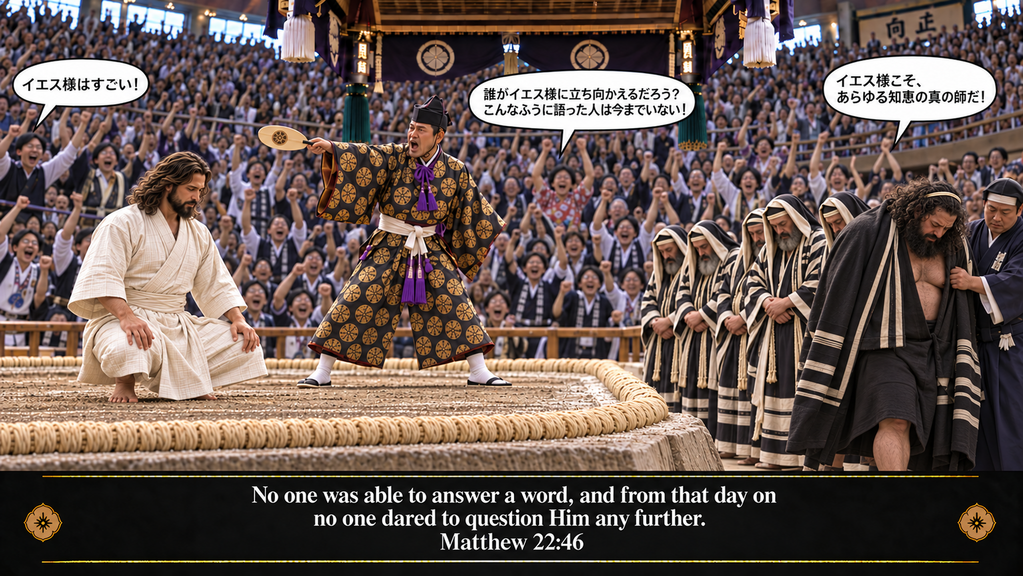
And no one was able to answer Him a word, nor from that day on did anyone dare question Him anymore. Matthew 22:46
Note: You can listen to today’s commentary courtesy of our friends at the “Bible in Ten” podcast. (Click Here to listen)
You can also read this commentary, scrolling with music, courtesy of our friends at “Discern the Bible” on YouTube. (Click Here to listen), or at Rumble (Click Here to listen).
“And none, He could Him answer – word, nor he ventured, any, from that, the day, to question Him longer.” (CG)
In the previous verse, Jesus questioned how the Messiah could be David’s Son if He is his Lord. The response is precious, “And none, He could Him answer – word.”
The question certainly formed a problem in their mind. The Scriptures were written, the psalm was considered to refer to the Messiah, and the truth Jesus presented could not be explained away.
The Messiah was to be more than a mere man. Whether they realized this would mean the Messiah was also deity may be in question, but Jesus’ words made it evident that there was more to the picture than they were seeing.
However, the citation of the psalm indicated that the Messiah would have the full authority of Yehovah. To consider Him anything less than deity would make no sense. Because of this, Matthew continues, “nor he ventured, any, from that, the day, to question Him longer.”
A new word is seen, tolmaó, to venture. It includes the sense of being bold, daring, taking a chance or a try at something, etc. They saw that Jesus’ knowledge of the Scriptures was not only extensive, but well thought out. This has been the pattern throughout the chapter.
Jesus has been questioned by Herodians, Pharisees, Sadducees, and even a lawyer. They either were put in their proverbial place, or they were astonished at His teachings and the depth of the knowledge He possessed and that He was able to explain from their sacred oracles.
Life application: Except for the Herodians, the people in this chapter were debating matters from the same source, meaning Scripture. The argument that included the Herodians, however, still touched on matters related to a relationship with God.
The attempt was to put Jesus into an impossible position between allegiance to God and those to be rendered to the state. The other questions and challenges were more Scripture-related. In the last instance, it was Jesus who initiated the question. But in all instances, Jesus’ knowledge concerning the word was considered exceptional.
That brings in an obvious reference point for our own challenges in life. If there is a matter about God, or that may jeopardize our relationship with God, how are we going to be able to defend ourselves and our actions before God if we do not respond according to His will?
And how can we do that if we don’t know what His will is? In this chapter, each challenge has come back to rightly knowing the word of God and then rightly applying that knowledge.
There was no true dilemma between paying taxes to Caesar or not. Because of Jesus’ understanding of the word, He was able to easily destroy their false dilemma, prevailing over their illogical presentation.
By knowing God’s word, we can know God’s will. Without this knowledge, we may do things as He would want or we may not. The problem is that there is no way to know. Thus, our walk before Him will be a risky one. Why live that way?
Wouldn’t it be better to know His word, walk in paths that are pleasing to Him, and stand before Him at our judgment knowing we had lived according to His will? Let us endeavor to make reading the Bible a daily commitment all our days.
Lord God, help our walk in this life to be one that is pleasing to You, honoring of Your will in our lives. May we carefully live out our days in accord with Your word, which tells us of these things. To Your glory, we pray. Amen.