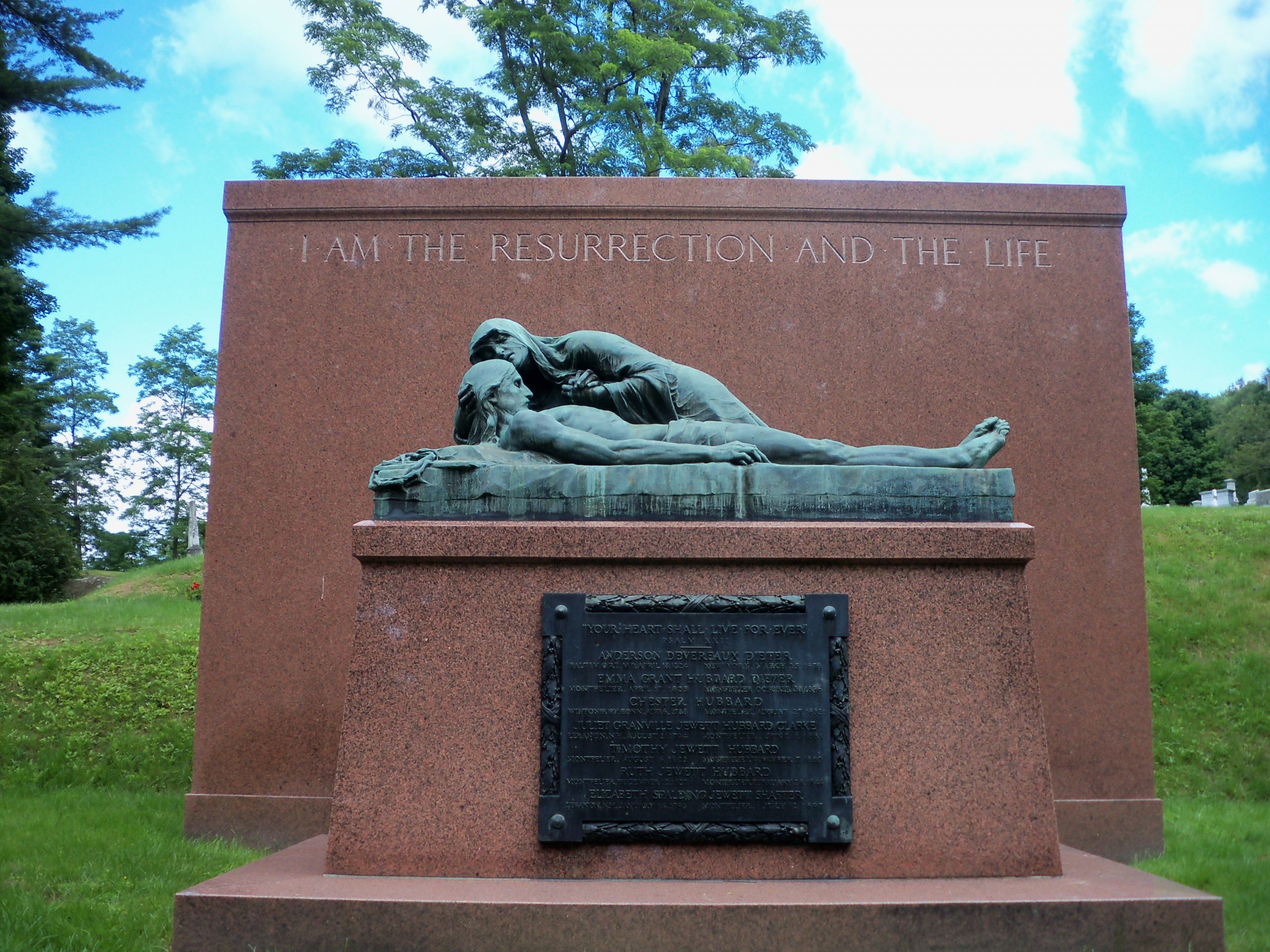
Acts 14:26

Covered Bridge. Vermont.

Monday, 27 February 2023

From there they sailed to Antioch, where they had been commended to the grace of God for the work which they had completed. Acts 14:26

Note: You can listen to today’s commentary courtesy of our friends at “Bible in Ten” podcast. (Click Here to listen)

You can also read this commentary, with music, courtesy of our friends at “Discern the Bible” on YouTube. (Click Here to listen), or at Rumble (Click Here to listen).

The previous verse told of the apostles preaching in Perga. That was followed by their going down to Attalia, a port on the coast. With that noted, it next says, “From there they sailed to Antioch.”

This is Syrian Antioch from which the apostles first departed in Acts 13:3. Unless this is a note of completion that ignores various stops the ship may have made, this is a direct trip even up the river to where Antioch was. It is possible the ship made stops or even completed its journey at Selucia and then the apostles traveled up the river to Antioch. The details of any such traveling are simply being left out of the record. No matter what, the record of the missionary trip is complete with these words.

With the journey home behind them, it next says that this is “where they had been commended to the grace of God.”

That was recorded in Acts 13:3 –

“Then, having fasted and prayed, and laid hands on them, they sent them away.”

Luke is reminding the reader that everything recorded is for the purpose of revealing what had occurred since that time and that it was a journey that these men were specifically commissioned to accomplish. They had fulfilled their assignment as witnessed by his written record. From there, it next says, “for the work.”

These words are based upon what is stated in Acts 13:2 –

“As they ministered to the Lord and fasted, the Holy Spirit said, ‘Now separate to Me Barnabas and Saul for the work to which I have called them.’”

The work they had participated in was an assignment first directed by the Holy Spirit. As God knows the end from the beginning, and as they were directed by the Holy Spirit, it can also be deduced that they were led by the Holy Spirit. Even the departure of John Mark from them is to be considered as an important point purposefully directed by the Holy Spirit to later be included in the Acts narrative by Luke.

It is this journey “which they had completed.” Their actions bear witness to their completion of what was directed. The recorded aspect of it, which is now included in the Bible, is a sufficient witness to that fact. With this note of completion, Barnabas is no longer to be considered an apostle. He was an apostle, a sent one, from Antioch, but only Paul was a sent one from Jesus. With this thought, the next verse will continue with the post-missionary journey details.

Life application: As noted in the previous verse, there are many things that may have occurred that are not recorded in the narrative by Luke. A preacher or teacher might attempt to justify divine protection of his missionaries by saying, “Do you see how God protected these two men throughout the entire journey? Neither one ever got sick on the entire trip. God will divinely protect you as well.”

This is both an argument from silence and an illogical conclusion concerning his own missionaries’ coming travels. For all we know, Barnabas was prone to sea sickness and was sick for the entire journey anytime he was on a ship. Paul may have eaten something bad in Iconium and been in bed for five days. We have no idea about such things, and we should never come to faulty conclusions based on what is not said.

There are times when what is not said is telling, but those things must be logical inferences that are in accord with the surrounding text. We must always be very careful to not insert fallacious thinking into the Bible. Rather we should only deduce what is right and logical. As an example, it says this in Deuteronomy 16:11 –

“You shall rejoice before the Lord your God, you and your son and your daughter, your male servant and your female servant, the Levite who is within your gates, the stranger and the fatherless and the widow who are among you, at the place where the Lord your God chooses to make His name abide.”

It is notable that the wife is missing from the list. Moses says you, your son, your daughter, your male servant, your female servant, the Levite, the stranger, the fatherless, and the widow, but nothing is said of the wife.

What seems obvious is that this is not saying that the wives were to stay home and take care of the pets. Rather, it is a way of acknowledging her importance within the household. The words take the reader back to the very beginning of man’s time on earth –

“And Adam said:
‘This is now bone of my bones
And flesh of my flesh;
She shall be called Woman,
Because she was taken out of Man.’
24 Therefore a man shall leave his father and mother and be joined to his wife, and they shall become one flesh.” Genesis 2:23, 24

Rather than being an oversight by Moses, it appears he is reiterating the fact that the man and his wife are one. In mentioning him, she is implicitly mentioned as well. Therefore, there is no reason to include her in the list. It would be unthinkable for him to observe the feast without her. Thus, all were to attend, including the unstated wife. This is a logical deduction that is supported by the previous biblical narrative, as well as other such passages.

Let us always be attentive to what the word is saying, what the word is not saying, and what can be logically deduced from the omissions and what cannot be. The word is too important to manipulate or twist for our own agendas or perverse desires.

Exalted Heavenly Father, we have a pure and precious word that has been granted to us to lead our lives and direct our feet. Help us to treat it with the utmost care and never twist what is presented into something other than what You intend for us to see. Help us to be responsible in this manner. Amen.

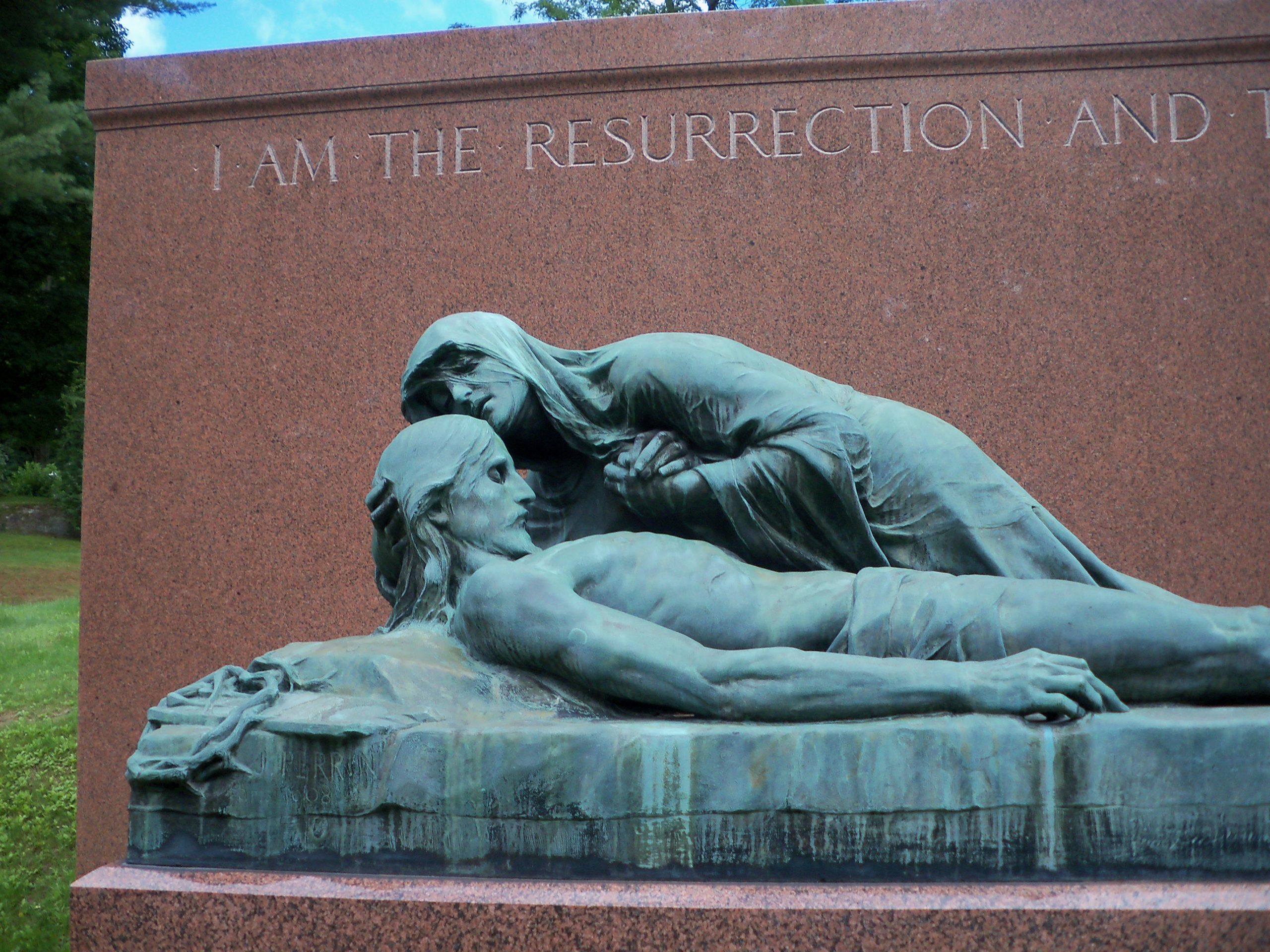


Acts 14:25

Quechee covered bridge. Vermont.

Sunday, 26 February 2023

Now when they had preached the word in Perga, they went down to Attalia. Acts 14:25

Note: You can listen to today’s commentary courtesy of our friends at “Bible in Ten” podcast. (Click Here to listen)

You can also read this commentary, with music, courtesy of our friends at “Discern the Bible” on YouTube. (Click Here to listen), or at Rumble (Click Here to listen).

The previous verse refers to the apostles passing through Pisidia and coming to Pamphylia. With that short note to cover whatever happened in that area, it next says, “Now when they had preached the word in Perga.”

This is something that they may or may not have done when passing through the first time. In Acts 13, it said –

“Now when Paul and his party set sail from Paphos, they came to Perga in Pamphylia; and John, departing from them, returned to Jerusalem. 14 But when they departed from Perga, they came to Antioch in Pisidia, and went into the synagogue on the Sabbath day and sat down.” Acts 13:13, 14

Scholars either ignore the reason why this area was not previously evangelized, or the comments are generally in line with the thought that they could tell there was no visible fruit and so they simply ignored the area. But the context of the passage may explain itself. One cannot know if there is “visible fruit” unless he first goes forth and preaches.

The most likely reason is that they did, in fact, preach to the people in Perga, but because there was no synagogue mentioned, it means the only preaching that occurred was to Gentiles. John Mark may have not appreciated this and got bent out of shape and departed. Or it could be that without any synagogue, they decided to go directly to where a known synagogue was, which was in Antioch. If this was so, then maybe the opposite occurred. John Mark may have said, “Why aren’t we preaching here instead of heading off to Antioch?” Not appreciating the situation, he packed up and left.

Either way, it is in Perga that John Mark became disaffected. With that remembered, it now notes definitively that this time they did preach in Perga. With that noted, it next says, “they went down to Attalia.”

Perga was not on the coast. Rather, it was upriver. The location of Attalia is described by Cambridge –

“A seaport of Pamphylia, at the mouth of the river Catarrhactes. … The Apostles had sailed, as they came from Paphos, directly to Perga, which they reached by coming some way up the river Cestrus. Now they go by land from Perga to the seacoast at Attalia, where there was more likelihood of finding a vessel in which they could sail into Syria.”

Of the city itself, it is next described by Albert Barnes –

“Attalus Philadelphus, king of Pergamus, whose dominions extended from the northwestern corner of Asia Miner to the Sea of Pamphylia, had built this city in a convenient position for commanding the trade of Syria or Egypt. When Alexander the Great passed this way, no such city was in existence; but since the days of the kings of Pergamus, who inherited a fragment of his vast empire, Attalia has always existed and flourished, retaining the name of the monarch who built it. Its ancient site is not now certainly known. … It is probable that it is the modern Satalia.”

This is the last stop of the missionary journey before returning home. Nothing is recorded of evangelizing here. It may simply have been used as a transit city to return home, at least as far as Luke’s records indicated.

Life application: Nothing is said of evangelization on the way from Perga to Attalia, nor of the time spent in Attalia. Nothing will be said of the trip from Attalia back to their home station. But this does not mean that the apostles didn’t preach to the people. Just as with Perga where nothing was recorded in Acts 13, to say that no evangelization took place is what is known as an argument from silence.

This is a logical fallacy where the failure of the source (in this case, Luke) to mention a given fact, or facts, becomes the ground for an inference. Such an inference is then turned into a conclusion that the supposed fact is untrue, or the supposed event never occurred.

In this case, the fallacy would be, “Because nothing is spoken of concerning evangelization of the people in Attalia and on the ship back home, the apostles failed to tell any of those people about Jesus.” The only facts we have are what Luke has recorded. Paul and Barnabas may have had many converts in Attalia, and it may be that the entire ship converted to Christianity on the way home. Luke is recording what the Holy Spirit inspired him to write. That is what we need. Everything else is silent and we cannot add to the historical record by making unfounded claims either way.

The point is that just because nothing is recorded concerning such things, we cannot use that silence to say, “I don’t need to tell people about Jesus at a particular time because Paul and Barnabas decided to not speak about Jesus at a particular time.”

We need to be willing to speak about Jesus all the time. Whether on a ship, on a bus, or at a stop awaiting the next part of the journey, we should look for an opportunity to open our mouths and speak. Let us do so, to the glory of God who has given us mouths to speak with. We are the redeemed of the Lord. Let us speak out the good news!

Most glorious Heavenly Father, we have been saved by the precious blood of Christ. May we not fail to tell others of this wonderful gift of healing and hope. Give us hearts to speak forth Your saving gospel message to any and all that we encounter on the path of life. To Your glory, we pray. Amen.


Acts 14:24

Indeed. He is.

Saturday, 25 February 2023 

And after they had passed through Pisidia, they came to Pamphylia. Acts 14:24

Note: You can listen to today’s commentary courtesy of our friends at “Bible in Ten” podcast. (Click Here to listen)

You can also read this commentary, with music, courtesy of our friends at “Discern the Bible” on YouTube. (Click Here to listen), or at Rumble (Click Here to listen).

The previous verse told of the selection of elders in every church, commending them to the Lord. From there, they obviously moved on, as it next says, “And after they had passed through Pisidia.”

This is the opposite movement of what occurred in Acts 13 –

“Now when Paul and his party set sail from Paphos, they came to Perga in Pamphylia; and John, departing from them, returned to Jerusalem. 14 But when they departed from Perga, they came to Antioch in Pisidia, and went into the synagogue on the Sabbath day and sat down.” Acts 13:13, 14

The apostles are certainly retracing their steps and ensuring they would meet any who had converted in order to bolster their faith. That this is the opposite movement is seen in the next words, saying, “they came to Pamphylia.”

As can be seen, this is the same area where John had departed from them quite some time ago. The detail of this stop will be more fully explained in the next verse.

Life application: Though nothing of substance concerning conversion was recorded during their previous trip through Perga in Pamphylia, the apostles are careful to have returned there. It may be that there were no converts or very few converts. However, even if there were no converts, they may still be able to break through to some who were close to conversion on the previous visit.

Even if it was just a stop that needed to be made on the journey home because it was a logical stop on the road, they will take the time to speak out the word, as will be seen next. It is never a futile thing to repeat the gospel to those who have heard it previously and turned it down. Some people have taken years to come to the Lord, hearing the message many times before the thought clicks in their minds.

Be willing to expend yourself in repeating this wonderful message to those who have previously rejected it. One can never tell when the right moment for the heart to be stirred will arise.

Lord God, others were patient with us as they waited for our hearts to be changed. Some of us may have heard the gospel many times before accepting it. Should we be less willing to share it with others? Rather, help us to be patient and to share this wonderful word of life as much as it is needed to obtain the right response. To Your glory, we pray. Amen.


Acts 14:23

Someone believed. Vermont Cemetery.

Friday, 24 February 2023

So when they had appointed elders in every church, and prayed with fasting, they commended them to the Lord in whom they had believed. Acts 14:23

Note: You can listen to today’s commentary courtesy of our friends at “Bible in Ten” podcast. (Click Here to listen)

You can also read this commentary, with music, courtesy of our friends at “Discern the Bible” on YouTube. (Click Here to listen), or at Rumble (Click Here to listen).

The previous verse indicated that the apostles strengthened the souls of the disciples, exhorting them that tribulations could be expected. With that, the narrative continues with, “So when they had appointed.”

The word is a new one to Scripture, cheirotoneó. It comes from cheir, the hand, and teinó, to stretch. Thus, it signifies to stretch out the hand for voting. It is an election by popular vote. If this is the intent now, and it certainly seems like the best intent for the word, then it should be translated as “chosen,” rather than “appointed.” However, some scholars argue that such a vote would be unlikely and that the apostles would rather appoint elders, thus stretching out their hands toward them as in the act of commissioning. The only other use of the word is found in 2 Corinthians 8 –

“And we have sent with him the brother whose praise is in the gospel throughout all the churches, 19 and not only that, but who was also chosen by the churches to travel with us with this gift, which is administered by us to the glory of the Lord Himself and to show your ready mind.” 2 Corinthians 8:18, 19

It does not seem unreasonable that the apostles would allow for a vote. The people would not want such a matter forced on them, and they would know best whose life was the most suited to such an office. Therefore, these elders were either “chosen” or “appointed.” This process was conducted for “elders in every church.”

The word is presbuteros, and it is where the word presbyter is derived from. It signifies a mature man who is experienced and has seasoned judgment. In the Bible, the office is always male. The feminine singular, presbytera, is not to be found in Scripture nor can the selection, appointment, and ordination of females be inferred from Scripture.

As for the establishment of this office of elder at each church, it was a necessary point that is fleshed out further in the pastoral epistles. A church body needs someone to guide it and to bear the responsibility of keeping the doctrine sound and the people properly trained. Without this, the church would become a rudderless ship, floundering in a sea of whatever strange teachings came along. But with a sound leader, the chances of the church maintaining the right course would be far better. Once these elders were selected it says they, probably meaning both the apostles and the church as a whole, “prayed with fasting.”

This is an obvious thing to occur in such a situation. These people had no idea if they would ever meet again. A church was being left in the care of men who did not have the completed Bible to guide them. Their training in the doctrines of Christ was, by today’s standards, extremely limited. Such prayer and fasting would have been to acknowledge this and to petition the Lord to favor their efforts into the future. With this then complete, it next says, “they commended them to the Lord.”

The word signifies to commit in a very close and personal way. It is as if the care of these elders is transferring from the apostles directly to the Lord, just as these apostles were set apart to the Lord in Acts 13:2. They are now the leaders who would shepherd or pasture the flocks. Therefore, they would need the hand of the Lord upon them in their duties. Of this word translated as “commended,” Albert Barnes notes the following –

“The word is the same as in Acts 20:32; Luke 23:46. It implies the confiding trust of one who commits what is very precious to him to the keeping of another. So in 2 Timothy 2:2 it is used of the depositum fidei, the treasure of truth which Timothy was to commit to faithful men. Here it implies an absolute trust in God as ordering all things for His Church and those who love Him.”

This thought is then intensified by Luke’s added words about their relationship with the Lord, saying, “in whom they had believed.”

The verb is  pluperfect or “more than perfect.” These men “had believed,” and this is the state in which they then conducted their lives since that defining moment. These were not just capable men of the town, known for their great administrative or oratory skills. Rather, they were men who had – first and foremost – believed the gospel message. Whatever other skills were noted that made them the ones to be chosen to lead the church, their status as believers was the primary issue for even being considered for leadership. Without this necessary qualification, no other attribute or skill could even be considered.

Life application: Of the prayer and fasting mentioned in this verse, Charles Ellicott states the following –

“It is a legitimate inference, from this recurrence of the act, that Paul and Barnabas recognized it as an established rule or canon of the Church that these two acts should jointly serve as a preparation for the solemn work of appointing men to spiritual functions. Without prayer such an appointment was a mockery, and fasting served to intensify prayer.”

Ellicott finds it a legitimate inference that this should be “an established rule or canon of the Church.” Although that may seem reasonable, it dismisses the fact that Acts is a descriptive account of what occurred in the establishment of the early church. It is true that one can often see what is normative from such repeated actions in the early church, such as baptism. However, it must be remembered (as noted above) that these men may never again have had anyone to guide them in their leading of this church, and they had no completed Bible for their instruction.

Instead, they were left solely to the care of the Lord and their own heart for Him as to how they would conduct their affairs. Today, we have seminaries set up to train and instruct leaders. We have churches that are already established and that have evaluated potential candidates, for extended periods of time. And, above all, we have the Bible as the rule and guide of our faith.

The instructions for selecting and ordaining elders are set forth there and nothing is said of fasting. As such, this is not to be considered a rule or canon for the church, even if it is a sound practice. With the lengthy process of preparing a person for church leadership, there is nothing wrong with ordaining an elder, praying over him, and then having a large celebration to acknowledge the many years of preparation that have readied him for that day.

If the Bible does not mandate something we cannot add to it without becoming legalistic. With each legalistic addition, there is a greater chance that more legalism is soon to follow. This cannot be tolerated. There is freedom in the church to express itself as a church in the local cultural setting. There is freedom in a church to meet when it wants to meet. There is freedom in a church to celebrate whatever days or events it chooses. In all things, the Lord is to be the primary consideration, everything else is secondary. And the Bible tells us the will of the Lord for the church.

Lord God, help us to never deviate from what Your word commands. Also, help us to never legalistically add to what Your word does not include. May we use our freedoms in Christ and in the church wisely and to Your glory. Yes, Lord! May all that we do be done to glorify You. Amen.


Acts 14:22

Passing a cemetery in Vermont. Let’s go visit.

Thursday, 23 February 2023

strengthening the souls of the disciples, exhorting them to continue in the faith, and saying, “We must through many tribulations enter the kingdom of God.” Acts 14:22

Note: You can listen to today’s commentary courtesy of our friends at “Bible in Ten” podcast. (Click Here to listen)

You can also read this commentary, with music, courtesy of our friends at “Discern the Bible” on YouTube. (Click Here to listen), or at Rumble (Click Here to listen).

The previous verse noted the effective preaching of the apostles in Derbe and then their subsequent return to Lystra, Iconium, and Derbe. Of their time in these cities, it notes, “strengthening the souls of the disciples.”

This includes a new word in Scripture, epistérizó. The word signifies the process of strengthening the understanding that precedes by building upon it. One might say, “to further support.” There is a knowledge that exists. By building upon that knowledge, with further instruction, the original basis of the faith is strengthened and built upon. The word will be seen three more times, all in Acts. Next, the narrative continues with, “exhorting them.”

This is a common word that is widely translated based on the context. It can mean to implore, beseech, encourage, comfort, and so on. It is an action that is close and personal. In this case, the apostles are imploring these disciples “to continue in the faith.”

One must ask, “Is this referring to the faith possessed by the disciple (their trust in the gospel) or is it the faith that is the basis (the substance) of what the apostles taught and in which they then trusted?” The answer is most certainly the latter.

To the apostles, what difference does it make if these disciples have faith if it is not in the faith that has been taught? If they went back and placed their faith in Zeus and Hermes again, that would be a pointless waste of everyone’s time. Rather, the term is being used in the objective sense, just as it is elsewhere, such as –

“But if anyone does not provide for his own, and especially for those of his household, he has denied the faith and is worse than an unbeliever.” 1 Timothy 5:8

Paul wrote those words to Timothy, a person who is certainly included in the words of Acts 14:22 as he is from the area of Derbe and Lystra, as will be seen in Acts 16. That this is an objective faith, and not merely the personal faith of the believer is seen in the next words. In their exhorting these new believers, they explained to them, saying, “We must through many tribulations enter the kingdom of God.”

The Greek more literally reads, “and that through many tribulations it is behooving us to enter into the kingdom of God.” By placing the words “We must” before “through many tribulations,” the NKJV makes it seem as if the kingdom of God is earned. However, by changing the structure to correct that, the sentence then requires the addition of the word “to” before “enter.” This then almost makes it seem like it is a necessity to experience tribulation before entrance can happen, which is not the case.

The verb translated as “enter” is aorist. It signifies a completed action at a particular time. Before that time, something will necessarily occur as stated by the apostles.

The word translated as “must” is a verb signifying that which is necessary or inevitable. As such it is translated as should, ought, must, and so on. The same general thought is expressed later by Peter –

“In this you greatly rejoice, though now for a little while, if need be, you have been grieved by various trials, that the genuineness of your faith, being much more precious than gold that perishes, though it is tested by fire, may be found to praise, honor, and glory at the revelation of Jesus Christ.” 1 Peter 1:6, 7

Peter says, “if need be.” There is a purpose for all things that come upon man. They come according to God’s sovereign decisions. In the book of Job, Satan afflicted Job terribly, but he did so only as allowed by the Lord. There was, in fact, a need for this trial in his life, and there is always a reason for that which occurs in our lives as well.

For some, they are temporary. Job was afflicted and then restored. However, others may face a particular affliction (or afflictions) for their entire lifespan. Here in Acts, the apostles are not telling these disciples that they had to earn entrance into the kingdom of God (a necessity), but that tribulations will necessarily occur in this life, which must be lived first, to enter the kingdom of God.

This is certainly the case. Paul and Barnabas were saved, and yet they include themselves in the exhortation as indicated by the first-person pronoun “us.” They were not saying, “We must go through tribulation in order to enter into the kingdom of God,” but surely, “We must inevitably go through tribulations before entering the kingdom of God.”

The difference may seem like splitting hairs to some, but to misunderstand this will lead to the thought of our earning what has already been earned by Christ for us. Both thoughts are expressed by Paul in Colossians 1 –

“For this reason we also, since the day we heard it, do not cease to pray for you, and to ask that you may be filled with the knowledge of His will in all wisdom and spiritual understanding; 10 that you may walk worthy of the Lord, fully pleasing Him, being fruitful in every good work and increasing in the knowledge of God; 11 strengthened with all might, according to His glorious power, for all patience and longsuffering with joy; 12 giving thanks to the Father who has qualified us to be partakers of the inheritance of the saints in the light. 13 He has delivered us from the power of darkness and conveyed us into the kingdom of the Son of His love, 14 in whom we have redemption through His blood, the forgiveness of sins.” Colossians 1:9-14

Paul speaks of longsuffering with joy. It is something that he assumes will necessarily come upon believers. He speaks of the inheritance, something that is granted but not yet received in actuality. And then he speaks of having been delivered and conveyed into the kingdom at the same time. In other words, we are in the kingdom, but we are also awaiting it as an inheritance. This is the substance of the words of the apostles now.

Life application: The apostles now in Acts are speaking to disciples about the kingdom of God. It is something that Paul refers to numerous times as well in his epistles. One cannot have a kingdom without a king. In the case of the kingdom of God, it is referring to that of Jesus Christ.

There are numerous teachings that deny that Christ is our King. This is done in order to justify various heretical doctrines. One of them is hyperdispensationalism. It improperly divides the dispensations that God has set up as He works out the redemptive narrative in human history saying that the church age began with Paul, not with Acts 2, and then saying that the seven letters to the seven churches in Revelation are directed solely to the Jews of the end times.

No such distinction as this exists. Paul and Barnabas have been sent on a missionary journey. There is no set time when they suddenly started the church as this false doctrine would claim. There is simply a slow and gradual diversion from the prime focus being on Jews to it being on Gentiles.

Hyperdispensationalism is so arbitrary and unsound that one could say, “It was on the walk between Lystra and Derbe that the church began.” There is not even a breath of a hint of this. Rather, the focus has been on one gospel throughout the entire Acts narrative. The book records the rejection of Jesus by the Jews while at the same time, there has been a wholehearted acceptance of it by many Gentiles.

Eventually, the nation of Israel will no longer be a consideration in the church age, but this does not mean they will not be a consideration later. And it does not mean that those Jews who were saved early on are not a part of the church. Rather, it means exactly the opposite. Someday, the church will be removed from the picture at the rapture. After this occurs, the narrative will again focus on Israel as a nation in their land.

The world is being prepared for this right now. Unfortunately, because of various nutty doctrines, such as hyperdispensationalism and replacement theology, many who are left behind (nonbelievers) will not understand when the events take place. This is too bad, and it could have been avoided if proper doctrine was taught in advance, even if initially rejected by those who heard it.

Lord God, please help us to learn Your word and understand it properly. Keep us from false teachings and false teachers who are untrained or incorrectly trained in proper theology. Lead us to those who will properly instruct us on what is occurring in the biblical narrative. Please hear our petition according to Your great mercy. Amen.