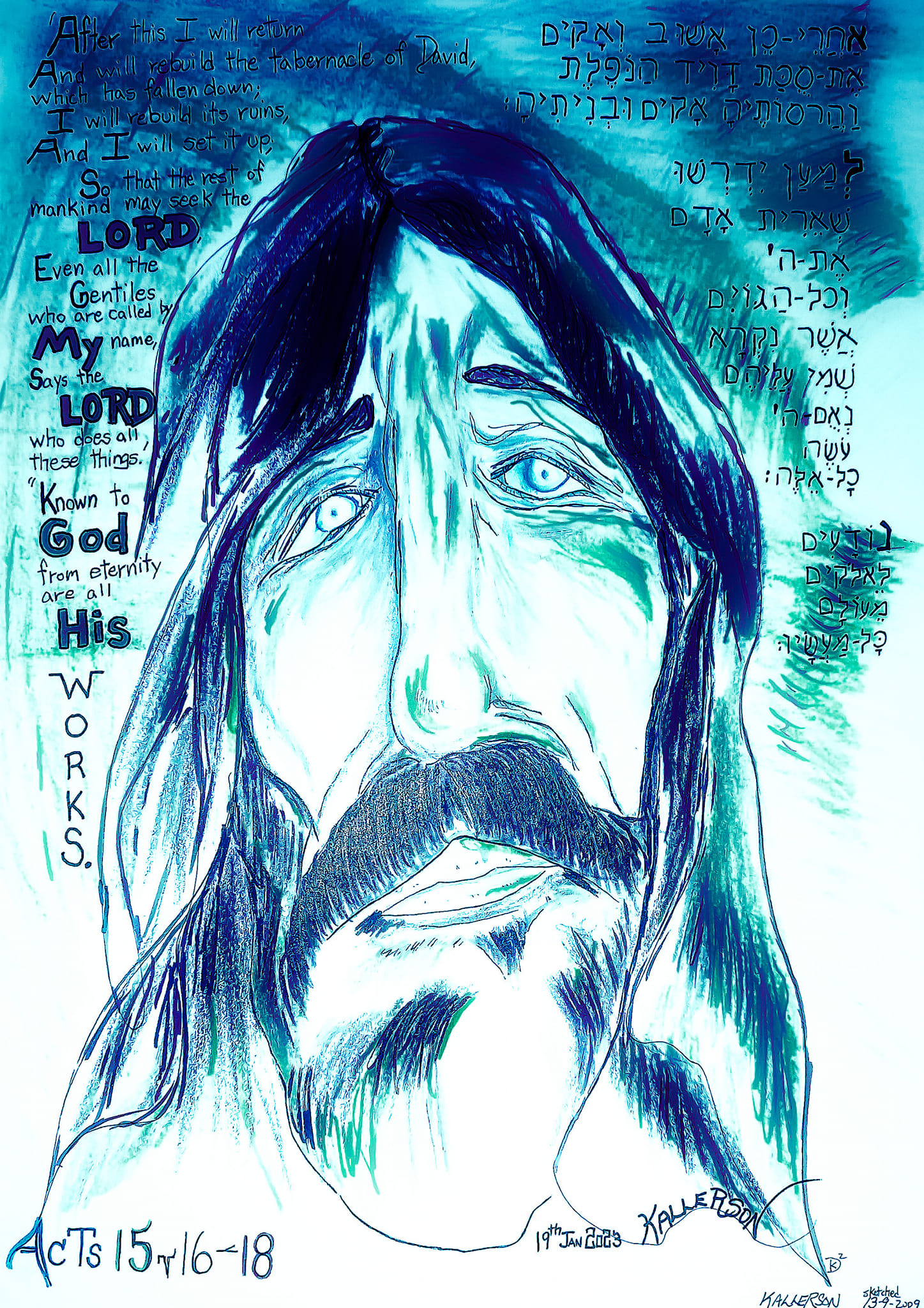
Acts 15:18

Artwork by Doug Kallerson.

Sunday, 19 March 2023

“Known to God from eternity are all His works. Acts 15:18

Note: You can listen to today’s commentary courtesy of our friends at “Bible in Ten” podcast. (Click Here to listen).

You can also read this commentary, with music, courtesy of our friends at “Discern the Bible” on YouTube. (Click Here to listen), or at Rumble (Click Here to listen).

The previous verse cited Amos, concluding with the words, “Says the Lord who does all these things.” With the end of the citation, James now speaks, saying, “Known to God from eternity are all His works.”

As a note for clarification, the wording of the previous verse and of this verse are not the same in various texts normally used by more modern versions. The difference is more noticeable when they are taken together and placed side by side –

“’So that the rest of mankind may seek the Lord,
And all the Gentiles who are called by My name,’
18 Says the Lord, who makes these things known from long ago.” (NASB)

“’So that the rest of mankind may seek the Lord,
Even all the Gentiles who are called by My name,
Says the Lord who does all these things.’
18 “Known to God from eternity are all His works.” (NKJV)

As can be seen, the NASB and other translations make the verse a part of the citation of Amos with words added as a part of the citation by James. On the other hand, the NKJV, et al., have more words in James’ additional thoughts which form a separate sentence altogether.

Going with the latter thought for commentary purposes, the meaning is that everything God has done or will do has been known from beginning to end by God, even since the very beginning. This thought is fully supported throughout Scripture, but an example from each testament will show this –

“Remember the former things of old,
For I am God, and there is no other;
I am God, and there is none like Me,
10 Declaring the end from the beginning,
And from ancient times things that are not yet done,
Saying, ‘My counsel shall stand,
And I will do all My pleasure,’” Isaiah 46:9, 10

“All who dwell on the earth will worship him, whose names have not been written in the Book of Life of the Lamb slain from the foundation of the world.” Revelation 13:8

As the words of Amos agree with the thought that the Gentiles were to be a part of what God was doing before the raising up and rebuilding of the “tabernacle of David,” meaning re-establishment of the Davidic rule, then it would be wrong for the apostles to judge against that by demanding that Gentiles observe the Law of Moses.

God had poured out His Spirit upon the Gentiles in the presence of Peter apart from the law. Paul and Barnabas had seen many converts and the Lord had worked signs and wonders through them on behalf of the Gentiles apart from the law. As these things were indisputable, it would be working contrary to God to suddenly stop this work of the Lord and impose a law upon them that had been fulfilled and set aside by the work of Jesus.

Life application: Various commentaries on Acts 15:17, 18 make a claim that “the best texts” support their translation which varies in content from the other texts. That is a subjective claim. Who is to determine the “best text” when they have no idea which is original?

Rather, unless their view is supportable by the original, which isn’t available and cannot be known, they need to simply state that there is a variation in source texts and state why they support one over the other. If this is not done, then a bias in the mind of the reader of the commentary will arise.

This is not a sound approach when explaining the Bible. This same thought carries through to one version or another. Even if the same source texts are used for two translations, it is inappropriate to say “This is the better version” without providing a full explanation as to why it is so. If it is true, that is fine, but to arbitrarily make the claim without support will lead to bias in the mind of the one being instructed.

Be careful to not inject subjective thoughts into your teaching. This is important because if those thoughts are found to be incorrect, it will often be too late to undo those biases in the minds of students who have moved on.

Heavenly Father, help us to look at Your word with a passion and desire to know it more each day. And if we are going to instruct others in what we have learned, help us to do so from an objective point of view, telling what we know is certain and not being dogmatic about what is uncertain. Be with us in this, O God. Amen.
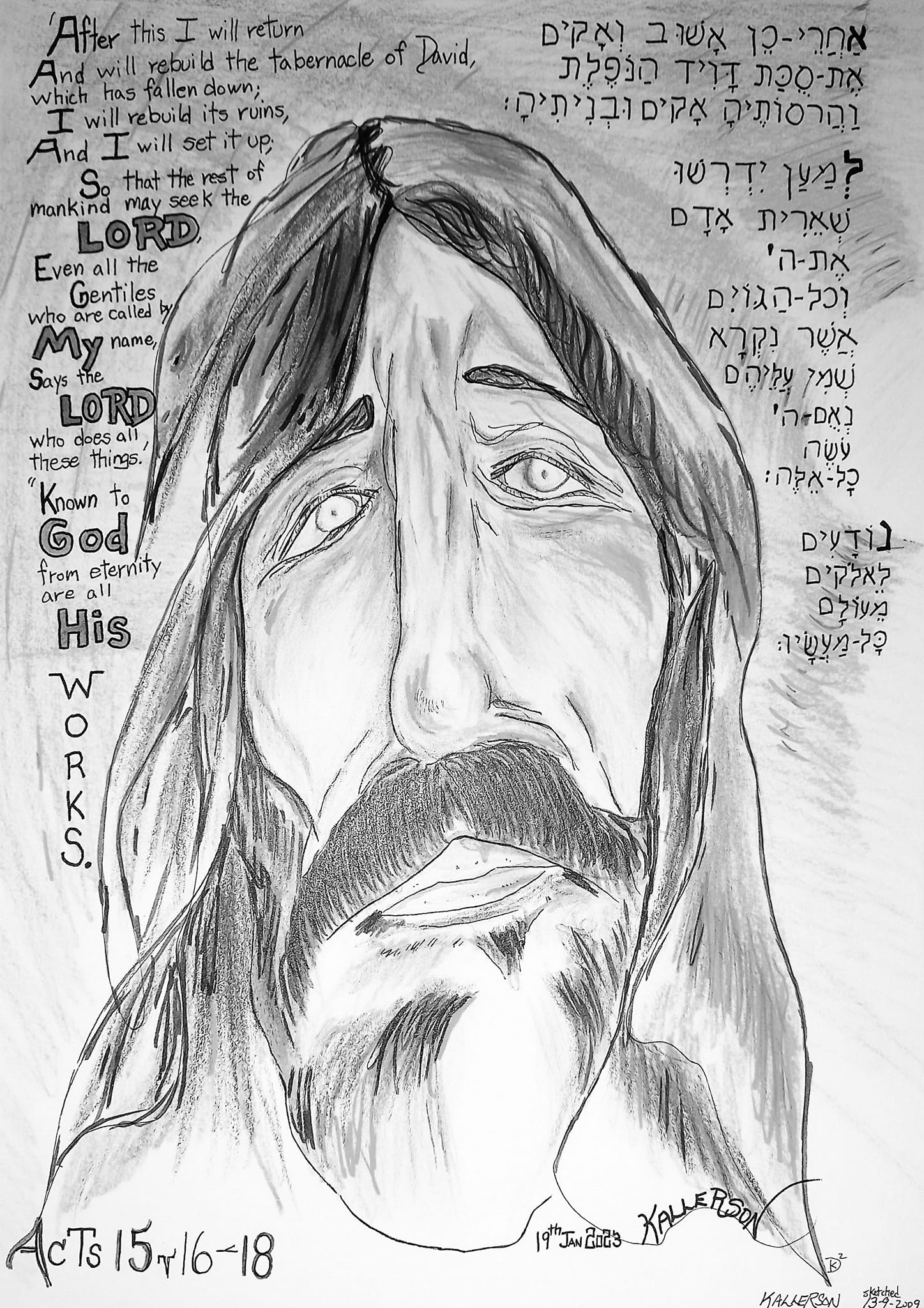
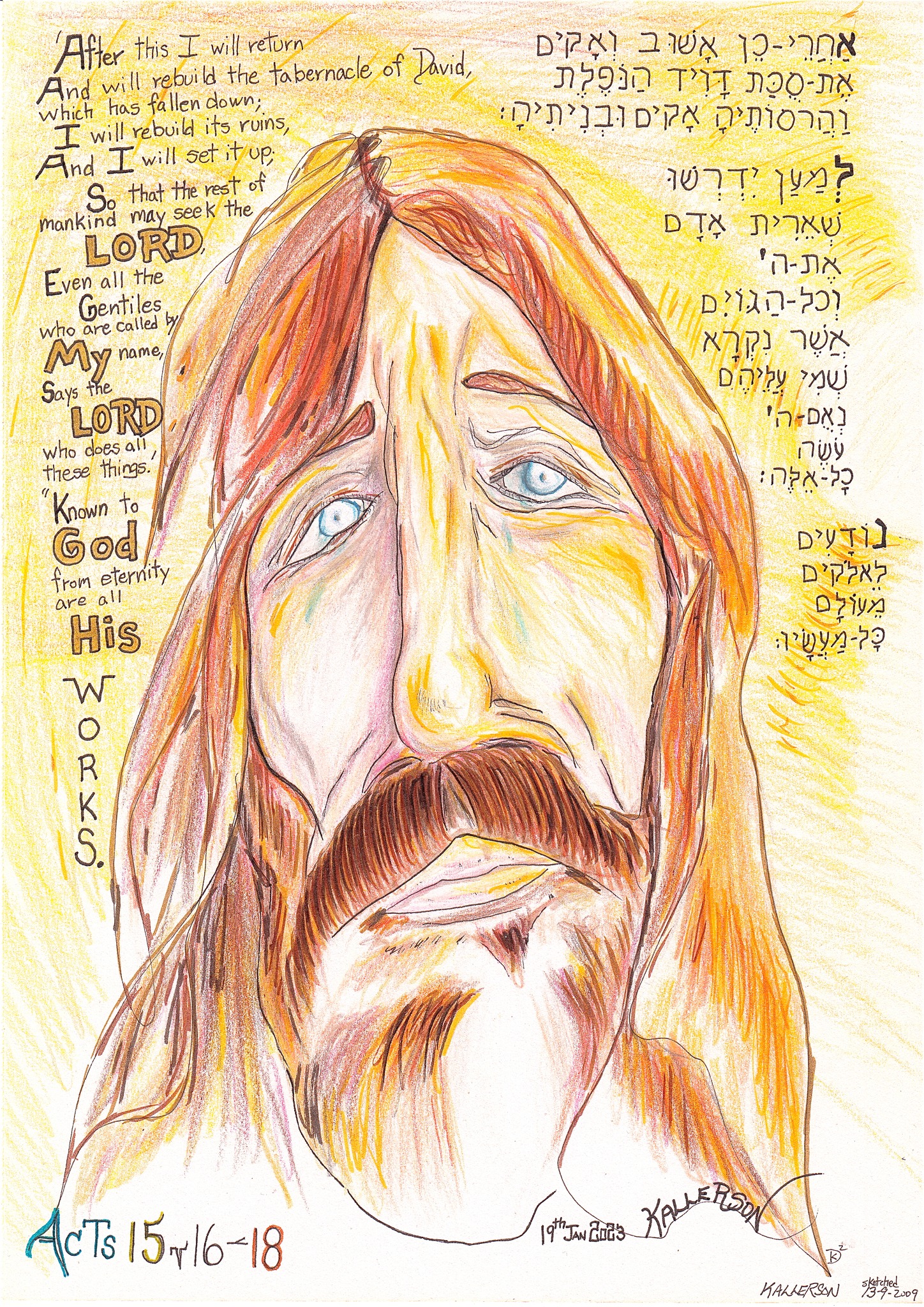


Acts 15:17

Artwork by Douglas Kallerson.

Saturday, 18 March 2023

So that the rest of mankind may seek the Lord,
Even all the Gentiles who are called by My name,
Says the Lord who does all these things.’ Acts 15:17

Note: You can listen to today’s commentary courtesy of our friends at “Bible in Ten” podcast. (Click Here to listen).

You can also read this commentary, with music, courtesy of our friends at “Discern the Bible” on YouTube. (Click Here to listen), or at Rumble (Click Here to listen).

In the previous verse, James began his citation of the prophet Amos. That now continues with, “So that the rest of mankind may seek the Lord.”

The Hebrew of this verse from Amos reads, “That they may possess the remnant of Edom.” However, the Greek translation reads as James has cited. The name of Edom and the word “man” are very similar in the Hebrew. Thus, the Septuagint translators seem to have understood the extended meaning of what lay ahead.

Further, this word translated as “mankind” is a plural noun, men. There is no reason for the NKJV to have changed it from the earlier rendering of the KJV except, most likely, political correctness. The singular is to be rejected. In the Greek, the masculine stands for all.

Despite this, the meaning seems clear. The previous portion of the quote began with, “After these things.” James has shown that there is a time when Israel will again be exalted under Davidic rule, meaning under Jesus their Messiah. That will occur after certain events take place.

He now says what those events will be. Until the time when that comes about, there is an opportunity for the rest of mankind to seek the Lord. Amos had talked about the punishment of Israel for rejecting the Lord leading up to the restoration of Israel.

Hence, the restoration comes after the time of punishment. But during that timeframe, the redemptive plan won’t just be put on hold, waiting for Israel to get its act together. Rather, while Israel is being punished according to the Mosaic Law which they agreed to remain under when they rejected Jesus, the nations (the rest of mankind) would be seeking the Lord. That is next further explained with the words, “Even all the Gentiles.”

It is the same word as in Acts 15:14, ethnos. Unlike in that verse, there is an article before the word. Rather than “nations” as was argued to be the better rendering there, this is rightly translated as “the Gentiles.” The reason is that even if there are Christian nations, it is not nations that are being called through the gospel, but individuals.

As nations have come and gone, the salvation of the Gentiles has remained unaffected. When the Lord calls for His people, they will rise, even if the nations they belonged to disappeared millennia earlier. James next continues the quote from Amos saying that it is these saved believers of this dispensation “who are called by My name.”

The words are reminiscent of James 2:7 where he uses the same Greek word –

“Do they not blaspheme that noble name by which you are called?”

Though James wrote to the Jews of the church, they are still members of the church. Being called by the name of the Lord means that the name of the Lord rests upon the person. Those who call upon the name of the Lord through faith become those who are called by the Lord’s name. With this understood, James finishes the citation with, “Says the Lord who does all these things.”

It is the Lord who called Israel and covenanted with them. It is the Lord who faithfully blessed Israel when they sought Him out. It is the Lord who punished Israel according to the covenant made between them. It is the Lord who sent Jesus to initiate a New Covenant. It is the Lord who, when rejected by Israel, fulfilled the words of the prophecy concerning Israel’s second exile and punishment. It is the Lord who called out a people for Himself from the Gentiles during Israel’s time of having rejected Jesus. It is the Lord who will once again return Israel to His favor and exalt them when they call upon the name of the Lord. Everything comes back to the wisdom and hand of the Lord.

As noted in the previous commentary, this must be the interpretation of these verses. The words of the citation from Amos cannot be referring to the replacement of Israel by the church. This is absolutely certain from the continued words of Amos 9, which close out the book of Amos –

“‘Behold, the days are coming,’ says the Lord,
‘When the plowman shall overtake the reaper,
And the treader of grapes him who sows seed;
The mountains shall drip with sweet wine,
And all the hills shall flow with it.
14 I will bring back the captives of My people Israel;
They shall build the waste cities and inhabit them;
They shall plant vineyards and drink wine from them;
They shall also make gardens and eat fruit from them.
15 I will plant them in their land,
And no longer shall they be pulled up
From the land I have given them,’
Says the Lord your God.” Amos 9:13-15

In saying that He will bring back the captives of Israel (of which Amos 9:1-10 are the focus), it means Israel the people and none other. There is no provision for exile for the people of the church. There is no land grant bestowed upon the church. Israel, the nation, will be replanted in Israel the land.

And more, this cannot be referring to their first exile. This is because of the final verse of the book of Amos –

“I will plant them in their land.
And no longer shall they be pulled up.”

There is no time in history that this has occurred. After the first exile, they were pulled up a second time, something prophesied by Isaiah even before the first exile –

“It shall come to pass in that day
That the Lord shall set His hand again the second time
To recover the remnant of His people who are left,
From Assyria and Egypt,
From Pathros and Cush,
From Elam and Shinar,
From Hamath and the islands of the sea.” Isaiah 11:11

Life application: Replacement theology is a failed system of biblical interpretation because it does not take into consideration the whole counsel of God. Nor does it rightly divide the word. But even during the time when Israel was deep in her second exile, at a time when there was seemingly no possibility that the nation would ever again be restored, John Gill (1697-1771) said the following concerning Amos 9:15 –

“…by which it appears that this is a prophecy of things yet to come; since the Jews, upon their return to their own land after the Babylonish captivity, were pulled up again, and rooted out of it by the Romans, and remain so to this day; but, when they shall return again, they will never more be removed from it; and of this they may he assured; because it is the land the Lord has, “given” them, and it shall not be taken away from them any more; and, because he will now appear to be the ‘Lord their God.’”

Likewise, Adam Clarke (1762-1832) says of this verse –

“Most certainly this prophecy has never yet been fulfilled. They were pulled out by the Assyrian captivity, and by that of Babylon. Many were planted in again, and again pulled out by the Roman conquest and captivity, and were never since planted in, but are now scattered among all the nations of the earth. I conclude, as the word of God cannot fail, and this has not yet been fulfilled, it therefore follows that it will and must be fulfilled to the fullness of its spirit and intention. And this is established by the conclusion: ‘Saith the Lord thy God.’ He is Jehovah, and cannot fail; he is Thy God, and will do it. He can do it, because he is Jehovah; and he will do it, because he is Thy God. Amen.”

Despite the wave of poor theology concerning the reestablishment of Israel, these voices cried out, “The Bible is to be taken literally! God has spoken and His word cannot fail.” Now, what will you proclaim? The men who could not have foreseen the reestablishment of Israel with their earthly eyes, wholly trusted the Lord, focusing their spiritually attuned eyes on what He had spoken.

Today, even today after the reestablishment of Israel to their land – exactly as the Lord prophesied would take place – much of the church refuses to accept that what was written has been fulfilled. They must receive their judgment for their lack of discernment and faith concerning God’s word. But they will remain saved despite their wholly tainted theology. This is the greatness of God who saves us despite ourselves.

Whether you like the Jewish people or not, something much greater is at stake in the world today. That something is the integrity of the word of God and the promise of God that He would never fully reject His people, Israel. He will bring them into the New Covenant. Have faith in this. Don’t be silly but be steadfast in your acceptance of the truth of God’s precious word.

Lord God, how could it be that You would reject Israel when You covenanted with them? If that were so, You could also reject us when we fail You. Our salvation would be up to us. But no! You have spoken and it is done. Thank You for the wonderful assurance we possess in Christ. Thank You, O God. Amen.


Acts 15:16

Artwork by Doug Kallerson.

Friday, 17 March 2023

‘After this I will return
And will rebuild the tabernacle of David, which has fallen down;
I will rebuild its ruins,
And I will set it up;
Acts 15:16

Note: You can listen to today’s commentary courtesy of our friends at “Bible in Ten” podcast. (Click Here to listen).

You can also read this commentary, with music, courtesy of our friends at “Discern the Bible” on YouTube. (Click Here to listen), or at Rumble (Click Here to listen).

James just noted that the words of the prophets agree with the idea that God first visited to take out of nations a people for His name. With that, he now cites Amos 9:11 & 12 to confirm this. As is often the case in the New Testament, the quote is from the Greek translation, not the Hebrew. Further, there is even a bit of deviation from the Greek in verse 15:16.

That verse begins with, “After this I will return.” Rather, the word translated as “this” is a plural demonstrative pronoun. It reads, “After these things I will return.” The reference is to what is said in the earlier verses of Amos 9. They speak of Israel’s destruction and exile. In those verses, the Lord says –

“‘Are you not like the people of Ethiopia to Me,
O children of Israel?’ says the Lord.
‘Did I not bring up Israel from the land of Egypt,
The Philistines from Caphtor,
And the Syrians from Kir?’” Amos 9:7

In essence, the Lord is saying to Israel, “You are just like any other people. Other than your relationship with Me, you are just people.” To show them this, He was going to take a different direction, working among the Gentiles of whom they thought they were better. Because of their sinful state, rejecting the Lord, they would enter a time of punishment, being scattered among the nations. It is “After these things” that the Lord will return.

The meaning of that is that He will revisit Israel. It is as if he had departed from them and was now returned to them. His attention was on their destruction, but it would be changed to their re-establishment and prosperity. It is at this prophesied time that it next says, “And will rebuild the tabernacle of David.”

The tabernacle is a booth or temporary shelter used during the Feast of Tabernacles. This was a feast where the people gathered in Jerusalem, meeting to acknowledge that the Lord was Israel’s protector. They had been brought out of Egypt, having been rescued from their bondage. They were wholly dependent on the Lord and were living in close and intimate contact with Him.

The “tabernacle of David” is specifically speaking of the royal house of David. Despite being the king, he too would have participated in the annual festival, dwelling in a tabernacle in this intimate fellowship with the Lord. What is being conveyed is that the rule and authority of Israel under the House of David would be restored to Israel, but it would be in a way that resembled the tabernacle, or booth.

Thus, it refers to the Person of Jesus, the Messiah who is the Greater David. For example, the verb form of the word is used when speaking of Christ in John 1 –

“And the Word became flesh and dwelt among us, and we beheld His glory, the glory as of the only begotten of the Father, full of grace and truth.” John 1:14

The noun form is used when referring to the intimate dwelling together of God and man in Revelation 21 –

“And I heard a loud voice from heaven saying, ‘Behold, the tabernacle of God is with men, and He will dwell with them, and they shall be His people. God Himself will be with them and be their God.’” Revelation 21:3

It is the intimate fellowship between the House of David and the Lord that would be rebuilt. Understanding this, the next words read, “which has fallen down.”

The Davidic line of kings ceased at the time of the Babylonian exile. From that time on there was no Israelite king of the line of David, in the sense of leading the nation. The line of kingship in the house of David was prophesied to end by Jeremiah –

 “‘As I live,’ says the Lord, ‘though Coniah the son of Jehoiakim, king of Judah, were the signet on My right hand, yet I would pluck you off; 25 and I will give you into the hand of those who seek your life, and into the hand of those whose face you fear—the hand of Nebuchadnezzar king of Babylon and the hand of the Chaldeans.’” Jeremiah 22:24, 25

However, the line of David itself was not cut off. After the exile, it continued on as is testified to in Haggai –

And again the word of the Lord came to Haggai on the twenty-fourth day of the month, saying, 21 “Speak to Zerubbabel, governor of Judah, saying:
‘I will shake heaven and earth.
22 I will overthrow the throne of kingdoms;
I will destroy the strength of the Gentile kingdoms.
I will overthrow the chariots
And those who ride in them;
The horses and their riders shall come down,
Every one by the sword of his brother.
23 ‘In that day,’ says the Lord of hosts, ‘I will take you, Zerubbabel My servant, the son of Shealtiel,’ says the Lord, ‘and will make you like a signet ring; for I have chosen you,’ says the Lord of hosts.” Haggai 2:20-23

The royal line was cut off in Coniah, but it was re-established after the exile to Babylon in Zerubbabel. It is Zerubbabel who is listed in Jesus’ genealogy in Luke 3:27, continuing this royal line leading to Israel’s Messiah.

This does not mean, however, that Zerubbabel was the rebuilt tabernacle signifying the rule of the House of David. Israel had no Davidic king again. Rather, they were ruled by other nations. Even when Herod ruled over Israel this is true. He was neither of the line of David nor was he the final authority over Israel. His rule fell under the jurisdiction of Rome.

With this understood, the words of the prophet being cited by James continue with, “I will rebuild its ruins.” Again, it is referring to the tabernacle of David, meaning the intimate fellowship with the Lord of the kingship of Israel over the people. The wording is speaking of a time when Davidic rule would again be realized in the land. This has never occurred since the time of Coniah whom Jeremiah referred to.

Of these words, Albert Barnes rightly states, “The ruins thereof – Heb. ‘close up the breaches thereof.’ That is, it would be restored to its former prosperity and magnificence; an emblem of the favor of God, and of the spiritual blessings that would in future times descend on the Jewish people.” This is what James is saying would occur. With that, the words of this verse end with, “And I will set it up.”

As with the previous clause, it is still referring to the tabernacle of David. There is a time prophesied that will come when the Davidic rule will again be established over Israel. It must be remembered that the words “After these things” set the tone for what is being debated in the council. It is based on these words of the prophet now being cited by James. That is based on the words of verse 15:14 that God first visited to take out of nations a people for His name.

In other words, the things being cited from Amos are not referring to the time leading up to the coming of Jesus and His spiritual rule over the church at this time, but to the second coming of Jesus and a literal rule over Israel. This is important to understand. Equating these words with the church is a completely false notion that is not supported by the words of Amos nor by the rest of Scripture. This will be seen more clearly with the evaluation of the next verse.

Life application: It is true that much of the church rejects a literal re-establishment of Israel and a millennial reign of Christ. These things are spiritualized forming the doctrine of replacement theology which says the church has replaced Israel and that everything spoken of in the past was referring not to Israel’s future, but to the current state of the world where Christ rules the church.

This cannot be. The surrounding words of Amos do not support this, nor do the rest of the words of Moses and the prophets. Even the New Testament cannot be seen to agree with this. If God has rejected Israel as a nation, it means the words of the covenant made between the Lord and Israel cannot be trusted. If that is true, then the words of the New Covenant cannot be trusted either. The same Lord who established the Mosaic Covenant is the Lord who has established the New Covenant.

Have faith that despite Israel’s failings, the Lord will never reject them as His people. Likewise, despite your failings, the Lord will never reject you because of what He has done through Christ Jesus. When the terms of the covenant are met, the deal is done. If you have believed the gospel, you have been saved, once and for all time.

Lord God, thank You for the lesson of Israel. Despite their continued unfaithfulness, You have remained faithful to them. We can learn from this that despite our unfaithfulness, You will always remain faithful to us. Thank You for this assurance in our hope of eternal life. Thank You! Amen.


Acts 15:15

Hi Ho Magnolia! Away!

Thursday, 16 March 2023

“And with this the words of the prophets agree, just as it is written: Acts 15:15

Note: You can listen to today’s commentary courtesy of our friends at “Bible in Ten” podcast. (Click Here to listen).

You can also read this commentary, with music, courtesy of our friends at “Discern the Bible” on YouTube. (Click Here to listen), or at Rumble (Click Here to listen).

James, speaking to the assembly in Jerusalem, just noted how God first visited to take out of the nations a people for His name. He now continues, saying, “And with this the words of the prophets agree.”

James has noted what occurred. He has indicated that it is ongoing since the coming of Jesus. But to demonstrate that his conclusion will not simply be a reasoned deduction or best guess as to what he will determine, he supports what he will say with words already prophesied hundreds of years earlier.

By saying “prophets” in the plural, even when he will only cite one prophet, he is indicating that the prophetic writings are a unified whole, inspired by God. What Jeremiah says may be different in content than what Amos says, but they are from the same source and are harmoniously in agreement in thought. With that understood, he next says, “just as it is written.”

As is normally the case, the verb is perfect – “as it has been written.” The words are complete, finalized, and recorded for all time.

Life application: If we treat the Bible as James has done, we would be more fixed and determined to treat it as the complete and unchanging holy document that it is. The Greek perfect verb is always a true perfect and cannot be substituted for the simple past. There is a sense of absolute completeness that will not be added to or amended.

This is how the word of God is. God has spoken. Those words have been written. With the final words of the final book penned, the Bible has been completed. The completed Bible has become the final authority for all matters pertaining to life and godliness in Christ.

Think of the many cults, denominations, and churches, and even individuals active today that claim a word from the Lord, a vision, a dream, etc. What is it that tells us they are false? Only the Bible can do so. If revelation from God is an ongoing process in the church today, then the Bible is not the final word for believers. Think of the mayhem that this line of thinking has brought forth!

Let us not get diverted by anyone who claims an authority over Scripture, such as the RCC. Let us not get misled by anyone who claims additional revelation beyond Scripture. Rather, let us hold fast to the word of God. Even if those people’s claims were true, we have lost nothing in the end. But if they are not, we have been diverted from the soundness of God’s fully revealed word. It is sufficient, so stand on it alone and you will do well.

O God, because of our failure to rightly divide what is said, there is already enough confusion in the church over what You have inspired in Your word. How much more confused we would be if we accepted that You are still breathing out words to direct us. Rather, help us to hold fast to Your word alone, and then to spend our time meditating on it and maintaining context as we evaluate it. Help us in this, O God. Amen.


Acts 15:14

Memorial to the great George Washington. Knowing Virginia, they will probably take it down and replace it with the loser George Floyd.

Wednesday, 15 March 2023

“Simon has declared how God at the first visited the Gentiles to take out of them a people for His name. Acts 15:14

Note: You can listen to today’s commentary courtesy of our friends at “Bible in Ten” podcast. (Click Here to listen).

You can also read this commentary, with music, courtesy of our friends at “Discern the Bible” on YouTube. (Click Here to listen), or at Rumble (Click Here to listen).

The words of the NKJV give a completely different sense than what the Greek is conveying. Placing the two side by side, the variation becomes noticeable:

* Simon has declared how God at the first visited the Gentiles to take out of them a people for His name. (NKJV)
* Simeon has declared how first God visited to take out of nations a people upon His name. (CG)

The difference is a great one. God did not visit the Gentiles, as if that was the only purpose of Christ’s Advent. Rather, God visited. In His visit, it was His intent to take out of Gentiles a people upon (meaning fitting for) His name. This translation will be used to evaluate what is said.

In the previous verse, after the gathering had become silent, James began to speak. His words now begin with the name of the subject of his words, “Simeon.” This and 2 Peter 1:1 are the only times that this spelling of the name is referring to Simon Peter. And even 2 Peter 1:1 is disputed based on various manuscripts. If James is referring to Simon Peter, using “Simeon” instead of “Simon” is not inappropriate that this form would be used because James is a Jew of the land of Israel and speaking to those in a gathering in the land. Even if not inappropriate, it is highly unusual.

However, and this may be a complete stretch of the intent of James’ words, there is another Simeon in the New Testament who did exactly what James will next convey. Those words spoken by Simeon will be explained accordingly. For now, James continues with a note that Simeon, “has declared how first God visited.”

The word translated as “visited” signifies just that. It comes from two words signifying “upon” and “to inspect.” By extension, it carries the thought of “being concerned with.” When one visits, it is to be concerned about the one visited.

James is equating the coming of Jesus Christ to God’s visitation. He concerned Himself in the narrative of human existence in a particular way. The terminology is found throughout Scripture. When God visits, it is a manifestation of His workings at a particular time and place. This is seen, for example, in Ruth –

“Then she arose with her daughters-in-law that she might return from the country of Moab, for she had heard in the country of Moab that the Lord had visited His people by giving them bread.” Ruth 1:6

It is of note that by saying “how God first visited” there is the implication of a first advent to be followed by a second advent. If this were not the case, then the word “first” would be superfluous.

Of this visitation of God, James specifically says it is “to take out of nations.” The word translated as Gentiles, ethnos, signifies “nations,” and it usually excludes Israel. This is not always the case, though. For example, the word refers to Israel in Luke 7:5 –

“And when they came to Jesus, they begged Him earnestly, saying that the one for whom He should do this was deserving, ‘for he loves our nation, and has built us a synagogue.’” Luke 7:4, 5

As there is no article before the word ethnos here, it is more rightly translated as “nations” rather than “the Gentiles.” This is because God visited in the Person of Jesus Christ to be a light to both Israel and the Gentiles, meaning all nations. This was for the purpose of obtaining “a people upon His name.” As noted earlier, the word translated as “upon” signifies fitting for His name. It is the Greek word epi. It is that which fits, such as skin (the epidermis) fits upon a person.

Also, as noted above, there is another Simeon that is noted in the New Testament who did exactly what James says would be the case. In Luke 2, this is recorded –

“And behold, there was a man in Jerusalem whose name was Simeon, and this man was just and devout, waiting for the Consolation of Israel, and the Holy Spirit was upon him. 26 And it had been revealed to him by the Holy Spirit that he would not see death before he had seen the Lord’s Christ. 27 So he came by the Spirit into the temple. And when the parents brought in the Child Jesus, to do for Him according to the custom of the law, 28 he took Him up in his arms and blessed God and said:
29 ‘Lord, now You are letting Your servant depart in peace,
According to Your word;
30 For my eyes have seen Your salvation
31 Which You have prepared before the face of all peoples,
32 A light to bring revelation to the Gentiles,
And the glory of Your people Israel.’” Luke 2:25-32

As he prophesied these words over Baby Jesus, and as his prophecy would have been well known to the apostles gathered at this time – certainly having become a part of the annual Passover story among the believers – this is not an impossible interpretation, especially considering that the name Simeon is used only one other time when referring to Simon Peter. There, it by his own hand in an epistle. Jesus addressed Simon Peter as Simon many times but never recorded as Simeon. In total, the name Simon is used about seventy-five times in the New Testament.

The prophecy of Simeon is exactly what James is now saying, referring to both the Gentiles and Israel. The prophesied work of this Baby would be for the salvation of both.

Thus, the meaning, regardless of which person James is referring to, is that God had sent Jesus on His first advent to take a particular people out for Himself from among the nations, inclusive of Israel. This is the church, a group of people comprised of both Jews and Gentiles, which would be separate and distinct from national Israel.

Life application: Very few translations of the Bible give the proper sense of what is conveyed in this verse. To see this, you can go to this link to compare what is said in a great many translations: https://biblehub.com/parallel/acts/15-14.htm.

The literal translations tend to get this right. But, surprisingly, the two catholic translations do as well. This is not uncommon. Despite having extremely flawed biblical theology in the Roman Catholic Church, their translations are often very literal and precise. Even when not literal, their paraphrasing will often be an exacting representation of the intent of the Greek.

Don’t throw the baby out with the bathwater! Read multiple translations and compare them with the original. In this, you will find that many beloved translations, like the King James Version, are extremely faulty in their presentation of the original languages. This is so much the case that the inevitable result will be a flawed sense of the original, leading to incorrect theology.

Take time to consider the word! Ponder what is being said! Hold fast to what is good in translations and reject that which is flawed. In this, you will show yourself as one who truly cares about the words of Scripture and how they can direct your steps in understanding what God is doing in the world.

Lord God, what an absolute joy it is to search out Your word. It is so rich and beautiful. It is filled with treasures waiting for us to dig up and consider. Help us to cherish this marvelous word all the days of our lives. To Your glory, we pray this. Amen.