Acts 16:2

Barn near Montpelier.

Thursday, 13 April 2023

He was well spoken of by the brethren who were at Lystra and Iconium. Acts 16:2

Note: You can listen to today’s commentary courtesy of our friends at “Bible in Ten” podcast. (Click Here to listen).

You can also read this commentary, with music, courtesy of our friends at “Discern the Bible” on YouTube. (Click Here to listen), or at Rumble (Click Here to listen).

In the previous verse, Paul had arrived at the area of Derbe and Lystra. Upon his arrival, the words introduced Timothy. Of him, it next says, “He was well spoken of.”

This is referring to Timothy, the main subject of the previous verse, not of his father who was mentioned in reference to him, just as his mother also was. The word translated as “well spoken of,” martureó, simply means “witnessed to” or “testified of.” The idea of the witness of him being positive is understood from the context.

This positive testimony concerning him was “by the brethren.” This is something Paul will later note is required of those who serve as elders and deacons when he writes his first epistle to Timothy. For example, of deacons it says, “But let these also first be tested; then let them serve as deacons, being found blameless” (1 Timothy 3:10).

During the time of Paul’s absence from this area, Timothy had earned a positive reputation within the church. But his reputation went beyond just his own local gathering. Luke records that Timothy was positively spoken of by those “who were at Lystra and Iconium.”

Nothing is said about how this came about, but there are possibilities to consider. Timothy might have had work that took him between Lystra and Iconium. If so, he might have faithfully attended whichever church he was nearest to when they gathered.

It may also be that when questions arose within the church in one area, they may have sent to the other area to say, “What about this issue from Ruth chapter 3? What do you think this is telling us?”

In such a scenario, Timothy may have considered the matter, spoken to the church, and was then sent off by them to the other church to give his reading on the matter. This is not speculation without support. Paul says in 2 Timothy 3 –

“But you must continue in the things which you have learned and been assured of, knowing from whom you have learned them, 15 and that from childhood you have known the Holy Scriptures, which are able to make you wise for salvation through faith which is in Christ Jesus.” 2 Timothy 3: 14, 15

Timothy’s great understanding of the Scriptures may have made him a sought-out commodity in these churches as they continued to grow in the faith. Whatever the reason for the positive witness concerning him, it is obvious that Paul immediately was drawn to him in a bond that would grow from this time forward.

Life application: Timothy was well-versed in Scripture even from childhood. Because of this, he was well-grounded in his life and conduct. Scripture can have a wonderfully positive effect on us if we are just willing to read it and apply its lessons to our lives. This is true even with verses that are filled with judgment and doom, such as –

“As the thief is ashamed when he is found out,
So is the house of Israel ashamed;
They and their kings and their princes, and their priests and their prophets,
27 Saying to a tree, ‘You are my father,’
And to a stone, ‘You gave birth to me.’
For they have turned their back to Me, and not their face.
But in the time of their trouble
They will say, ‘Arise and save us.’
28 But where are your gods that you have made for yourselves?
Let them arise,
If they can save you in the time of your trouble;
For according to the number of your cities
Are your gods, O Judah.
29 Why will you plead with Me?
You all have transgressed against Me, says the Lord.
30 In vain I have chastened your children;
They received no correction.
Your sword has devoured your prophets
Like a destroying lion.” Jeremiah 2:26-30

In reading passages like this, along with its surrounding words of judgment, too many people conclude that the God of the Old Testament is an angry, judgmental God. But this is not the case. In understanding the entire context of the history of Israel, including their covenant relationship with the Lord, they will see that it is Israel, not the Lord, who is at fault. The wrath and punishment are meted out because they have violated the relationship between the two.

But understanding such things necessitates knowing all that Scripture says. From the broader view, the goodness of God, His covenant faithfulness, His holy nature, etc. are seen. This is how God is. The negative aspects of the relationship between the Lord and Israel are self-inflicted wounds on their part, just as getting a spanking or being grounded is a self-inflicted wound to an unruly, disobedient child.

Timothy could see this because his life was centered on Scripture since his youth. It is not too late for you to learn such things now. No matter how old you are, you can learn Scripture quickly if you just apply yourself. Audio Bibles can fill your time when you are too tired to read. You have YouTube and a multitude of other ways to access answers that may arise in your studies.

If you are trying to save money on a broken washing machine, you will go to YouTube and find a link that will show you how to repair the part you need to fix. If you can do this for a washing machine, you certainly can find an answer to something much more important that you don’t understand from the book of Jeremiah.

Don’t waste your life on vapor! Spend your time in the word. Read it, think about it, contemplate its lessons, and search for answers that arise. Which will it be today – a football game or time in the word? The choice is yours. Where do your priorities lie?

Lord God, help us to rightly align our priorities to those things that will be pleasing to You, that will edify us in Your word, and that will have eternal reward. May we not fritter our lives away on that which is just smoke and vapor. Help us in this, O God. Amen.


Acts 16:1

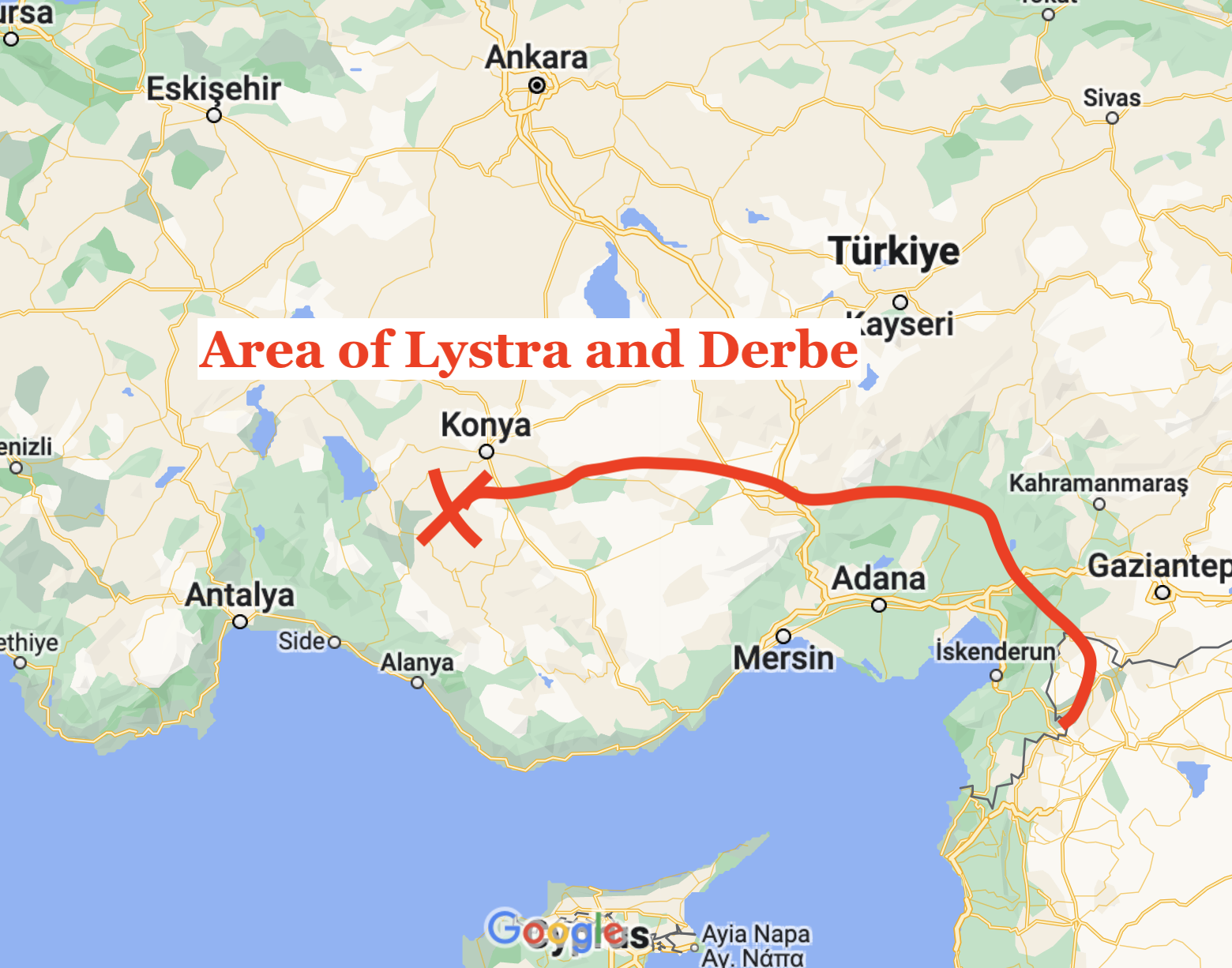
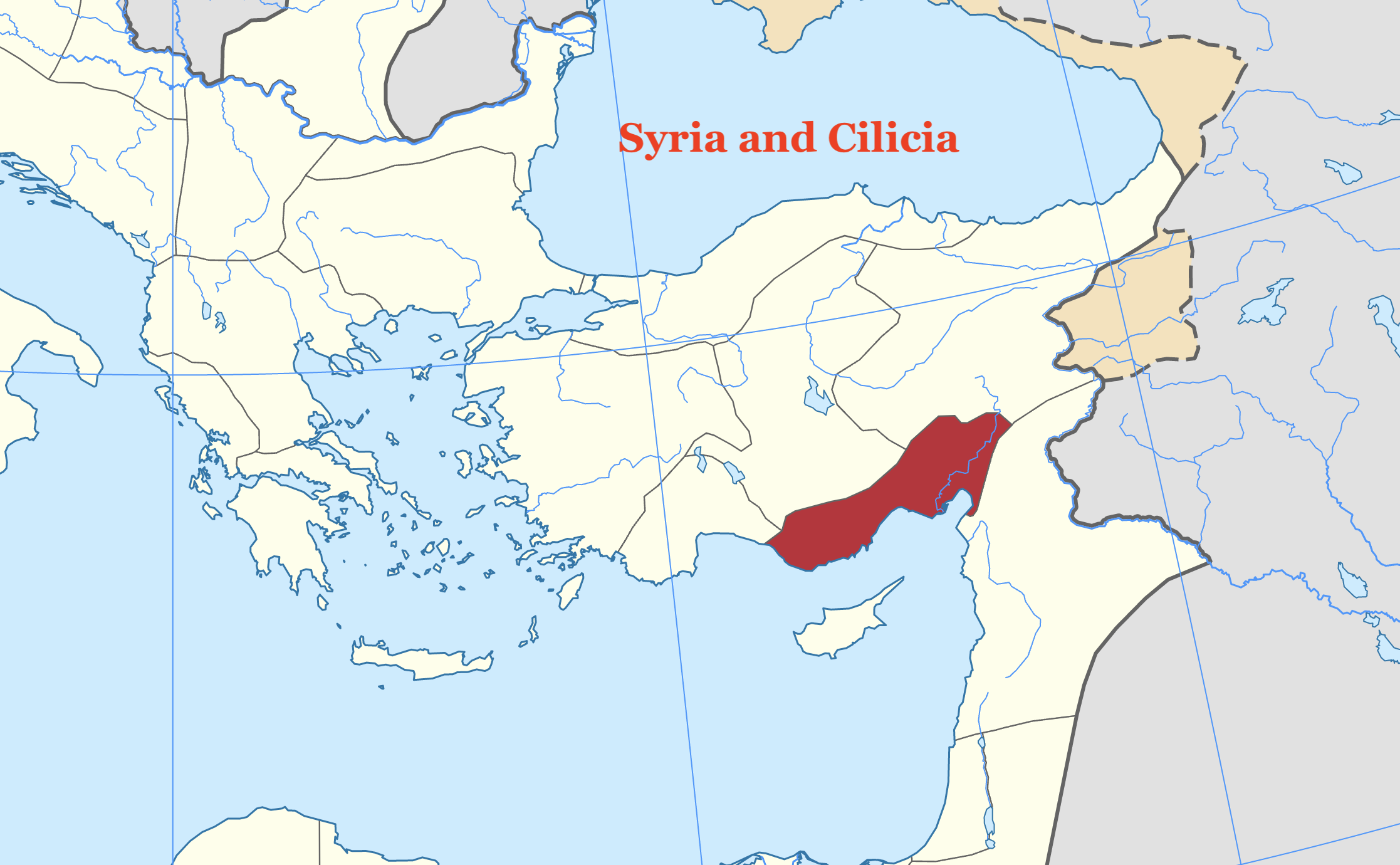
From Antioch,  via Sryria and Cilicia, to Derbe and Lystra.

Wednesday, 12 April 2023

Then he came to Derbe and Lystra. And behold, a certain disciple was there, named Timothy, the son of a certain Jewish woman who believed, but his father was Greek. Acts 16:1

Note: You can listen to today’s commentary courtesy of our friends at “Bible in Ten” podcast. (Click Here to listen).

You can also read this commentary, with music, courtesy of our friends at “Discern the Bible” on YouTube. (Click Here to listen), or at Rumble (Click Here to listen).

Acts 15 ended with a note that Paul went through Syria and Cilicia, strengthening the churches. Though he was accompanied by Silas, the verse spoke only of Paul. Chapter 16 begins with the singular as well, saying, “Then he came to Derbe and Lystra.”

Notably, the record of the journey of Barnabas and John is omitted by Luke. With the decision of the council established concerning Gentiles, the focus has turned to Paul, the Apostle to the Gentiles. As for this location, it is the area where Paul and Barnabas had fled in Acts 14:6 after having been chased out of Iconium. This is the area Paul referred to in Acts 15:36 –

“Then after some days Paul said to Barnabas, ‘Let us now go back and visit our brethren in every city where we have preached the word of the Lord, and see how they are doing.’”

Instead of Barnabas, it is Silas who is with him this time. While in this area that Paul had previously evangelized, it next says, “And behold, a certain disciple was there.” The wording does not indicate whether Timothy was in Lystra or Derbe. However, Lystra is the nearest antecedent, and it is named again in relation to Timothy in the next verse and in 2 Timothy 3 –

“But you have carefully followed my doctrine, manner of life, purpose, faith, longsuffering, love, perseverance, 11 persecutions, afflictions, which happened to me at Antioch, at Iconium, at Lystra—what persecutions I endured. And out of them all the Lord delivered me.” 2 Timothy 3:11, 12

Being a disciple means that he was probably converted by Paul on his previous missionary trip or that someone who was converted had later spoken to him about Jesus. Paul will call him a “son in the faith” or a “faithful son” in his epistles which may be an indication that Paul was a father to him through conversion.

In Philemon, Paul will say, “my son Onesimus, who I have begotten while in my chains,” when referring to Onesimus’ conversion. Therefore, it is possible that Timothy was one of the converts of Paul and Barnabas. Whatever the case, he is now referred to for the first time in Scripture with the words, “named Timothy.”

The name comes from the Greek words timé, price or honor, and theos, God. Thus, the name means something like (passively) Honored of God or (actively) Honoring of God. Other similar variations are given such as Dear of God, etc. Of him, it next says, “the son of a certain Jewish woman.”

This will be an important distinction that Paul will deal with in just two more verses. For now, it says of his mother that she was one “who believed.”

The meaning is certainly that she was a believer in Christ. Nothing indicates how this came about, but being around of Derbe and Lystra, it is likely that the message carried by Paul and Barnabas had made it to her ears either directly or indirectly. This faith is referred to by Paul in his first letter to Timothy –

“I thank God, whom I serve with a pure conscience, as my forefathers did, as without ceasing I remember you in my prayers night and day, greatly desiring to see you, being mindful of your tears, that I may be filled with joy, when I call to remembrance the genuine faith that is in you, which dwelt first in your grandmother Lois and your mother Eunice, and I am persuaded is in you also.” 1 Timothy 1:3-5

Noting that his mother is a Jew is important because it next says, “but his father was Greek.” Nothing is said of the father’s connection to either Judaism or Christianity. If such a connection existed, Luke would have noted it as he meticulously tends to highlight such things. Despite this, the faith of his grandmother and his mother was strong and that was instilled in Timothy either for his conversion or as an example to him to remain strong after his conversion.

Life application: There are faithful women noted in Scripture that were set as examples to their households. One of them is Abigail, the wife of Nabal. While he was an uncaring drunk, she saved him and his household from being killed by David through her faithful deeds, eventually becoming the wife of David after the death of Nabal. Likewise, Proverbs 31 describes the conscientious conduct of the woman of faith, describing someone Solomon was intimately aware of.

Faithful women such as Mary and Tabitha are noted in Luke’s writings. Though the history of Scripture predominantly is centered on men, women are carefully noted throughout its pages as well. Paul highlights the importance of women in an obvious way in his writings –

“For man is not from woman, but woman from man. Nor was man created for the woman, but woman for the man. 10 For this reason the woman ought to have a symbol of authority on her head, because of the angels. 11 Nevertheless, neither is man independent of woman, nor woman independent of man, in the Lord. 12 For as woman came from man, even so man also comes through woman; but all things are from God.” 1 Corinthians 11:8-12

God is revealing the history of the redemption of humanity through the pages of the Bible. As the man is the head of the house, the focus is naturally on the line of man throughout its pages. But within the greater story, we are reminded that women play an integral role in this process. Women should not be upset that certain restrictions are placed upon them in the church. They are created differently, and limitations are set because of these differences. And yet, there is an honor upon women that cannot be denied. Any noted figure in the church, even the humanity of Jesus, came through the woman.

When the biblical model is adhered to, things will work properly, and proper respect will be granted. Let us remember this and adhere to the order which God has ordained according to His wisdom.

Lord God, thank You for the differences that exist between men and women. Together, we form a unit that is ordained by You that is lacking when it is not properly adhered to. Help us to follow the guidelines set down by You so that we will not err in our lives as we live in Your presence. Amen.


Acts 15:41

Tuesday, 11 April 2023

And he went through Syria and Cilicia, strengthening the churches. Acts 15:41

Note: You can listen to today’s commentary courtesy of our friends at “Bible in Ten” podcast. (Click Here to listen).

You can also read this commentary, with music, courtesy of our friends at “Discern the Bible” on YouTube. (Click Here to listen), or at Rumble (Click Here to listen).

The previous verse noted Paul’s choosing of Silas to join him on his second missionary trip. Upon their departure, they were “commended by the believers to the grace of the Lord.” Now, that continues with, “And he went through Syria and Cilicia.”

The singular shows that the journey is currently conducted by Paul while Silas is merely there as an assistant. This is probably like Acts 13:5 where John was noted as their helper. This will continue in Chapter 16, noting Paul as the main subject. At times, it will say “Paul and his companions.” However, Silas will begin to take on a more prominent role, being noted alongside Paul, while in Philippi.

As for the region they are going through, Syria and Cilicia, those are, along with Antioch, the areas noted in the letter from the council earlier in this chapter –

“The apostles and elders, your brothers,
To the Gentile believers in Antioch, Syria and Cilicia:
Greetings.” Acts 15:23

As these areas are not where Paul and Barnabas had gone on their first missionary journey, and yet they are areas that had churches as evidenced by the letter and the travels of Paul now, it is probable that these churches were either established during the dispersion of the Jews at some unrecorded point or, more likely, by Paul.

If by Paul, it may be during the time when he had left Jerusalem after visiting the apostles as is recorded in Acts 9:26. In Acts 9:30, Paul returned to Tarsus which is in Cilicia. It was quite a bit later when Barnabas went to bring him to Antioch as is recorded in Acts 11:25. Therefore, during that period, Paul may have gone to the synagogues in the surrounding areas and spoke about Jesus, establishing churches that included Gentiles.

This appears to be the case as is recorded in Galatians 1:21 where Paul says he “went into the regions of Syria and Cilicia.” This can be also assumed because of the council’s letter which specifically addresses the Gentiles in those churches. It is evident that Judaizers had gone to those churches and countered the true gospel they had at first received.

Therefore, with Silas as a representative of those in Jerusalem, it was a wise time to personally go to those churches and spread the truth of the matter that had been resolved. Salvation is by grace through faith, and law observance has no part in one’s standing before Christ. It is this message they carried, “strengthening the churches.”

In other words, the churches had certainly been put into a quandary when the Judaizers had shown up and started teaching their false gospel of works of the law in order to be saved. Now, to shore them up and strengthen them, Paul had determined to bring them the true gospel once again, establishing that word with the authority and backing of those in Jerusalem.

Life application: Acts 15 has now come to an end. The main message of this chapter is not unlike the overall substance of the book of Galatians. But it is a message that permeates both Paul’s writings and the rest of Scripture as well. It is that man under law is at enmity with God but in the coming of Jesus Christ, there is grace.

From the first verse of the chapter to the last, this is the preeminent theme –

“Certain people came down from Judea to Antioch and were teaching the believers: ‘Unless you are circumcised, according to the custom taught by Moses, you cannot be saved.’” Acts 15:1

“Now then, why do you try to test God by putting on the necks of Gentiles a yoke that neither we nor our ancestors have been able to bear? 11 No! We believe it is through the grace of our Lord Jesus that we are saved, just as they are.” Acts 15:10, 11 (Peter’s final recorded words in Acts)

Acts 15:23-29 provide the decision of the council, excluding any hint of law observance.

He went through Syria and Cilicia, strengthening the churches. Acts 15:41

Interspersed throughout these select verses is the constant theme that salvation is by grace through faith and that works of the law are excluded from the process of salvation. Stand fast on this precept and stay away from any teacher, church, or denomination that imposes some type of works as a needful requirement to be pleasing to God. Rather, God is pleased with faith in the works of His Son –

Then they asked him, “What must we do to do the works God requires?”
29 Jesus answered, “The work of God is this: to believe in the one he has sent.” John 6:28, 29

O God, how grateful we are for Your grace. Thank You for Jesus Christ who has made it possible for us to receive it by faith. Help us to never add to the purity of the gospel. May our deeds be deeds of faith because of who we are in Christ. Amen.


Acts 15:40

Picture from inside domed thingy.

Monday, 10 April 2023 

but Paul chose Silas and departed, being commended by the brethren to the grace of God. Acts 15:40

Note: You can listen to today’s commentary courtesy of our friends at “Bible in Ten” podcast. (Click Here to listen)

You can also read this commentary, with music, courtesy of our friends at “Discern the Bible” on YouTube. (Click Here to listen), or at Rumble (Click Here to listen).

The great dispute that led to the parting of Paul and Barnabas came about in the previous verse. Because of it, Barnabas and Mark sailed to Cyprus. Continuing that thought, it next says, “but Paul chose Silas and departed.”

Here, Silas is reintroduced into the narrative. The dispute over whether verse 15:34 is authentic or not was discussed at that time. It could be that he stayed in Antioch all along, or it could be that he returned with Judas to Jerusalem and came back to Antioch later. Regardless of that matter, he was approved by Paul for his conduct and reliability and so Paul chose him to accompany him on his second missionary journey. In their departure, it next says, “being commended by the brethren.”

This is a blessing bestowed upon them as they headed out. The congregation met, prayed over them, and commended them to the task set before them. Because of what is said here, many scholars take the incredible stand that this means they took Paul’s side in the dispute that had arisen between him and Barnabas. That is an argument from silence, and it ignores the fact that the narrative is focused on the ministry of Paul.

For all we know, the church could have had a party with balloons, falafel, and herbal tea for Barnabas and John Mark. After that, they could have heaped blessings upon them and sent them off with a ten-piece band playing the 126th Psalm. The point is that the contents of Acts is highlighting the ministry of Paul now, just as it had highlighted Peter from Acts 1-12.

There is a transition from Jew to Gentile taking place. Paul is the one to effect that transition as it occurs, being the apostle to the Gentiles. Barnabas was mentioned because he was relevant to the account in relation to Peter and then to Paul. Now that he is not connected to Paul any longer, there is no need to focus on what has happened to him. As for Paul and Silas, they were commended by those at Antioch “to the grace of God.”

It is of note that some Greek texts say, “to the grace of the Lord.” As Jesus is God, and as God bestows His grace through the Lord, the change in texts does not change the significance of what is said. The blessing upon them is given and they will depart to carry on the work set before them.

Life application: It is fine to speculate on matters such as the blessing of the church upon Paul and Silas, but it is not appropriate to take sides where the Bible does not do so. As noted, that is an argument from silence, a fallacy. A fallacy is a belief that is mistaken because it is based on an unsound argument. There is a failure to properly reason out what is taking place. When a conclusion is made, the argument is rendered invalid because of this error in thinking.

There is an almost innumerable list of fallacies used by people. Take time to brush up on them and then try to avoid such errors in your words. This is important because once a fallacy is introduced, the rest of the argument has no further standing on that particular point. And it may be that particular point that the entire argument stands or falls on.

Lord God, help us to be reasonable in our thinking, discerning in how we present our thoughts and logical in evaluating arguments that arise. May this especially be so when we consider Your word. Help us not to insert fallacies into our perceptions about what You are telling us. Instead, give us wisdom to think things through in a right and clear manner. Amen.


Acts 15:39

Sunday, 9 April 2023

Then the contention became so sharp that they parted from one another. And so Barnabas took Mark and sailed to Cyprus; Acts 15:39

Note: You can listen to today’s commentary courtesy of our friends at “Bible in Ten” podcast. (Click Here to listen)

You can also read this commentary, with music, courtesy of our friends at “Discern the Bible” on YouTube. (Click Here to listen), or at Rumble (Click Here to listen).

The previous verse revealed Paul’s insistence that John Mark should not be taken along with him and Barnabas on the next missionary journey. With that, it now notes, “Then the contention became so sharp.”

The word translated as contention is paroxusmos. This is the first of two times it will be seen in Scripture. It signifies a paroxysm; a provocation that literally jabs someone to the point where he is forced to respond. Words such as provoke, incite, and so on will give the active sense of the matter. The other use of the word is in Hebrews 10:24 where it is used in a positive sense where believers are implored to motivate one another toward love and good works.

As for Paul and Barnabas, one would say something that cut so deeply the other couldn’t let it go and responded with his own cutting words. It is the type of argument that leads to words that may never be forgiven and wounds that may never heal. Because of this, it says “that they parted from one another.”

Of this, Matthew Poole dubiously equates this to the parting of Abraham and Lot as is recorded in Genesis 13, claiming they kept the unity of the Spirit. The words now do not bear this out. Their fellowship was torn apart, and the Spirit would have to deal with them individually as they proceeded in their own directions. Because of this, it next says, “And so Barnabas took Mark and sailed to Cyprus.”

Barnabas was from Cyprus (Acts 4:36) and it is where he and Paul set forth on the first missionary journey (Acts 13:4). Thus, it is the natural direction that he should go to have the most impact on his next missionary travels. Taking along John Mark shows Barnabas’ ability to overlook whatever Paul perceived as a permanent factor of disqualification.

This is the last time that Barnabas is mentioned in Acts. The record Luke lays down from this point on, as inspired by the Holy Spirit, is directed to the ministry of Paul, the apostle to the Gentiles. Any further record of future impact that Barnabas may have had on the church is left to secular history. In Scripture, he will be directly mentioned two more times. The first is in 1 Corinthians 9 –

“My defense to those who examine me is this: Do we have no right to eat and drink? Do we have no right to take along a believing wife, as do also the other apostles, the brothers of the Lord, and Cephas? Or is it only Barnabas and I who have no right to refrain from working? Who ever goes to war at his own expense? Who plants a vineyard and does not eat of its fruit? Or who tends a flock and does not drink of the milk of the flock?” 1 Corinthians 9:3-7

He will also be mentioned again in Galatians where Paul notes that he was led astray, just as Peter was, by the Judaizer who came to Antioch. That is an event that probably occurred during the events of Acts 15, although some see it as having occurred during Acts 18, something less likely. Of the events now taking place, John Gill says –

“…thus as soon almost as peace was made in the church, a difference arises among the ministers of the word, who are men of like passions with others; and though it is not easy to say which was to blame most in this contention; perhaps there were faults on both sides, for the best men are not without their failings; yet this affair was overruled by the providence of God, for the spread of his Gospel, and the enlargement of his interest; for when these two great and good men parted from one another, they went to different places, preaching the word of God.”

Life application: Regardless as to whether Paul and Barnabas ever reconciled again or not, the Spirit inspired Luke to record the events in Acts for us to consider what occurred. There was a sharp dispute between two men who had expended themselves for the gospel and who would continue to do so.

This is a fallen world. We all have limitations and buttons are bound to get pushed. When they are, our response may set us at odds with one another, even to the point of never fellowshipping together again. And yet, Paul does not later hint at the events that occurred or claim that Barnabas is not to be trusted. Rather, his comments in 1 Corinthians 9 (noted above) indicate that Barnabas was a trustworthy, selfless worker for the Lord.

Somehow, those in Corinth will hear about Barnabas even if there is no record of him traveling there in Acts. This means that Paul probably spoke well of him to the Corinthians, describing the person he had traveled with on his first missionary journey. In other words, just because they could not agree on working together any longer, Paul continued to speak highly about Barnabas. Let us consider doing this as well should we divide from another over some difference in opinion.

Heavenly Father, we are limited beings. We don’t have all the information, we only have so much power and stamina, we may get riled up or offended by events that occur, etc. Because of this, differences are bound to arise between us. When such times come, give us wisdom and discernment in how to handle such things. May we not spitefully hurt others simply because we can. Help us in this, O God. Amen.