Acts 18:13

Tune up and etc at Ken’s Auto. Great guys.

Friday, 7 July 2023

saying, “This fellow persuades men to worship God contrary to the law.” Acts 18:13

Note: You can listen to today’s commentary courtesy of our friends at “Bible in Ten” podcast. (Click Here to listen)

You can also read this commentary, with music, courtesy of our friends at “Discern the Bible” on YouTube. (Click Here to listen), or at Rumble (Click Here to listen).

In the previous verse, the Jews had stood against Paul and brought him to the judgment seat of Gallio. Their words are now given, “saying, ‘This fellow persuades men.’”

The word translated as persuades is found only here in Scripture, anapeitho. It gives the sense of inciting, as if Paul is forming his own insurrection by teaching something that stirs up others. That incitement is then defined by them as “to worship God.”

This is the main subject of the incitement. It is not the worship of God itself, however, that they are up in arms about. Rather, it is the manner of doctrine by which Paul taught others to worship God. To fully define his supposed inappropriate worship, they next say, “contrary to the law.”

This is not directly speaking of the Law of Moses. Rather, Gallio is a Roman proconsul. Thus, the Jews are trying to say that Paul’s doctrine is not in accord with Roman law. The worship of God through the Law of Moses was accepted as religio licita by Rome; it was considered acceptable under Roman Law.

The Jews, however, are saying that what Paul is teaching is not in accord with their law and therefore it is not in accord with Roman law. Hence, it must be religio illicita, meaning an illegitimate religious expression.

In other words, Judaism is the overall umbrella for worship by the Jews. Under that umbrella, there were many sects, such as the Pharisees, the Sadducees, the Essenes, etc. However, Paul was a Christian – a Christ follower. The Jews were attempting to disassociate this sect from the protection of the overall umbrella approved for the Jews. In doing so, the faith would be considered an unapproved form of worship by Rome, and thus “contrary to the law.”

Life application: What does it mean to be a true Jew? Paul explains it in Romans 2 –

“For circumcision is indeed profitable if you keep the law; but if you are a breaker of the law, your circumcision has become uncircumcision. 26 Therefore, if an uncircumcised man keeps the righteous requirements of the law, will not his uncircumcision be counted as circumcision? 27 And will not the physically uncircumcised, if he fulfills the law, judge you who, even with your written code and circumcision, are a transgressor of the law? 28 For he is not a Jew who is one outwardly, nor is circumcision that which is outward in the flesh; 29 but he is a Jew who is one inwardly; and circumcision is that of the heart, in the Spirit, not in the letter; whose praise is not from men but from God.” Romans 2:25-29

A true Jew is a Jew who is not merely circumcised in the flesh, but who is also circumcised in the heart, by the Spirit, through faith in Jesus Christ. Unfortunately, replacement theologians take Paul’s words and say, “We are circumcised in the heart and therefore we are true Jews.” This is a fallacy known as a category mistake.

A Gentile who believes rightly in Jesus is, in fact, circumcised in the heart. But this does not make him a Jew. He remains a Gentile. Paul never speaks of Gentiles as anything but Gentiles. He refers to Jews as Jews. This goes back to Romans 2:17 where he specifically begins to address the Jews. Paul is making a theological point about what it means to be a true Jew, not what it means for a Gentile to become a Jew through faith in Jesus.

Keep the categorical boxes straight. In so doing, you will not look ridiculous when making an absurd claim that you are something you are not. If you are a Gentile, you are a Gentile. Live with it.

Glorious God, thank You that because of faith in Jesus, each of us is precious in Your sight, whether we are Jews or Gentiles, men or women, rich or poor, or any other such earthly division. If we have called out by faith, accepting the gospel of Jesus, we are pleasing to You. What an honor and a blessing to be Your children because of that. Thank You, O God. Amen.


Acts 18:12

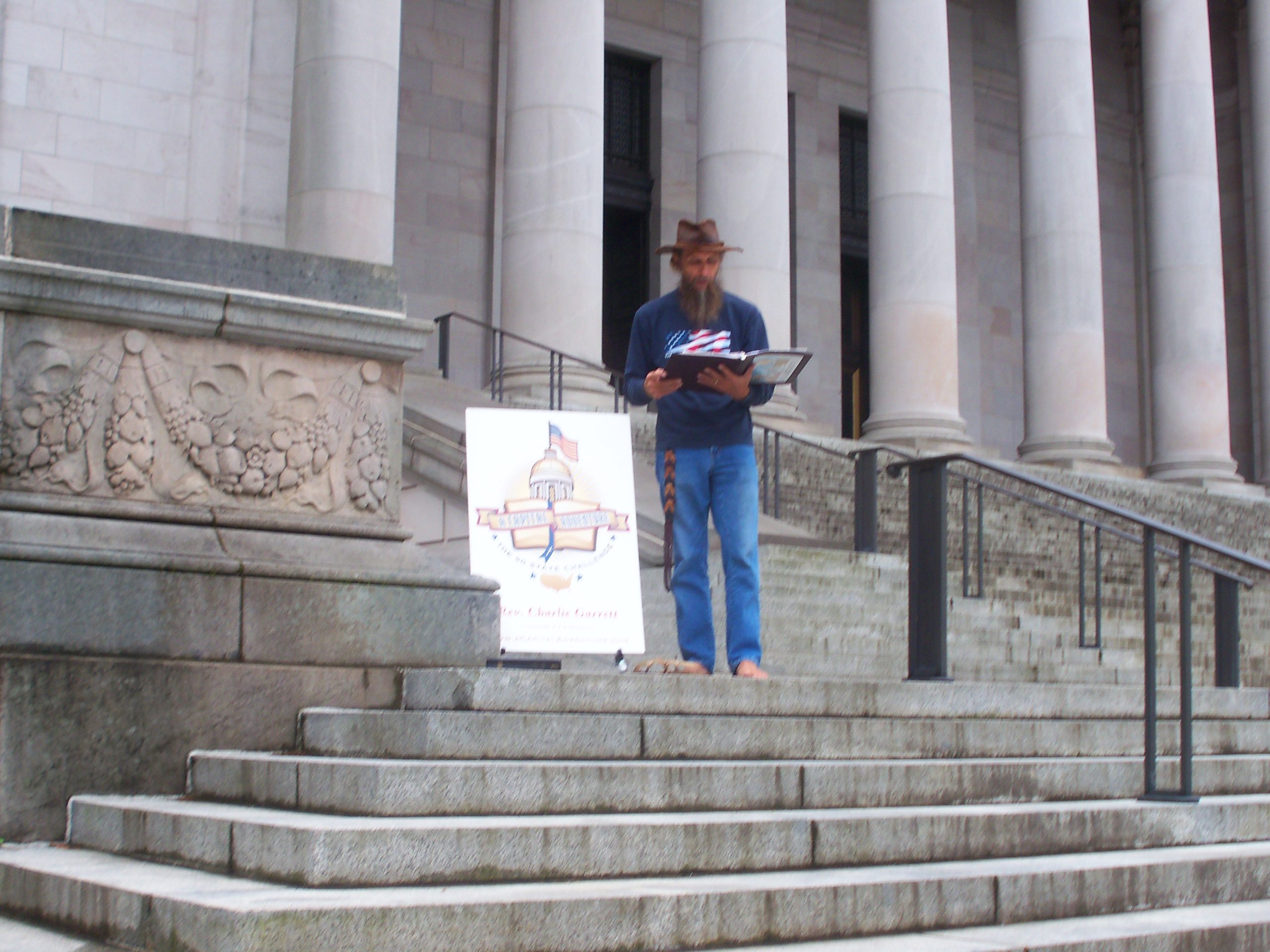
Washington Capitol.

Thursday, 6 July 2023

When Gallio was proconsul of Achaia, the Jews with one accord rose up against Paul and brought him to the judgment seat, Acts 18:12

Note: You can listen to today’s commentary courtesy of our friends at “Bible in Ten” podcast. (Click Here to listen)

You can also read this commentary, with music, courtesy of our friends at “Discern the Bible” on YouTube. (Click Here to listen), or at Rumble (Click Here to listen).

The previous verse noted that Paul continued in Corinth for a year and six months, teaching the word of God among the people. Now, it says, “When Gallio was proconsul of Achaia.”

Rather, the verb is a present participle, “And Gallio being proconsul of Achaia.” Gallio is described by Albert Barnes –

“Gallio, who was now deputy of it, was brother to L. Annaeus Seneca, the famous philosopher, who was preceptor to Nero; his name at first was M. Annaeus Novatus, but being adopted by L. Junius Gallio, he took the name of the family. According to his brother’s account of him (s), he was a very modest man, of a sweet disposition, and greatly beloved; and Statius (t) calls him Dulcem Gallionem, “the sweet Gallio”, mild and gentle in his speech, as Quintilian says.”

Luke notes that at this time he was the proconsul of Achaia. This is the first mention of Achaia in Scripture. It was a Roman province that contained almost all of Greece. Ellicott says, “This word, in its largest sense, comprehended the whole of Greece. Achaia proper, however, was a province of which Corinth was the capital. It embraced that part of Greece lying between Thessaly and the southern part of the Peloponnesus.”

During Gallio’s time as proconsul, Luke notes that “the Jews with one accord rose up.” The action described is from a word found only here in Scripture, katephistemi. It is a word that is also not found in the Greek Old Testament nor in any ancient Greek writers. It gives the sense of standing against another. Older Bibles incorrectly say “insurrection.” However, an insurrection is against a ruling body, not a guy you disagree with. As it next notes, “against Paul.”

As has been the case several times in Acts, the Jews’ jealousy at Paul’s success, and their inability to refute his words concerning the coming of Messiah, had them all steamed up. A similar event occurred in Daniel 6 where the governors and satraps rose up against Daniel, thronging king Darius. As for Paul, remembering that his letters to those in Thessalonica were written during his time in Greece, one can see the bitterness that had arisen between the two parties in his first letter to them –

“For you, brethren, became imitators of the churches of God which are in Judea in Christ Jesus. For you also suffered the same things from your own countrymen, just as they did from the Judeans, 15 who killed both the Lord Jesus and their own prophets, and have persecuted us; and they do not please God and are contrary to all men, 16 forbidding us to speak to the Gentiles that they may be saved, so as always to fill up the measure of their sins; but wrath has come upon them to the uttermost.” 1 Thessalonians 2:14, 20

The greater number of Jews had rejected the message of Jesus being the Messiah while the Gentiles had openly embraced it in ever-increasing numbers. What the Jews had been unable to do for many years with established synagogues, Paul had done in a short amount of time. And more, Paul did not mandate any type of conversion to Judaism. Rather he openly preached against it. This infuriated them. Because of this, they stood against him “and brought him to the judgment seat.”

The meaning is to the bema seat of Gallio. They probably did this because he was new and hoped that his inexperience in this position would work on their behalf. They had surely concocted a charge against him concerning his diversion from Jewish law. Where their teaching was accepted as a legitimate expression of the Roman-approved religions, they wanted what Paul was teaching to be cut off as illegitimate.

Life application: What happened to Paul in his day is what is coming about again in our own time. The proper expression of worship concerning Jesus is derived from obedience to Scripture. However, churches around the world are actually of the attitude that those who hold to Scripture are the problem.

For example, everything homosexual and perverted is becoming the norm in major denominations. And yet, there is no provision for such things in Scripture. Despite this, these apostate bodies are actively accusing those who hold to Scripture of being the ones who are intolerant and aberrant concerning proper Christian values.

Eventually, this will become so pervasive that these greater bodies will openly come against those who faithfully adhere to the word and attempt to have them cut off from being considered Christian entities. The unholy tide is rushing in their favor, and so this is not mere speculation, but rather a logical conclusion concerning what lies ahead. Be prepared to stand on your faith from a biblical perspective. It may cost you dearly, but heck, it is well worth it in the long run.

Heavenly Father, the time has arrived when what You have set forth in Your word concerning our conduct is no longer being tolerated. It seems inevitable that those who hold to what You expect of us will be increasingly persecuted for their faith. So, Lord, be with us and give us the strength to endure whatever comes against us. Help us in our weak state to be strong in You. Amen.


Acts 18:11

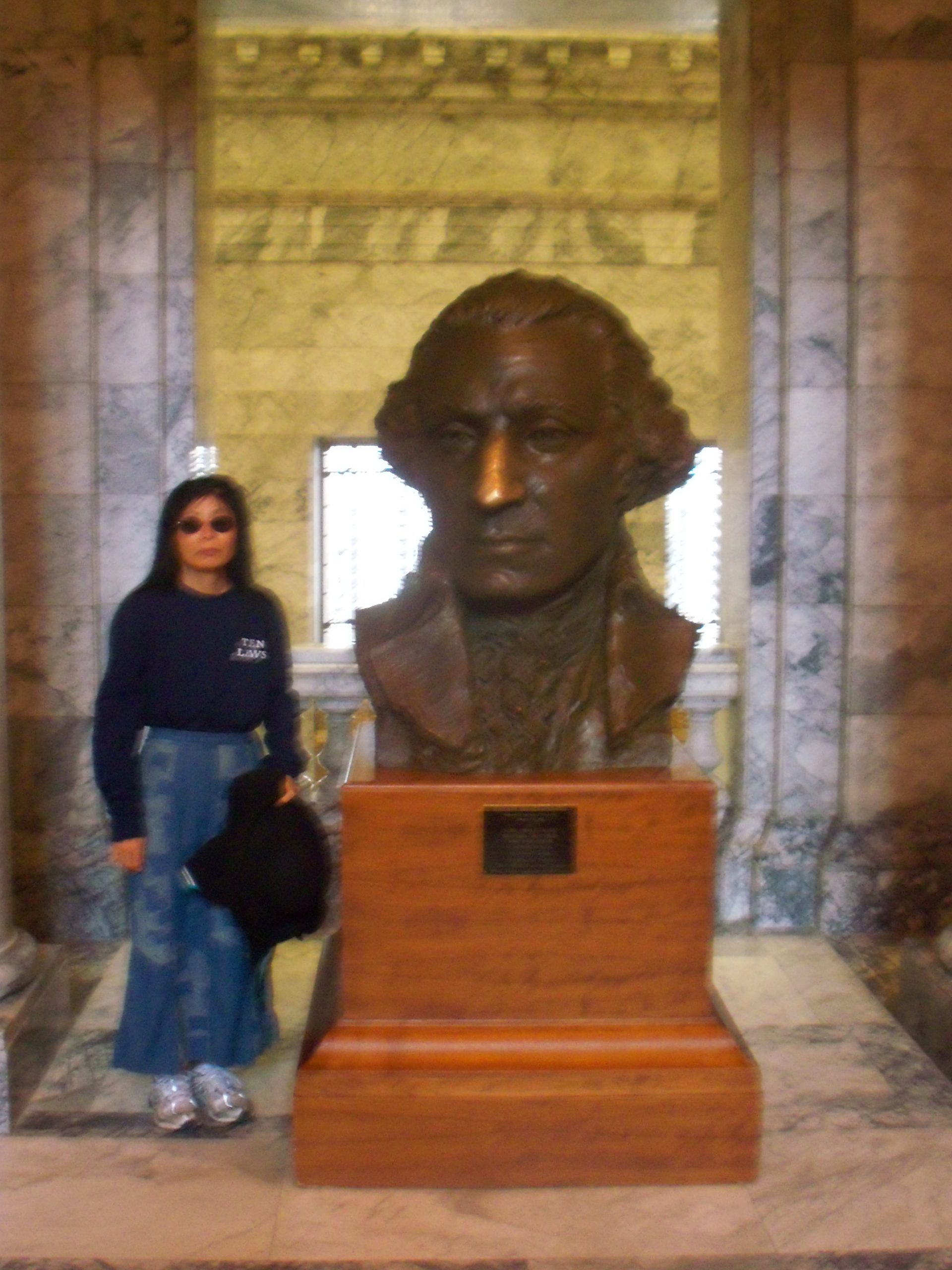
Washington statue with beautiful Japanese lady.

Wednesday, 5 July 2023

And he continued there a year and six months, teaching the word of God among them. Acts 18:11

Note: You can listen to today’s commentary courtesy of our friends at “Bible in Ten” podcast. (Click Here to listen)

You can also read this commentary, with music, courtesy of our friends at “Discern the Bible” on YouTube. (Click Here to listen), or at Rumble (Click Here to listen).

The last two verses detailed Paul’s vision of the Lord. He was informed that he was to keep on speaking and he was given reassurance that all would be ok. With that, it now says, “And he continued there.” The word is kathizó. It literally means “to sit down.” Figuratively then, it gives the sense of dwelling, remaining, abiding, etc.  It corresponds to the Hebrew word yashav which carries the same general meanings.

It is as if he sat in the overseer’s chair, monitoring, leading, and teaching the church. The Geneva Bible says that in former times the bishop’s seat was named from this. It shows that Paul not only dwelt there, but he ‘rested’ there. Instead of being depressed, anxious, or fearful, he was now in a relaxed state.

He understood that God was working in a new direction that did not have to be either exclusively Jewish or even have a majority of Jews. Rather, he was now accustomed to the fact that Gentiles were taking the predominant role in the church. This content state of “sitting down” is next said to be for “a year and six months.”

A year and a half allowed for the church to get established and for doctrine to begin to set in. This also allowed for the establishment of sister churches in the area. There is another church close by, in Cenchrea, that is mentioned in Romans 16 where it says –

“I commend to you Phoebe our sister, who is a servant of the church in Cenchrea, that you may receive her in the Lord in a manner worthy of the saints, and assist her in whatever business she has need of you; for indeed she has been a helper of many and of myself also.” Romans 16:1, 2

It is also implied in 2 Corinthians 1:1 as well, where it says, “To the church of God which is at Corinth, with all the saints who are in all Achaia.” Cenchrea is in Achaia. It is during his time in Greece that Paul wrote his epistles to those in Thessalonica as well. Thus, they are the earliest dated letters found in the New Testament.

This year-and-a-half lasted until the next verse where things were no longer so restful. That will be described in verses 12-17. Then, in verse 18 it will say, “So Paul still remained a good while.” In other words, Paul’s total time at Corinth was actually longer than a year and six months. The only place that he is recorded as staying at longer is in Ephesus which Acts 20:31 says was for a period of three years.

During this first year and a half, it next says that he was “teaching the word of God among them.” Paul not only evangelized and started churches in the area, but he took careful time to instruct the new believers in the word of God. He also had Crispus, the synagogue ruler, which surely would have been a real help for the long-term health of the church.

Life application: The church at Corinth became a highly dysfunctional church after Paul’s departure. There was a lot of division along with many other problems. It’s hard to imagine that not being the case without the epistles to refer to. They help remind, correct, admonish, and encourage us today.

Without those, it would be easy to divide up over pet peeves, misremember what was said, etc. Now, however, we have the epistles. When problems arise, it is generally because the epistles are either ignored or they are misinterpreted or intentionally misused. All members of the church should be familiar with them. Reading from Romans to Philemon, which are Paul’s named epistles, only takes a very short time. Even a slow reader can read them in no time at all.

From there, they should be read again at least a couple of times a year. If the pastor is competent, he should be referring to them constantly in his writings or in his Bible studies and sermons. The more they are referred to, the more familiar the congregants will be with what is in them. When conflicts in doctrine arise, they should be referred to and any disputes should be laid out for consideration.

The problem with such things is not that there is insufficient information in the word to direct the church. The problem is that the word is neglected or mishandled. Keep studying the word, keep referring to it, and be aware of what it says. God has given it to us to keep the church healthy and away from those who would take the church down unfriendly avenues.

Glorious Lord God, may we make the Bible a priority in our lives. In holding it close to our daily lives, referring to it, considering it, carefully analyzing it, and cherishing it, we will avoid many pitfalls in our walk with You. Help us to be diligent in our pursuit of Your precious and sacred word. Amen.


Acts 18:10

Fancy. Washington State Capitol.

Tuesday, 4 July 2023

“for I am with you, and no one will attack you to hurt you; for I have many people in this city.” Acts 18:10

Note: You can listen to today’s commentary courtesy of our friends at “Bible in Ten” podcast. (Click Here to listen)

You can also read this commentary, with music, courtesy of our friends at “Discern the Bible” on YouTube. (Click Here to listen), or at Rumble (Click Here to listen).

The Lord has come to Paul in a vision at night and told him to not be afraid, but to speak and not keep silent. His words now continue with, “for I am with you.”

The words are especially emphatic, “For I AM with you.” There is absolute assurance that Jesus is with Paul and will be with him. As noted in the previous verse, this is said in support of what was said there: Do not be afraid / for I am with you. The Lord acknowledges that he is with Paul and that his efforts will not lead to disappointment or harm. The Lord next explains to Paul how he knows he will be safe, saying, “and no one will attack you to hurt you.”

The meaning is correct, but it more literally says, “and no one will set upon you to harm you.” The Lord already knows, in advance, that Paul will not be molested while evangelizing and teaching. With this understood, the Lord next says, “for I have many people in this city.”

The Greek literally reads, “for people are to me many.” This then is not an explanation of how Paul knows he will be safe, as if those people will protect him. Rather, they are words supporting the words of the previous verse: Speak / for I have many people in this city.

In other words, these are not only people who have been saved, but people that the Lord knows will be saved. Paul is not to be disheartened over having a minimal effect in his evangelistic efforts, especially toward his Jewish brethren. Instead, he is to be certain that his words will be welcomed by the Gentiles and there will be a great harvest.

Concerning these words, Albert Barnes rightly contrasts Paul’s efforts in Athens with those in Corinth. He also gives several other well-thought-out points to consider –

We may learn from this:

(1) That God has a purpose in regard to the salvation of sinners.

(2) that that purpose is so fixed in the mind of God that he can say that those in relation to whom it is formed are his.

(3) this is the ground of encouragement to the ministers of the gospel. Had God no purpose to save sinners, they could have no hope in their work.

(4) this plan may have reference to the most frivolous, the most guilty, and the most abandoned, and ministers should not be deterred by the amount or the degree of wickedness from attempting to save them.

(5) there may be more hope of success among a dissolute and profligate population, than among proud, cold, and skeptical philosophers. Paul had little success in philosophic Athens; he had great success in dissolute Corinth. There is often more hope of converting a man openly dissolute and abandoned, than one who prides himself on his philosophy, and is confident in his own wisdom.

Life application: Looking at the first ten verses of the chapter, the despondency of Paul, leading to the need for the vision of the Lord, can be seen.

  • Paul departed from Athens and went to Corinth.
  • He stayed with Aquila and Priscilla and worked, thus he had to support himself.
  • He reasoned in the synagogue every Sabbath and persuaded both Jews and Greeks. Unlike in Berea, there was only a weekly, not a daily, interest in searching Scripture.
  • Only when Silas and Timothy came from Macedonia was Paul finally compelled to testify that Jesus is the Christ.
  • They opposed him and blasphemed.
  • Paul set up next to the synagogue, and Crispus and his household believed, but with the opposition to the message, the synagogue would remain unavailable to him.
  • A harvest among the Greeks was coming about, but Paul certainly mourned over his “countrymen according to the flesh” (Romans 9:1-3).
  • Jesus came and informed him that there was a great harvest to be expected in the city. The implication is that the transition from Jew to Gentile was increasing and this was to be expected. It would be the direction of the church henceforth.

Paul was expending himself in a city of pagans after having left a city filled with idolatry and empty philosophy. His own people of the flesh had all but rejected his efforts of evangelism. Those few converts from his class and ethnic group were slow in coming. But he had himself required a divine visitation in order to be converted and so he shouldn’t be surprised by the lack of converts. He must have been concerned about the direction of how things were going. But the Lord came and assured him that what was taking place was exactly as he should expect.

Even though Jesus had told him he was to go to the nations (the Gentiles), Paul always went to the synagogues first, but the increasing disdain for his message surely affected him. However, knowing Jesus’ words, he was discovering that what was transpiring was the new norm. God’s plan extended beyond anything he had anticipated.

The influx of Gentiles was now understood to be a long-term proposition. With this knowledge becoming solidified in him, he will continue to become more effective and much bolder in his ministry. The church being built was according to the Lord’s plan and therefore his efforts were worthwhile and not a waste of time or energy.

Lord God, we can learn so much from studying and contemplating Your word. When we may feel ineffective and our efforts for You seem to be gathering little attention or bearing little fruit, You are there, using them according to Your wisdom. Help us to continue with our tasks, even if they seem small or unimportant. If they are done for You, we know that You will use them in the most effective way. Thank You that Your word reveals this. Amen.


Acts 18:9

Big marble column. Washington State Capitol.

Monday, 3 July 2023 

Now the Lord spoke to Paul in the night by a vision, “Do not be afraid, but speak, and do not keep silent; Acts 18:9

Note: You can listen to today’s commentary courtesy of our friends at “Bible in Ten” podcast. (Click Here to listen)

You can also read this commentary, with music, courtesy of our friends at “Discern the Bible” on YouTube. (Click Here to listen), or at Rumble (Click Here to listen).

In the last verse, Paul spoke, people believed, and then they were baptized. With that, it next says, “Now the Lord spoke to Paul.”

This is something that has occurred and will continue to occur in Acts. Sometimes it is the Lord personally appearing, and sometimes it is through a messenger. It has happened to others, such as Stephen, Peter, and Cornelius. At the time of his conversion in Acts 9, the Lord appeared to Paul. In Acts 16:9, Paul had a vision of a man from Macedonia calling for them to come and help them. Now, it specifically says that the Lord spoke to Paul “in the night.”

This is the same as the vision from the man of Macedonia. It was specifically recorded as being at night. Likewise, this time it is also “by a vision,” or more literally, “through a vision.” It can only be speculated just what is being conveyed here, but it is the same word used several times already in Acts. Strong’s defines it as “something gazed at, i.e. A spectacle (especially supernatural).”

The Lord appeared to Paul in a recognizable way where he knew it was Him. In His appearing, He then said, “Do not be afraid.” The deduction is that the Lord said this because Paul was afraid and he needed to be reassured that he would bring about the effect the Lord intended. This is answered in the next verse: Do not be afraid / for I am with you.

The obvious question would be, “Afraid of what?” The answer is addressed in the next words where the Lord says, “but speak.” The word is a present imperative. It is a command to speak. Translations vary, but the intent is understood – be speaking, continue speaking, speak out, etc. Paul may have thought that the converts he had were all that would come about and from this point on, there would be little fruit.

The city was pagan and filled with idolatry and immorality. He might have thought he was insufficient to the task of any further evangelization. However, the Lord is instructing him to speak. This is also answered in the next verse: Speak / for I have many people in this city. Paul is being reassured that his words will meet the Lord’s intended effect. This appears to be what Paul is referring to in 1 Corinthians –

“And I, brethren, when I came to you, did not come with excellence of speech or of wisdom declaring to you the testimony of God. For I determined not to know anything among you except Jesus Christ and Him crucified. I was with you in weakness, in fear, and in much trembling. And my speech and my preaching were not with persuasive words of human wisdom, but in demonstration of the Spirit and of power, that your faith should not be in the wisdom of men but in the power of God.” 1 Corinthians 2:1-5

Paul admits his weakness, fear, and trembling. He obviously felt insufficient to carry on the task set before him. He again admits that this is the case in his second letter to them, asking the question for all to consider –

“Now thanks be to God who always leads us in triumph in Christ, and through us diffuses the fragrance of His knowledge in every place. 15 For we are to God the fragrance of Christ among those who are being saved and among those who are perishing. 16 To the one we are the aroma of death leading to death, and to the other the aroma of life leading to life. And who is sufficient for these things? 17 For we are not, as so many, peddling the word of God; but as of sincerity, but as from God, we speak in the sight of God in Christ.” 2 Corinthians 2:14-17

In those words, Paul asks the question rhetorically as a way of showing the immense responsibility laid upon the one who shares the gospel message. It is a two-edged sword that will lead some to life and some to death. The words when transmitted will lead to either eternal life or eternal damnation.

Who would take such a responsibility lightly? Who would even be willing to speak such words, knowing what the result could be? Paul implies here that it is the grace of God alone which enabled him to pronounce the eternal destiny-deciding words. He felt insufficient, but the Lord bolstered his confidence with this night vision. Continuing His words, He says to Paul, “and do not keep silent.”

Not only was he commanded to speak but he is exhorted to not be silent. One can speak and then take a break, but the Lord tells Paul to do otherwise. He is to both speak and not stop speaking. His words will be effective and the Lord will be with him in the process.

Life application: Today, we do not need such a vision from the Lord. The Bible is complete. The trepidation Paul experienced is something that others may experience. A missionary goes off to Thailand, for example. Upon arrival, the question may be, “How can I be effective in the task set before me?” If that person has read the account of Paul in Acts, he will know that if the Lord is with him, exactly what is intended by Him will come about.

The very words recorded in Acts and the epistles are given to remind us that such fear is unfounded. It is because these things are recorded there that we should not expect visions from the Lord. He has sufficiently demonstrated that His plans are being worked out. Because we have the Bible, we can know that even in our insufficiency, the Lord’s guiding hand is with us and it is fully sufficient to get the job done.

Lord God, because we have Your word, everything we need to proceed in life is documented and available to us. Nothing is lacking for us to accomplish what is set before us except to read and know what the word says. If we apply its contents to our own walk before You, we will be set for every challenge. Thank You for Your precious word. Amen.