Acts 22:26

War Memorial. West Virginia Capitol.

Thursday, 14 December 2023

When the centurion heard that, he went and told the commander, saying, “Take care what you do, for this man is a Roman.’” Acts 22:26

Note: You can listen to today’s commentary courtesy of our friends at “Bible in Ten” podcast. (Click Here to listen).

You can also read this commentary, with music, courtesy of our friends at “Discern the Bible” on YouTube. (Click Here to listen), or at Rumble (Click Here to listen).

A literal translation would be, “And the centurion, having heard, having gone to the commander reported, saying, ‘See what you are about to do! For this man is Roman” (CG).

As the Romans were binding Paul, intending to scourge him, he asked, “Is it lawful for you to scourge a man who is a Roman, and uncondemned?” An immediate response follows. Luke next records, “And the centurion, having heard, having gone to the commander.”

As soon as Paul uttered his words, the centurion realized there could be trouble. Any further action by him concerning Paul without direct approval of the commander could mean any level of punishment. Therefore, he “reported, saying, ‘See what you are about to do!’”

Some manuscripts place this as a question, saying, “What are you about to do?” Others make it a proclamation, “See what you are about to do…” The change doesn’t substantially alter the intent. The centurion is simply protecting himself and the commander from real trouble. If the commander presses the punishment on Paul, and Paul’s words are true, it could permanently change the course of their lives. The centurion’s next words explain why, “For this man is Roman.”

Paul was a citizen of Rome. What they were about to do was illegal and a punishable offense. Further action against Paul had to be stopped, and at this point, trouble may already be brewing. Paul’s personal attitude towards them could still result in real problems ahead.

Life application: Citizenship in a country carries certain rights and responsibilities. However, in many countries today, the leaders are purposefully following an agenda where those who are illegal in a country are treated better than those who are citizens.

Those who productively work are having the effort of their labors stolen from them and handed over to those who have no right to them. When a citizen is raped or killed by an illegal alien, the government – from the local level even to the federal level – will shield the illegal from punishment and deportation. Why do you think this is occurring?

There is a globalist agenda that is attempting to bring the world under a single authority, removing national barriers, rights, and laws. In order to do this, destroying the foundational underpinnings of societies is required. The only time those following this communist agenda have a change of heart is when their agenda personally backfires on them.

These things are, however, inevitable. The Bible’s prophecies about the future are being realized with each wicked step of these insufferable people. Don’t be surprised as you continue to see those in authority despise the nations they are charged to run and the people they are sworn to protect. Realize that the times are drawing near for God’s judgment on a global scale.

This also means that the time for Jesus to come for His people is also drawing near. Be ready! Tell people about God’s goodness in Christ now. The time for our departure is coming quickly.

Heavenly Father, help us to be prompt in speaking to others about their need for Jesus. May we not hold back in explaining the good news. Rather, may we be about fulfilling our call to evangelize, sharing the wonderful news that Jesus has prevailed over death, and He promises us eternal life in a world without wickedness. Instill this desire in us, O God. Amen.




Acts 22:25

Courtyard plants. West Virginia Capitol.

Wednesday, 13 December 2023

And as they bound him with thongs, Paul said to the centurion who stood by, “Is it lawful for you to scourge a man who is a Roman, and uncondemned?” Acts 22:25

Note: You can listen to today’s commentary courtesy of our friends at “Bible in Ten” podcast. (Click Here to listen).

You can also read this commentary, with music, courtesy of our friends at “Discern the Bible” on YouTube. (Click Here to listen), or at Rumble (Click Here to listen).

Paul has been taken into the barracks where the commander ordered that he be examined under scourging. Now, that continues with, “And as they bound him with thongs.”

Luke uses another word unique in Scripture, proteinó, translated by the NKJV as “bound.” It signifies “to stretch forward.” There is a debate about the correct way to translate these words. It could either say, “As they stretched him out to thong him…” or “And as they stretched him forward with thongs.”

In other words, are the thongs used to tie him in preparation for being beaten, or is he being tied up in order for the thongs, on which are the scourges, to be used on him? Vincent’s Word Studies argues that it would be superfluous to say, “bound him” and then add in “with thongs.” But Luke is normally very precise in his use of words. What others may find superfluous, he will find as an exacting and necessary detail.

On the other hand, Ellicott notes that “The Greek word for ‘thong’ is always used in the New Testament in connection with the idea of tying.” A good question to ask is, “Does it make any difference in the end?” For precision, yes. However, in the overall picture, the result will be the same. Paul is facing a good beating with scourges. Therefore, “Paul said to the centurion who stood by.”

The commander gave the order. A centurion is ensuring the order is complied with and will probably be the one to administer the scourging. Lower-ranking soldiers are the ones tying Paul up. Paul addresses the one in greatest authority in the room at the current time, asking, “Is it lawful for you to scourge a man who is a Roman, and uncondemned?”

His question would have an immediate effect on the centurion. If this person were a Roman citizen, those in the barracks would already be guilty of a crime for violating Paul’s rights by not giving him a trial first. Further, even if guilty, this type of punishment could not be given to a citizen.

To continue would make him even more guilty and possibly liable to the same punishment he was about to administer. If Paul were not a Roman, he would be a lunatic. To claim citizenship in this way would be punishable, probably by death. His claim alone would be enough to make the centurion stop and investigate what he was about to do.

Cicero says, “It is a heinous sin to bind a Roman citizen, it is wickedness to beat him, it is next to parricide to kill him, and what shall I say to crucify him?” Another ancient witness says, “According to the Valerian law, it was not lawful for magistrates to condemn a Roman without hearing the cause, and pleading in it; and such condemned persons might appeal to the populace” Pompon. Laetus de Legibus, p. 157.

Life application: If we think about the situation being described, Paul possessed certain rights that kept him from being bound, scourged, or executed without the strictest of investigations and proper judicial processes. Jesus was born in the same general generation, but He did not possess these rights.

Although we can dismiss that idea without much thought, we can also contemplate the enormity of it and stand in awe of what it means. God could have sent His Messiah into the world as the son of a Roman citizen. If this were to have been the case, the result would have been completely different.

But He preordained every aspect of the birth of Christ to meet His purposes. Hebrews 10 says –

“Therefore, when He came into the world, He said:
‘Sacrifice and offering You did not desire,
But a body You have prepared for Me.
In burnt offerings and sacrifices for sin
You had no pleasure.
Then I said, “Behold, I have come—
In the volume of the book it is written of Me—
To do Your will, O God.”’” Hebrews 10:5-7

God’s preparation of a body for Jesus includes every ancestor who came into His genealogy, purposefully selecting the line to ensure each prophecy about Him would come to pass. It included the timing of His birth, its location, the rights or lack of rights He would possess, etc.

Everything was meticulously ordained by God for the purpose of redeeming man. Those who dismiss the life of Christ do so without thinking through the incredible nature of what transpired, and thus the immense love God must have for the objects of His affections, meaning those whom He will save through the giving of Jesus.

Let us never minimize the magnitude of the marvel that is displayed in the coming of our Lord. God’s affections are on redeeming the people of the world. May we consider this and be willing to speak out the good news to those who so desperately need to hear it.

Lord God, how can it be that You would look upon us and see anything of value? We have all sinned and gone astray in our hearts, minds, and actions. And yet, You have graciously accepted us and forgiven us because of faith in what was done in the giving of Christ Jesus our Lord. We shall praise you forever and ever because of the glory of our Lord. Hallelujah and amen.


Acts 22:24

Tippy top of West Virginia Capitol.

Tuesday, 12 December 2023

the commander ordered him to be brought into the barracks, and said that he should be examined under scourging, so that he might know why they shouted so against him. Acts 22:24

Note: You can listen to today’s commentary courtesy of our friends at “Bible in Ten” podcast. (Click Here to listen).

You can also read this commentary, with music, courtesy of our friends at “Discern the Bible” on YouTube. (Click Here to listen), or at Rumble (Click Here to listen).

The Greek reads, “The commander ordered him to be brought into the barracks, having directed him examining by scourges so that he might know for what reason they cried out thus against him” (CG).

In the previous verse, Paul’s words had caused the crowd to go into an uproar, casting off their clothes and throwing dust up into the air. With that, Paul’s words were forcibly finished, and, as it next says, “The commander ordered him to be brought into the barracks.”

No further purpose could be served by allowing Paul to attempt speaking to the crowd again. As Paul spoke in the local dialect to the people, the commander probably would not have known the substance of what he had said. He might have known a little of the language, but he obviously didn’t understand the entire discourse. And so, he gave order to his men to bring him into the barracks, “having directed him examining by scourges.”

This implies that this was the standard way of eliciting information from someone. Were it not, the account would have gone through stages of interrogation leading up to torture. As for the word translated as examining, anetazó, it is used only twice in the Bible, first here and then again in verse 29.

It signifies thorough examining, as if a person were on trial, such as a witness. Strong’s notes that this was frequently accomplished through the aid of torture. Such is the case now with Paul. The word is not found anywhere in classical Greek, but it is used once in the apocryphal book of Susanna.

As nothing is noted concerning interrogation leading up to torture, it shows that the Romans wasted no time in getting to the point. Hence, it next says, “so that he might know for what reason they cried out thus against him.”

It would be well known that this type of punishment was how the Romans operated. Therefore, it would be a way of keeping the peace through threats. Paul was to be subjected to a brutal interrogation that would leave him in agonizing pain and with permanent scars to remind him of the ordeal.

Life application: Ecclesiastes 8:11 says, “Because the sentence against an evil work is not executed speedily, therefore the heart of the sons of men is fully set in them to do evil.” We can philosophize all day long about whether the judgment to beat Paul, in order to elicit information from him was wrong or not. But it is certain that it was an effective deterrent within the Roman society.

When people saw the consequences of being a miscreant, it would keep them in check concerning their own conduct. Today, it is exactly the opposite. Those who do right are punished as offenders of the law. Those who break the law are not required to post bail, given light or no sentences, and are pandered to by the news media, portraying them as victims.

Because of this, society in many large cities has devolved into abject fear among the general populace. They know that if they defend themselves and their property from evildoers, they will be charged. Police are likewise hand-tied. If they capture a thug who should otherwise be removed from society and something happens to him, even accidentally, the arresting officer can be charged and spend many years in prison.

This has led to a total breakdown in society. Ecclesiastes, Proverbs, and even Job provide wisdom concerning these things. This wisdom has been rejected by left-leaning politicians, media, judges, and academia. Thus, societal harm, possibly permanent, has arisen.

A society cannot function like this. A rejection of the biblical standard of morality, by a nation that was established on the biblical model, can only result in its own implosion. Be sure to vote when the time arises. The only thing that will stem this unholy tide is to vote against these ungodly lefties.

Heavenly Father, nations that previously honored You, Your word, and the moral principles set forth by You are quickly turning away to ideas that can only result in societal degradation and ever-increasing moral turpitude. Give us wisdom and the ability to stand against these things. It is our desire that our societies be honoring of You. Help us to restore godly values in the nations we live in. Amen.


Acts 22:23

June 20. My dad’s BD.

Monday, 11 December 2023

Then, as they cried out and tore off their clothes and threw dust into the air, Acts 22:23

Note: You can listen to today’s commentary courtesy of our friends at “Bible in Ten” podcast. (Click Here to listen).

You can also read this commentary, with music, courtesy of our friends at “Discern the Bible” on YouTube. (Click Here to listen), or at Rumble (Click Here to listen).

The tense of the verbs is all wrong in the NKJV. The Greek uses present participles, saying – “And they – howling and hurling their garments and casting dust into the air” (CG).

In the previous verse, the crowd before Paul shouted out for him to be removed from the earth, not being fit to live. With that, it next says, “And they – howling.”

It is a word that signifies clamor. It is properly identified with the loud bay or croaking of animals. Thus, it can signify shouting, shrieking, etc. Plato used it when describing the howling of dogs. These people, who were supposedly the holy nation of the law, had assumed the aspect of unclean canine, yelping as if a pack of rabid Dobermans. Next, it says, “and hurling their garments.”

It is a word found only here in Scripture, rhipteó. It signifies to cast or hurl. In this case, one can see them like a bunch of angry school children ready to fight. They pull their outer garments off and toss them in the air or to the ground, away from their bodies, thus freeing themselves for a rumble. It then adds, “and casting dust into the air.”

It is a metaphor for their conduct about Paul. He is a man of the dust, and they are recommending he be returned to dust. It is a sign of great distress and, at times, mourning. The scene may seem almost comical to us, but what is written here is the customary way of showing both anger and a sense of anguish over what they perceive as blasphemy.

Even today, we can see this type of Middle Eastern rage on TV as people show their offense or revulsion in similar displays. Both acts also have to be considered in light of Paul’s detention by the Romans.

The Jews knew that they couldn’t stone Paul while he was in Roman custody. But showing him that this is what they would do if he wasn’t protected by them, they 1) cast off their clothing, a sign that they were readying to stone him; 2) they threw dust into the air, a sign that if he wasn’t surrounded by Romans, it would be rocks instead of dust.

Both actions are signs that they would gladly fulfill their words of removing him from the earth.

Life application: There is a lot of rage in the world against the gospel. That is becoming more pervasive as time goes by. Nations that were once heralds of the gospel now send government agents to spy on people who simply want to worship Jesus as their forefathers had done.

This attitude results from an internal hatred stemming from their own deviant morals. Christians hold that their ultimate moral standard is based on what God expects of them, not what the government dictates. Thus, it is ultimately an attack against the God who gave man the moral guidelines in the first place.

These people claim they don’t believe in God, and yet they have a vehement hatred for the God they claim doesn’t exist. Their thinking is irrational and violent, just as the Jews in Paul’s time were. They hated that the God Paul proclaimed had a moral base inclusive of Gentile salvation. Thus, they hate His Messiah, who came to represent God.

From there, they hate any messenger of this Messiah. But Jesus stated this would be so –

“For the Father judges no one, but has committed all judgment to the Son, 23 that all should honor the Son just as they honor the Father. He who does not honor the Son does not honor the Father who sent Him.” John 5:22, 23

“If the world hates you, you know that it hated Me before it hated you. 19 If you were of the world, the world would love its own. Yet because you are not of the world, but I chose you out of the world, therefore the world hates you.” John 15:18, 19

This attitude continues today toward those who hold to the words of Scripture. The world hates the message of Jesus because it proclaims a standard of morality that the world does not accept. Scripture also holds a standard of acceptance that most people groups do not want to accept. All people are on the same level of acceptance in Christ, regardless of culture, genealogy, etc. This is highly unpalatable to many.

Hold fast to the word despite this. God is calling out a group of people from this world who will worship Him in spirit and in truth for all eternity. What happens now is a temporary blip on the way to glory.

Lord God, thank You for allowing us to come to You just as we are. The color of our skin, the family line we descend from, the cultural background we possess, and other such distinctions are set aside in Christ. We are accepted by faith in Him. How freeing that is! Thank You for Jesus Christ our Lord. Amen.


Acts 22:22

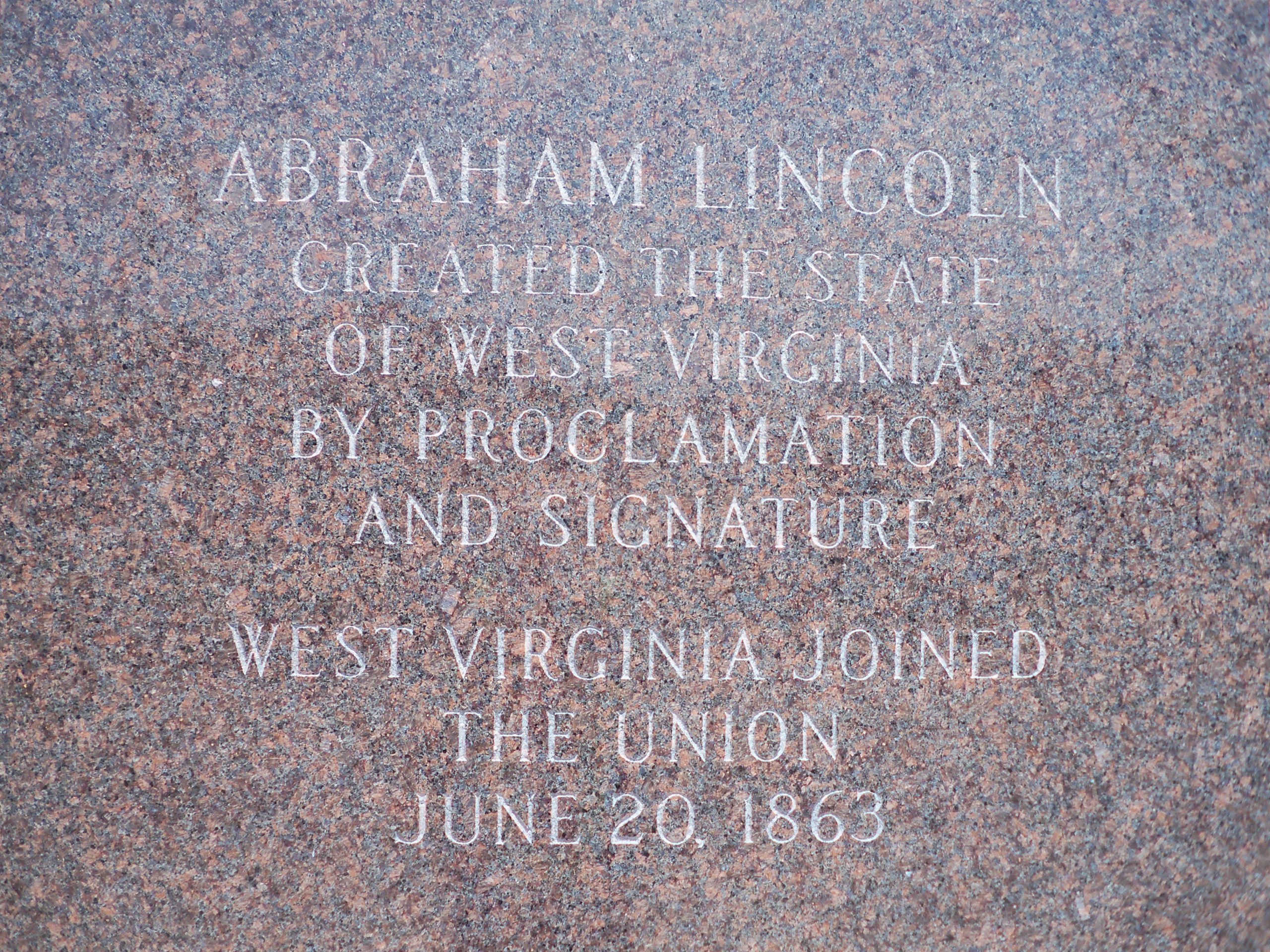
Lincoln plaque.

Sunday, 10 December 2023

And they listened to him until this word, and then they raised their voices and said, “Away with such a fellow from the earth, for he is not fit to live!” Acts 22:22

Note: You can listen to today’s commentary courtesy of our friends at “Bible in Ten” podcast. (Click Here to listen)

You can also read this commentary, with music, courtesy of our friends at “Discern the Bible” on YouTube. (Click Here to listen), or at Rumble (Click Here to listen).

In the previous verse, Jesus told Paul he was to depart because he was being sent far from Jerusalem to the Gentiles. Now, that continues with, “And they listened to him until this word.” The reference is to the word “Gentiles.”

One word. Just one word is all that it took to remove any further chance of reasoned dialogue. That same thought permeates the theological and cultural minds of Jews to this day. Gentiles, though being the people among whom they dwell, are not considered on the same spiritual or cultural level as they are.

To think that one of their own would be willing to minister to them about the “supposed” Messiah was worse than a slap in the face. Everything Paul had said implied that he was a spokesperson for this Messiah and that the message he proclaimed was in line with this Messiah’s intents and purposes. Therefore, Paul’s Messiah could not be their Messiah. Therefore, it next says, “and then they raised their voices.”

One can see the crowd suddenly roaring as one. Those who had sat down to listen while he spoke would have raised to their feet with their fists held high. Teeth would have gnashed, and faces would have fumed with fury. They collectively shouted out “and said, ‘Away with such a fellow from the earth, for he is not fit to live!’”

The Messiah Paul proclaimed was, to them, a total failure. How could He favor the Gentiles when He hadn’t even broken off their bonds? The people of Israel were looking for an earthly ruler, never considering that the bonds they were in were spiritual ones. They were slaves to sin, and the law kept them in that bondage.

Only in the Messiah that Paul proclaimed could such bonds be removed, but they couldn’t see this. They stumbled over the stumbling block, and in the process, they killed the messengers of the truth. They now intended to kill this one as well.

In proclaiming that the messianic message was intended for all people, Paul had raised Gentiles to their level. At the same time, he had lowered them from their supposed exalted and chosen status. However, this attitude was from a selective reading of their own Scriptures that proclaim salvation to the nations and restoration of life to the Gentiles as well as Israel.

Having missed this obvious precept, they found him wholly unfit to live and called for him to be removed from the earth.

Life application: When we are taught something by someone we trust, such as our preacher, we will generally accept his words as correct. After all, he is the specialist in matters of faith. Dad might be a dentist, and the preacher may go to him to have his teeth repaired, but Dad goes to the preacher to be taught the word.

As we grow up, having believed a particular doctrine, we will tend to mentally dismiss anything that contradicts what we now believe is true. This is known as cognitive dissonance. It is a state where we have inconsistent thoughts, attitudes, or beliefs that are related to particular matters or concepts.

For example, if we are taught that there is no such thing as a rapture of the church, we will tend to ignore any teaching that supports that doctrine, even if there is a preponderance of evidence that supports it. Even irrefutable arguments will be dismissed.

This is why it is so difficult for people to leave cults. What has been trained into them is extremely difficult to overcome. Therefore, it is so very important to read and know the Bible and ask God to correct anything in your doctrine that is wrong. But you must be willing to go where He leads directly from His word.

Removal of bad doctrine is difficult, but it is not impossible. As Paul says, “Test all things; hold fast what is good” 1 Thessalonians 5:21.

Lord God Almighty, we are prone to take wrong turns in life, thinking we are on the right path. Help us to keep our feet on sound doctrine and proper biblical interpretation. Clean out those doctrines that are faulty and fill us with right and proper thinking concerning this precious and sacred word that You have given us. Amen.