Acts 23:1

Big and gnarly tree. West Virginia Capitol.

Tuesday, 19 December 2023

Then Paul, looking earnestly at the council, said, “Men and brethren, I have lived in all good conscience before God until this day.” Acts 23:1

Note: You can listen to today’s commentary courtesy of our friends at “Bible in Ten” podcast. (Click Here to listen).

You can also read this commentary, with music, courtesy of our friends at “Discern the Bible” on YouTube. (Click Here to listen), or at Rumble (Click Here to listen).

The Greek is more literally translated, “And Paul, having looked fixedly at the council, said, ‘Men, brothers, I – in all good conscience – have citizened to God until this day.’”

In the previous verse, Paul was brought by the Roman commander and set before the council. With him there, Chapter 23 begins with, “And Paul, having looked fixedly.”

Paul’s fixed look implies a staring gaze. HELPS Word Studies says it signifies “to fix one’s eyes on some object continually and intensely – ‘to look straight at, to stare at, to keep one’s eyes fixed on.’” It was used in Luke 4:20, Acts 6:15, and Acts 7:55, among other times. If his eyesight was bad, as speculated, it would be all the more relevant to show that he diligently was attempting to meet the eyes of his accusers. Therefore, he having looked fixedly “at the council, said, ‘Men, brothers.’”

In his address, he greets them as equals, “men, brothers.” This would have been the first time in a quarter of a century that he stood in this place, sometime around the stoning of Stephen. There, after all these years, he begins his defense with the words, “I – in all good conscience.”

Here, a new word is introduced into Scripture, suneidésis. It signifies “joint-knowing.” It thus signifies “conscience which joins moral and spiritual consciousness as part of being created in the divine image. Accordingly, all people have this God-given capacity to know right from wrong because each is a free moral agent” (HELPS Word Studies).

Paul is summing up all of his time during those intervening years and his ministry to the Gentiles, whom they so despised, as right and appropriate. He asserts that his moral conduct in this regard was above reproach and that it would have been approved of by the higher moral power before whom he conducted his affairs. That is next expressly stated in the words “have citizened to God until this day.”

Another new word is brought into Scripture here and is defined by a new Charlie word now gifted to the English language, politeuomai. It means to behave or live as a citizen, coming from polités, a citizen. Thus, it means to citizen oneself. As it is a perfect participle, “have citizened” fits the meaning exactly. The word is found only elsewhere in Scripture in Philippians 1:27 –

“Only let your conduct [lit: citizening (another new Charlie word)] be worthy of the gospel of Christ, so that whether I come and see you or am absent, I may hear of your affairs, that you stand fast in one spirit, with one mind striving together for the faith of the gospel.”

This word is an idiom of the times to mean that he had lived properly, and his conscience was clean, even before God. This would have riled up those before him to no end, having been aware of his efforts among the Gentiles and of his walk with the Messiah they had rejected.

For some other times Paul speaks of conscience, see 2 Timothy 1:3; 1 Timothy 1:5; Romans 2:15, 13:5; 1 Corinthians 4:4, 10:25; and Acts 24:16.

Life application: As noted in previous commentaries, Paul never denied his citizenship either before God, or as a citizen of the empire (Rome) or country (Israel) to which he belonged. He used each according to the rights and benefits conferred upon him because of that citizenship.

And more, he claimed his rights to a heavenly citizenship as is indicated elsewhere in the New Testament. Of this status within a society, Wikipedia defines the word politeia. It is a help in understanding one’s rights within a particular society –

According to Liddell and Scott’s Greek-English Lexicon a meaning of politeia is ‘the conditions and rights of the citizen, or citizenship’, analogous to the Latin civitas.

Politeia, in Greek means the community of citizens in a city / state. …

Politeia is derived from both the root word polis meaning ‘city’ or ‘state’, and from the verb politeuomai that means ‘I am living as an active citizen of the polis.’

People living in a Greek city/state were not necessarily citizens. A person that was ostracized from the active matrix of the city was an example of such. Another example was people who lived in the city but were not active citizens who had a say in the political processes of the community. Women, slaves and others who Greek men deemed unworthy were not in the active matrix of the political formations of that city state, making them not-citizens, so not part of politeia.

In countries of the world today, many illegal aliens are brought in. And yet, they do not possess the rights of the nation in which they live. In the visible church, there are unbelievers. They are in the church, but they are not of the church. Thus, they have no right to the citizenship of the church.

Paul held the rights of a Roman, a man of Israel, and a member of the church. He thus possessed the rights of the heavenly citizenship found in Christ. The Jews who had rejected Jesus do not possess those rights. This continues to this day.

This is an important point. Dual Covenantalism claims that Jews are saved by adherence to the law. This would be like saying that the illegals, or even legal immigrants still on visas or Green Cards, in the US have rights to citizenship because they work in jobs earning money.

Anyone with a modicum of sense can tell that such a notion is false. Only a person who is made a citizen can have the rights of a citizen. This is the false dichotomy set forth by people like John Hagee, who teach Dual Covenantalism. They claim rights for others that do not exist. The only way to possess the heavenly rights of citizenship of the New Covenant is to enter into the New Covenant through faith in the completed work of Jesus Christ.

But this also again shows the sad state of those Christians who do not participate in the political decisions of the nations in which they live. They fail to understand that God has placed them in those nations to be active members of them.

Understanding the nature of the Hebrew or Greek writings, from the perspective of the people who lived during those times, helps shed light on what we are being told in Scripture. Be sure to pay heed. Be sure to participate in each body of which you are a citizen. And be sure to never acknowledge others’ rights to citizenship that they do not possess, lest you lead them to a false sense of security that they should not enjoy.

Lord God Almighty, may we diligently study Your word and show ourselves approved before You by adhering to the precepts You have laid out for us there. May we carefully consider our state before You and never waffle in conducting our lives accordingly. We have been granted heavenly citizenship because of Jesus. Help us to live in accord with that truth. Amen.




Acts 22:30

Look’s like crab apples at the WV Capitol.

Monday, 18 December 2023

The next day, because he wanted to know for certain why he was accused by the Jews, he released him from his bonds, and commanded the chief priests and all their council to appear, and brought Paul down and set him before them. Acts 22:30

Note: You can listen to today’s commentary courtesy of our friends at “Bible in Ten” podcast. (Click Here to listen).

You can also read this commentary, with music, courtesy of our friends at “Discern the Bible” on YouTube. (Click Here to listen), or at Rumble (Click Here to listen).

A literal translation would be, “And the next day, desiring to know for certain why he is accused by the Jews, he loosed him and commanded the chief priests and all the council to assemble. And having brought down Paul, set him among them” (CG).

In the previous verse, the Roman soldiers withdrew from their plans to scourge Paul. Now, the words continue with, “And the next day.”

Without any delay, and certainly because Paul was a Roman, the commander acted. He surely didn’t want to keep Paul incarcerated if he had done nothing wrong. Continuing, it says he was “desiring to know for certain why he is accused by the Jews.”

This refers back to Acts 21:34, which occurred on the previous day –

“And some among the multitude cried one thing and some another.
So when he could not ascertain the truth because of the tumult, he commanded him to be taken into the barracks.”

We need to carefully consider what is happening. If Paul was a Roman, then the commander would certainly have talked to him about what happened and asked about the situation. No charges had been filed against Paul that we are aware of. He was in the midst of a ruckus and was carried out of it. At this point, the commander just wants to know for certain why he was accused.

As he had not been able to satisfactorily determine what the Jews were in a tizzy about, and because he could not “examine” Paul through torture, he needed to set the record straight before he could take any further action. Therefore, “he loosed him.”

The word is luó. It means to loosen. Thus, he may have been bound, or he simply may have been in a cell from which he was released. Either way, once he was loosed, the commander “commanded the chief priests and all the council to assemble.”

A general meeting of the leadership was called. This probably would never have been needed if Paul was not a Roman. Instead, the scourging would have revealed what they needed to know. However, that could not take place, and so this meeting was necessary. There is still the consideration that if Paul was telling the truth in whatever they had discussed, he would still be open to attack and harm. Therefore, the verse and the chapter end with, “And having brought down Paul, set him among them.”

In order to both protect Paul and also to get the leaders to tell their side of the story, he had Paul escorted to them for all to openly work through the matter. The commander had made a giant mistake in his handling of Paul the previous day. He would not allow such an error to take place again. Therefore, Paul was to be carefully escorted and protected during the entire process.

Life application: The account of the Roman commander shows that cutting corners is not the best way to go about things. He was given the responsibility of maintaining the peace, but he was also given the responsibility of protecting the citizens of Rome from those among whom they dwelt.

It may have been unexpected to find a Jewish man in the middle of a ruckus to be a Roman citizen, but it was something he should have checked anyway. This is especially so because putting anyone through a scourging would be a serious matter. But to put a Roman citizen through that ordeal would be a life-changing ordeal for both of them.

He didn’t stop to check. Now he must make an extra effort to determine what he might have found out the day before without the additional grief. We can learn from this. When we have a matter that is set before us, the least we can do is think through what the outcome of being hasty may be. Small things can turn into big problems if we don’t consider how our decisions may adversely affect the result we are trying to obtain.

Go slow, think through your actions, and then act in a wise and prudent manner in the matters you are involved in. Be sure this is especially so when others may be negatively affected by what you do. Stop and pray about matters as well. James tells us that if we lack wisdom, we should ask of God, “who gives to all liberally and without reproach” (James 1:5).

Glorious Lord God, may the decisions we make and the actions we take be carefully considered before we act. Give us wisdom to not cause harm to others as we go through life. May we carefully think through the steps we take so that harmony will reign, and You will be glorified through the wise conduct of Your people. Amen.


Acts 22:29

Trees. West Virginia Capitol.

Sunday, 17 December 2023

Then immediately those who were about to examine him withdrew from him; and the commander was also afraid after he found out that he was a Roman, and because he had bound him. Acts 22:29

Note: You can listen to today’s commentary courtesy of our friends at “Bible in Ten” podcast. (Click Here to listen).

You can also read this commentary, with music, courtesy of our friends at “Discern the Bible” on YouTube. (Click Here to listen), or at Rumble (Click Here to listen).

The words are more literally rendered, “Immediately, therefore, those being about to examine him departed from him. And also, the commander was afraid, having ascertained that he is a Roman, and because he had bound him” (CG).

Paul just confirmed to the commander that he was born a citizen. With that, it next says, “Immediately, therefore, those being about to examine him departed from him.”

Oopsie. As soon as the words left Paul’s lips, they stepped back from his “examination.” The word here is used in a euphemistic sense for scourging him. They would have done so until he spoke whatever they wanted to hear. Hence, it was an examination.

This is the second and last use of the word anetazó in Scripture. The first was in verse 22:24. As noted then, it signifies thorough examining, as if a person were on trial, such as a witness. In Paul’s case, the examining was to be done in conjunction with torture. There is a point where even the hardest of men will yield under such inquisition, although that point may lead to death.

As for Paul, any thought of the examination continuing was ended. One might ask why he didn’t object to the punishment he and Silas received in Acts 16, but he objected now in Jerusalem. The reason is that their beating in Acts 16 was with rods. Though painful, it would not be life-threatening. This treatment in Jerusalem would have resulted in a great loss of blood and an extended period of convalescence, or possibly death.

Therefore, and knowing that he could use this to his advantage, he appealed to his citizenship. Understanding this, it next says, “And also, the commander was afraid.”

The word afraid could be an understatement, depending on those appointed over him. He had almost degraded a fellow citizen in one of the most humiliating and painful examinations that could be imagined. Having even prepared Paul for this, by stretching him out and readying the scourges, was intolerable treatment. He knew this, “having ascertained that he is a Roman, and because he had bound him.”

One thing is certain, it would not be wrong to bind him in chains. This is known because Paul will be in chains later, even though a Roman. Therefore, the illegal binding is having strapped him into a position where he could be tortured and then binding him there with leather straps.

Life application: Imagine yourself in a crowd, and the authorities were about to execute a baby in front of her mother. Because of your position within society, you have the ability to appeal on behalf of the child, thus saving its life. Would you remain silent, or would you speak up for the child?

Any person with even a modicum of God-centered morals would immediately speak out. To not do so would mean you were actively complicit in the murder of the child. In Proverbs 3:27, it says –

“Do not withhold good from those to whom it is due,
When it is in the power of your hand to do so.

This sentiment is not unique in Scripture. Rather, we are to speak up and speak out about such matters. So why should you think your vote is any different? You are a citizen of a nation. If your nation allows you to vote and you withhold your vote, knowing that an ungodly person may prevail in the election, you are working against what is good.

Likewise, if you vote for a person who supports abortion, you are actively working against God’s intent for human life. In the US, for example, abortion on demand is the platform of the democrat party. If a Christian votes for a democrat, he is – by default – supporting the murder of the unborn.

Do you not fear God? There is a judgment coming, even for believers. We cannot be held guiltless when we work against the moral principles God has laid out in Scripture. Be wise and be discerning. Use your citizenship through the power of the vote to glorify God.

Lord God, please give us wise and discerning hearts concerning matters of morality as outlined in Your word. May we apply our lives and our decisions in such matters to uphold what is right and good, and to stem the tide of wickedness that will arise if we fail to act. Yes, Lord, give us wisdom in this way. Amen.


Acts 22:28

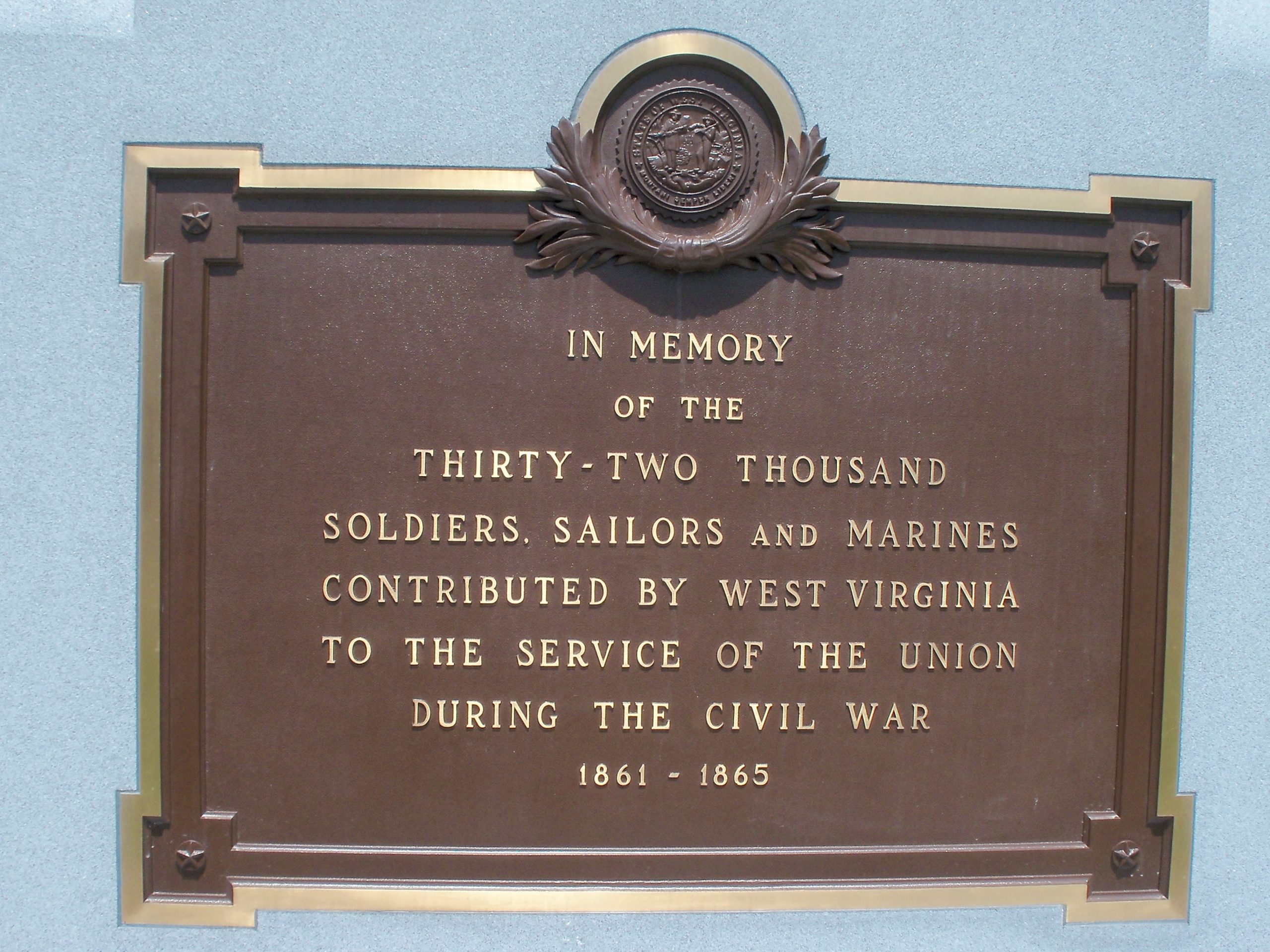
Civil War Dead Memorial.

Saturday, 16 December 2023

The commander answered, “With a large sum I obtained this citizenship.”
And Paul said, “But I was born a citizen.
Acts 22:28

Note: You can listen to today’s commentary courtesy of our friends at “Bible in Ten” podcast. (Click Here to listen).

You can also read this commentary, with music, courtesy of our friends at “Discern the Bible” on YouTube. (Click Here to listen), or at Rumble (Click Here to listen).

While preparing to have Paul scourged, the centurion was alerted to the fact that Paul was Roman. Hearing this, the centurion told his commander. From there, the commander went to Paul and asked if he was Roman. Paul responded affirmatively. Now, it says, “The commander answered, ‘With a large sum I obtained this citizenship.’”

The words bear emphasis – “I, great sum, this citizenship bought.” The commander’s response shows without any doubt that citizenship could be purchased and that he had done so at great expense, something he was quite proud of. Some believe that such a purchase was made through bribery of corrupt officials. Vincent’s Word Studies says –

“The purchase of Roman citizenship was an investment. Under the first Roman emperors it was obtained only at large cost and with great difficulty; later, it was sold for a trifle.”

If that doesn’t sound like the US today! It used to be an honor to earn citizenship. Now, it means nothing. It is handed out to those who don’t deserve it, and it is denied to those who have demonstrated the wits, intelligence, and business acumen to merit it in the way the law clearly states.

The word translated as sum is kephalaion. It is used only twice in the New Testament, here and in Hebrews 8:1, where it is translated as “the main point.” It comes from kephale, meaning the head, a cornerstone, or even the primary head of something, like a ruler.

Also, the word translated as citizenship is politeia. It indicates “citizenship; concretely, a community — commonwealth, freedom” (Strong’s). Its only other use is in Ephesians 2:12 speaking of the commonwealth of Israel –

“Therefore remember that you, once Gentiles in the flesh—who are called Uncircumcision by what is called the Circumcision made in the flesh by hands— 12 that at that time you were without Christ, being aliens from the commonwealth [politeia] of Israel and strangers from the covenants of promise, having no hope and without God in the world. 13 But now in Christ Jesus you who once were far off have been brought near by the blood of Christ.” Ephesians 2:11-13

Now, and understanding the commander’s words, it next says, “And Paul said, ‘But I was born a citizen.’” Again, the Greek is more emphatic. It reads, “I, and even, was born.” This means that he was born into a family who were already citizens. Many theories have arisen as to how he obtained it, but Ellicott may be correct –

“Many of the Jews who were taken to Rome by Pompeius as slaves first obtained their freedom and became libertini, and afterwards were admitted on the register as citizens. The mention of kinsmen or friends at Rome (Romans 16:7; Romans 16:11), makes it probable, as has been said, that the Apostle’s father may have been among them.”

Life application: Think about what this conversation means in relation to the world today. Something that was once highly cherished, even precious and/or life-saving, eventually meant nothing at all. The leaders of the great and vast Roman empire squandered what had been built. The mid-level officials had become corrupt and uncaring about safeguarding what had been entrusted to them.

Eventually, Roman citizenship had no value at all. Today, the exact same attitude is on display in most of the great and powerful governments of the world. Obtaining US citizenship, for example, is a laughable process that is so misused by government employees that, for a quick bribe when no one is looking, even pedophiles can easily obtain it.

The only citizenship that truly matters in this world is the one that will never be diminished in how it is obtained –

“Now, therefore, you are no longer strangers and foreigners, but fellow citizens with the saints and members of the household of God, 20 having been built on the foundation of the apostles and prophets, Jesus Christ Himself being the chief cornerstone, 21 in whom the whole building, being fitted together, grows into a holy temple in the Lord, 22 in whom you also are being built together for a dwelling place of God in the Spirit.” Ephesians 2:19-22

There is only one way heavenly citizenship is realized, and it is through faith in what God has done in and through the giving of His Son, our Lord Jesus Christ. While the rest of the world is hurriedly seeking things that have no lasting value, Jesus Christ’s offer stands as an eternal hope for those who come to Him.

This offer comes at the highest price of all, and yet, that price has been paid already through Jesus’ cross. All that is needed to appropriate it is to believe to the saving of the soul.

Lord God, how thankful we are that there is a hope beyond this fallen world. We strive for things that have no value and things that can be taken away or lost in a moment. But what You offer is eternal citizenship in a heavenly kingdom. May we be willing to share this good news with those who so desperately need it. To Your glory, we pray. Amen.


Acts 22:27

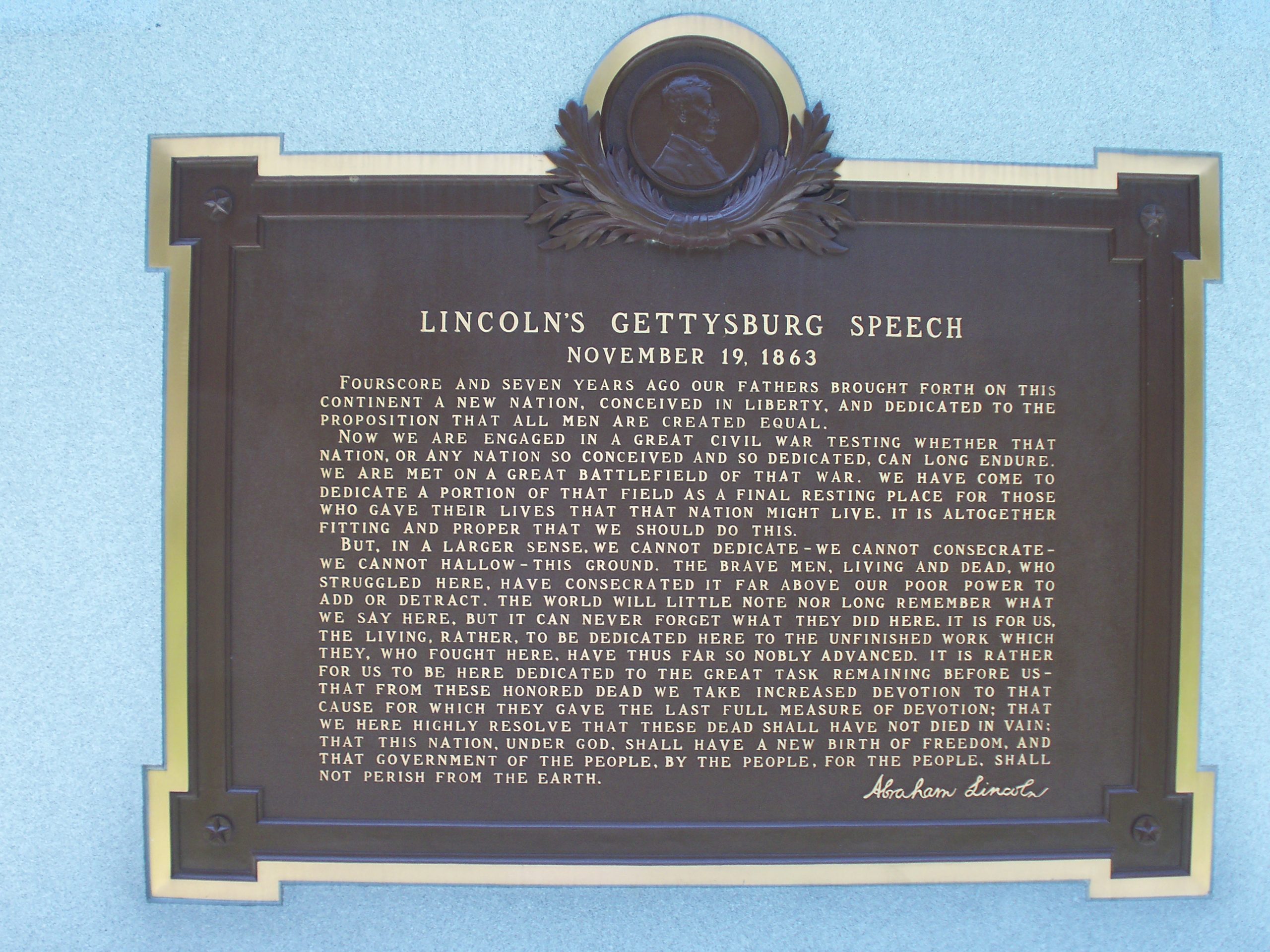
Gettysburg Address.

Friday, 15 December 2023

Then the commander came and said to him, “Tell me, are you a Roman?”

He said, “Yes.” Acts 22:27

Note: You can listen to today’s commentary courtesy of our friends at “Bible in Ten” podcast. (Click Here to listen).

You can also read this commentary, with music, courtesy of our friends at “Discern the Bible” on YouTube. (Click Here to listen), or at Rumble (Click Here to listen).

A literal translation is, “And the commander, having come near, said to him, ‘Tell me, are you Roman?’ And he said, ‘Yes.’”

The centurion had just gone to the commander and informed him of Paul’s claim of being Roman. Having heard this, Luke next records, “And the commander, having come near, said to him, ‘Tell me, are you Roman?’”

The commander seems truly shocked by the claim, as seen in his words. The “you” in the question is emphatic. In essence, “You? Roman?” By this time, the commander is certainly scared, probably in disbelief, and surely baffled. The coming response would make his heart drop, “And he said, ‘Yes.’”

The commander never thought to ask, and now he was in a very difficult position before the law. If Paul were to press the matter, he might find himself reduced in rank, sent to an even worse outpost, or even imprisoned for having failed in properly discharging his duties in this regard.

As for Paul’s response, it is unimaginable that he would lie about such a thing. As Ellicott notes, “The combination of so many more or less discordant elements was so exceptional as to be almost incredible.”

Paul’s answer is either horrifyingly true or it is the answer of a fool with a death wish. Attempting to claim such a position to which he had no right would be the claim of a madman. Therefore, the commander must assume it to be true.

Life application: Paul directly appealed to his citizenship as a right that he possessed and which he was exercising that right to. This sentiment is found throughout Scripture, and the reason it is so is because God has set the nations before Him. By dividing the peoples by individual languages, He directed that they would unite in a manner that would result in the establishment of individual nations.

Within those nations, those who are citizens are given the right to whatever benefits are to be derived from such citizenship. How tragic it is that Christians in today’s world have failed to rightly understand this, and they have ceded their rights by not voting according to biblical principles.

For each Christian who neglects to vote, there is another non-Christian with whatever perverse agenda he is supporting. The vote of the Christian is lost. Along with that, his own rights are slowly stripped away from him. This is all because of a failure to responsibly act in the nation where God has placed him.

When people such as this are rounded up for extermination, they will only be able to blame themselves. If you are a citizen of a nation with a right such as voting, use your right to the glory of God. In such instances, failing to be responsible because of supposed piety will only lead to future tragedy.

Lord God, may we be aware of our position within the societies You have placed us. When we have a right that allows for our active participation, may we be wise and responsible to act for the betterment of the nation in which we live. In failing to act, we are only bringing disaster upon ourselves. Thank You for the rights we possess in the land in which we live. May we use them to Your glory. Amen.