Acts 23:31

Fancy brass lamp at West Virginia Capitol.

Thursday, 18 January 2024

Then the soldiers, as they were commanded, took Paul and brought him by night to Antipatris. Acts 23:31

Note: You can listen to today’s commentary courtesy of our friends at “Bible in Ten” podcast. (Click Here to listen)

You can also read this commentary, with music, courtesy of our friends at “Discern the Bible” on YouTube. (Click Here to listen), or at Rumble (Click Here to listen).

A more literal rendering is, “Then, indeed, the soldiers according to that having been appointed them, having taken up Paul, brought through night to Antipatris” (CG).

With the letter from the commander fully detailed by Luke, it next says, “Then, indeed, the soldiers according to that having been appointed them.”

The plan was previously detailed. When the commander completed his letter, the soldiers were assembled according to their previously arranged assignment, and Paul was brought out of the barracks to where the soldiers awaited him. At that point, it next says, “having taken up Paul.”

In verse 24, the centurions were instructed to provide mounts to set Paul on. This is what is now taking place. He is taken up onto his mount for the journey and “brought through night to Antipatris.”

Antipatris was previously called Cafar-Saba. It is mentioned by Flavius Josephus in his writings. Herod the Great had its name changed to Antipatris to honor his father Antipater. It is about thirty-five miles north and west of Jerusalem and still another twenty-six miles south and east of Caesarea.

Today it is known as Kefr-Saba, having reverted back to its original name. The majority of the trip from Jerusalem would be somewhat downhill from the hill country of Ephraim and into the plain of Sharon.

If they went all night, which seems likely, they could have reached this by 6 or 7 the next morning. The rest of the trip would take about six hours until they reached Caesarea. If they stopped for an extended break, they could have been there by sometime in the afternoon.

Life application: The Bible isn’t just a book that tells of arbitrary events that may or may not be true. It details events that can be verified, including locations, names of those locations, structures that existed in those locations, events that are recorded to have happened in those same locations (like certain details of battles where evidence is readily available), and so forth.

There is no reason to assume that the events of a battle that are recorded in the Bible are true but that the details of the lives of those people – as recorded at the time of those battles – are merely myths. Rather, when it says that a city is besieged by the Assyrians, something that can be verified as true, and that the king said and did certain things at that time, we should assume that those things are also true.

This is true with events like Paul’s situation that is now being detailed in Acts. If Luke correctly recorded all of the verifiable information, like names of cities, names of certain officials, distances between locations, etc., then what he says about Paul’s personal matters would have been equally well-researched.

Have confidence that what you are reading is accurate and reliable. This is especially so because it is recorded in God’s word. Why would God allow something false or misleading to be included there? He wouldn’t! Trust the word because God is trustworthy.

Heavenly Father, may we be confident in Your word, knowing that it has been checked, rechecked, and then checked again throughout the time since it was received. Even today, new evidence of its reliability is being discovered. Thank You for the surety we can possess concerning Your word. And, thus, thank You for the surety we can possess concerning what it says about Jesus! Hallelujah for the story of the coming of our Lord. Amen.


Acts 23:30

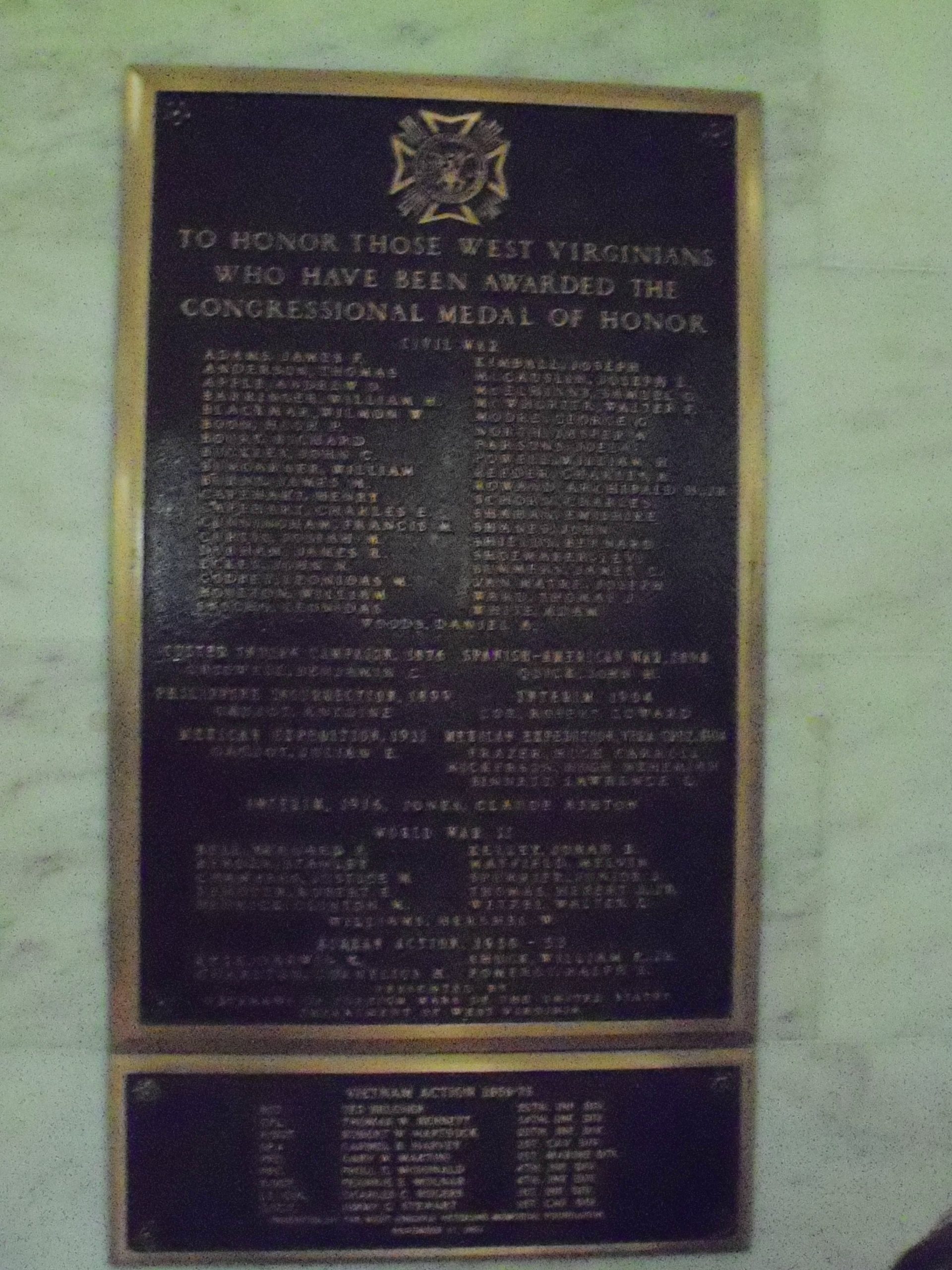
Medal of Honor Recipients. West Virginia Capitol.

Wednesday, 17 January 2024

And when it was told me that the Jews lay in wait for the man, I sent him immediately to you, and also commanded his accusers to state before you the charges against him. Farewell. Acts 23:30

Note: You can listen to today’s commentary courtesy of our friends at “Bible in Ten” podcast. (Click Here to listen)

You can also read this commentary, with music, courtesy of our friends at “Discern the Bible” on YouTube. (Click Here to listen), or at Rumble (Click Here to listen).

The Greek, though a bit clunky, more literally reads, “And, having been revealed to me a plot, about to be by the Jews, against the man, I sent immediately unto you, having also instructed the accusers to say these against him before you. Be strong” (CG).

In his letter to Felix, the commander just noted that he found that there was nothing charged against Paul deserving of death or chains. Because of this, he next writes, “And, having been revealed to me a plot, about to be by the Jews, against the man.”

The commander, Claudius Lysias, appears to be the epitome of rational thinking. He perceived trouble at the beginning and saved Paul. As the trouble hadn’t ceased, he again saves him by directing the things he now is writing to Felix.

This second half of the account is at least truthful. It also sets Paul as an honorable person being troubled by the seditious Jews who would even dare to harm a Roman citizen and thus make an implicit attack on the government. Thus, as a Roman military officer, he places the Roman priorities above any favor he had curried with the Jews since being assigned in Jerusalem.

This is certainly the intent of his words. He is looking for Felix’s favor by showing his allegiance to Rome above all else. As Paul is also Roman, and to demonstrate his care for his fellow citizens, he next writes, “I sent immediately unto you.”

Paul will be safely conducted with a large force of soldiers. Even after getting safely out of the local area, a sizeable portion of them will continue the trek to Caesarea. When Paul arrives safely, this show of force would be considered a notable aspect of the commander’s care for his charge. Along with that, he tells Felix, “having also instructed the accusers to say these against him before you.”

It is apparent that, by his letter, he wants Paul looked at in a favorable light so that Paul’s original mistreatment will never come to light. The note of him commanding the accusers to state the charges before Felix probably means that he composed two letters at the same time. The first was this letter to Felix, and the second would have been dispatched to the Jewish council once Paul was safely out of the area.

Thus, this letter explains why Paul was sent to Caesarea and why his journey included such a large contingent of soldiers. With that, he closes out the letter with a word not found in all manuscripts, saying, “Be strong.”

In many manuscripts, it is the second and last use of the word rhónnumi. It was first used to close out the letter from the council in Jerusalem to the Gentile church in Acts 15:29. It is a verb that literally signifies to strengthen or be strong. Being a perfect imperative, it literally gives the sense of “you have been strengthened and so remain strengthened.”

Life application: There is no note of the commander having ever come to Christ. Therefore, it is likely that if he did, it would have been after Paul’s time with him. During his time interacting with Paul, he placed his highest priority on discharging his duties as a Roman officer.

He was careful to ensure that his account would make him appear favorable in the eyes of those above him, hoping they would notice his deeds and look favorably upon him. For those in Christ, our highest priority should be doing those things that exalt the Lord above all else.

However, in doing this, we will actually be doing our very best to perform our duties in all other areas to the very best of our abilities. This is because in wanting to honor the Lord, we will conduct all other aspects of our lives in the most noble way possible. Only when there is a conflict between our allegiance to the Lord and conducting our duties should this not be the case.

Today, we may be asked to compromise our faith to meet a liberal, woke agenda. We should never cave to this sort of perversion. Instead, we should use our rights as Christians to work against such things. We should even do it to the full extent of our ability. This will be what is most honoring to the name of the Lord. In all things, let us consider the Lord being glorified through our actions as our highest priority.

O God, we may have challenges set before us that ask us to compromise our position as Christians. Help us never to cave to such things. Rather, give us wisdom and strength to stand against anything that may hinder our relationship with You. In the end, we must give an account for our actions when we come before You. May what we do be right and pleasing so that we are prepared to do so. Amen.


Acts 23:29

Stonewall Jackson bust base. West Virginia Capitol.

Tuesday, 16 January 2024 

I found out that he was accused concerning questions of their law, but had nothing charged against him deserving of death or chains. Acts 23:29

Note: You can listen to today’s commentary courtesy of our friends at “Bible in Ten” podcast. (Click Here to listen).

You can also read this commentary, with music, courtesy of our friends at “Discern the Bible” on YouTube. (Click Here to listen), or at Rumble (Click Here to listen).

The tense of the verbs needs tweaking. The Greek reads, “Whom I found being accused about questions of their law and having no accusation worthy of death or chains” (CG).

The commander’s letter to Felix, the governor, about Paul continues, saying, “Whom I found being accused about questions of their law.”

The words, “questions of their law,” mean that there was nothing involved that Rome would care about. Instead, it was a matter of the interpretation of Jewish law and not something that was defined by the courts of Rome.

The Jewish people had been given authority to worship their God as they chose. Any internal strife concerning rites, interpretations, authorized teachers, etc. in relation to the law was left solely up to those in charge of such religious matters to decide. Because of this, the commander was certain that they were of no concern to Rome. They are what was detailed earlier in this chapter where it said –

“But when Paul perceived that one part were Sadducees and the other Pharisees, he cried out in the council, ‘Men and brethren, I am a Pharisee, the son of a Pharisee; concerning the hope and resurrection of the dead I am being judged!’
And when he had said this, a dissension arose between the Pharisees and the Sadducees; and the assembly was divided. For Sadducees say that there is no resurrection—and no angel or spirit; but the Pharisees confess both. Then there arose a loud outcry. And the scribes of the Pharisees’ party arose and protested, saying, ‘We find no evil in this man; but if a spirit or an angel has spoken to him, let us not fight against God.’” Acts 23:6-9

As this was a matter not within the jurisdiction of Roman decision, the commander concluded that Paul was “having no accusation worthy of death or chains.”

None of the things he heard were sufficient to bind him, imprison him, or have him executed. And yet, ironically, the things that they discussed are the most important issues that will ever affect the people of the world.

Because of the Roman system that was in place at the time, the worldly matters seemed to overshadow the more important spiritual ones, at least in order for Paul to be able to continue his ministry. Here and in all other cases in Acts, no magistrate found any wrongdoing in Paul.

Life application: The same situation exists today that existed at the time of Paul’s life under Roman rule. There are those who share the gospel in order to free people from the bonds of sin and the power of the devil. They do this within nations that supposedly have the right to rule over such matters or who are indifferent to such things.

And yet, the problem of sin infects every single person on the earth. At the time of the writing of this commentary, there is a major corruption scandal concerning fundraising in Japan. In Germany, there is a corruption scandal concerning gas supplies from Qatar. In the United States, the person in the White House is being investigated for corruption that literally permeates his political life and his family.

The same type of sinful behavior is found in one nation after another and in religious institutions around the world, including Christian churches and especially the Vatican, from the pope down to all levels. Some of these entities proclaim that they have authority over what believing Christians can say or how they can say it.

This, then, supposedly puts them over God who has given His word and has then instructed believers to share it and teach it. Imagine that! God has allowed humanity to run its own affairs, even if what they decide is set in contrast to His word. This includes churches that are supposed to rightly teach it.

And yet, people call God an ogre for telling them that the problem rests within their hearts and that He has done everything necessary to fix it and bring restoration between them and Him. No wonder the world is devolving into total chaos.

When the people turn from Him and how He has revealed Himself, it means that only sin is left to rule in their lives. Even the very best governments will fail unless the truth of God in Christ is accepted and allowed to flourish within the society.

What a mess the world is in, Lord God. Nations have cast off any sense of Christian morality, and we have turned away from the magnificent message of the gospel. Even churches and denominations are following the path of perversion, accepting profane doctrines to be taught as acceptable. Lord, we know that the coming of Jesus for His people is getting closer each day as we see these things unfold. Even so, come Lord Jesus. Amen.


Acts 23:28

Stonewall Jackson.

Monday, 15 January 2024

And when I wanted to know the reason they accused him, I brought him before their council. Acts 23:28

Note: You can listen to today’s commentary courtesy of our friends at “Bible in Ten” podcast. (Click Here to listen)

You can also read this commentary, with music, courtesy of our friends at “Discern the Bible” on YouTube. (Click Here to listen), or at Rumble (Click Here to listen).

The words more literally say, “And desiring to know the charge through which they accused him, I brought him down to their council” (CG).

In the previous verse, the commander referred to his actions in rescuing Paul, noting that he rescued him, having learned he was a Roman. In his words, he certainly fudged the truth, hiding his inappropriate actions, and changing the facts to highlight his alertness in defense of a fellow Roman. He continues this approach now, saying, “And desiring to know the charge through which they accused him.”

Again, the commander will completely omit his first choice of determining the accusations against Paul, which was to tie him up and torture him into a confession. Being such a minor detail, he must have felt sure that no governor could possibly want to know about it J.

However, the governor would surely want to know about his adeptness at getting to the heart of what was going on. Therefore, he next says, “I brought him down to their council.”

The commander’s letter shows a decisive person who takes the necessary action to get to the bottom of a matter with alacrity and alertness, even if that wasn’t exactly how things transpired. What appears to be the case is that he is looking for a year-end bonus or maybe a promotion for his attentiveness and military competence.

Life application: Doing what is right and telling the truth concerning a situation is always the best option, even if it may temporarily stain one’s image in the eyes of another. People will generally remember that a person was willing to admit his faults and acknowledge his shortcomings.

It’s hard to do, but it also frees up the mind from the lurking possibility that the actual circumstances of what occurred may someday be discovered. But even if they aren’t, and the event is completely forgotten, getting away with an untruth may sear the conscience to tell more lies. This is not a good way to conduct one’s life.

In the end, it is best to speak truthfully and be open and honest in one’s life. Above all, the Lord is aware of such things and so we should strive to live honorably and properly in His presence at all times.

Lord God, it can be difficult to face our own shortcomings. It can be more difficult to admit them to others. But it is right that we should be open and honest in our dealings with those around us. Help us to consider this and honor You through our words, deeds, and interactions with others. Amen.


Acts 23:27

Fancy marble work, West Virginia Capitol.

Sunday, 14 January 2024

This man was seized by the Jews and was about to be killed by them. Coming with the troops I rescued him, having learned that he was a Roman. Acts 23:27

Note: You can listen to today’s commentary courtesy of our friends at “Bible in Ten” podcast. (Click Here to listen)

You can also read this commentary, with music, courtesy of our friends at “Discern the Bible” on YouTube. (Click Here to listen), or at Rumble (Click Here to listen).

The words are filled with participles, excitedly filling the statement with action. It more literally reads, “This man, having been seized by the Jews, and being about to be killed by them, having come with the detachment, I rescued him, having learned that he is Roman” (CG).

In the previous verse, Claudius Lysias, the Roman commander, opened his letter to Felix the governor. He now enters into the main details of the reason for that letter, beginning with, “This man.”

In the Greek, Paul is identified as ton andra touton, “the man, this.” Bengel sees this as a way of granting a title of honor. It is again used as the letter closes out in verse 30. The reason for this particular expression is explained by the end of the verse when he is identified further as being Roman. Of him, the letter continues, “having been seized by the Jews.”

It was the Jews who seized Paul and started hurling accusations at him. They got into such a lather that he was “about to be killed by them.” The situation practically turned into a riot as the temple doors were shut.

Once it was seen that they were about to kill Paul, the Roman garrison was notified, and the soldiers acted, “having come with the detachment.” Were they not to have come immediately, Paul surely would not have survived. However, the commander briefly states, “I rescued him.”

Of this word, while citing Bengel, Vincent’s Word Studies says –

“Bengel says, ‘a lie.’ Lysias wishes to make the impression that Paul’s citizenship was the cause of his rescuing him; whereas he did not know of this until afterward. He says nothing about the proposed scourging.”

That untruth is seen in the final words of the verse, “having learned that he is Roman.”

It is not a noun, “a Roman.” Rather, it is an adjective, “Roman.” He is highlighting the honor of the state of citizenship and how he carefully defended that aspect of the culture, regardless of any other traits. It would be like saying, “I was willing to defend the citizenship itself, whether he was my best friend or a personal enemy.”

Although this isn’t at all what happened with respect to Paul’s Roman citizenship, it is intended to show the commander’s passion for protecting Romans and to preempt any negative comments by Paul concerning his treatment. In essence, he has completely buried his illegal actions towards Paul and is hoping that his wording in this letter will keep them forever buried. Unfortunately, he didn’t know that Luke was such a minute chronicler of the events of life.

Life application: Claudius Lysias has presented his actions in the most favorable light, even if they were not completely true. This will continue to be seen in his brief letter. His words are recorded and placed in Scripture for every person who has ever read the Bible to see.

How would we act if we knew that every word we spoke and deed we did were being recorded for others to see? Would we say things a little bit differently? Would we refrain from doing certain things and be sure to do other things that we would otherwise leave undone?

If we really believe that God is the judge of all men and is omniscient, then our words and deeds are, in fact, being recorded. If we can capture millions of live stream cameras 24 hours a day and keep those recordings in storage for future playback, how much more can we know that God is able to replay every moment of our existence before us!

This thought should not scare us, but it should alert us to the fact that God is there and everything we think, say, and do is known to Him. From that knowledge, we should endeavor to live our lives appropriately before Him. Everything we do will be brought to light when we stand before Him –

“For no other foundation can anyone lay than that which is laid, which is Jesus Christ. 12 Now if anyone builds on this foundation with gold, silver, precious stones, wood, hay, straw, 13 each one’s work will become clear; for the Day will declare it, because it will be revealed by fire; and the fire will test each one’s work, of what sort it is. 14 If anyone’s work which he has built on it endures, he will receive a reward. 15 If anyone’s work is burned, he will suffer loss; but he himself will be saved, yet so as through fire.” 1 Corinthians 3:11-15

“Therefore we make it our aim, whether present or absent, to be well pleasing to Him. 10 For we must all appear before the judgment seat of Christ, that each one may receive the things done in the body, according to what he has done, whether good or bad. 11 Knowing, therefore, the terror of the Lord, we persuade men; but we are well known to God, and I also trust are well known in your consciences.” 2 Corinthians 5:9-11

We believed the gospel. The same God, who we believe read our hearts at that time, is the God who is now monitoring our lives in Christ for eternal rewards. Let our hearts be faithful, and may our actions be in accord with His will, as is set forth for us in Scripture. On the day when we are presented before the Judge, may rewards abound because of it.

Heavenly Father, thank You for having heard us on the day we believed the gospel. At that time, You sealed us with Your Spirit and granted us eternal life. Help us to remember that You are still listening and hearing. May our lives now be filled with the same faith that we professed on that day. To Your glory, we pray. Amen.