Acts 4:33

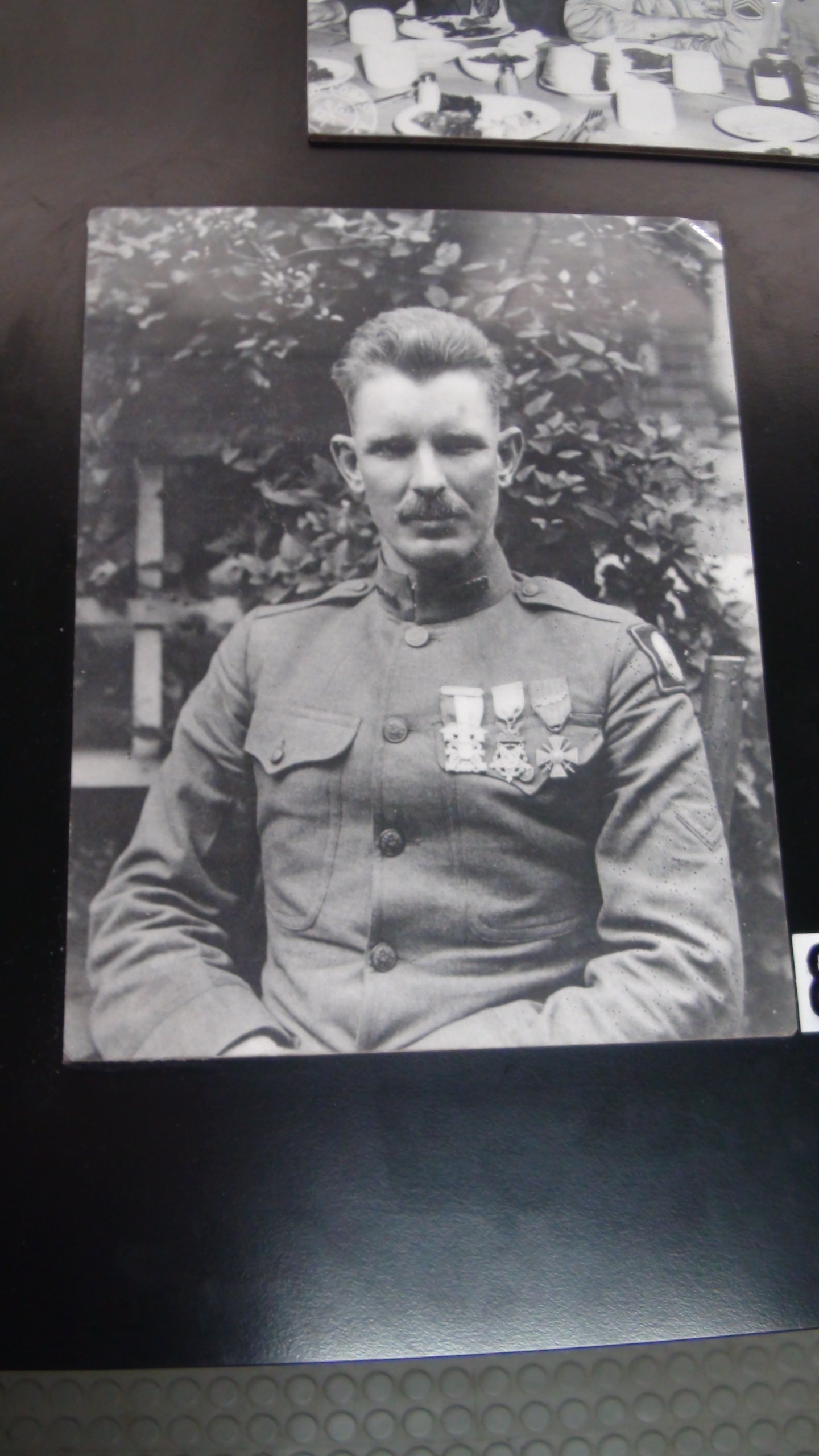
WWI Medal of Honor recipient, Sgt. Alvin C. York

Friday, 4 February 2022

And with great power the apostles gave witness to the resurrection of the Lord Jesus. And great grace was upon them all. Acts 4:33

Note: You can listen to today’s commentary courtesy of our friends at “Bible in Ten” podcast. (Click Here to listen)

You can also read this commentary, with music, courtesy of our friends at “Discern the Bible” on YouTube. (Click Here to listen), or at Rumble (Click Here to listen).

The previous verse noted the state of the believers as all being of one heart and soul, and that they held all things in common. Luke next records, “And with great power.”

The word translated as “power” is often translated as “miracles,” “mighty works,” and so on. In this case the idea is probably to be taken as the preaching itself and not as any demonstrations that went along with it. The word was preached, and the power of the word is what is being referred to. That seems both reasonable and correct when considering the rest of the words of the verse, beginning with, “the apostles gave witness.”

The word, as it is translated “gave,” is insufficient for two reasons. First, it is an indefinite verb. Secondly, the word itself means more than “gave,” but it more rightly signifies “to return,” “restore,” “give back,” and so on. In other words, the seemingly abrupt change from the previous verse is only so because the faulty rendering of this word now –

“Now the multitude of those who believed were of one heart and one soul; neither did anyone say that any of the things he possessed was his own, but they had all things in common. 33 And with great power the apostles gave [lit: were returning] witness to the resurrection of the Lord Jesus. And great grace was upon them all.”

The people had decided to give up on claims to personal possessions, but what was to be gained from that? The answer is that they lived in such a way that they were the recipients of the preaching of the apostles. This wasn’t just a group of people benefitting off the converted masses, but there was a yielding of the people to the whole, and there was a returning by the apostles to the people, through the preaching of the word, a great and powerful understanding of what God had done in Christ, pointing “to the resurrection of the Lord Jesus.”

This is the central point of everything that mattered. If Jesus was crucified and did not resurrect, that would be as common as raindrops in a monsoon. But the apostles had walked with the Lord, they had participated in His life and seen the power of His miracles. And then, they saw Him taken away under guard and they had seen Him crucified. And yet, they saw Him alive again.

They were able to bear witness to the resurrection because they had borne witness to it. With this knowledge, they could then tie all of Scripture into a book with meaning never even imagined before. Everything fits from the word when the resurrection of the Lord Jesus is properly understood. With that in mind, the verse finishes with, “And great grace was upon them all.”

The translation of these words is not complicated, but the meaning is somewhat difficult to determine. There can be one of several meanings, but the two most likely will be considered. The first is that the grace of God rested upon the disciples. If this is correct, it would be in accord with Luke 2:40 –

“And the Child grew and became strong in spirit, filled with wisdom; and the grace of God was upon Him.” Luke 2:40

The second possibility is that it speaks of the favor of the people resting upon the disciples. A parallel to this would be Acts 2 where the same Greek word is translated as “favor” –

“So continuing daily with one accord in the temple, and breaking bread from house to house, they ate their food with gladness and simplicity of heart, 47 praising God and having favor with all the people. And the Lord added to the church daily those who were being saved.” Acts 2:46, 47

Either way, there was a state of grace which existed because of the situation.

Life application: The crucifixion and resurrection of Jesus is the central point of our faith, because without these occurring there is nothing to have faith in. There have been innumerable spiritual leaders over the span of man’s existence, but their teachings are simply various aspects about what is right or wrong, what is morally acceptable or objectionable, and so on.

However, in the cross and resurrection of Jesus there is the indisputable evidence that God has favored His ministry, accepting it as the way to reconciliation with Him. Anyone can speak eloquently and with convincing arguments, but upon the death of that person, the stream of his knowledge and wisdom ends. This is not so with Christ Jesus. Rather, because of the resurrection, we know that His infinite knowledge continues on and will continue to do so for all eternity.

Let us hold fast to the glory that is found in Christ Jesus. May our lives be witnesses to others of what God has done, and what God is still doing, among the sons of men.

Heavenly Father, thank You for the surety we possess in our faith. It is backed up by the greatest event in all of human history, because You have so ordained it. May we be willing to share the knowledge of this wondrous story to any and all we encounter. To Your glory! Amen.


 

Acts 4:32

Sgt York, in the Ardenne Forest.

Thursday, 3 February 2022

Now the multitude of those who believed were of one heart and one soul; neither did anyone say that any of the things he possessed was his own, but they had all things in common.  Acts 4:32

Note: You can listen to today’s commentary courtesy of our friends at “Bible in Ten” podcast. (Click Here to listen)

You can also read this commentary, with music, courtesy of our friends at “Discern the Bible” on YouTube. (Click Here to listen), or at Rumble (Click Here to listen).

With the ending of the event in the house where the disciples prayed, the story now changes its direction, beginning with, “Now the multitude of those who believed.”

Acts 4:4 said the number of men had arisen to five thousand. Adding in women and children, it would be a rather large number, and it was one that was surely growing quickly after the event with the healing. Of this large group, it next says, “were of one heart and one soul.”

The Greek uses the word “one” only once – “were of one heart and soul.” It is an idiomatic expression revealing a closeness as if they were literally one body. The blood pumping through them would be as if one. But more, because the heart reflects the seat of reasoning in the Bible, they also had a united purpose.

The animation of the soul is, likewise, as with one united purpose. That makes it the closest bond of all. The expression is seen in the love found between David and Jonathan –

“Now when he had finished speaking to Saul, the soul of Jonathan was knit to the soul of David, and Jonathan loved him as his own soul.” 1 Samuel 18:1

In this state, they were like one living organism. Because of this, Luke next records “neither did anyone say that any of the things he possessed was his own.” Unlike the communist model where the state forcibly takes over the private property of the people, this is a completely voluntary thing. The people were pleased to say, “What’s mine is yours.”

This approach to the possessions of the people is an unsustainable one, as will be seen, but it was probably based on the thought that the Lord would be returning soon. If this was on their mind, it was a wonderful expression of hope in the event, but it would eventually lead these people to require charity themselves, as will be noted later and in the epistles.

Luke finishes the verse with, “but they had all things in common.” This is a close model to the modern kibbutz found in Israel. That has worked pretty well, but this is because the people work together and have a united purpose in making the kibbutz run properly. As for these early believers, their model was not as developed, and it would eventually not work out. However, with this, and with persecution of these believers ahead, it will be an impetus for the people to spread out and share the message beyond the area of Jerusalem.

Life application: Even if believers do not share all personal goods in common today, we can still attempt to be of one heart and soul. It is a difficult thing to do because sin fills our lives, but it should be the goal of the body to act in such a manner.

Obviously, doctrinal differences can be so great that it is simply impossible to fellowship with some who have called on Christ. As much as it is possible, however, we should do our best to be closely united with those who are the redeemed of the Lord –

“Finally, brethren, farewell. Become complete. Be of good comfort, be of one mind, live in peace; and the God of love and peace will be with you.” 2 Corinthians 13:11

Heavenly Father, while it isn’t always easy to be close and in a united mind with other believers, we know that this is what You would desire for us. Help us to live in this way, overlooking faults, forgiving disagreements, and loving others just as You have loved us. Help it to be so in our lives. Amen.


Acts 4:31

A depiction of Sgt York doing his thing in the Ardenne, WWI.

Wednesday, 2 February 2022

And when they had prayed, the place where they were assembled together was shaken; and they were all filled with the Holy Spirit, and they spoke the word of God with boldness. Acts 4:31

Note: You can listen to today’s commentary courtesy of our friends at “Bible in Ten” podcast. (Click Here to listen)

You can also read this commentary, with music, courtesy of our friends at “Discern the Bible” on YouTube. (Click Here to listen), or at Rumble (Click Here to listen).

With the prayer of the previous verses complete, we receive a description of what next occurred. Luke begins with, “And when they had prayed.” The idea behind these words is that of a connection to whatever follows. There was the prayer by this group, and then there was an event that resulted from the prayer. The two are tied together. As such, it is an acknowledgment that the prayer has been accepted. This is seen in the next words, saying, “the place where they were assembled together was shaken.”

The Greek word, translated as shaken, comes from another word, salos. That is used just one time, but its use may give a sense of what it was like in the place where they were –

“And there will be signs in the sun, in the moon, and in the stars; and on the earth distress of nations, with perplexity, the sea and the waves roaring;” Luke 21:25

There may have been a rush of wind into their quarters that caused everything inside to fly about, or a mild earthquake may have hit the area at that exact moment. Whatever occurred, such an event was taken by them as a clear indication that the Lord was behind it. The presence of such trembling in conjunction with the coming of the Lord is seen elsewhere –

“The earth shook;
The heavens also dropped rain at the presence of God;
Sinai itself was moved at the presence of God, the God of Israel.” Psalm 68:8

With that understood, Luke next says, “and they were all filled with the Holy Spirit.” The verb is passive. The prayer and praise to God allowed them to be opened up and filled. Just as wine cups are simply ready to receive a filling, this group had been prepared for the filling which then came upon them. As they were all believers, and because they had already received the Spirit, the meaning here is that of confidence, encouragement, and a renewal of determination to act boldly on behalf of the Lord and His gospel message.

That is clearly seen and understood as Luke next records, “and they spoke the word of God with boldness.” This is the result of the filling of the Spirit. It brings about a sense of joy, determination, renewed anticipation of what God has in store for His people, and so on. These believers understood from the shaking they experienced that the Lord had fully approved of the events that took place, that the threats to Peter and John were worth the cost, and that continuing on as they had been was the right thing to do.

Life application: Such passages in Acts are given as a descriptive account of what occurred during the early establishment of the church. They are not to be considered normative for all of the church age, nor do they prescribe anything at all.

If we keep reminding ourselves of this, we will find our own walk with the Lord much more grounded. These early believers did not have the New Testament writings, and so the Lord worked in a manner that should no longer be expected. When we read the Bible, we should be shaken in our souls at the majesty of what is recorded there. We have no need for outward displays of the Lord’s power to confirm we are on the right path.

The word itself reveals the power of God. Let us hold fast to this word, cherish this word, and be pleased in our hearts and souls that we have so much more than what the early believers had. We have the word of God! Let us rejoice in this.

Lord God, thank You for Your precious and sacred word. Amen.


Acts 4:30

Memorial stamp print for WWI hero Sgt Alvin C. York.

Tuesday, 1 February 2022

by stretching out Your hand to heal, and that signs and wonders may be done through the name of Your holy Servant Jesus.” Acts 4:30

Note: You can listen to today’s commentary courtesy of our friends at “Bible in Ten” podcast. (Click Here to listen)

You can also read this commentary, with music, courtesy of our friends at “Discern the Bible” on YouTube. (Click Here to listen), or at Rumble (Click Here to listen).

The verse now completes the prayer of the disciples, but to remember the context, it should be read along with the previous verse –

Now, Lord, look on their threats, and grant to Your servants that with all boldness they may speak Your word, 30 by stretching out Your hand to heal, and that signs and wonders may be done through the name of Your holy Servant Jesus.”

With this context understood, the words of this verse begin with, “by stretching out Your hand.” A more literal rendering would be, “in the stretching forth of Your hand.” It is as if the Lord’s hand is directly equated to the actions which will take place. As He stretches it forth, the intended event occurs. The implication is that the power of the Lord that filled Jesus is to be available now, after His ascension, that was with Him during His ministry. For example, and using the same word, Mark 1 says –

“Then Jesus, moved with compassion, stretched out His hand and touched him, and said to him, ‘I am willing; be cleansed.’ 42 As soon as He had spoken, immediately the leprosy left him, and he was cleansed.” Mark 1:41, 42

It is the power of the Lord that the apostles are asking to appropriate in order to glorify Him. This is then noted for several reasons. The first is “to heal.”

Charles Ellicott notes that the Greek word chosen by Luke is a play on words, and assonance, that corresponds to the Greek name translated as Jesus. It is the same word used in verse 4:22, but this time it is used directly in connection with the name –

Iasis – healing
Iésous  – Jesus

As for the prayer, it continues with, “and that signs and wonders may be done.” The word “and” seems to show that this is still dependent on the stretching forth of the hand of the first clause –

“in the stretching forth of Your hand…that signs and wonders may be done.”

The stretching forth of the hand is an anthropomorphism where the hand accomplishes things. It is this hand of the Lord that is stretched forth to heal, and also to perform signs and wonders. Thus, the Source is the Lord for all that occurs. That then leads to the next words, “through the name.”

In this, the words connect the act to the Lord. In the stretching forth of the Lord’s hand, signs and wonders are accomplished through the name, meaning the name “Jesus” as seen in the coming words. In this, the connection of the name to the Lord’s hand is made. And the name that is connected to the hand of the Lord is next said to be “of Your holy Servant Jesus.”

Again, the idea of the Messiah being the Servant of the Lord is brought forth. The suffering Servant has become the Healer. As such, an implied connection is made in the play on words noted above. Through the suffering of Jesus (Iésous), healing (iasis) is brought about by the Lord. The importance of the connection of the healing being done as a consequence of the stretching out of the Lord’s hand can be more fully appreciated by looking at the account in Acts 19 –

Then some of the itinerant Jewish exorcists took it upon themselves to call the name of the Lord Jesus over those who had evil spirits, saying, “We exorcise you by the Jesus whom Paul preaches.” 14 Also there were seven sons of Sceva, a Jewish chief priest, who did so.
15 And the evil spirit answered and said, “Jesus I know, and Paul I know; but who are you?”
16 Then the man in whom the evil spirit was leaped on them, overpowered them, and prevailed against them, so that they fled out of that house naked and wounded. 17 This became known both to all Jews and Greeks dwelling in Ephesus; and fear fell on them all, and the name of the Lord Jesus was magnified.

These Jews were using the name of Jesus as a talisman, looking to gain from throwing it about. But the name is to be magnified, not treated as a cliché or a trinket that can be pulled out and used to suit a personal fancy or agenda. The name of the Lord is directly equated to the name Jesus.

Life application: How often it is that people toss around the name of Jesus, claiming things that they have no right to claim! It is used to claim healing when the one claiming only looks to benefit personally from the claim. It is used to claim sports cars or winning football games. It is used to pronounce a curse on someone that another person may not like.

On and on the abuse of the name continues. But we have been told otherwise –

“Let this mind be in you which was also in Christ Jesus, who, being in the form of God, did not consider it robbery to be equal with God, but made Himself of no reputation, taking the form of a bondservant, and coming in the likeness of men. And being found in appearance as a man, He humbled Himself and became obedient to the point of death, even the death of the cross. Therefore God also has highly exalted Him and given Him the name which is above every name, 10 that at the name of Jesus every knee should bow, of those in heaven, and of those on earth, and of those under the earth, 11 and that every tongue should confess that Jesus Christ is Lord, to the glory of God the Father.” Philippians 2:5-11

Let us confess the name, hold the name as sacred, and not allow the name to be degraded through the whims of false teachers and false prophets. Reject this evil and be sure to honor the name JESUS!

Lord God Almighty, You have chosen to have all the power of the Godhead expressed in the exalted name of Jesus. It is in that name, and through that name, that we find our life, our hope, and our joy. Help us, Lord, to never diminish this exalted name through the frivolous use of it. Rather, may we exalt that great name, the name that is above every name – JESUS. Amen.


Acts 4:29

Alvin York WWII memorial.

Monday, 31 January 2022

Now, Lord, look on their threats, and grant to Your servants that with all boldness they may speak Your word, Acts 4:29

Note: You can listen to today’s commentary courtesy of our friends at “Bible in Ten” podcast. (Click Here to listen)

You can also read this commentary, with music, courtesy of our friends at “Discern the Bible” on YouTube. (Click Here to listen), or at Rumble (Click Here to listen).

The prayer of the disciples continues. They had just noted the gathering of various groups in order to “do whatever Your hand and Your purpose determined before to be done.” This gathering of disciples clearly saw the hand and purpose of God in the events that had taken place. Understanding that they too have a continued role in God’s unfolding plan (see Matthew 28:18-20, for example), they desire to do what God wills, both effectively and with boldness. As such, they continue with “Now, Lord, look on their threats.”

In verse 4:24, the address was made to Theos, God. At the same time, they used the title Despotés, or Sovereign Lord. They now say Kurios, signifying a master, sir, or lord, but which is used in the Greek Old Testament when referring to Yehovah. This is certainly what is on their mind as they speak forth to God. In citing the 2nd Psalm, they had said that the rulers were gathered together “Against the Lord [Yehovah] and His Christ.”

As such, they are acknowledging that God who is the Sovereign over all things has, along with His Christ, been attacked. It is therefore incumbent upon His followers to defend His name, title, and position – along with that of His Christ – as they continue on in the charge they had been given. Therefore, their petition is clearly made with the thought of defending the name of the Lord Yehovah and of the Lord Jesus. Because of this, they continue with, “and grant to Your servants.”

This clearly sets the disciples in contrast to ruling council. If the disciples are followers of the Lord, Yehovah, it means that those in the establishment are not. But Jesus had already said as much to the leaders during His ministry –

“Jesus said to them, ‘If God were your Father, you would love Me, for I proceeded forth and came from God; nor have I come of Myself, but He sent Me. 43 Why do you not understand My speech? Because you are not able to listen to My word. 44 You are of your father the devil, and the desires of your father you want to do. He was a murderer from the beginning, and does not stand in the truth, because there is no truth in him. When he speaks a lie, he speaks from his own resources, for he is a liar and the father of it.’” John 8:42-44

This is not simply an earthly spat between two rival factions, but a spiritual war between the followers of the true God and followers of the devil. This is clearly understood by them. Therefore, the disciples’ petition is “that with all boldness they may speak Your word.”

In saying, “Your word,” they are clearly referring to the message of Christ, inclusive of the gospel itself. They are not referring to the Old Testament Scriptures, except as they point to Christ. In other words, they are not asking to boldly proclaim the Law of Moses, meaning the Old Covenant. That is clearly understood to be completed through Jesus’ work. He initiated a New Covenant in His blood (Luke 22:20), and – as the author of Hebrews says –

“In that He says, ‘A new covenant,’ He has made the first obsolete. Now what is becoming obsolete and growing old is ready to vanish away.” Hebrews 8:13

In coming to Christ, the Mosaic Covenant is made obsolete. It was ineffectual to save, and it had served its intended purpose until the coming of the Messiah who would fulfill it and set it aside. As noted, this is a spiritual war. It pits man and his works against Christ and His works. But the problem with man’s self-righteousness is that it is already stained with sin. Christ’s perfection is what is needed to be pleasing to God. This is what the disciples are asking for boldness to proclaim.

Life application: It may seem almost contradictory to note in one sentence that God has purposed and determined before that certain things be accomplished, and then to ask for boldness to speak on behalf of God in the next. If God has purposed all things, why would people need to act at all?

In such things, we must always consider God’s sovereignty, something already considered by the disciples. Therefore, their prayers (and ours) should factor this in. “Lord, we are Your servants. Direct our steps according to Your will. May our actions be in accord with that.” The apostles have been given a specific charge to speak forth God’s word, so such an appeal is implied in their prayer.

If what we are doing is in accord with God’s will, it will happen. If it is not, it will not. This does not negate the need for prayer. Rather, it highlights it. We are demonstrating a reliance on God’s sovereignty when we lift our prayers to Him in such a manner.

In all things, let us remember that God is God. We are His subjects. What He determines is right, it is good, and it is what is best. Even if we do not understand that, we should take it as an axiom that it is true. From there, we simply need to get out and live our lives according to the manner which He has shown us is right, meaning as is recorded in His word.

Heavenly Father, Your word is written, and it provides guidance for our lives. Help us to live out our lives in accord with that word, and to glorify You as we do. May our lives be proper examples to others of how to live in a manner which pleases You. Amen.