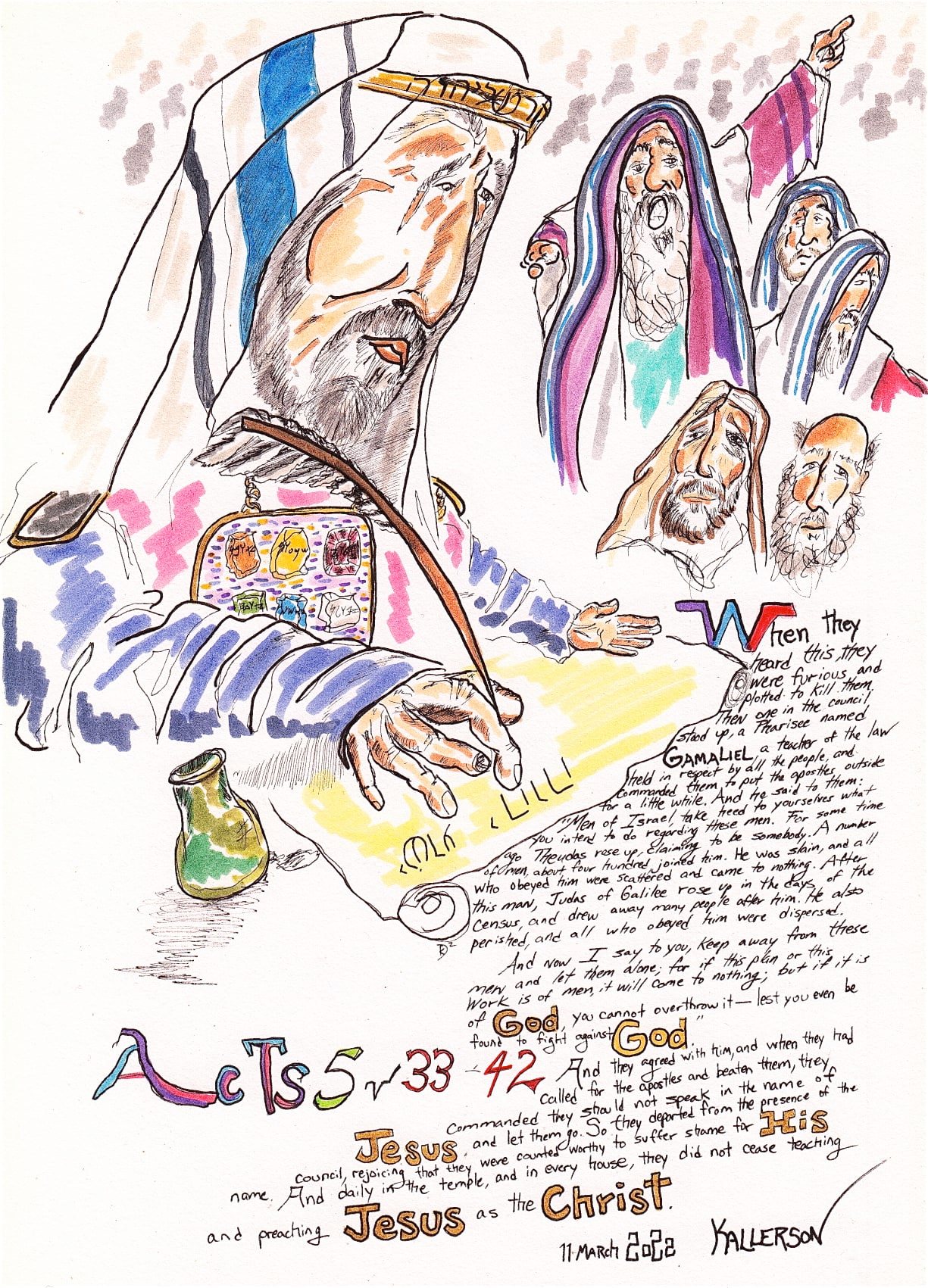
Acts 5:36

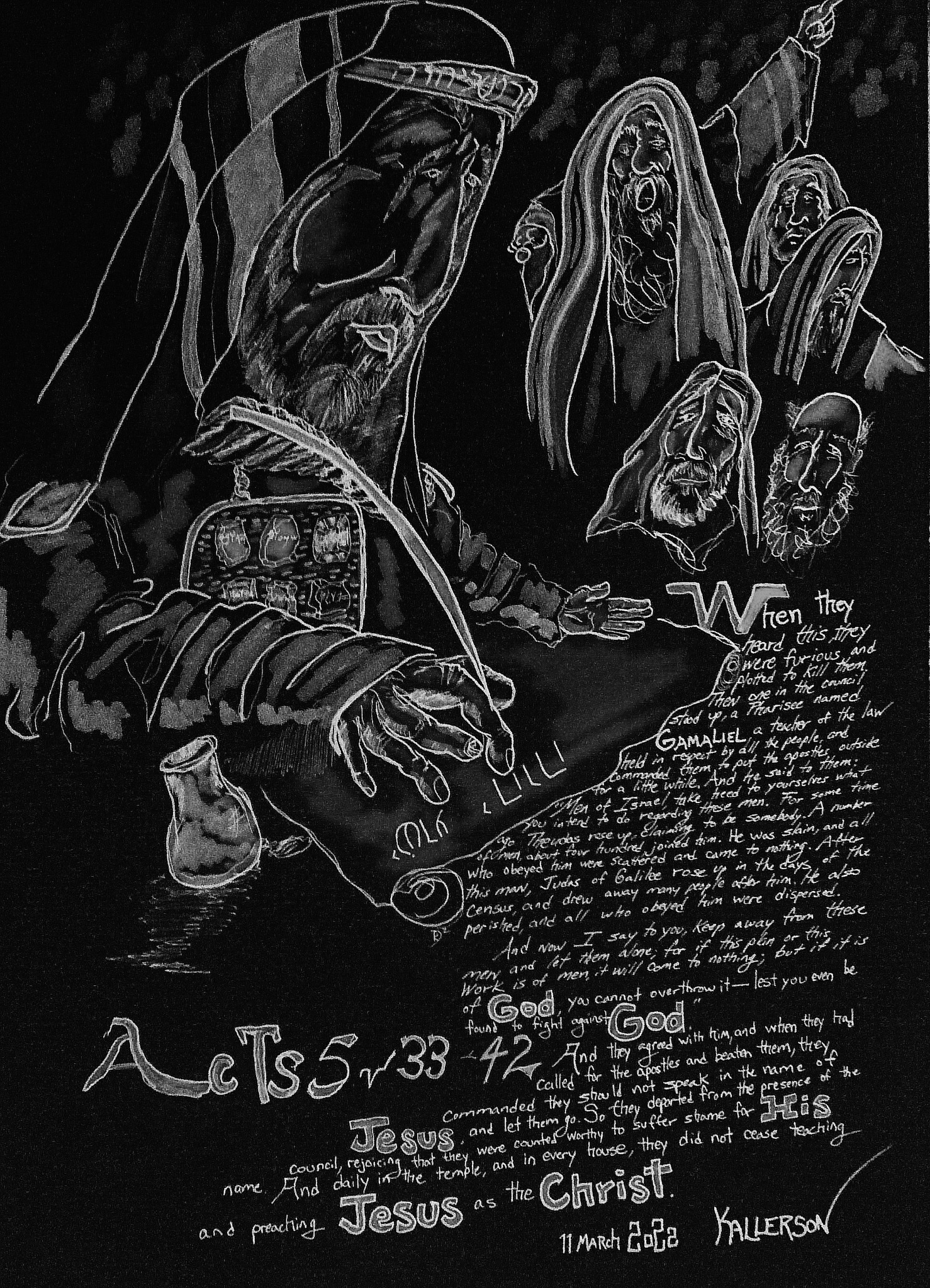
Black with white.

Wednesday, 16 March 2022


For some time ago Theudas rose up, claiming to be somebody. A number of men, about four hundred, joined him. He was slain, and all who obeyed him were scattered and came to nothing. Acts 5:36

Note: You can listen to today’s commentary courtesy of our friends at “Bible in Ten” podcast. (Click Here to listen)

You can also read this commentary, with music, courtesy of our friends at “Discern the Bible” on YouTube. (Click Here to listen), or at Rumble (Click Here to listen).

The advice from Gamaliel concerning the apostles is now to be given, but before actually providing his recommendation, he gives background data that will lead to his recommendation. What he says is from the historical record, and it details things the council would have been fully aware of. The first example begins with the words, “For some time ago Theudas rose up.”

Bringing in the name Theudas causes scholars a great deal of difficulty. The only known Theudas outside of the Bible is found in the writings of Josephus. However, he is placed later in history by Josephus than Gamaliel’s speech now. As such, some find Luke’s words an anachronism. A great deal is written on the inclusion of this name now, but the Pulpit commentary gives three options concerning him that allow for the biblical account to stand as correct –

“1. Josephus may have misplaced the adventure of Theudas by some accidental error. Considering the vast number of Jewish insurrections from the death of Herod the Great to the destruction of Jerusalem, such a mistake is not very improbable. 2. There may have been two adventurers of the name of Theudas, one in the reign of Augustus Caesar, and the other in the reign of Claudius; and so both the historians may be right, and the apparent discrepancy may have no real existence (see Wordsworth, in loc.). 3. The person named Theudas by Gamaliel may be the same whom Josephus speaks of (‘Bell. Jud.,’ it. 4:2) by the common name of Simon, as gathering a band of robbers around him, and making himself king at Herod’s death (‘Sonntag,’ cited by Meyer, etc.). But he was killed by Gratus, and the insurrection suppressed. A variety in this last mode has also been suggested (Kitto’s ‘Cyclopaedia’), viz. to understand Theudas to be an Aramaic form of Theodotus, and the equivalent Hebrew form of Theodotus to be מַתִתְיָה, Matthias, and so the person meant by Theudas to be a certain Matthias who with one Judas made an insurrection, when Herod the Great was dying, by tearing down the golden eagle which Herod had put over the great gate of the temple, and who was burnt alive with his companions, after defending his deed in a speech of great boldness and constancy (‘Ant. Jud’ 17:6).”

The first option, as noted, is not improbable. Josephus is often cited as an absolute authority when someone wants to defend his opinion concerning one matter or another. However, in comparing the writings of Josephus to Scripture an almost infinite number of discrepancies arise between the two. What he says will often deviate significantly from a plain reading of the Scriptures.

Therefore, and because of the reliability of the Bible, it is always best to defer to it and only to cite Josephus when his writings contain unique accounts that cannot be verified elsewhere. His writings are important, but they are certainly not inspired.

But just as important concerning this is that the details of Josephus concerning his account do not match what is stated in this verse by Gamaliel. To assume that Josephus is correct, and that Luke made such a blundering error, shows a bias against the writings of Luke, and a bias against the Bible, picking one similarity and disregarding other differences.

With this understood, Gamaliel continues with his reference to Theudas, saying that he rose up “claiming to be somebody.” The meaning of this is that Theudas put himself forth as an authority figure who was worth being heeded and who was also deemed worthy of being followed – “I am divinely appointed by God to deliver Israel! Men… Follow me!”

It is to be remembered that Gamaliel is giving examples that are to be taken in the context of the claims of the apostles. Therefore, Theudas’ “claiming to be somebody” is to be set parallel to the thought that “the apostles claim that Jesus is somebody.” In other words, Gamaliel is using a historical account to build a case based on precedent in order to make a decision. As such, he continues with, “A number of men, about four hundred, joined him.”

The number is not large compared to the Roman army, nor is it especially large in relation to many other groups of insurrectionists that might arise in hopes of overthrowing a sizeable army. Despite this, it is the same size of force that David originally had when he broke away from Saul –

“David therefore departed from there and escaped to the cave of Adullam. So when his brothers and all his father’s house heard it, they went down there to him. And everyone who was in distress, everyone who was in debt, and everyone who was discontented gathered to him. So he became captain over them. And there were about four hundred men with him.” 1 Samuel 22:1, 2

However, this band of four hundred eventually grew into a large fighting force. Later, David became the ruler of all of Israel. Again, the account must be set in parallel to what Gamaliel is saying.

David had been chosen by the Lord to be the next king. He was anointed as such by Samuel. And though his army started small, it grew into a vast kingdom of great power. The Scriptures reveal that God was behind the actions of David, and therefore David became the great leader of his people and the king of his nation. God’s will and purposes could not be thwarted. On the other hand, Theudas had an army of the same size as David. And yet, “He was slain.”

In David’s battles, he did the slaying. Again, and again, the Bible records the magnificent fighting and leadership abilities of David. God had chosen the man, He was there with the man, and thus David was unstoppable as he defeated the enemies of God’s people. Instead of being slain in battle, he died in his own bed, having seen the continuance of his kingdom through the establishment of his own son, Solomon, as king in his place with all of Israel subject to him. As for Theudas, Gamaliel says, “and all who obeyed him were scattered and came to nothing.”

David and his four hundred grew into the leaders of an entire nation. He appointed those with him to leadership positions, and rewarded those who were faithful subjects. Theudas, on the other hand, was defeated in battle, lay slain in the dust, and his followers dispersed. And the reason is obvious, no group of people of sane mind would continue to follow a slain leader who accomplished nothing he had set out to do.

And again, the parallel to Jesus and the apostles must be considered. This small band of apostles had grown into a very sizeable following because of the message they conveyed to the people. Their Leader had also been slain, but His death was both a part of what was supposed to happen, and it was not the end of the story the apostles spoke forth. Instead, Jesus had risen in victory. And the Foe was not merely an oppressive ruler over the people. Rather, it was the power of Satan himself that Jesus had defeated.

Death had been defeated, and a new life had come out of what Jesus had done. Gamaliel is making a point. If the message of the apostles is true, whatever the council decided must take that into consideration. David and his four hundred eventually led to an eternal dynasty –

“When your days are fulfilled and you rest with your fathers, I will set up your seed after you, who will come from your body, and I will establish his kingdom. 13 He shall build a house for My name, and I will establish the throne of his kingdom forever. 14 I will be his Father, and he shall be My son. If he commits iniquity, I will chasten him with the rod of men and with the blows of the sons of men. 15 But My mercy shall not depart from him, as I took it from Saul, whom I removed from before you. 16 And your house and your kingdom shall be established forever before you. Your throne shall be established forever.” 2 Samuel 7:12-16

On the other hand, Theudas and his four hundred men came to nothing. The difference between the two is whether their actions met with the approval of the Lord or not.

Life application: Many people have built great and lasting dynasties. This does not mean that the people rightly followed God and were set in place because He approved of them. But they could not have arisen to such positions unless God had allowed them to do so.

We cannot make the assumption that just because someone is powerful or wealthy that they are right with the Lord. However, the power and wealth of that person ultimately came from the Lord allowing it to be so. Likewise, a person who is faithful to the Lord may be poor, he may have no authority, he may be a minister with a very small ministry, or he may be a cripple or someone who even dies at an early age.

The main thing that we need to guide our lives is faithfulness to the Lord. Whatever else happens, good or bad, is what the Lord allows in our lives. It may actually be more difficult to be faithful to the Lord when one has great power, wealth, and abundance. How easy it is to forget the Lord in such circumstances!

Let us remember to be faithful no matter what our lot in life is. The life that is truly life is ahead, and the Lord will reward our faithfulness in a way that we cannot yet even imagine.

Lord God, Your will in our lives! May that be the driving motivation in all that we do. Help us to focus on that which is truly of value and not on the temporary, fleeting pleasures of this life we currently live. Help us! Give us strength and wisdom to be faithful to You as we walk down this temporary path on the way to glory. Amen.



Acts 5:35

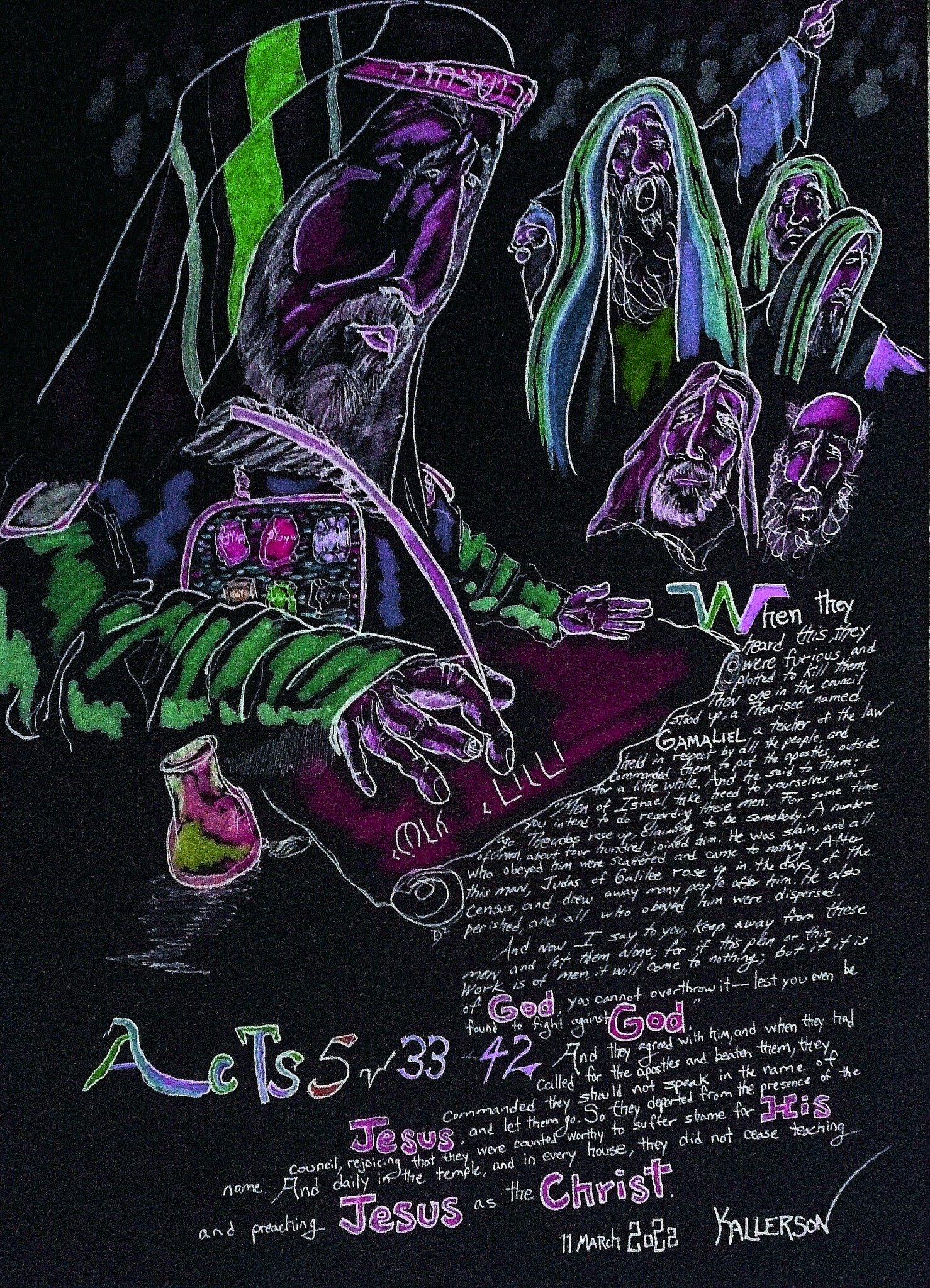
Acts in Mocha.

Tuesday, 15 March 2022

And he said to them: “Men of Israel, take heed to yourselves what you intend to do regarding these men. Acts 5:35

Note: You can listen to today’s commentary courtesy of our friends at “Bible in Ten” podcast. (Click Here to listen)

You can also read this commentary, with music, courtesy of our friends at “Discern the Bible” on YouTube. (Click Here to listen), or at Rumble (Click Here to listen).

The previous verse introduced Gamaliel who stood up and commanded that the apostles be put outside for a little while. With them removed from the council, Luke continues describing what occurred, next noting, “And he said to them.”

It is Gamaliel who had requested removal of the apostles, and it is now he who addresses the council, beginning with, “Men of Israel.” They are words of familiarity addressed to those on a similar standing within the council. This is unlike when Peter addressed this same council in Acts 4. There, his words carefully acknowledged their position within the society –

“Then Peter, filled with the Holy Spirit, said to them, ‘Rulers of the people and elders of Israel.’” Acts 4:8

What is more important in considering Peter’s address is that he was speaking as a person who was fully aware of the work of Jesus Christ. In addressing the council, he was addressing the body responsible for the direction of Israel. The choices they made would affect the entire nation.

Gamaliel’s words are on the same societal level as the others in the council, and he seems fully aware of this by his coming words to them, especially what he will say in verse 39. As a member of the body, he has the potential to direct them in a way that the apostles did not. But if the leadership of Israel ultimately fails to heed the sound advice of even one of their own, it will only increase their guilt in the matter of who Jesus is.

For now, his words continue with, “take heed to yourselves.” It is a phrase that was used by Jesus. There is the implication that careful thought should be given to a matter before any decision is hurriedly rendered.

One might say, “Guard yourselves concerning this.” It is as if there is a looming danger if the advice is not taken. The word is used by Paul in the Pastoral epistles concerning doctrinal matters. With this understood, that thing which Gamaliel warns of is concerning their actions toward the apostles. He warns the council to beware of “what you intend to do regarding these men.”

Although it is not yet known what is on his mind, Gamaliel has a definite concern that cannot be ignored. Whatever decision that will be rendered, his advice needs to be considered. This is surely based on his seeing their conduct after hearing the words of Peter and the others. Luke had noted that they were furious and plotted to kill the apostles.

Gamaliel smells potential trouble brewing, and he wants to avoid that. Being one who knew the Scriptures, he was fully aware that God’s plans cannot be thwarted. His words will use this knowledge in an attempt to keep things running smoothly and to keep anyone from actually harming themselves.

Life application: Gamaliel’s advice is based on a life of reading, contemplating, and studying Scripture. The only way he could make a reasoned decision in relation to what Scripture says is to…. (Yes, you, in the corner over there! Yes! That is correct!) … It is to know what the word says.

And the only way you can do that is by reading the word. People all over the world make well thought out decisions all the time, and it is based on their knowledge of whatever subject they are dealing with. Be well versed in the words of the Bible if you want to make right decisions that are intimately linked to your faith. Otherwise, you are setting yourself up for failure.

Read your Bible.

How great are You, O God. You are beyond our understanding, and yet, You have told us about Yourself and what You expect of us in Your word. Where are our priorities? If they are directed toward You, we will be responsible by studying and knowing that source of knowledge, reading it all the days of our lives. Help us to do this, O God. Amen.


Acts 5:34

False color rendering of Doug’s artwork.

Monday, 14 March 2022

Then one in the council stood up, a Pharisee named Gamaliel, a teacher of the law held in respect by all the people, and commanded them to put the apostles outside for a little while. Acts 5:34

Note: You can listen to today’s commentary courtesy of our friends at “Bible in Ten” podcast. (Click Here to listen)

You can also read this commentary, with music, courtesy of our friends at “Discern the Bible” on YouTube. (Click Here to listen), or at Rumble (Click Here to listen).

The events to this point have led the members of the council to become furious at the words of defense spoken by the apostles. In addition, it said that those in the council “plotted to kill them.” With that, a voice of reason now stands up within the council. Luke begins the note concerning him by saying, “Then one in the council stood up.”

This person probably heard the grumblings of some of the people and knew that their words were contrary to both reason and to the Law of Moses. Their violent speech and actions of the leadership had led to the crucifixion of Christ, and now His followers were standing before the council with the same type of anger being cast towards them. Luke next identifies him as “a Pharisee named Gamaliel.”

The name Gamaliel means “Reward of God.” Being a Pharisee is a key point. As a Pharisee, he accepted the premise that there is a resurrection, and also that there are angels and spirits. This is seen later in Acts –

“And when he had said this, a dissension arose between the Pharisees and the Sadducees; and the assembly was divided. For Sadducees say that there is no resurrection—and no angel or spirit; but the Pharisees confess both.” Acts 23:7, 8

As this is the case, he would at least be sympathetic to the words of the apostles concerning Christ, and he could actually accept that the unexplained release of the apostles from prison could have been accomplished by an angel. The latter point is not noted in the account now. And yet, it is otherwise hard to imagine that the council did not ask about it, even if Luke does not record the conversation (see the life application in the commentary on Acts 5:24).

Because of his views, he will be a voice of reason toward the situation now being brought before the council. Of this person, Gamaliel, Paul will later note in Acts 22:3 that he was brought up at his feet. The meaning is that he personally studied under this man. Hence, Paul’s doctrine followed after Gamaliel, and it was from this source that Paul’s grounding in Scripture was then used by the Lord to bring the message of life in Christ and the name of Jesus “before Gentiles, kings, and the children of Israel” (Acts 9:15).

Of this person, the following is noted by Albert Barnes –

“…this man was the teacher of Paul Acts 22:3, the son of the ‘Simon’ who took the Saviour in his arms Luke 2, and the grandson of the famous ‘Hillel,’ and was known among the Jews by the title of ‘Rabban Gamaliel the elder.’ There were other people of this name, who were also eminent among the Jews. This man is said to have died 18 years after the destruction of Jerusalem, and he died as he had lived, a Pharisee. There is not the least evidence that he was a friend of the Christian religion; but he was evidently a man of far more liberal views than the other members of the Sanhedrin.”

Luke next notes him as “a teacher of the law.” The meaning is that he instructed others in the law (as noted above concerning Paul), but he also would have interpreted the law, learned the traditional views of the scholars of the law before him, preserved the traditions of the Jewish culture and society, and so on. These things can be seen in how Paul, his student, presented himself before a tribunal later in Acts –

 “My manner of life from my youth, which was spent from the beginning among my own nation at Jerusalem, all the Jews know. They knew me from the first, if they were willing to testify, that according to the strictest sect of our religion I lived a Pharisee.” Acts 26:4, 5

Paul’s life was modeled after the teachings of Gamaliel, and his conduct and teaching – even as a believer in Christ – are to be understood from that perspective. His training and knowledge are certainly one reason why the Lord chose him for his apostolic ministry. Understanding the type of man Gamaliel was helps us to understand the reasoned passion Paul had concerning the things he knew about Jesus, and how they stand in relation to the Law of Moses. For now, Luke continues with his word about Gamaliel, saying that he was “held in respect by all the people.”

Even if the Sadducees and others disagreed with his beliefs, it is of note that those in the council still held Gamaliel in high regard. They were willing to listen to his thoughts and consider his arguments. This shows that he was understood to be a man of intelligence and reason. In this notable state, Luke next says that he “commanded them to put the apostles outside for a little while.”

From what will be said in the verses ahead, it is obvious that the discussion would only embolden the apostles to persevere in the spreading of their message if they knew what it was that will be stated. To avoid this, and to allow the movement of the apostles to either grow or die out without prejudice, they were to be removed from the deliberations.

What is interesting is that what is said in the council is, in fact, recorded by Luke. That means that someone who was in the room was aware of what was said and recalled it for Luke during his investigations leading to the writing of the book of Acts. Hence, it could be Gamaliel himself, or even Paul that heard and remembered the words that will next be looked at.

As a side note, the Alexandrian text says “men” instead of “apostles” in this final clause. Thus, many translations, going back as far as the Latin Vulgate, follow this wording. This will explain the change for those who notice the difference.

Life application: Above, the training and knowledge of Paul is noted. It was because of his in-depth knowledge of the Law of Moses and his grounded belief in his training as a Pharisee that he was able to piece together so much of his theology. It is true that God inspired Paul to write out his epistles, but what is inspired is still based upon what Paul knew and how he perceived the world around him in relation to the law and its fulfillment in Christ.

For example, though the author of Hebrews is not identified in the epistle, it is highly likely that Paul is its author. To understand why this is so, refer to the introduction to the commentary by the Superior Word on Hebrews. Whether it was Paul or not, it is someone who had an extensive knowledge of the law, and who obviously believed in the resurrection, angels, and spirits. He further was able to take that knowledge and weave together a sound and reasonable discourse for the Hebrew people to understand that Jesus is the fulfillment of these things.

This is what Paul does throughout all of his letters. His training as a Pharisee made the obvious connections to Jesus jump out of the law that he once lived under. From there, he was able to fully and rightly discern what even the other apostles could not quite grasp (see Acts 11 and Galatians 2 for example). In this, Paul – more than any other – was able to see that everything he had grown up with and been trained in was to find its fulfillment in Christ –

“So let no one judge you in food or in drink, or regarding a festival or a new moon or sabbaths, 17 which are a shadow of things to come, but the substance is of Christ. 18 Let no one cheat you of your reward, taking delight in false humility and worship of angels, intruding into those things which he has not seen, vainly puffed up by his fleshly mind, 19 and not holding fast to the Head, from whom all the body, nourished and knit together by joints and ligaments, grows with the increase that is from God.” Colossians 2:16-19

Today, we will also look at the words of Paul based on how we perceive our relationship to the law. The same words are read by those who accept that Christ is the end of the law for righteousness to everyone who believes (the correct view), and by those who believe the law is still in effect for all people, in part or in whole (the heretical view).

The difference is in their understanding of Paul’s words, meaning in relation to Christ as the fulfillment of the law or in relation to the law which Paul had once been under. The only way to get beyond the law is to properly understand its purpose in relation to Jesus. And the only way to do that is to read the Bible in its proper context. Once it is understood that that law was only a stepping stone on the way to Christ, and not an end in and of itself, only then does the law find its proper place in our thinking about the magnitude of what Jesus did for us.

Keep reading the Bible, and do not be led astray by those who would reinsert the law into our lives. It is a law that could never save anyone. Only in coming to Christ can we find the true hope that God has set before us. Thank God for our hope. Thank God for Jesus!

Lord God, You have taken real people, from all walks of life and from all kinds of interesting situations, and You have used them and their experiences in order to reveal to us Your intent for humanity, expressing these things in Your word. How great You are to show us such things so that we can know the proper path that leads us to Jesus. Yes, how great You are! Amen.


Acts 5:33

Negative color image.

Sunday, 13 March 2022

When they heard this, they were furious and plotted to kill them. Acts 5:33

Note: You can listen to today’s commentary courtesy of our friends at “Bible in Ten” podcast. (Click Here to listen).

You can also read this commentary, with music, courtesy of our friends at “Discern the Bible” on YouTube. (Click Here to listen), or at Rumble (Click Here to listen).

The apostles just offended the council with their words concerning Jesus, particularly that God had given the Holy Spirit to those who obey Him. That, in particular, must have really set them off. These were Israel’s leaders! These were those who sat in Moses’ seat! It was they who explained the law to the people! And yet, these men before them – mere Galileans by the way! – claimed that it is they who stood in favor with God. As such, Luke next records, “When they heard this.”

The entire discourse was probably upsetting to the council – 1) We ought to obey God rather than men. 2) God raised up Jesus whom you murdered. 3) Jesus has been exalted at the right hand of God. 4) It is through Jesus that repentance to Israel and forgiveness of sin comes. 5) The Holy Spirit is given to those who obey Him.

Each point was a direct poke at those of the council. By the time the apostles arrived at the last point, the minds of those on the council would be enraged at what they had heard. As such, Luke next says that “they were furious.”

This is a new word to Scripture, diaprió. It is found only here and in Acts 7:54. It comes from two words signifying “through” and “cut with a saw.” Hence, it signifies “sawn in two.” It is a state where a person feels they have been cut right in two, right down the middle, when overcome with grief or rage.

In the case of the council, one can imagine a saw cutting through their minds as bits fly off in different directions. The more words they heard, the more their minds would be drawn apart. At some point, in this case, the mentioning of receiving the Spirit for those who obeyed, their minds would become completely enraged and disjointed. In this state, Luke says that they “plotted to kill them.”

The verb is imperfect. It says that they “were plotting to kill them.” They were sitting there, stewing away at what they heard, and with every new indictment against them, each person was thinking of how he could use the law to do away with this group of arrogant miscreants. If the law was incapable of removing them, they certainly were thinking about how they could devise their own plan to do so. This seems evident because this is exactly what they later attempted to do to Paul, as is recorded in Acts 23:12-15.

What is important to remember, and which is a point upon which the council’s evaluation of the matter hinges, is that these apostles before them had been arrested and locked securely in the prison just a few hours before. And yet, they were not in the prison despite it being shut securely and with the guards still standing outside. Further, they had not run away from Jerusalem but had gone to its most prominent spot, the temple, in order to continue preaching.

What occurred there stood as a witness and a testimony to the truth of the words that the apostles spoke. The ignoring of each such validation of their message is another reason to justify the cutting off of the nation for their stubborn refusal to accept the truth of God in Christ Jesus.

Life application: The apostles said nothing wrong, and each point presented to the council was true. Many on the council would even know this. It is true that every person should obey God rather than men. It is true that those on the council had murdered Jesus. It is true that if He had been raised (which is what they knew and tried to cover up), that He was exalted at the right hand of God. It is also true that if Jesus had been raised, then He was the prophesied Servant of Isaiah 52/53 who would first die for the transgressions of the people. And it is true that the Holy Spirit had come upon those who believed in Jesus (as is carefully recorded in Acts 2 and as was validated by the signs, wonders, and miracles performed by the apostles).

Despite this, hearing the words of the apostles was enough to enrage the council. As such, we must remember that quite often the truth hurts. Thus, when we are presenting the truth, it may get us into trouble. That has been proven true throughout human history. But it is better to be persecuted for the truth than it is to hide safely behind lies.

Be people of truth, let things fall where they fall, and be pleased in never compromising the truth of the gospel of Jesus Christ. This life is short, we will soon go the way of all the world, and we will stand before the Lord for our judgment. It is right that we should do so having been truthful and having been faithful. May it be so.

Lord God Almighty, help us to never hide the truth when it should be presented. Help us to never waver in our convictions about what is right and proper. And, Lord, help us to be people of integrity in all we do. To Your glory, we pray. Amen.


Acts 5:32

Paint by Doug Kallerson. Sligo, Ireland.

Saturday, 12 March 2022

And we are His witnesses to these things, and so also is the Holy Spirit whom God has given to those who obey Him. Acts 5:32

Note: You can listen to today’s commentary courtesy of our friends at “Bible in Ten” podcast. (Click Here to listen)

You can also read this commentary, with music, courtesy of our friends at “Discern the Bible” on YouTube. (Click Here to listen), or at Rumble (Click Here to listen).

The words here must be kept in relation to what was just said since verse 5:29 in order to be rightly understood. Taken together, they say, “But Peter and the other apostles answered and said: ‘We ought to obey God rather than men. 30 The God of our fathers raised up Jesus whom you murdered by hanging on a tree. 31 Him God has exalted to His right hand to be Prince and Savior, to give repentance to Israel and forgiveness of sins. 32 And we are His witnesses to these things, and so also is the Holy Spirit whom God has given to those who obey Him.’”

With this context remembered, the words can be more clearly understood. They begin with, “And we are His witnesses.” This is the purpose of the apostles. They are “sent ones” who testify to everything that they saw concerning Jesus. This is an important point because it is an office that only existed in those who were personally involved in what occurred in His ministry. Paul is the only exception to this as is carefully explained by him in 1 Corinthians 15.

It was the condition specifically given when deciding upon the replacement for Judas –

“Therefore, of these men who have accompanied us all the time that the Lord Jesus went in and out among us, 22 beginning from the baptism of John to that day when He was taken up from us, one of these must become a witness with us of His resurrection.” Acts 1:21, 22

With this understood, they continue by saying that they are witnesses “to these things.” This refers to what is given in the previous verses cited above –

God raised up Jesus.
Israel’s leaders, representative of Israel, murdered Him by hanging Him on a tree.
God has exalted Him to (or by) His right hand to be Prince and Savior.
Repentance to Israel and forgiveness of sin is available through this.

It is the gospel message – Christ died for our sins, Christ was buried, Christ rose again. Calling on the Lord Jesus (meaning He is God because He is at the right hand of God, the position of power and authority) brings salvation. From there, Peter and the apostles next say, “and so also is the Holy Spirit.”

The Holy Spirit, the third member of the Godhead and the One who inspired God’s prophets to write out Scripture, is a witness to the workings of God in Christ –

“And so we have the prophetic word confirmed, which you do well to heed as a light that shines in a dark place, until the day dawns and the morning star rises in your hearts; 20 knowing this first, that no prophecy of Scripture is of any private interpretation, 21 for prophecy never came by the will of man, but holy men of God spoke as they were moved by the Holy Spirit.” 2 Peter 1:19-21

The visual, audible coming of the Holy Spirit upon these men also provided a supporting witness to their testimony. That witness continues again in their ability to properly convey the meaning of Scripture, of their healing of the sick, and so on. The acts of the apostles are another part of the witness of the Holy Spirit, testifying to the fact that Jesus is the Christ. With this understood, the apostles next say of the Holy Spirit, “whom God has given.”

The Holy Spirit is God, giving of Himself. It is not unlike God giving of Himself in Christ. Christ was given for the sin of the world, but that forgiveness is only applied to those who appropriate it through belief. Likewise, the Holy Spirit is given by God to humanity, but this only comes to those who appropriate the offering, and that only occurs for “to those who obey Him.”

The word the apostles use, which is translated as “obey,” is the one introduced in verse 5:29 (cited above). It is the word, peitharcheó. As previously noted, it comes from two words signifying “persuade” and “what comes first.” Thus, it signifies being obedient to the higher authority.

One must decide who he will obey. The apostles clearly state that they will be obedient to Christ, the fulfillment of the Law of Moses, rather than to those appointed to administer that law. Israel was given the law, only Israel. And so, this precept pertains only to Israel in the sense that they must put aside the law and come to the One who fulfilled it. And yet, the precept also applies to any who voluntarily place themselves under this law. To understand this, Paul refers to circumcision, the identifying mark of those who have so placed themselves under the law.

One cannot claim obedience to the law and not be circumcised, because it is a precept of the law. The precept applied to any part of the law, but Paul uses it as the premier example of choosing the law over grace. The result of doing so is clearly stated by him –

“Indeed I, Paul, say to you that if you become circumcised, Christ will profit you nothing. And I testify again to every man who becomes circumcised that he is a debtor to keep the whole law. You have become estranged from Christ, you who attempt to be justified by law; you have fallen from grace. For we through the Spirit eagerly wait for the hope of righteousness by faith. For in Christ Jesus neither circumcision nor uncircumcision avails anything, but faith working through love.” Galatians 5:2-6

Israel was given the law and they were under the law. To “obey” Christ for them was to follow the higher authority of Christ. A person who is not of Israel and who follows the law has failed to follow the higher authority of Christ. Either way, they do not have the Spirit, and they remain at enmity with God. This is the significance of the apostles’ words to the leaders of Israel.

The council will give their response, and the narrative will continue showing the failure of Israel to come to Christ. Eventually, the transfer of the spiritual banner will go from Jew to Gentile, from Israel to the church. This is because Israel is represented by this council. God isn’t overriding His own words found in the law. Instead, He is showing that Jesus is the fulfillment of the law, and the law is then annulled through His work.

Life application: The words of this verse speak of the witness of the Holy Spirit. As noted, the Holy Spirit witnesses through His word. He is given to those “who obey Him.” It must be understood that because the apostles personally saw the work of Christ and were witnesses of it, there are no longer apostles today. Nor is there any need for them.

The books of the Bible were completed before all of the apostles had died, being written by them, or those who were approved by them (such as Luke) to accurately report what was done by Christ and the apostles. As such, the Holy Spirit now witnesses to us only through His word. There is no need for believers to perform miraculous signs, nor the like.

The word is written, and it calls for faith to accept what it says. This is the premise for believers today. God has spoken, the Holy Spirit – through His word – witnesses to us of the work of Christ, and we are expected to believe it and accept that He is the Christ of God. In this, the Holy Spirit is given as a seal and a guarantee of our future redemption (Ephesians 1:13, 14).

Be of sound mind, believe what God has done, and be saved through the cleansing power of God’s Anointed, the Lord Jesus Christ.

The message is so simple, and it is all-sufficient for us to be saved. What more do we need, O God, to have the sure and unfailing faith that will carry us through the dark and distressing world? We have all we need, and we are so grateful for it! Thank You for the witness of the word, given to us by inspiration from You. Amen.