Acts 7:39

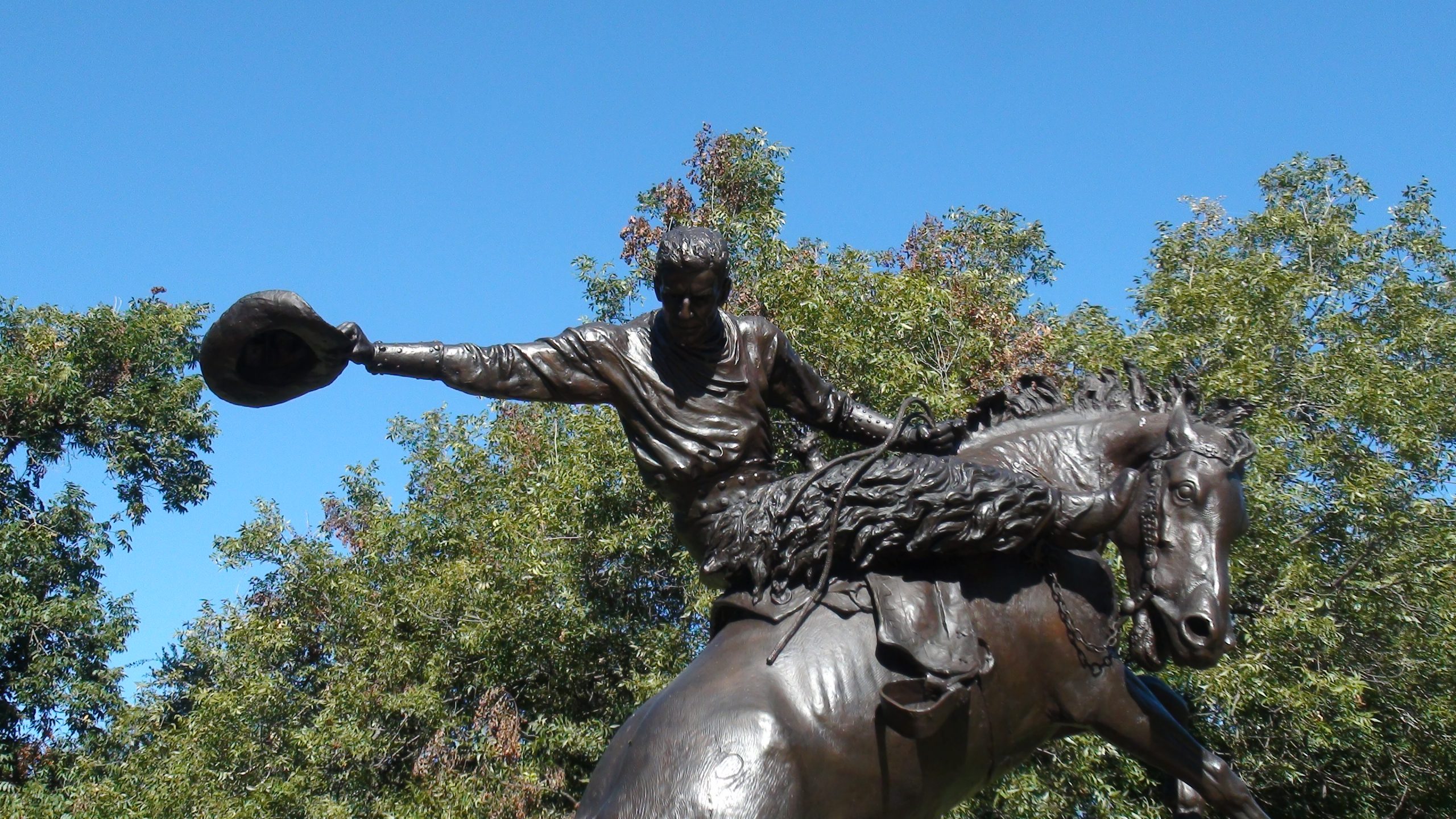
Close up of Yee Haw!

Sunday, 15 May 2022

whom our fathers would not obey, but rejected. And in their hearts they turned back to Egypt, Acts 7:39

Note: You can listen to today’s commentary courtesy of our friends at “Bible in Ten” podcast. (Click Here to listen)

You can also read this commentary, with music, courtesy of our friends at “Discern the Bible” on YouTube. (Click Here to listen), or at Rumble (Click Here to listen).

Stephen is still referring to Moses. He just noted that it was he to whom the Angel spoke on Mount Sinai, having received the living oracles which were then given to the people. Now he says of him, “whom our fathers would not obey.”

In the Greek, the word “obey” is an adjective. It should be rendered, “to whom our fathers were not willing to become obedient.” Obedience to Moses is to obey the Lord who gave the law through Moses. But they were unwilling to be obedient, as Stephen says, “but rejected.”

The specific events by which they rejected obedience to Moses, and of which Stephen is referring to, will be detailed in the coming verses. They are centered on what occurred in Exodus 32 in the incident of the golden calf.

For now, there is a casting off of what the Lord commanded. In this, they have cast off obedience to Moses who was chosen by the Lord to lead them. In rejecting this leadership, Stephen next says, “And in their hearts they turned back to Egypt.”

This is something that is specifically recorded in both Exodus 16 and Numbers 14. For example, in Exodus 16, it says –

“Then the whole congregation of the children of Israel complained against Moses and Aaron in the wilderness. And the children of Israel said to them, ‘Oh, that we had died by the hand of the Lord in the land of Egypt, when we sat by the pots of meat and when we ate bread to the full! For you have brought us out into this wilderness to kill this whole assembly with hunger.’” Exodus 16:2, 3

Even though not explicitly stated in Exodus 32, the same attitude is seen there. They rejected the Lord whose presence was seen atop the mountain, and they rejected Moses who was there conferring with the Lord. Instead, they turned their hearts back to Egypt in the sense that they longed for a physical, tangible idol that they could worship.

Life application: Israel turned its heart back to Egypt when they faced lack, such as in Exodus 16. The people turned their heart back to Egypt when they faced the idea of entering Canaan and having to deal with the inhabitants there that had fortified cities and strong defenses as in Numbers 14. They turned their heart back to Egypt in desiring gods that are not God as in Exodus 32. Each of these incidents demonstrates a lack in the people. That lack is faith.

They did not have faith that the Lord would provide for their physical needs, they did not have faith that the Lord would go before them and defeat their foes, and they lacked faith in God if they could not see Him right there among them.

People would rather trust a deaf and mute idol that they have fashioned with their own hands than to trust the unseen God who created all things. We must rise above this type of thinking and trust God through hardship and ease, through victory and possible defeat, and in not seeing the One who has made all that we see.

If we can just remember that He is there and that He has a plan that is being worked out for our ultimate benefit, then the temporary trials can be put in their proper perspective. There is no guarantee of living a life without pains, sadness, or loss. In fact, we should expect all of these things. But we can know that what we experience is temporary and will have a good end in the restoration of all things that God, who cannot lie, has promised to His people. Have faith in this.

Lord God, You are looking for faith in Your faithless creatures. Help us to be people of faith even when it seems beyond our ability to control anything around us. While the whirlwind swirls and destroys, may we remember that the calm and tranquil joy of heaven awaits us because of our hope in Jesus Christ our Lord. Amen.


Acts 7:38

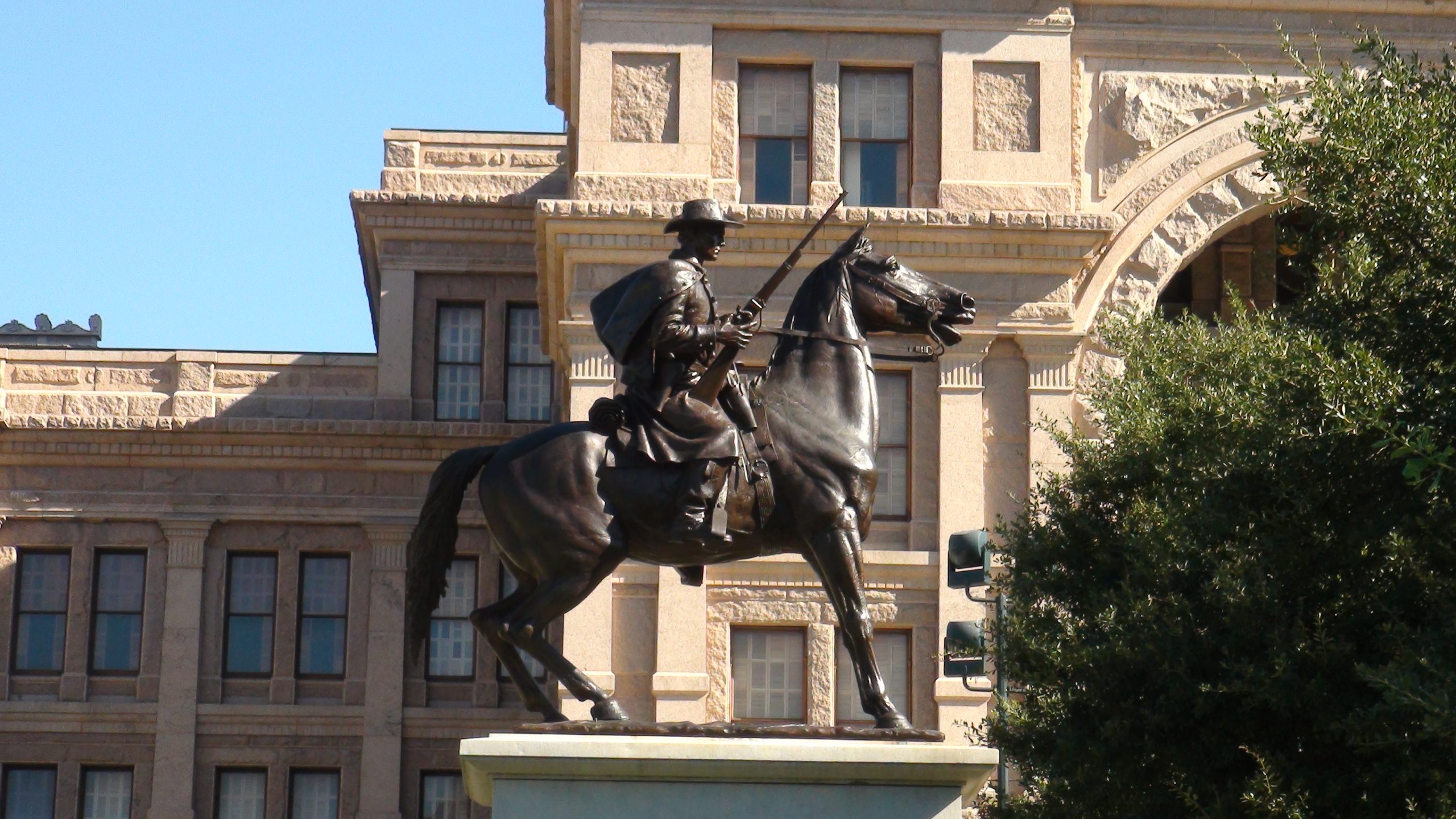
Yee Haw! Texas State Capitol grounds.

Saturday, 14 May 2022

“This is he who was in the congregation in the wilderness with the Angel who spoke to him on Mount Sinai, and with our fathers, the one who received the living oracles to give to us, Acts 7:38

Note: You can listen to today’s commentary courtesy of our friends at “Bible in Ten” podcast. (Click Here to listen)

You can also read this commentary, with music, courtesy of our friends at “Discern the Bible” on YouTube. (Click Here to listen), or at Rumble (Click Here to listen).

Following in the same thoughts as Peter from Acts 3, Stephen implicitly tied Jesus in with the “Prophet like Moses” from the previous verse. He did this by noting that Moses had admonished Israel to hear that coming Prophet. Now, he continues with his words about Moses, saying, “This is he who was in the congregation in the wilderness.”

In the Hebrew Old Testament, two main words are used to define those in the wilderness: qahal – assembly, and edah – congregation. The two words are similar in meaning but are distinct enough that a good translation will render them consistently as “assembly” and “congregation” to show the difference between the two. The word Stephen uses is the Greek word ekklésia. It can signify either word from the Hebrew. It refers to a group that is assembled, whether religious or secular (such as in Acts 19:32).

His use of the word simply indicates that the people of Israel had been called together as a people, assembling for a purpose. In this case, the assembly is defined by the next words, saying, “with the Angel who spoke to him on Mount Sinai.”

The congregation of those assembled met with the Angel of the Lord, meaning a visible/audible manifestation of God. As God is Spirit, it is a reference to the Lord Jesus who is the Angel (Messenger) of the Lord seen at that time and throughout the Old Testament.

The people were called together to hear the law spoken forth. They agreed to the conditions set forth, and they accepted the rule of the Lord over them. As such, they accepted Moses as the Lord’s representative. With this understood, Stephen confirms that not only Moses, but the people had heard this, saying, “and with our fathers.”

The people as an assembly had gathered at the foot of Sinai. They had heard the words of law, and they were overcome with terror at what they had heard. This is found just after the giving of the Ten Commandments –

“Now all the people witnessed the thunderings, the lightning flashes, the sound of the trumpet, and the mountain smoking; and when the people saw it, they trembled and stood afar off. 19 Then they said to Moses, ‘You speak with us, and we will hear; but let not God speak with us, lest we die.’” Exodus 20:18, 19

The people agreed that hearing the voice of the Lord was too much for them. And so, they asked Moses to speak out the words of law and they would hear – meaning obey – them. This is then reflected in the final words of the verse, saying, “the one who received the living oracles to give to us.”

This refers again to Moses. The people accepted that Moses would receive and transmit the word of the Lord to them. These are then called “the living oracles.” Some translations incorrectly say, “lively oracles,” “words of life,” or “life-giving.” Such translations are not the intent. It is a verb and signifies that the oracles are alive and active.

In Deuteronomy 33:2, Moses says, “From His right hand, fire-law for them” (CG). The meaning is that the law is alive and both purifying and consuming. This is the intent of what is given. These oracles are what work in Israel to either purify them as a people in their obedience or to consume them in their disobedience.

Life application: In Hebrews, it says –

“Let us therefore be diligent to enter that rest, lest anyone fall according to the same example of disobedience. 12 For the word of God is living and powerful, and sharper than any two-edged sword, piercing even to the division of soul and spirit, and of joints and marrow, and is a discerner of the thoughts and intents of the heart. 13 And there is no creature hidden from His sight, but all things are naked and open to the eyes of Him to whom we must give account.” Hebrews 4:11-13

This is the same thought as that of what Stephen presents to the council as he speaks to them. It is the same thought that we are to remember as well. Assuming the person is saved by faith in Christ, there is still the need to develop in Him. We are saved out of sin to live in holiness. This is what the Word of God is given for. We can learn what is pleasing to Him. We can learn how to walk properly before Him. We can avoid those things that are contrary to His nature.

Let us make use of this wonderful word. We will not lose our salvation if we don’t learn the word, but our life will never be one that is properly conducted unless we apply it to our walk before Him. Read the word, think on it, and let it fill you so that it can guide your actions, your conduct, and your words all the days of your life.

Glorious God, thank You for the wonderful words that You have given to us in the pages of Scripture! It is a living and powerful word that can mold us into Your image if we will just learn it and apply it to our lives. Help us in this, O God. May we do so, and may we be pleasing in Your sight as we walk before You in holiness. Amen.


Acts 7:37

Horse, rider, and rifle.

Friday, 13 May 2022

“This is that Moses who said to the children of Israel, ‘The Lord your God will raise up for you a Prophet like me from your brethren. Him you shall hear.’ Acts 7:37

Note: You can listen to today’s commentary courtesy of our friends at “Bible in Ten” podcast. (Click Here to listen)

You can also read this commentary, with music, courtesy of our friends at “Discern the Bible” on YouTube. (Click Here to listen), or at Rumble (Click Here to listen).

The previous verse described Moses, by the hand of the Angel, bringing Israel out and showing wonders and signs in Egypt, in the Red Sea, and in the wilderness for forty years. Stephen now says, “This is that Moses.”

The words are stated to emphatically show that it is the same Moses and none other. Stephen continues, noting that the same man who led Israel is the same man “who said to the children of Israel.” Again, the words are not without purpose. Just as it is the same Moses who did all the great things for Israel, so it is the same man who spoke out words of instruction to them in the law of Moses. And within that law, Moses said, “The Lord your God will raise up for you.”

What Moses says is law, it includes prophecy, and it is the word of the Lord. Therefore, when he wrote out the law, it became binding upon those who would receive it. It is as if Moses was still there with them in the council as Stephen spoke. Just because the man had died and been buried, the weight of his words continued as if he was sitting there speaking them out directly to this body of leaders.

As they were words of prophecy as well, when he said that an event would happen in the future, and when that event met up with the stream of time, whatever that event was had to be considered as happening by the will of the Lord and treated as such. It was not to be neglected, overlooked, or dismissed as an aberration. As for the event now referred to by Stephen, it is an event already proclaimed to this same council by Peter as fulfilled in the coming of Jesus Christ. It is that God shall raise up “a Prophet like me from your brethren.”

The words are stated in Deuteronomy 18:18 and are explained in the commentary of Acts 3:22. In short, Moses was a prophet of the Lord, and after him came many more prophets whose words were often carefully recorded and maintained, becoming the basis for Israel’s Scriptures. However, none of these were “like” Moses, apart from the fact that they were prophets. The difference between Moses and all others was that the words of Moses formed the basis of the law. He was the one who initiated the covenant.

And more, not only did he initiate the covenant, but he also performed the priestly role in its initiation, serving at the altar and ministering the blood. Though he was not to continue in the role of priest, he did serve in this function initially.

And further, not only did he serve in these ways, but he also served as the legislator of the covenant. No other prophet would be like Moses in all of these ways. His position in Israel was unique and distinct from all other prophets.

As Moses said that the Lord would raise up a Prophet like him, it meant that this prophet would – by default – be the Initiator, Priest, and Legislator of a New Covenant. This is carefully and minutely explained to Israel in the book of Hebrews where Jesus is said to be “greater than” Moses and Aaron in all ways. With this understood, Stephen repeats the words of Moses that were already spoken to this council by Peter, saying, “Him you shall hear.”

In the Hebrew of the referenced verse from Moses, there is an added stress in the word translated as “you shall hear.” This is indicated by the structure. It says, elav tishmaun – “Him you shall certainly hear.” Further, the sense of the word “hear” is not just to listen to the audible sounds, but to heed them and to obey them.

As such, there will be no excuse for rejection of this Prophet. The people must heed the words He speaks. It is a command of Moses, and it is a provision specifically directed by the Lord. Further, the people were to heed him, as Peter says, “in all things, whatever He says to you.”

The basis for these words is found also in Deuteronomy 18 –

“And the Lord said to me: ‘What they have spoken is good. 18 I will raise up for them a Prophet like you from among their brethren, and will put My words in His mouth, and He shall speak to them all that I command Him.’” Deuteronomy 18:17, 18

The words of the Prophet are equated directly to the words of the Lord. Therefore, to reject the Prophet’s words is to reject both Moses and the Lord. What is said by Him is to be heard and obeyed.

Because this is clearly to be understood from the law itself, no person of Israel – to whom the Law of Moses was given – could (or can) say that he was being obedient to Moses if he rejected this Prophet that Moses spoke of and that Peter now refers to. To reject Jesus is to reject Moses. Jesus said this explicitly to them –

“Do not think that I shall accuse you to the Father; there is one who accuses you—Moses, in whom you trust. 46 For if you believed Moses, you would believe Me; for he wrote about Me. 47 But if you do not believe his writings, how will you believe My words?” John 5:45-47

In rejecting Moses, the people would reject the Lord who commissioned Moses. The logical progression of thought is that only condemnation could result from a rejection of Jesus. The words of Peter in Acts 3, and the words of Stephen now, can be put side by side to see their parallel nature –

“For Moses truly said to the fathers, ‘The Lord your God will raise up for you a Prophet like me from your brethren. Him you shall hear in all things, whatever He says to you. 23 And it shall be that every soul who will not hear that Prophet shall be utterly destroyed from among the people.’” Acts 3:22, 23

“This is that Moses who said to the children of Israel, ‘The Lord your God will raise up for you a Prophet like me from your brethren. Him you shall hear.’” Acts 7:37

The two testimonies before the council stand as witnesses to them. If they are rejected, they stand as witnesses against them. But more, the words of Moses that they have cited are their own witness. The apostles are simply confirming that these words do, in fact, point to Christ Jesus.

Life application: Israel of today is taught by their own rabbis that Ezekiel 36 is fulfilled in their return to the land. Ezekiel was a prophet under the law of Moses, and his words prophesied of events that would happen in confirmation of what Moses had already recorded –

“If any of you are driven out to the farthest parts under heaven, from there the Lord your God will gather you, and from there He will bring you. Then the Lord your God will bring you to the land which your fathers possessed, and you shall possess it. He will prosper you and multiply you more than your fathers. And the Lord your God will circumcise your heart and the heart of your descendants, to love the Lord your God with all your heart and with all your soul, that you may live.” Deuteronomy 30:4-6

“For I will take you from among the nations, gather you out of all countries, and bring you into your own land. 25 Then I will sprinkle clean water on you, and you shall be clean; I will cleanse you from all your filthiness and from all your idols. 26 I will give you a new heart and put a new spirit within you; I will take the heart of stone out of your flesh and give you a heart of flesh. 27 I will put My Spirit within you and cause you to walk in My statutes, and you will keep My judgments and do them. 28 Then you shall dwell in the land that I gave to your fathers; you shall be My people, and I will be your God.” Ezekiel 36:24-28

It is the epitome of hypocrisy to claim that the Lord has favored them and brought them back to the land while ignoring the very words of the Lord that say they were exiled for their rejection of Jesus. Even though these words of Acts are found in the New Testament, they are based upon the words of the Law of Moses, they have been witnessed and testified to, and the witness stands as a historical record, bearing authority as such.

Picking and choosing what applies and what does not from the word of the Lord does not solve anything. It only confuses things even further. This is what Israel has done and continues to do. It is, unfortunately, what innumerable denominations, churches, and individual pastors, preachers, and teachers do. What is not liked about the prescriptions from the word is simply ignored. This is not a healthy way of taking in what the Lord is saying, and it can only lead to sadness in the end.

Let us take all things in their proper context, adhere to what is prescribed in the proper dispensation, and be willing to accept what is presented for what it is – the word of God that is to guide our life and conduct before the Lord.

Lord God, help us to be responsible with our analysis and application of Your precious word. It is far too important to dismiss or only partially apply it to our lives. Rather, may we be willing to carefully adhere to Your word, allowing it to guide our steps all the days of our lives. Amen.



Acts 7:36

Pidgeon bath. Austin Capitol grounds.

Thursday, 12 May 2022

He brought them out, after he had shown wonders and signs in the land of Egypt, and in the Red Sea, and in the wilderness forty years. Acts 7:36

Note: You can listen to today’s commentary courtesy of our friends at “Bible in Ten” podcast. (Click Here to listen)

You can also read this commentary, with music, courtesy of our friends at “Discern the Bible” on YouTube. (Click Here to listen), or at Rumble (Click Here to listen).

The previous verse referred to Moses, who was rejected by his own brothers, being the one God sent to be a ruler and a deliverer by the hand of the Angel who appeared to him in the bush. Still referring to Moses, Stephen next says, “He brought them out.”

This refers to the leadership of Moses, bringing the nation out of the bondage of Egypt. From there, the NKJV incorrectly (following the blunder of the KJV) includes the word “after.” This is not in the Greek, and it needs to be ignored. Including the word “after” as they have done leaves the words impossible to reconcile with the sequence of events. Moses “brought them out, having shown wonders and signs.”

The words translated as “wonders and signs” have already been seen in Acts, such as in Acts 2:22. The wonders refer to an event that occurs that is beyond what is normal. Calling forth frogs, lice, locusts, and hail (and so forth) are wonders. Moses said these things would come, and then they came, just as prophesied.

A sign is something that anticipates something else. Moses was given three signs to present in order to validate that the Lord had commissioned him. These were the rod that turned into a snake, the hand that turned leprous, and the turning of water into blood. The sign may be a wonder, but it has a greater purpose by pointing to something else, validating what it points to. Stephen notes that these wonders and signs were accomplished in three specific locations. The first is “in the land of Egypt.”

These were documented in Exodus 5-12, culminating in the slaying of the firstborn of Egypt and the passing over of the firstborn of Israel. Stephen next says, “and in the Red Sea.”

This was not only the parting of the Red Sea, but of the presence of the Lord in the pillar of fire and cloud, His protecting of them as they passed through the sea, and of His destruction of the Egyptians in the sea. Everything about the event was wondrous.

As a side note, this is the first of two times the Red Sea is mentioned in the New Testament, here and in Hebrews 11:29. The name Red Sea is derived not from the Hebrew, but from the Greek. The Hebrew calls it yam suph, or “Sea of ending,” coming from the verb suph, meaning to come to an end, or cease. This would refer to the sea from the perspective of the land of Israel, where its southern edge ends at the sea.

The origin of the Greek name, Erythra Thalassē, is unknown. Some think it might be because of red seaweed found there, while some because of the coast having a reddish appearance, and some find it etymologically connected to Edom (the Edom Sea) because the border of Edom ends at the sea. Edom means red, and so this is not an unlikely possibility. No matter where the name comes from, it is evident that the Greek name, from the Greek translation of Scripture, is where Stephen’s word is derived from.

Finally, Stephen finishes with, “and in the wilderness forty years.” Obviously, passing through the Red Sea was at the time of bringing Israel out of Egypt, not before. And the time in the wilderness was after being brought out and through the sea, not before. As such, the use of the word “after,” as added in by the NKJV, confuses the timing of the events described in this verse.

As for the wonders and signs in the wilderness, they are recorded from Exodus 13 and continue through the book of Numbers. The name Etham, found in Exodus 13:20, means “Their Sign.” It was given based on the surrounding events.

From there, Israel had bitter waters made sweet, manna from heaven throughout the entire time they wandered, water from the rock, quail in abundance, the giving of the law, the punishment of offenders in unique and interesting ways, the snake on the pole, and on and on and on. The wonders and signs were there with Israel as God maintained them as a people. The Lord never failed them during their entire time of wandering.

Life application: It is not uncommon to hear people muse as to why some say we do not have signs and wonders today. The answer is right in the Bible. Paul says that we live by faith, not by sight. If we had sight, we wouldn’t need faith. But think about it. Did the signs and wonders change anyone? For the most part, no.

Pharaoh saw them and continuously hardened his heart. Israel saw them and failed to believe the Lord and refused to trust Him. Jesus performed them among the people, and they crucified Him. The apostles demonstrated signs, wonders, and healings, and they were persecuted and rejected. To this day, they are still rejected.

And to say that a wonder does not exist in the world today is not completely true. Israel exists, despite all that it has gone through. This is exactly what the Lord said would be the case. And more, Israel the people are back in the land of Israel, exactly as the Lord – as testified to in His word – said would occur. And yet, the vast majority of the church rejects that this has anything to do with the workings of God. To them, it is an aberration that is to be rejected as such.

As you can see, things such as signs, wonders, and healings may be interesting, but without faith, they have no real meaning to the person who sees them. So, which is greater? What is it that God is looking for in you? He is looking for faith. If you want to experience a true wonder in your own home, try picking up your Bible and reading it.

God has authored it through chosen men. It took centuries to complete, and it details the history of the world and the process of redemption. It tells us of Jesus, the God/Man who has come to reconcile us to God. It tells of how we should live at this time, and it tells of the glories that lie ahead for those who simply believe the gospel. If you want a true wonder, right in your own home, try picking up the Bible and reading it.

Precious and glorious is Your word, O God. Thank You for the wonder that is there for us to search out and experience. We don’t need to watch more movies to be entertained, and we don’t need to see signs and wonders to be awed. Rather, we can find all the joy, excitement, emotion, and marvel we can imagine right in Your wonderful word. Thank you for this gift. Thank You for the Bible. Amen.


Acts 7:35

Austin Capitol, being tidied up in 2010.

Wednesday, 11 May 2022

“This Moses whom they rejected, saying, ‘Who made you a ruler and a judge?’ is the one God sent to be a ruler and a deliverer by the hand of the Angel who appeared to him in the bush. Acts 7:35

Note: You can listen to today’s commentary courtesy of our friends at “Bible in Ten” podcast. (Click Here to listen).

You can also read this commentary, with music, courtesy of our friends at “Discern the Bible” on YouTube. (Click Here to listen), or at Rumble (Click Here to listen).

The previous verse referred to the Lord’s words at the bush noting the oppression of His people and His coming down to deliver them. He completed the thought to Moses with, “And now come, I will send you to Egypt.” Stephen continues now, saying, “This Moses whom they rejected.”

What had happened forty years earlier is being reminded to the council again. Moses had appeared to his brother Israelites, coming to them as one of them, and yet they rejected him, “saying, ‘Who made you a ruler and a judge?’”

It is the words of verse 7:27 being called to mind. Moses had attempted to intercede by bringing harmony between the two who were fighting, but his attempts met with being pushed away and stinging words of rejection. Despite this, Stephen continues with his words about Moses, saying that this same Moses “is the one God sent.”

This refers to the words, “And now come, I will send you to Egypt,” of the previous verse. Despite having been rejected by his own people, it is he who was commissioned to be sent “to be a ruler and a deliverer.”

The word translated as “ruler” signifies one commanding with authority. It can be a governor, a leading man, a member of the elders, and so on. It is a general word that would rightly describe Moses over the people. The next word, translated as “deliverer,” is found only here in the Bible, lutrótés. It comes from the verb, lutroó, to release by paying a ransom, or to redeem. As such, it is more appropriately translated as “redeemer.”

In the choice of this word, Stephen is clearly tying the leadership of Moses in with the work of Christ. Moses worked on behalf of the Lord who redeemed Egypt –

“Therefore say to the children of Israel: ‘I am the Lord; I will bring you out from under the burdens of the Egyptians, I will rescue you from their bondage, and I will redeem you with an outstretched arm and with great judgments.’” Exodus 6:6

“’And it came to pass, when Pharaoh was stubborn about letting us go, that the Lord killed all the firstborn in the land of Egypt, both the firstborn of man and the firstborn of beast. Therefore I sacrifice to the Lord all males that open the womb, but all the firstborn of my sons I redeem.’ 16 It shall be as a sign on your hand and as frontlets between your eyes, for by strength of hand the Lord brought us out of Egypt.” Exodus 13:15, 16

The verb from which this noun comes is applied to Jesus three times in the New Testament: Luke 24:21, Titus 2:14, and 1 Peter 1:18. It says in 1 Peter –

“knowing that you were not redeemed with corruptible things, like silver or gold, from your aimless conduct received by tradition from your fathers, 19 but with the precious blood of Christ, as of a lamb without blemish and without spot.” 1 Peter 1:18, 19

Stephen is showing that Moses, through the blood of the Passover, was a type and picture of the coming Christ. This is exactingly stated by Paul in Ephesians 1:7 where he notes that it is “In Him we have redemption through His blood.” It is Jesus who would be rejected by those he came to, and yet, he was appointed by God to be their Ruler and Redeemer. As for Moses, he was sent in this capacity “by the hand of the Angel who appeared to him in the bush.”

The Greek preposition, en, or “in,” is used – “in the hand.” The hand is a symbol of power and strength. Thus, it is a way of saying, “in the strength of the Angel.” Thus, it is the power of the Lord who led him and by which he performed the miracles, signs, and wonders before Pharaoh and the people of Egypt. The connection to Jesus, the Ruler of Israel and who performs in the strength of the Lord, is being called forth once again –

“‘But you, Bethlehem Ephrathah,
Though you are little among the thousands of Judah,
Yet out of you shall come forth to Me
The One to be Ruler in Israel,
Whose goings forth are from of old,
From everlasting.’
Therefore He shall give them up,
Until the time that she who is in labor has given birth;
Then the remnant of His brethren
Shall return to the children of Israel.
And He shall stand and feed His flock
In the strength of the Lord,
In the majesty of the name of the Lord His God;
And they shall abide,
For now He shall be great
To the ends of the earth;
And this One shall be peace.” Micah 5:2-5

Stephen is clearly and precisely showing the council that everything about the coming Messiah was clearly prophesied in advance and that the typology of their historical figures – along with the prophecies – is exactingly fulfilled in Jesus.

Life application: Studying what Jesus has done, as it was anticipated in Old Testament types and pictures, clearly reveals His deity. If you are struggling with this concept, or if you have someone telling you that it is not a proper doctrine, all you need to do is pick up your Bible and read it – cover to cover and again and again. The more familiar you are with it, the more obvious what is being said becomes.

Jesus Christ is clearly a Man, born of a woman. Jesus Christ is clearly God, born of the Holy Spirit. The pattern for all things reproducing after their own kind is found on the first page of the Bible. It is explicitly stated there for a reason. Be confident in your faith concerning Jesus Christ, the God/Man.

Glorious God Almighty, what You have done is incredible! We may struggle with the core doctrines concerning You and what You have done, but they are so clearly presented in Scripture that we would be foolish to deny them. And so, Lord, help us to have faith when our knowledge may be lacking. But also, Lord, lead us to those who can also firm up our knowledge. Thank You, O God. Amen.