Acts 7:49

Wednesday, 25 May 2022

‘Heaven is My throne,
And earth is My footstool.
What house will you build for Me? says the Lord,
Or what is the place of My rest?
Acts 7:49

Note: You can listen to today’s commentary courtesy of our friends at “Bible in Ten” podcast. (Click Here to listen)

You can also read this commentary, with music, courtesy of our friends at “Discern the Bible” on YouTube. (Click Here to listen), or at Rumble (Click Here to listen).

Stephen had just said that “the Most High does not dwell in temples made with hands.” To support this, he now cites Isaiah 66. His citation of Isaiah 66:1 and the corresponding Hebrew are listed in order here –

“Heaven is My throne,
And earth is My footstool.
What house will you build for Me? says the Lord,
Or what is the place of My rest?” (NKJV)

“Thus says Yehovah:
‘The heavens are My throne,
And the earth is the footstool for My feet.
Where is this – the house which you will build to Me?
And where is this – the place of My rest?’” (CG)

Stephen begins by saying, “Heaven is My throne.” The translation should contain the articles that are found in the Greek – “The heaven is My throne.” It is as if heaven is the place where the Lord sits in authority and judgment over all things, looking down upon His subjects below, evaluating them, and directing them.

Heaven is the place of His hosts, and it is from there that He directs them as they then direct the course of human governments, accomplishments, and achievements. Stephen next says, “And earth is My footstool.”

Again, the definite article should be translated. It should read, “And the earth a footstool of the feet of Me.” It speaks of the earth being totally subject to Him. The place of the foot is the place where authority is exercised. As the feet of the Lord rest upon the earth, it signifies that He possesses all authority over it. Everything that happens on it is at His discretion and is subject to His will. With this understood, Stephen next says, “What house will you build for Me? says the Lord.”

The Greek word translated as “what” signifies “what manner.” It is as if the Lord says, “You are down there on earth. What manner of house could you possibly build for Me that could contain Me? Your human hands are insufficient to do such a thing!” This is based on the previous two declarations. If the Lord is ruling from heaven, and if His rule is over all the earth, then what earthly house would be sufficient to contain Him? With that, Stephen says, “Or what is the place of My rest?”

Again, the question begs for an obvious answer. Isaiah was quoting the Lord at the time when the first temple stood. Stephen is quoting Isaiah while the second temple was still standing. How could the people truly believe that the temple could contain the substance of the Lord in His fulness? It again calls to mind Solomon’s proclamation when the temple was dedicated –

“But will God indeed dwell on the earth? Behold, heaven and the heaven of heavens cannot contain You. How much less this temple which I have built!” 1 Kings 8:27

How could the Lord find rest in such a place? But there is a dwelling in which the Lord could find His rest. It is one not made with human hands. It is this that Stephen is trying to convey to the council.

Life application: The Bible is using anthropomorphism to make a point about the nature of God. This is not saying that God has body parts that are actually sitting on a throne in heaven with His feet resting on the earth. As John Gill says, “…these things are not to be literally understood, but are images and figures, representing the majesty, sovereignty, and immensity of God; who is the maker of all things, the governor of the universe, and is above all places, and not to be contained in any.”

It is good practice to actively remind yourself of this type of speech when reading the Bible and to think about what is being conveyed. What idea does each body part that is mentioned express? For example, the hand signifies that which accomplishes things. The right hand is the position of authority. The finger is that which directs and participates in the hand’s accomplishments. The arm signifies reach of authority and ability. And so on.

All the way through Scripture, God is using terms, ideas, and concepts that man should be aware of in any culture and in any language. So, think about the analogy and why it is used in the particular passage. What is the surrounding context asking you to consider?

When reading the Bible in this way, you will more fully grasp the intent of its words. Again, be careful to understand that these things are to be taken as anthropomorphisms and not as literal terminology. In misunderstanding this, you may become a flat earther. Forget the tinfoil hat, understand the terminology, and consider the greatness of God as it is expressed to you in His precious word.

Lord God, Your word resonates with people all over the world and from every culture and language. As You created man, You have found a way to express Yourself to him in a way that is universally understood. The simplicity of the overall message simply cannot be missed! Jesus. It is all about Your work in and through Jesus. Thank You for Jesus Christ our Lord who makes You understandable to us. Amen.



Acts 7:48

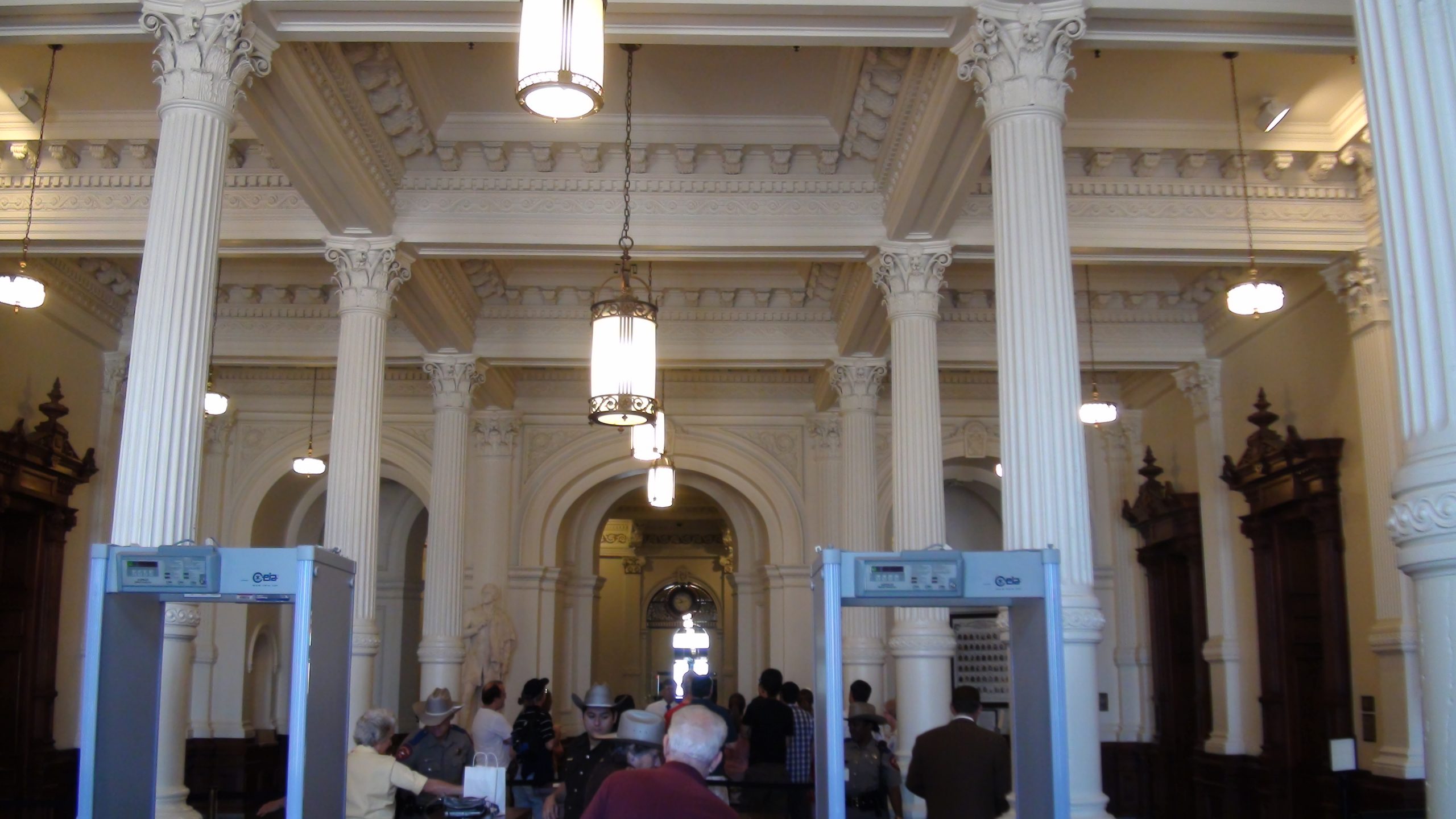
Ready to enter the capitol…

Tuesday, 24 May 2022

“However, the Most High does not dwell in temples made with hands, as the prophet says: Acts 7:48

Note: You can listen to today’s commentary courtesy of our friends at “Bible in Ten” podcast. (Click Here to listen).

You can also read this commentary, with music, courtesy of our friends at “Discern the Bible” on YouTube. (Click Here to listen), or at Rumble (Click Here to listen).

Stephen has been speaking of the tabernacle, David’s desire to build a house for the Lord, and then acknowledging, “But Solomon built Him a house.” Now, as a clear indication that such a building is only a type of something greater, he substantially conveys the thought of Solomon at the dedication of the temple, beginning with, “However, the Most High.”

The term “Most High” (or “Highest”) is used more than fifty times in Scripture, usually in poetical verses, and mostly in the psalms, but it is also used quite often in Daniel. It speaks of God as being above all else. In Hebrew, the term is El Elyon God Most High. The word elyon refers to that which is at the highest point; that which is uppermost. This term was first used by Abraham –

“Then Melchizedek king of Salem brought out bread and wine; he was the priest of God Most High.” Genesis 14:18

It is used to refer to the Lord God being above all other “gods” and of the absolute preeminence –

“Let all be put to shame who serve carved images,
Who boast of idols.
Worship Him, all you gods.
Zion hears and is glad,
And the daughters of Judah rejoice
Because of Your judgments, O Lord.
For You, Lord, are most high above all the earth;
You are exalted far above all gods.” Psalm 97:7-9

Daniel uses it in relation to the absolute power and authority of the Lord. Of the Most High, Stephen logically states that He “does not dwell in temples made with hands.”

Paul uses the same sentiment in Acts 17 when making his case concerning God while speaking at the Areopagus –

“God, who made the world and everything in it, since He is Lord of heaven and earth, does not dwell in temples made with hands.” Acts 17:24

The author of Hebrews shows that the tabernacle/temple was only a type, or representation, of the true dwelling of God, heaven itself –

“For Christ has not entered the holy places made with hands, which are copies of the true, but into heaven itself, now to appear in the presence of God for us.” Hebrews 9:24

The words of Stephen, and which are agreed upon in both testaments, is that the temple itself, though a representation of who Jesus is and of what He would do, was a temporary point of worship until the coming of Christ. As noted above, his words are perfectly in line with what Solomon said at the dedication of the temple –

“But will God indeed dwell on the earth? Behold, heaven and the heaven of heavens cannot contain You. How much less this temple which I have built!” 1 Kings 8:27

As this is so, then a different type of worship will come when the Messiah has fulfilled the types and shadows seen in the rites and rituals of the temple. Jesus stated as much when He noted that true believers will worship God in spirit and in truth. Stephen’s statement now is a defense against the charge made against him in Acts 6:13 –

“This man does not cease to speak blasphemous words against this holy place and the law.”

Stephen is carefully making his case that what has been said about him is untrue. But more, he is showing the council that it is they who have misunderstood the significance of the rites, rituals, and edifices that have made up the history of their people. In doing so, they were unable to see Jesus for who He is when He came among them. This verse now finishes in the middle of a thought with, “as the prophet says.” Stephen will next cite Isaiah to confirm that Scripture bears out what he is conveying.

Life application: Like the nation of Israel, who failed to see that all of their biblically instituted rites and rituals were only types and shadows of the coming Messiah (see Colossians 2:17), the same is true today with the Jewish people. But more, this truth permeates churches as well.

To some extent or another, churches fall back on mandating rites and rituals that are made null and void in Christ. Circumcision, Sabbath worship, tithing, observance of certain feast days, dietary restrictions, and so on. All such things do not bring a person any closer to God. In fact, they bring in a wall that separates them from God.

Because Christ is the fulfillment of these things, mandating them essentially says, “I trust in my own observance of these things to make God happy instead of trusting in Christ who fulfilled these things.”

To mandate something means it is more than simple instruction. If a church wants to have a Passover ceremony to show what it was like before Christ’s coming, that is fine and acceptable. But to mandate observance of the same as a ritual observance sets aside its greater fulfillment in Christ. Be wise and discerning. A little yeast leavens the whole lump.

Trust in Christ, rest in Christ, and look to Christ alone for your righteousness.

Lord God, thank You that Jesus has done all we need to be reconciled to You. We shall fix our eyes on Him and give You glory through this. Surely, we thank You for Jesus Christ our Lord. Amen.


Acts 7:47

Kerblam.

Monday, 23 May 2022

But Solomon built Him a house. Acts 7:47

Note: You can listen to today’s commentary courtesy of our friends at “Bible in Ten” podcast. (Click Here to listen).

You can also read this commentary, with music, courtesy of our friends at “Discern the Bible” on YouTube. (Click Here to listen), or at Rumble (Click Here to listen).

The previous verse referred to David, saying, “who found favor before God and asked to find a dwelling for the God of Jacob.” With that, Stephen now notes, “But Solomon built Him a house.”

It was David’s intent to build a house for the Lord to dwell in, but he was a man of war and so that honor was denied him –

“Then he called for his son Solomon, and charged him to build a house for the Lord God of Israel. And David said to Solomon: ‘My son, as for me, it was in my mind to build a house to the name of the Lord my God; but the word of the Lord came to me, saying, “You have shed much blood and have made great wars; you shall not build a house for My name, because you have shed much blood on the earth in My sight. Behold, a son shall be born to you, who shall be a man of rest; and I will give him rest from all his enemies all around. His name shall be Solomon, for I will give peace and quietness to Israel in his days. 10 He shall build a house for My name, and he shall be My son, and I will be his Father; and I will establish the throne of his kingdom over Israel forever.”’” 1 Chronicles 22:6-10

As David could not build the house, Solomon was given charge to do so. But David had prepared all that was necessary for the task in advance. That is recorded in the same chapter –

“Indeed I have taken much trouble to prepare for the house of the Lord one hundred thousand talents of gold and one million talents of silver, and bronze and iron beyond measure, for it is so abundant. I have prepared timber and stone also, and you may add to them. 15 Moreover there are workmen with you in abundance: woodsmen and stonecutters, and all types of skillful men for every kind of work. 16 Of gold and silver and bronze and iron there is no limit. Arise and begin working, and the Lord be with you.” 1 Chronicles 22:14-16

But there is more than just the “house,”assa which is the temple that is referred to in the original promise made to David as is recorded in 2 Samuel 7. The Hebrew word bayith, or house, is used again and again in that chapter. There, it has two main meanings. The first is a literal structure, a temple, where the Lord would dwell. The second refers to a family, such as saying, “the house of David.”

Both ideas are found in one paragraph of 2 Samuel 7 –

 “When your days are fulfilled and you rest with your fathers, I will set up your seed after you, who will come from your body, and I will establish his kingdom. 13 He shall build a house for My name, and I will establish the throne of his kingdom forever. 14 I will be his Father, and he shall be My son. If he commits iniquity, I will chasten him with the rod of men and with the blows of the sons of men. 15 But My mercy shall not depart from him, as I took it from Saul, whom I removed from before you. 16 And your house and your kingdom shall be established forever before you. Your throne shall be established forever.” 2 Samuel 7:12-16

The words “He shall build a house for My name” immediately refer to Solomon, as Stephen indicates in Acts. However, the words go further, referring to the work of Christ who is the One to build the true house of God. Peter, using the same word that Stephen uses, says –

“you also, as living stones, are being built up a spiritual house, a holy priesthood, to offer up spiritual sacrifices acceptable to God through Jesus Christ.” 1 Peter 2:5

This is the same thing that Paul refers to as well. In his words, the edifice he refers to is a temple, but it is the same idea as the “house” that Peter refers to –

“Now, therefore, you are no longer strangers and foreigners, but fellow citizens with the saints and members of the household of God, 20 having been built on the foundation of the apostles and prophets, Jesus Christ Himself being the chief cornerstone, 21 in whom the whole building, being fitted together, grows into a holy temple in the Lord, 22 in whom you also are being built together for a dwelling place of God in the Spirit.” Ephesians 2:19-22

Stephen’s words are intended to wake the council up to the truth that what man has made is not, nor can it be, the final home of God. It is simply a perishable structure that meets a temporary purpose. He will confirm this in his words ahead. It is the apostles who then explain this so that we can understand just what the Lord is referring to in using the word “house” when speaking of a holy dwelling place, as well as an eternal family in His words to David. What He says goes beyond the line of Solomon and the temple which Solomon built by referring to what Christ would do in building the true house of God through David’s greater Son, Jesus.

Life application: Let us remember that no matter where we worship, the true church is not a building. Rather, it is the people of God. If you attend an online church, you are as much a part of the “church” as a person who has sat in the same pew for 45 years. Paul shows us this several times in his epistles, such as –

“To Philemon our beloved friend and fellow laborer, to the beloved Apphia, Archippus our fellow soldier, and to the church in your house:” Philemon 1:1, 2

The church meets in a building; the building is not the church. Wherever you are, you are a living stone in the true house that God is building. Be confident in this and don’t worry if the latte machine in the corner of the building is broken. It will not affect your salvation at all. Be assured of your position in Christ. He has you safely cared for as a member of His true church.

Heavenly Father, thank You for the knowledge that we are accepted members of Your church because of the work of Jesus. We are accepted, and we are being built into a house that will endure forever. Thank You for Your kind care for each one of us. Glory to You in the highest. Amen.


Acts 7:46

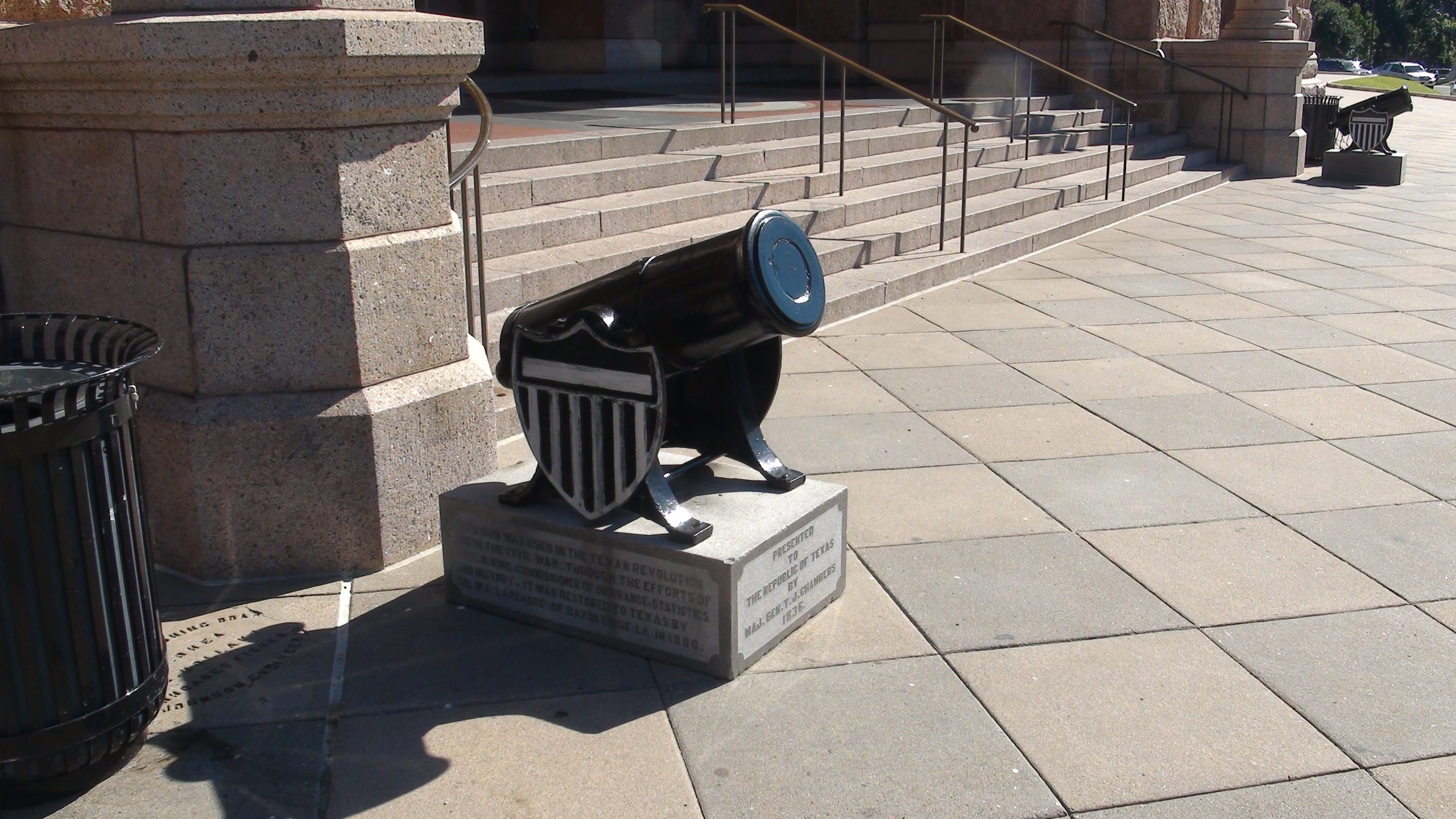
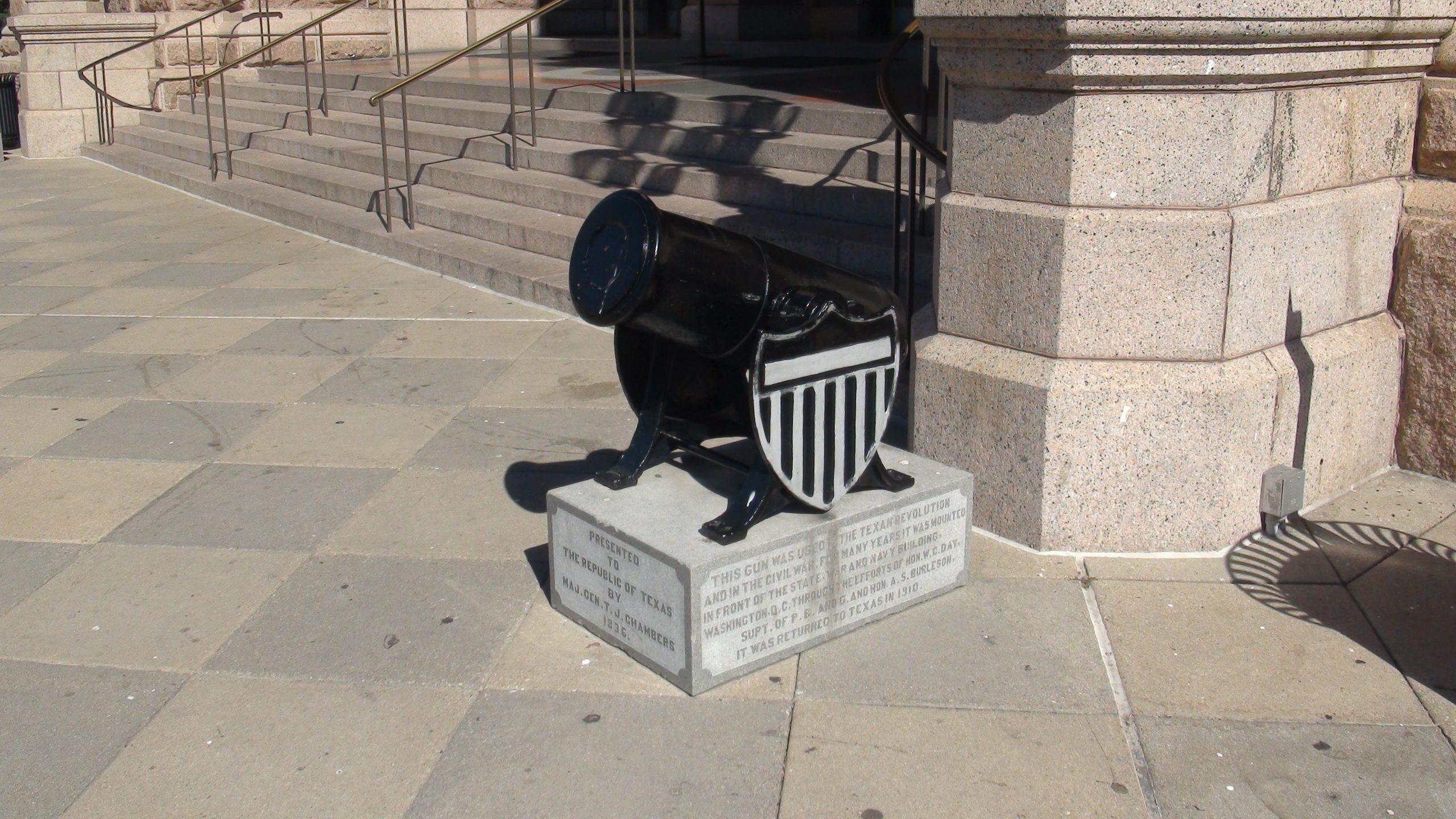
Used in the Texan Revolution and in the Civil War.

Sunday, 22 May 2022

who found favor before God and asked to find a dwelling for the God of Jacob. Acts 7:46

Note: You can listen to today’s commentary courtesy of our friends at “Bible in Ten” podcast. (Click Here to listen).

You can also read this commentary, with music, courtesy of our friends at “Discern the Bible” on YouTube. (Click Here to listen), or at Rumble (Click Here to listen).

The previous verse mentioned that the fathers who entered Canaan had received the tabernacle. This continued until the days of David. With that, Stephen now says, “who found favor before God.”

This is referring to David. Saul had dropped out of favor with the Lord and was told that his dynasty would not continue. Instead, David was chosen. Because of his faithful heart, he was promised an everlasting dynasty. It was at this same time that he “asked to find a dwelling.”

The word used is the same as that of the tabernacle. It is a tent for the ark to be brought into. The intention of David was to bring the ark to Jerusalem and to eventually build a permanent house for it. The passage of bringing it to Jerusalem is found in 2 Samuel 6. Eventually, it was his intent to have it taken from the temporary tent to a permanent house.

The tabernacle built at the time of Moses was the central point of worship from Moses until David, but David determined to eventually build a temple for a permanent edifice in which the ark could be housed for the “God of Jacob.”

This is referenced in the words of Psalm 132 –

“Lord, remember David
And all his afflictions;
How he swore to the Lord,
And vowed to the Mighty One of Jacob:
‘Surely I will not go into the chamber of my house,
Or go up to the comfort of my bed;
I will not give sleep to my eyes
Or slumber to my eyelids,
Until I find a place for the Lord,
A dwelling place for the Mighty One of Jacob.’” Psalm 132:1-5

Life application: Take time to read 1 Samuel 6 and 7 today.  With Jerusalem subdued and under David’s control, he intended to bring the ark there. When it came, it was placed in another temporary tent while David determined to build a temple. This will not come about in David’s time, but the promise of an everlasting dynasty was made. Also, he was told that a temple for the Lord would come about through his seed.

Stephen’s words are dealing with the matter of blasphemy that he has been accused of. What is the proper means and mode of worship for God’s people? Did it come through the tabernacle constructed in the wilderness? Did it come about through the tabernacle of David? Will it come about through the temple built by Solomon as will be noted in the next verse?

These are edifices produced by the work of man’s hands. What type of worship is God ultimately expecting from His people? Each step of the process, the people thought that what they had was the final piece of the puzzle, or that (as in David’s case) it was leading to the erection of a final temple.

We can get so caught up in our own type and style of worship that we put God into a box and secret Him away, just as the ark was secreted away in a tent or house. But we are being taught through Stephen the same truth that Jesus told to the woman at the well –

“But the hour is coming, and now is, when the true worshipers will worship the Father in spirit and truth; for the Father is seeking such to worship Him. 24 God is Spirit, and those who worship Him must worship in spirit and truth.” John 4:23, 24

God is not to be limited to our own preconceived notions about Him. Our attention and devotion are to be on Jesus, and our hearts are to be conformed to that. Everything else is simply a temporary form of expression that we have developed in order to, hopefully, help others express that attention and devotion properly. Jesus is the true and final expression of what these Old Testament types and pictures only anticipate. Keep yourself from the legalism that so easily entraps us when we gather together to worship Jesus.

Glorious God Almighty, You have given us the final expression of who You are to us in the Person of Jesus. It is through Him that we will forever worship You. Help us to remember this and to not get caught up in legalistic expressions that take our eyes off of this fact. Help us to remain focused on You, through Jesus, all our days. Amen.


Acts 7:45

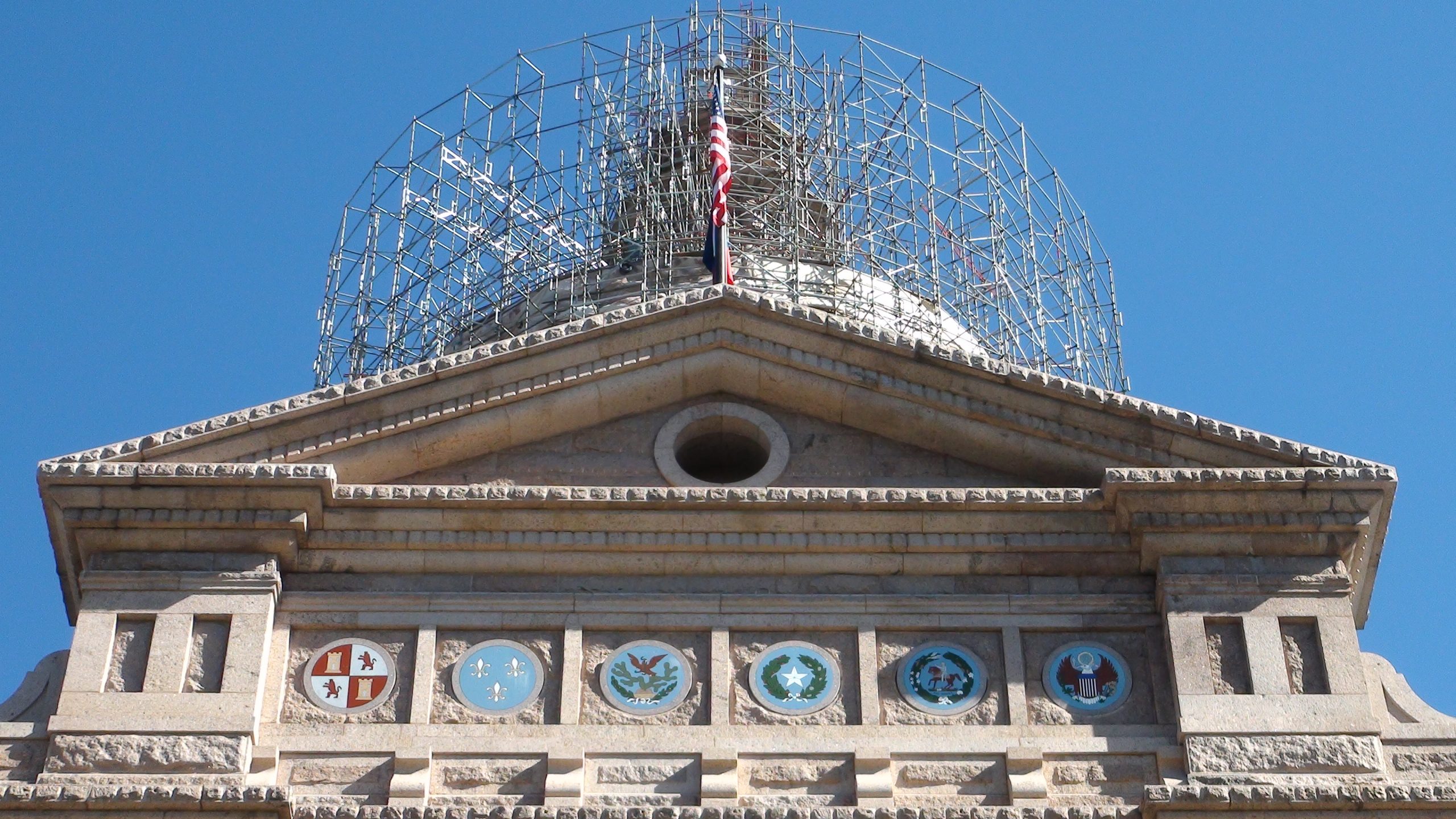
Texas Capitol being worked on, 2010.

Saturday, 21 May 2022

which our fathers, having received it in turn, also brought with Joshua into the land possessed by the Gentiles, whom God drove out before the face of our fathers until the days of David, Acts 7:45

Note: You can listen to today’s commentary courtesy of our friends at “Bible in Ten” podcast. (Click Here to listen)

You can also read this commentary, with music, courtesy of our friends at “Discern the Bible” on YouTube. (Click Here to listen), or at Rumble (Click Here to listen).

The previous verse referred to the tabernacle in the wilderness, and that Moses was instructed to make it according to the pattern he had seen. Having seen a pattern, it then conveys to us an obvious truth. If there is a pattern, then the copy is not the actual thing that has been copied. Stephen will explain that in a few verses. For now, he explains more about the earthly tabernacle, beginning with, “which our fathers, having received it in turn.”

The Greek word translated as “having received it in turn,” is found only here in Scripture. It speaks of the succession of the tabernacle. It was fashioned at the time of Moses and it was the central point of worship for those who constructed it. Eventually, that generation died off, and the next generation received it in turn.

This is because the first generation was disobedient and failed to enter into Canaan when it was offered to them. They did not believe the Lord, and they were condemned to die in the wilderness. Only when that generation had died off would the people enter. Two exceptions to this were Joshua and Caleb who believed the Lord. It is this next generation that is being referred to. From there, Stephen continues by saying, “also brought with Joshua.”

Joshua is explicitly noted as being with the next generation. As the leader of the people, but as one of the previous generation, Stephen ensures that this distinction in him is made. He was of faith, and because he was, he led the next generation of Israel into Canaan. It was this generation, with Joshua leading them, that brought the tabernacle “into the land possessed by the Gentiles.”

Here, Stephen uses the same word found in Acts 7:5 where it speaks of promising the land of Canaan to Abraham “for a possession.” This is now its only other use in Scripture. The Greek literally reads, “in the possession of the nations.” Because of this, translations vary. Some see this as the act of possessing the land. But the word “possession” is a noun. It is, therefore, most probably speaking of the land that was possessed by the nations, and who would then be disposed from the land.

Also, it is to be noted that some earlier translations say “Jesus” in this verse instead of “Joshua.” The names of both in the Greek are the same. It is obvious that Joshua brought Israel into the land. But the similarity of the names is still important.

In reading the Greek, the mental connection to both is made. It is certainly historically accurate to translate this as Joshua, but in typology, it is good to know that the Greek names Joshua and Jesus are the same. Joshua brought the tabernacle of the Lord into the land possessed by the Gentiles. Jesus, the Lord, is the one who brought the knowledge of the Lord into the Gentile world.

It is this presence of the Lord as indicated by the tabernacle being brought by the next generation of Israel, and as led by Joshua, that enabled Israel to drive out the nations “before the face of our fathers.”

The Greek actually reads just the opposite, saying “from the face of our fathers.” It is the same expression used in the Greek translation of Deuteronomy 11:23. It is the Lord who does the work, removing the Gentiles from before Israel. Israel participated in the wars, but without the Lord, they could never have succeeded in accomplishing the task.

This process of removing the Gentiles, with the presence of the tabernacle among Israel, is carefully recorded in Joshua, and the battles in the land continue on through Judges. Saul, the first king of Israel dealt with this as well. This continued on, according to Stephen, “until the days of David.”

What this is referring to is not the removing of the Gentiles until the time of David, but of the presence of the tabernacle until the time of David. The removing of the Gentiles is a fact that occurred because of the presence of the tabernacle, but the main subject is the tabernacle itself. That will be seen in the next two verses.

Life application: The tabernacle is noted above as a copy of something else. As such, it is not the real thing, but only a type or shadow of the real thing. It is important to understand this because it was telling Israel that the One who dwelt in that tabernacle was not limited to it.

It is God in Christ that this tabernacle was modeled after. Until one sees this, he cannot fully appreciate that what God is doing is larger than just what is spoken of concerning Israel. To this day, people get excited about events surrounding the coming temple in Jerusalem, such as finding a suitable red heifer for sacrifice.

And, indeed, it is exciting in the sense that prophecy is being fulfilled, but it should not be exciting to think that Israel is going to build a temple for worship. As Jesus is the fulfillment of these things, it means that Israel has not yet learned this lesson. The sacrifice of a red heifer cannot do anything for Israel. Only what that red heifer anticipated, meaning the work of Jesus, can cleanse them.

Let us remember this. It is not good to send money to fund temple projects in Israel. In doing so, we are participating in Israel’s rejection of Christ! Be understanding of these things. We need to get out the word about Jesus, not about Israel’s return to an obsolete law.

Heavenly Father, we pray that Israel’s eyes will be opened to the truth of what You have done through Jesus. May their hearts be turned to You through Him. The law was ineffective in bringing them to a right standing with You. Only in Jesus’ fulfillment of it can that happen. Help them to see this, O God. Amen.