Acts 9:9

Blades for a wind farm turbine. Total scenery chewers, inefficient, and environmentally unfriendly.

Sunday, 24 July 2022

And he was three days without sight, and neither ate nor drank. Acts 9:9

Note: You can listen to today’s commentary courtesy of our friends at “Bible in Ten” podcast. (Click Here to listen)

You can also read this commentary, with music, courtesy of our friends at “Discern the Bible” on YouTube. (Click Here to listen), or at Rumble (Click Here to listen).

The previous verse saw Saul being led by the hand into the city of Damascus. Now, while there, it says, “And he was three days without sight.”

The Greek is a present participle verb, not a noun. It says, “And he was three days without seeing.” Rather than saying he was blind, as if it was a form of punishment, it says he was without seeing. The meaning is the same, but the choice of words seems purposeful. Paul was given a period of darkness to help him consider his state before God. It is not unlike what occurred in Egypt –

“Then the Lord said to Moses, ‘Stretch out your hand toward heaven, that there may be darkness over the land of Egypt, darkness which may even be felt.’ 22 So Moses stretched out his hand toward heaven, and there was thick darkness in all the land of Egypt three days. 23 They did not see one another; nor did anyone rise from his place for three days. But all the children of Israel had light in their dwellings.” Exodus 10:21-23

The people of Egypt were not blind, but rather they simply could not see. It is probably during this time that many Egyptians decided they had enough and would join with Israel. The probable timing of the events was the selection of the Passover Lambs followed by the three days of darkness. Once the darkness was over, the mixed multitude that went out of Egypt was probably more than ready to go with them. The darkness was a time to consider what had happened and to choose to follow the right path.

Likewise, Paul was not able to see for three days after having seen Christ. He could consider his life up to this point, meaning his actions that had brought him to where he was now, and then redirect everything he was made of for a new path.

It is not uncommon for scholars to attempt to tie this period in with Paul’s vision of 2 Corinthians 12:1-4. But there is nothing to suggest this and everything to argue against it. Paul says there that he did not know if the vision he had was in the body or out. While in Damascus, he would have known perfectly well that he was in the body. His inability to see would remind him of this. Further, the events in Damascus occurred at a point prior to his conversion and baptism. It is not likely that God would transport him to the “third heaven” prior to his becoming an apostle.

Paul had to first contemplate his state before God and have his mind and heart directed to Him. This was surely the purpose of the state of not being able to see. And more, it next says of him, “and neither ate nor drank.”

Both of these speak of intake. Combined with the inability to intake new information through his eyes, he was left with the basic senses of hearing and feeling. Thus, his mind would be far more attuned to what was important without the distractions of sight and food. This was a time of reflection and he used it as such by not filling himself with physical food, but with the spiritual food of thought and contemplation.

Life application: There are times in our lives when great decisions need to be made. At such times, redirecting our senses to the Lord in a greater way than we normally would is to be considered. When we are bombarded with a constant stream of information coming in, these things can only confuse the mind and distract it from what is most important.

If you have important decisions to make, a time of quiet, prayer, and even fasting may be called for. Cutting out the externals that can draw our attention away from proper focus should always be considered and acted upon based on the surrounding circumstances.

Lord God, there is a lot to distract us in our daily lives. And there are times when we need to not be distracted. Give us wisdom when such times arise to put away the things that fill our normal daily life and to focus on seeking You more fully. In this, we will be prepared to more rightly decide what we should do. Give us wisdom in this, O God. Amen.




Acts 9:8

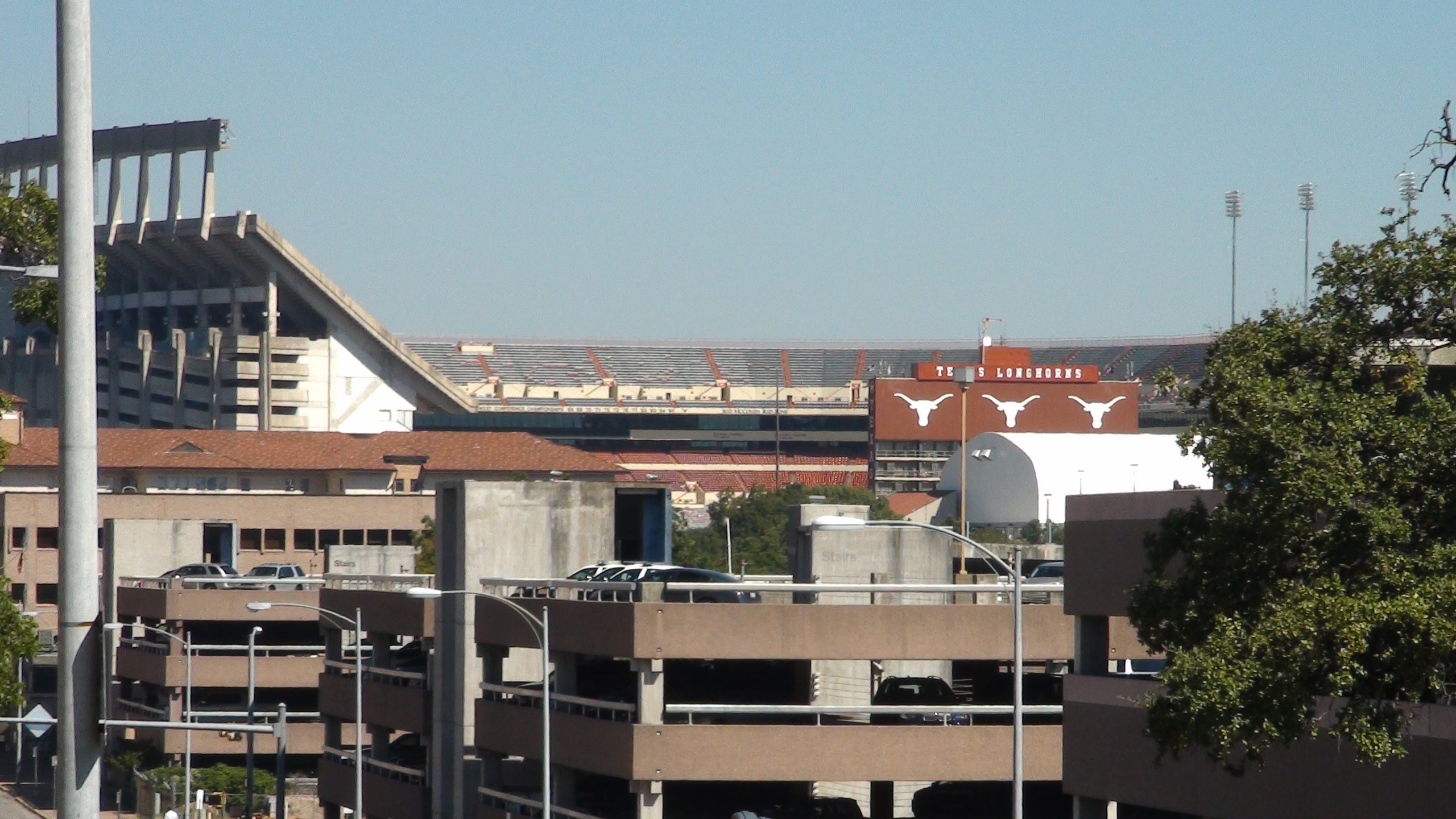
Longhorn Stadium.

Saturday, 23 July 2022

Then Saul arose from the ground, and when his eyes were opened he saw no one. But they led him by the hand and brought him into Damascus. Acts 9:8

Note: You can listen to today’s commentary courtesy of our friends at “Bible in Ten” podcast. (Click Here to listen)

You can also read this commentary, with music, courtesy of our friends at “Discern the Bible” on YouTube. (Click Here to listen), or at Rumble (Click Here to listen).

Previously, it was seen that the men who were with Paul heard a voice, but they saw no one. The narrative continues with, “Then Saul arose from the ground.” As noted in verses 9:3 & 4, he had fallen to the ground after the bright light shone around him. In the intervening verses where he conversed with the Lord, Paul would have been on the ground before Him and with his eyes closed. That is seen in the next words, saying, “and when his eyes were opened he saw no one.”

The word is different than the previous verse where those with Paul saw no one. Here, it is a neuter adjective, and it should be translated as, “he saw nothing” –

  • And the men who journeyed with him stood speechless, hearing a voice but seeing no one.
  • Then Saul arose from the ground, and when his eyes were opened he saw nothing.

Unlike the men who were miraculously prevented from seeing the brilliancy surrounding the Lord, Paul was completely blinded. In this state, it next says, “But they led him by the hand.” The leader of those who were prepared to arrest the Lord’s people had to be led by those who previously followed him. In this state of helpless blindness, it says they “brought him into Damascus.”

Paul did make it to Damascus, but not in the way he expected. In Acts 22, he will attribute his blindness directly to the brilliancy of the light he encountered –

“And since I could not see for the glory of that light, being led by the hand of those who were with me, I came into Damascus.” Acts 22:11

There are several natural explanations for Paul’s blindness, one is known as conversion disorder or hysterical blindness. This is an affliction where an event that causes severe emotional distress, a psychological factor, and something that certainly was the case with Paul, manifests itself physically. In this case, the physical ailment would be blindness.

Such an explanation cannot be fully dismissed, but it also cannot completely explain what occurred with Paul. First, he clearly attributes his blindness to the glory of the light. Secondly, the effects that occur later in this chapter when he regains his sight are not something that can be explained by conversion disorder. Thirdly, such naturalistic explanations don’t answer why Paul saw the brilliant light while those with him did not.

Therefore, there is possibly a naturalistic explanation for parts of what occurred, something seen with many miracles in the Bible, but there is that which goes beyond the naturalistic as well.

Life application: When we read the Bible, there is nothing wrong with trying to figure out how God performs a miracle. At times, the explanation is given right in the text. For example, in the parting of the Red Sea, the answer as to how it occurred is right in the passage –

“Then Moses stretched out his hand over the sea; and the Lord caused the sea to go back by a strong east wind all that night, and made the sea into dry land, and the waters were divided.” Exodus 14:21

The Lord provided an east wind to part the waters just as he provided an east wind to bring in the locusts (Exodus 10:13). Such explanations show us that God is in control of the elements, and He can and will use them to effect His purposes. However, that is not the only part of the miracles.

When the locusts came upon the land, it was told in advance to Pharaoh that it would occur. When the Red Sea was parted, it was at the exact spot where such a wind could cause the waters to divide, it was at the exact time that it needed to occur for Israel to be saved. And more, the surrounding events – such as the destruction of the Egyptian army – occurred during the same event that brought Israel to safety.

Often, naysayers of the Bible will look so intently at the naturalistic explanations surrounding a miracle that they will overlook the truly miraculous parts of them. Be attentive to the surrounding events concerning such things. It is in these details that an argument for the miraculous is actually available.

But one of the key points of such a defense is that someone took the time to argue for a naturalistic explanation. That means that he has now set the account as both factual and acceptable as recorded history. Otherwise, there would be no reason to try to explain it away as naturalistic. Once a person has taken this position, providing the surrounding points that are truly miraculous will set their arguments off as illogical and without merit.

Lord God, while people try to diminish the truth or accuracy of Your word, we can watch their attempts fail time and time again. But we can only do this if we know it well enough to dismiss their arguments as unacceptable. Otherwise, we have no footing to do so. Please help us to be prepared for the attacks that are made. Help us to be ready to defend what Your word says while having faith that what it conveys is true. Amen.


Acts 9:7

UT at A.

Friday, 22 July 2022

And the men who journeyed with him stood speechless, hearing a voice but seeing no one. Acts 9:7

Note: You can listen to today’s commentary courtesy of our friends at “Bible in Ten” podcast. (Click Here to listen)

You can also read this commentary, with music, courtesy of our friends at “Discern the Bible” on YouTube. (Click Here to listen), or at Rumble (Click Here to listen).

The Lord Jesus just said to Paul, “Arise and go into the city, and you will be told what you must do.” Luke continues the narrative now with the words, “And the men who journeyed with him stood speechless.”

The word translated as “speechless,” enneos, is found only here in the Bible. It comes from another unique word, enneuó, which means to nod at or make a sign by nodding. As such this word signifies mute, as in a person making signs. In this case, the men are silent from a state of complete astonishment. As this is the case, it tells us that they have been captured by the vision as well as Paul has. However, there is a difference. Here, Luke records that they were “hearing a voice but seeing no one.”

A literal rendering of the Greek is, “hearing indeed the voice but seeing no one.” This is a verse that naysayers and those who attack the Bible will point to when claiming there are contradictions in Scripture. The reason for this is that it says later in Acts –

“And those who were with me indeed saw the light and were afraid, but they did not hear the voice of Him who spoke to me.” Acts 22:9

The supposed contradiction is eliminated through understanding the intent of what has been said. The same word, akouó, is used in both passages. It means physically hearing, but it also means to understand. In the case of Acts 9, the men indeed heard the voice. However, in Acts 22, Paul notes to those he is speaking to in Jerusalem (to those who speak the same language as he did) that the men with him did not understand what was being said.

Again, the same word carries both connotations. We might say, “You aren’t hearing me” to someone who hears but does not understand or pay heed. We may knock on someone’s head and say, “Hellloooo, did you hear me?” when we know perfectly well that he did, even though he may not have grasped or paid attention to what was said.

The reason for the specificity is because Paul, in his defense before King Agrippa in Acts 26, says –

“And when we all had fallen to the ground, I heard a voice speaking to me and saying in the Hebrew language, ‘Saul, Saul, why are you persecuting Me? It is hard for you to kick against the goads.’” Acts 26:14

There Paul identifies the language as Hebrew (the word also covers Aramaic). But those he spoke to in Jerusalem in Acts 22 (his crazed audience), would have understood Hebrew. As this is so, it is telling us that either those with Paul in Acts 9 did not speak Hebrew, or they were purposefully withheld from understanding what Paul could readily understand. This would be a miracle like in Acts 2 then. It is comparable to the fact that Paul saw the Lord while these men did not. Their hearing/understanding and vision were hindered from what Paul clearly heard, understood, and saw.

Two (of the many) examples of hearing physically while not understanding are –

“And with many such parables He spoke the word to them as they were able to hear it [akouó].” Mark 4:33

“For he who speaks in a tongue does not speak to men but to God, for no one understands [akouó] him; however, in the spirit he speaks mysteries.” 1 Corinthians 14:2

One more example shows the intent of what is now said in Acts quite clearly –

“Therefore the people who stood by and heard [akouóit said that it had thundered. Others said, ‘An angel has spoken to Him.’” John 12:29

In the example from John, some “heard” what they thought was thunder. Others clearly heard words because they refer to it as having been spoken. Thus, we can see that those in Acts 9 heard but they did not hear. There is no contradiction.

The Pulpit Commentary on Acts 22:9 correctly notes, “To see and hear the risen Christ was a privilege given to St. Paul alone.” This is the intent and point of what is seen here. The Lord purposefully revealed Himself only to Paul. The others were given enough information to know that something took place, but not enough to allow them to be converted apart from faith in what they were then told by Paul.

Life application: Jesus withheld understanding His voice and seeing His form from those with Paul for His own reasons. He appeared to Israel at a particular point in time for His own reasons. If you are saved, it happened at a point in your life that was marked out according to God’s plans. Nothing occurs apart from the knowledge of God, and when He wants something to occur at a specific time, it is going to come about.

Trust in this and know that He is in complete control over what is happening. And yet, He does it while factoring in free will. He knows those who will believe or not believe. But more, He knows when those who may not believe at one time will believe at another. He is working out things so that the most glory will come to Him – either in salvation or in judgment. He is God. He is sovereign. His purposes will come to pass.

At the same time, He is using us to effect those purposes at times. So be ready to act. Hand out those tracts, open your mouth and speak, and be sure to talk about your hope in the Lord Jesus often. He already knows if you will or not, and that has been factored in too. So be on the rewards side of the equation and do what you can while you can.

Glorious God Almighty, help us to be active participants in the unfolding plan of redemption that You have going on in the world. May we be responsible with our time and may we be willing to put our best foot forward and act. Help us in this, O God. Amen.


Acts 9:6

Lornhorn Stadium (DKR Texas Memorial Stadium) – Austin, Texas.

Thursday, 21 July 2022 

So he, trembling and astonished, said, “Lord, what do You want me to do?”
Then the Lord said to him, “Arise and go into the city, and you will be told what you must do.”
Acts 9:6

Note: You can listen to today’s commentary courtesy of our friends at “Bible in Ten” podcast. (Click Here to listen)

You can also read this commentary, with music, courtesy of our friends at “Discern the Bible” on YouTube. (Click Here to listen), or at Rumble (Click Here to listen).

Note: The text of verses 9:5 and 9:6 is different based on original manuscripts, and so your Bible may not match what is presented here:

*And he said, “Who are you, Lord?” And he said, “I am Jesus, whom you are persecuting. 6 But rise and enter the city, and you will be told what you are to do.” (ESV)

* And he said, “Who are You, Lord?”
Then the Lord said, “I am Jesus, whom you are persecuting. It is hard for you to kick against the goads.”
So he, trembling and astonished, said, “Lord, what do You want me to do?”
Then the Lord said to him, “Arise and go into the city, and you will be told what you must do.” (NKJV)

————————————–

Jesus just explained to Saul (Paul) who He is and informed Saul that it is “hard to kick against the goads.” With that noted, it now says of Saul, “So he, trembling and astonished.” The word translated as trembling, tremó, signifies to dread or to terrify, hence trembling is the result of the mental condition. One can see the obvious root of several modern English words, such as tremor, tremble, and so on.

The next word, thambeó, translated as astonished, gives the idea of being perplexed or amazed. In this state one, mentally shuts down, even to the point of terror depending on the situation. In other words, Saul was both terrified and he was unable to mentally grasp the enormity of the matter. The One he had been pursuing and persecuting is the Lord God. His cognitive abilities were overwrought with the magnitude of what he now perceived. In this state, He said, “Lord, what do You want me to do?”

The fact that he was still alive meant there must be a purpose for him. Otherwise, the Lord could have simply revealed Himself and consumed him in a moment. But Saul realized that would not be the case, especially when presented with the words concerning kicking against the goads. It was not a statement of threat, but of warning and instruction. Saul’s immediate reaction beyond the trembling and astonishment was a submissive spirit, asking for direction.

With this now realized in him, he is no longer kicking against the goads. Instead, his compliance is anticipated. As such, Luke records, “Then the Lord said to him.”

This is the beginning of the relationship that will carry Saul throughout his life. He will work harder, suffer more frequently, and more fully express what has happened in the coming of Christ than any of the others whom Jesus called His apostles. But above all, it has begun with a mark of grace. Saul did not deserve the favor bestowed upon him. He realizes it now and he will continue to realize it throughout his life.

The man of the law has become a man of God’s grace. This experience will shape and define his writings to all people because all people must come to the Lord in the same manner. None can come on personal merit but only through the grace that comes through the reception of the gospel of Jesus Christ. It is with this in mind that Jesus gives him instruction to prepare him for this new life, saying, “Arise and go into the city, and you will be told what you must do.”

The city is Damascus. The details will come to Saul while there, but it is true that the Lord could have simply told him right there on the way to the city what He wanted. As such, there is more than mere verbal instruction for Saul. There is a process he must go through, there is instruction for others that hardly seem involved at all, and there will be the ongoing explanation of this event for others to share that would have been lacking if Saul was simply commissioned on the spot.

Though Saul is the key figure in the process of his conversion, that conversion in Damascus will touch others as well. Each will have his life changed by the events that will take place.

Life application: At times in our lives, we all face what is known as Cognitive Dissonance. It is the state of discomfort of the mind that results when two conflicting beliefs, attitudes, or values arise. When we are presented with something that challenges our belief systems, we will immediately try to avoid accepting it, we may explain it away, and we may simply outright reject it.

For example, if we are taught that there will be no rapture, when presented with an analysis of the rapture that is directly from the Bible, in context, and evidently true, we will still work to dismiss it. The same is true with someone who believes the rapture will be mid-trib, but then is given clear evidence that it is pre-trib. Such things cause mental anxiety as we look to affirm our current belief and ignore or explain away the obviously correct explanation.

In Paul’s case, he believed one thing, and yet he was faced with the overwhelming truth that what he had believed was one hundred percent wrong. Instead of trying to argue away what had now become wholly and perfectly evident, he simply shut down. His mind was overwhelmed (see above: thambeó, being perplexed or amazed) and he could no longer function. It would take time for his mind to heal and redirect to the proper path.

We will normally not get such a sudden and absolute confirmation of what is correct. Rather, we will be presented with the truth of what is found in Scripture, but because of our limited knowledge of the word, we will search for ways to explain away what we have been presented. This is not wise because we may be dismissing the truth when we do.

The surest way to avoid this is to know what Scripture says, intimately. The more well-versed we are in the word, the less likely we will follow a wrong teaching. Otherwise, the next person to come along will present a case that sounds right to our ears. When he does, it may satisfy our own presuppositions about a matter (whether they are right or not), or it may be simply convenient and involve less hard work on our part (think of King James Onlyism), and so we go with it.

This is a big problem that can be avoided if we read the word, use logic in approaching the things the Bible presents, and – above all – pray for discernment and proper direction from the Lord. Paul could not argue against the appearance of the Lord and so he submitted himself to what he now knew to be true. If we intimately know the Bible, including the words of Paul, the same should be the case. The same Lord is presenting Himself to us there. Please! Know your Bible!

Lord God, we come before You sincerely asking for You to lead us in Your word, to keep us from incorrect teachings, and to give us the great and strong desire to want to know Your word more fully all the days of our lives. Amen.


Acts 9:5

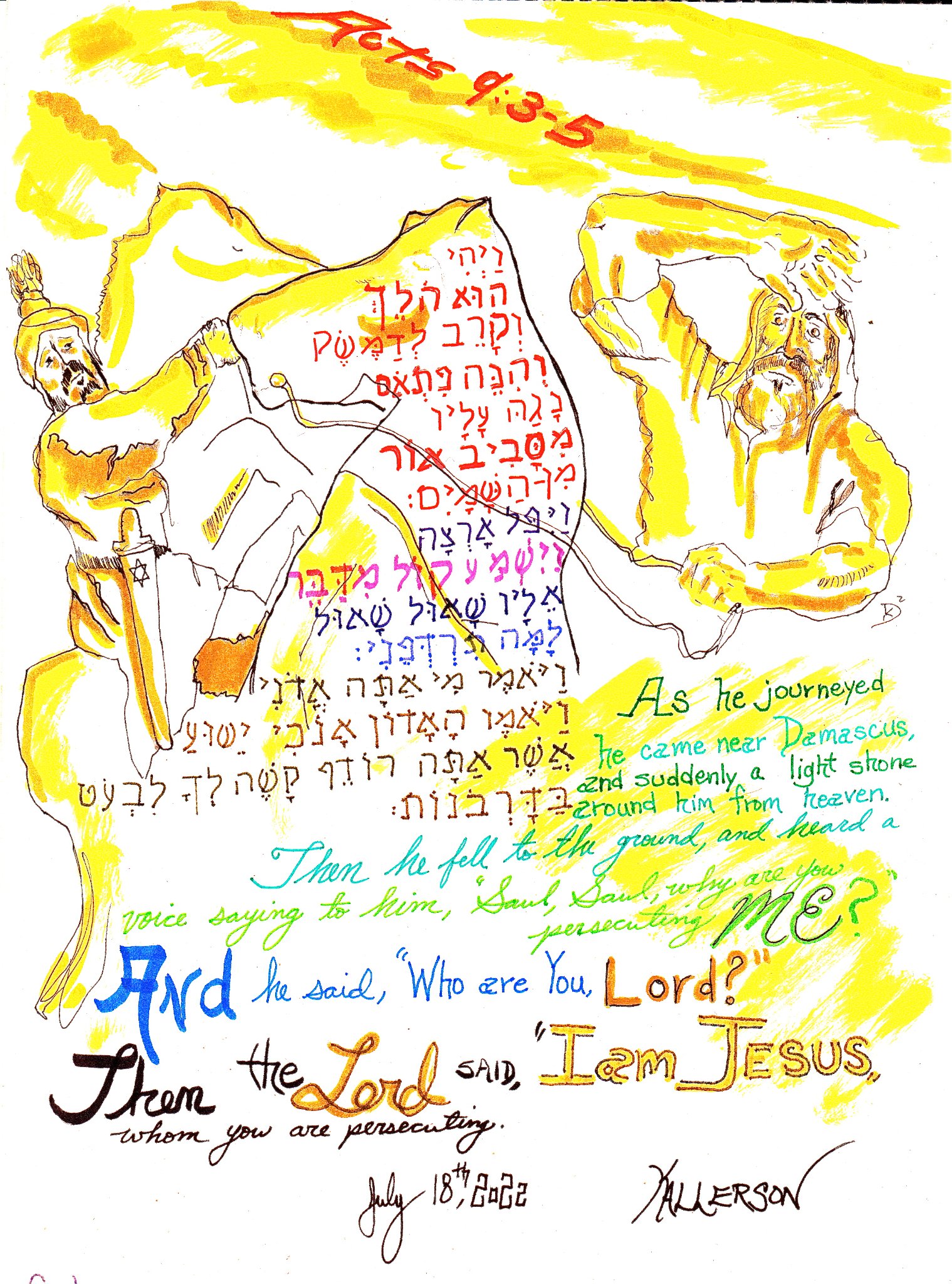
Artwork by Doug Kallerson.

Wednesday, 20 July 2022

And he said, “Who are You, Lord?”
Then the Lord said, “I am Jesus, whom you are persecuting. It is hard for you to kick against the goads.” Acts 9:5

Note: You can listen to today’s commentary courtesy of our friends at “Bible in Ten” podcast. (Click Here to listen)

You can also read this commentary, with music, courtesy of our friends at “Discern the Bible” on YouTube. (Click Here to listen), or at Rumble (Click Here to listen).

Note: The text of verses 9:5 and 9:6 is different based on original manuscripts, and so your Bible may not match what is presented here:

*And he said, “Who are you, Lord?” And he said, “I am Jesus, whom you are persecuting. 6 But rise and enter the city, and you will be told what you are to do.” (ESV)

* And he said, “Who are You, Lord?”
Then the Lord said, “I am Jesus, whom you are persecuting. It is hard for you to kick against the goads.”
So he, trembling and astonished, said, “Lord, what do You want me to do?”
Then the Lord said to him, “Arise and go into the city, and you will be told what you must do.” (NKJV)

————————————–

Paul was just shown to have fallen to the ground, and he heard a voice saying to him, “Saul, Saul why are you persecuting Me?” With that, Luke now records Paul’s response, “And he said, ‘Who are You, Lord?’”

In the use of “Lord” (Greek: kurios), it is probably not yet to be understood as referring to the Lord, Yehovah, the God of Israel, although by now that may not be out of the question. The same word can be translated in various ways based on the context. For example, in John 4:19, it says, “The woman said to Him, ‘Sir, I perceive that You are a prophet.’” There, the word “Sir” is the same as what Paul now uses.

Paul may, at this time, be thinking it is an angel. Whatever was on his mind, he uses this title to indicate someone in a highly respectful position. With the question asked, the narrative continues, saying, “Then the Lord said.”

The same word, kurios, is used again. This time, it is from Luke’s understanding of who it actually is, and thus it should mentally be considered as “Lord God,” meaning the Lord Jesus. This is seen in the divine response, “I am Jesus.”

The words would have pierced right into Saul’s soul. Here he is, trying to eradicate this very name. He had surely believed the lie of the council that Jesus’ body was stolen –

“Now while they were going, behold, some of the guard came into the city and reported to the chief priests all the things that had happened. 12 When they had assembled with the elders and consulted together, they gave a large sum of money to the soldiers, 13 saying, ‘Tell them, ‘His disciples came at night and stole Him away while we slept.’ 14 And if this comes to the governor’s ears, we will appease him and make you secure.’ 15 So they took the money and did as they were instructed; and this saying is commonly reported among the Jews until this day.” Matthew 28:11-15

Suddenly, this voice accompanied by the brilliant light has called out that He is alive. The enormity of the moment would never have left Paul’s mind. This was the great transformative event that would change him forever. With this stated, Jesus continues, saying, “whom you are persecuting.”

As with the previous verse, Jesus relays the thought that an attack against His people is an attack against Him. It is personal and it will be reckoned as such on the day of judgment. But Paul is given a mark of grace that will lead to mercy upon him and his previous actions (1 Timothy 1:13). With this stated, Jesus continues, saying, “It is hard for you to kick against the goads.”

Here, the word translated as “goads,” kentron, is introduced. It is from kenteo (to prick) and thus it signifies “center,” as in the sharp part of a sting, a thorn, a sharp weapon, and so on. It is used in reference to the sting of bees, scorpions, and so on (see Revelation 9:10). It is also used figuratively as something that stings in the emotions, as in “the sting of death” referred to by Paul in 1 Corinthians 15:55.

Jesus’ words certainly came from a proverbial expression of the time. It is seen in various ancient Greek writings. The meaning for Paul is that he is acting like a dumb ox that kicks against the goads that are intended to prod him along. Instead of responding positively, he kicks back into the goad itself. A common saying that gives a similar sense is, “You’re only hurting yourself.”

Life application: The Bible has been given as a guide for our lives if we will simply utilize it as such. There are many who simply reject it, and they reject the One who is proclaimed in it. They have no understanding, and they will die apart from God. Others hear the gospel and they come to a saving knowledge of the Lord. But then, they never apply the precepts of the Bible to their lives.

Imagine the state! These people are immature, and they are unwilling to grow in the knowledge of the Lord. Their lives are unproductive, unhappy, and without a sense of direction or purpose. In essence, they spend their lives kicking against the goads (see Ecclesiastes 12:11). God is prodding them to grow up and become responsible members of His church. But they just keep plodding along without faithfully doing as they should. Every time someone says to them, “You really should attend church and start reading your Bible,” they kick against the advice, and their week is miserable.

Or maybe they attend a church that doesn’t properly feed them with the word of God. Instead of being grounded in the hope of Christ, they are told that God wants them to prosper materially. And yet, only the pastor seems to be getting rich. The money that is supposed to be a “seed offering” that will magically multiply in their pockets never does, because it has multiplied in the pockets of these false teachers.

What kind of a follower of Christ will you be? Don’t kick against the goads. God is prodding you to follow Him, to get to know Him, and to act in accord with His expectations for you. These things cannot occur unless you are willing to put Him and His word first in your life. Be wise and study this precious word. Avoid the pains of kicking against His divine will for you!

Lord God, surely things will be a lot better off for us if we will simply apply Your will to our lives. Help us to do so by learning what that will is through a careful study of Your word. May we seek it out all the days of our lives. To Your glory, we pray! Amen.