Acts 11:3

View from capitol building, Salt Lake City, Utah

Thursday, 20 October 2022

saying, “You went in to uncircumcised men and ate with them!” Acts 11:3

Note: You can listen to today’s commentary courtesy of our friends at “Bible in Ten” podcast. (Click Here to listen)

You can also read this commentary, with music, courtesy of our friends at “Discern the Bible” on YouTube. (Click Here to listen), or at Rumble (Click Here to listen).

In the previous verse, it noted that when Peter came up to Jerusalem, those of the circumcision contended with him. It now explains that with the words, “You went in to uncircumcised men.” Rather, the Greek reads, “men having foreskin.” Vincent’s Word Studies says of this, “An indignant expression.”

The word, akrobustia, is first seen here. It signifies the foreskin. It is used at times by Jews when referring to Gentiles. Figuratively, it signifies a person being outside of God’s covenant. This is because of the mandates given to Abraham all the way back in Genesis 17. This was later brought into the Mosaic law, as well as is seen in Leviticus 12:3, saying, “And on the eighth day the flesh of his foreskin shall be circumcised.”

After this, the word will be used nineteen more times, all by Paul in his epistles. His uses of it will mostly contrast those who are circumcised and those who are not. One of the most poignant times is when he uses the word six times in Romans 4:9-12 –

Does this blessedness then come upon the circumcised only, or upon the uncircumcised also? For we say that faith was accounted to Abraham for righteousness. 10 How then was it accounted? While he was circumcised, or uncircumcised? Not while circumcised, but while uncircumcised. 11 And he received the sign of circumcision, a seal of the righteousness of the faith which he had while still uncircumcised, that he might be the father of all those who believe, though they are uncircumcised, that righteousness might be imputed to them also, 12 and the father of circumcision to those who not only are of the circumcision, but who also walk in the steps of the faith which our father Abraham had while still uncircumcised.”

What happened with Cornelius and those with him is just what Paul is referring to in Romans 4. The blessing of God in Christ came upon the uncircumcised just as the declaration of righteousness bestowed upon Abraham came upon him while he was still uncircumcised. Not considering this, those of the circumcision were highly upset at Peter, noting that he had gone in to be with these men “and ate with them!”

They knew that uncircumcised men would also be eating food that was not considered clean according to the laws and customs of the Jews. He might as well have brought a pound of bacon home with him and started eating it right in front of them. They were aghast at his complete shunning of what it meant to be a Jew.

Life application: Those who promote the Hebrew Roots movement, along with other cults and sects of supposed Christians, will deny the obvious meaning of what occurred when Peter stayed with these Gentiles and ate with them. If asked about such verses, long explanations of how Peter would have brought his own food, or that he would have had special food prepared for him, or some other ridiculous notion that is clearly not indicated by Luke’s words, will be proposed.

But the text and its meaning are clear. Peter did not adhere to the customs or dietary restrictions of the Jews. He had been in the trance, he had heard the voice from heaven, it had been presented three times, and then he had seen the Holy Spirit come down upon the Gentiles. He realized what Jesus meant concerning the words He spoke when He walked among them –

“Are you thus without understanding also? Do you not perceive that whatever enters a man from outside cannot defile him, 19 because it does not enter his heart but his stomach, and is eliminated, thus purifying all foods?” Mark 7:18, 19

Rather than an elaborate explanation of how Peter remained undefiled in his diet, which is obviously not the case, it is more probable that he sat down, had a meal, and while eating asked, “Wow, this is really good! What is it?” The answer may have come back, “Pork chops, do you want more?”

Think about the entire context of what happened from Acts 10:1 until this point. We are free from the constraints that were levied upon the Jews. Why on earth would anyone want to be put back under that yoke, except to prove how holy he was? What an affront to the finished work of Jesus Christ! We find our true righteousness, sanctification, and holiness in Him alone.

Lord God, thank You for what Jesus has done. In Him, there is full and forever purification that could never come through the Law of Moses or from any other supposed demonstration of piety. Religion cannot bring us closer to You. Only Jesus can do that. Thank You for Jesus who has made us acceptable before Your glorious throne. Amen.



Acts 11:2

Revolutionary War Tribute, Utah Capitol

Wednesday, 19 October 2022

And when Peter came up to Jerusalem, those of the circumcision contended with him, Acts 11:2

Note: You can listen to today’s commentary courtesy of our friends at “Bible in Ten” podcast. (Click Here to listen).

You can also read this commentary, with music, courtesy of our friends at “Discern the Bible” on YouTube. (Click Here to listen), or at Rumble (Click Here to listen).

Previously, it was noted that the apostles and brethren in Judea heard that the Gentiles had also received the word of God. Exciting news indeed. With that noted, it now says, “And when Peter came up to Jerusalem.” It had previously said that Cornelius had asked Peter to stay a few days (Acts 10:48). It is after this unstated amount of time that Peter now went up to Jerusalem. This is where the apostles stayed and tended to the affairs of the believers.

Upon arriving in Jerusalem, it next says “those of the circumcision contended with him.” The words seem out of place. As the only non-circumcised believers so far mentioned were either in Ethiopia or Caesarea, every other believer is, by default, a circumcised Jew. Therefore, there must be a reason why they are singled out as “the circumcision.”

The reason for the contention is not stated until the next verse, and so it is getting ahead in the analysis to debate exactly what that means, but it is necessary now. There are several possibilities for Luke recording it this way:

  • They are those mentioned in Acts 10:45 who went with Peter and saw the conversion of the Gentiles. There, they are called “those of the circumcision.” Peter stayed while they left, returning with the news throughout Judea even to Jerusalem.
  • It is referring to any Jew (born as a Jew or converted to Judaism) who had converted to faith in Jesus as the Messiah, and they are simply being noted in a different category than the other Jews.
  • They are those Jews who had converted to faith in Jesus but who were adamant about the necessity for continued observance of the law and of the rites of conversion, such as circumcision.
  • Luke is now using the term in a new manner, setting a distinction between any circumcised person and any non-circumcised person. This distinction is set to define who is a Jew and who is a Gentile, regardless of how they conduct their life, even if the matter of circumcision in a non-believing Jew needs to be more fully explained later.

In short, and which will be evaluated again in the next verse, they believe Peter defiled himself by going in with those who were uncircumcised. Understanding this, the first option is wrong. Those who went with Peter were privy to the details of his trance, and they were certainly aware of what had transpired afterward. It is not sound to think they would argue against Peter concerning a matter they were also intimately involved in.

The second option is incorrect because it would make an improper distinction between those Jews who believed and those who did not. The issue is physical circumcision, not the spiritual circumcision of the heart referred to elsewhere in Scripture.

The third option is a distinction that seems to be referred to elsewhere, such as in Galatians 2 –

“Now when Peter had come to Antioch, I withstood him to his face, because he was to be blamed; 12 for before certain men came from James, he would eat with the Gentiles; but when they came, he withdrew and separated himself, fearing those who were of the circumcision. 13 And the rest of the Jews also played the hypocrite with him, so that even Barnabas was carried away with their hypocrisy.” Galatians 2:11-13

This is seen in Acts 11:2 as well. Thus, it appears that a distinction is being made by separating Peter and those with him from a group that is adamant about adherence to the law by calling them “the circumcision.” But that is a point of theology based on their status as circumcised Jews, not a separate category altogether. This is certain because Peter is specifically noted as an apostle to those who are circumcised in Galatians 2 –

“But from those who seemed to be something—whatever they were, it makes no difference to me; God shows personal favoritism to no man—for those who seemed to be something added nothing to me. But on the contrary, when they saw that the gospel for the uncircumcised had been committed to me, as the gospel for the circumcised was to Peter (for He who worked effectively in Peter for the apostleship to the circumcised also worked effectively in me toward the Gentiles), and when James, Cephas, and John, who seemed to be pillars, perceived the grace that had been given to me, they gave me and Barnabas the right hand of fellowship, that we should go to the Gentiles and they to the circumcised. 10 They desired only that we should remember the poor, the very thing which I also was eager to do.” Galatians 2:6-10

Understanding this, and also understanding that the term can later be applied to the third category, but at this early date before the matter is settled, the answer to who “the circumcision” is that Luke is referring to in Acts 11:2, the fourth option is correct. It is a term that is now being used in order to distinguish between any person who is circumcised according to the cultural standards of Israel, expressly setting them apart from the Gentile world. This is certain because Paul says this in Colossians 4 –

“Aristarchus my fellow prisoner greets you, with Mark the cousin of Barnabas (about whom you received instructions: if he comes to you, welcome him), 11 and Jesus who is called Justus. These are my only fellow workers for the kingdom of God who are of the circumcision; they have proved to be a comfort to me.” Colossians 4:10, 11

Paul makes a distinction between who is circumcised as a Jew and who is not, meaning they are Gentiles, in his epistle. A separate category of who is a “true Jew” is defined by Paul in the book of Romans, but that is a theological argument which is still based on the physical mark of circumcision in relation to the spiritual “circumcision of the heart” that is also required to be in a right standing with God.

Life application: The physical circumcision of the Jewish people sets them apart from the Gentile world. Just because most Jews do not believe in Messiah, and thus they are not currently in a right standing with God, it does not mean that they are not Jews. They are just not completed Jews. They remain separate from God in one manner (failure to enter into the New Covenant), but they remain united to God in another (bound to Him through the Mosaic Covenant).

The lack of faithfulness of the Jewish nation (meaning Israel) to come to Jesus Christ does not negate God’s having covenanted with them through Moses. His words to them will be performed. They will be brought into the New Covenant.

However, until they do come to Him through Jesus, they will continue to suffer the consequences of their agreement to the Mosaic Code. They are bound to it, even if they do not adhere to it. God bound Himself to it as well. Israel’s unfaithfulness in no way negates God’s faithfulness. This is the main error in thinking for most of the church. Both Israel and the church will eventually learn that God’s promises and His election will stand.

Heavenly Father, how faithful You are. When we fail You, it is a mark against us. But You will never fail us. Your faithfulness reaches to the skies and Your love and tender mercies to the objects of Your affection are never-ending. Thank You for Your tender care of Your unfaithful creatures. Amen.


Acts 11:1

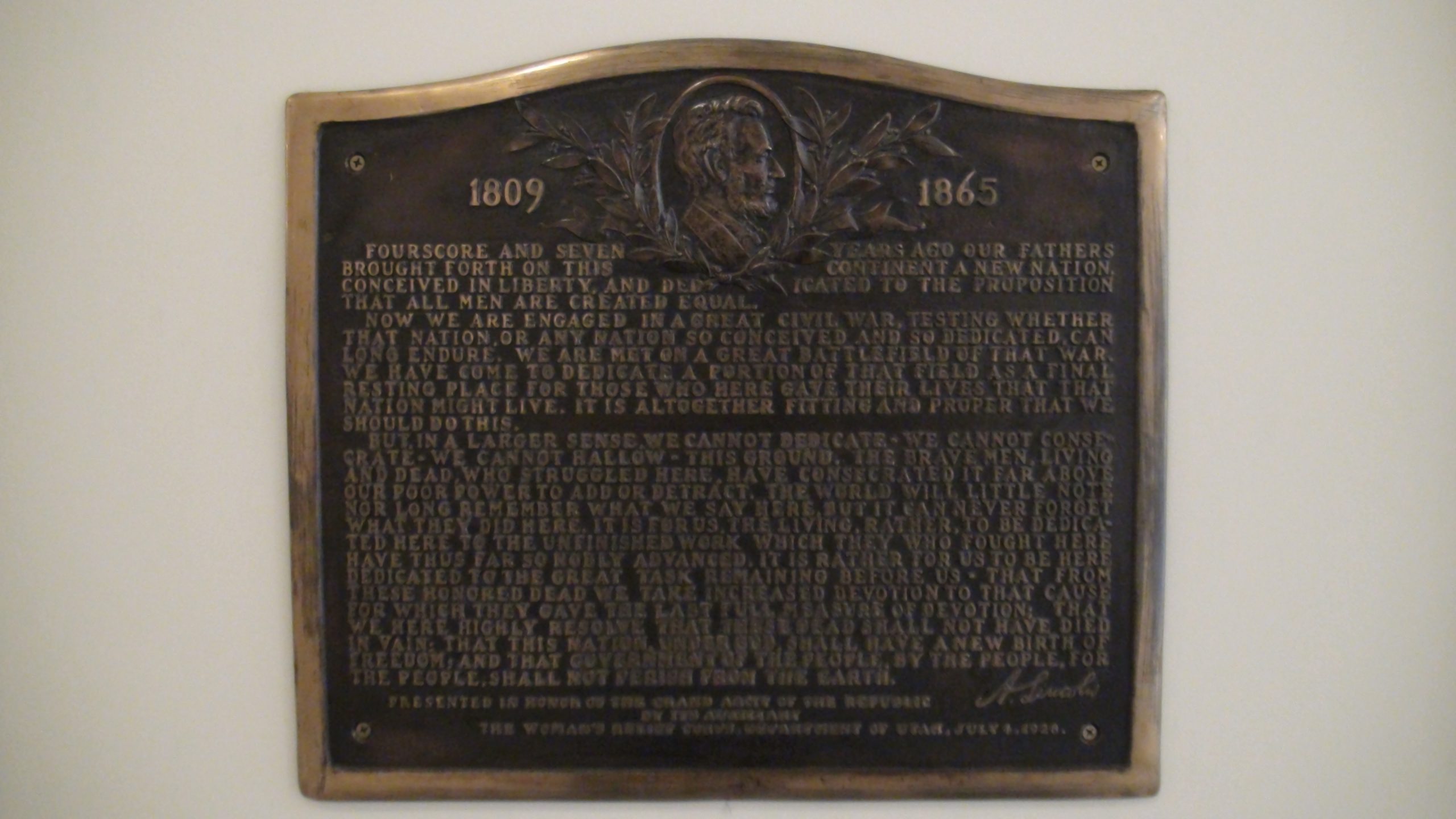
Gettysburg Address, Utah capitol

Tuesday, 18 October 2022

Now the apostles and brethren who were in Judea heard that the Gentiles had also received the word of God. Acts 11:1

Note: You can listen to today’s commentary courtesy of our friends at “Bible in Ten” podcast. (Click Here to listen).

You can also read this commentary, with music, courtesy of our friends at “Discern the Bible” on YouTube. (Click Here to listen), or at Rumble (Click Here to listen).

The last verse of Chapter 10 ended with the baptism of the new believers and then a note saying, “Then they asked him to stay a few days.” This was referring to Peter. With that, Chapter 11 starts with, “Now the apostles and brethren.”

More appropriately, it reads, “Now the apostles and the brethren.” They are two distinct categories. Of these two groups, it next reads, “who were in Judea.”

The sense of the Greek is “throughout Judea.” Also, the verb is a present participle. Thus, it reads, “Now the apostles and the brothers being in Judea.” In other words, the word spread throughout all of the believers, and Luke is writing it as if it is happening. What must be the case is that the Jews who were with Peter left immediately to tell of what had occurred. As they traveled from Caesarea, they stopped at the houses of believers and shared with them news of what happened. As it next says, they “heard that the Gentiles had also received the word of God.”

The clear and obvious meaning is that these were uncircumcised, non-proselyte Gentiles. They had never observed a day of the Mosaic Law in their lives, their stomachs were filled with the morning’s bacon, they had not received any ceremonial purifications, and so on. They were, to the Jews, essentially unclean dogs. The thought of what occurred may have been repugnant to them and yet it occurred. Therefore, it was not – nor could it be considered – repugnant to God. While this message is being conveyed, it is to be remembered that Peter remained in Caesarea, living for a span among these Gentiles.

Also, note how Luke phrased his words. These Gentiles “had also received the word of God.” What does this mean? The books of Moses? No, of course not. Does it mean that they were instructed in the law, the history of Israel, and the prophets? Nothing specific is said of that in Luke’s analysis of what Peter said.

Go back and read Acts 10:34-43. Other than the last sentence which merely confirms that Jesus is the fulfillment of the prophets, the words are about Jesus and His ministry. The implication of the vision given to Cornelius, as well as the trance in which Peter was in, is that Jesus’ ministry is the fulfillment of those prophets, and what He has done is now also offered to the Gentiles. It is a new direction, a New Covenant, and it is based on the word of God which is the testimony of Jesus. As Paul says in Romans 10:17, “So then faith comes by hearing, and hearing by the word of God.”

Life application: What is it that you find out of place in your church? Do you get queasy when someone comes to church after having worked all night at a dirty job and is still wearing his dirty uniform? What about someone who is from a different culture and whose mannerisms are different than everyone else? Maybe someone shows up at church with biker’s clothes on. Maybe he doesn’t (perish the thought!) wear shoes. Maybe he wears sandals and kicks them off while in church. Well, maybe he grew up on the beach and never really left it.

The point is that people are different. As long as the people that come into a church building are respectful of the way the church is normally run, why should you worry about appearances? If someone comes in and is noisy or belligerent in his behavior, that is a different issue. However, if he is a believer, he is in the same state as the Jews before Cornelius’ conversion, and the same as Cornelius and those with him after their conversion. In other words, God has accepted him. As this is so, how can you not do so as well?

Once unbiblical legalism creeps into a church, the church will become arrogant and self-serving. As stated in an earlier commentary, this is not necessarily the same as a cultural standard. If you go to a church filled with people from the Philippines, they will have a way of worshiping that may be different. There is nothing wrong with that. As long as you respect their cultural distinctions and enjoy their fellowship, stick it out and enjoy the Baluts. If not, then go find another church. They have a right to worship the Lord in a manner that satisfies their cultural standards.

Be accepting of those who are different when they come into your midst. At the same time, be respectful of the ways of others when you go into their midst. Seek harmony, not division, within the body of believers.

Lord God, how wonderful it is! The grace You have bestowed on us means that we can rest in what You have done. Works for salvation are excluded. We have the door to heaven opened to us by a simple act of faith. Thank You, O God, for the wonderful thing You have done. Thank You for Jesus Christ our Lord. Amen.


Acts 10:48

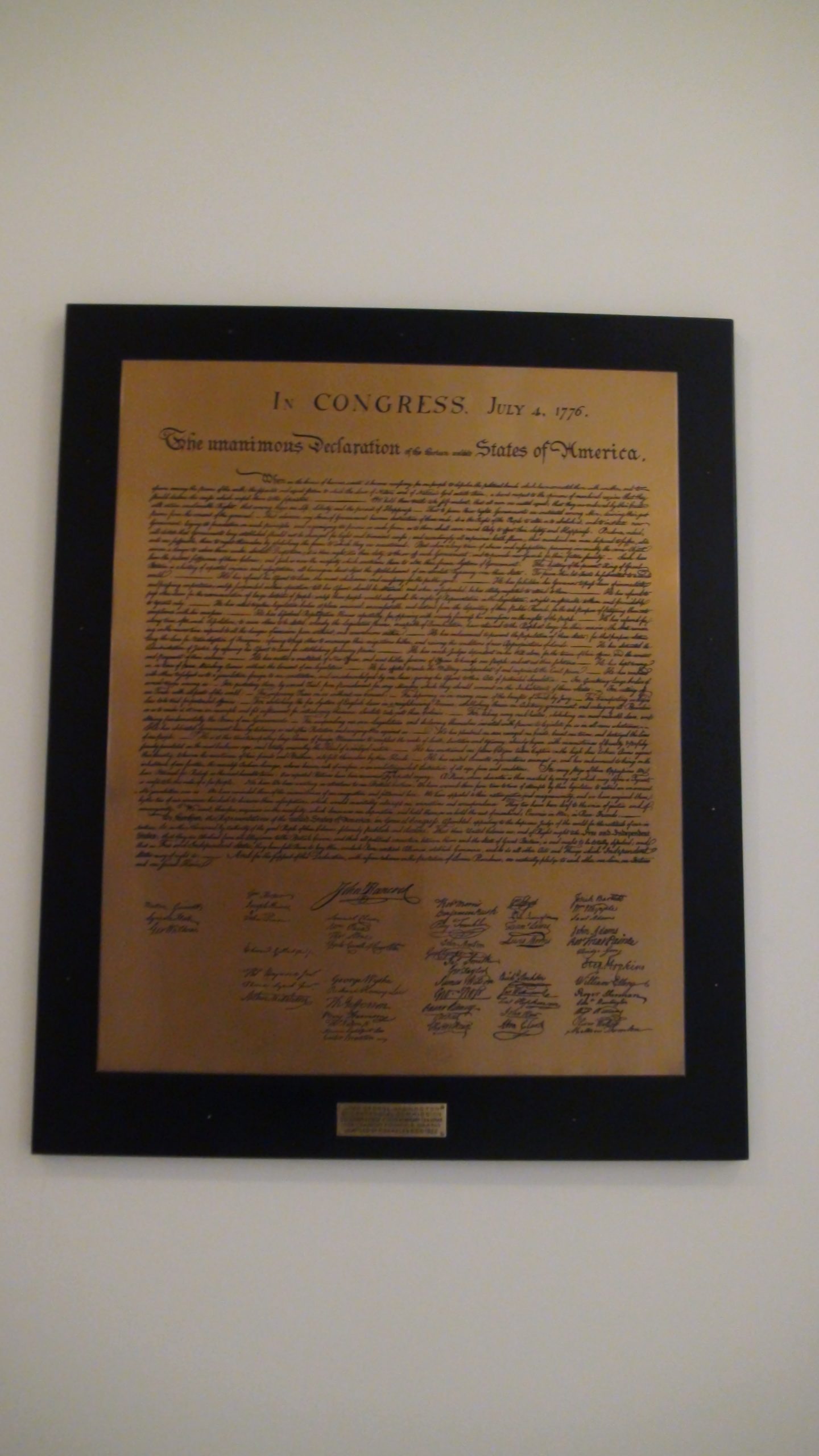
Copy of US Declaration of Independence, Utah State Capitol

Monday, 17 October 2022

And he commanded them to be baptized in the name of the Lord. Then they asked him to stay a few days. Acts 10:48

Note: You can listen to today’s commentary courtesy of our friends at “Bible in Ten” podcast. (Click Here to listen).

You can also read this commentary, with music, courtesy of our friends at “Discern the Bible” on YouTube. (Click Here to listen), or at Rumble (Click Here to listen).

Peter had just asked those with him (obviously meaning the Jews who came with him), if any could forbid the water, meaning baptism. This was because the Gentiles had received the Holy Spirit just as the Jews had. With that noted, it next says, “And he commanded them to be baptized.”

This is parallel to Paul’s words of 1 Corinthians 1:17 –

“For Christ did not send me to baptize, but to preach the gospel, not with wisdom of words, lest the cross of Christ should be made of no effect.”

Peter’s main mission was to preach the gospel. He did this, and he now instructs those with him to perform baptism upon the new Gentile believers. Paul, likewise, had a main mission of preaching the gospel. This does not mean that neither Paul nor Peter baptized others. It means that this was not their main focus. As in Acts 6, there is an area of focus for the apostles and there are responsibilities that devolve to others –

“Now in those days, when the number of the disciples was multiplying, there arose a complaint against the Hebrews by the Hellenists, because their widows were neglected in the daily distribution. Then the twelve summoned the multitude of the disciples and said, ‘It is not desirable that we should leave the word of God and serve tables. Therefore, brethren, seek out from among you seven men of good reputation, full of the Holy Spirit and wisdom, whom we may appoint over this business; but we will give ourselves continually to prayer and to the ministry of the word.’” Acts 6:1-4

With this obvious truth understood, Peter continues with, “in the name of the Lord.” Some texts say, “in the name of Jesus Christ.” The latter would be nearly in accord with Acts 2:38. The difference is the preposition. In Acts 2:38, it is epi (upon) the name of Jesus Christ. Here, it is en (in).

As for this verse in Acts 10, regardless of which is the correct rendering, it does not contradict Jesus’ words of Matthew 28:19. The actual baptism, when performed, is “in the name of the Father and of the Son and of the Holy Spirit.” The meaning here in Acts 10 of “in the name of the Lord,” or “in the name of Jesus Christ,” is not so much for the actual rite of baptism but for the designation of the baptism.

In other words, there was the “baptism of John” found in Acts 1:22. That wasn’t a baptism into the name of John. Rather it was a baptism designated by the ministry of John. It was a baptism of preparation for the coming Messiah. The baptism now mentioned by Peter is en (in) the name of the Lord (or of Jesus Christ). And yet, when performed, if done properly and in obedience to the words of Jesus, it is done eis (into) the name of the Father, and the Son and the Holy Spirit.

As such, there is no contradiction. When one is baptized in the name of the Lord (or in the name of Jesus Christ), it is a designation of the type of baptism. When that type of baptism is performed, it is to be into the name of the Father, Son, and Holy Spirit. Peter did the commanding, the Jews with him performed the rite, and the Gentiles would have been obedient to the command. With that complete, the verse and the chapter end with, “Then they asked him to stay a few days.”

This obviously occurred as will be seen in the opening of chapter 11. Peter was not to call common what God had cleansed. He had seen the realization of his trance in the conversion of the Gentiles to the faith of Jesus Christ.

Life application: A lot of heresies or really bad doctrine can be cleared up with a careful, thorough reading through the book of Acts. Mostly, understanding the nature of the writing is of paramount importance. Acts is a descriptive account of what occurred. It prescribes almost nothing, but it does provide a clear look into what establishes sound doctrine because of what is considered normative and what is not. Determining the difference takes careful study, but the result is a student of the Bible that is properly trained in what is right for his life and practice within the faith.

Be sure to not jump on a particular bandwagon because it sounds convincing. And this is especially so with people who use one particular, faulty, translation to come to unfounded conclusions. A careful study of where error in translation occurs will help clear up a lot of the muddy waters of unsound theology.

Most glorious and gracious heavenly Father, how we thank You for what You have done for us. We are undeserving of the least of Your favor, and yet You lavish goodness upon us daily. And even when we were Your enemies, You sent Christ Jesus to reconcile us to You. Thank You for what You have done, and may Your glorious name ever be praised as we walk in Your presence. Amen.


Acts 10:47

Another great view from the Utah State Capitol.

Sunday, 16 October 2022

“Can anyone forbid water, that these should not be baptized who have received the Holy Spirit just as we have? Acts 10:47

Note: You can listen to today’s commentary courtesy of our friends at “Bible in Ten” podcast. (Click Here to listen).

You can also read this commentary, with music, courtesy of our friends at “Discern the Bible” on YouTube. (Click Here to listen), or at Rumble (Click Here to listen).

The previous verse told of the Gentiles who had just listened to Peter give the gospel, having spoken with tongues and magnified God after having received the Holy Spirit. With this stunning event witnessed by Peter and the Jews, Peter then answered, “Can anyone forbid water.”

The Greek reads “the water.” Of this, Vincent’s Word Studies says, “Note the article: the water; co-ordinating the water with the Spirit (see 1 John 5:8), and designating water as the recognized and customary element of baptism.” This is in accord with Jesus’ words as are explicitly stated in Matthew 28:19, 20 –

“Go therefore and make disciples of all the nations, baptizing them in the name of the Father and of the Son and of the Holy Spirit, 20 teaching them to observe all things that I have commanded you; and lo, I am with you always, even to the end of the age.” Amen.”

Jesus spoke these words after the completion of His work in fulfillment of the law. He spoke to them in relation to the New Covenant in His blood, a covenant that clearly and explicitly includes Gentiles (see 1 Corinthians 11:25 and 2 Corinthians 3:6). The command by Jesus to “baptize” is not referring to the coming of the Holy Spirit, but to water baptism. This is obvious because “making disciples” and “teaching them to observe” are instructions for those who are to also perform the water baptism.

Of this, Bengel states the obvious, something which people to this day ignorantly overlook, saying, “He does not say, ‘They now already have the Spirit; therefore they can do without the water.’”

Rather, the water is given because of having received the Spirit, and the Spirit is received by faith. Hence, this is not a work in order to be saved, but it is a command for those who have been saved. To not receive water baptism is to remain in a state of disobedience to the Lord Jesus, even after salvation has been realized. Peter continues to confirm this, saying, “that these should not be baptized who have received the Holy Spirit just as we have?”

It is as if Peter had forgotten the words of Jesus cited above, noting that this was for “all the nations.” Jesus had distinctly stated that His salvation now was to go forward to all people, not just Israel. He repeated this in Acts 1:7, 8

The ministry of Jesus during His first coming was to Israel. The reason for this is that Israel alone was given the Law of Moses. It would make no sense for Jesus to preach to the people in Thailand. They had not been given the law. However, the effect of His work, once completed, spread out to all men on earth because His work had negated the power of law that brought about sin in Adam. His ministry to Israel was a necessary and logical step that had to be accomplished before salvation could go forth to the Gentiles –

“I will also give You as a light to the Gentiles,
That You should be My salvation to the ends of the earth.” Isaiah 49:6

The Gentiles, as witnessed by Peter, had seen the light of Christ and they had accepted His completed work by faith. In their faith, they had received the Holy Spirit. As a testament to that fact, and in obedience to the Lord who saved them, they are now given the opportunity to receive the water as a sign of the New Covenant into which they had entered.

Life application: Peter, the apostle to the Jews, gave the same gospel to those gathered with Cornelius that Paul will later give to the Gentiles. Paul, the apostle to the Gentiles, would enter the synagogues first in each town he visited, and he gave the same gospel to the Jews that he presented to the Gentiles. This is because there is one gospel, just one.

Peter acknowledged that the Gentiles should receive the water as a sign of their salvation and enterance into the New Covenant. Paul will do the same with each person he brings to Christ as well. But Paul also said words that are torn out of their proper context by those who deny the usefulness of water baptism. His words are –

“For Christ did not send me to baptize, but to preach the gospel, not with wisdom of words, lest the cross of Christ should be made of no effect.” 1 Corinthians 1:17

In this, there are those that claim Paul is denying the need for water baptism. This is false. Read the next verse of Acts and see what occurs there. Then consider if they align with Paul’s words of 1 Corinthians 1:17.

The Bible is reduced to a few scraps of unintelligible paper when it is improperly handled by hyperdispensationalists. Stay away from such heretics who diminish and refuse to properly teach the will of the Lord who laid His commands before us.

Lord God, thank You for the salvation we have received in Jesus Christ our Lord. May we be as willing to be obedient to Him in our state of salvation as He was to You in order to obtain our salvation. Amen.