Acts 13:8

A guy who did something.

Monday, 19 December 2022 

But Elymas the sorcerer (for so his name is translated) withstood them, seeking to turn the proconsul away from the faith. Acts 13:8

Note: You can listen to today’s commentary courtesy of our friends at “Bible in Ten” podcast. (Click Here to listen)

You can also read this commentary, with music, courtesy of our friends at “Discern the Bible” on YouTube. (Click Here to listen), or at Rumble (Click Here to listen).

In the previous verse, Sergius Paulus called for Barnabas and Saul seeking to hear the word of God. With that remembered, it now begins with, “But Elymas the sorcerer (for so his name is translated).”

As has been seen, it is not uncommon for people to have more than one way to designate them. In the case of this man, he was “Son of Jesus,” but his given name is Elymas. Thus, his name would more fully be stated as “Elymas, the son of Jesus.” The name Elymas is hard to pin down, especially because it is a transliteration into Greek. Despite this, it may mean “Wise.” If so, he may have let his skills, abilities, and wisdom go to his head because of the meaning of the name. The thought might be, “I am Wise and hence I embody wisdom.” Concerning Barnabas and Saul and their message, it next says that Elymas “withstood them.”

The word gives the sense of opposition in a 180-degree contrary position. He was like a wall that refused to be moved. It was obvious that Sergius Paulus was highly affected by the word of God that was proclaimed and sat listening in rapt attention. In seeing this, it next notes that Elymas was “seeking to turn the proconsul away from the faith.”

Elymas could see that the influence of the word of God would diminish his own influence over Sergius Paulus. And so, as the two men spoke, he would inject his own words, “That’s balderdash!” “Barnabas, you don’t know what you’re talking about!” And so on. The word translated as “turn away” signifies a total corruption or twisting of something. He attempted to pervert the sound teaching of Barnabas and Saul hoping to maintain his control over the proconsul.

Life application: The tactic employed by Elymas is as common as aisles in a Walmart. If someone posts a theologically sound sermon or study on the internet, those who wish to draw attention to their own crummy doctrine will post an endless stream of negative comments in order to draw attention away from the word of God and towards themselves or their perverted doctrine.

This happens on live streaming as well. Right during a sermon, people will sign on and start bad-mouthing what is being presented. At times, however, it may be that the person who has signed on has a legitimate argument against the bad doctrine that is being presented. And so, how does one tell what is right and what is not?

The only way to do so is to READ AND KNOW THE BIBLE before such attacks come. It is so easy to be led astray by fine-sounding arguments when you are not already grounded in the word. Another thing to do is to watch out for fallacious thinking. But one cannot know what fallacies are being presented unless the fallacies are known. So, it is good to read up on them.

For example, someone may say, “Look at him, his appearance is terrible. Who would listen to him!” That is an immediate (and fallacious) appeal to the source. It doesn’t matter what someone looks like. He can be Chinese, shabby, wearing a top hat, or sitting in a bland room with nothing but a white background. What matters is the message and whether it is correct or not.

Be careful to know your Bible, understand fallacious arguments, and prepared to defend why you believe what you hold to. These things are important, so be sure to spend the necessary time in knowing your subjects properly.

Lord God, thank You for leading us to teachers and preachers who rightly handle Your word. But Lord, we have to know Your word well enough to know that we are not being duped in the process. And so, we have our part to do as well. Give us the strong desire to know Your word, and then when You direct us to teachers, we will know when they are properly dividing it. Amen.



Acts 13:7

Sergiō, 1 each, an intelligent man.

Sunday, 18 December 2022

who was with the proconsul, Sergius Paulus, an intelligent man. This man called for Barnabas and Saul and sought to hear the word of God. Acts 13:7

Note: You can listen to today’s commentary courtesy of our friends at “Bible in Ten” podcast. (Click Here to listen)

You can also read this commentary, with music, courtesy of our friends at “Discern the Bible” on YouTube. (Click Here to listen), or at Rumble (Click Here to listen).

Previously Bar-Jesus the false prophet was noted. He is still the subject as this verse begins, saying, “who was with the proconsul.”

The word translated as proconsul, anthupatos, is introduced here. It essentially means “instead of the highest officer.” He stood as the highest official in place of the authority over him that remained in Rome. Of this position, Albert Barnes notes –

“The exact accuracy of Luke in this statement is worthy of special remark. In the time when Augustus united the world under his own power, the provinces were divided into two classes. Augustus found two names which were applied to public officers in existence, one of which was henceforward inseparably blended with the imperial dignity and with military command, and the other with the authority of the senate and its civil administration. The first of these names was “Praetor”; the other was ‘Consul.’ What is to be accounted for here is that the latter is the name given by Luke to Sergius Paulus, as if he derived his authority from the senate. The difficulty in the ease is this: that Augustus told the senate and the people of Rome that he would resign to them those provinces where soldiers were unnecessary to secure a peaceful administration, and that he would himself take the care and risk of the other provinces where the presence of the Roman legions would be necessary.”

In the verse, the word “who” refers to Bar-Jesus. The meaning is that he had the ear of the proconsul and was connected to his court. This proconsul’s name was “Sergius Paulus.” The Greek reads, Sergiō Paulō. The name Sergiō [Sergius] comes from Latin as does the second name, Paulos. This name, Paulos, is the same Greek as that of Paul, meaning “Little.” Concerning him, Vincent’s Word Studies notes –

“Di Cesnola relates the discovery at Soli, which, next to Salamis, was the most important city in the island, of a slab with a Greek inscription containing the name of Paulus, proconsul.”

Of this man, it says he was “an intelligent man.” The word translated as “intelligent” signifies understanding derived from correlating facts. In this case, he may have been intelligent, but he was also lacking discernment as is evident by the presence of Bar-Jesus. He had been beguiled by this charlatan and so his intelligence was being frustrated by him. However, he was also open to making comparisons, thus demonstrating wisdom. That is seen in the words, “This man called for Barnabas and Saul.”

The verb is an aorist participle, “having called for Barnabas and Saul.” The thought is preparing the reader for the next words. Somehow, the knowledge of these two became known to him. He heard that they were proclaiming the word of God in the synagogues of the Jews (verse 13:5) and was obviously curious about the report. This curiosity may have been heightened by the fact that Bar-Jesus attended to him, and he wanted to know if what these two had to say supported or refuted the prophecies he had heard. For whatever reason, he reached out to them “and sought to hear the word of God.”

It is highly unlikely he was looking to hear words of salvation. He had a false prophet handy who was certainly feeding him sensational words to keep him spellbound. It is probable that Bar-Jesus was not unlike the description of Simon in Acts 8 –

“But there was a certain man called Simon, who previously practiced sorcery in the city and astonished the people of Samaria, claiming that he was someone great, 10 to whom they all gave heed, from the least to the greatest, saying, ‘This man is the great power of God.’ 11 And they heeded him because he had astonished them with his sorceries for a long time.” Acts 8:9-11

It is likely that Sergius Paulus was probably anticipating more sensational doctrines, magic tricks, and prophecies. And so, he called for these two.

Life application: There is a difference between intelligence, wisdom, and faith. Each has its own place, but they are not always in harmony with one another. Intelligence is the ability to evaluate circumstances and come to conclusions. The matter may involve making money, building a clock, discerning how to sail the oceans, or whatever.

Intelligence takes the surrounding information and puts it together to make things happen so that the desired outcome is realized. For example, a person may have the intelligence to build a marvelous clock that will allow others to sail the oceans while being able to determine their position with perfect accuracy.

However, such a person may not have wisdom concerning his invention. He used his intelligence to make this amazing clock, but then he is duped into giving it to someone who takes the invention and gets rich off of it. He failed to use wisdom in how his intelligence had been employed.

Faith is an even higher aspect than either of these. Intelligence and wisdom will only get one so far, but faith – when it is properly directed – will lead to proper use of the intelligence as well as a right directing of the wisdom. This is what will be seen when Sergius Paulus faces the power of God in the verses ahead.

When you see people that are intelligent, it does not mean that they are wise. And when you see a man of wisdom, it does not mean he has properly directed faith in the employment of his wisdom. And yet, there are people that are not intelligent but who have properly directed faith. They have demonstrated wisdom and have done so by directing it toward the true Source of where all logic and wisdom resides.

Pay heed to the people around you, and evaluate them first and foremost based on their relationship with God as He has presented Himself in Scripture. In this, you will be able to discern who is truly the wisest of all.

Lord God, Your word tells us that not many wise according to the flesh have been called. It is the humble soul who realizes his lowly state before You, regardless of intelligence or wisdom, that You find pleasing. Help us to be people of faith, rightly directing everything we are to You. Only in that will our other qualities find their true purpose. Amen.


Acts 13:6

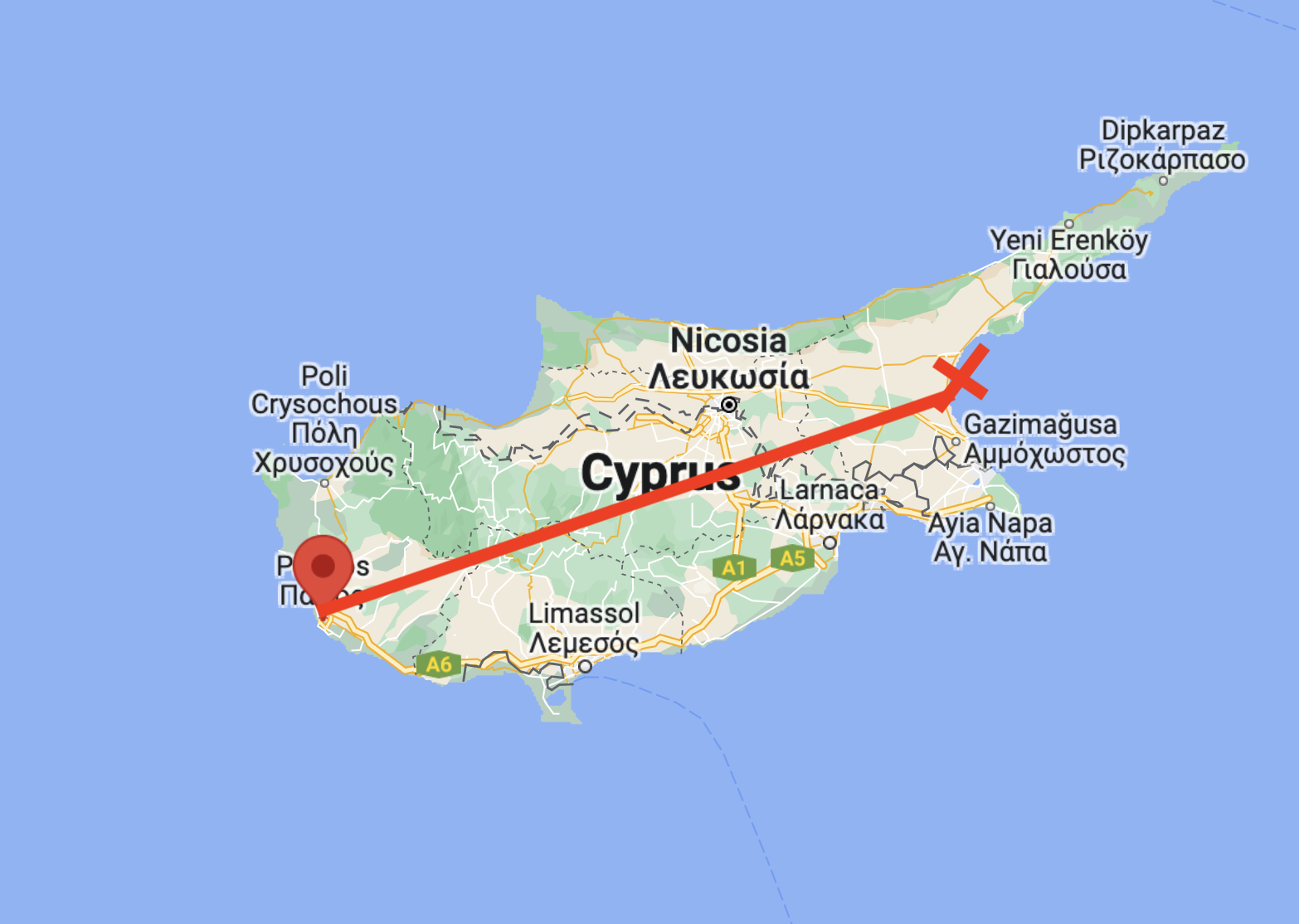
From Salamis to Paphos.

Saturday, 17 December 2022

Now when they had gone through the island to Paphos, they found a certain sorcerer, a false prophet, a Jew whose name was Bar-Jesus, Acts 13:6

Note: You can listen to today’s commentary courtesy of our friends at “Bible in Ten” podcast. (Click Here to listen)

You can also read this commentary, with music, courtesy of our friends at “Discern the Bible” on YouTube. (Click Here to listen), or at Rumble (Click Here to listen).

The last verse covered the arrival at, and evangelization of, Salamis on the island of Cyprus. Next, Luke’s words continue with, “Now when they had gone through the island to Paphos.”

The city of Paphos is first noted here. It will be seen only one more time, in verse 13:13. The meaning of its name is not certain. It is a maritime city located on the southwest coast of Cyprus, meaning they traveled the entire breadth of the island, eventually arriving there. Of this city, John Gill states –

“Paphus, a city on the sea coast, in the island of Cyprus, formerly famous for the sacred rites of Venus, and the verses of the poets; which fell by frequent earthquakes, and now only shows, by its ruins, what it formerly was: so Seneca (y) says, … ‘how often has Paphus fell within itself?’ that is, by earthquakes: the ruins of many goodly churches and buildings are to be seen in it; and the walls of a strong, and almost impregnable tower, situated upon a hill in the middle of the city, supposed to be the habitation of Sergius Paulus; there is also shown, under a certain church, a prison divided into seven rooms, where they say Paul and Barnabas were imprisoned, for preaching the Gospel.”

While in Paphos, it next says, “they found a certain sorcerer.” The word translated as “sorcerer” is magos. It is the same word used to describe the Magi that came at the time of Jesus’ birth. The verb form of the word is used of Simon the Sorcerer in Acts 8:9 as well.

It is an astrologer and by implication a magician. The word finds its origin in Persia. The Old Testament term Rab-mag, found in Jeremiah 39:3 & 13 is its etymological root. Of this magos, it next records that he was “a false prophet.”

The word is pseudoprophétés. Jesus is cited five times in the synoptic gospels using this term when speaking of the false prophets. It will also be seen in 2 Peter, 1 John, and three times in Revelation. It means exactly as it is translated. This guy is a supposed prophet, but his prophecies were false. Next, it says of him that he was “a Jew.”

Being a Jew is not surprising. The designation simply identifies his line of descent, but it does not signify any connection to the God of Israel. This is true throughout the Old Testament where there were innumerable false prophets in the land.

Being of Israel, or being a Jew, in no way identifies a person as being faithful to God. In fact, when Jesus mentions the false prophets in the gospels, His words are spoken to Israel, thus identifying them as Jews as well. Concerning this false prophet, it next says, “whose name was Bar-Jesus.”

The word bar before the name signifies “son of.” It is the Aramaic equivalent of the Hebrew ben. Hence, his name is “son of Jesus.” At this time in Israel’s history, the name Jesus was a common one. Another example of this name is found in Colossians 4:11 where Paul writes of “Jesus who is called Justus.” Once Jesus the Messiah came, the name quickly stopped being used among the Jews.

Life application: It is a good time to review the source fallacy known as the genetic fallacy. This fallacy, also known as a source fallacy, fallacy of origins, or fallacy of virtue, “is a fallacy of irrelevance in which arguments or information are dismissed or validated based solely on their source of origin rather than their content. In other words, a claim is ignored or given credibility based on its source rather than the claim itself” (Wikipedia).

It has become as common as hearing barks in a dog kennel for people to ascribe some sort of special ability, talent, or especially spiritual or biblical insight to a person because he is Jewish. In other words, “Oh, he is a great Bible teacher. He is Jewish and understands Hebrew.”

This type of thinking is fallacious, and it is dangerous. It is the kind of thinking that probably landed this false prophet, Bar-Jesus, in the job he was in. It is the kind of thinking that has elevated various Bible teachers, who actually have no idea what they are talking about, to almost superstar status.

The fallacy also extends to preachers who are the sons of famous preachers – “He must really know his stuff; his dad is Superstar Stanley.” It extends to possessing a certain degree – “He has a doctorate in systematic theology. He must really know his stuff.” It extends to certain abilities – “He knows both Hebrew and Greek.” And so on.

These things do not necessarily equate to a knowledge of the Bible. Innumerable people in the pulpit have doctorates and yet they teach aberrant doctrines. Being trained in, or even fluent in, the biblical languages is great, but that does not equate to sound doctrine. Having a title, possessing a degree, or knowing a language does not mean a person is trustworthy in providing biblical instruction.

Remember this as you listen to teachers. Evaluate what they say based on how it aligns with Scripture. And guess what? You cannot do that if you do not know Scripture already. Do you want to avoid Bad Doctrine Drive? Do you want to stay off the Heresy Highway? Here is how you do it: Set your navigation device onto Bible Boulevard. Get on it and stay on it. Learn every detail of it. In this, you will do well.

O God, stir up in us the great desire to learn Your word. Help us to know it well enough that we will not get sent down wrong avenues of falsity by those who would attempt to exercise control over our spiritual lives. May we focus our eyes and our hearts on Jesus as we learn this precious word that reveals Him to us. Amen.


Acts 13:5

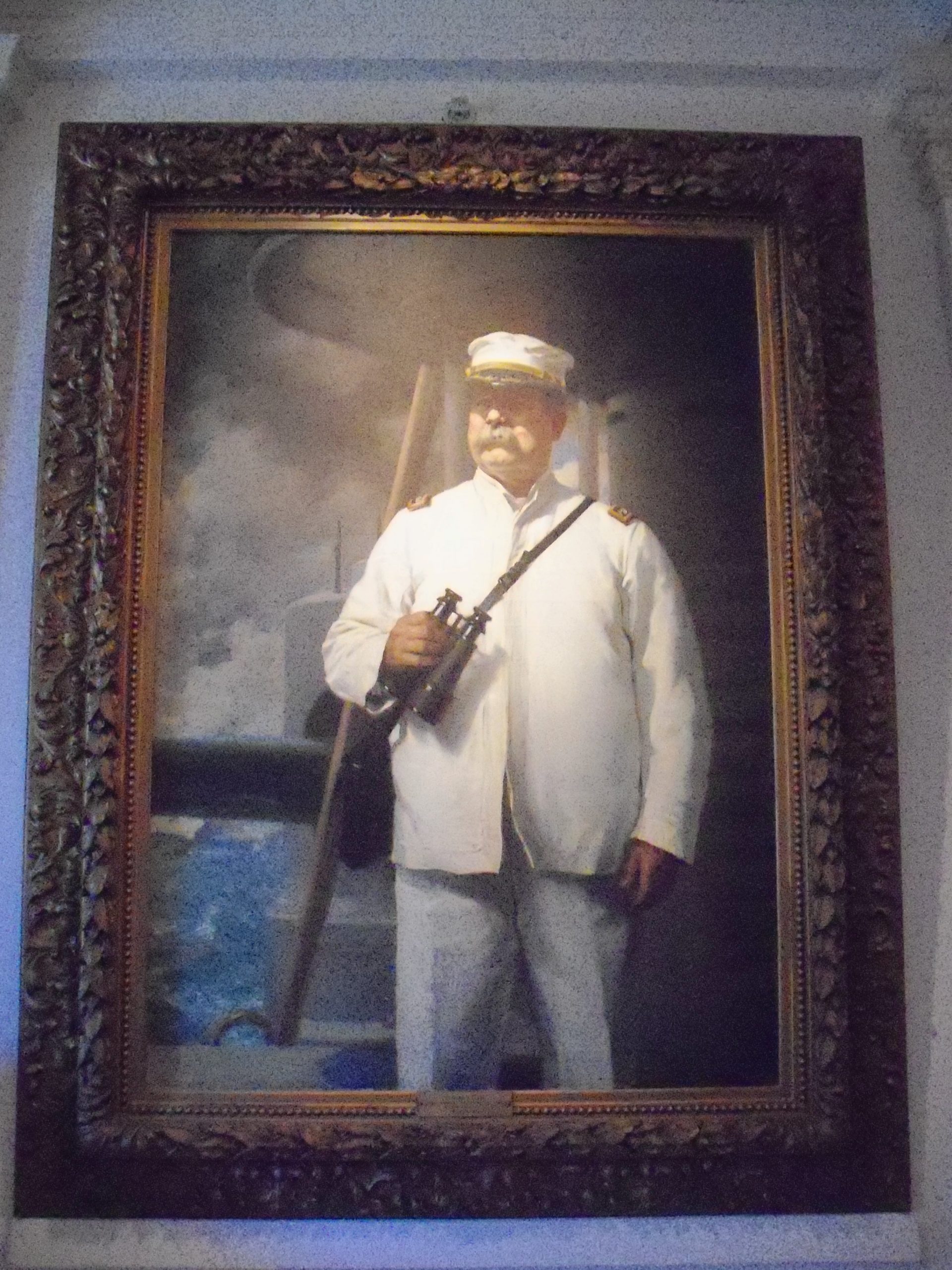
Inside Vermont State Capitol.

Friday, 16 December 2022 

And when they arrived in Salamis, they preached the word of God in the synagogues of the Jews. They also had John as their assistant. Acts 13:5

Note: You can listen to today’s commentary courtesy of our friends at “Bible in Ten” podcast. (Click Here to listen)

You can also read this commentary, with music, courtesy of our friends at “Discern the Bible” on YouTube. (Click Here to listen), or at Rumble (Click Here to listen).

Barnabas and Saul left Antioch, went down to Seleucia and from there sailed to Cyprus. Once there, it now says, “And when they arrived in Salamis.” This is the chief city on the island. The name is believed to have possibly come from salos, meaning the tossing of the sea in a tempest.

The city itself is on the east end of the island. It is the nearest port on Cyprus from Seleucia. Once they arrived there, it next says that “they preached.” The word more correctly means “proclaimed.” Also, the verb is imperfect, signifying that they not only preached, but they continued to do so, they “were proclaiming” at the synagogues. This is why the Holy Spirit had sent them, and so this is what they did. And what they proclaimed was “the word of God.”

In other words, it doesn’t say specifically that they preached the gospel as in Acts 8:25. Rather, these men, being Jews were proclaiming the word of God. The reason for this was that their proclamation was “in the synagogues of the Jews.”

Barnabas and Saul went right to Scripture and from there proclaimed what they knew concerning how it pointed to Jesus, using the Jews’ own writings as the basis for what they spoke. The plural, synagogues, testifies to the large number of Jews on the island. In fact, Vincent’s Word Studies notes –

“Augustus, according to Josephus, made Herod the Great a present of half the revenue of the copper-mines of Cyprus, so that numerous Jewish families would be settled in the island. In the reign of Trajan [98-117AD], upon the breaking out of a Jewish insurrection, the whole island fell into the hands of the Jews, and became a rallying-point for the revolt. It is said that two hundred and forty thousand of the native population were sacrificed to the fury of the insurgents. When the rebellion was extinguished, the Jews were forbidden thenceforth, on pain of death, to set foot on the island.”

Because of the large number of Jews and the many synagogues they had built, one would think it would be a fertile field for the good news about Jesus. However, nothing is noted concerning bearing any fruit from their labors at this time. As for the ministry of these two men, it next says, “They also had John as their assistant.”

It was Barnabas and Paul who had been designated to conduct this missionary journey. For whatever reason, whether he was asked to come or whether he volunteered to go, John traveled with them and acted as an assistant to them.

Until verse 13, nothing more will be said of John or in what manner he helped these two men. He will depart from them in verse 13 but will join Barnabas on a second trip to Cyprus in Acts 15.

As for the effectiveness of this journey, it seems purposeful that Luke does not record any conversions by the Jews. Even if any were converted, the lack of such references highlights the fact that there was certainly not a widespread acceptance of the message. This will continue to be seen as events on the island continue to be chronicled by him.

Life application: Nothing is said about how long it was from the time of the arrival of Barnabas and Saul on the island until the time they first began proclaiming the word of God. Luke’s record simply goes directly from their arrival to their proclaiming the word.

These two certainly didn’t set up an office and start to hire helpers. They also didn’t open a storefront ministry. Instead, they went to the synagogues and started telling them what they knew. This is the implication we get from Luke’s direct and brief notes.

Sometimes churches get so detailed in developing ministries that they never become productive in the most important part of what should be done. It is fine to open a food bank or a clothing ministry in a poor area, but in doing this, it normally becomes the focus of attention. Instead of proclaiming Jesus, He only becomes a part of the ministry. And quite often, He is not even a major part of it.

The proclamation of the gospel needs to be brought forward as the main purpose of what is being done. If it is not, then the ministry has lost its focus. And so, from time to time, be sure to ask yourself, “Why am I doing this thing on Saturday morning?” Or maybe, “Why do I keep helping out at this store?” After asking this, remind yourself that the main purpose of what you are doing is to share the good news about Jesus.

Handing out breakfast will satisfy someone for a couple of hours. Selling a shirt to pay the rent at the charity store will keep the store selling more shirts. But these things must have the set and ongoing purpose of sharing Jesus, or they have missed the point of being started in the first place.

Glorious Heavenly Father, help us to keep our priorities rightly focused at all times. We may start a ministry with the intent of telling people about Jesus, but has that main purpose been lost in the business of keeping the ministry going? If so, help us to redirect our attention back to sharing the good news about Jesus. May this always be our heart’s desire. Amen.


Acts 13:4

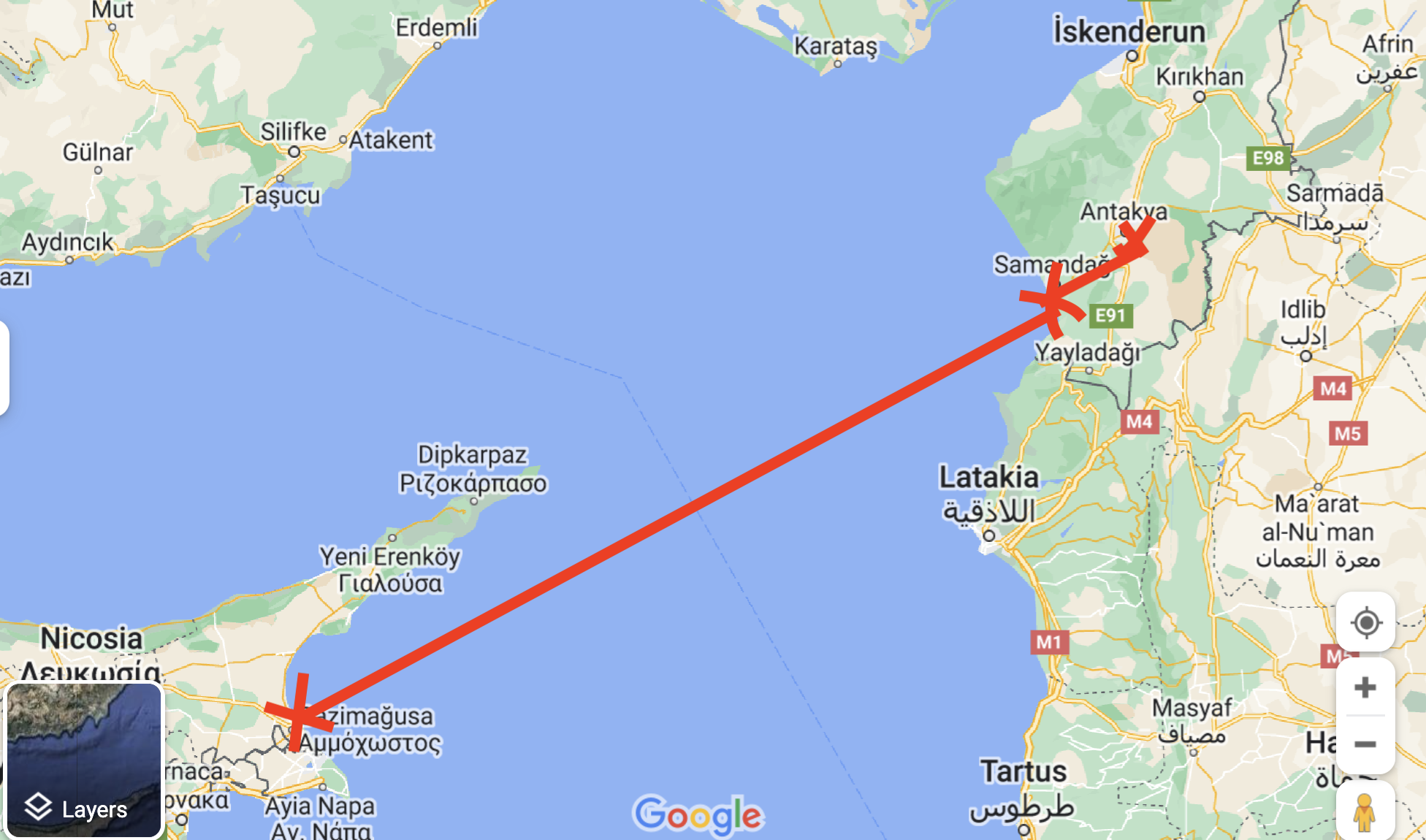
Antioch to Selucia to Salamis on Cyprus

Thursday, 15 December 2022

So, being sent out by the Holy Spirit, they went down to Seleucia, and from there they sailed to Cyprus. Acts 13:4

Note: You can listen to today’s commentary courtesy of our friends at “Bible in Ten” podcast. (Click Here to listen)

You can also read this commentary, with music, courtesy of our friends at “Discern the Bible” on YouTube. (Click Here to listen), or at Rumble (Click Here to listen).

In the previous verse, those in Antioch fasted and prayed. They then laid “the hands on” Barnabas and Saul and sent them away. The narrative continues with, “So, being sent out.”

Rather, the participle is aorist. Also, there are two introductory conjunctions. It more correctly says, “They, indeed, therefore, having been sent out.”

Luke uses a word new to Scripture, ekpempó. It signifies to send out or send forth. This is just what occurred. They had been purposefully called to depart from one place and to go forth as directed. And this was, as Luke records, “by the Holy Spirit.”

As can be seen, it was not only that the Holy Spirit had called them (verse 2), but He also is directing them. Their movements are according to His will as He leads. Further, the written record set forth by Luke, which he was inspired to document, is a record of those movements and events also specifically directed by the Holy Spirit.

Everything about what we are reading is a carefully directed and documented set of events intended to show us God’s workings in the establishment and expansion of the church. It is also a clear and unambiguous record of why the focus of the gospel diverted away from the Jews and toward the Gentiles. Consider this as the chapter continues to unfold. For now, that record continues with their travels as “they went down to Seleucia.”

The name Seleucia comes from Seleukos, a Syrian king. The name is found only this once in Scripture but traveling through here appears to be implied again in Acts 14:26 and Acts 15:30,39. Of the city, S.M. Christie notes –

“The seaport of Antioch from which it is 16 miles distant. It is situated 5 miles North of the mouth of the Orontes, in the northwestern corner of a fruitful plain at the base of Mt. Rhosus or Pieria, the modern Jebel Musa, a spur of the Amanus Range. Built by Seleucus Nicator (died 280 BC) it was one of the Syrian Tetrapolis, the others being Apameia, Laodicea and Antioch. The city was protected by nature on the mountain side, and, being strongly fortified on the South and West, was considered invulnerable and the key to Syria (Strabo 751; Polyb. v.58). It was taken, however, by Ptolemy Euergetes (1 Macc 11:8) and remained in his family till 219 BC, when it was recovered for the Seleucids by Antiochus the Great, who then richly adorned it. Captured again by Ptolemy Philometor in 146 BC, it remained for a short time in the hands of the Egyptians. Pompey made it a free city in 64 BC in return for its energy in resisting Tigranes (Pliny, NH, v.18), and it was then greatly improved by the Romans, so that in the 1st century AD it was in a most flourishing condition.”

As Seleucia is the port from which those at Antioch would head out, they first went there “and from there they sailed to Cyprus.”

Cyprus is a large island in the eastern Mediterranean and, due to its high mountains, is said to be close enough to the coast to be seen on a clear day. Used here is another new word in Scripture, apopleó. It literally signifies, “to sail away.” The word is only used by Luke. He will use it four times in Acts along with various other words that refer to sailing. In their sailing away from Seleucia, they sailed to Cyprus. Of this location, Howson says –

“Four reasons may have induced them to turn in first to this island: (1) Its nearness to the mainland; (2) It was the native place of Barnabas, and since the time when Andrew found his brother Simon, and brought him to Jesus, and ‘Jesus loved Martha, and her sister, and Lazarus,’ family ties had not been without effect on the progress of the Gospel. (3) It could not be unnatural to suppose that the truth would be welcomed in Cyprus when brought by Barnabas and his kinsman Mark, to their own connections or friends. The Jews were numerous in Salamis. By sailing to that city, they were following the track of the synagogues; and though their mission was chiefly to the Gentiles, their surest course for reaching them was through the proselytes and Hellenizing Jews. (4) Some of the Cypriotes were already Christians. Indeed, no one place out of Palestine, except Antioch, had been so honorably associated with the work of successful evangelization.”

His reasons are well stated except for the comments that “their mission was chiefly to the Gentiles.” That must be presupposed, and it is not borne out by the narrative. As of this point, nothing has been said of evangelizing the Gentiles. The only clue that it is so is what was stated at Paul’s calling in Acts 9 –

“But the Lord said to him, ‘Go, for he is a chosen vessel of Mine to bear My name before Gentiles, kings, and the children of Israel.’” Acts 9:15

But even these words include three categories. The reason for bearing the Lord’s name before Gentiles is not stated. Since the words of that verse, nothing about Paul evangelizing Gentiles has been noted. So far, he has only been seen having contact with Jews.

Life application: Interestingly, the Holy Spirit is mentioned four times in this chapter. The first time was in verse 2 where the calling of Barnabas and Saul was made. The next is verse 4 where they are being sent out. In verse 9, it says that Paul, filled with the Holy Spirit, will rebuke a Jew who is with a high-ranking Roman official. The final time will be in verse 52 where it will note that the disciples, which includes Gentiles, are “filled with joy and with the Holy Spirit.”

Watching how this chapter unfolds, and then continuing to watch how the rest of Acts unfolds, it becomes perfectly clear that we are being shown why there is a transition from the Jews to the Gentiles in the furtherance of the gospel. There will be great hostility by the Jews towards the notion that Jesus is their Messiah. On the contrary, there will be an opening of arms towards Him by the Gentiles.

This same state has continued for two thousand years. Only in the most recent of times has that begun to change. The past fifty years have seen a great increase in the number of Jews who have accepted that Jesus is their Messiah. But out of church history, that is an insignificant number. For the gospel to extend to all nations on earth, it was necessary for the Gentiles to spread it. God knew this and He has given us the book of Acts to show this transitional phase from Jew to Gentile. Paul is the key to its coming about.

Be attentive to this as Acts continues and you will more rightly understand why the Jewish nation, Israel, was not used for this purpose. And yet, God has not fully abandoned them. When the time is right, they will again become a central point of focus in carrying this spiritual banner that has for so long been carried by the Gentiles. That is something that is beginning to occur before our very eyes.

Lord God, Your infinite wisdom is so perfectly revealed in Your word. Every detail of redemptive history is seen to be under Your control. As this is so, we can know that the steps we take to share the gospel must also be fully known by You. That sure takes the pressure off us as we go forth, knowing that You already know those who will come to saving faith in Jesus. Help us to get out and to speak this message clearly so that our efforts will be fruitful. Yes, use us according to Your wisdom. Amen.