1 Corinthians 15:2

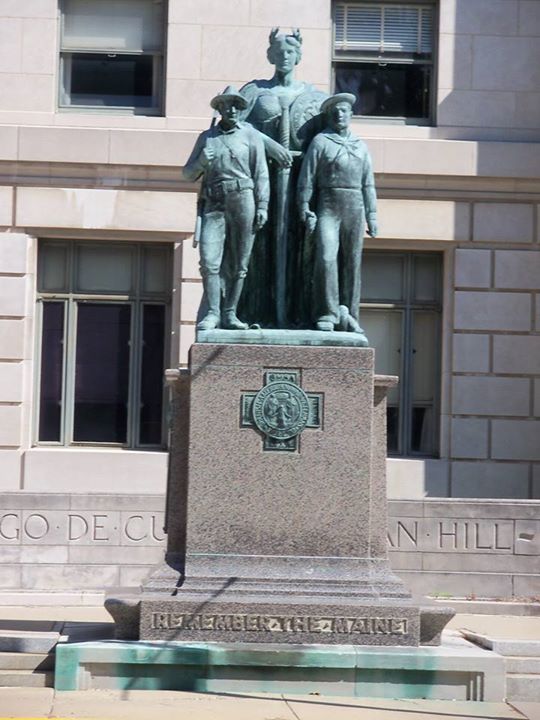
150224_remember_the_maine

Tuesday, 24 February 2015

…by which also you are saved, if you hold fast that word which I preached to you—unless you believed in vain. 1 Corinthians 15:2

The difficult nature of Paul’s words have led many to assume that he is saying:

1) Our continued salvation is dependent on a work of our own will, and
2) That salvation can be lost if one fails to hold fast to what was preached

In other words, this verse is used as a denial of the doctrine of “eternal salvation.” This is not the case. As Ellicott notes, “The idea here is not, as implied in the English version, that they were converted, and yet that heretofore no results have followed from their belief…” Rather, Paul will explain exactly what he means in verse 11, which says –

“Therefore, whether it was I or they, so we preach and so you believed.” (verse 11)

There has been belief and there has been forgiveness because of the gospel message. Paul’s intent here in verse 2 is similar in meaning to what he will say in verse 17 –

“And if Christ is not risen, your faith is futile; you are still in your sins!” verse 17

And so the best avenue is to look at verses 1 and 2 together and then analyze verse 2 –

“Moreover, brethren, I declare to you the gospel which I preached to you, which also you received and in which you stand, by which also you are saved, if you hold fast that word which I preached to you—unless you believed in vain.”

In verse 1, the gospel was preached and it was received. It is also the truth in “which you stand.” This is the gospel “by which you are saved.” The words “are saved” indicate a done deal. It is the moving from Adam to Christ and the spiritual rebirth which was anticipated since the fall of man. From there it says, “if you hold fast that word which I preached to you.” The essence of this difficult portion is speaking of a possibility (not a reality) that someone heard and didn’t believe. The message didn’t sink into their minds in order for them to “hold fast” to it.

It is being given as a possible scenario for someone who sat among the believers (and he has noted that they “received” the gospel) and didn’t bind the truth of the gospel to the saving of their soul. However, for those who did, the gospel is perfectly able to save and keep on saving, “unless you believed in vain.” These words are again not saying that someone first believed and then didn’t believe. Instead, it is, like verse 17 (cited above), a hypothetical statement. In essence, “yes you believed, but the message that you believed isn’t true and therefore you aren’t saved.”

Paul is attempting to get the Corinthians (and thus us!) to wake up to the fact that our very conduct in the church is to be based on the fact that we are saved. If we are, we have a hope which is grounded in reality. If it is grounded in reality, then we should act as if it is so. Chapter 15 has taken on a new direction, but it is still an orderly move from Chapter 14, which highlighted the disorder within the church.

If we have believed in vain, then our conduct doesn’t matter. But we have not believed in vain. Instead, we have believed in the gospel and therefore our conduct should be based on that.

Life application: If you were saved by the blood of Christ, you are saved by the blood of Christ.

Lord, I so love the world we live in which You have given to us. I thank You for the astonishing array of beauty, smells, sights, and tastes which flood my life each day. And yet, I so despise the world which we have made. There is war, death, hatred, perversion, and contempt for Your word. Help me to focus on what You have given, work against the wrong we have established, and keep me reminded of the perfection that lies ahead of me when Christ returns. I look forward to an eternal walk in Your heavenly garden. Amen.




1 Corinthians 15:1

150223_illinois_capitol

Monday, 23 February 2015

Moreover, brethren, I declare to you the gospel which I preached to you, which also you received and in which you stand, 1 Corinthians 15:1

Paul now enters into a new chapter with a new direction. This chapters concerns, above all else, the doctrine of the resurrection. It is divided into six noticeable parts as follows:

  1. The good news of Christ which is realized in His resurrection (verses 1-11)
    2. Our hope in the resurrection of Christ (verses 12-19)
    3. Dead in Adam; alive in Christ (verses 20 – 28)
    4. Remaining awake to righteousness (verses 29-34)
    5. A contrast between our present earthly body and our coming heavenly body (verses 35-49)
    6. Victory in Christ (verses 50-58)

This chapter, along with 1 Corinthians 13, stands out as one of Paul’s most notable passages. In it is the hope of the believer and the surety of our faith. It gives us hints of the coming rapture, and it shows our unique and unbreakable tie to Christ our Lord. Should we find ourselves in a mental slump, we can come to the words of Chapter 15 and renew our souls in the hope we possess.

And so he begins with “Moreover.” The Greek conjunction can mean something like, “in addition to,” or “now I am about to say,” or something similar. In this case, it is a transition away from the doctrine of tongues and prophesying, and into that of the resurrection. This is directed to the “brethren.” In other words, what he will say does not apply to all people. It only applies to those who are in Christ.

Next he notes, “I declare to you the gospel which I preached to you.” In the coming verses, he will sum up the good news of Christ; the gospel of salvation for all who believe. The word he uses is gnorizo. It means “to make known.” But Vincent’s Word Studies notes that he is stating this reproachfully; having to make known all over again this news. It is as if they had forgotten the very basic information which they had believed at the beginning.

This gospel is the good news “which also you received and in which you stand.” He is making an effort to repeat the very basics which brought them to salvation and which continues to save them. But it is right and proper that Paul needed to repeat this to them in writing, because his letter to the Corinthians contains the same words which are now included in the Bible. Their failing memories prompted Paul’s hand to write the words of Scripture which continue to instruct the faithful 2000 years later.

Life application: Let us pay heed to the words of 1 Corinthians 15 and stand fast in the good news which Paul presents to us there. Let us apply them to our minds and fix them in our hearts in order to carry us through even the darkest moments of our continued walk in Christ.

Heavenly Father, if there is one thing that I am absolutely sure about, it is that of the record of Christ’s resurrection. It is as sure as anything else in all of history. I am more certain of the truth of that wondrous moment than I am that the sun will rise again each day. Even if the heavens fail to work properly, I have a sure foundation in the testimony of Your word that Christ is risen. And because I am in Him, I too will rise to eternal life. No fear here. Amen.


1 Corinthians 14:40

Let all things be done decently and in order. 1 Corinthians 14:40

This is the last verse of Chapter 14, and it rather neatly and concisely sums up the intent of the entire passage. If people are speaking nonsensical tongues, or real languages without a translator, then there will be no order. If people are jumping up and giving a word of exhortation or explanation while someone else is speaking, there will not be order. In such cases, things will not be either decent or orderly, but rather chaotic.

This is contrary to the nature of God who is both logical and orderly. Ice floats, air rises when it is hot, stars emit light, spiders weave webs, and little trees convert CO2 into oxygen. These things occur because God is a God of order. The things that are out of whack are because of the fall of man and the disorder which occurred at that time. But it is incumbent upon the church to have order in the gathering in order to reflect the beautiful nature of our orderly Creator.

In an abbreviated form, Albert Barnes sums up the points of Chapter 14 which he feels are appropriate in regards to this verse with four principles –

(1) That public worship should be in a language understood by the people; the language which they commonly employ.
(2) preaching should be simple and intelligible.
(3) we should learn to value “useful” talent more than that which is splendid and showy
(4) ministers of the gospel should not aim to be admired.

God is worthy of our respect and honor, and so what we do within the church should reflect His holy nature. It should be befitting of His glory and bring glory to Him as we gather to understand Him and worship Him.
Life application: As Paul says, “Let all things be done decently and in order.” So may it be.

Lord God, forgive us for the times we fail to honor and glorify You. May we never presume to ignore Your word, or to diminish Your glory through our actions. Instead, may we always bring honor to You. This we pray in the exalted and magnificent name of Jesus Christ our Lord. Amen.

1 Corinthians 14:39

150222_on_highway

Sunday, 22 February 2015

Therefore, brethren, desire earnestly to prophesy, and do not forbid to speak with tongues. 1 Corinthians 14:39

In this verse, Paul inverts the order of the major areas of discussion of the chapter. In his comments, he first discussed tongues and then he moved to prophesying. After having demonstrated the superiority of prophesy, he places it first here.

“Therefore” is his conclusion on the matter. In essence, “Based on this detailed evaluation and the commands which I have issued, do the following.”

“Brethren” is his way of showing that he recognizes that they are in the faith and that his words ahead are exhortations for them to conduct themselves in that manner.

“Desire earnestly to prophesy.” As this is to be considered a more valuable gift than tongues, it should be the hope and aim of the brethren to speak words of instruction and edification. By doing so, not only will they be built up, but so will those who hear their words.

“And do not forbid to speak with tongues.” He has given strict guidelines concerning tongues. If those guidelines are adhered to, then the tongues may serve a valid purpose. If not, there will be no edification and they are not to be spoken.

Life application: Chapter 14 has many important points for us to consider and to remember. It contains commands which are to be adhered to and exhortations meant for orderly church conduct. Logically, we have seen that if someone violates these through supposed tongues, prophesying, or violating the precepts concerning women preaching or teaching, their conduct is not of God. One cannot truthfully claim they are led by the Spirit while being actively disobedient to the word of God. Let us apply truth and honesty to our actions in the congregation by being obedient to His word. Everything we do in the church should be for the glory of God and for the edification of others.

Glorious God! I stand in awe of Your majesty. I see the wondrous displays of Your wisdom and power throughout this world. And yet, it is a minute bubble in a sea of froth in comparison to this marvelous universe You have created. I know that for all eternity, I will continue to see Your immense and amazing wisdom and power on display as I search out the mysteries You reveal before us. And it is all possible because of the Lamb who was slain to reconcile me to You. Thank You, O God. I stand in awe of Your majesty! Amen.


1 Corinthians 14:38

150221_sunset

Saturday, 21 February 2015

But if anyone is ignorant, let him be ignorant. 1 Corinthians 14:38

There are two variant readings on this from the Greek texts. Compared side by side they say –

But if anyone is ignorant, let him be ignorant. (NKJV)
But if anyone ignores this, they will themselves be ignored. (NIV)

Either way, it is a continued rebuke on those who reject the word of God either ignorantly or purposefully. If ignorantly, the blame still rests upon the individual for speaking without first knowing. In this case, Paul is saying that if they should purpose to speak without knowledge, then let them remain in their ignorance. As Ellicott says in this situation –

“…a person who could not recognise such an evident and simple truth must be of a perverse mind—his opposition would give the Apostle no further concern.”

On the other hand, if the person is acting against the word purposefully, they have replaced their personal conduct above the explicit word of God. Such a person should be completely ignored. Only the word of God should guide the conduct of the saints. Therefore, if someone claims that speaking in incoherent tongues is acceptable, ignore him. If someone starts speaking (prophesying) while another person is speaking, then ignore him. And if a woman inappropriately speaks words of instruction in the congregation, ignore her.

This is the context of the passage and it is the intent of Paul’s words now. Unfortunately, they are often ignored in modern times. There has been a falling away from adherence to the word of God and an acceptance of that which is inappropriate. Let us turn our hearts and minds back to God’s word and away from those who manipulate it, either willingly or in ignorance.

Life application: The only way to know if a person is misguiding you in their words about Scripture is to know Scripture yourself. Read and study your Bible!

Praise You Lord! Again I face a new day knowing that You are here with me. There is food for me to eat, there is work to be done, and there is the unknown which is unfolding moment by moment before my eyes. Whether good things happen, or whether this is my last day in this life, I know that it has been directed by You and that Your purposes for me will come about. And so why should I fret? Thank You for the marvelous blessing of simply walking in Your presence! Amen.