Judges 7:9-20 (Gideon, Judges of Israel, Part VI)

12

Artwork by Douglas Kallerson.

Judges 7:9-20
(Gideon, Judge of Israel, Part VI)

(Typed 4 December 2023) Extra-biblical claims of revelation from God are not necessary for any part of our salvation or a walk with the Lord. They add nothing to what God has detailed in His word, and following such supposed revelations will only distract us from study and contemplation of His word.

There are accounts of such things detailed in Scripture. Today’s account will tell us of one such event. At the time, the people of the world did not yet have the fully revealed word of God. This obviously means that God was still revealing it to the world.

Therefore, it is not unexpected that there would be prophets, visions, divinely directed dreams, and the like. These things were used by God to direct His plan of redemption, to reveal coming aspects of what He would do as are later recorded in the word, and to show later generations how such things came about.

Is any of that necessary now? I say no. The word is given and it is fully sufficient to teach us everything we now need to know.

Text Verse: “For God may speak in one way, or in another,
Yet man does not perceive it.
15 In a dream, in a vision of the night,
When deep sleep falls upon men,
While slumbering on their beds.” Job 33:14,15

In our verses today, there are a few astonishing aspects of the dream recorded here. Such things, once thought through, are like the lightbulb above the head memes. The light comes on and suddenly one can see the logic.

The word, as it is given, is so filled with interesting insights that we can read it innumerable times and still miss obvious truths it is revealing. Keep reading the word! Keep thinking on what it is telling you. It is God’s marvelous gift to the people of the world.

This is especially so because in it is revealed God’s greatest Gift of all, our Lord Jesus Christ. Everything points to Him and His coming. Let us remember this and seek Him out in every detail. He is there, waiting to be discovered.

Such great things as finding Jesus throughout every story are to be found in His superior word. And so, let us turn to that precious word once again, and… May God speak to us through His word today, and may His glorious name ever be praised.

I. I Have Had a Dream (verses 9-14)

It happened on the same night that the Lord said to him,

v’hi ba’laylah ha’hu vayomer elav Yehovah – “And was in the night, the it, and say unto him, Yehovah…” This is the same night in which the selection of who would fight in the battle was made –

“Then the Lord said to Gideon, ‘By the three hundred men who lapped I will save you, and deliver the Midianites into your hand. Let all the other people go, every man to his place.’ So the people took provisions and their trumpets in their hands. And he sent away all the rest of Israel, every man to his tent, and retained those three hundred men. Now the camp of Midian was below him in the valley.” Judges 7:7, 8

Before the battle is engaged, the Lord will have something for Gideon to do that will ease the minds of the soldiers with him. The odds are so great against them that only absolute trust in the Lord’s guiding hand could mollify their unease. However, the Lord first says…

9 (con’t) “Arise, go down against the camp,

qum red ba’makhaneh – “Arise! Descend in the camp.” Gideon is told to get up in order to go down. It is night, so the soldiers were probably laying around campfires. Maybe some were slumbering. But, the Lord said the night is the time to engage the battle. This is a command for the entire camp to now descend and get going…

9 (con’t) for I have delivered it into your hand.

ki n’thativ b’yadekha – “for I have given it in your hand.” The aspect of the verb is perfect. The matter is settled and accomplished in the Lord’s mind. He promises victory over the vast horde scattered across the valley. However, to ensure the men are confident, He has a sign to help them mentally prepare…

10 But if you are afraid to go down, go down to the camp with Purah your servant,

v’im yare atah la’redeth red atah u-phurah naarkha el ha’makhaneh – “And if fearing – you – to descend, descend – you and Purah your servant – unto the camp.” The Lord knew the heart of Gideon. He was leading three hundred men into battle against one hundred and thirty-five thousand. There would naturally be reticence concerning such an endeavor.

Therefore, He directs Gideon with emphatic and precisely stated words. First, in the previous verse he was told to descend in the camp. That command was to go to battle. Here, it says unto the camp. It is not a direction for fighting but for another purpose.

Also, the Lord could have said, “Take one of your men and go…” Or, He could have said, “Take a servant and go…” Instead, He expressly identifies by name who Gideon should take, Purah. Purah is his naar. The word means a youth, but in this case, it is referring to his attendant, probably his armor bearer.

This is a young person who is not yet a warrior. Such a person would carry the implements of war for the warrior and would follow along after, killing any who were wounded by the hand of his master but were not yet dead.

The name Purah may come from one of two separate but related sources. The first is the verb parah, to bear fruit or be fruitful. The other is the noun porah, a branch. However, that in turn comes from paar, to beautify or glorify. The branch is what beautifies a vine. This is seen, for example, in Ezekiel 31 –

“All the birds of the heavens made their nests in its boughs;
Under its branches [porah] all the beasts of the field brought forth their young;
And in its shadow all great nations made their home.
‘Thus it was beautiful in greatness and in the length of its branches,
Because its roots reached to abundant waters.
The cedars in the garden of God could not hide it;
The fir trees were not like its boughs,
And the chestnut trees were not like its branches [porah];
No tree in the garden of God was like it in beauty.” Ezekiel 31:6-8

Therefore, the name Purah means Fruitful or Branch. However, if Branch, it carries with it the sense of honor, beauty, glory, etc.

11 and you shall hear what they say; and afterward your hands shall be strengthened to go down against the camp.”

Rather, and more precisely: v’shamta mah y’daberu v’akhar tekhezaqnah yadekha v’yaradta ba’makhaneh – “And hear what they speak. And after, shall be strengthened your hand. And go down in the camp.” The meaning is that in hearing what the Lord has spoken, the hand of Gideon will no longer be limp from fear. He will be encouraged and confident to enter into the battle. Again, as in verse 9, it says “in the camp,” meaning to attack it.

11  (con’t) Then he went down with Purah his servant to the outpost of the armed men who were in the camp.

The words bear an emphasis: vayered hu u-phurah naaro el qetseh ha’khamushim asher ba’makhaneh – “And descended, he, and Purah his servant, unto extremity the fiftied who in the camp.” Gideon, the Cutter, is highlighted. He, along with Purah did as directed and went to the outskirts of the khamushim.

It is a verb, the meaning of which is highly debated. Outpost, though, is incorrect. It may mean “the arrayed” or something similar. However, other than later vowel pointing, it is spelled identically to the plural of fifty. Therefore, it is likely that it signifies a battle array of units of fifty men. Today we would say, “by platoon” to indicate units of fifty men.

These two descended and came up close to the fifties. There would be two thousand seven hundred fifties in a camp of one hundred and thirty-five thousand. By the Lord’s providence, they will come to the extremity where a particular fifty was situated.

12 Now the Midianites and Amalekites, all the people of the East, were lying in the valley as numerous as locusts;

Rather: u-midyan va’amaleq v’kal b’ne qedem nophlim ba’emeq ka’arbeh la’rov – “And Midian and Amalek and all sons East lying in the valley according to the locust to the multitude.” The words take us back to the opening of the previous chapter –

“So it was, whenever Israel had sown, Midianites would come up; also Amalekites and the people of the East would come up against them. … For they would come up with their livestock and their tents, coming in as numerous as locusts; both they and their camels were without number; and they would enter the land to destroy it.” Judges 6:3, 5

Midian means Place of Judgment.

Amalek is derived from the word am, or people, and malaq which means to nip or wring off the head of a bird with or without severing it from the body. Thus, they are The People Who Wring Off. They are those who are disconnected from the body and strive to disconnect the body.

The b’ne qedem or “sons East” would be the various people groups including Arab tribes, Ishmaelites, etc.

Saying these were numbered like locusts is a way of saying that just as the locust moves around, making it impossible to count them, so was this hoard of invaders gathered in the valley. There were so many of them that they seemed endless in number. This is set in contrast to the mere three hundred men with Gideon.

12 (con’t) and their camels were without number, as the sand by the seashore in multitude.

v’ligmalehem ein mispar ka’khol se’al s’phath ha’yam la’rov – “And to their camels not number, according to the sand upon her lip – the sea – to the multitude.” It is a hugely whopping and great superlative seen previously in Joshua 11:4 when Israel met the enemies gathered at the waters of Merom. The idea is almost an infinite number of them.

The word sand, khol, comes from the verb khul, to whirl or writhe. The idea is that of sand whirling in the wind. Hence, it would be impossible to count the sand as the wind blew over it.

As for the gamal, or camel, that comes from the verb gamal, to deal fully or adequately with. Thus, it can mean to wean, repay, require, reward, ripen, and so forth. As such, it refers to the treatment, either well or ill, that a person will receive.

Camels were not found in abundance in Canaan. They were brought in by the invaders, demonstrating the enormous amount of provision the marauding invaders possessed and the profusely plump piles of plunder they had taken each year as they stormed over the land. This is set in contrast to the limited supplies of Gideon’s men which was carried on foot rather than by camel.

13 And when Gideon had come, there was a man telling a dream to his companion.

vayavo gidon v’hineh ish m’saper l’reehu khalom – “And came Gideon, and behold, man recounting to his friend dream.” This is what the Jewish sages call the bath kol, daughter of a voice. They say there are four ways of receiving a divine word: prophets, dream, the Urim, and the bath kol. It is a voice of guidance or the first words one hears after looking out for them. For example –

Then Jonathan said, “Very well, let us cross over to these men, and we will show ourselves to them. If they say thus to us, ‘Wait until we come to you,’ then we will stand still in our place and not go up to them. 10 But if they say thus, ‘Come up to us,’ then we will go up. For the Lord has delivered them into our hand, and this will be a sign to us.”

11 So both of them showed themselves to the garrison of the Philistines. And the Philistines said, “Look, the Hebrews are coming out of the holes where they have hidden.” 12 Then the men of the garrison called to Jonathan and his armorbearer, and said, “Come up to us, and we will show you something.”
Jonathan said to his armorbearer, “Come up after me, for the Lord has delivered them into the hand of Israel.” 1 Samuel 14:8-12

This is not a sound interpretation of Scripture. First, there are other means of receiving a divine word, such as the appearance of an angel, a vision, etc. Second, the Lord is instructing Gideon to a specific place to hear a specific word. That word is based on a dream.

Charismatics and the superstitious accept this type of thing as a divine message, “If this, then this.” It is a sloppy way of handling theology. It leads directly to the “Open the Bible, turn to a random page, point, and make your decision” approach to life. As for what Gideon hears…

13 (con’t) He said, “I have had a dream: To my surprise, a loaf of barley bread tumbled into the camp of Midian;

vayomer hineh khalom khalamti v’hineh tselol lekhem s’orim mithhapekh b’makhaneh midyan – “And said, ‘Behold dream dreamt. And behold, loaf bread barley turning in camp Midian.” There is a word found only here in Scripture, tselul (or tselil).

It is highly debated what the word means and many suggestions have been made. It may signify a round (or flattened but round) cake of bread. Strong’s identifies the word as coming from tsalal, to sink. As something sinks, it generally wafts downward through the water in a rolling motion. Thus, it may be a flat round cake, or a roll or loaf.

Barley is considered a lesser grain compared to wheat. The bread is thus inconsequential in both size and quality. Therefore, it is emblematic of the camp of Gideon in relation to the camp of Midian, low and contemptible in contrast to exalted and mighty.

Barley is also known as the crop of hairy ears because of its appearance on the stalk. Hence it is named seorah, coming from sear, hair. Hair in the Bible signifies an awareness, especially an awareness of sin, as in the saiyr, or hairy goat sin offering.

The motion of the bread is haphak, to turn or turn over. It is the same word in the same construct used to describe the turning sword held by the cherubim at the east of the Garden of Eden.

“So He drove out the man; and He placed cherubim at the east of the garden of Eden, and a flaming sword which turned [ha’mithhapekheth: the turning] every way, to guard the way to the tree of life.” Genesis 3:24

If it is flattened bread, then it is on its side like a wheel turning. If a loaf, it is simply rolling along. Either way, it has come into the camp of Midian, Place of Judgment…

13 (con’t) it came to a tent and struck it so that it fell and overturned, and the tent collapsed.”

The words are chaotic and filled with motion: vayavo ad ha’ohel vayakehu vayipol vayahaphkhehu l’malah v’naphal ha’ohel – “And came until the tent and struck it, and falling, and turning it to her upward, and fallen the tent.” Saying “the tent” has several possibilities. It may be the main tent of the highest-ranking person, but that seems dubious and forced.

It could be the dreamer’s own tent, making it personal – it was his own tent, not just an arbitrary tent. Or it may be that the word tent stands for the camp as a whole. It is the camp (sg.) of Midian (sg.), so this is the tent of Midian. That is not out of the question. It even seems likely based on the interpretation of the dream by his friend.

Either way, this is what Gideon needed to hear. Out of one hundred and thirty-five thousand people, in two thousand seven hundred platoons, and probably twenty-five tents per platoon (figuring two people per tent), Gideon walked up to the one tent where this dream had occurred. He also walked up at the time that the man conveyed his dream to his friend.

The probability of coming to the right tent would be approximately 67,500 to 1. Coming at the exact time the conversation was going on would increase the odds further. Sergio figured the probability based on a thirty-minute conversation and it is a bit more than one in a million odds. A five-minute conversation would take it to about one in ten million chance of coming upon the right tent at the right moment. And more, a further verification that this was the Lord’s doing is next seen…

14 Then his companion answered and said, “This is nothing else but the sword of Gideon the son of Joash, a man of Israel!

va’yaan reehu vayomer ein zoth bilti im kherev gidon ben yoash ish Yisrael – “And answered his friend and said, ‘Not this except if sword Gideon son Joash, man Israel.” However those in the camp became aware of Gideon and his men, it was understood that they were a teeny, insignificant force. And yet, this dream clearly indicated that they would come into the camp of Midian and level it.

This again raises the odds previously mentioned. The dream interpreter could have said, “It’s nothing. Go back to sleep, dreamer.” Also, he was able to correctly interpret the dream as Gideon listened. He directly equated the turning loaf of bread (zoth bilti: this except) to the kherev, sword, of Gideon.

Everything about the account is provided to assure Gideon that he will, in fact, prevail over Midian, just as the Lord said.

The name Joash means Yehovah Has Bestowed. Israel means He Strives with God. That has bearing on the next words…

14 (con’t) Into his hand God has delivered Midian and the whole camp.”

natan ha’Elohim b’yado eth midyan v’eth kal ha’makhaneh – “Given the God in his hand Midian and all the camp.” As in verse 9, the aspect of the verb is perfect. Just as the Lord said, so this man has confirmed. And more, he uses the term “the God.”

The article is expressive and refers to the one true God in relation to man. But more especially, it is in relation to those who are in a right relationship with Him, or it is used to contrast those who are not in a right relationship with Him.

In this case, Gideon, who is of Israel (He Strives with God), is striving in a proper relationship with the God. This man understands that Gideon is chosen by the God, Yehovah, to destroy Midian and all the camp. The words are convincing…

The Lord alone will gain the victory
We simply trust in what He has done
He has set forth everything splendidly
In the giving of Christ, His only begotten Son 

Let us trust in this and go forth confidently
Our destiny is secure through what He has done
Innumerable people gathered around the glassy sea
Forgiven and redeemed through the work of the Son

Hallelujah to our God!
Behold the great things He has done
Forever and ever we shall applaud
The glory of the Lord’s cross, God’s only begotten Son

II. orches and Trumpets (verses 15-20)

15 And so it was, when Gideon heard the telling of the dream and its interpretation, that he worshiped.

v’hi kishmoa gidon eth mispar ha’khalom v’eth shivro vayishtakhu – “And was according to hearing Gideon account the dream and its fracture, and he worshiped.” The word shavar signifies a breaking, a fracture, a crushing, etc.

In this case, it is as if the dream was given, but it was closed up. However, the interpreter was able to cause a fracture in the words, thus exposing the meaning. Hence, it signifies a solution or interpretation of the dream.

This, in itself, was as miraculous as the giving of the dream. Gideon, like all of Israel, would have known the words of Joseph to Pharaoh, hearing them year after year as the stories of their forefathers were recounted from generation to generation –

“And they said to him, ‘We each have had a dream, and there is no interpreter of it.’ So Joseph said to them, ‘Do not interpretations belong to God? Tell them to me, please.’” Genesis 40:8

Every detail of their time while at the camp of Midian was carefully orchestrated by the Lord to fully convince Gideon that victory was assured. Therefore, he took time to worship the Lord in grateful confidence that they would prevail.

15 (con’t) He returned to the camp of Israel, and said, “Arise, for the Lord has delivered the camp of Midian into your hand.”

vayashav el makhaneh Yisrael vayomer qumu ki nathan Yehovah b’yedkhem eth makhaneh Midyan – “And returned unto camp Israel and said, ‘Arise! For given Yehovah in your hand camp Midian.’” As the Lord previously said, and as the interpreter of the dream repeated, so Gideon speaks using the word “give” in the perfect aspect. It is a done deal.

Midian is already destroyed in the Lord’s mind and in the mind of the interpreter. Now it is in Gideon’s mind as well. Therefore, he instructs the men to arise. It is time to engage the enemy…

16 Then he divided the three hundred men into three companies,

This division was to give the illusion of a much larger attacking force, coming at the enemy from various directions. It will later be employed by Saul and David. Three bands of raiders are also mentioned in Job –

“While he was still speaking, another also came and said, “The Chaldeans formed three bands, raided the camels and took them away, yes, and killed the servants with the edge of the sword; and I alone have escaped to tell you!” Job 1:17

Once divided…

16 (con’t) and he put a trumpet into every man’s hand, with empty pitchers, and torches inside the pitchers.

vayiten shopharoth b’yad kulam v’khadim reqim v’lapidim b’thok ha’kadim – “And gave shophars in hand all them, and pitchers empty, and torches in midst the pitchers.” The shophar is used to call troops to or into battle. In this case, it is into battle. When they are arrayed and ready, the shophar is blown and the attack begins.

This would lead the enemy to suppose that the battle was coming from every direction with each shophar mustering an entire force of men. This could mean thirty thousand or more ready men running into a camp filled with sleeping men. It would bring immediate terror and confusion to the entire camp.

The kad, or pitcher, was an earthenware jar often used for carrying water from a well, such as that used by Rebekah in Genesis 24. In this case, the pitchers are empty, and a torch was inserted. The jar was to conceal the light until it was time for it to shine forth.

The word lapid describes a torch or lamp. In this case, it is a torch that would not be easily extinguished and which would increase in brightness as it was waved to and fro. The lights would be used by the head of a company to direct those behind him where he was going in the dark. Again, it gives the illusion of many people following leaders into battle.

17 And he said to them, “Look at me and do likewise;

The words are short and to the point: vayomer alehem mimeni tiru v’ken taasu – “And said unto them, ‘From me look and thus do.” He would lead the attack when all the men were set and ready. From wherever he was stationed, the rest would have stealthily encircled the camp, keeping their eyes on Gideon’s position as he approached the camp. Therefore…

17 (con’t) watch, and when I come to the edge of the camp you shall do as I do:

There is a strong, emphatic nature to his words: v’hineh anokhi ba biqtseh ha’makhaneh v’hayah ka’asher eeseh ken taasun – “And behold, I come in extremity the camp, and it is according to which I doing, so shall you (certainly) do.”

Moving to the edge of the camp rather than remaining at a distance was to make the Midianites think that an entire attacking force was directly upon them. It would throw them into utter confusion and absolute panic. This is the point of the careful repetition and detailed, emphatic instruction by Gideon. Therefore…

18 When I blow the trumpet, I and all who are with me,

Again, it is emphatic: v’taqati ba’shofar anoki v’kal iti – “And I blast in the shophar, I, and all who with me.” Gideon would initiate the process and almost simultaneously he would be accompanied by his one hundred. This would initiate the battle.

Those inside the camp would hear it and understand a battle was beginning. Any mentally alert Midianites would direct their eyes and ears in the direction of Gideon. But within just another second or two, confusion would break out in their minds…

18 (con’t) then you also blow the trumpets on every side of the whole camp, and say, ‘The sword of the Lord and of Gideon!’”

It is again emphatic: uth’qatem ba’shopharoth gam atem sivoth kal ha’makhaneh v’amartem l’Yehovah u-l’gidon – “and you blast in the shophars also – you around all the camp – and say, ‘to Yehovah and to Gideon.’” The inserted words “The sword of” are a part of the call as indicated in verse 20, but they are not a part of this verse.

It is a rallying cry for Gideon’s forces to remember the Lord and to acknowledge the leadership of Gideon under the Lord. Calling out the name of the Lord, a name that would be known to the Midianites, as well as the name of Gideon, was to let them know that they were being attacked under the authority of their God and with a capable military leader heading the army.

19 So Gideon and the hundred men who were with him came to the outpost of the camp at the beginning of the middle watch,

vayavo gidon u-meah ish asher ito biqtseh ha’makhaneh rosh ha’ashmoreth ha’tikonah – “And Gideon and hundred man who with him in extremity the camp, head the watch, the middle.” The timing is purposely selected to be when the sentinels were least likely to be ready for any alarm.

It is generally believed that there were three designated watches in the night during this time in history. As night went from six to six, it would be about 10pm. If there were four watches, then it could be as late as 12am. Either way, most in the camp would be falling into deep sleep. Waking up suddenly causes the brain to be foggy and unprepared.

19 (con’t) just as they had posted the watch;

The words are a verb fest: akh haqem heqimu eth ha’shomrim – “surely, arising arisen the watchers.” The meaning is that the new watch had just gotten up. They were just being posted, probably still bleary eyed. The others were mind-numbed from their posting and ready to sleep. Just at this carefully selected moment, it says…

19 (con’t) and they blew the trumpets and broke the pitchers that were in their hands.

vayitq’u ba’shopharoth v’napots ha’kadim asher beyadam – “And blasting in the shophars, and shattering the pitchers which in their hands.” The verb shattering is structured to indicate that the blasting and the shattering occurred simultaneously.

At one moment, there would be the sound of the battle call, the crash of some unknown but destructive sound, and the sudden flashing of lights very close to the camp. Each detail is given to elicit the maximum terror in the newly posted watchers. Those going off duty would be likewise horrified that the enemy had encircled them while they were on duty.

Those asleep would wake up completely confused, astonished, and terrified. The entire camp would be unprepared for the sudden event that had fallen upon them. Just as Gideon had acted, and as instructed, it then says…

20 Then the three companies blew the trumpets and broke the pitchers—

Vayitqu sh’loshet harashim ba’shopharoth vayishbru ha’kadim – “And blasting three the companies in the shophars, and shattering the pitchers.” The fact that it already said that the three hundred did these things in verse 19 has caused a lot of unnecessary speculation in many different directions.

Verse 19 referred to Gideon and the company with him. This speaks of the other two companies doing it. Gideon had instructed them to follow after him. They have done exactly that. They immediately followed suit, so that it was as if the attack was from all sides at once. The text is simply affirming that all three companies obediently accomplished what they were charged to do.

20 (con’t) they held the torches in their left hands and the trumpets in their right hands for blowing

vayakhaziqu b’yad sh’molam ba’lapidim u-b’yad y’minam ha’shopharoth litqoa – “And strengthened in hand left in the torches, and in hand their right the shophars to blowing.” It could have simply said, “They held the torches and blew the trumpets.” However, the text is asking us to consider why the particular hands are specified.

The left side refers to the north, or darker side, in Scripture. The word semol, or left, comes from simlah, a wrapper or mantle. Hence, the left is the hidden side. It is like saying, “And strengthened in the hidden hand, the torches.” Thus, the focus is on the torches.

The right is the south side in Scripture. It is the side of strength and authority. Understanding this…

*20 (fin) —and they cried, “The sword of the Lord and of Gideon!”

vayiqreu kherev l’Yehovah u-l’gidon – “And crying, ‘Sword to Yehovah and to Gideon.” The meaning of “to” is “of.” This is to be inferred from the previous clause. The three hundred men stood completely unarmed as far as their hands were concerned.

One hand held the torch and the other the shophar. They cannot do any killing like that! Therefore, any destruction that occurs is because the Lord directed it to be so and Gideon, the Cutter, is the Lord’s designated leader who organized the non-fighting battle on behalf of the Lord.

Any cutting down of the enemy must be credited solely to the Lord who directed every step and to Gideon who acted on the Lord’s direction.

And this is a truth that carries over to our own spiritual lives as well. Every aspect of what is needed to accomplish the victory has been wrought by the Lord. There can be no boasting in what we have done. Scripture makes this perfectly clear, and as our closing verse will reveal.

The thought is central to what is going on in the redemption of man. The Bible notes that we are saved by grace through faith and that is not of ourselves. Rather, Ephesians 2 says it is the gift of God. A gift is something unearned, and grace is unmerited favor.

Understanding this, and remembering that we are to never mar grace by assuming that we must accomplish works in order to merit salvation, or that if we fail the Lord in some particular way we cannot be saved or we might become unsaved.

That is a chief lie of the devil. In essence it says that we either participate in our own salvation or we accomplish it apart from God’s grace. Rather, let us trust in what God has done. That is what faith is! It is accepting His work and being persuaded that it is sufficient.

Next week, we will go through the final verses and see what the contents of Chapter 7 are pointing to. But from our final verse of the passage today, we can know that acknowledging that the battle is the Lord’s is a key part of what is being conveyed.

For the Christian, that came about by faith. Let us hold fast to that, not getting pulled away from it by cunning deception. The gospel is clear and simple. Let me explain it to you…

Closing Verse: “Where is boasting then? It is excluded. By what law? Of works? No, but by the law of faith.” Romans 3:27

Next Week: Judges 7:21-25 Fun a ton! It’s so swell – and close to heaven… (Gideon, Judge of Israel, Part VII) (24th Judges Sermon)

The Lord has you exactly where He wants you. He has a good plan and purpose for you. It is He who judges His people according to their deeds. So, follow Him, live for Him, and trust Him, and He will do marvelous things for you and through you.

Gideon, Judge of Israel, Part VI

It happened on the same night
That the LORD said to Gideon in a command
“Arise, go down against the camp
For I have delivered it into your hand

But if you are afraid to go down
Go down to the camp with Purah your servant
And you shall hear what they say
And afterward your hands shall be strengthened to go down
———-against the camp, so be observant

Then he went down with Purah his servant
Together they did scamp
To the outpost of the armed men
Who were in the camp

Now the Midianites and Amalekites, all the people of the East
Were in the valley as numerous as locusts. No, the size
———-is not skewed
And their camels were without number
As the sand by the seashore in multitude

And when Gideon had come, there was a man telling a dream
———-to his companion
He said, “I have had a dream: To my surprise of this event
A loaf of barley bread tumbled into the camp of Midian
It came to a tent and struck it so that it fell and overturned, and
———-collapsed the tent

Then his companion answered and said
“This is nothing else but the sword of Gideon, Israel’s champ
The son of Joash, a man of Israel!
Into his hand God has delivered Midian and the whole camp

And so it was, when Gideon heard the telling
Of the dream and its interpretation, that he worshiped. So grand!

He returned to the camp of Israel, and said
“Arise, for the LORD has delivered the camp of Midian
———-into your hand

Then he divided the three hundred men
Into three companies, so he did divide
And he put a trumpet into every man’s hand
With empty pitchers, and with torches inside

And he said to them
“Look at me and likewise do
Watch, and when I come to the edge of the camp
You shall do as I do too

When I blow the trumpet, I and all who are with me
Then you also blow the trumpets on every side, so you shall do
Of the whole camp, and say
‘The sword of the LORD and of Gideon too

So Gideon and the hundred men who were with him
Came to the outpost of the camp at the beginning of the
———-middle watch, according to the plans
Just as they had posted the watch; and they blew the trumpets
And broke the pitchers that were in their hands

Then the three companies blew the trumpets and broke the pitchers
They held the torches in their left hands as things had begun
And the trumpets in their right hands for blowing
And they cried, “The sword of the LORD and of Gideon!

Lord God, turn our hearts to be obedient to Your word
Give us wisdom to be ever faithful to You
May we carefully heed each thing we have heard
Yes, Lord God may our hearts be faithful and true

And we shall be content and satisfied in You alone
We will follow You as we sing our songs of praise
Hallelujah to You; to us Your path You have shown
Hallelujah we shall sing to You for all of our days

Hallelujah and Amen…


It happened on the same night that the Lord said to him, “Arise, go down against the camp, for I have delivered it into your hand. 10 But if you are afraid to go down, go down to the camp with Purah your servant, 11 and you shall hear what they say; and afterward your hands shall be strengthened to go down against the camp.” Then he went down with Purah his servant to the outpost of the armed men who were in the camp. 12 Now the Midianites and Amalekites, all the people of the East, were lying in the valley as numerous as locusts; and their camels were without number, as the sand by the seashore in multitude.

13 And when Gideon had come, there was a man telling a dream to his companion. He said, “I have had a dream: To my surprise, a loaf of barley bread tumbled into the camp of Midian; it came to a tent and struck it so that it fell and overturned, and the tent collapsed.”

14 Then his companion answered and said, “This is nothing else but the sword of Gideon the son of Joash, a man of Israel! Into his hand God has delivered Midian and the whole camp.”

15 And so it was, when Gideon heard the telling of the dream and its interpretation, that he worshiped. He returned to the camp of Israel, and said, “Arise, for the Lord has delivered the camp of Midian into your hand.” 16 Then he divided the three hundred men into three companies, and he put a trumpet into every man’s hand, with empty pitchers, and torches inside the pitchers. 17 And he said to them, “Look at me and do likewise; watch, and when I come to the edge of the camp you shall do as I do: 18 When I blow the trumpet, I and all who are with me, then you also blow the trumpets on every side of the whole camp, and say, ‘The sword of the Lord and of Gideon!’”

19 So Gideon and the hundred men who were with him came to the outpost of the camp at the beginning of the middle watch, just as they had posted the watch; and they blew the trumpets and broke the pitchers that were in their hands. 20 Then the three companies blew the trumpets and broke the pitchers—they held the torches in their left hands and the trumpets in their right hands for blowing—and they cried, “The sword of the Lord and of Gideon!”


Acts 24:20

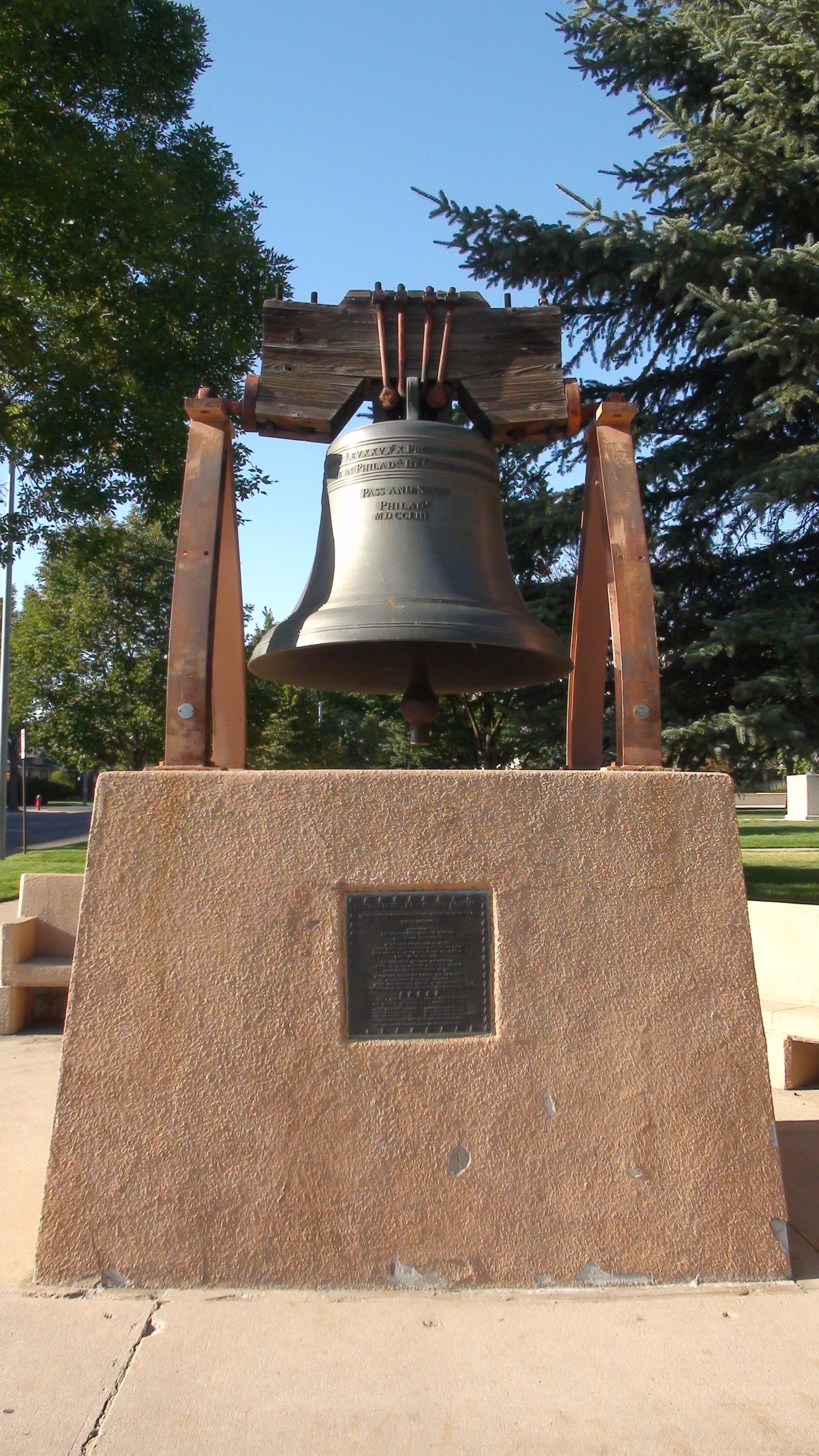
Liberty Bell Replica, West Virginia Capitol.

Sunday, 11 February 2024

“Or else let those who are here themselves say if they found any wrongdoing in me while I stood before the council, Acts 24:20

Note: You can listen to today’s commentary courtesy of our friends at “Bible in Ten” podcast. (Click Here to listen)

You can also read this commentary, with music, courtesy of our friends at “Discern the Bible” on YouTube. (Click Here to listen), or at Rumble (Click Here to listen).

A more literal rendering is, “Or let these themselves say if they found any unrighteousness, having stood me before the Sanhedrin” (CG).

In the previous verse, Paul noted that the people who purportedly had testimony against him should have been brought forth if they really had evidence worth listening to. As a final challenge to his accusers, he now introduces the words of this and the next verse, beginning with, “Or let these themselves say if they found any unrighteousness.”

As none of the Jews from Asia who supposedly had testimony against Paul had come to testify, he appealed to those who were present to testify against him. It is almost a mocking challenge because they had brought Tertullus to speak for them. Paul knew that they didn’t know Roman law. He also knew that they had absolutely no evidence against him.

Therefore, if they opened their mouths, they would either have to tell the truth, thus exonerating him, or they would have to perjure themselves, something he knew they would not be able to do effectively. As such, they would not do it at all. With that stated, his challenging words continue with, “having stood me before the Sanhedrin.”

They had been at the Sanhedrin where Paul had been presented. This is found in Acts 22:30-23:10. The thing is that the garrison commander and various Roman guards were there, too. Therefore, they could testify to Paul’s truthfulness and against any lies spoken of him during that time at the Sanhedrin.

While there, they had heard Paul’s testimony and should be able to competently bear witness to his conduct at that time, whether proper or improper. Thus, his words are a direct challenge to either speak up or give up on the case against him.

It should be noted that until this verse, Paul hasn’t spoken at all about Jesus being the Messiah or about His resurrection. It has been a defense formed entirely around the facts of the case in regard to what he has been accused of.

Life application: Paul has masterfully kept his religious beliefs out of the trial until this point, knowing that what he said in that regard would be a distraction from the main point of the trial itself, which was that he stood before a civil court, not a religious one.

Having said that, in the next verse, he will finally bring in religious matters. The reason why he will do this is because his words of defense have come to their end with nothing of a civil matter having been done wrong. Therefore, by bringing in the religious words, it will be evident that it is that, and not an infraction against Rome, that lies at the heart of the enmity directed at him.

As this is so, it will mean that Rome has no jurisdiction over that issue, and all charges should be dropped. However, Jesus has already told him that Paul must witness for Him in Rome (Acts 23:11). Therefore, the coming events will continue to unfold with that statement being fulfilled.

In other words, God’s plans will come to pass. This is true not just in Paul’s life but also in all of ours. We have our part to do in living out our lives, but God’s overall plan is the priority. Therefore, when all is said and done, we must acknowledge and accept that what transpires is what is in accord with His will.

Having this attitude, we can be freed from frustrations that would otherwise consume our thoughts. The words “His will be done” are true and comforting. Speak them often.

Lord God, may Your will be the highest joy in our lives. As time passes and our lives unfold before You, may we understand that nothing happens apart from Your knowledge. Things will meet up with Your final plan for us, so help us to be content with that and glorify You at all times. We truly believe that You have the best in store for us. Thank You for this assurance. Amen.


Acts 24:19

West Virginia Capitol Grounds.

Saturday, 10 February 2024

“They ought to have been here before you to object if they had anything against me. Acts 24:19

Note: You can listen to today’s commentary courtesy of our friends at “Bible in Ten” podcast. (Click Here to listen)

You can also read this commentary, with music, courtesy of our friends at “Discern the Bible” on YouTube. (Click Here to listen), or at Rumble (Click Here to listen).

This verse completes the previous verse. A more literal rendering is, “…who ought to appear before you and accuse if they may have anything against me” (CG).

The previous verse reads, “In which they found me purified in the temple, not with a crowd, nor with a tumult. And who, Jews from Asia…” (CG). That now continues with, “who ought to appear before you and accuse.”

Paul’s words cut to the heart of the matter. The very people who could testify to the situation had not come to do so. It is a hint that either they would have to perjure themselves or that they would have to admit that he had done nothing wrong.

However, if the excuse was made that these witnesses had gone back home after the feast, it would still show that there were none to accuse him. As such, any charges against him would have to be dropped for lack of evidence.

As for any others who would testify, it would be hearsay, not firsthand witness. The logical end of his words is that the charges were unsound and should be dismissed. He finishes the thought with, “if they may have anything against me.”

The obvious meaning is that there were no valid accusations, and thus, the charges were invalid. This was a religious matter that had nothing to do with Rome. And more, it was Paul who was wronged simply because of his interpretation of the law and the prophets.

Life application: Paul was an apostle. As such, the words of Jesus found in Matthew 10 certainly apply to him –

“But when they deliver you up, do not worry about how or what you should speak. For it will be given to you in that hour what you should speak; 20 for it is not you who speak, but the Spirit of your Father who speaks in you.” Matthew 10:19, 20

Although persecution is not an uncommon occurrence in the church today, those words were not spoken to us as a general rule we can apply to ourselves. They were spoken by Jesus to His apostles. Evidence that the Lord was with Paul in the same manner is found throughout Acts, where the Lord appears to him and tells him that He is with him.

As this is so, and as those words of Matthew 10 do not apply to us today, it is the best policy not to speak out of turn. If we have a legal matter, it is a sound strategy for us to hire a lawyer. The Lord wanted Paul’s ministry to continue because it was a part of the unfolding actions that would lead to the compilation of His completed word.

We now have that completed word and should not expect the Lord to appear to us and tell us what to do. Nor should we expect visions, dreams, or revelations of things that are not recorded in the word.

Having said that, we will get out of the word just what we put into it. The more we read it, the more clarity we will be able to obtain about the mysteries God has tucked away in it. New insights, types, and pictures are found every day by people who study and evaluate the word.

It is truly an inexhaustible word, so filled with wisdom that we will be searching it out and finding new insights until the day the Lord takes us home. So be sure to get into the word and read it daily. You will be blessed as you do.

Lord God Almighty, how wonderful it is to read Your word, come to something we don’t understand, and then take the time to read commentaries or try to work through it until we find a resolution to our questions. It is a delight because we are filling our minds with what You have given us to guide us all our days. Thank You for this wonderful treasure, Your superior word! Amen.


Acts 24:18

Flag display. West Virginia Capitol.

Friday, 9 February 2024

“in the midst of which some Jews from Asia found me purified in the temple, neither with a mob nor with tumult. Acts 24:18

Note: You can listen to today’s commentary courtesy of our friends at “Bible in Ten” podcast. (Click Here to listen)

You can also read this commentary, with music, courtesy of our friends at “Discern the Bible” on YouTube. (Click Here to listen), or at Rumble (Click Here to listen).

The verse is incomplete without the next verse. For now, a more literal rendering is, “In which they found me purified in the temple, not with a crowd, nor with a tumult. And who, Jews from Asia…” (CG).

In the previous verse, Paul noted that after many years away, he came to bring alms to his nation, and offerings. Now, he says, “In which they found me purified in the temple.” This is a key point concerning his right to be in the temple area that stems from Chapter 21. Upon his arrival, he was exhorted by the elders of the church to pay the expenses of those who had taken a vow. In compliance with that, and going further by joining them in purification, it said –

“Then Paul took the men, and the next day, having been purified with them, entered the temple to announce the expiration of the days of purification, at which time an offering should be made for each one of them.” Acts 21:26

This was something that could easily be validated and which proved he had the right to be in the temple area, and he was obviously there for proper religious purposes. He continues further, saying, “not with a crowd, nor with a tumult.”

It would be improbable that a person who was bringing alms and making sacrifices after an extended absence would suddenly decide to start a tumult. As his words could be proven on those points, his innocence in the matter logically follows.

As for the introductory words to the verse, “in which,” they mean that he was actually in the process of performing his sacrifices. At the very time he was conducting his religious affairs in a purified state, he was interrupted. To support that, he then begins his next thought. His words will continue into the next verse. For now, he begins with, “And who, Jews from Asia…”

These are those mentioned in Chapter 21 –

“Now when the seven days were almost ended, the Jews from Asia, seeing him in the temple, stirred up the whole crowd and laid hands on him, 28 crying out, ‘Men of Israel, help! This is the man who teaches all men everywhere against the people, the law, and this place; and furthermore he also brought Greeks into the temple and has defiled this holy place.’ 29 (For they had previously seen Trophimus the Ephesian with him in the city, whom they supposed that Paul had brought into the temple.)”

It is these Asian Jews who certainly saw him among the Gentiles in the past and who had hounded him all along. When they saw him in Jerusalem, they realized it was a perfect opportunity to cause him grief.

Life application: When people are ideologically at odds with others, it is hard to come to a reconciliation over those differences. It is human nature to not “live and let live.” Muslims, particularly because of the words of the Koran, feel it is a sacred obligation to kill or enslave unbelievers. Those who hold to this are not the extremists but rather the fundamentalists.

They hold their writings as sacred and feel it is their duty to act in this way. Likewise, the Jews, depending on how they interpret Scripture and their later writings, feel that they are God’s chosen people – above and apart from all others. When Paul went among the Gentiles and communed with them, it was taken as a great and blasphemous thing.

His actions were seen as defiling and worthy of death. This is not so much because he associated with Gentiles, something all of the diaspora Jews did to some extent. Rather, it was because he taught that Jesus was the Messiah and that His message accepted Gentiles on an equal footing with Jews. To them, this was intolerable. This totally nullified the “above and apart from all others” attitude that still permeates Jewish society today.

Christians are not expected to have such an idea about themselves. Rather, we are to acknowledge that we are sinners in need of a Messiah who alone can save us. But this is a problem that the world doesn’t understand. Instead, they look at the result, not the process.

In other words, true Christians believe that Jesus is the only way to be saved. This is because Jesus said it, and it is also logically true. As such, the meaning is that only true Christians are saved. This is the result of faith in Christ. It is what the world sees, and they perceive this as a point of arrogance – “How dare you say I am not saved!”

The process, however, is that we first acknowledged that we were sinners and that we understood Jesus could save us. This excludes all arrogance. Rather, it is a point of extreme humility to stand before the Creator and say, “I leave myself totally at your mercy. Without you, I am lost. I trust in Your grace alone to save me.”

If the world more fully understood this, it may relieve the tension to some extent. However, much of the world refuses to simply acknowledge that they are sinners. If they are, they have a need for a Savior. But this would then require them to have the same humility saved believers once demonstrated. As such, this is still a great cause for a feeling of contempt towards Christians.

In understanding this, we can then understand why Christianity is so quickly becoming abhorrent to the people of the world. With each new “freedom” that governments proclaim, there is a new wall put up. If people are free to be homosexuals, then they cannot be “sinners” for their conduct. If people are free to murder their unborn, then they cannot be “sinners” for aborting babies.

As wickedness increases, a hatred of what you stand for will logically increase. Be ready to focus on the process (by grace through faith) of your salvation when talking to others. Some of them may get it. But to focus on the result, I am saved, and you are not, is a point of theology, though true, that we now find is almost completely impossible to state without being hated all the more. Until people see their sin as something God cannot accept, they will never believe that they are in need of a Savior.

Heavenly Father, we, as believers, came to You with empty hands, realizing our fallen state before You. We believe that because of the cross of Jesus Christ, we are saved. Help us to properly and faithfully communicate this truth to the world around us. May we not waffle in our proclamation that it is sin that separates us from You. We are saved because we were first sinners who needed to be saved. Thank You, O God, for Your saving grace that is found in Jesus Christ our Lord. Amen.


Acgts 24:17

WWII Memorial, West Virginia Capitol.

Thursday, 8 February 2024

“Now after many years I came to bring alms and offerings to my nation, Acts 24:17

Note: You can listen to today’s commentary courtesy of our friends at “Bible in Ten” podcast. (Click Here to listen)

You can also read this commentary, with music, courtesy of our friends at “Discern the Bible” on YouTube. (Click Here to listen), or at Rumble (Click Here to listen).

More literally, the Greek reads, “And through many years, I arrived to bring alms to my nation, and offerings” (CG).

Paul just said to Felix that he always strove to have a conscience without offense toward God and men. In support of both of those thoughts, he next says, “And through many years.”

Rather than saying, “And after many years,” he uses the word “through.” Paul expresses his thoughts as if he is on a journey through time, much of it being separated from Jerusalem and the religious life and offerings that are continuously conducted there.

As for the duration away, it had only been about four or five years at this time. His last visit was in Acts 18:22. His use of many is to be taken in light of the “many years” of verse 10. If he was asked what “many years” was, he could say “four,” and it would then be a note of approval towards the comment he made about Felix’s service. In other words, it would be a way of acknowledging Felix’s service as lengthy and thus well received by his superiors.

Now, to fill those years apart from Israel, he says, “I arrived to bring alms to my nation.” His note concerning the “alms” is otherwise not mentioned in Acts, and yet it appears prominently in his epistles, such as Romans 15:25, 1 Corinthians 16:1-4, and 2 Corinthians 8:1-4. Along with the alms, he adds “and offerings.”

The “offerings” (or sacrifices) were those prescribed by the law when one would come for a feast day celebration and those associated with vows as well. As can be seen, he says the alms are for the nation, but the offerings being set apart in the sentence were for his personal relationship with the Lord. Also, as noted in the NKJV translation, they and other translations lump these together as “alms and offerings to my nation.” However, this is not the intent of Paul’s words.

As for the word “nation,” he uses the term ethnos. It most properly indicates “people joined by practicing similar customs or common culture” (HELPS Word Studies). He uses this word rather than identifying them with a more commonly used word for “people.” It is a hint of courtesy towards Felix by avoiding a term that could be interpreted as a note of superiority over the Gentiles.

Life application: Paul carefully divided his words, as noted above, to indicate two separate acts that have a different purpose. His alms were something he was doing for his nation and people. The offerings were those things that were intended to keep him on a personally sound footing within the religious sphere of life that connected him to the Lord.

Obviously, being in Christ meant that he had immediate access to God through Jesus the Mediator. But for the sake of propriety, he continued conducting his religious life while in the land of Israel as an observant Jew. There is no contradiction here. Today, there are messianic Jews in Israel who observe the Sabbath even though Christ Jesus is their true rest (Hebrews 4:3).

It is culturally appropriate that they conduct themselves in a manner that keeps them in the favor of their nation while also understanding that they are free from all such observances because of Christ. This is not a hypocritical approach to worshipping God. Rather, it is a respectful way of doing so.

If a Pentecostal were to attend a Presbyterian church, it would be wholly inappropriate for him to get up and start yelling in the false gibberish that he yells out when in his own church. If that is how Pentecostals want to conduct their relationship with the Lord, they need to do it in their own church.

Be sure to use tact when you attend services with other Christians or when you are visiting other countries. See what they do first and then conduct yourself accordingly. This is right and proper. We, as Christians, worship in spirit and in truth in our hearts and minds. What we do externally should be courteous and with proper decorum in the particular setting we find ourselves.

O God, there are innumerable ways to worship You while still staying within the boundaries of our faith in Christ. Some like organ music, while some like a band. Some worship on the beach, while others do so in ancient buildings. Wherever we are, may our conduct be appropriate to the setting in which we find ourselves. May our worship be to Your glory and for the mutual benefit of those around us. Amen.