
Romans 10:7

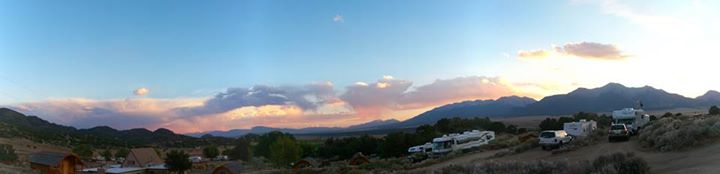
130915_mountain_panorama

Sunday, 15 September 2013

…or, “‘Who will descend into the abyss?’” (that is, to bring Christ up from the dead). Romans 10:7

“Or” is tying this question to the previous one – “Who will ascend into heaven?” The corresponding verse in Deuteronomy 30 is verse 13. However, that says, “Nor is it beyond the sea, that you should say, ‘Who will go over the sea for us and bring it to us, that we may hear it and do it?’” Paul wasn’t changing Scripture by changing the thought from going over the sea to descending into the abyss. The intent is the same, but the point of reference is different.

The Hebrew people were at Horeb in the dry wilderness and they did not have the knowledge of the risen Lord. Moses was using an example which they could clearly understand in order to speak the language of faith. Paul is using the resurrection in the same way. The sea to the Hebrews was a great, impassable body; the death of man is being spoken of in this same manner.

However, as a connecting point between the two, the Greek word abysson is used for “abyss” by Paul. The same word is used in the Greek translation of the Old Testament when referring to the sea. For example, Job 41:31 uses abysson for “deep” when speaking about the great sea creature Leviathan. There it says this –

“He makes the deep boil like a pot; He makes the sea like a pot of ointment.”

The sea was perceived as the great deep in this way even at Moses’ time. At the giving of the Law, the third commandment says, “You shall not make for yourself a carved image—any likeness of anything that is in heaven above, or that is in the earth beneath, or that is in the water under the earth;…” Ex 20:4

The “water under the earth” is the sea. Passing over the sea then is comparable to descending into the abyss for all intents and purposes. And so Paul grasps this Old Testament similarity and uses the imagery to  connect it with the work of Christ in the New when speaking of the seemingly impassible void of death. Searching for the commandment by a descent “into the abyss” then is explained “to bring Christ up from the dead.”

We don’t need to conduct such a search to find the knowledge God provides; it is obtainable in the work of Christ. He has descended into the abyss. To search for our faith-righteousness there, after His prevailing over it, would then be a denial of what has been fulfilled in Him. He has triumphed over it for us. As a resounding note of victory in this matter, Paul states this in 1 Corinthians 15:54-56 –

“‘Death is swallowed up in victory.’
‘O Death, where is your sting?
O Hades, where is your victory?’
The sting of death is sin, and the strength of sin is the law. But thanks be to God, who gives us the victory through our Lord Jesus Christ.”

Life application: Who needs to die in order to find out what is on the other side? Not the faithful Christian! Christ has already gone there and the word tells us of our final outcome. Stand fast in your faith and trust in the work of Christ. In Him, death is swallowed up in victory.

Glorious almighty God. I don’t need to question what lies on the other side of death. Christ has already gone there in my stead. Because of His work, there is no fear here. Your word tells where I am headed, what it will be like, and the glorious eternal nature of it. Such is the wondrous power of the resurrection of Christ. I have absolute assurance of the glory which lies ahead. Hallelujah and Amen.


Romans 10:6

130914_orangy_sky

Saturday, 14 September 2013

But the righteousness of faith speaks in this way, “Do not say in your heart, ‘Who will ascend into heaven?'” (that is, to bring Christ down from above)… Romans 10:6

To contrast the preceding verse which spoke of actively doing deeds to attain the righteousness of the law, Paul begins with “But…” One would think that by showing a contrast, he would remove himself from the law and initiate a new discourse apart from it; he doesn’t. Instead, he goes right back to the very same law he just spoke of and he cites Deuteronomy 30:11-14 –

“For this commandment which I command you today is not too mysterious for you, nor is it far off. It is not in heaven, that you should say, ‘Who will ascend into heaven for us and bring it to us, that we may hear it and do it?’ Nor is it beyond the sea, that you should say, ‘Who will go over the sea for us and bring it to us, that we may hear it and do it?’ But the word is very near you, in your mouth and in your heart, that you may do it.”

And so in 10:6, he cites a portion of this passage, “But the righteousness of faith…” Literally “of-faith righteousness.” He has personified righteousness and then causes it to describe itself – “The righteousness of faith speaks this way.” It is an ingenious way of showing us the source of righteousness.

Far too often, we look to the distant as better than the near. The saying “The grass grows greener on the other side of the fence” shows us this. From that springboard, we look at the more distant the fence, the greener the grass. When we look for wisdom, we don’t do it in our own household, but a college far away. And even better, we assume that we can travel to the Far East and attain the enlightened wisdom of those cultures. We look to Japan for business acumen, to China for better Kung-Fu, and to Tibet for spiritual enlightenment – as if they were the answer to our own failing wisdom.

Even Christian missionaries use the “far-away” logic. “I must travel across the seas to make a convert.” But one’s mission field can be in their own neighborhood; in their own family. Likewise, the righteousness of faith is found right in the precepts of the law as fulfilled in Christ. Understanding this, Paul notes the way faith-based righteousness calls out, “Do not say in your heart, ‘Who will ascend into heaven.'”

Moses gave Israel the law which was near to them. It was to them their righteousness and it was handed to them as a people. All they needed to do was live within its precepts. They didn’t have to travel to foreign countries to find it, they didn’t need to search the heavens for it. Instead, it was right there for them to pursue. And the law they were given pointed directly to the coming work of Christ. In fact, the book of Hebrews clearly demonstrates that the fulfillment of the Mosaic and Levitical pictures are found in Him. He is the “greater than” of those types and pictures.

Now, with the fulfillment of those shadows clearly seen in the light of Christ – who came through Israel, there is much less need to “ascend into heaven. (that is, to bring Christ down from above.)” Such an attitude would be a denial of the incarnation. Christ has come down from above. To search for faith-righteousness in heaven after the coming of Christ would then be to deny what He has already accomplished.

Life application: Spiritual matters don’t require removing oneself to distant lands, either for education or execution. Jesus Christ is available to all by simple faith and His mission field is the entire world. One can serve Him wherever they are and one can fellowship with Him anywhere and at any time. Such is the beauty of a personal, faith-based relationship with the Lord.

Lord, it is so good to know that You aren’t a distant God. I don’t need to climb the highest mountain nor travel the widest sea in order to meet You. You are near and in You I have my being. I know that when times are tough, I need do nothing more than simply talk to You in order for Your comfort to come flooding in. Thank You for being with me always. Amen.

Romans 10:5

130913_colorado_sunset

Friday, 13 September 2013

For Moses writes about the righteousness which is of the law, “The man who does those things shall live by them.” Romans 10:5

Paul now describes the righteousness which is of the law. In doing so, he won’t make up any new concept of it in order to make a claim against it. Instead, he will go to the law itself. Before looking at that, it would be good to understand the progression of what he is saying. This will establish why he is citing this. Notice the term “for” in the following verses and see how he builds upon each new thought –

“Brethren, my heart’s desire and prayer to God for Israel is that they may be saved. For I bear them witness that they have a zeal for God, but not according to knowledge. For they being ignorant of God’s righteousness, and seeking to establish their own righteousness, have not submitted to the righteousness of God. For Christ is the end of the law for righteousness to everyone who believes. For Moses writes about the righteousness which is of the law, ‘The man who does those things shall live by them.'” Romans 10:1-5

“For” in verse 5, is explaining verse 3 (and which is built upon in verse 4). And so he says, “For Moses writes…” The law was received by Moses and within that law is a note concerning the necessity to follow the very same law in order to obtain “the righteousness which is of the law.” And what is that note? It is Leviticus 18:5 –

“You shall therefore keep My statutes and My judgments, which if a man does, he shall live by them: I am the Lord.”

Or, as Paul paraphrases, “The man who does those things shall live by them.”

God promised life to any who could keep the law. In fact, it was a guarantee of right-standing and a ticket to the fullness of His blessing if it could be done. But the fact is that no-one was, or even today is, capable of such a thing. More so, no one is capable of obeying even the first commandment perfectly. And with Jesus’ words showing that intent is the same as execution (see Matthew 5:27, 28 for an example), we have utterly failed in any hopes of keeping any portion of the law.

The law shows that in order to be right with God, one must live in a right manner before God. And then the law turns around and shows that no one can live in a right manner before God. Because of this, blood sacrifices were needed as a form of grace to protect against the penalties of the very law they were described in. Something more was needed to be right before God, something apart from the law. This righteousness involves a Person, not a deed. This is what the law actually anticipated and it is found in Jesus.

Life application: God is looking for faith that He is fully capable of saving us apart from our efforts. If we add in our efforts feeling they are necessary for our salvation, we are lacking faith in His provision. Have faith; stand on Christ alone.

Lord God, today I am facing battles. Some are known only to You, but I know that You know them. Please help me to face these challenges according to Your will. Please don’t allow these trials to take my eyes off of You, but instead may they be used to bring us even closer together. I need Your hand of guidance and reassurance Lord, and I know that You will provide it. Amen.

Romans 10:4

130912_peaceful_river

Thursday, 12 September 2013

For Christ is the end of the law for righteousness to everyone who believes.    Romans 10:4

For the third time in only four verses, Paul begins with “For.” This time, it looks back to the thought that Israel, being ignorant of God’s righteousness, sought instead to establish their own righteousness. By doing so, they “have not submitted to the righteousness of God.” Based on this, Paul explains, “For Christ is the end of the law for righteousness.” The law was put in place to show us of our desperately sinful state (refer to Romans 7) and to lead us to our need for Christ (see Galatians 3:21-25).

Jesus, being born without sin, was qualified to replace Adam. And living perfectly under the law without sinning, He fulfilled the law on our behalf. Now God offers us a trade. If we accept what Jesus did, believing that it was all-sufficient for us, He grants us Jesus’ perfect righteousness and places our sins under His shed blood. In Him, we have peace with God. This is offered “to everyone who believes.”

Nothing is said here, or at any other place in Scripture what Calvinists teach – that God first regenerates us in order to believe and then we exercise our faith. Belief is an act of the volitional will. We hear the message, we accept the premise, we believe that it is true, and God grants us Christ’s righteousness. This is how it works and this is how the Bible describes the process time and time again.

So a question remains for consideration. “What happens to the law?” If Christ is the end of the law for righteousness to everyone who believes, then what does that mean about the law itself? The answer is twofold. First, the law remains in full force and effect for those who fail to believe in what Christ does. They must fulfill the law perfectly in order to stand justified before God. But Paul explains in Galatians 3:10-12 (and elsewhere) that no one is justified by the law. Because of this, those who fail to accept Christ stand condemned. Secondly however, the law is over for those who have accepted Christ. It is:

1) Annulled (Hebrews 7:18)
2) Obsolete (Hebrews 8:13)
3) Taken away (Hebrews 10:9)
4) Wiped out, taken out of the way, and nailed to the cross (Colossian 2:14)
5) Etc. elsewhere in multiple statements, explicitly and implicitly

In other words, we are free from the constraints of the law – completely and entirely. They are not binding on us. Our righteousness is an imputed righteousness based on the work of Christ. Therefore, to re-introduce the law in any precept (mandatory Sabbath day observance, circumcision, dietary restrictions such as “no pork”, etc.) is to say to God, “I believe that what Christ did was insufficient to save me.” It is a slap in the face of God.

The doctrine for our lives and conduct comes not from the law then, but from the New Testament epistles, particularly the writings of Paul who was selected to guide us during the church age.

Life application: Have faith in what Christ did, believe that what He did is all-sufficient, and be free from the requirements of the law which could never make you righteous in and of themselves.

Oh God, I am so thankful for Jesus. You gave the law to Israel with so many commands – over 600. And then You told the people, “You shall therefore keep My statutes and My judgments, which if a man does, he shall live by them.” Then, after 1500 years of proving that no one could do this, You sent Jesus to do them on our behalf. Now You offer His righteous work in exchange for my failures. I believe… I receive! Thank You for Jesus. Amen.

Romans 10:3

130911_running_river

Wednesday, 11 September 2013

For they being ignorant of God’s righteousness, and seeking to establish their own righteousness, have not submitted to the righteousness of God. Romans 10:3

“For” is again used to continue the on-going chain of thought. This time, it is directly related to Paul’s previous words, speaking of the Jewish people who held to the law as a means to an end, “they have a zeal for God, but not according to knowledge.” Because of this zeal, which lacks knowledge, they were “ignorant of God’s righteousness.” A few thoughts on this –

1) This is speaking of God’s means of bestowing righteousness, not God’s inherent righteousness.

2) Paul is not attempting to excuse the Jewish people for their ignorance; he is stating it as a fact and then explaining the results of it. This goes directly to the thought that misdirected faith is wasted faith, no matter how sincere it is; ignorance is no excuse. Paul uses the same thought about himself in 1 Timothy 1:13 when speaking of the time before God’s grace was bestowed upon him –

“…although I was formerly a blasphemer, a persecutor, and an insolent man; but I obtained mercy because I did it ignorantly in unbelief.”

Although his words here seem to indicate that he obtained the mercy because of his ignorance, this isn’t what he is saying. Rather, he received mercy because of his faith which came after his ignorance. Had he continued on in his unbelief, the mercy wouldn’t have come. This is the continued state of those Paul is speaking about. Instead, they were “seeking to establish their own righteousness.”

The righteousness of God for man is found in Christ Jesus. This is explicitly stated in Ephesians 3:9. Paul said there that he would – “be found in Him, not having my own righteousness, which is from the law, but that which is through faith in Christ, the righteousness which is from God by faith.” But this isn’t where those he is speaking about looked. Rather than looking at Jesus as the fulfillment of the law, they used the law in an attempt to establish righteousness in themselves.

But Christ is the end of the law and they “have not submitted to the righteousness of God.” To understand this, let’s look at righteousness as a destination and different ways of attempting to get there:

The Island of Righteousness is in the middle of the ocean. Some may choose an airplane (representing being a philanthropist) to get there. But the destination has no airport and so airplanes crash in the ocean; all dead, donators drowned. Some may choose, a car (representing asceticism). But there is no road and they drive off the beach, into the water, and perish. Self-denial sinks. Some get onto a hot air balloon (representing the engagement in lofty thinking). However, the winds around the island never allow for a landing. All balloon attempts end in a bad way. Philosophy fails. These are all incorrect methods of reaching Righteousness. However, there is another way.

Some understand that one can get across the ocean by boat, and so they get onto the SS Law. God built the Law and so it is certainly fit for their journey to Righteousness. As they travel on the Law, some enjoy the mode of traveling and they start to help with the maintenance of the ship. The Law has become their obsession. When Righteousness is in sight, they don’t realize it because they are so busy working on the Law. The ship pulls up to Righteousness and those who understand that this is the final destination get off, putting their faith in the fact that they will be safe, even apart from the Law when it departs. The Island of Righteousness is their only hope, support, and source of life from that point on.

But there are those who never get off. They are so blinded by their obsession with SS Law that they never see what it was pointing to all along, Righteousness. Without leaving the ship, the Law goes back to the sea and sinks. It was designed for one purpose and one only, to reach Righteousness, which is apart from the Law. None of the other means of travel could ever safely get to Righteousness, and the SS Law had the purpose of getting there and then ending.

The last example is that which led to the state of the Jews who rejected Christ. They attempted to establish their own righteousness and failed to submit to the righteousness of God. They saw the law as a means to an end, never understanding that its intent and purpose (which is even described in the law itself) was to point to something greater; Jesus.

Life application: The Bible tells us how to reach Righteousness. When we follow the proper path and receive Christ Jesus, we are granted His righteousness. Nothing else will satisfy God. What Christ has done is all-sufficient for us to be reconciled once again to Him. Trust in Christ, live for Christ, and keep your eyes on Christ.

Heavenly Father, how I love all that You have done for us. You have granted us life, beauty, family, friendships, food, and so much more. But above all, You have given us Jesus. All other things are pleasing, but temporary. But Jesus is fully satisfying and eternal. Thank You for the sure and glorious hope You have set in my soul because of Him! Hallelujah and Amen.