Romans 12:5

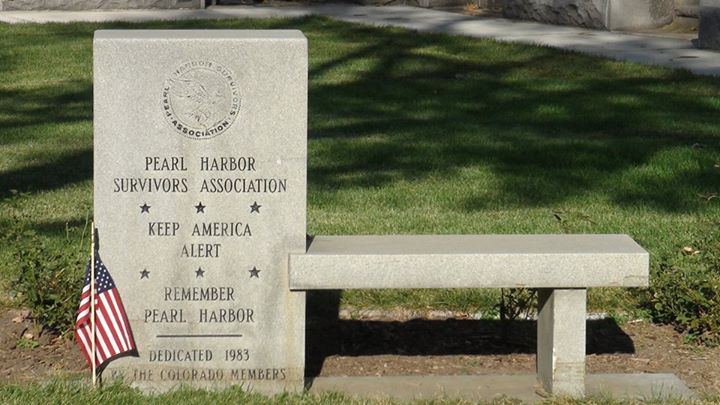
131109_pearl_harbor

Saturday, 9 November 2013

…so we, being many, are one body in Christ, and individually members of one another. Romans 12:5

Using the previous verse as a reference, Paul says, “so we…” Just as there are many members in one body, and just as the members have their own unique function which differs from the others, so it is with all those in Christ. There are many in Christ and yet each has a unique role. We could argue that there are lots of pastors, but each pastor has a specific flock. Or even if the pastors are in the same congregation, they will minister at different times and to different individuals for different reasons. There may be many door greeters, but each door greeter greets different people and does so in a unique way.

No matter what the member does, all are members of “one body in Christ.” In Ephesians 1:22, 23 we are told that Christ is the Head. This doesn’t mean He is literally the head as if one is looking at a person’s head. Rather, “head” is speaking of His leadership and preeminence. With Christ in this position, every member (many) comprises the body in an individual role which is uniquely united to all others; we are “members of one another.”

In Christ, the saying is true that “No man is an island.” We are bound to each other under the headship of Christ and have importance and value. However, far too many allow their role to be more like a fingernail than a finger, finding it sufficient to be attached to the body, but only of use in a minimal way. Being a member of Christ’s church indicates that we should put forth effort in order to exalt the Head.

Life application: We all have talents in our secular employment which can probably be transferred to our Christian walk. Is it right to satisfy ourselves and others outside the church with these talents while keeping them hidden from the body of Christ? Be willing to share your abilities within the church for the building up of others and the glorification of God.

Lord God, help me to be more than a bump on a log. I have talents which I know should be used to glorify You. I spend money on things which aren’t necessary while neglecting the church I attend. I spend time doing stuff which has no lasting value while I skip church and Bible studies. I’m a mess, Lord. Help me to get my priorities right as I live out this life. Amen.

Romans 12:4

131108_indian_and_buffalo

Friday, 8 November 2013

For as we have many members in one body, but all the members do not have the same function, Romans 12:4

Using the human body as representative of the different offices of the church, Paul will draw out a comparison for us to more readily accept our station within the body. He begins with “for” and so shows that this verse is tied to, not separate from, the preceding verse. In that verse, he spoke of the grace he received and the grace each member of the church has also received “as God has dealt to each one a measure of faith.”

Based on this, he notes now that just “as we have many members in one body…” so does the church. Paul will use this same thought several times in his writings, such as in Ephesians 4 and 5, but he will use it in the most expressive and telling way in 1 Corinthians 12. To get a fuller picture of Paul’s thoughts here in Romans, take time to read that passage and see how he speaks about the body there. He has surprising insights for those who might “think of himself more highly than he ought to think.”

Within the church, like within the human body, no two parts are the same, although some may have the same function. For example, the left hand functions with basically the same role as the right hand, but each is used to perform that function individually in order to meet the needs of the body. Eyes, feet, and elbows likewise mirror each other, but we’re given more than one in order to meet the body’s needs. Then there are the greater distinctions. There are external organs and internal organs. There is the skeletal system and the epidermis. The list goes on and on. Each part of the body, selected by God to meet a particular need and to perform a particular function. As Paul say, “not all have the same function.”

If you are a foot and not a hand, do you feel less important than the hand? Again, take time to read 1 Corinthians 12 today and you may find that being a foot isn’t so bad after all.

Life application: The pastor of a church will only be as effective as the other members of the church. If the person who cleans the bathroom does a crummy job, it will reflect on the pastor. If the pastor does a crummy job in his preaching, there won’t be any members coming around to use the bathroom. The church is structured like the body and each part needs to properly perform its task, not with boasting, but with humility. With Christ as our Head, let us exalt the Head.

Lord, I know the church with the cleanest, shiniest bathrooms in town. They’re kept that way by one person. Thank You for those who honor You without boasting or showmanship, but by performing a needed job that others might think is below them. But You don’t feel that way – You washed the dirty feet of the apostles. The water You washed them with had hardly dried as they were nailing You to the cross. Thank You for those with Your servant’s heart. Amen.

Romans 12:3

131106_arkansas_capitol

Thursday, 7 October 2013

For I say, through the grace given to me, to everyone who is among you, not to think of himself more highly than he ought to think, but to think soberly, as God has dealt to each one a measure of faith. Romans 12:3

In this verse, Paul makes a word play for us from the idea of “thought.” Four times in the Greek the word phronein is used in one form or another. Each is given to have us stop and mentally consider (to think) on the thought he wants us to think about…

“For” is given to build on verses 1 & 2. He spoke of our responsibility to the Lord to be as “living sacrifices” and to not be conformed to this world, but to be transformed. If we are living sacrifices and are being transformed to correspond to the will of God, then what he will now write should follow naturally. But rather than immediately stating what this is, he interjects a point of humility concerning himself.

“For I say, through the grace given to me…” He is speaking about his apostleship (see Romans 1:5) which is preeminently one directed to the Gentiles. Despite this exalted position, it was given “through grace.” In other words, Paul has excluded boasting from his position and therefore, when he pens his coming words, boasting or feelings of superiority should be excluded. In the end, if our position came by grace, then the playing field is level. Having shown this up front, he continues with “…to everyone who is among you.”

Each recipient of his letter, which includes even those of us today who peruse the words of Romans, is “not to think of himself more highly than he ought to think.” Whatever our position is, we shouldn’t allow it to go to our heads. Pastors are often placed on high pedestals. This only increases as the size of the church increases – swollen heads overshadow large pulpits. Eventually, they are treated, and they accept the treatment, as superstars. Elders in churches will often have their heads burst forth with thoughts of control and power. They didn’t have to do the hard work in seminary, but they still get control of the flock.

Those who have a strong grasp of the word, taking it in context and understanding the nuances of the original languages, can lord this over others, acting as if they hold the keys to deep insights and wisdom, doling it out with a teaspoon. Musicians are often exalted (and act) as if they are greats of the faith, simply because they sing songs with deep-seated theological lyrics. And the list could go on…

But Paul warns against this and we should heed the warning, even taking time to memorize these twelve words, “not to think of himself more highly than he ought to think.” As soon as pride steps in, the devil gains a foothold into the life of the believer. If the Creator can come in human flesh, walk among us, and wash the dirty feet of His apostles – the highest designation in the Church Age, then we have nothing to consider ourselves more worthy than any other person in this body. After all, Paul has already shown that apostleship is given by grace. He has preempted boasting at any other level.

Instead, Paul says that we are to “think soberly” using the term sōphronein. This word is used to indicate being sober-minded or to think clearly while exercising self control. It is formed by two words which translate as “safe” and “what regulates life.” The second word is the root of our word “diaphragm.” Helps Word Studies gives the example of an opera singer who controls the length or quality of his tones by the diaphragm. This then controls the ability to breathe and to moderate heartbeat. This in turn regulates or “brings safety” to the body, keeping it properly controlled. This physical example translates well into what Paul asks of us in our mental state.

And the reason we are to “think soberly” is because it all comes back to God in the end. It is He who “has dealt to each one a measure of faith.” Even if faith is an exercise of the free-will, which it is, that free-will was granted by God, and the opportunity to exercise it was also granted by God. To understand this, think of two people with exactly the same free-will and looking to exercise it in exactly the same way –

Seeker 1 is in his store in Sarasota, Florida when two guys come in and talk to him about the Bible, about Jesus, and about salvation. He accepts the premise, exercises his faith, and receives Christ.

Seeker 2 is in Wang-Chung China. He knows there’s a God and wants to know Him. Mission budgets were cut for Wang-Chung though and nobody is sent to evangelize the lost there. He never hears the saving message of Christ.

Did Seeker 1 deserve his opportunity to hear the word? Did Seeker 2 somehow not measure up? No. By grace alone did Seeker 1 hear and receive the message.

Now apply this to any state of any believer. One person may have the financial ability to go to seminary and another may lack it. The first becomes a pastor, the second cleans church bathrooms. The first cannot presume he is better than the second. He merely was granted a grace the first lacked. However, the toilet-cleaner may have a much deeper and more pleasing-to-God faith than the pastor. In the end, none should think more highly of himself than he ought to think. Rather, he needs to consider his position soberly, whatever it is, and understand that it was granted by God alone.

Life application: The universe doesn’t center around any of us. Be humble and exalt the Lord.

O God, just when life seems to be great and everything is going well, something comes along which reminds me that I am completely dependent on You. I get thinking I have it all under control and You remind me it is otherwise. Every beat of my heart is at Your will and every victory or trial is granted by You. Thank You for the victories, help me through the trials, and never let me forget that You have it all under control. Amen.

Romans 12:2

131106_twin_towers

Wednesday, 6 November 2013

And do not be conformed to this world, but be transformed by the renewing of your mind, that you may prove what is that good and acceptable and perfect will of God. Romans 12:2

In Romans 12:1, Paul spoke of our “reasonable service.” This daily walk in Christ is a volitional act of the will. It is prescribed, but not enforced. If we fail to walk properly we won’t be cast into a prison or sent a fine in the mail. And yet, it is what our rewards and losses will be based on when we stand before the judgment seat of Christ. We are asked to think soberly on our calling and to fix our eyes on the prize, not settle for mediocrity. In order to accomplish this, Paul tells us to “not be conformed to this world.”

Being conformed to this world is to walk in a manner which is at enmity with God (see Romans 8:7). The Greek word indicates accepting the form or appearance of another. It could include anything which would align oneself with another – habit, mannerisms, style of clothing, form of living, etc. We are not to be conformed, or fashioned, to the world in such a way. However, there are fashions and mannerisms that cannot be avoided. Further, this becomes problematic because one person could disapprove of a particular style which is a natural appearance to another person.

If the thought of “conforming” isn’t carefully considered, one could find fault with anything – men’s hair reaching to the collar, beards, a tattoo, high heeled shoes, women wearing pants, bikinis at the beach, etc. The list could be (and often is) never-ending with the judgmental type.

The idea isn’t concerning things to wear that can be bought at the store, nor is it that we cannot be a part of the customs of the culture in which we live. Rather, it is not to be conformed to the worldly life-style where it becomes our priority. We are to focus on Christ, think about Christ, talk to Christ, to live in and live for Christ. The beautiful part of Paul’s instruction is that which was noted above – what is our “reasonable service.” When we understand that these things are prescribed but not enforced it should help us to properly evaluate when someone is over-conformed to the world and under-conformed to Christ.

And this is explained in the next thought, which is preceded by “but.” This word (in Greek alla) is given to contrast the first thought. Instead of being “conformed to this world” it says to be “transformed by the renewing of your mind.” It is the mind, and the attitude which stems from it, which is being focused on rather than the externals. Remember this when Frank and Fran Finger-pointer find fault in your fashion. To be transformed is to have a complete mental change in who we are from who we once were.

The Greek word is metamorphoó. If you notice, it is the root of our word “metamorphosis.” Just as a caterpillar is changed into a butterfly, we are to be changed from an earthly mindset to a heavenly one; from our view of a temporary existence to an eternal one; from a system of living for pleasure, to one of living for Christ’s honor. This word is used only three other times in the New Testament – in Matthew 17:2, Mark 9:2, and 2 Corinthians 3:18. The first two are speaking of the transfiguration of Christ; the third is this verse from Paul’s hand –

“But we all, with unveiled face, beholding as in a mirror the glory of the Lord, are being transformed into the same image from glory to glory, just as by the Spirit of the Lord.”

At the transfiguration, God’s glory showed through Jesus, not upon Him. He was literally changed before there eyes to reveal and shine-forth the glory of God. This is what Paul is telling the believer should occur in their lives as well. The Spirit within is to shine out, not be hidden away. But again, this is accomplished by our voluntary actions. Thus, when someone sees us, they should be seeing the changed person revealing the glory of God; albeit in a fallen body.

This is the error of charismatic churches where “signs” and “gifts” are displayed at worship services. The change isn’t to be “in church on Sunday morning.” It is to be the state of life at all times. The change isn’t merely seen in external demonstrations meant to convince others of a “Spirit-filled life.” The change is in the internal person which is to then radiate outward.

And the reason for this “renewing of the mind” is explained by Paul in a clear and concise manner – “That you may prove what is that good and acceptable and perfect will of God.” He uses a term for “prove” which is linked to the testing of metals. If one wants to “prove” gold for purity, they will take a sample of it and see if it is pure or not. The same is true with whatever metal or alloy is being tested. Such proof will ensure strength, purity, hardness, pliability, etc. The same is to be true with us.

We are to be so transformed that the proof is in the testing of us – a scale which can only be measured against God’s word in this life and by the Lord at our judgment. “The good and acceptable will of God” is our goal and the standard of our testing. We cannot get this from “the inner Christ” but only by adhering to the Word of God and allowing it to change us to the conformity of the Holy Spirit. The Bible shows that being “filled with the Spirit” is a passive action, not an active one. As we comply, He fills. As we fail to comply, there is no room for filling. The believer can never get more of the Spirit, but the Spirit can always get more of the believer.

Life application: The renewing of the mind must come about by adherence to God’s word. Without it, we become the arbiters of what is and isn’t acceptable. Stay close to the word, know the word, and live out the word. Allow the Holy Spirit to fill you through obedient conformity to God’s word.

Lord God, Your word says that I have been sealed with Your Spirit by my faith in Jesus. The deal is done. Now Lord, please help me to live out that high-calling by my obedient adherence to Your word. I truly long to live my life for You and I know that all of the instructions are to be found there. Lead me to proper teachers who will soundly instruct me in the right and holy way. This to Your glory. Amen.  

Romans 12:1

131105_denver_street

Tuesday, 5 November 2013

I beseech you therefore, brethren, by the mercies of God, that you present your bodies a living sacrifice, holy, acceptable to God, which is your reasonable service. Romans 12:1

Paul spoke of doctrine in chapters 1-8. Next he moved to the concept of the dispensational nature of God’s redemptive working in chapters 9-11. Now his final section, chapters 12-16, he will speak of our devotional responsibilities; what our duties are and how to perform them. And so he begins with his plea to those in Rome, “I beseech you therefore…”

“Therefore” is given based on the awe-inspiring doxology he just presented at the end of chapter 11. God’s glory is incomprehensible, His wisdom is infinite, and his judgments are beyond finding out. Because of this surpassing greatness, Paul implores the “brethren.” In Greek, the term “brethren” is used anytime at least one male was addressed. This in no way is diminishing to women, but is how the language is structured. Those at Rome were all being addressed, including women, as is indicated in chapter 16.

“By the mercies of God” takes us back to the mercy verses (11:30-32) which just preceded the doxology. As God has determined to have mercy on both Jew and Gentile, Paul states that those objects of God’s mercy should “present your bodies a living sacrifice.” On the surface, this seems like an oxymoron.  A sacrifice, by nature, is something that dies. And yet, Paul asks us to be “living sacrifices.” However, to Paul there was nothing contradictory in his words. In his first letter to the Corinthians he says, “I affirm, by the boasting in you which I have in Christ Jesus our Lord, I die daily.” 1 Corinthians 15:31

A sacrifice was offered to God for various reasons – atonement, fellowship, thanks, etc. These offerings were sometimes entirely given over to God in the fire, such as a sin offering. Other offerings were shared in by the one who offered, such as in the fellowship offering. Either way though, the entire sacrifice was consumed. This is the idea that Paul is conveying to them (and thus to us). We are to be completely consumed in our offering to God – not in literal death, but in death to unrighteousness, death to sin, death to immorality, etc.

This “living” sacrifice is to be a part of our very nature as we continue on in our earthly tents, awaiting that day when we are called home – either through death or the rapture. Until that time, our every act and thought is to be a devotion and an offering to God; a living sacrifice. As he says in the conclusion of the verse, such a sacrifice is to be “holy, acceptable to God, which is your reasonable service.”

“Holy” is undefiled and without mar or blemish. It is to be set apart and sanctified to God. “Acceptable to God” involves the thought that we are His, we were bought at a price and are to be effective bondservants of Christ, not slack in our duties or our devotions. We are to honor God with our every fiber, bringing every thought into captivity so that our service will be complete, undefiled, and honorable to Him. Such is our reasonable service and such is the expectation of God who sent Jesus to give us the pattern and the model which we are to emulate.

Life application: Let us truly be “living sacrifices” to God, wholly pleasing to Him in all ways. We are His and it is only right that we acknowledge this in our lives and conduct.

Heavenly Father, You have asked me to be a “living sacrifice” to You. And yet I know that I fail You from day to day and even from thought to thought. Help me to live for You, not by my own power or spirit, but by the power of Your Spirit, living in me. I desire to be an offering which is pleasing, holy, and acceptable to You. On my own, I know I will fail, but through You, I know I will prevail. Thank You for directing me. Amen.