Romans 6:20

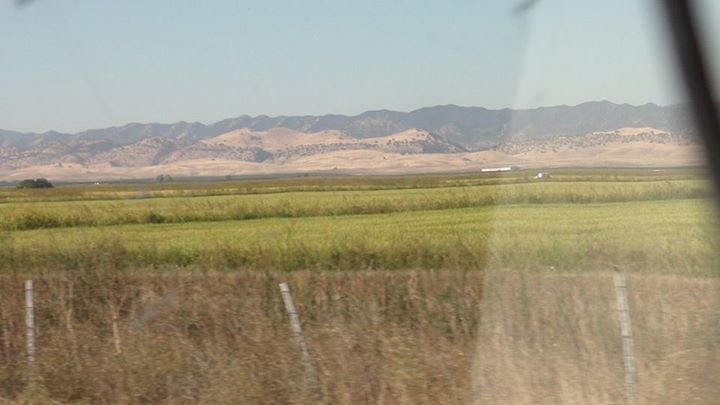
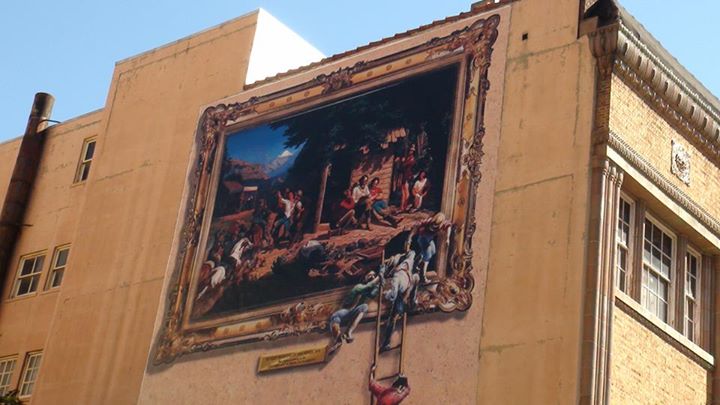
130531_fresco_building

Friday, 31 May 2013

For when you were slaves of sin, you were free in regard to righteousness. Romans 6:20

This is a simple truth which was looked at in 6:19 and which continues in 6:20. A slave has one master and therefore the ruling authority of that master is absolute. Before we received Christ as Lord, we were slaves to sin and we were free from the master-ship of righteousness. But when we moved to Him, we were freed from sin. Error in the mind of man is easily introduced during an evaluation of these verses though. There are people who are not Christians who do really great stuff for others, for their community, for the sake of animals or the environment, etc.

And of course there are Christians who fail at any or all of these things. Their lives actually changed little after coming to Christ. This sets up a false belief in people that Christ doesn’t really make anyone holy. The problem with this is that it is dealing with the slave in regard to the master, not the master’s authority over the slave. The example from 6:19 was that a slave went from his previous owner, Stevius Romanus, to a new owner, Sergious Maximus. Regardless of how the slave acts, he has become the legal property of Sergious Maximus.

This is what Paul is speaking about here. Slavery to Stevius Romanus is synonymous with freedom from Sergious Maximus; slavery to Sergious Maximus is synonymous with freedom from Stevius Romanus. Now simply change the ownership titles and say the sentence again –

“Slavery to the devil is synonymous with freedom from Christ; slavery to Christ is synonymous with freedom from the devil.”

It is the ownership which has changed. The slave now has a responsibility to change his life and habits to the new owner. If he fails to do so, it in no way changes the ownership. The title to deed to our slave has transferred.

Life application: Who are we going to please, our Master who loved us so much that He gave His life to have authority over us, or our old master who cares so little about us that he desired our destruction? Think it through – everything the devil had to offer was pleasing on the outside and yet rotten on the inside. Why would we want such fruits when the life Christ offers is pure and good, from the inside out?

Lord, as I sit with my thoughts, I realize that everything around me is so perfectly placed and organized. I get thirsty and there is water, I get hungry and there is food, I get tired and there is sleep. New things come out of the ground to replace that which was pulled up. It rains and everything turns vibrant green. It’s all so perfectly arranged. You are great, O God. Amen.

Romans 6:19

130530_tree_lined_street

Thursday, 30 May 2013

I speak in human terms because of the weakness of your flesh. For just as you presented your members as slaves of uncleanness, and of lawlessness leading to more lawlessness, so now present your members as slaves of righteousness for holiness. Romans 6:19

Paul begins with an idiom of the time, “I speak in human terms…” This was a way of saying that what he is telling them, and the way he is saying it, is done in order to make the argument easy to grasp. It would be like us today saying, “Let me say this so even a child could understand.”

As noted in the previous verse, Paul has used the personification of sin and of righteousness to help us more clearly comprehend the state and circumstances in which we find ourselves.

The people of Rome would clearly understand the symbolism of slaves and masters. If a person is a slave to Stevius Romanus, then he would present himself to Stevius in a distinct way; as to his rightful master. Stevius likes foot rubs at noon each day and so the slave does this. However, the slave is bought by Sergious Maximus who finds foot rubs vulgar (and a bit too tickly) for his liking. The last thing that the slave would do would be to grab Sergious by the foot at noon and start rubbing. It would be contrary to his new ownership. Sergious would be displeased and there would be consequences – especially if the disobedient foot rubs continued.

This is the thought process which Paul is using. We were slaves to Sin. Sin liked uncleanness – dishonesty, sexual perversion, gluttony, etc. Because Sin was our master, we presented ourselves in this “state of uncleanness, and of lawlessness leading to more lawlessness.” However, a new master has taken over – Righteousness. Now that we have this new master, we would be completely unwise to present ourselves to Righteousness in this way. Rather, he demands that we present ourselves as his slaves “for holiness.”

The owner of a slave has the power of rule and authority over their slave. Disobedience may result in punishment, imprisonment, or death. And it is so with us now. As a saved believer, if we turn from Righteousness to Sin, through sexual immorality for example, we may catch a disease resulting in pain, confinement from others in society, or even death. Righteousness was abandoned and Sin did its evil work in us.

Having said this, it is important to understand that Righteousness is still our master. Just as the slave remains the property of Sergious regardless of his conduct after being purchased from Stevius, so we remain the property of our new master. We have moved from the rightful ownership of the devil to that of Christ. For this reason, we are expected to present ourselves to Christ in the manner which is pleasing to Him. He is a gentle, caring Master and as our Creator, He knows what is best for us.

Life application: In Christ, you have a new Master. He has certain expectations of you which you are expected to fulfill. He asks us to be obedient because He knows what is best for us. Endeavor to live in righteousness and not as if you were still a slave to sin.

Lord God, I was in a state of slavery to sin and wretchedness. Even in this condition, You bought me back and gave me the garments of righteousness. As your servant, give me the wisdom to do that which pleases You, shunning my old master and living under the tender care and right living of my Redeemer. Guide me for Your name’s sake. Amen.

Romans 6:18

130529_trees_grove

Wednesday, 29 May 2013

And having been set free from sin, you became slaves of righteousness. Romans 6:18

If you peek ahead, you will see that the rest of the chapter continues to discuss the issue of slavery. The personification of sin and righteousness allows us to understand our state more clearly.

Sin was our master but we were brought out from under it and have moved to a new master; that of righteousness. But sin has a source, just as righteousness has a source. Sin came about through obeying the lies of the devil and rejecting the truth of God. Taking this in its logical form then, we were once slaves to the devil but have now become slaves of God through the work of Christ. Sin no longer has power over us because the power of the devil is defeated through the cross.

Life application: The wages of sin is death. As believers in Christ we have been set free from sin and thus we have been set free from the power of death. Eternal life, because of the work of Christ, is an absolute guarantee. Don’t let anyone tell you that Christ’s work isn’t fully sufficient to save you. There is one gospel and it is found in the work of Christ alone.

Heavenly Father, Your word tells me that Jesus is the way, the truth, and the life and that no one can come to You except through Him. I accept His work and I received Jesus as my Lord. I know that what You have done through Him is fully sufficient to reconcile me to You and that apart from Him there is no hope. Thank You for Jesus! Amen.

Romans 6:17

130528_corn_silos

Tuesday, 28 May 2013

But God be thanked that though you were slaves of sin, yet you obeyed from the heart that form of doctrine to which you were delivered. Romans 6:17

In his customary excitement over the greatness of what God has done through Christ, Paul interjects a note of gratitude for what has occurred in the believer. “But God be thanked…” He has just previously shown the contrast between being a slave of sin to that of being a slave to righteousness and now his thanks go forth because, “though you were slaves of sin, yet you obeyed from the heart that form of doctrine to which you were delivered.”

Yes, before hearing the gospel we were all slaves to sin. This includes all people and was what necessitated the cross. But through allowing the truth of the Christian message (that form of doctrine) to enter our heart, we have been delivered from this bondage. The word for “form” is the Greek word typon. This is a pattern or a mold. In Hebrews 8:5, it is used in this way –

“…as Moses was divinely instructed when he was about to make the tabernacle. For He said, ‘See that you make all things according to the pattern shown you on the mountain.'”

As you can see, Moses was instructed to use the exact pattern he was shown. There was to be no deviation from the instruction. The reason why is because they were “a copy and shadow of the heavenly things.” We should have the exact same idea in our heads about our New Testament instruction. We are delivered and we are sanctified through the pattern which is set. The question is, what is that pattern? The answer is simple, the teachings found in our instruction manual – the New Testament epistles.

The gospels show us who Jesus is, what He did, and the what transpired based on His work. The book of Acts shows how these things became established among the various people groups and some of the “why” of what Jesus did, but they contain little instruction on the “how to apply” what has been revealed. It is the epistles which show us how to do so. They give shape to the “form.”

One could think of the epistles as a portion of the mold into which was poured a substance. This would then conform to the shape of the mold. The substance is the believer; the word is the mold. Our doctrine for conversion, and our doctrine for continued growth, must come from the mold or it isn’t at all the pattern set down by God!

For this reason, it is imperative to read, ponder, and conform to these letters. That which fails to conform to the mold must be chiseled away, sanded, and smoothed out. And that which is poured into the wrong mold is an unacceptable vessel; it will be rejected entirely. This was seen in the Old Testament temple worship and it is no different in the church. Conformity to the doctrine of Christ must be realized in order for us to conform to Christ as individuals. It is conforming to this form which delivers us, directs us in sanctification, and which will lead to glorification.

Life application: If you want to be conformed to the image of Christ, read and apply your Bible to your life.

Yes Lord! What a beautiful day You have laid out before me. Help me to use my time wisely and to be a blessing, not a discouragement to others. Allow me the honor of being a beacon of Your light to those whose paths I cross as well as a vessel that overflows with Your goodness. These are the things I pray for my day ahead… to Your glory! Amen.

Romans 6:16

130527_grasslands_mountains

Monday, 27 May 2013

Do you not know that to whom you present yourselves slaves to obey, you are that one’s slaves whom you obey, whether of sin leading to death, or of obedience leading to righteousness? Romans 6:16

The word translated as “slaves” is appropriate. It comes from the word doulous. The King James Version translates this word as “servants.” Both should possibly be used though. In the matter of sin, “servant” doesn’t carry either the force, nor the intent of the matter. However, in the matter of righteousness it is acceptable. This verse’s objective is to show the state we were in and the state we should be in. Humans are born into slavery; slavery to sin. It is inherited and it is a bondage which we cannot free ourselves from. Jesus Himself shows us this in John 8:34 –

“Jesus answered them, “Most assuredly, I say to you, whoever commits sin is a slave of sin.”

Because we were born into Adam who sinned, we are thus a slave to sin; it is our station as humans. Having said that, there were different types of slaves in the ancient world, those who were the property of the house with no rights at all and those who had, in one way or another, become “bond” servants. A bondservant is a person who works without pay for various reasons. One of these reasons would be a person wholly devoted to another to the disregard of their own interests. This is the concept that a “bondservant” of Christ would carry.

As this is so, it should be clear that the change Christ has made in us is one which requires obedience. “Do you not know” is a way of saying, “Of course you know.” It is a rhetorical question which is being asked to simply help us think clearly on the matter. And the follow up is given in the same thought – “To whom you present yourselves slaves to obey, you are that one’s slaves whom you obey.” Again, Jesus gives clear insight into this concept in Matthew 6:24 –

“No one can serve two masters; for either he will hate the one and love the other, or else he will be loyal to the one and despise the other. You cannot serve God and mammon.”

Master-ship or ownership doesn’t have divided loyalties. If you are bound to one master, then that is where your work is to be directed. If you are bound to another master, then that is where your work should be directed. When we were freed from the slavery to sin and the ownership of the devil, we moved to the headship and authority of Jesus. Are we now “slaves” of Christ in the sense that we take our directions without thought, or are we “bondservants” of Christ where we have (or should have) ourselves wholly dedicated to His headship? The answer, based on the surrounding text, is that we are “bondservants” who can choose to ignore His headship, but that leads to Paul’s conclusion.

We are slaves “of sin leading to death, or of obedience leading to righteousness.” As you can see, the word “obedience” is crucial and it shows that we can be disobedient; the will is involved in our actions. We were slaves to sin and death and the devil had ownership over us. We have moved to the authority of Christ and now have choices to make. Will we be obedient or will we hold on to the past? If we continue in the sins of the past, even after having been freed from sin’s power, then we will suffer the death which that sin produces. Alcohol, for example, will destroy our liver.

We now have the ability, through the process of sanctification, to depart from these things and live in the freedom for which Christ has set us free. Here is the continuation of Jesus’ words in John 8:35, 36 –

“And a slave does not abide in the house forever, but a son abides forever. Therefore if the Son makes you free, you shall be free indeed.”

Life application: If you have called on Jesus, then who is your Lord? It is Jesus. Do you want to be entangled again in a yoke of slavery? Of course not. Therefore, live as a bondservant of Christ, wholly committing yourself to His glorious head-ship. He has set you free. Now live in Him as if you believe it!

Lord God, You have offered me freedom from my bonds and You have granted me the ability to put the things of the past behind. You know my weakness in my struggles and you know the temptations I face. Give me the resolute courage, strength, and conviction to press on in the power of Your Spirit, ever-striving to emulate my glorious Lord Jesus. Thank You, O God. Amen.